The United States began “Operation Yankee Team”, low-level and medium-level reconnaissance flights from South Vietnam over Communist strongholds in neighboring Laos, at the request of the Royal Laotian Armed Forces. Two days after flights began over southern Laos in the area that was part of the “Ho Chi Minh Trail”, U.S. Navy planes would conduct sorties over northern Laos. At the same time, the U.S. releases bomb fuses and more T-28s to the Laotian Air Force. Souvanna Phouma has been consulted about the flights and has given his approval.
The United States said today that it was prepared to take any steps short of direct military intervention in Laos to stop the fighting and preserve independence there. The State Department charged that “aggressive military actions by the Pathet Lao and North Vietnamese forces” had seriously threatened the Geneva agreements guaranteeing Laotian neutrality. “We are not ruling out any measure which may be necessary to preserve the neutrality and independence of Laos, to which we are committed as a signatory of the agreements,” Robert J. McCloskey, the State Department spokesman, said. He did not go into details. But qualified sources said the measures under consideration included the sending of elements of the Seventh Fleet to the Gulf’ of Tonkin off North Vietnam and the returning of troops to Thailand, which borders Laos. About 5,000 marines were sent into northeast Thailand during a Laotian crisis in 1962.
Officials said no military moves had been made by the United States in the current phase of the Laotian crisis, which began when pro‐Communist Pathet Lao forces attacked neutralist troops in central Laos last weekend. Officials also emphasized that no consideration had been given to sending troops into Laos. The Geneva accords, signed by 14 nations in July, 1962, forbid the introduction of foreign troops. The movement of United States warships near North Vietnam would seem more menacing now than before because of recent discussion of the possibility of raiding North Vietnam to discourage its support for the guerrilla war in South Vietnam.
Mr. McCloskey called attention to reports that Prince Souvanna Phouma, the neutralist Premier of Laos, had exhibited documents taken from North Vietnamese soldiers during attacks last week at Tha Thom. Mr. McCloskey said the United States could not confirm that the North Vietnamese troops were in Laos in violation of the Geneva accords, but he asserted: “We have no reason to doubt the presence of North Vietnamese cadres and would certainly regard the Prime Minister’s documentation yesterday as necessary proof.” The State Department declarations were viewed as an attempt to apply psychological pressure on North Vietnam and Communist China to use their influence to halt the fighting in Laos before Western powers took military steps.
An arrangement has developed whereby Cambodian border guard units grant aid and haven to Việt Cộng insurgents, according to Western intelligence officials. Under the arrangement, the Cambodians are said to sell food and supplies to the insurgents, grant them security in moving into and away from combat inside South Vietnam and supply intelligence about South Vietnamese troop strength and activity in the border area. In return, the Việt Cộng, or Vietnamese Communist guerrillas, are reported to have agreed to dispose of their individual weapons before approaching Cambodian settlements, except in actual combat, and to conduct themselves with such discretion that authorities can disclaim knowledge of their activity. The collusion arrangement is said to have developed between the commanders of the Cambodian border units and the Việt Cộng.
The United States and South Vietnamese Governments have been aware of this arrangement for some time but chose not to make an issue of it as they tried to reach an accord with Cambodia’s head of state, Prince Norodom Sihanouk. Prince Sihanouk denies any collusion between Cambodia and the Việt Cộng. His charges that South Vietnam has violated Cambodia’s borders are before the United Nations Security Council.
In the Security Council, the Soviet Union accused the United States of a studied policy of aggression against Cambodia from South Vietnam. It demanded an immediate end of United States interference in any part of Southeast Asia.
Some Western officials consider the Cambodian frontier arrangement a more immediate danger to the South Vietnamese and United States war effort than the supply lines, called the Hồ Chí Minh Trail, entering South Vietnam through Laos. At its nearest point — the tip of the so‐called Duck’s Beak, where the most effective cooperation has been traced — the Cambodian border is less than 40 miles from Saigon.
Evidence of collusion has been found along the frontier all the way from a point near the Cambodian town of Snoul to the Gulf of Siam, a distance of more than 200 miles. Increasingly frequent battles and am bushes have occurred in the border area, notably a series of hit‐and-run attacks last Thursday and Saturday in which the South Vietnamese suffered heavy casualties and losses of weapons. Border incidents between South Vietnam and Cambodia have also increased as Cambodian guards have caught South Vietnamese troops crossing the generally poorly marked frontier in hot pursuit of the Việt Cộng.
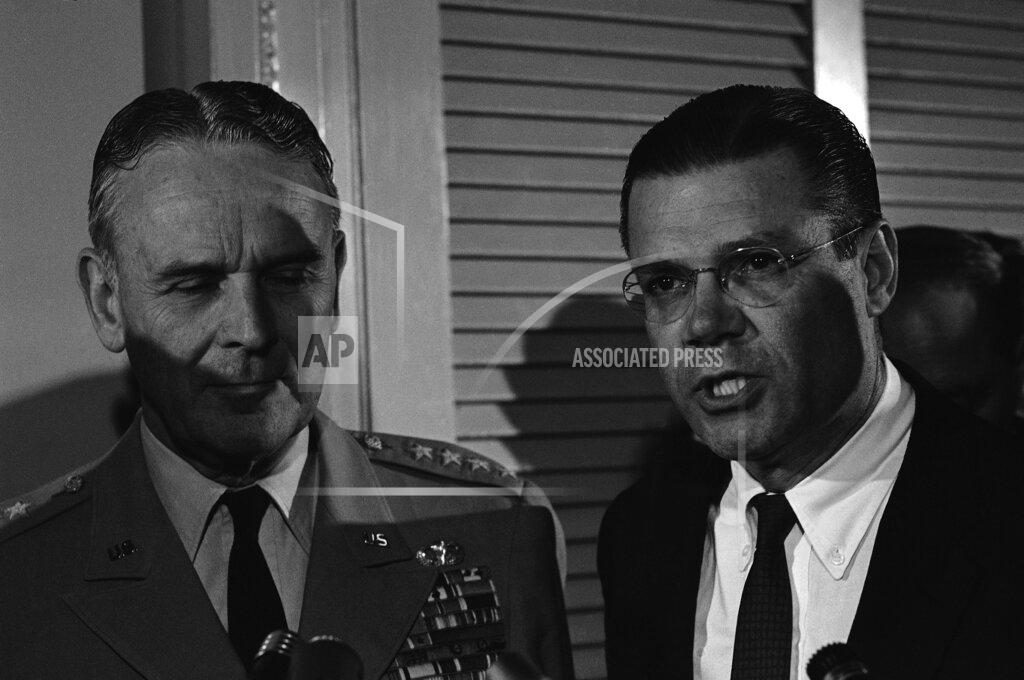
The U.S. House Foreign Affairs Committee cleared the way today for prompt approval of President Johnson’s request for an additional $125 million in military and economic aid for South Vietnam. The group appeared convinced after three hours of testimony by the President’s defense and foreign policy advisers that the amount was essential to counter the stepped- up terrorist tactics of the Communist guerrillas and that if more was required, he would not hesitate to ask for it. Secretary of Defense Robert S. McNamara said after the closed‐door hearing that the increased terrorist activities, “including murders, ambushes, and attacks of all kinds,” were plainly intended to “destroy the confidence of the Vietnamese people in their government.”
The committee also heard from Secretary of State Dean Rusk, General Maxwell D. Taylor, Chairman of the Joint Chiefs of Staff, and David E. Bell, the Administrator of the Agency for International Development. The Defense Secretary said after the meeting that he was convinced “the war will be long, hard and very difficult” but that he had no doubt it would end successfully. He said the expanded terrorist tactics of the guerrillas were being held in check and the additional amount asked by the President was needed to counter these attacks.
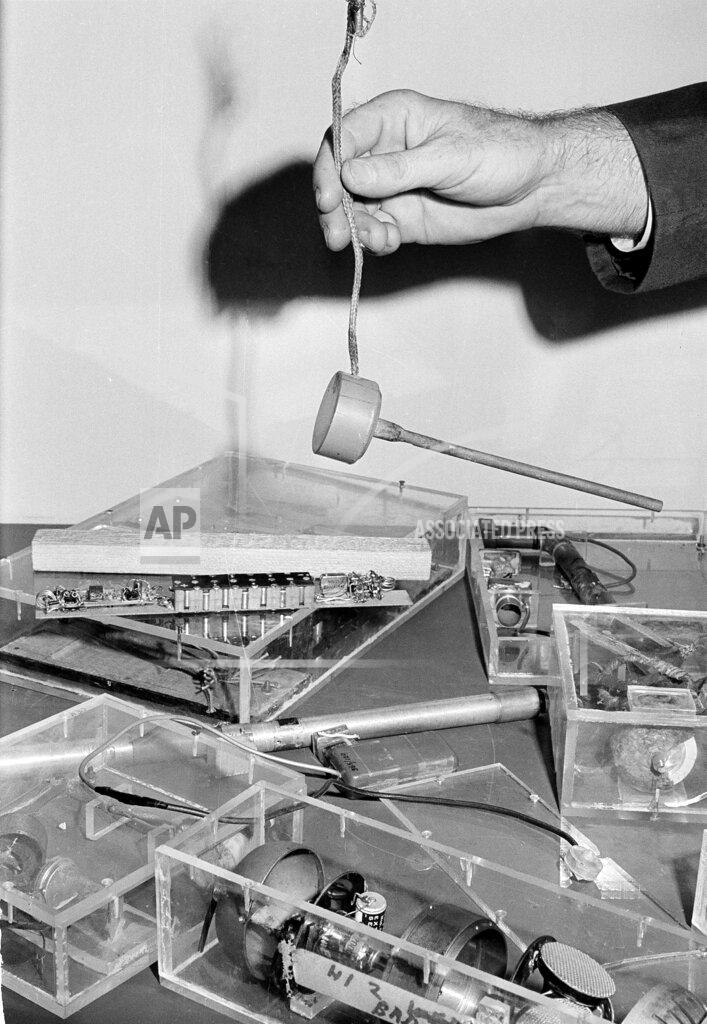
The United States Department of State disclosed that more than 40 hidden microphones had been found embedded in the walls of the U.S. Embassy in Moscow, and that it had filed a protest with the Soviet government. The devices, which were at least 8 inches inside the walls and “integrated to main structural reports” had apparently been in place since 1953, when the building was first leased to the United States. All of the microphones were found on the eighth, ninth and tenth floors of the building, where embassy offices were located, and were not found until February, when Embassy officials tore down the walls of a room that “frequently was used for sensitive discussions”. The other microphones were found by following the wiring system from the first one discovered.
Archbishop Makarios, President of Cyprus, said today that he had been unable to discover the whereabouts of 74 of the 91 Turkish Cypriotes reported to have been seized by Greek Cypriotes since March 27. The archbishop gave this report to Galo Plaza Lasso, the special representative here of U Thant, United Nations Secretary General. Mr. Plaza will leave tomorrow for New York to confer with the Secretary General on the Cyprus situation. The United Nations made it clear Sunday that it expected the release by tomorrow of all 46 Turkish Cypriote hostages taken by the Greek Cypriotes since the shooting of two Greek Cypriote officers in Famagusta May 11. Previously the world body had sought the release of 45 other Turkish Cypriote hostages seized since the United Nations peace force became operational March 27.
Because of his apparent inability to accede to the United Nations demand, strong new doubts were raised about the archbishop’s authority over the Greek Cypriote security forces, which now are estimated to total between 15,000 and 30,000. The maximum, estimate of Turkish Cypriote strength is a total of 10,000 armed men but the number probably is considerably lower. Archbishop Makarios told Mr. Plaza that 17 Turkish Cypriotes — seven abducted four weeks ago in the Kyrenia area and 10 more seized last Thursday, at Nicosia Airport — were in the custody of Government officials. He also said, according to Mr. Plaza, that not all of the missing Turkish Cypriotes were, or ever had been, in the hands of the Government.
Foes of Premier Fidel Castro have promised that they will open a new phase of the struggle against his five‐year-old regime tomorrow, the 62d anniversary of Cuban independence from Spain. According to the militant exile organizations in Miami, this phase will consist of efforts to rebuild an effective anti‐Castro underground and to harass the regime with internal sabotage and hit‐and-run coastal raids. They describe these efforts as the first major ones since the unsuccessful invasion attempt of 1961. The United States played a major role in that attempt, but has since vowed to take no part in any new military venture.
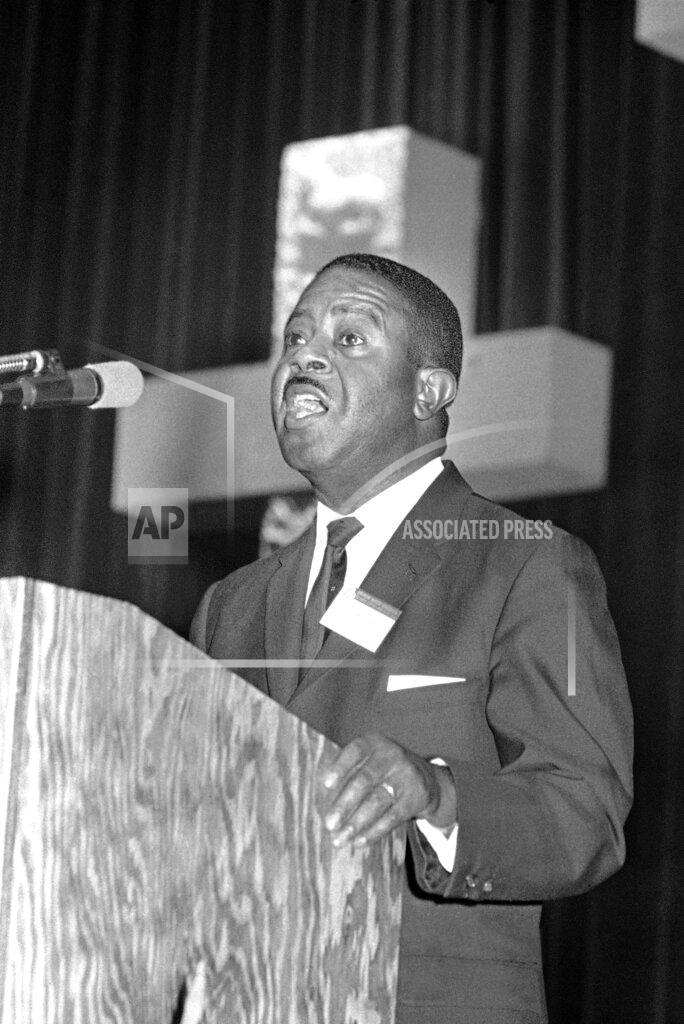
The most important single operation now being undertaken is that of the Revolutionary junta. The leader of the junta, Manuel Ray, was reported today to be somewhere in the Caribbean, presumably preparing to land secretly in Cuba in order to initiate what he has described as a long and painstaking process of hammering together an effective underground organization. The exile leader has emphasized that his undertaking is a “purely Cuban” operation. Mr. Ray first announced his plans a year ago. Whether he succeeds or fails, he has apparently managed, through his well‐publicized preparations, to produce a considerable psychological impact in Cuba.
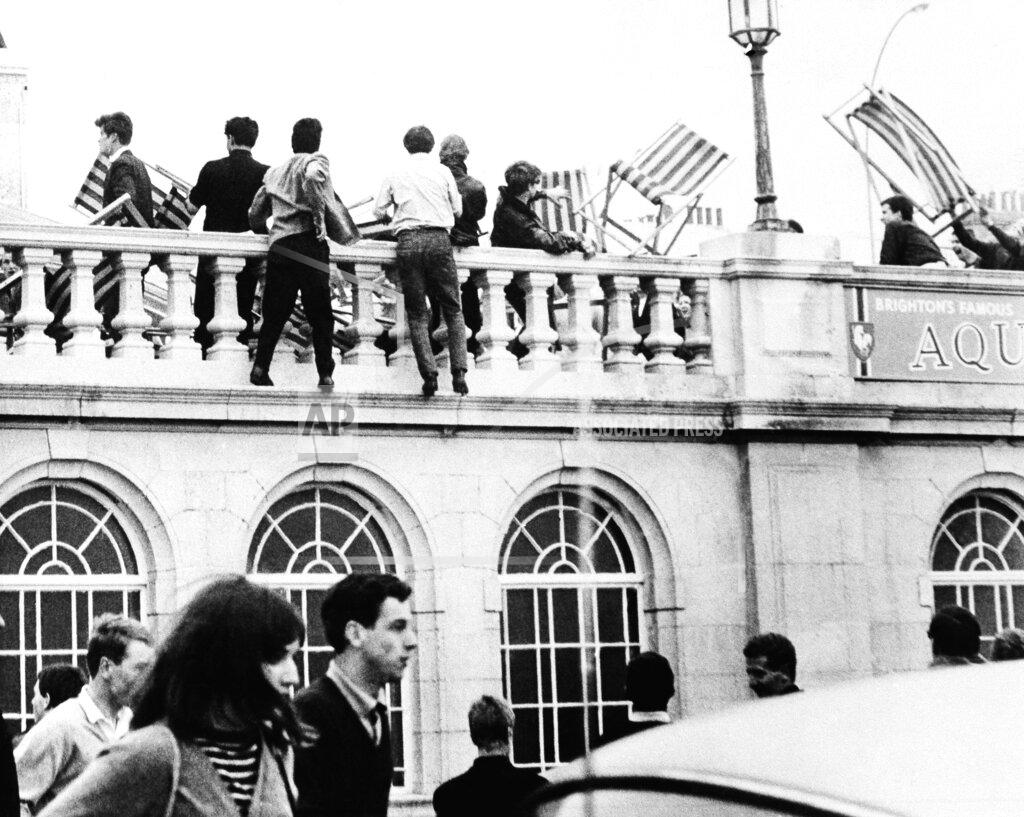
In the aftermath of a riotous Whitsun weekend, Britain was wondering today what to do about her unruly teenagers. Thousands of them, in rival gangs of Mods and Rockers and unaffiliated young toughs, brawled with each other and the police through the long weekend at the normally peaceful seaside resorts of Margate, Brighton and Bournemouth. The Mods favor flashy clothes and motor scooters. The Rockers prefer leather jackets and drive motorcycles. Among the remedies offered today by politicians, newspapers, church leaders and sociologists, the firm approach seemed to be the most favored. Sir William Teeling, a Conservative member of Parliament who watched some of the ruckus from his home in Brighton, said here that he intended to asks the Government to consider reviving compulsory national service for the youngsters, perhaps in digging an English Channel tunnel.
Two days after Pope Paul VI announced its creation at the celebration of the holiday of Pentecost, the Secretariat for Non-Christians was created, with Cardinal Paolo Marella as its first secretary.
Bipartisan leaders in the Senate battle for a civil rights bill confidently declared today that their package of proposed amendments had won sorely needed votes to cut off the Southern filibuster. The assertions were made after Republicans and Democrats had held separate meetings to discuss the changes agreed to by the bill’s floor managers, Senator Everett McKinley Dirksen, the Republican leader, and the Justice Department. “I don’t believe we did ourselves any harm so far as closure is concerned.” said Mr. Dirksen, who was the author of most of the amendments. He said the leaders were nearer to closure today than they were yesterday. Senator Hubert H. Humphrey, Democratic floor manager of the bill, said: “I feel these amendments have won some closure votes.”
Although Mr. Dirksen is the central figure in the fight to pass the bill, he had never defended the principles of the measure nor spoken of the grievances of the Black. Therefore. he surprised reporters today when he suddenly began what he called “a little sermon.” It was prompted by a question about how he had overcome his original misgivings and assumed the role of “champion.” Mr. Dirksen began by relating how Victor Hugo on the night of his death had entered in his diary, “No army can withstand the strength of an idea whose time has come.” Mr. Dirksen enumerated the ideas, ridiculed or resisted for years, that had ultimately triumphed — the civil service merit system, women’s suffrage, the direct election of Senators, pure food and drug laws, the ban on child labor and the eight‐hour day. As he recited the history of each advance, he said, “The time of the idea had come.” Finally, he said: “Civil rights here is an idea whose time has come.”
He spoke of the 470,000 Blacks who had served in World War I and the 1.7 million in World War II. “What do you think they told their kids about the freedom they experienced wherever they served abroad?” he asked. He listed the number of Black doctors, dentists, engineers, school teachers and professors. “Today the challenge is here,” Mr. Dirksen said softly. “It is inescapable, and the time has come to deal with it.” Although the civil rights forces have the votes to pass the bill, they do not yet have the two‐thirds vote-67 if all 100 members are present — necessary for closure. To invoke it, the leaders estimate they will need 25 of the 33 Republicans. Mr. Dirksen’s principal amendments were designed to attract five or six Republican votes by giving more scope to state and local agencies to deal with discrimination in public accommodations and employment.
A proposal that Senators be compelled to disclose periodically all sources of outside income met a mixed reception on Capitol Hill today. The proposal was one of several controversial features of a draft report on the Robert G. Baker investigation compiled by the staff of the Senate Rules Committee. The full committee is to meet tomorrow to consider the report. Copies of the supposedly secret document came into the hands of several reporters yesterday. Senator Hubert H. Humphrey of Minnesota, the assistant Democratic leader, said that he strongly believed in such a financial disclosure plan. He said he thought enough Senators favored the proposal to put it into effect.
“We have reached the point where something of the sort just has to be done,” he told a reporter today. The Republican leader, Senator Everett McKinley Dirksen of Illinois, was markedly less enthusiastic. He said, “I have never been in favor of making Class B citizens out of Senators.” These two viewpoints appeared, on the basis of a rough sampling of opinion today, to represent the positions of liberals and conservatives on the issues.
Liberals have long advocated this and other reforms to insure a stricter code of official conduct among legislators. Conservatives, in general, have opposed such measures as being intrusions upon the tradition of independence for the individual Senator. A second proposal in the report to the Rules Committee met almost unanimous opposition. This would prohibit intercession by a Senator with any Governmental agency on behalf of a corporation doing business with the Government. Most members agreed this would seriously handicap a member in performing legitimate and necessary services for his constituents.
Senator Daniel B. Brewster won an unexpectedly close victory tonight over Governor George C. Wallace of Alabama in the Maryland Democratic Presidential preference primary. In doing so he bested the segregationist Alabamian in the third round of the latter’s campaign to arouse white voters against the civil rights bill. But the vote in the race — which brought a record turnout — was plainly a shock and a disappointment to the state and national Democratic administrations. With all the ballots counted, Senator Brewster had 53.2 percent of the total and Governor Wallace 42.7 percent.
The unofficial vote was:
Brewster ……… 264,613
Wallace ……… 212,068
The Columbia Broadcasting System, in analyzing the returns, said that without the strong surge of support Mr. Brewster won from Baltimore and the middle- and upper‐class suburbs of Washington, the Senator might well have lost to Mr. Wallace Maryland’s 48 delegate votes in the Democratic National Convention.
The executive council of the American Federation of Labor and Congress of Industrial Organizations emphatically declared its opposition today to the Administration’s guideposts for noninflationary wage settlements. The labor leaders served notice that they intended to press forward for better wages, shorter hours and improved working conditions. “Neither wage nor price restraints are tolerable in a free society except in the gravest national emergency and then only when coupled with stringent restraints upon excess profits,” the council said in a statement that it adopted unanimously.
District Judge Joe B, Brown disclosed today that Jack L. Ruby was being treated for a mental illness in his maximum-security cell. The slayer of Lee H. Oswald, the accused assassin of President Kennedy, is expected to given a sanity hearing. Reports leaked out that Dr. Robert Stubblefield, a court. appointed psychiatrist, had told Judge Brown that Ruby, 54 years old, has a mental illness that should yield to treatment. “I understand they are treating him in jail right now,” Judge Brown said. “I believe they are giving him ‘happy pills’ [tranquilizers] or something. Things so far indicate a sanity hearing.” District Attorney Henry Wade, who prosecuted Ruby, said he would not object to treatment in jail or in a psychiatric hospital without a sanity hearing. “It’s my understanding that Ruby needs some kind of treatment,” Mr. Wade said. “He’s been under a strain, sitting up there knowing he has been sentenced to the electric chair.”
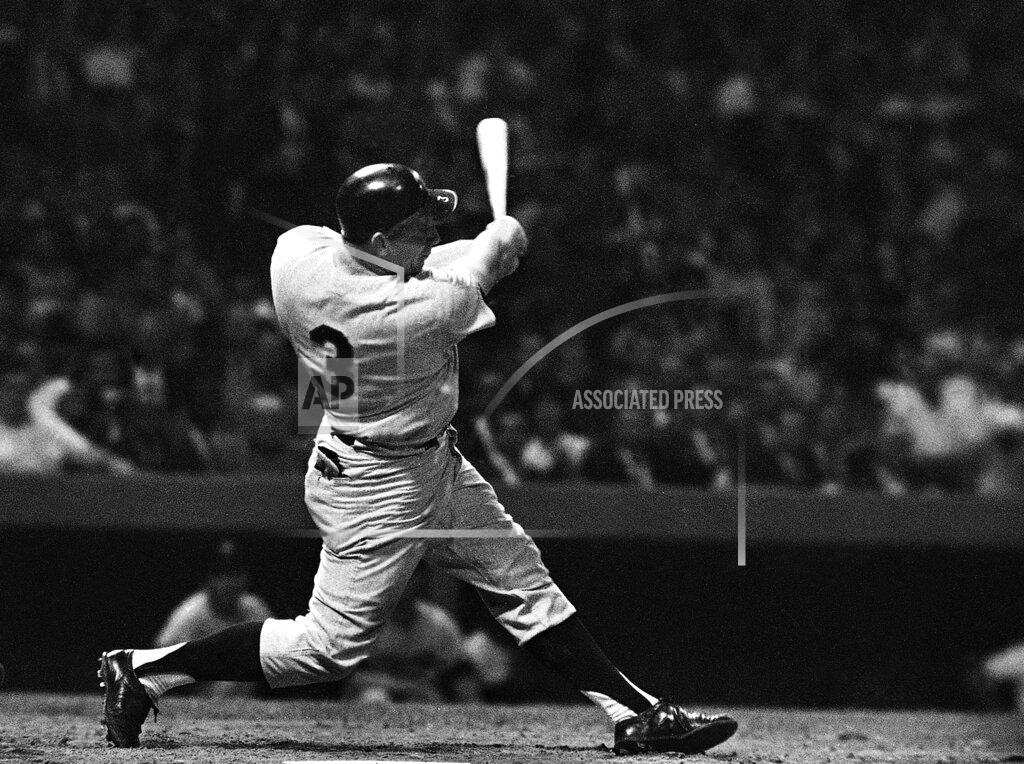
St. Louis Cardinals pitcher Ernie Broglio throws a record-tying three wild pitches in one inning. In an interesting twist, the Cardinals, who lose to the Chicago Cubs, 7–4, will trade Broglio to Chicago later in the season. The deal will net St. Louis future Hall of Fame outfielder Lou Brock.
Dow Jones Industrial Average: 817.28 (-4.03).
Born:
Luis Aquino, Puerto Rican MLB pitcher (Toronto Blue Jays, Kansas City Royals, Florida Marlins, Montreal Expos, San Francisco Giants), in Santurce, Puerto Rico.
John Lee, Korean-American NFL kicker (St. Louis Cardinals), in Seoul, South Korea.
Tony Mayes, NFL defensive back (St. Louis Cardinals), in Tazewell, Tennessee.

 History Diaries