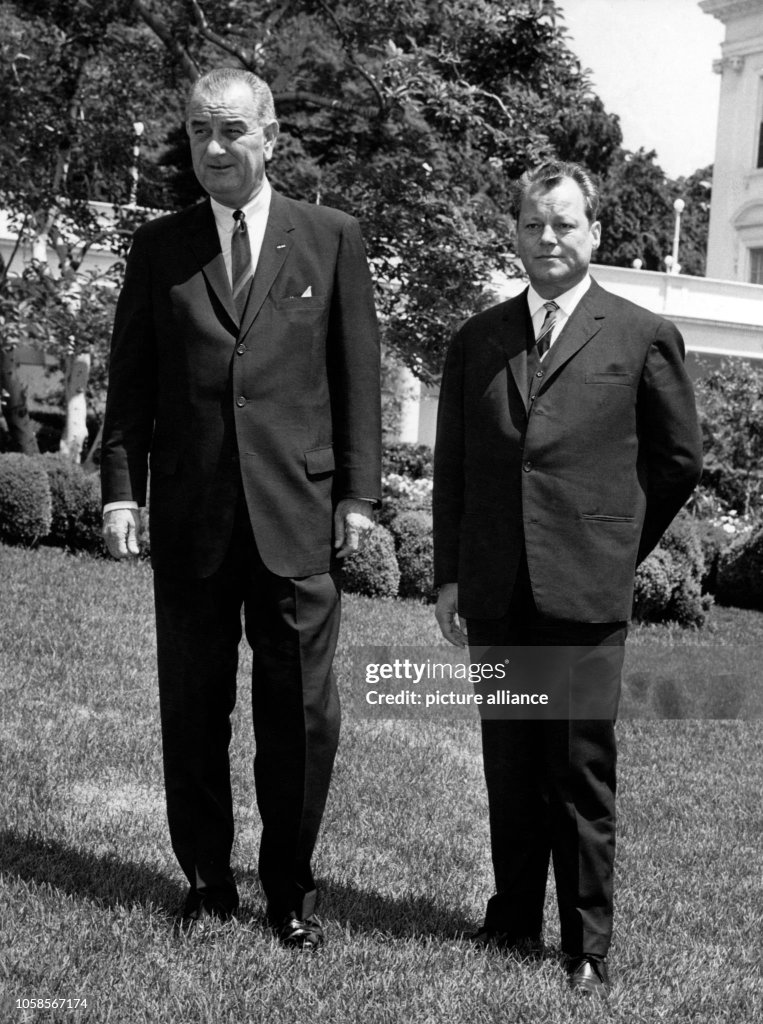
President Johnson, in a special message to Congress, asks for $125,000,000 more for economic and military aid to Vietnam. This would be in addition to the appropriation of about $500 million already sought by the Administration for programs in Vietnam during the fiscal year starting July 1. Representative Thomas E. Morgan, chairman of the House Foreign Affairs Committee, which has been working on the Administration’s $3.4 billion foreign‐aid bill, said he was certain that Congress would provide the extra funds requested by the President. The Pennsylvania Democrat said high officials would testify before the committee in closed session tomorrow on the request. These will include Secretary of State Dean Rusk, Secretary of Defense Robert S. McNamara, David E. Bell, the foreign‐aid administrator, and General Maxwell D. Taylor, Chairman of the Joint Chiefs of Staff. The President’s request for more money for the Vietnamese war effort calls for an increase of $70 million in economic aid and $55 million in military aid.
In his special message to Congress, President Johnson said more funds were needed in South Vietnam because of two developments that had taken place since his 1965 foreign aid request was prepared in January and February. These, he said, were the following: “First, the Việt Cộng guerrillas, under orders from their Communist masters in the North, have intensified terrorist actions against the peaceful people of South Vietnam. This increased terrorism requires increased response. Second, a new government under Prime Minister [Nguyễn] Khánh has come to power, bringing new energy and leadership and new hope for effective action. I share with Ambassador [Henry Cabot] Lodge the conviction that this new government can mount a successful campaign against the Communists.”
The President’s request came against a background of deepening crisis in Southeast Asia. High Administration officials held closed meetings today to consider the dangerous situation in Laos, where pro‐Communist forces have sent neutralist troops reeling in defeat on the strategic Plaine des Jarres. Last year, when a similar crisis developed, the United States sent warships into the Gulf of Siam as a show of force to preserve the balance of power. So far during the current tensions there, Washington has concentrated on an intensive diplomatic campaign to save the sagging neutrality of Laos.
The United States and its allies were trying all possible diplomatic avenues tonight to halt the fighting in Laos and preserve that country’s tottering neutral Government. Officials disclosed that the United States had asked several nations to urge Communist China to use its influence with the pro‐Communist Pathet Lao to stop the attacks on neutralist and right‑wing positions before the Geneva accords on Laos were shattered. Western diplomats were also reported to be trying to arrange a meeting in Vientiane of representatives of the 14 nations that signed the Geneva accords of 1962, which set up the three‐faction neutralist regime. Such an effort is being considered by Prince Souvanna Phouma, the neutralist Premier, qualified sources reported.
The Pathet Lao forces intensified their drive to take control of the Plaines des Jarres region and, with it, all northern Laos, The Associated Press reported. The neutralist army was said to be retreating under attack by thousands of pro‐Communist troops on a 22-mile front. They have struck southward from the former neutralist and right‐wing base at Tha Thom, 90 miles northeast of Vientiane, toward the right‐wing stronghold at Paksane on the Mekong River. Officials said the forces were about 25 miles north of Paksane. They have pushed westward across the Plaine des Jarres, about 110 miles north of Vientiane, routing neutralist troops.
Officials said Defense Department aides had been asked to discuss military contingencies with the State Department in case diplomatic efforts fail to restore peace and stability in Laos. Robert J. McCloskey, a State Department spokesman, said the Administration was “weighing decisions” on what steps might be taken. But he emphasized that for now military considerations were in the background and that the main line of Western activity was diplomatic. Officials asserted that under no circumstances was the United States considering direct military intervention in Laos. When a crisis developed there two years ago, 5,000 Marines were sent to northeast Thailand, which borders Laos. A year ago, the United States sent warships near Laos to try to restore stability after attacks on neutralist forces in the Plaine des Jarres by the Pathet Lao.
So far, officials said, there has been no appeal from Prince Souvanna Phouma for military assistance by the Western powers. And there has been none from Thailand, normally the country most directly concerned with pro‐Communist advances in Laos. State Department spokesman called the new attacks “flagrant and open violations” of the accords. But the Western powers were hesitant to declare the agreements abrogated and no longer in effect.
The South Vietnamese Government has airlifted a battalion of reinforcements into the Communist stronghold of Đỗ Xá in central Vietnam, amid persistent reports that a large government force has been trapped there by the Việt Cộng. United States military sources said the battalion — 400 to 500 men — was flown by helicopter on Thursday to the nearly impenetrable area. The Communists have held Đỗ Xá since the end of World War II and have made it into a major headquarters. American military sources said every helicopter used in the airlift was hit by Communist ground fire. They reported the landing zone previously used had been captured by the Việt Cộng, and that the latest airlift had had to use an inferior clearing 500 yards away. These sources denied that a government force had been trapped, but there were many reports to the contrary.
Đỗ Xá is situated in the jungle‐covered mountains of central Vietnam, 320 miles northeast of Saigon. The government began a six‐battalion operation (2,400 to 3,000 men) against the guerrilla base on April 27 with strikes on three known enemy camps. Vietnamese military sources said a government force of about two battalions (800 to 1,000 men) was trapped in a narrow valley, and had been unable to break out in a week of fighting. The valley is surrounded by mountains held by the Việt Cộng. Guerrilla ground fire in the area downed four helicopters and a fighter‐bomber during the April 27 landing. American pilots complained of intense guerrilla fire again Thursday. The sources said that the pilots had repeatedly called for air strikes of napalm on the guerrilla positions, but that local headquarters had refused the request. The government has been reluctant to use the flaming bombs for political reasons. There have been several incidents where innocent villagers were burned, with a public uproar resulting.
The Government of Cyprus was reported tonight to be negotiating abroad for the purchase of bombers, fighter planes, torpedo boats, antiaircraft guns and other heavy equipment. The report was distributed by the Cyprus News Agency, a semiofficial service that frequently has been used by the Government to communicate important decisions. The news agency reported that the Cyprus House of Representatives would enact a conscription measure soon, covering five age groups, “to increase the numerical strength” of the Greek Cypriote armed forces. Glafkos Clerides, president of the legislature and a key figure in the Greek Cypriote leadership, confirmed the report on the conscription act and the negotiations for new arms. He would not discuss the nature of the armament. Mr. Clerides declined to indicate what countries had been approached for arms. He also refused to divulge the age groups that would be affected by the conscription act, how large a force was contemplated, or how long the service period would be, other than to say that it would be “for the immediate emergency.”
Western sources suggested that the armament might come from the Soviet Union and the United Arab Republic, or at least be paid for with generous Soviet credits. The Government of Cyprus has maintained, the closest links with those two countries, which have supported the Greek Cypriote cause from the beginning of the communal strife in December. The news agency, citing authoritative sources, said the measures had been decided upon “with a view to completing the necessary preparations to face possible Turkish aggression” against Cyprus. It spoke of the new arms as “the necessary war equipment.” The present size of the Greek Cypriote security forces is estimated to be between 15,000 and 30,000 men. There was some speculation that the conscription act would seek in effect to “legalize” the present force by providing for regular pay and by covering basically the age groups of the Greek Cypriotes now bearing arms. It was widely agreed that, even if the news agency report was not accurate in all details, it constituted a major setback for the United Nations efforts to restore peace to the island. Vigorous reactions were expected from Western capitals. There was apprehension over what impact the measures would have on Ankara.
The disconcerting word of the proposed arms purchases offset two encouraging developments. Greek and Turkish Cypriotes dismantled some of their fortified positions in the port town of Famagusta, while 70 percent of the ports’ longshoremen both Turkish and Greek, returned to work. A United Nations spokesman said the developments were “due in great measure to the cooperation” of the local authorities in both communities. He said the rest of the longshoremen were expected to resume work tomorrow. The arrangements to dismantle the fortifications affected only those put up since the killings in the Turkish quarter a week ago of two Greek army officers and a Greek Cypriote policeman. Basic defensive positions of the two sides were not modified.
An essential requisite for the restoration of calm remains the release of 34 Turkish Cypriote hostages seized by Greek Cypriotes since the Famagusta incidents. The United Nations command has made it clear that it expects these hostages to be released by Wednesday. United Nations sources believe the prisoners are alive. There are unconfirmed reports that some of them have been killed.
The United States and Rumania opened talks on trade and other issues today that could have considerable importance in the United States’ relations with countries in the Soviet bloc. W. Averell Hariman, Under Secretary of State for Political Affairs, met at the State department with Gheorge Gaston‐Marin, a Deputy Premier and chairman of the State Planning Committee of Rumania. Later, delegations gathered around a conference table. The Rumanian officials, who arrived in Washington Friday, have stressed their wish to improve trade relations with the United States. They have not been specific, but informed sources have said the Rumanians hope to accomplish these three things: purchase modern plants in the petrochemical field, expand Rumanian exports to the United States from the 1963 figure of $800,000 and raise the legations in Bucharest and Washington to the embassy level. The talks could last a week or longer.
Communist China and the Sudan have reached a provisional agreement on increased trade. The accord was reached at a meeting here between the Sudanese Commerce Minister, Major General el Makboul el Amin el Hadj, and Communist China’s Foreign Trade Minister, Yeh Chichuang, sources of the visiting Sudanese delegation said. The basis of the agreement was believed to be increased exports of Sudanese cotton to China in exchange for Chinese machinery and electrical products.
Mwanawina III, King of Barotseland, and Kenneth Kaunda, Prime Minister of Northern Rhodesia (now Zambia), signed the Barotseland Agreement establishing the Lozi people’s autonomy within Zambia as the Western Province. In return, Barotseland would renounce its relationship with the British crown. The autonomy would last only five years after Zambia’s independence. In 1969, a majority of Zambians (but only 31% of the people in Barotseland) voted in a referendum to approve Zambia’s “Constitutional Amendment Act of 1969”, which declared that all provinces in Zambia would receive equal status.
Senators received copies today of the civil rights bill incorporating all the changes agreed to last week by the Justice Department and the bipartisan leadership in charge of the bill. It was the first time members had seen the precise language of the amendments. In their final form, the amendments bore out statements by Attorney General Robert F. Kennedy, Senator Everett McKinley Dirksen, the Republican leader, and Senator Hubert H. Humphrey, Democratic‐manager of the bill, that the objectives of the House‐passed measure had not been weakened. Tomorrow morning there will be conferences of both parties to discuss the proposed changes. Accordingly, the leaders set back the convening of the Senate from 10 AM to noon.
While these conferences are in progress, the 19 Southern opponents of the bill will caucus under the leadership of Senator Richard B. Russell of Georgia to map out their strategy. Meanwhile, Mr. Humphrey said he shared the view of Mr. Dirksen that an attempt to shut off the Southern filibuster could not be made before early June. Some Republican Senators who support the Presidential ambitions of Senator Barry. Goldwater are willing to vote for closure of debate, Mr. Humphrey said, but not before the California primary on June 2. Mr. Humphrey said he surmised that “these Senators felt a vote for closure before that date might be construed as a withdrawal of support for Mr. Goldwater.
Virtually all of the 50‐odd amendments circulated today were proposed by Senator Dirksen. Most of them were noncontroversial clarifications of language and procedure. The few substantive alterations were intended to attract the votes for closure of six or seven Republicans. Closure requires two‐thirds of the Senators present and voting — 67 if all 100 members vote. To obtain this number, it is estimated Mr. Dirksen must get the support of 25 of the 33 Republicans.
A secret draft report by the staff of the Senate Rules Committee recommends a stiff code of ethical conduct for Senators as well as their employees. The proposal is a result of the committee’s investigation into the financial affairs of Robert G. Baker, former secretary to the Senate Democratic majority. “No amount of sophistry can relieve the Senate of the public criticism now directed. against it,” the report asserts.
“The disclosures made in this investigation justify, beyond any reasonable doubt, the necessity for protecting the good and faithful public servant against a minority who would take advantage of every, opportunity to engage in all manner of money‐making and influence‐ peddling schemes. It is with these views in mind that the committee feels compelled to recommend what some people may judge to be far‐reaching and unprecedented legislation, rules and regulations, applicable to Senators themselves and to all officers and employes of the Senate.”
By a 5–3 decision in the case of Schneider v. Rusk, the U.S. Supreme Court allowed the restoration of American citizenship of more than 50,000 people who had been stripped of their naturalized citizenship under a 1952 amendment of the Immigration and Nationality Act. The Court declared unconstitutional a provision that took away the status of foreign-born people, who had become naturalized U.S. citizens, if they lived for more than three years continuously in their native land.
The House Appropriations Committee dealt the plans for a lunar expedition another budgetary setback today by making almost a 5 percent cut in funds for the civilian space agency. The committee recommended $5.2 billion for the National Aeronautics and Space Administration in the fiscal year that starts this July. This was $245 million less than the Administration had requested. The reduction was smaller than those made by the committee in the space. budget in previous years. Last year, for example, it pushed through a $600-million cut that the space agency says set back the lunar expedition schedule by about a year. The 5 percent reduction, however, comes in a budget that the agency has said already has been so pruned down by the Administration as to provide only a “fighting chance” of achieving a manned lunar landing by the “end of the decade.” That objective was laid down by President Kennedy three years ago. For budgetary and technical reasons, the schedule for the first Project Apollo flight to the moon already had slipped into 1969. Additional budgetary cuts could push the expedition into the next decade.
Three or more months have already been lost because the committee did not approve $141 million in supplemental funds that NASA maintained was essential to accelerate work on the Apollo spacecraft and the Saturn 5 rocket that will launch it to the moon. Committee action was blocked by the late Representative Clarence Cannon of Missouri who, as chairman, had ruled there should be no supplemental appropriations for the present fiscal year, which ends June 30. Instead, the committee included the supplemental request in the proposed funds for the coming fiscal year. In effect, the committee rejected the supplemental request, for the final amount approved was less than the $5.3 billion that had been proposed for the next fiscal year. The committee bill, expected to be approved by the House later this week, made a $1781 million reduction in the $4.4 billion requested for research and development. About 75 percent of these funds have been allotted to the manned space flight program.
In a minority opinion, Representative Louis C. Wyman, Republican of New Hampshire, suggested that the space budget could be cut by at least $1 billion without wrecking the space program or interfering with “the proper security interests of the United States. He described the target date of 1970 for the lunar expedition as “foolish” because of technical uncertainties.
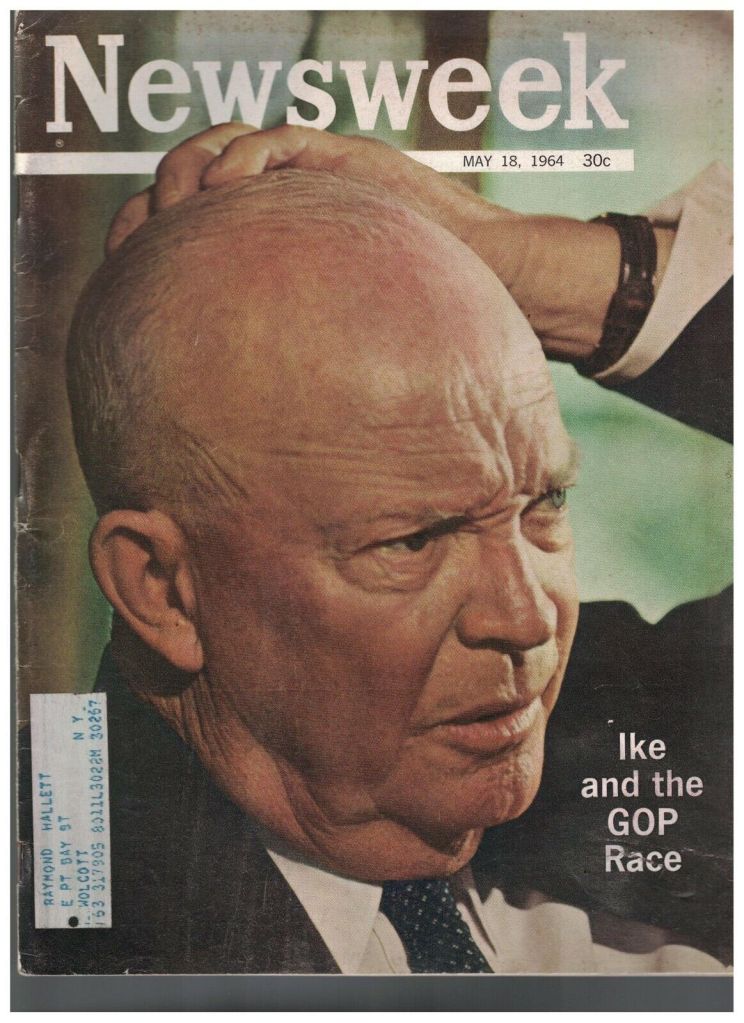
Henry Cabot Lodge’s California friends decided today to work for the Rockefeller slate of delegates as a tactical move to save their own candidate. The decision was meaningful for the Republican party nationally because it sharpened the conflict between conservatives and moderates to a point that could make or break Senator Barry Goldwater in the contest for the 1964 nomination for President. On June 2 California will decide a strictly two‐man race. No write‐ins are permitted. The decision by the Draft Lodge Committee contributed significantly to Governor Rockefeller’s chances, but by no means assured his success here. If Senator Goldwater can beat the combined Rockefeller‐Lodge forces, he will have compensated for his poor Oregon and New Hampshire showings and will have the nomination almost within his grasp.
The Arizona Senator now claims more than 300 of the needed 655 delegates for the Republican National Convention opening in San Francisco July 13. Most come from states that choose by convention. His performance against tough competition in primaries has cast doubt on his strength as a popular vote‐getter. Far from acknowledging any arrangement with Governor Rockefeller, the Lodge forces said they had not, and would not, even coordinate their campaign with the Governor’s.
Jackie Cochran, who in 1953 had become the first woman to “break the sound barrier” by flying faster than Mach 1, became the first woman to fly faster than Mach 2, setting a new women’s airspeed record of 1,429 mph (2,300 km/h) in an F-104 Starfighter. At the time of her death from heart problems in 1980, Cochran “held over 250 speed, altitude, and distance records, more than any other pilot in the world, male or female.”
English rock guitarist Ritchie Blackmore (19) weds German girl Margrit Volkmar (19); divorce in 1969
At Colt Stadium, the Phillies Jim Bunning fires a one-hitter, giving up a single in the 5th inning to Jimmy Wynn. The Phils top the Colts, 4–0.
David Frost interviews Paul McCartney on BBC-TV.
Dow Jones Industrial Average: 821.31 (-4.92).
Born:
Will Wolford, NFL tackle (Pro Bowl, 1990, 1992, 1995; Buffalo Bills, Indianapolis Colts, Pittsburgh Steelers), born in Louisville, Kentucky.
James Primus, NFL running back (Atlanta Falcons), in Yuma, Arizona.
Rick Boh, Canadian NHL centre (Minnesota North Stars), in Kamloops, British Columbia, Canada.



 History Diaries