Informed sources said today that Britain and France had decided to offer the Soviet Union a guarantee of support if she were forced to fight any aggressor from the last fulfilling guarantees to small countries on her border. This represented a concession to Soviet demands for reciprocal protection if she entered the British-led alliance against Germany. The decision was reported to have been made after a two-hour meeting of the Foreign Affairs Committee of the Cabinet. It represented a concession to Russia’s demands for reciprocal protection if she entered the British-led front.
It was understood from these reports that Britain planned first to ask for an immediate joint declaration by France, Britain, and Russia of determination to resist any aggression. Then the Soviet would be asked to guarantee all bordering States against aggression, including Poland, Rumania, Estonia, Latvia and Finland. If called on to fight as a result of these pledges, the Soviet would be joined by Britain and France.
Military staff talks to arrange each country’s part in any war resulting from these pledges would be provided, it was reported. Britain originally had proposed that Russia give pledges to Poland and Rumania similar to those given by Britain and France, with the proviso that Russia would not be obliged to fight except to support British and French forces after they already had taken the field. Russia replied that, without similar pacts for Latvia, Estonia and Finland and an alliance of the three big powers, the arrangement would lack the vital element of reciprocity. She feared being drawn into war without British and French support if guarantees were not given to other small countries on her border. A note outlining Britain’s concessions was expected to go to Moscow today. Prime Minister Neville Chamberlain is scheduled to make a statement Friday on the Moscow-London negotiations.
Just as the British thought that they had a Russian agreement in the bag, a Soviet decision to be represented by Ivan M. Maisky, Ambassador to London, at the League of Nations Council session beginning Monday instead of by a higher Foreign Office official was sprung on them today. Nevertheless, the British completed their reply to Russia and it was expected that it would be dispatched to Moscow within the next twenty-four hours. The tenor of the dispatch was described as conforming to the Russian ideas. It was said in London that the dispatch might well prove to be the key to unlock the present Anglo-Russian difficulties.
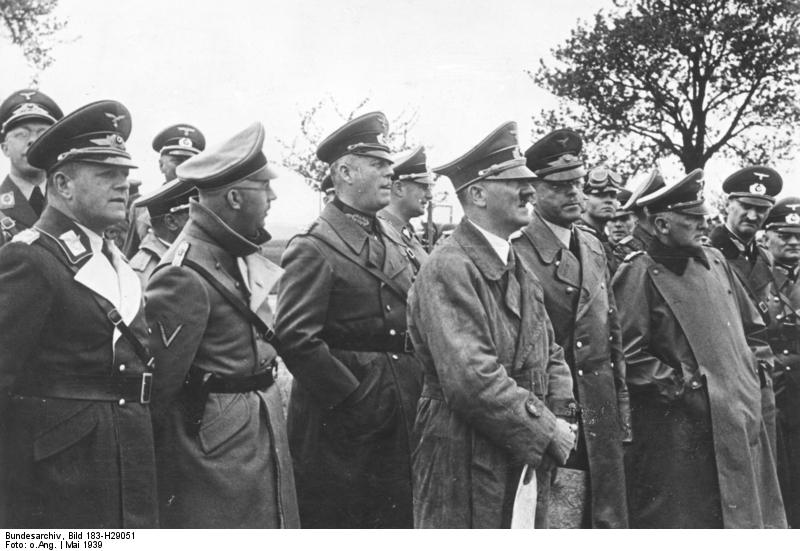
German Chancellor Adolf Hitler’s automobile trip today took him through the Saar Valley. He arrived here late this afternoon. Although Herr Hitler has visited Saarbrücken before this, it was the first time he had driven through the Saar Valley, which was returned to Germany as a result of a plebiscite in March, 1935. Today he was loudly acclaimed by the population as its “emancipator” and “protector.”
In the course of his journey Herr Hitler observed that there were numerous dangerous grade crossings in this industrial district. Therefore, he ordered Dr. Fritz Todt, constructor of the western fortifications and the Autobahnen, to attend to their elimination immediately.
Admiral Erich Raeder presented to Adolf Hitler the German Navy’s plan for conducting war against Poland in the Baltic Sea and against Britain and France in the Atlantic Ocean.
Propaganda Minister Joseph Goebbels’ newspaper, Angriff, observed that the western defense line was a “fourfold symbol of German strength and solidarity.”
“First, the west wall guarantees military invincibility in a region which only a few years ago was demilitarized and open to any attack,” said the Angriff.
“Second, it is a guarantee of peace because its strength causes even the most irresponsible war agitator to think twice.
“Third, it is a symbol of internal solidarity because it was a work joyfully accomplished by United German workers and soldiers.
“Fourth, it is a guarantee that we German workers can pursue our daily tasks without worry.”
A volunteer army of 70,000 Germans began work today on a census which will afford the Nazi regime information on which to base further regimentation of the life of the nation. One important purpose of the count, it was officially stated, is to determine exactly what callings, trades, professions or branches of labor are too scantily supplied to satisfy the needs of the nation and which ones are overcrowded from the national viewpoint.
The Rome-Berlin axis “is building a powerful chain-system from the Baltic to the Indian Ocean” and Hungary has cast its lot with that alignment because “it offers sure protection,” Foreign Minister Count István Csáky said in a speech.
Youths called up for military training under the new British conscription act will be paid one shilling sixpence (35 cents) a day during their six months’ training, the army council announced in its request for supplementary credits.
A shortage of personnel and equipment due to Britain’s vast re-armament drive has impelled authorities to shorten the Imperial Bisley shooting tournament from two weeks to one this summer.
Arthur Cardinal Hinsley, Archbishop of Westminster, headed a delegation of more than 1,000 Roman Catholics on their annual Ascension Day pilgrimage to the Shrine of Lourdes. A total of 166 members of the group were sick or crippled and were carried aboard the special trains on stretchers.
A fine of £50 or imprisonment for two months at hard labor was imposed on Rolf Heuberger, German-born engineer, convicted in Johannesburg, South Africa, of being in illegal possession of a sub-machine gun with 1,350 rounds of ammunition. Heuberger said his father sent him the gun from Germany with the suggestion he might acquire the selling rights in South Africa.
British troops patrolled strategic points throughout Palestine as part of extensive precautions to avert threatened disorders over the British governments Palestine plan scheduled to be published the next day. With the local press already printing reports of what the plan is believed to provide, both Jews and extremist Arabs expressed bitter opposition and planned demonstrations, including a twenty-four-hour Jewish strike scheduled for Thursday. Stand-by orders were telegraphed to all police posts in the country and volunteer fire brigades in Jerusalem, Haifa, Tel Aviv and Jaffa were drafted into service for the first time to use fire-fighting equipment to break up demonstrations.
Indications of the intense feelings of Jews were seen in an attempt by revisionists to lower British flags from government buildings at Tel Aviv and in signs smeared on Jerusalem shop windows saying: “We are bringing illegal immigrants into the country, if necessary, under Jewish armed guards.” The Jewish Labor Federation, the strongest body in Palestine, commanding 100,000 workers, pledged its support to central Jewish institutions to carry out any measures needed to defeat the British plan. All Jewish sports groups have their members “ready.” The Tel Aviv Municipality, which rules 150,000 in the all-Jewish city, planned to cooperate with the central body. Manifestoes signed by such groups as the “National Army Association” and “Fighters for Liberty and the Homeland” called on Jews to be ready for “any sacrifice.
In Washington today, President Roosevelt accepted the resignation of Richard C. Patterson Jr. as Assistant Secretary of Commerce, sent a letter to the Temporary National Economic Committee asking it to endeavor to solve the problem of getting stagnant capital into productive channels, sent to the Senate the nomination of Armistead M. Dobie to be Federal Judge in Virginia, discussed the political situation with F. Ryan Duffy, former Senator from Wisconsin, and said at his press conference that he had no intention of intervening in the Harlan coal controversy.
The Senate considered the bill authorizing completion of the Florida ship canal and recessed at 4:04 PM until noon on Wednesday. The Temporary National Economic Committee began its study of the flow of capital into industry. The Education and Labor Committee continued hearings on amendments to the National Labor Relations Act.
The House passed the bill to authorize each of its members to hire an additional clerk at a salary of $1,500 per year, refused the request of Representative Mary Norton that the proposed amendments to the Wages and Hours Law be returned to the Labor Committee and adjourned at 4:04 PM until noon tomorrow. The Foreign Affairs Committee received Representative Bloom’s proposed neutrality bill, and the Naval Affairs Committee rejected the request for funds for a drydock at the New York Navy Yard.
U.S. President Franklin Roosevelt appeared today to be reconciled to the probability of repeal of the remnant of his undistributed profits tax, as well as to other changes in the revenue laws insisted upon by a growing Congressional group as aids to business recovery. At his press conference he declined to be drawn into a discussion of the lively tax meeting yesterday at the White House, but said that definite progress was being made in the formulation of a tax revision program and that he planned more conversations with revenue legislation leaders within the next few days.
In answer to a correspondent’s question, the President denied emphatically that he was conducting a personal filibuster against tax revision to favor business at this session. Meanwhile, opinion seemed to be crystallizing at the Capitol along the lines laid down to the President by Senator Harrison yesterday: that Congress would address itself to the task of writing a business-encouraging tax bill this session, with or without the assistance of the Administration.
President Roosevelt today challenged the Temporary National Economic Committee at the opening of its hearings on investments and savings to provide an answer to the problem of how to get the nation’s bulging capital resources into beneficial use. Of this and related questions the President said, “I know of no more urgent ones in the country today.” Stating that “it is our task to find and energetically adopt those specific measures which will bring together idle men, machines and money,” the President hinted strongly that the Administration stood prepared to adopt the findings of the committee.
The President’s letter, dated today and beginning, “Dear Joe,” was read by Senator Joseph C. O’Mahoney, committee chairman, at a session of the committee which brought renewed statistical data from Lauchlin Currie, a Federal Reserve Board economist and one of the chief advocates of “pump priming” by the government as a supplement to deficiencies in capital outlays by private industry. A vigorous attack on the present tax structure was made by another witness, Professor Alvin H. Hansen of Harvard University.
The President’s letter follows: “In my message to the Congress Initiating the work of the Temporary National Economic Committee, I had occasion to say that “idle factories and idle workers profit no man. It may equally be said that idle dollars profit no man. The present phase of the hearings before the committee bear directly upon this problem. It is a matter of common knowledge that the dollars which the American people save each year are not yet finding their way back into productive enterprise in sufficient volume to keep our economic machine turning over at the rate required to bring about full employment. We have mastered the technique of creating necessary credit; we have now to deal with the problem of assuring its full use.
“In the series of hearings which the Securities and Exchange Commission is to hold before your committee, I take it that a major problem of your committee will be to ascertain why a large part of our vast reservoir of money and savings have remained idle in stagnant pools. Is it because our economy is leaving an era of rapid expansion and entering an era of steadier growth, calling for relatively less investment in capital goods? Is it because of lag, leak and friction in the operation of Investment markets which pervert the normal flow of savings into nonproductive enterprise? These are questions for your committee to answer. I know of no more urgent ones in the country today.”
The first food stamps in United States history were distributed in Rochester, New York.
A new clerk for each of the 435 members of the House of Representatives was voted today by the membership after a hilarious debate in which they were admonished by Representative Warren, Democrat, North Carolina, to use a “minimum of demagoguery.” Representatives Taber of New York and McLean of New Jersey, Republicans, attempted vainly to obtain a roll-call vote on the proposal, but they were able to get only thirty-five members to rise, far less than the one-fifth required to put the House on record. On a standing vote, Speaker Bankhead announced the bill had passed by a vote of 237 to 95. It now goes to the Senate.
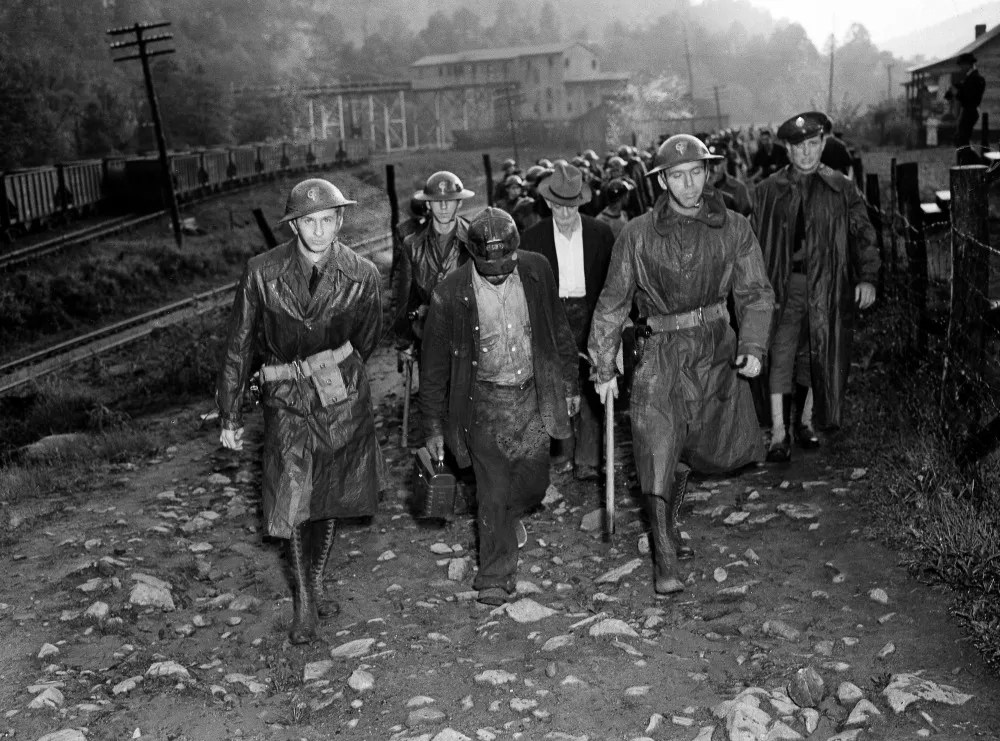
Harlan County CIO leaders sought President Roosevelt’s intervention today in the coal mining crisis here and told him that they had warned the county’s civil authorities that if troops and machine guns were not removed from the highways within twenty-four hours the men “would take them themselves.” County Judge C. E. Ball, who confirmed union charges that he owned land and stock in two mines now operating under the supervision of the Kentucky National Guard, said that he had not the slightest intention of seeking the removal of the troops now on guard at twenty-two mines.
In Washington, President Roosevelt said that he would not act in the Harlan County trouble. Although there were no casualties during the second day of mine operations under National Guard supervision, the situation remained ominous. William Turnblazer, president of Harlan District 19 of the United Mine Workers, said late in the day that he had sent a telegram to Governor Chandler, who ordered the troops into the county, inviting him to address a mass meeting of Harlan miners on Sunday. Negotiations between CIO leaders and officials of the Black Mountain Corporation at Kenvir and with the Perkins-Harlan Coal Company of Liggett were discontinued until Monday. The union men were hopeful that they could obtain a signed contract from one or two companies and thus break the united front that the operators have been able to maintain.
At mine-shaft openings in gloomy, rock-shadowed ravines, cold-eyed, jeering miners faced the National Guardsmen, many of them nervous young recruits. The Harlan Coal Operators Association had refused to sign the agreement which ended the bituminous coal strike in the rest of the Appalachian region last week. The mine owners stood by their earlier declaration that they would not be a party to any agreement which forced any miner to join John L. Lewis’s United Mine Workers of America if he did not want to do so.
Four hundred additional National Guardsmen were ordered today to be ready to move where needed in the Harlan area with peace negotiations between soft coal operators and miners at a standstill at least until Monday. Brigadier General Ellerbe Carter, in command of the State troops ordered here by Governor A. B. Chandler as mines closed since March 31 opened, said the 400 more soldiers had not been called to duty, but “alerted” for possible quick movement. There are almost 800 militiamen here.
A four-man board of inquiry was to investigate today the crash of the K-2, the Navy’s newest and largest non-rigid airship, which struck a tree while landing at the naval air station after an overnight observation flight. Commander Jesse L. Kenworthy and a crew of eight men escaped injury yesterday when the blimp collapsed on the field after branches of the tree had punctured the helium-filled gas bag of the ship. Kenworthy said damage was slight and the K-2 could be repaired at little cost.
Over his protest, Mayor Fiorello H. La Guardia today was reelected unanimously as president for the fourth term of the United States Conference of Mayors. Mayor Edward J. Kelly, of Chicago, who had been slated for the office, took the floor and proposed the reelection.
American Booksellers Association speakers urge booksellers to reduce prices. Books are as life-giving as food and water, one says, and should therefore be as common.
A crowd of 15,109 watch the first American League night game played at Shibe Park, with Cleveland beating the A’s 8–3 in 10 innings. Johnny Humphries is the winner over Roy Parmalee.
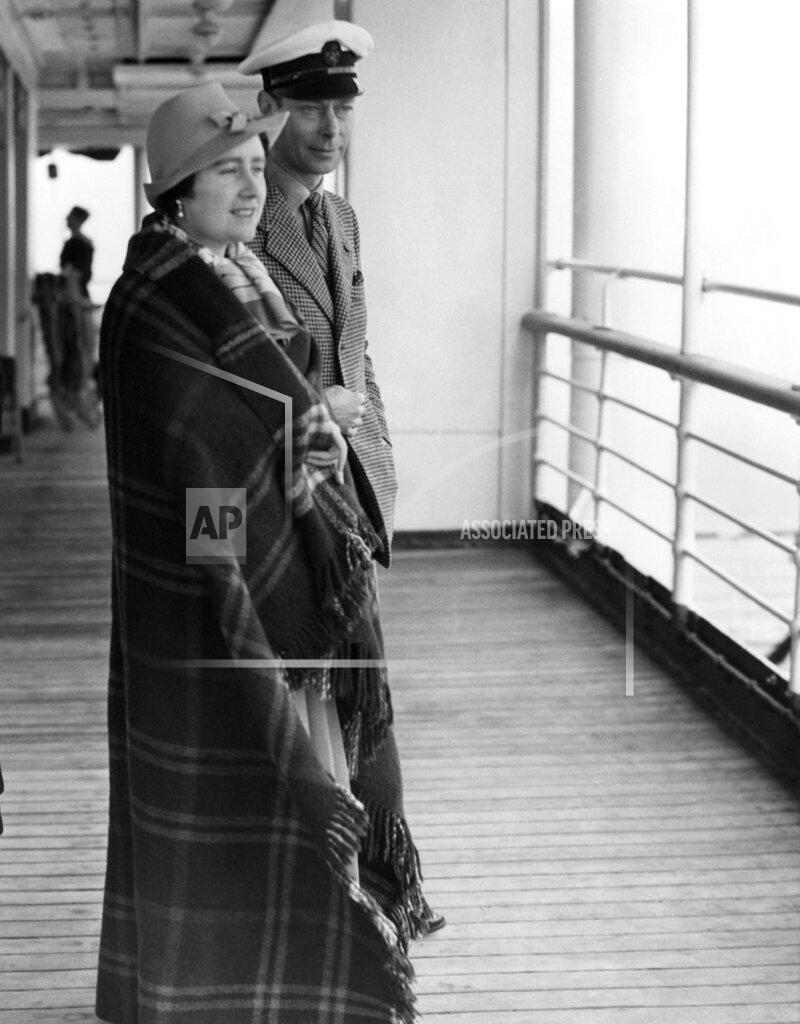
The steamship Empress of Australia, bearing the King and Queen of Great Britain, dropped anchor at 11:30 tonight off the town of St. Jean on the Ile d’Orleans, about twelve miles downstream from Quebec City, citadel-crowned ancient capital of French Canada. St. Jean is a signal station out of sight of Quebec. Not until tomorrow will the French-speaking subjects of King George VI and Queen Elizabeth have an opportunity to express their fealty and their enthusiasm for this, the first visit of a ruling English sovereign to any dominion in the British Commonwealth of Nations.
As the white liner, serving as a royal yacht, came to her anchorage police boats swept the broad St. Lawrence clear of all other traffic. Tankers, liners, freighters, tugboats, and small power craft all were held motionless along shore as a precaution against accidents. The liner will lay at anchorage until about 7 o’clock tomorrow morning, then will proceed to Wolf’s Cove for the debarkation of the royal visitors at 10:30. Until they land, river traffic will be paralyzed.
Argentina bans foreign political parties and dissolves the German Nazi party. Argentine President Roberto M. Ortiz has issued a decree making mandatory the dissolution of the German Nazi party and all other political organizations in Argentina which are directed from abroad.
Japanese authorities rejected today a demand by the Municipal Council of the International Settlement of Kulangsu Island, off the port of Amoy, for withdrawal of Japanese who invaded the foreign area there Friday. At the same time the Council appealed to foreign powers concerned, chiefly the United States and Great Britain, for aid in the crisis arising from the invasion.
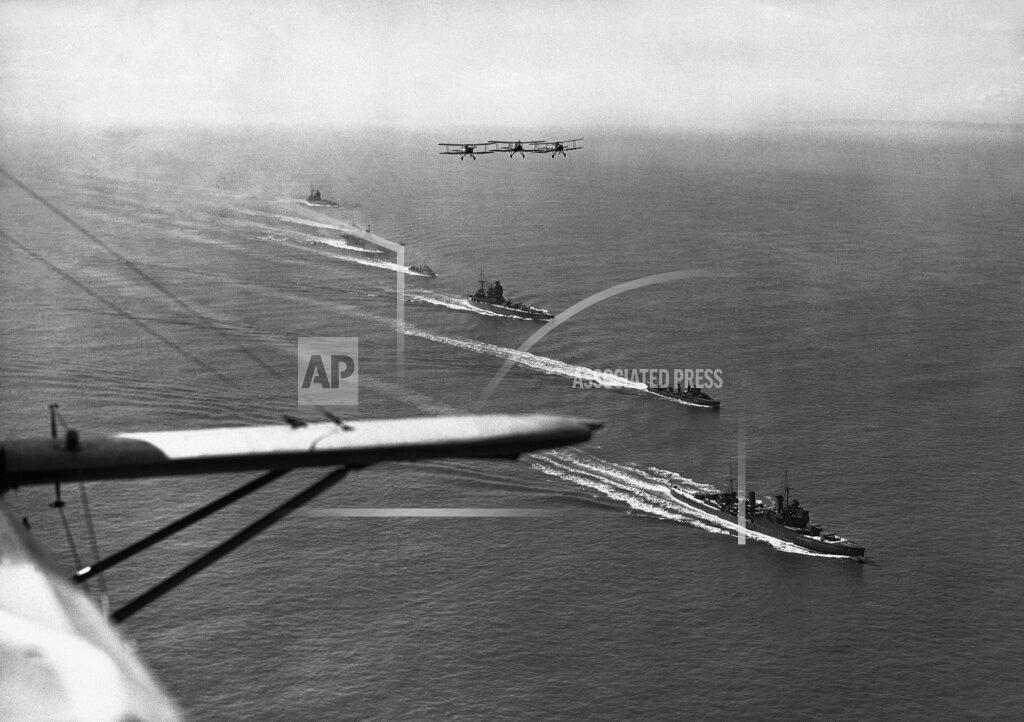
Concern of American and other foreign officials was shown in the dispatch of four British warships and the United States cruiser USS Marblehead to Amoy. The Marblehead was expected to arrive there tomorrow, joining the United States destroyer USS Bulmer, which had been sent previously. Foreign observers speculated on whether British and United States detachments would land at Kulangsu to checkmate desires of the Japanese for a lone hand in that settlement’s administration.
Japanese pressure against the International Settlement at Shanghai meanwhile continued unabated. A Japanese spokesman indicated that thus far Tokyo had failed to receive replies to demands upon the United States and Great Britain that the Settlement’s laws be altered to give Japanese a greater voice in its government. The Shanghai Settlement’s Municipal Council appealed to foreign consuls for support in the newest incident, asserting that the arrest of five Chinese in the Settlement by Japanese detectives Saturday was in violation of the agreement under which the Settlement was established.
Foochow, Fukien Province port, which was razed last year by Japanese bombs and later partly restored, has been devastated again by Japanese bombing, as have Changchow, Tungan, Chihmei and Chuanchow, also on the Fukien coast. A Japanese naval attack on Sungsu, opposite Amoy, ceased on the arrival of the British warship HMS Birmingham on an investigation mission. Kwangchowwan and the vicinity were bombed to cut off supplies from French territory. Japanese reinforcements have arrived in South China. It is expected they will seek to repulse guerrillas and start a drive in Kwangsi Province.
Chinese military authorities reported today that, after a bitter fight, the Chinese had recaptured Yochow, in Northeastern Hunan Province, 100 miles southwest of Hankow and eighty miles north of Changsha, Hunan capital. The report could not be verified through independent channels, and foreign observers were inclined to doubt that the Japanese had lost this Yangtze River foothold.
The Chinese asserted today that the situation in Northern Hupeh and Southwestern Honan had been stabilized as a result of Chinese reoccupation of Sinyeh and Tangho, in Southwestern Honan, combined with unyielding Chinese resistance along the semi-circular main battle line, extending from Tungpeh in the north through Suihsien to Chunghsiang on the west.
A Chinese military spokesman explained that the recent Japanese threat to Siangyang had been caused by a remarkable foray by a detachment of 2,000 Japanese cavalrymen, who struck north from Chunghsiang, swept 100 miles into Chinese territory, veered east and took Sinyeh and Tangho, then abandoned these when attacked from Nanyang, and retired southeast of Tungpeh. The spokesman said there was bitter fighting in Northern Hupeh, with heavy casualties.
An appeal for reinforcement of the national unity and intensification of the will to resist was the answer given to the widespread Japanese air bombardments of Chinese cities by Generalissimo Chiang Kai-shek in a message to Chinese civilians and to provincial and municipal governments.
General Chiang declared the Japanese bombed residential districts throughout the country on more than fifty occasions last month and that, although the Japanese had tried to convince the world that their aerial operations had been confined to Chinese military establishments, “the world is not deceived.” He asserted that the object of the Japanese raids was to terrorize the Chinese people into submission, to destroy productive enterprises and the people’s means of livelihood and to create confusion in the Chinese rear.
“The enemy fully realizes that the foundation of China’s national salvation is built on the masses and that to annihilate the Chinese race the lives of the Chinese people must first be destroyed,” he declared. “Hence the slaughter of civilians in Chungking and other places from the sky.”
Dow Jones Industrial Average: 129.86 (-2.79).
Born:
Jochen Heisenberg, German physicist specializing in nuclear physics, and Professor Emeritus of Physics at the University of New Hampshire, son of Nobel Prize-winning physicist Werner Heisenberg, in Germany.
Naval Construction:
The U.S. Navy destroyer USS Benson (DD-421), lead ship of her class of 30, is laid down by the Bethlehem Shipbuilding Corp. (Quincy, Massachusetts, U.S.A.).
 History Diaries