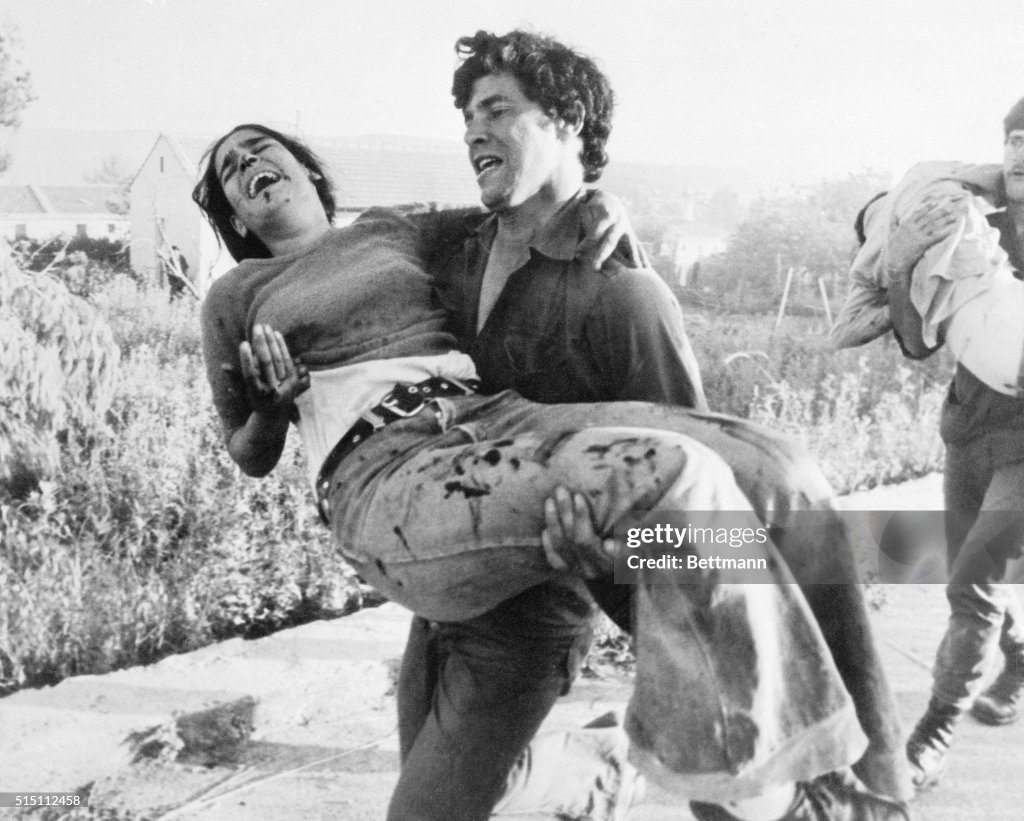
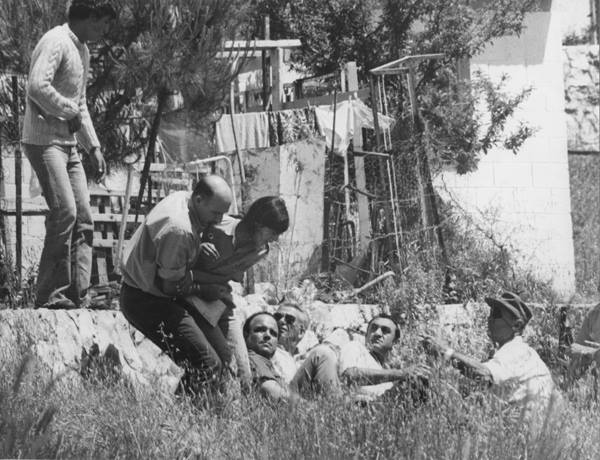
Arab guerillas seized an Israeli school near the Lebanese border before dawn today, captured about 100 children and threatened to kill them unless the government agreed to release imprisoned Arab guerrillas. The band of guerrillas, striking from Lebanon, ambushed a car carrying Israeli Arabs, killed a woman and wounded 10 persons before occupying the school of Ma’alot Moshav kibbutz in the mountains five miles south of the Lebanese border and 10 miles inland from the Mediterranean. They set a deadline of 6 PM, (noon New York time) for the release of the prisoners. Security forces surrounded the building. Officials said they believe at least four Arabs were inside. The two‐story school building normally would have been empty. But officials said that the children, from the nearby town of Safad, were visiting the settlement and were sleeping in the school.
An attempt by Israel’s Sayeret Matkal to free 115 hostages, most of them students at the Netiv Meir Elementary School in Ma’alot-Tarshiha, resulted in the deaths of 25 captives and the injury of 68 others. All three of the terrorists, members of the Democratic Front for the Liberation of Palestine who had crossed over from Lebanon into Israel, were killed. Prior to seizing the school, the terrorists had killed five other civilians. The Israeli attack on the school came shortly before a 6 PM deadline set by the guerrillas to blow up the school. The next day, Israeli planes retaliated by bombing Palestinian targets in Lebanon, killing more than 20 people.
Addressing her nation over television, Premier Golda Meir pledged that Israel would do everything possible to guard against future terrorist attacks. Confirming that the government had reversed a long-standing policy against negotiating with terrorists, Mrs. Meir said a deal to release 23 prisoners in exchange for hostages had broken down because of confusion.
The Ma’alot attack forced Secretary of State Kissinger to suspend his shuttle diplomacy, and both Israeli and American officials felt the events would probably impair Mr. Kissinger’s quest for compromise on an Israeli-Syrian disengagement agreement.
The Israeli people reacted to the events at Ma’alot with a bitterness that some felt could be translated into political pressures that might endanger peace initiatives in the Middle East.
Soviet Premier Alexei N. Kosygin welcomed visiting Libyan Premier Abdel Salam Jalloud and at the same time condemned “half-measures” in the Middle East, attacking mediation efforts of U.S. Secretary of State Henry A. Kissinger. The remarks echoed comments a month ago by Soviet party chief Leonid I. Brezhnev deploring partial solutions or artificial settlements.
North Vietnamese troops launched a night ground attack on isolated Đắk Pék Camp, 300 miles north of Saigon, in an attempt to take the former U.S. Green Beret camp. Officers said the camp is in imminent danger of falling, although it might be able to hold out for at least a day or two. Field reports said Đắk Pék artillerymen lowered barrels of their guns and fired directly into charging North Vietnamese troops.
Communist gunners sank an ammunition barge today and set afire two other vessels in an attack on a Mekong River convoy. The port police said three crewmen had been killed and 15 wounded, all of them aboard the South Vietnamese tanker Vitt Long and all believed to be Vietnamese. The crewmen of the sunken barge were rescued unhurt by Cambodian escort boats. The value of the American‐supplied munitions was $1.5‐million, the United States Embassy said. The tanker and a second one-ton ammunition barge were set on fire. The barge fire was put out quickly, but the tanker was badly damaged. It had to be towed into Phnom Penh. The rest of the convoy made it to the city by nightfall.
The attack occurred as the 27‐ship convoy steamed up narrow channel at Peam Chor, 34 miles south of Phnom Penh, where the Mekong is less than a quarter mile wide during the current dry season. The convoy originated in South Vietnam. It included five freighters, five tankers, eight ammunition barges and nine smaller barges carrying rice. The Mekong River is the chief supply route for Phnom Penh and for Government forces. The only other regular supplies come in by air, since all major highways are blocked most of the time by Communist troops.
Three B-52s took off from Thailand as the United States began a scheduled cutback to about half its 50-bomber force there by the end of the year. At the same time a squadron of 18 A-7 Corsair attack aircraft — part of a force of nearly 300 fighter-bombers — began leaving. The withdrawal is part of a plan to reduce U.S. military manpower in Thailand now about 35,000-by one-third.
Beginning of the Ulster Workers’ Council strike called by Ulster loyalists and unionists who were against the Sunningdale Agreement, which proposed the sharing of political power with Irish nationalists
Squads of Protestants wielding clubs roamed through Northern Ireland towns, threatening shopkeepers and workers with reprisals unless they supported a general strike. Near Newry, British troops shot and killed two men believed to be Irish Republican Army bomb-makers. Extremist Protestants called the strike after the province’s assembly voted to continue talks on ratification of an agreement among Britain, Northern Ireland and the Irish Republic to set up a Council of Ireland.”
Ian Ball, 26, a former mental patient accused in the gun attack against Britain’s Princess Anne March 20, was ordered to stand trial next Wednesday in London on six charges of attempted murder and kidnapping. The attacker wounded Anne’s bodyguard and chauffeur, a journalist and a policeman but the princess was unhurt.
The Liberal minority government of Danish Premier Poul Hartling averted a threat of being voted out of office when he agreed to a compromise with holdouts in the opposition Progressive Party over controversial tax legislation. The compromise would lower income taxes but sharply raise levies on imported goods and luxury items. The Progressives control enough seats in parliament so that their support gives Hartling the necessary votes to survive any confidence motion.
In a demonstration of firm solidarity between West Germany’s two governing coalition parties, Walter Scheel was easily elected to the largely ceremonial office of President by the presidential electoral college. The 54‐year‐old Mr. Scheel, who has been Vice Chancellor and Foreign Minister in the coalition Government since 1969, won a comfortable majority‐530 of the 1,036 votes in the presidential electoral college on the first ballot. The fourth President since the formation of the West German Federal Republic in 1949, he is the first to be chosen so easily. It was clear that despite bickering and fears of a revolt by some Social Democrats because of the resignation of their leader, Willy Brandt, from the chancellorship last week in the wake of a divisive spy scandal, the coalition was holding firmly together. There were only five abstentions and three absences. Mr. Scheel’s opponent, Richard von Weizsacker, received 498 votes, three fewer than his Christian Democratic backers had in theory.
General António de Spínola took office as President of Portugal and named a left-leaning government pledged to establishing democratic rule. Hours after being sworn in, Spinola named Adelino da Palmas Carlos as Prime Minister of a cabinet that included Communists for the first time in Portugal’s history, with Avelino Pacheco Goncalves as Minister of Labor and Communist Party Chief Alvaro Cunhal as a minister without portfolio.
Pope Paul VI expressed “astonishment and pain” over the referendum upholding the Italian divorce law, but he said that no vote can change the law of God and the church. In his first public reaction to the referendum, the Pontiff also chided priests who publicly supported the divorce law and said he assumed that they “did not fully take account of the seriousness of their action.”
Three cities in India were partly paralyzed as journalists, longshoremen and transport workers stopped work in sympathy with railroad men who had been on strike for a week. Bombay, Calcutta and Madras felt effects of the walkout but over most of the nation workers failed to heed a call for a general strike. The government, meanwhile, broke off pay talks with the railroad men until they end their strike.
By the margin of a single vote, 47 to 46, the U.S. Senate tabled further discussion of an amendment to the $25 billion education funding bill that would have required an end to desegregation busing to achieve racial integration in U.S. schools receiving federal funding. After defeating the amendment, the Senate approved a much more limited anti-busing provision that would bar the busing of children between two districts, only one of which is in compliance with a court order to desegregate.
Democratic members of the House voted overwhelmingly to force a yes-or-no floor vote on the immediate termination of the oil industry’s 22 percent depletion allowance. The action by the Democratic caucus brought repeal of the depletion allowance closer than it has ever been.
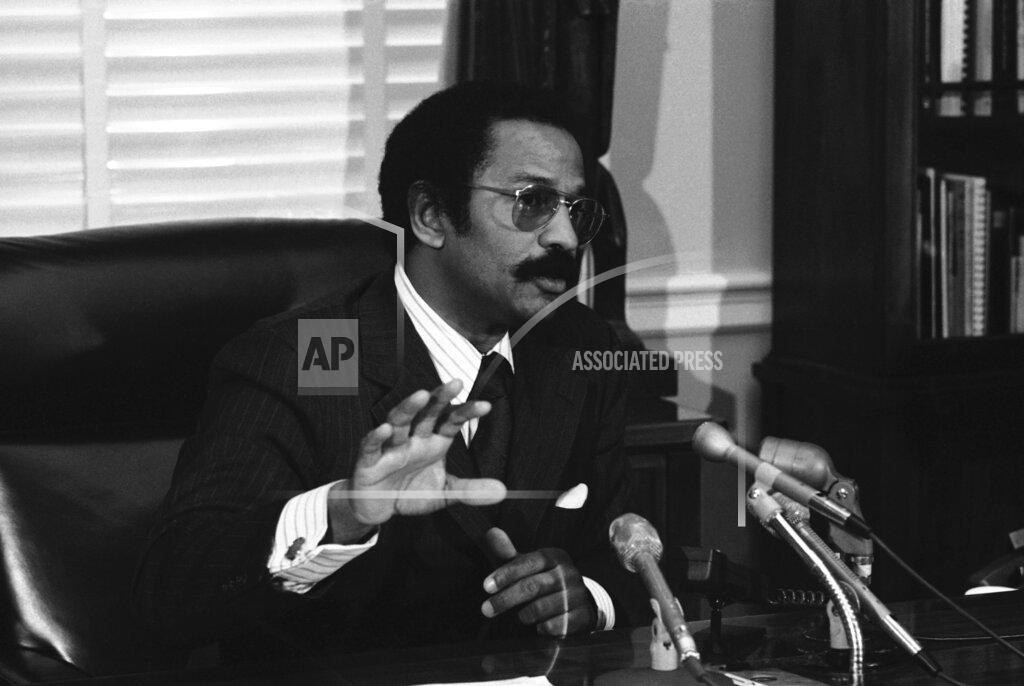
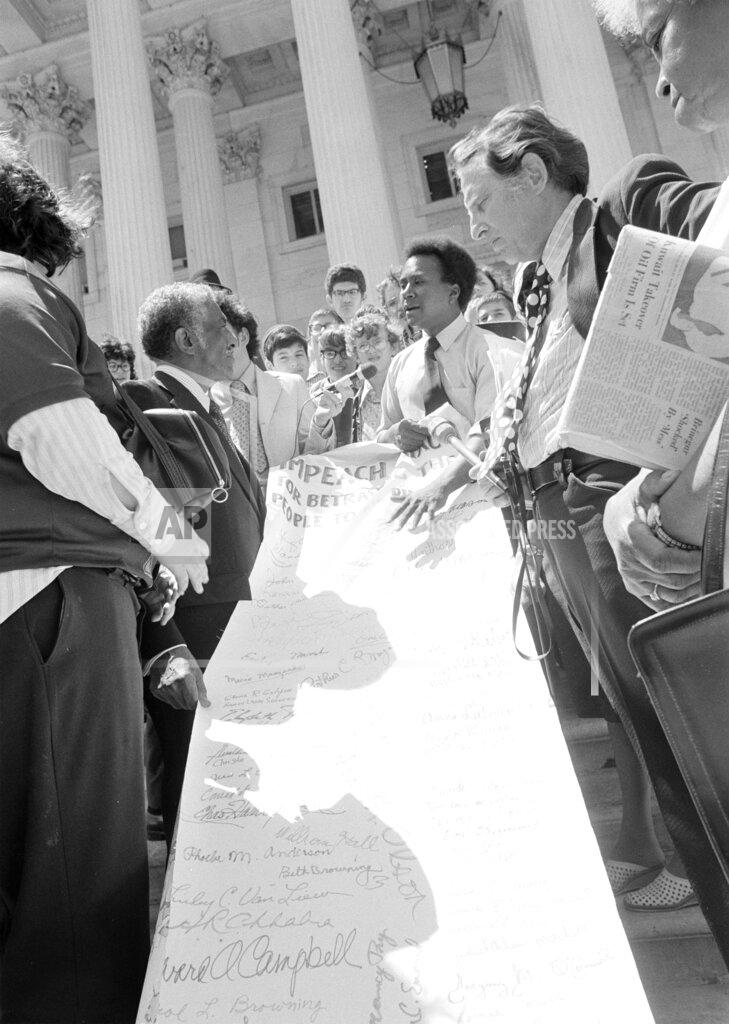
Amid charges by some members that significant portions of President Nixon’s Watergate conversations had been omitted from edited White House transcripts, the House Judiciary Committee issued two new subpoenas for additional tapes and documents. The subpoenas give the President a week to provide the committee with tapes of 11 conversations and of White House diaries of the President’s meetings over more than eight months in 1972 and 1973.
The subpoenaed tapes of the 11 presidential conversations could provide concrete evidence of the President’s actions on three critical phases of the Watergate case — whether the President knew of the intelligence-gathering scheme that led to the break-in; how much his aides told him immediately after the burglary, and his motives for limiting the investigation.
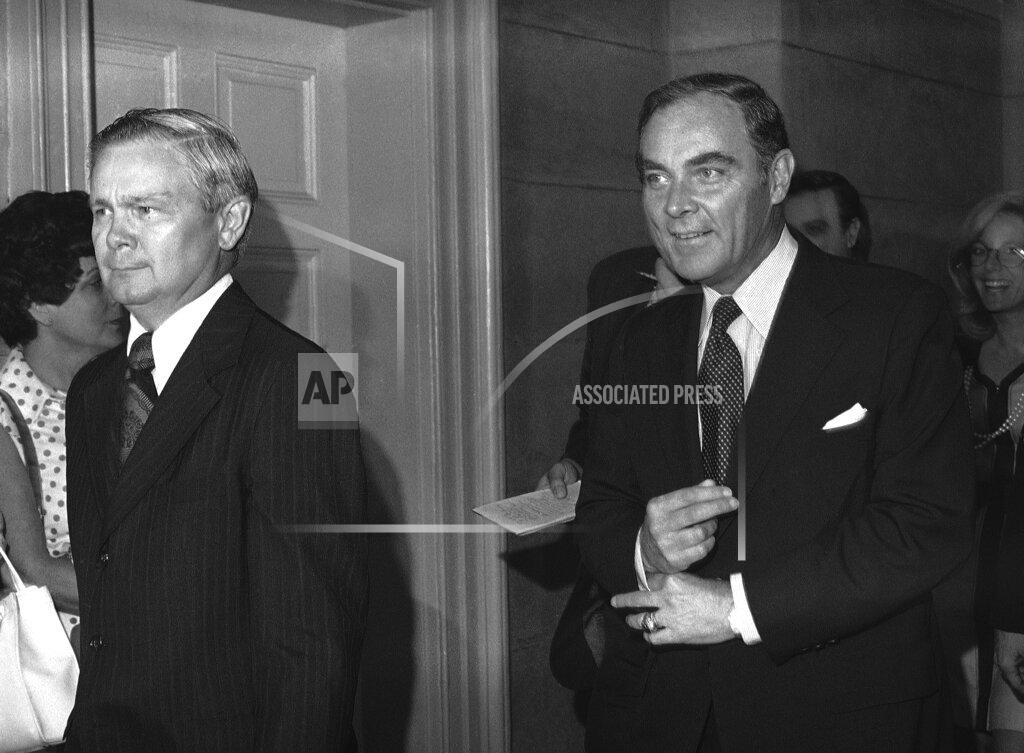
General Alexander Haig, President Nixon’s chief of staff, reportedly told the Senate Watergate Committee that he had been warned a year ago that a federal investigation of a mysterious $100,000 contribution from Howard Hughes could embarrass the President. Sources familiar with the testimony in the secret session said that General Haig had identified Secretary of the Treasury Simon, then a Deputy Treasury Secretary, as the source of the warning.
President Nixon’s former appointments secretary, Dwight Chapin, was sentenced to from 10 to 30 months in prison for lying to a federal grand jury about political espionage in the 1972 campaign.
The Justice Department announced it had notified the courts of its intention to appeal a decision which permitted William L. Calley Jr. to be freed from confinement. U.S. District Judge J. Robert Elliott set bail for the former Army lieutenant and then freed him on his own recognizance in February. Calley was sentenced originally to life imprisonment in March, 1971, for the murder of 22 Vietnamese villagers at Mỹ Lai. The sentence subsequently was reduced to 10 years and he was given a dishonorable discharge May 6.
Efforts to have the Federal Communications Commission prohibit newspapers from owning local radio and television stations are being intensified by the Justice Department. In a filing with the FCC, antitrust division attorneys urged the commission to phase out so-called cross-ownerships over a five to eight-year period by denying license renewals. About 100 joint newspaper-radio-TV ownerships would be affected. The FCC has had new cross-ownership rules under consideration since 1970 but they were dormant until last March.
Democratic members of the House of Representatives voted overwhelmingly today to force a straight yes‐or‐no vote in the House on immediate termination of the 22 percent depletion allowance for the oil industry. The action by the House Democratic Caucus, though technically only on a procedural matter, brought repeal of the depletion allowance closer than it has ever been in its 50‐year history. The vote in the caucus came about after weeks of intensive strategy planning, lobbying and nose‐counting masterminded by three organizations: the American Federation of Labor and Congress of Industrial Organizations, Ralph Nader’s tax reform research group and Common Cause, the citizens lobby.
Unions representing 750,000 telephone workers sought big pay hikes in negotiations free from wage guidelines for the first time in nearly three years. The outcome will have a major economic impact and give an indication of the size of future wage settlements. Talks began with American Telephone & Telegraph Co. agents meeting with three separate union bargaining committees in Washington, D.C., to discuss national issues. Across the country, company and union bargainers from the various Bell systems met on local issues. Specific bargaining goals were not made public. Some Bell contracts expire July 17, others run until September 2.
A federal judge, trying to avoid a mistrial, offered two American Indian Movement leaders a compromise by agreeing to let them share in their own defense if they would not fire their six attorneys. Dennis Banks, a Chippewa, and Russell Means, an Oglala Sioux, are charged by the government with a series of felonies arising from the 1973 armed takeover of Wounded Knee, South Dakota. Banks told U.S. District Judge Fred Nichol, presiding in St. Paul, Minnesota, that he thought the offer was a “productive proposal.” He added, “Both Russell and I think we can do the job against the government.”
Medical researchers have developed a spray vaccine against “strep throat” that they say can lead to a reduction in the serious diseases that children sometimes contract afterwards. The vaccine was developed by Dr. Eugene N. Fox, a microbiologist at La Rabida Children’s Hospital and Research Center in Chicago and the University of Chicago. It is considered important because it can lead to reduction in rheumatic heart, kidney and other serious illnesses. The vaccine, however, will not be generally available until further tests are done.
The Marine Corps, faced with a congressional requirement to find more high school graduates, was able to recruit only 45% of its goal last month, the Pentagon reported. It was thought that the figures for May and perhaps June will indicate even greater shortages.
There should be a realignment of Republicans and Democrats into Conservative and Liberal parties. And if that ever happens, he will switch from the Republicans to the Conservatives, said Senator Jesse A. Helms of North Carolina, who was a Democrat until he switched in 1972. He said conservatism was on the rise, “even after one of the greatest campaigns of smear and slander against conservatives in the history of the nation.” Helms, a staunch Baptist, scoffed at the “whole affair of the tapes,” which he said might be summed up by Clark Gable’s immortal line in “Gone with the Wind,” “Frankly, my dear, I don’t give a (expletive deleted).”
It was a scene no one would have forecast a few years ago. Alabama Governor George C. Wallace and the Reverend Ralph David Abernathy shared a stage in Montgomery and shook hands after each had been awarded an honorary doctorate of law from predominantly black Alabama State University. It was the school’s 100th anniversary celebration and coincidentally the second anniversary of the assassination attempt that cost Wallace the use of his legs. “Thank you for your prayers and thoughts two years ago on this date,” Wallace told the crowd and added, “I’m getting along fine.” Mr. Abernathy, a graduate of the school, did not speak. But Carl T. Rowan, newspaper columnist, former U.S. ambassador to Finland and a Black, did. After receiving his honorary doctorate, he remarked: “I like crossing the state line into Alabama today a hell of a lot better than I did 17 years ago.”
The first game of the 6-team National Lacrosse League, the first professional box lacrosse circuit in North America, was played as the NLL made its debut before 9,120 fans at The Forum in Montreal. The Montreal Quebecois defeated the visiting Toronto Tomahawks, 14 to 8. John Davis of the Quebecois made the league’s first score, 13 seconds into the game, with a shot past Tomahawks goalie Ron Thomas. In addition to the two Canadian franchises, the NLL had four U.S. teams: the Maryland Arrows, the Philadelphia Wings, the Rochester Griffins and the Syracuse Stingers.
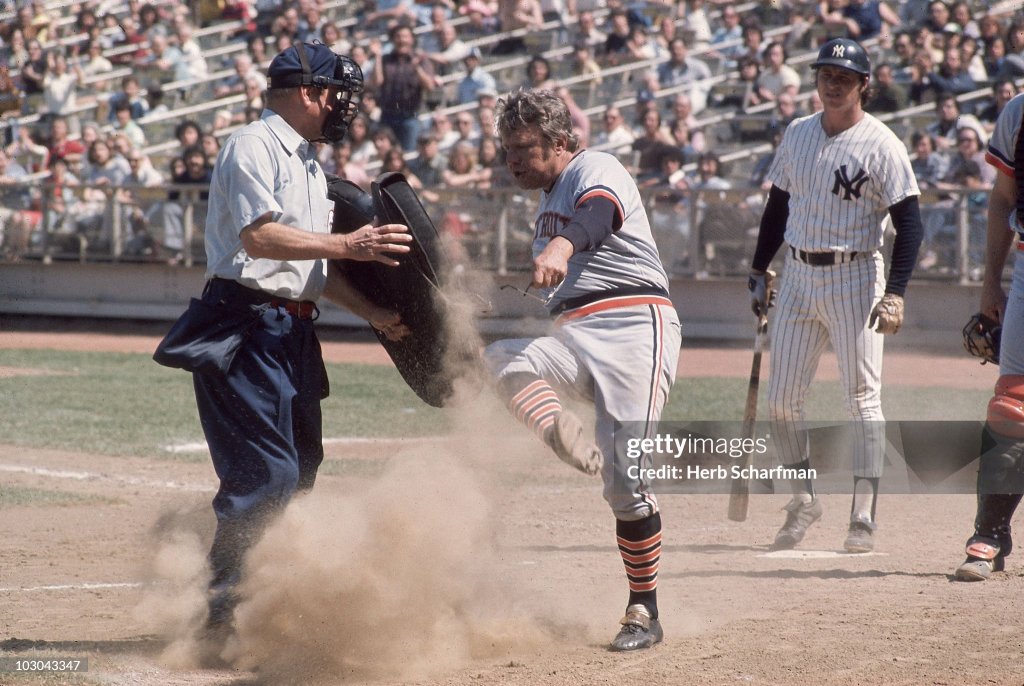
At Riverfront Stadium, Cincinnati Reds pitcher Roger Nelson has his no-hitter broken up by Bobby Bonds, who clubs a 2-run homer for San Francisco in the 8th. Chris Speier homers in the 9th for the other Giants hit and Nelson finishes with a 4–3 win. The Giants skipped a batter in the eighth inning. In the sixth inning, Bobby Bonds pinch-hit for the pitcher. He stayed in the game in the ninth spot in the order and the new pitcher batted in the first spot. The next time around the order, Bonds homered and Tito Fuentes hit for the pitcher. Mike Phillips should have batted next but Garry Maddox, the number three hitter, came to the plate instead and made an out. The Reds said nothing in this case and eventually won the game.
Stan Bahnsen pitches a 2-hitter for the White Sox, beating the Twins, 1–0. Bobby Darwin has Minnesota’s first hit with 2 out in the 8th.
Dow Jones Industrial Average: 846.06 (-1.79, -0.21%).
Born:
Russell Hornsby, American television and film actor (“Grimm”; “Fences”), in Oakland, California.
A. J. Hinch, Tean USA and MLB catcher (Olympic bronze medal, 1996; Oakland A’s, Kansas City Royals, Detroit Tigers, Philadelphia Phillies), in Wavely, Iowa.
Jennifer Rizzotti, College and WNBA point guard (Women’s Basketball Hall of Fame, 2013; NCAA Champions-U Conn, 2015; WNBA Champions-Comets, 1999, 2000; University of Connecticut; Houston Comets, Cleveland Rockers) and coach (George Washington University), in White Plains, New York.
Chris O’Sullivan, NHL defenseman (Calgary Flames, Vancouver Canucks, Mighty Ducks of Anaheim), in Dorchester, Massachusetts.
Died:
Lieutenant-General Guy Simonds, CC, CB, CBE, DSO, CD, 71, English-born commander of the Canadian Armed Forces in World War II
Harrison M. Sayre, 79, co-founder of My Weekly Reader magazine.
Paul Gonsalves, 53, American jazz saxophonist in Duke Ellington’s band, died of complications from narcotics abuse, 9 days before Ellington’s death.



 History Diaries