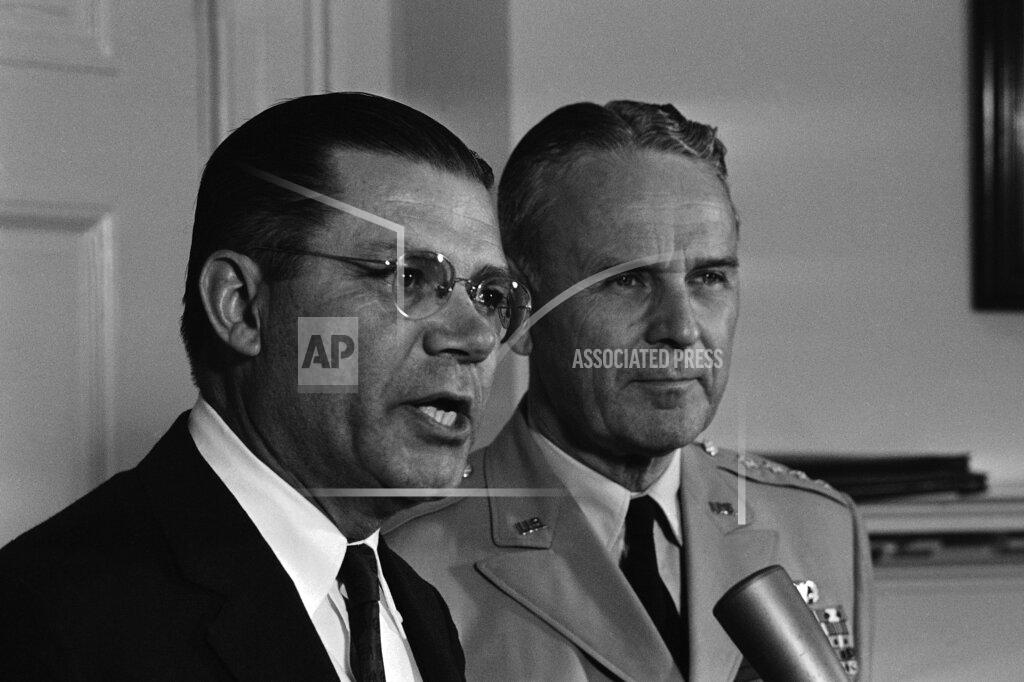
Defense Secretary McNamara, returned to Washington, presents a plan to President Johnson calling for increased aid to South Vietnam. Secretary of Defense Robert S. McNamara laid before President Johnson today a new plan for increased military and economic support for South Vietnam. Accelerated Communist activity will require expanded United States support, particularly to increase the size of the South Vietnamese Air Force, Mr. McNamara said at a news conference after reporting to the President. This may require modest increases in the number of United States training personnel in South Vietnam, he added.
The Defense Secretary repeated earlier predictions of ultimate victory against the Communist insurgency. “But I want to emphasize it is not going to come soon,” he said. “This is not that kind of war. This is a war for the confidence of the people and the security of those people, and that kind of war is a long, hard war.” The Defense Secretary and General Maxwell D. Taylor, Chairman of the Joint Chiefs of Staff, reported to President Johnson and his aides for one- and one-half hours, shortly after returning from their Saigon mission. It was Mr. McNamara’s fifth trip to Vietnam. Mr. McNamara, with General Taylor by his side, afterward met reporters in the Fish Room of the White House. He said that the Communists in Vietnam had increased their terrorist activities in recent weeks, and explained that his proposals for increased support to the Government of Nguyen Khanh were being considered.
He noted that this might involve sending more American troops. Additional meetings with the President on the topic have been scheduled for tomorrow and the next day, Mr. McNamara said. The United States withdrew 1,000 men from South Vietnam at the end of last year, leaving 15,500. Two military police units are due to be returned, however, in addition to more training personnel for the Air Force.
The role of United States military forces in South Vietnam is officially characterized as the providing of training and logistical support. United States pilots and ground soldiers go into the combat zones, however, and are authorized to fire when fired upon. According to the latest official estimates, 128 Americans have been killed by hostile action in South Vietnam since January 1, 1961. In addition, 87 casualties have been suffered in actions not attributed to the enemy. The number of wounded is officially estimated at 854 and nine persons are missing.
A Việt Cộng battalion wipes out an ARVN relief force, 20 miles north of Saigon; 54 ARVN are killed and 50 wounded. (The next day, a U.S. military adviser, referring to this incident, says ‘we make the same mistake all the time.’) In one of the most disastrous routs of the war this year, 51 government troops were confirmed killed and an uncounted number wounded, the Defense Ministry said today. The ambush followed Communist attacks on three outposts and a village north of Saigon. Troops sent to reinforce the defenders were attacked from positions along the roadside. United States spokesman said full details were not known, but it appeared to be a stunning loss for the South Vietnamese government.
The Defense Ministry also reported that Việt Cộng guerrilla units rounded up 100 civilians near Tây Ninh, southwest of Saigon, and took them into Cambodia.
The most striking fact about the fifth trip to South Vietnam of Secretary of Defense Robert S. McNamara was that he had to wrap himself in bulletproof vests to drive through the streets of Saigon. This, as much as anything reported by the Secretary, underlines the serious state of the United States‐Vietnamese war effort under Premier Nguyen Khanh. Mr. McNamara never had to adopt such rigid security measures in the Vietnamese capital before. In the view of at least one long‐time resident of Vietnam, the elaborate security precautions taken for the Defense Secretary — occurring in the very center of Government authority — represent a propaganda gain for the Việt Cộng, or Communist guerrillas. In Asian eyes, they represent a loss of face for the Secretary. And they help to create doubt in the average Vietnamese about his Government’s ability to provide him with adequate protection. And in a war for men’s minds and confidence, such a psychological setback is of more than passing importance.
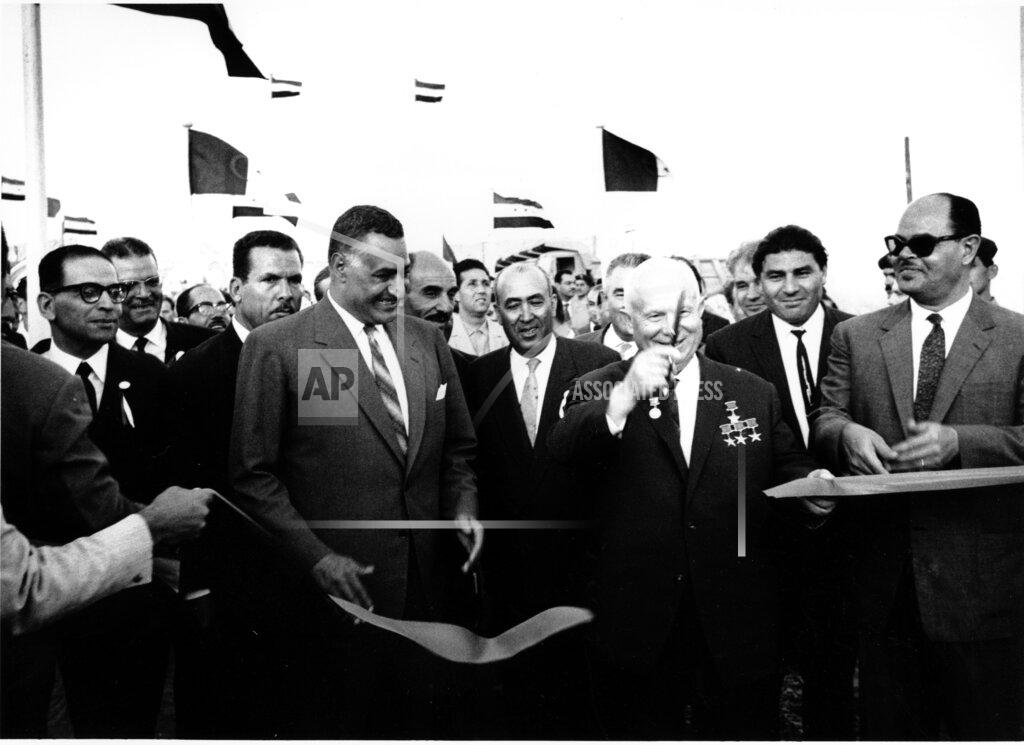
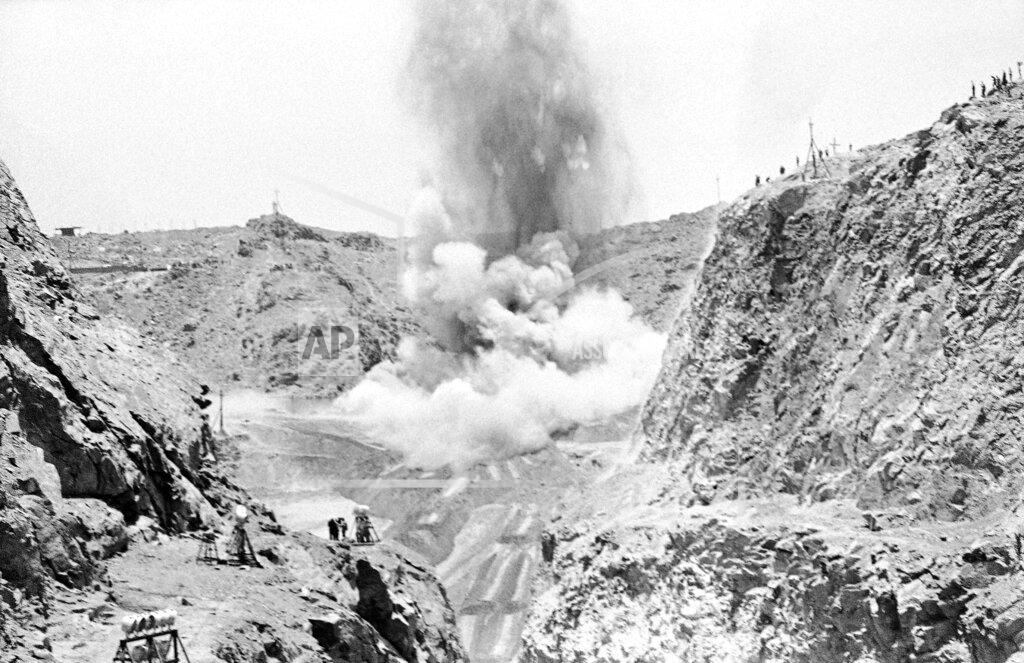
At the Egyptian city of Aswan, United Arab Republic President Gamal Abdel Nasser and the Soviet Union’s Prime Minister and Party First Secretary Nikita Khrushchev jointly pressed a button that set off a 352-pound charge of dynamite, destroying “a plug of sand and rock” and diverting the Nile River into canal to complete the first stage of the Soviet-financed Aswan Dam project.
Prime Minister Sir Alec Douglas-Home suggested today that continued infiltration into the South Arabian Federation by Yemeni republicans might lead Britain to abandon her policy of nonintervention in the struggle between republicans and royalists within Yemen. While Sir Alec confined his remarks to vague hints about broad policy, the Colonial Secretary, Duncan Sandys, said in the House of Commons that another battalion of British troops would be sent to the South Arabian Federation. They will be used, he said, to consolidate positions won by British and Federation troops from dissident tribesmen and intruding forces from Yemen. In his statement in Commons, Sir Alec made it clear that Britain’s policy was still not to intervene in Yemen’s affairs. The Government of the deposed Imam Mohamad al-Badr, whom Britain still recognizes as Yemen’s lawful ruler, has neither asked for nor received British aid, he said.
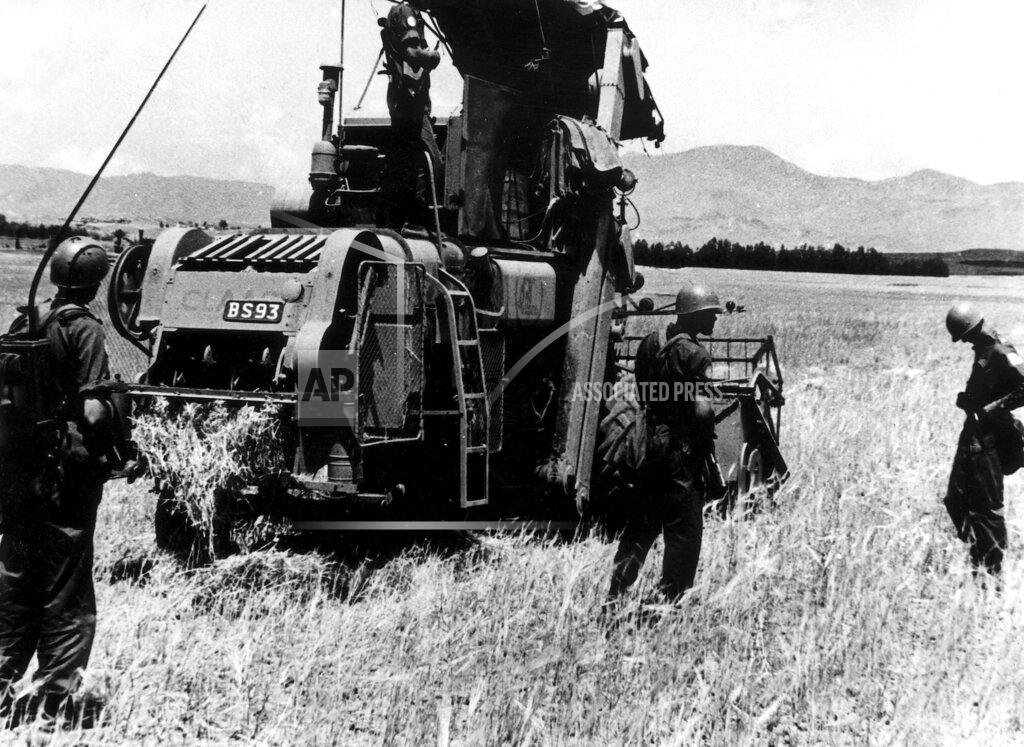
It was announced by a United Nations spokesman that the number of Turkish hostages seized since the Famagusta incidents in which two Greeks, a Greek Cypriote and a Turkish Cypriote were killed last Monday had risen to 32. So far, the Greex Cypriotes have not permitted the United Nations or the International Red Cross to visit the hostages. Alejandro Flores, political adviser to General Gyani, went to see Archbishop Makarios, President of Cyprus, today to protest the seizure of the hostages. The session was reported to have been stormy. At one point Mr. Flores was understood to have informed the grim‐faced Archbishop that only fear for the safety of the hostages in Famagusta had prevented the United Nations from sending its troops into action to liberate them.
A deceptive two‐week lull in open hostilities cannot disguise the fact that none of the basic issues has been resolved. The Greek and Turkish Cypriote views are as incompatible as ever on an eventual political solution. The Greek Cypriotes, who are a majority on the island, want a fully integrated independent state that they would administrate. They would accept the Turkish Cypriotes as fully protected citizens but not as political equals. The Turkish Cypriotes want a federal system involving a regrouping of the communities and geographical, political and administrative divisions that would place them on a separate but equal footing with the Geek Cypriotes.
Dr. Dirk U. Stikker, retiring Secretary General of NATO, has received an alliance assignment to try to prevent a worsening of Turkish‐Greek relations over the Cyprus crisis. He was given a “watching brief” at the final meeting of the North Atlantic Treaty Organization’s Ministerial Council. All the leaders here emphasized that the alliance has no jurisdiction over the Cyprus dispute. Dr. Stikker will not be a mediator. But he has some hopes that he can lead Turkey and Greece to a more realistic attitude. The alliance’s concern is that the two countries that guard NATO’s southeastern flank will become so embroiled in their dispute over Cyprus that they will overlook the menace of Soviet penetration into southeast Europe and the Middle East. Dr. Stikker intends within the next few weeks to visit both Ankara and Athens. Meanwhile, he will exert all his influence and that of the alliance in the North Atlantic Council to prevent the two powers from taking positions more extreme than their present ones.
The North Atlantic Treaty Organization agreed today to renew pressure on the Soviet Union for a German settlement on the basis of self‐determination. A statement to this effect was the most substantive part of a communiqué issued at the end of a three‐day meeting of the Foreign Ministers of the 15 Governments in the alliance in the Hall of Knights. A revised plan for German reunification, drawn up by the West German Foreign Ministry, is to be studied by the ambassadorial group in Washington and presented to the Soviet Union at a suitable opportunity. The West German Government is insistent that there should be little delay in getting the Soviet Union to agree to a new discussion of Germany.
The meeting ended with the alliance in a stronger position than expected. United States officials said pressures by the French for a change in the system of integrated military command had shown only that France was for a change and 14 others, particularly West Germany and the smaller members, were against it.
European and American nuclear researchers entered into an agreement today to pool efforts in developing a breeder reactor, one that produces more nuclear fuel than it consumes. In the 20‐year history of reactor development, marked more by nationalistic competition than international cooperation, the arrangement for trans-Atlantic cooperation is unusual. Joining in the project are 17 private utilities in the Midwest and Southwest, the General Electric Company, the Atomic Energy Commission, West Germany’s Karlsruhe Research Center and the six‐nation European Atomic Energy Community. The groups will join in building and operating an experimental fast breeder reactor near Fayetteville, Arkansas, in the Ozarks. The reactor will “burn” natural uranium and in the process produce heat and atomic fuel in the form of fissionable plutonium.
Everett McKinley Dirksen, the Senate Republican leader, said today that a move to cut off the Southern filibuster and bring the civil rights bill to a vote would probably be made in the first or second week of June. Mr. Dirksen explained to reporters why he and Mike Mansfield of Montana, the leader of the Democratic majority, would find it difficult to file a closure petition before that time. First, he said, part of next week would be devoted to conferences on the package of amendments agreed to yesterday by leaders of the bipartisan civil rights coalition and Attorney General Robert F. Kennedy.
The Democratic caucus on these amendments, which was to take place next Tuesday, has been moved up to Monday. The Republican conference on them will be held Tuesday. The package of amendments is largely of Mr. Dirksen’s making. He put it together to attract the Republicans needed to make up the two‐thirds vote that is required to shut off debate. With these doubters and waverers in mind, Mr. Dirksen said it might be necessary to hold two or three meetings on the package. “I want it thoroughly explained and understood,” he said. “I want to make sure it doesn’t come unstuck.”
A second reason why a closure petition cannot be hurried is that the Senate must first dispose of several amendments dealing with the right of jury trial in cases of criminal contempt arising under the bill. Senator Richard B. Russell, Democrat of Georgia, who is the leader of the Southern opposition, said today that his forces would caucus early next week to decide whether to permit a vote on these amendments during the week.
Mr. Russell’s strategy, it is generally agreed, is to block voting on the jury‐trial amendments until after the Maryland Presidential primary on Tuesday. The Southerners hope Governor George C. Wallace of Alabama will pull a heavy enough vote to generate sentiment for deleting, or substantially weakening, the bill. Mr. Dirksen has said flatly that the Maryland election results “will have no impact on the final disposition of this bill.” In any event, the jury‐trial amendments are unlikely to be disposed of before the end of next week.
President Johnson’s “hold-the‐line” appeal for his $3.4 billion foreign aid request was sustained again today by the House Foreign Affairs Committee. It rejected an effort to cut his contingency fund by a third from his $150 million request. However, the group struck from the legislation an Administration proposal to vote a “continuing authorization” of $1 billion a year for military aid without a terminal date. Nearing the end of the “mark‐up” process, the committee also rejected a second proposal by Representative E. Ross Adair, Republican of Indiana, to put a floor under military aid to Vietnam. The present aid figure is classified for security reasons. Yesterday the committee beat off repeated attempts to cut the $3.4 billion request, and the House voted a $312 million United States contribution to the International Development Association. Representative Thomas E. Morgan, Democrat of Pennsylvania, the committee chairman, said the group would probably complete the authorization measure at its next session on Tuesday. “I don’t think this bill is going to be cut at all,” he said.
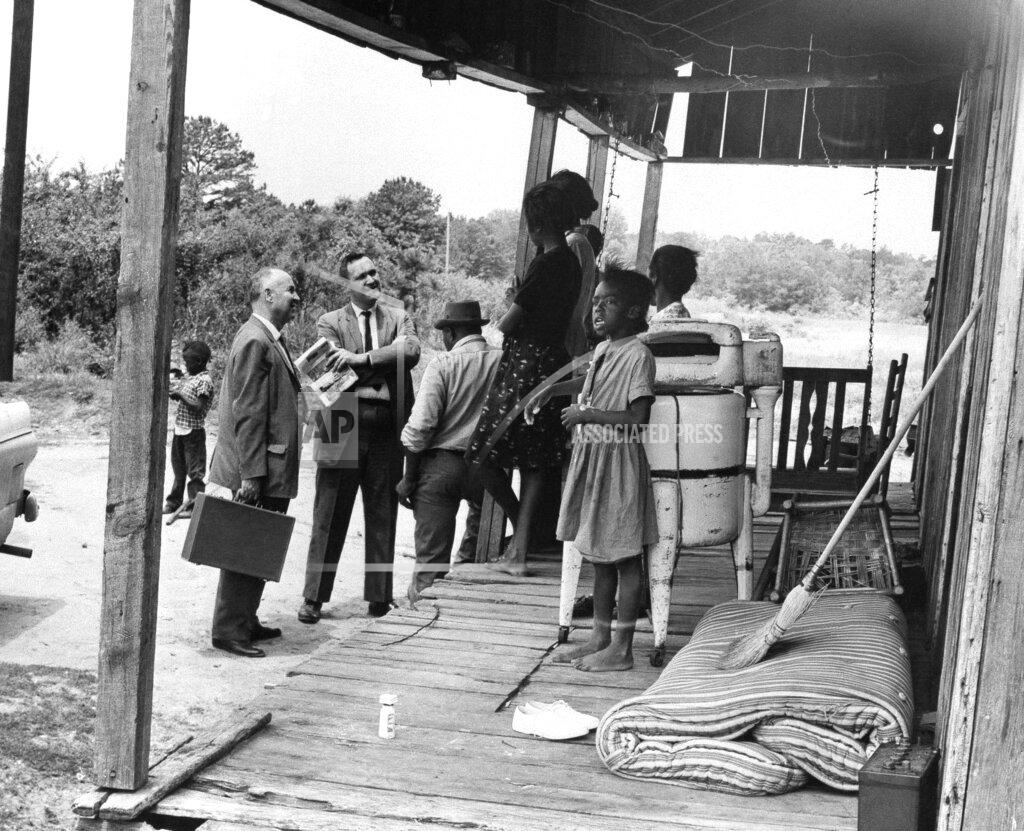
Two Republican Representatives suggested today that President Johnson and his family put their own “squalid” tenant houses in order before trying to establish a billion‐dollar program to combat poverty. Reporting that they found tenants on Johnson land in Alabama living in poverty, Representative David T. Martin of Nebraska and Representative M. G. Snyder of Kentucky concluded: “The President’s poverty campaign is nothing more than an election‐year gimmick.” If the President were sincerely interested in eliminating poverty, they said, he would have shown the interest long ago by fixing up the houses on the Johnson land in Alabama. “We were shocked at the squalor we found,” Mr. Martin said.
The two men flew to Alabama last week to talk with tenants living on land owned by Mrs. Johnson. The trip was sponsored by the Republican Congressional Campaign Committee. President Johnson declined to comment on the Republican charges. But a White House spokesman said that Mrs. Johnson had allowed the tenants to remain on what were once cotton farms, against the advice of her lawyer. By allowing the talents to stay, renting them houses and land for $5 a month, Mrs. Johnson’s income from her property is about 14 cents an acre, after taxes and expenses, White House officials said. The 3,660 acres of land, most of it seeded for pine, is in Autauga and Chilton Counties, northwest of Montgomery. Mrs. Johnson inherited much of the property from her maternal grandfather, aunt and uncle, and purchased some of it from other heirs.
In one of the angriest debates in recent Congressional history, the Senate defeated today a Republican proposal to broaden the Robert G. Baker investigation to include improper activities by Senators. The critical vote came on a motion by the Democratic leader, Mike Mansfield of Montana, to table, and thus kill, a resolution by Senator John J. Williams, Republican of Delaware. The resolution, to extend the scope of the investigation, was tabled by a 42‐to‐33 vote. But the substantive issue was virtually lost sight of a tempestuous shouting match between Mr. Mansfield and Senator Clifford P. Case, Republican of New Jersey, a co‐sponsor of the resolution. The Republicans have been attempting to force the Rules Committee to reopen its investigation into the private business dealings of Mr. Baker, who resigned under fire in October as secretary to the Senate’s Democratic majority. In the voting today, nine Democrats joined 24 Republicans in voting against tabling. All who voted for tabling were Democrats.
Attorney General Robert F. Kennedy can count on Liberal party support and is also likely to have Mayor Wagner’s backing if he runs for the Senate from New York State this year. This became known as many high‐ranking Democrats reacted favorably to the report that Mr. Kennedy was considering a race against Senator Kenneth B. Keating, the Republican incumbent. The Liberal party often represents the balance of power in New York elections. In 1960, the 406,176 votes cast on the Liberal party line enabled the Kennedy‐Johnson ticket take the state’s 45 electoral votes. Mayor Wagner and William H. McKeon, the Democratic state chairman, were among prominent Democrats welcoming consideration of a Senate race by the Attorney General.
Mrs. John F. Kennedy bears no ill‐feeling toward the city where her husband was slain by her side, a brother‐in‐law of the late President said today. She favors a memorial to President Kennedy in Dallas as long as it is “modest and dignified,” although her main interest is in the proposed John Fitzgerald Kennedy Memorial Library at Harvard. Stephen E. Smith of New York, whose wife is Jean Kennedy, one of the late President’s sisters, said he had no ill‐feeling about Dallas, either. Mr. Smith is treasurer of the library, to be built with publicly subscribed funds.
Describing himself as a former politician, former President Dwight D. Eisenhower said today that he would not try to dictate the selection of the Republican Presidential nominee. Nor, said General Eisenhower in an interview, will he attempt to stop any of the most prominently mentioned contenders for the nomination at the Republican convention in San Francisco July 13. “I by no means believe that it is proper for me to say ‘This is the man,’ and expect all the Republicans, just like a herd of sheep, to run that way,” General Eisenhower said.
A full-page advertisement that appeared Tuesday in The Evening Star of Washington, questioning United States policy in Vietnam, apparently was paid for by right‐wing elements. The advertisement listed the names of 127 Americans reported to have been killed by hostile action in South Vietnam. It asked “why” the attack is not pressed to North Vietnam. The advertisement also listed the names of “87 relatives of Vietnam war dead who have joined in signing this open letter.”
It was learned from The Star that the ad was placed by the Mason Relkin Agency of New York. The agency’s president said Tuesday that he was not at liberty to disclose any details about his clients. However, it was also learned from Star sources that the advertisement was prepared by Marvin Liebman Associates, a New York public relations company. Mr. Liebman helped to organize and spoke at the March 12 rally for Senator Barry Goldwater at Madison Square Garden. Mr. Liebman is a leader of the Jewish League Against Communism in New York. He is also a member of the national advisory board of Young Americans for Freedom. Associated with Mr. Liebman in financing the young Americans for Freedom have been Charles A. Edison, former Democratic Governor of New Jersey; Edward V. Rickenbacker of Eastern Airlines and the late George E. Sokolsky, newspaper columnist.
[Ed: Even in 1964, the press leans left. It’s “right-wing” to be against communism, Comrades.]
17th Cannes Film Festival: “The Umbrellas of Cherbourg” directed by Jacques Demy wins the Grand Prix du Festival International du Film
Don Zimmer belts a 2nd-inning grand slam off Robin Roberts to provide all the scoring as the Senators beat the Orioles, 4–1. Buster Narum wins his first of the year.
Dow Jones Industrial Average: 824.45 (-1.33).
Born:
Colonel James M. Kelly, U.S. Air Force, astronaut (STS-102, Discovery, 2001; STS-114, Discovery, 2005), in Burlington, Iowa.
Walter Berry, NBA power forward and small forward (Portland Trailblazers, San Antonio Spurs, New Jersey Nets, Houston Rockets), in New York, New York.
Suzy Kolber, American sportscaster, in Philadelphia, Pennsylvania.



 History Diaries