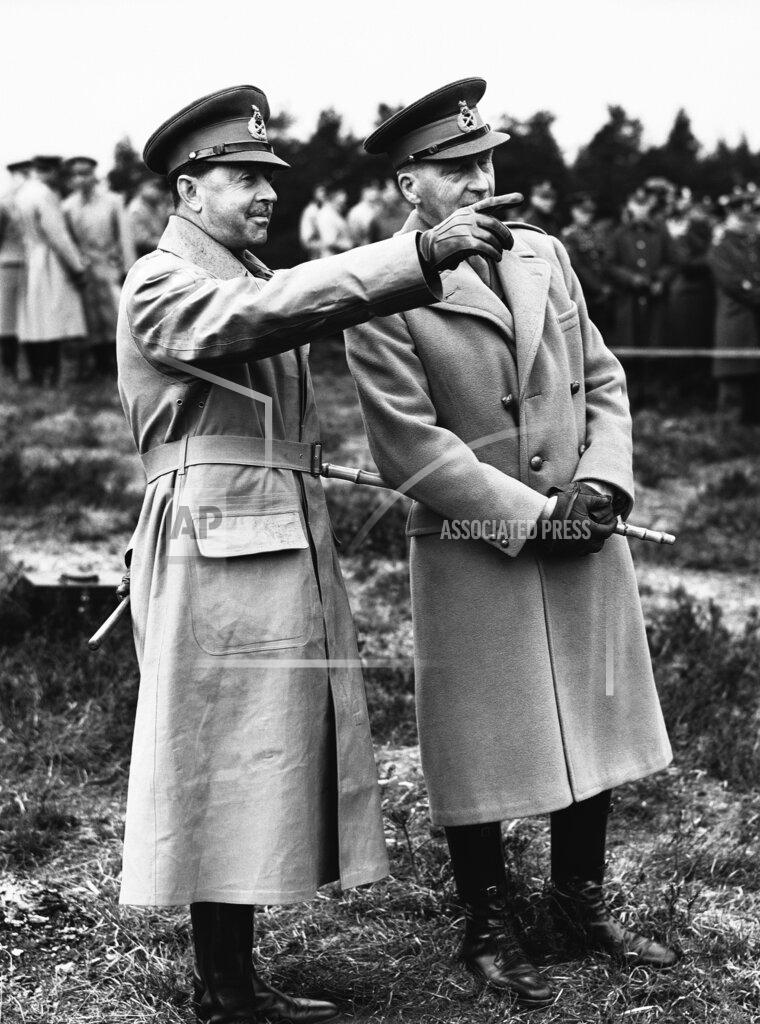
Britain and Turkey announced a mutual aid agreement in the event of aggression or war. The British and Turkish governments announced a mutual aid agreement in the event of aggression or war, which marked the expansion of military assistance treaties in Eastern Europe to the Middle East. In spite of close economic ties with Germany, the Turkish government supported a British bloc to check German expansion into the Balkans.
In the House of Commons yesterday Prime Minister Chamberlain announced the important addition of Turkey to the anti-aggression front that Britain is forming. Pending completion of a definitive agreement, the two governments are prepared to lend each other all possible assistance in the event of action leading to war in the Mediterranean area. The Turkish Parliament unanimously approved the agreement as Premier Saydam declared that the nation could no longer remain neutral and was ready to cooperate with other countries “equally anxious to preserve peace.”
Prime Minister Neville Chamberlain told the House of Commons about the successful outcome of the negotiations with Turkey. Chamberlain stated “The British Government and the Turkish Government have entered into close consultation and the discussions which have taken place between them, and which are still continuing, have revealed their customary identity of view. “It is agreed that the two countries will conclude a definite long-term agreement of reciprocal character in the interest of their national security,” said Mr. Chamberlain, while the House cheered. “Pending completion of the definitive agreement,” he went on, “His Majesty’s government and the Turkish Government declare that, in the event of aggression leading to war in the Mediterranean area, they would be prepared to cooperate effectively and lend each other all aid and assistance in their power.”
As the democracies’ anti-war front grew, a new uncertainty and caution were evident in German policy. Berlin was indignant because the Turks announced their agreement with London on the same day that they ratified the extension of a big German credit to them. Meanwhile, It was revealed that 1,500,000 men were engaging in German army maneuvers, partly designed to wear down the “enemy” before a war.
The democracies’ growing “dynamics,” as manifested in the spreading “peace front,” cemented by guarantees and mutual-assistance pacts, and the new tenor of democratic speeches against new and forceful coups in Europe, have created a noticeable and, so far, rather unusual uncertainty in German official quarters and the press. This uncertainty is so pronounced that some diplomatic quarters already are asking the question: Has Chancellor Hitler been stopped?
The German answer to a question put as bluntly as that is merely a derisive laugh. There is every evidence that both in diplomacy and propaganda Germany remains as active as ever and still has several aces up her sleeve. But German quarters, while insisting that the period of frontier revision and “surprises” is by no means over, admit that their date has become uncertain, and if pressed may even admit that the date for the next “surprise” might possibly have been postponed.
That Germany’s foreign policy is being guided by new caution is manifest and this caution is being attributed to two very obvious reasons.
First, the democratic “peace front,” which Germany calls encirclement, has become so wide and so strong that any new attempt to expand Germany’s Lebensraum [living space] by the threat of armed force entails too great a risk of a new world war, which Germany does not want and knows she cannot win.
Second, her ally, Italy, widens the area of political complications and makes unilateral decisions as in the cases of Austria and Czecho-Slovakia more difficult.
In Paris Premier Daladier obtained a 375-230 vote of confidence for his policies, the division being caused by his insistence on lumping his domestic measures with his foreign ones in the motion.
The Italian press renewed attacks on France. The way for Premier Mussolini’s speech at Turin Sunday is being prepared by violent press attacks against France. Tunisia suddenly has come into prominence with what all papers call a “new infamy,” which is the dismissal of some Italian miners for their refusal to become naturalized or agree to serve in the French Army in case of war. Then Premier Edouard Daladier’s speech yesterday is sharply attacked as intransigent and as fostering a policy of democratic aggression and encirclement. Prime Minister Neville Chamberlain’s words are generally passed over, although the Lavoro Fascista blankets his and Premier Daladier’s speeches with the headline “Hypocrisy, Pig-Headedness, Bellicosity.”
A Polish newspaper in Warsaw charged that some 30,000 Germans had been added to the population of the Free City of Danzig in “an invasion of armed squads” and denounced any effort by Germany to resort to a plebiscite there. The newspaper said most of the Germans entering the city were storm troopers and members of blackshirt units.
Police in Nazi-dominated Danzig prevented Poles from holding their annual open air memorial service for Poland’s hero Marshal Joseph Pilsudski. Pilsudski was an influential political leader after Poland regained her independence after the First World War. Polish indignation was aroused by the fact that Danzig had barred a tribute to Marshal Pilsudaki on the fourth anniversary of his death. Attacks on Poles continued in the Free City and at frontier customs posts.
Catholic Church authorities in Vienna were notified today that all changes in the personnel of the clergy in the future would be subject to the approval of the National Socialist party. In other words, the Catholic Church no longer will be permitted to appoint parish priests or higher dignitaries without previously submitting the list of candidates to party authorities. The party also reserves for itself the right to pass on candidates for theological schools or religious orders.
Theoretically the new regulation gives the party complete control over the Catholic hierarchy and the future of the church. It can not only prevent the appointment of priests and Bishops whom it regards as undesirable, but it can also curtail the number of theological students who are to fill the ranks. Catholic quarters intimated that the advice of the Vatican would be sought.
Another decree today places cremation on an equal legal footing with burial, despite the fact that the church condemns cremation. The new law will become effective this month.
London sets up four plants to store blood for war transfusion needs.
The Soviet League of Militant Atheists states that 30 million still hold religious beliefs after 21 years of attempting to stamp them out. Five-year plans are being designed to end religion in Russia.
The Russian patrol ship Turga is believed to have sunk in the White Sea with its crew of 200. Three Norwegian seal hunters found the bodies of five Russian sailors on ice floes near the Gorodetsky Lighthouse. The bodies were taken aboard a Russian torpedo boat which, with three icebreakers, two other craft and two airplanes, has been operating in the region, apparently searching for the lost ship. There have been violent storms in the White Sea since the beginning of April, when the Turga is believed to have sunk.
Today in Washington, President Roosevelt, at his press conference revived the possibility of undistributed profits tax repeal with the statement that he was willing if a substitute could be found to compensate for the loss of revenue; he expressed optimism on the prospects for railroad legislation, and denounced an amendment to navy bill which requires the navy to buy domestic canned beef, saying that Argentine beef is better and cheaper and that the amendment would make the navy pay more and feed the men worse.
The Senate passed the record farm bill, 61 to 14, when the economy bloc remained silent in the face of criticism of the $1,218,000,000 measure for parity payments and surplus crop disposal funds, and voted against a resolution to disapprove the President’s second reorganization order. Senator Byrnes announced that he will introduce a bill to make both the reorganization orders effective within thirty days instead of waiting the required sixty days. The Senate adjourned at 4:12 PM until Tuesday. The House was in recess and is scheduled to meet at noon Monday.
President Roosevelt placed responsibility for any business-encouraging tax revisions squarely on Congress today. Specifically, he declared that he would have no objection to repeal of the undistributed-profits tax, but challenged Congress to find a substitute which would raise the same amount of money and prevent what he termed legal tax evasion.
Conceding for the first time that there were a number of ways of satisfying these revenue and compliance requirements, he said that at the proper time the Treasury would submit these alternatives to Congressional committees in the form of suggestions but not as recommendations from the Administration. He made it doubly clear that his Administration would not accept responsibility for any changes in the present law.
His statements were interpreted at the Capitol as leaving the way open to a possible compromise which was already being whipped into shape by members who ordinarily support the tax views of Chairman Harrison of the Senate Finance Committee. Besides compensating for revenue losses resulting from repeal of the undistributed profits tax, the compromise would get at avoidance by tightening up present restrictions on unreasonable surplus accumulations.
The compromise is expected to be in completed form in time for a White House conference called by Mr. Roosevelt for Monday afternoon. To this conference were summoned Secretary Morgenthau, Senator Harrison, Representative Doughton, chairman of the Ways and Means Committee, and Representative Cooper, chairman of the Ways and Means subcommittee on taxation. In his challenge to Congress the President implied that it lacked the courage to increase the percentage tax on any but the few very large corporations.
Only the opposition of a group of Southern soft coal operators stood last night between John L. Lewis’s United Mine Workers and the achievement of its demand for a “union shop” agreement covering 320,000 miners in the Appalachian district. The extent of Mr. Lewis’s victory in an economic battle that imperiled the nation’s fuel supply and necessitated the direct intervention of President Roosevelt was to be determined by the results of a session of the Appalachian Joint Wage Conference to be held this morning at the Hotel Biltmore.
Dr. John R. Steelman, chief of the United States Conciliation Service, expressed confidence that the overnight adjournment would “prove profitable” in bringing the dissident elements among the conferees into agreement. The session of the joint conference began last night but was adjourned after two hours until 10 o’clock today. While no immediate explanation of the adjournment was forthcoming, it was believed that additional time was desired to bring all operators in the northern and southern sections of the Appalachian territory into accord on the terms proposed.
Before the night session began three of the four members of the operators’ negotiating committee signed report recommending adoption of an agreement providing that all workers in the mines be members of the CIO union. The only member who did not sign was L. C. Gunther of Knoxville, Tennessee, representing the so-called Southern high volatile districts of Kentucky, Virginia and West Virginia. These mines employ 80,000 men.
The Senate, undeterred by accusations of extravagance and budget wrecking, today passed by a vote of 61 to 14 an appropriation bill for the Department of Agriculture carrying $1,218,666,572. Exceeding the budget by almost $400,000,000, it was the largest such measure in the history of the country. The vote was taken after a little more than two hours of closing debate, in which speakers generally defended the bill. Efforts by two Democrats, Senators Glass of Virginia and Johnson of Colorado, to gain further study of the measure in an effort to trim back $385,000,000, added by the Senate after it was passed by the House, were summarily defeated.
When Senator Glass asked for unanimous consent to reconsider the votes by which the Senate added to the bill $225,000,000 for “parity” payments, $113,000,000 for purchase of surplus commodities and companion price-pegging efforts, Senator La Follette objected. Just before the final vote Senator Johnson moved to recommit the bill to the Senate Appropriations Committee for elimination of these and about $45,000,000 worth of miscellaneous unbudgeted additions made by the Senate.
The President’s son Elliot warns of curbs on radio content. He says it will lead to muzzling of the press.
The New York Senate bans race exclusion and passes a bill to deny benefits to unions guilty of discrimination.
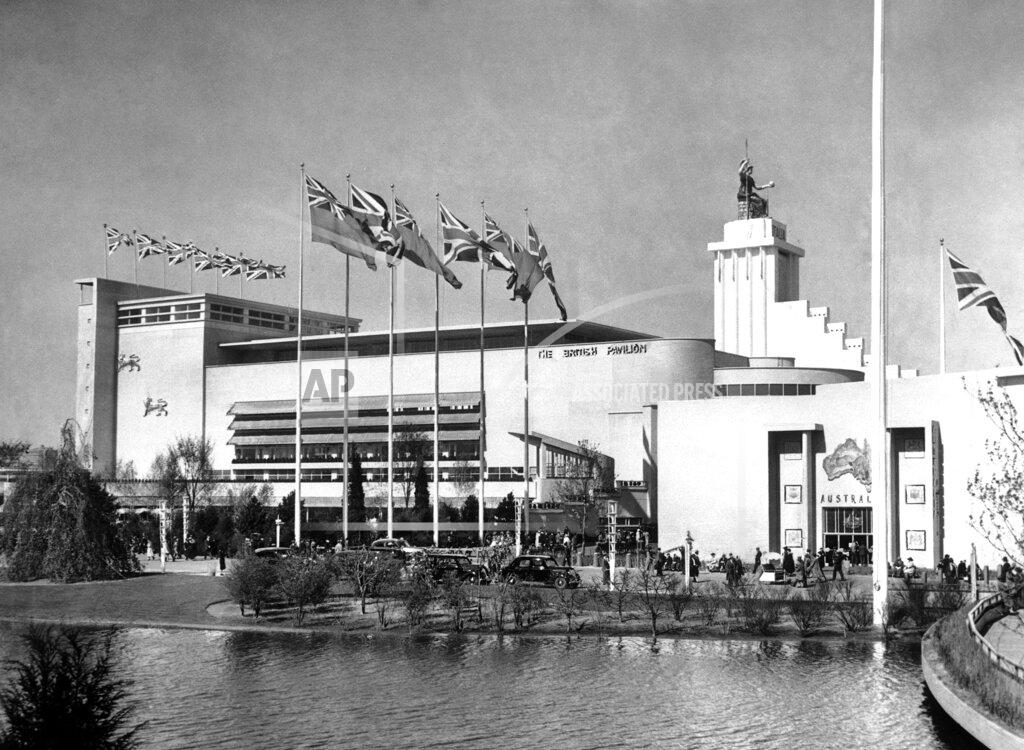
The British and Commonwealth (Canadian, Australian, and New Zealand) pavilions open at the New York World’s Fair.
John Barrymore’s estranged wife files a 12-page suit. She charges the actor with fits of temper and rage.
Chungking remains China’s capital. The population thins because of air raids.
Japanese planes visited Chungking again today, turning another section of the city into blazing ruins and exacting a toll of killed and injured that, as in last week’s raids, may again total thousands. The air raiders concentrated their bombardment on Kiangpei, a populous walled city on the north bank of the Kialing River, which recently was incorporated into the Chungking municipality. Tanszesze, a waterfront village on the south bank of the Yangtze, half a mile down river from Chungking, also was hit by several bombs. In both places the bomb explosions caused extensive damage and started fires which, fanned by a brisk wind, added to the enormous toll.
The casualties are believed to have been heavy in Kiangpei, to which many Chungking residents fled recently, thinking this outlying district was safe from bombings. The killed and injured are believed to number several thousand. The Japanese raiders, as when carrying out the disastrous bombings on Thursday of last week, came at dusk. Twenty-seven cruised over the city at 10,000 feet, running the gauntlet of intense anti-aircraft fire, and dropping about 100 bombs. Bombs fell 200 yards from the French naval barracks at Tanszesze. The warehouse and office of William Hunt & Co., American shipping firm, was wrecked by a blast and burned.
Five thousand civilians were killed and 2,000 were wounded in two Japanese raids at Chungking last week, according to Dr. F. C. Yen, director of the National Health Administration. The second raid, on May 4, caused most of the casualties and was the most destructive of lives. and property in the history of air bombings.
Japanese marines arrested 100 persons in a house-to-house search of the international settlement at Amoy, following the death from bullet wounds of the Chinese pro-Japanese chairman of the Chamber of Commerce, Hung Li-hsan. The locality where the Japanese landed marines was at the international settlement at Kulangsu, half a mile from Amoy, which is a treaty port. It was understood that the Japanese occupation would continue until the settlement authorities gained control over anti-Japanese activities. The landing of Japanese marines at Kulangsu, their declaration of martial law and their patrolling of the streets today put Japan in full possession of a small island in Amoy harbor, which hitherto ranked as an international concession almost like that at Shanghai, 600 miles north.
The seizure of Kulangsu followed the assassination of Hang Li-shun, president of the Amoy Chinese Chamber of Commerce, a new organization cooperating with the Japanese. The killing presumably was inspired by patriotic motives. More than 100 Chinese suspects were arrested in Kulangsu today, according to The Associated Press.
When asked if the seizure of Kulangsu was permanent and if the Japanese there might be interpreted as forecasting similar action in Shanghai’s International Settlement if terrorism is not checked, the Japanese spokesman tonight answered: “It is too early to say whether the Kulangsu occupation is permanent. Action here will depend on circumstances.”
Questioned further as to whether the Japanese would attempt to seize the Shanghai International Settlement despite the presence of United States and British forces, the spokesman again said “It will depend on circumstances.”
Dow Jones Industrial Average: 132.16 (-0.76).
Born:
Ron Ziegler, American White House press secretary for President Nixon, in Covington, Kentucky (d. 2003).
Charles Hull, American inventor (3D printing), in Clifton, Colorado.
 History Diaries