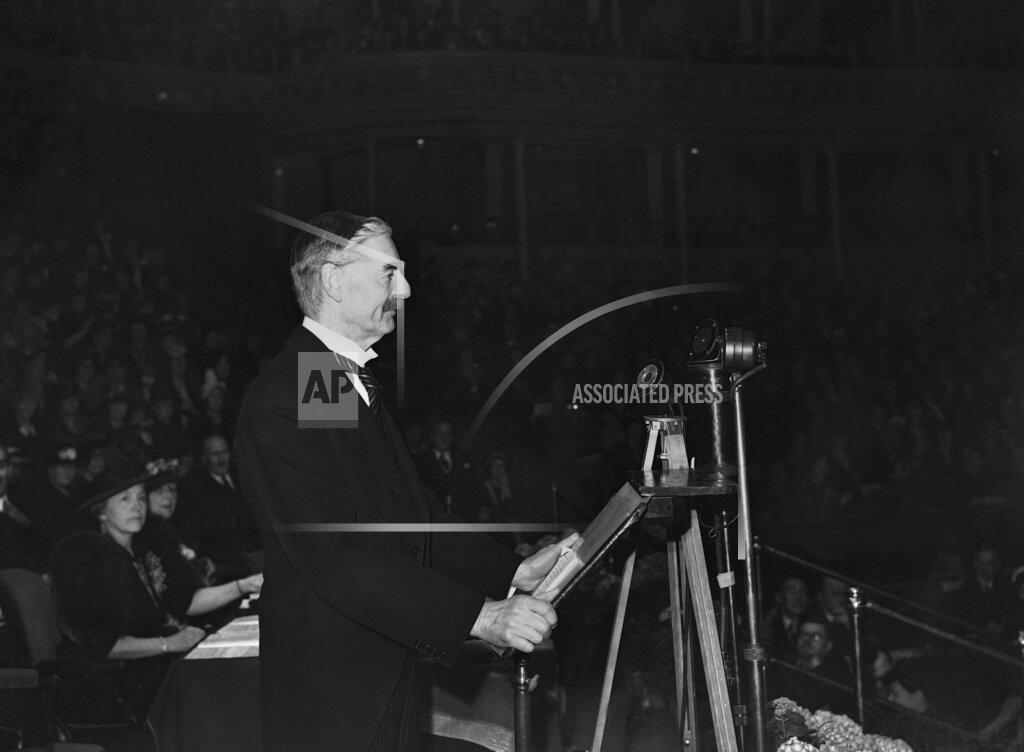
The leaders of Britain and France warned yesterday that they were in earnest in their anti-aggression pledges. “No more deadly mistake could be made,” said Prime Minister Chamberlain, then to assume that they were not. He went so far as to specify that use of force in Danzig would start a general war. Prime Minister Neville Chamberlain today coupled the name of Danzig with another solemn warning that Great Britain and France were in deadly earnest in their intention to fight to redeem the new promises they had made to smaller States in Europe.
Whether because news of Polish frontier incidents had reached him. or because of recent though completely unofficial revivals of the “appeasement” spirit in high quarters, the Prime Minister chose the occasion of what was expected to be a routine speech at a gathering of women Conservative leaders in Albert Hall to sound the strongest warning he had yet made against further Axis aggression. It was not overlooked here that Premier Edouard Daladier made a speech in Paris in the same tone.
“In many minds the danger spot of Europe is Danzig,” said Mr. Chamberlain, “where our assurances to Poland are clear and precise, and although we should be glad to see the differences between Poland and Germany amicably settled by discussion, and although we think they could and should be settled, if any attempt were made to change the situation by force in such a way as to threaten Polish independence, that would inevitably start a general conflagration in which this country would be involved.”
“I had the opportunity yesterday of exchanging a few words with M. [Léon] Blum, the French Socialist leader and former Premier,” he continued, “and he said to me that in his view and in the view of all Socialist friends with whom he had talked there was only one real danger of war in Europe, and that a very real one. It was that the impression should get about that Britain and France were not in earnest and could not be relied on to carry out their promises. If that were so, no greater, no more deadly mistake could be made, and it would be a frightful thing if Europe were plunged into war on account of a misunderstanding.”
Premier Daladier said that his country was strong but would make itself even stronger if its neighbors kept up “massive mobilizations.” With the words, “We shall hold on as long as necessary,” Premier Edouard Daladier in the Chamber of Deputies this afternoon defined exactly the position of France in the present situation of Europe, deadlocked between peace and war.
To those who by their preparations seem to be threatening war he added this warning: “We have taken what military measures we consider necessary. We are not thinking of reducing but rather of increasing them if beyond our frontiers certain massive mobilizations are maintained.” To prove that his words were no empty boast, M. Daladier cited facts and figures. France was absolutely united and resolute, he declared. In the whole country there was only one strike, involving thirteen workers. The franc had become a refuge for money and gold kept flowing in. Production had increased. With Great Britain unity had never been so strong and confident.
“They think they can wear out France with this new form of war without battles, this war of uncertainty, of constantly renewed anxiety and broken hopes,” the Premier said. “But our determination has not weakened and will not weaken. We know what we must defend — our fatherland and our liberties, our beliefs and our ideals of human dignity. If they want a just and equal peace, we are ready to make it. If they break the peace, they will know the full force of our arms. If between peace and war they think to wear us out, we shall hold out as long as necessary. Neither force nor ruse can avail against France.”
As Britain drove another rivet into the coalition front by signing a trade agreement with Rumania, Russia, by getting the League of Nations Council to postpone its meeting until May 22, indicated interest in collaboration. But an Izvestia editorial rejected the latest London proposal for a common front as lacking reciprocity. Negotiations were continuing, however, and the chances still seemed to be for success.
Russia’s relations with Poland were viewed in Warsaw as growing steadily more friendly.
[No.]
The rejection of the latest British proposal for an Anglo-French-Soviet common front against aggression was indicated today in an editorial in the newspaper Izvestia, which was certainly inspired by the Kremlin if not actually drafted by it. Indeed, some people thought they saw in the language of the piece a resemblance to Joseph Stalin’s own style. The editorial, however, in no way implies final failure to reach an understanding. The negotiations are continuing and the belief is still strong in foreign diplomatic circles that an effective pact will be signed.
What the Soviet Union wants is preferably a mutual assistance pact binding France, Britain, the Soviet Union and Poland or, failing the entry of Poland, of France, Britain and the Soviet Union, and today’s editorial, like the official Soviet statement of two days ago, clearly shows that the Soviet Union’s own interests must be firmly guaranteed before she will enter any compact. It is strongly implied that the operation of such a pact will be made contingent on aggression against Poland and perhaps other Eastern States, and it is a safe assumption that the Soviet Union does not care to bind itself to Britain and France in any conflict in which the Soviet Union’s own interests and safety are not directly concerned.
With Germany apparently marking time, Vatican circles felt confident that no immediate outbreak was likely.
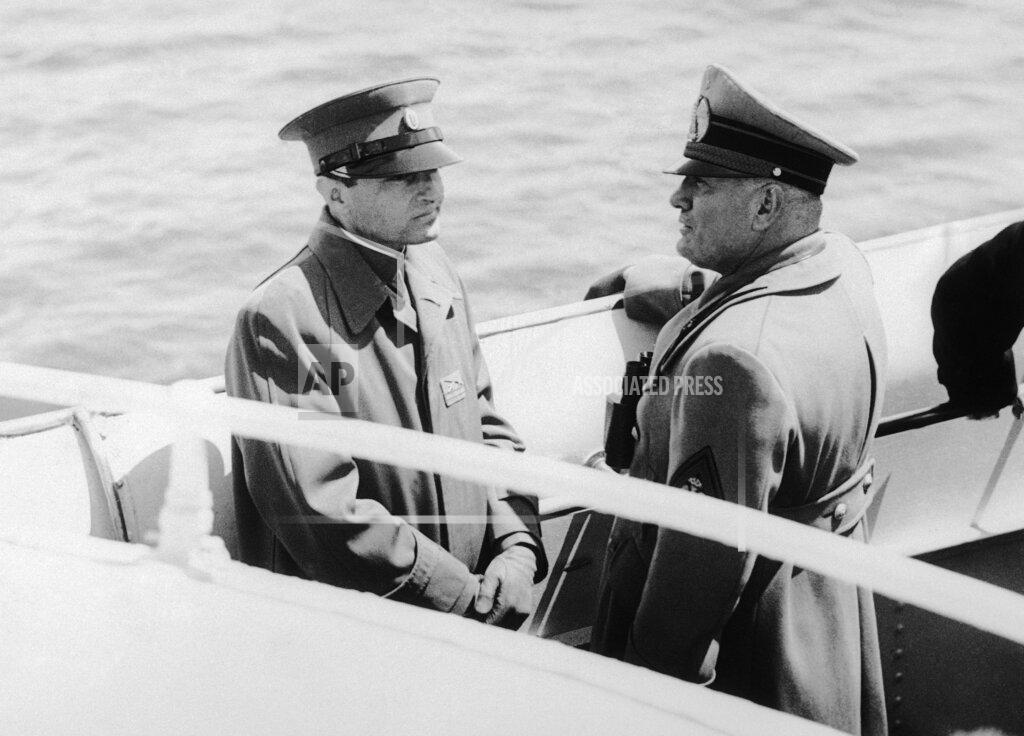
A grand review of the Italian Navy was conducted in the Gulf of Naples for Prince Paul of Yugoslavia on the occasion of his state visit.
A book teaches German soldiers Czech phrases for “Where is money” and “If you lie, you will be shot.”
The British air minister recruits thousands of pigeons to deliver messages from planes.
Norway’s Foreign Minister Halvdan Koht stated that “the question of a nonaggression pact with a great power raises the problem whether it will lead to some particular demand upon as, and throw suspicion on our neutrality, which we will not give up voluntarily.”
General Attilio Terruzzi, Under Secretary for Italian Africa, told the Chamber of Fascists that Italy controlled Ethiopia though small band of hostile natives were still operating in the provinces of Amara and Shoa as a result of foreign assistance and propaganda.
In Washington today, President Roosevelt conferred separately with Senator Wheeler and Representative Lea on railroad legislation and kept in touch with developments in the controversy in the coal industry.
The Senate considered the Department of Agriculture Appropriation Bill, heard Senator Reynolds defend his views on foreign policy, received the Gillette bill to repeal the Neutrality Act and recessed at 4:43 PM until 11 AM tomorrow. The Temporary National Economic Committee continued hearings on consumer problems.
The House listened to several speeches and adjourned at 2:28 PM until noon Monday. The Rivers and Harbors Committee approved a bill authorizing $120,000,000 in river and harbor improvement projects and an appropriations subcommittee heard testimony that members of the Workers Alliance had planned to prevent the participation of Representative Moser in a post office cornerstone laying at Reading, Pennsylvania, next Saturday.
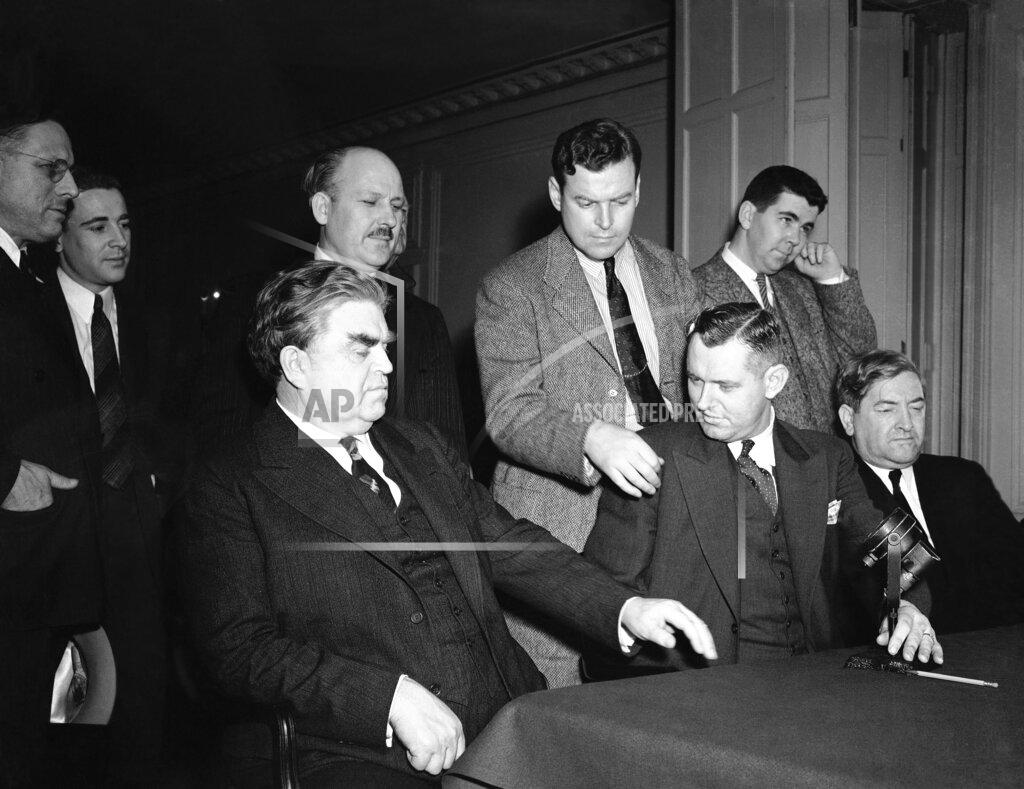
Although unable to give the President the plan he demanded, John L. Lewis and the United Mine Workers called off their strike in the areas west of the Appalachians, and will return to work. The prospect that the soft coal industry will resume operation by Monday morning was held out last night by Dr. John R. Steelman, chief of the United States Conciliation Service, after another day of negotiations between representatives of the United Mine Workers and bituminous operators of the Appalachian area.
“So far as the public is concerned the deadlock is over,” Dr. Steelman, who has been acting as mediator, announced. Developments yesterday indicated that a new Appalachian agreement, embodying the miners’ demand for a “union shop,” probably would be reached today. Support of this expectation was seen in the announcement of John L. Lewis, president of the miners, that the entire policy committee of the union, consisting of 130 members, representing the various districts and localities of the eight-State Appalachian region, would reassemble at the Hotel Commodore at 5 PM to ratify any agreement that may he reached.
Regardless of what may take place today in the efforts to bring peace in the Appalachian region, substantial relief from the coal shortage was assured yesterday when, in response to the government’s request, Mr. Lewis issued orders calling off the strike in the States outside the Appalachian area, where 126,000 miners went on strike May 4 and 5 in support of the union’s demands. The area in question produces 126,000,000 tons annually, and resumption of operations, which is expected to be fully under way within a few days, alleviates materially the coal shortage confronting railroads, public utilities, industrial plants and other institutions.
Shortly before noon yesterday Mr. Lewis sent telegrams of instruction to union leaders in the outlying districts to sign new contracts with the operators, and when this was accomplished, to arrange for “forthwith operation of the mines.” Mr. Lewis’s telegrams emphasized that two sentences must be added to the old contracts when the new agreements are drawn, making the United Mine Workers the exclusive bargaining agency for the employees and establishing a union shop. The same principle will be embodied in any Appalachian contract that may be signed here today, it was said. Operators in the outside area began signing agreements yesterday afternoon.
In the face of authoritative reports that President Roosevelt had rejected the Treasury’s tax revision plan and virtually forbidden his fiscal aides to present it “as an Administration proposal,” Secretary Morgenthau reiterated today his intention to ask Congress to remove business deterrents from the revenue laws if he were invited to do so from Capitol Hill. If the President’s reputed disapproval stands, then Mr. Morgenthau either will have to appear as an individual or submit the Treasury’s data in answer to questions of Representatives and Senators without recommendation.
On the basis of further reports from various quarters the assumption grew in Washington that the President had rejected the specific proposals as worked out by Secretary Morgenthau and Under-Secretary Hanes. The White House confirmed the information received yesterday at the Capitol that the President had reviewed the tax situation in detail at a conference with Representative Doughton, chairman of the Ways and Means Committee; Representative Cooper of Tennessee and Secretary Morgenthau, but insisted that no conclusions had been reached during the conference.
Negotiations between the National Labor Relations Board and American Federation of Labor spokesmen on the latter’s proposed four-point compromise program for amendments to the National Labor Relations Act collapsed today. Upon termination of the conferences, which began two days ago, William Green, president of the AFL, and Joseph A. Padway, its general counsel, announced that the federation would continue “full speed ahead” in pressing for changes in the act. In AFL circles the opinion was expressed that the circumstances of the sessions proved to the satisfaction of federation spokesmen that their charges concerning alleged CIO “domination” of the board were correct.
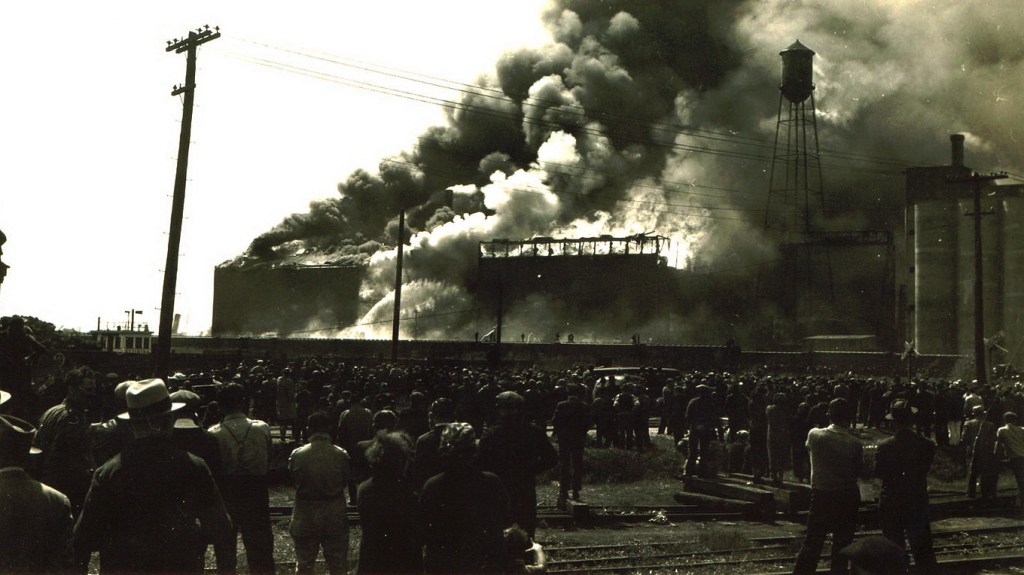
A grain elevator explodes and burns on the Calumet River in Chicago. An explosion occurred at the Rosenbaum Elevator A near Commercial Avenue on the north side of Slip No. 2 on the Calumet River. The fire spread to Elevators B and C progressing eastward toward the river. The fire then jumped the 100-foot-wide slip to the south and ignited the Norris elevators No. 1 and No. 2. By the time the fire ended 5 elevators were destroyed and 9 individuals were killed. 20 railroad freight cars were also burned in the 4-million-dollar blaze. The Chicago Fire Department had two fireboats at the scene which helped put the fire out relatively quickly. Crowds estimated at 25,000 watched firemen battle the blaze. Fires at the site continued to break out sporadically and the remains of the fire gave off a stench for several months.
A U.S. National Parks System employee finds three new caves 900 feet below Carlsbad Caverns. The new realm is named Pluto’s Palace.
Thirty-eight fishermen were reported missing and nine were safe at Yarmouth, Nova Scotia, tonight after a bow-on collision of two vessels in dense fog 115 miles east of Boston at 5:30 AM yesterday. The nine survivors who reached Yarmouth at dusk disclosed that the fishing schooners Isabelle Parker of Boston and Edith C. Rose of Gloucester had both gone down at sea in an hour and a half after the crash.
One fisherman, Frank Nickerson of Argyle, Nova Scotia, was known to be dead. Although some of the survivors took to dories, the Edith C. Rose managed to lower only two of her boats and it was feared many of her crew of twenty-five had perished. Coast Guard vessels which put out hastily from Boston, after summoning their crews from shore leave by radio, were at the scene tonight. Although the air was clear and the seas smooth, not even wreckage was visible as the vessels scoured the area with powerful searchlights.
R.L. Ripley leases three floors of a New York City building to create a museum of oddities.
The American Social Hygiene Association sets up a fair display in New York to spread sex education and show how to combat venereal diseases.
U.S. Navy issued contract to Curtiss Wright for the XSB2C-1 dive bomber, later known as the Helldiver. The preceding month, Brewster had received a contract for the XSB2A-1. As part of the mobilization in ensuing years, large production orders were issued for both aircraft, but serious managerial and developmental problems were encountered at both firms which eventually contributed to the cancellation of the SB2A and prolonged preoperational development of the SB2C. Despite this, the SB2C Helldiver would become the principal operational carrier dive bomber in the last year of World War II. Some less than enthusiastic navy fliers will insist the type designation SB2C stands for, “Son of a Bitch, 2nd Class.” It is also known by others as the “Big Tailed Beast.”
The Yankees set down the Browns, 10–8, jumping on rookie Ewald Pyle for three hits before he exits. Pyle is subbing for Newsom, out with a skinned finger. Russ Van Atta, the Fresno Flinger follows, and the Yanks score nine runs in four innings to put the game out of reach. Bill Dickey has three hits to extend his hitting streak to 13 games. Gehrig does not play, but takes infield practice and warms up Monte Pearson using a righty glove. New York now leads by 1½ games.
Ted Lyons hurls the White Sox to a 3–2 win over Boston, handing rookie Woodrow Rich his first loss. Chicago makes just 4 hits. Jimmie Foxx hits his 5th homer, a solo in the 9th, for Boston.
Cleveland native Al Milnar stops the visiting A’s, 7–0. Ken Keltner has a triple and three RBIs, and Roy Weatherly is 5-for-5, all singles, for Cleveland.
The Boston Bees collect 13 hits off the Cubs 33-year-old rookie Vance Page, but manage just 2 hits in losing 6–2. Billy Herman’s bases-loaded triple in the 9th seals it. Poor base running contributes to the loss, the worst example coming in the 4th when Eddie Miller singles and stops at third on a drive down the first base line by Elbie Fletcher. Fletcher is caught trying to stretch the hit to a triple.
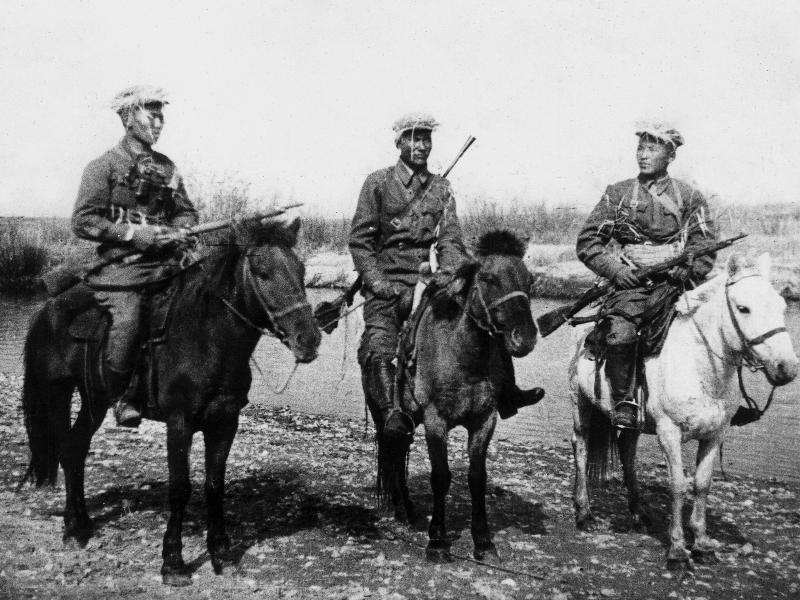
The Nomonhan (Khalkin Gol) Incident begins. A Mongolian cavalry unit of some 70–90 men enters the disputed area on the Manchurian-Mongolian border in search of grazing for their horses. Later that day, Japanese-allied Manchukuoan cavalry attacked the Mongolians and drove them back across the river Khalkhin Gol. On 13 May, the Mongolian force returned in greater numbers and the Manchukoans were unable to dislodge them. The fighting will continue to intensify over the coming months. The skirmish initiated a series of firefights and battles, and eventually led to the Soviet Union and Japan sending tens of thousands troops to the area in a four month long conflict.
A field dispatch to Tokyo reported that nine Chinese divisions totaling 150,000 soldiers were routed Northwest of Hankow. Many Chinese staff officer were said to have surrendered after the encirclement of General Tang Po’s headquarters.
Hundreds died in a huge fire which swept Cunachow as a result of Japanese bombings. The Japanese also rebombed Foochow and Ningpo.
Chinese guerrillas raided the Customs cruiser Haicheng in Chefco Harbor. Another ship discharged its contents to avoid Japanese reprisals after which it left for Shanghai accompanied by the river gunboat HMS Scorpion.
A definite and formal threat to expel from the International Settlement and also from the French Concession any persons hereafter belonging to any associations of a political nature or indulging in political organization or propaganda was issued today under the seals of the Settlement and Concession. With this threat was coupled a warning that if conditions do not improve, both foreign areas are likely at any time and without notice to impose drastic curfew regulations. The proclamation ends with an ominous warning to this effect: “Notice is given that the authorities of the French Concession and the International Settlement intend to take the most drastic steps within their power to punish any person who at this time commits any act prejudicial to the preservation of peace, order and good government.” This means in effect a practically complete capitulation to Japanese demands and threats for the suppression of all agencies of the Chungking government still operating within the two foreign areas. It also means the complete suppression of the activities of numerous patriotic societies which have been taking advantage of the neutrality of the Settlement and the Concession.
Dow Jones Industrial Average: 132.92 (+0.10).
Born:
Milt Pappas, MLB pitcher (All-Star, 1962, 1962², 1965; Baltimore Orioles, Cincinnati Reds, Atlanta Braves, Chicago Cubs), in Detroit, Michigan (d. 2016).
Frank Quilici, MLB second baseman and third baseman (Minnesota Twins), in Chicago, Illinois (d. 2018).
Héctor Martínez, Cuban MLB pinch hitter and centerfielder (Kansas City A’s), in Las Villas, Cuba (d. 1999).
Dante Tiñga, politician and jurist, in Taguig, Philippines.
Died:
Yevgeny Miller [Eugen Ludwig Müller], 71, Baltic German general and a leader of the anticommunist White Army during and after the Russian Civil War, executed after being kidnapped in Paris by Soviet intelligence and taken to Moscow where he was tortured and eventually shot.
 History Diaries