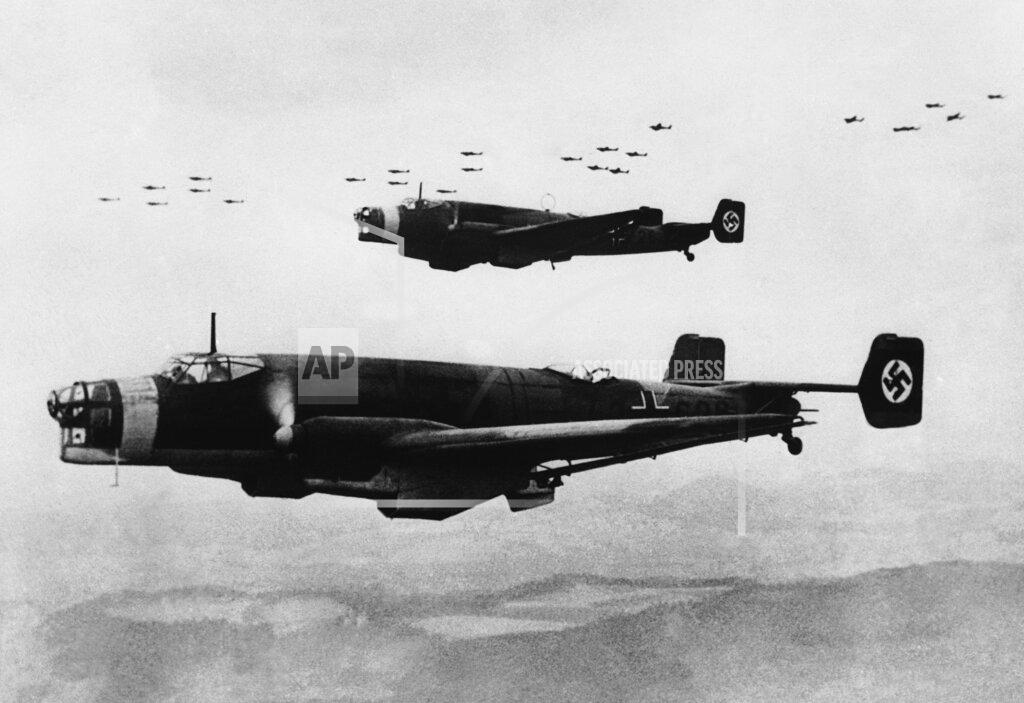
Although the Vatican confirmed yesterday that it had sounded out several capitals on Papal mediation for peace, the outlook for the project was not too hopeful.
Chancellor Hitler was not believed to be favorably disposed toward a conference and was thought to be preparing to settle the Danzig question in his own way next month. After a four-day attempt to deny, then ignore and then minimize the Vatican’s peace initiative, it was at last “unofficially” admitted here today that Pope Pius had offered his good offices as mediator in solving the Danzig problem ex the first move toward a general peace settlement. The treatment of the first soundings to that end now admittedly made by Mgr. Cesare Orsenigo, the Papal Nuncio to Berlin, during his call on Chancellor Adolf Hitler at Berchtesgaden Friday is, however, an indication of the scant welcome accorded by the Germans to this new peace appeal and their presumptive answer.
Nor do the Poles favor mediation; they hope for an agreement with the Reich through direct talks. Vatican mediation suggestions are being received in Warsaw with a certain amount of skepticism. When Mgr. Filippo Cortesi, Papal Nuncio, submitted Pope Pius’s peace plea to Foreign Minister Josef Beck yesterday it is understood the Nuncio received an evasive answer because the Poles do not favor mediation as a means of solving the Danzig problem. They hope to come to an agreement with Germany by means of straight talks. Should a conference of mediators. be called, it is felt here, the dictators would create an unbearable atmosphere of force and war scares, and the mediators, faced with a choice of peace or war, would yield to pressure and intimidation.
The French are only lukewarm toward the idea, feeling that Poland and Germany are the countries primarily concerned.
There was reticence regarding the plan in Britain. In that country, while the war minister said that “the nation must sleep on its haversacks” and announced measures for partial mobilization throughout Summer, the Foreign Office was cheerful over the negotiations with Russia.
And this attitude seemed justified by reports from Moscow that there was now a real prospect for a three-power alliance to balk German aggression.
[Ed: In fact, Stalin is done seriously listening to the western allies.]
With the blunt statement that “it is a time when the nation must sleep on its haversacks,” War Minister Leslie Hore-Belisha today announced to the House of Commons a series of measures whose effect will be to keep the British Army, Navy and Air Force partly mobilized throughout the Summer. The entire five divisions of the Territorial anti-aircraft force will serve one month instead of the usual two weeks’ training period, manning guns and searchlights in rotation until new conscripts can take over. And, instead of the 16,000 army reservists who were to have been called up, a far larger number will be placed on three months’ active duty to bring up the regular army to war strength and enable it, “if necessary, to take the field at short notice.”
As if to emphasize cooperation among the defense services, Mr. Hore-Belisha then went on to announce similar steps whereby the navy and air force were gathering their strength during the coming months of heightened international tension. The Air Ministry, he explained, would also call up “a certain proportion” of the auxiliary air force to serve alongside the Territorial anti-aircraft units in one-month training periods, and the Admiralty would summon some reserve officers for six months plus 6,000 reservists and other veterans for three months’ duty with antisubmarine, mine-sweeping, and other units of the fleet.
This series of announcements, made during debate on a bill permitting the government to mobilize armed forces without the present elaborate procedure, was received with cheers by government supporters, although the entire House was weary from a strenuous all-night wrangle on a financial resolution connected with the Conscription Bill.
Almost 1,000 young men from East Prussia have arrived here as “tourists” during the last few days and are lodging in private houses. Some are wearing Storm Troopers’ uniforms. Young Danzigers serving in the German Army have received leave to return here, where they have immediately reported to the police. All Danzig police leaves have been canceled. Thirty-seven persons have been arrested, suspected of entertaining anti-Nazi sympathies. The Free City is again flooded with rumors of a forthcoming Putsch. Danzigers remember that similar “tourists” entered the Sudetenland just before the September crisis. Many prominent Nazis have left for Berlin during the last few days. It is understood that Albert Foerster, Nazi district leader for Danzig, summoned them after reportedly visiting Chancellor Hitler at Berchtesgaden.
The four Scandinavian States that conferred in Stockholm in effect rebuffed Chancellor Hitler’s offer of non-aggression pacts.
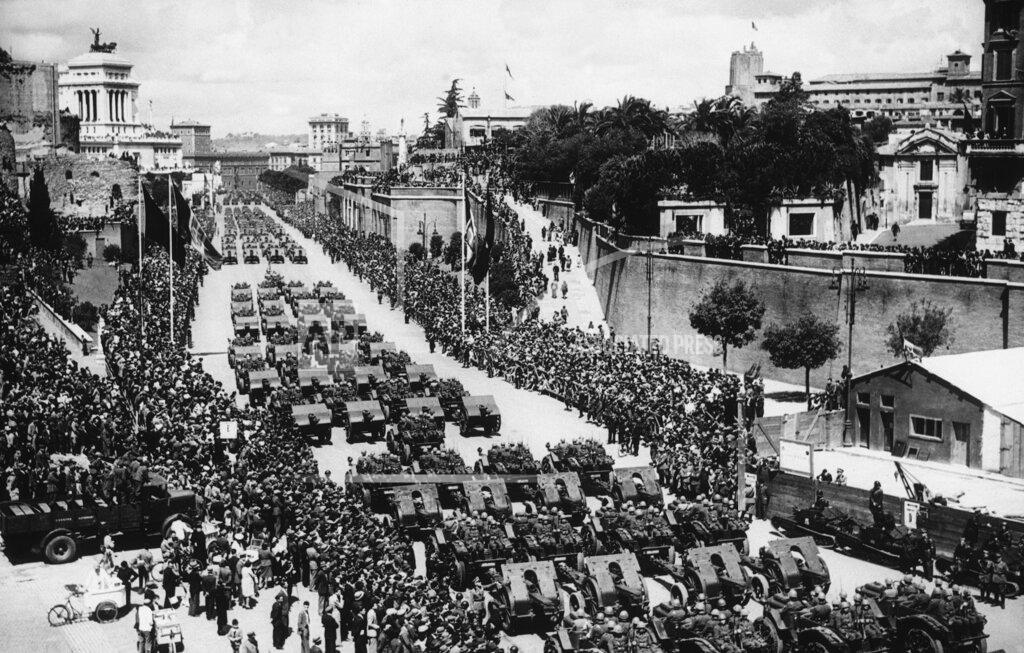
The Chancellor’s Axis partner, Premier Mussolini, in a belligerent Army Day speech, cried that “if the hour comes” Italy would prove she was strong.
Meanwhile, a source of oil for Germany in the Western Hemisphere seemed to be a possibility when it was disclosed that Bolivia was seeking a barter deal under which she would exchange petroleum for construction by the Reich of pipelines.
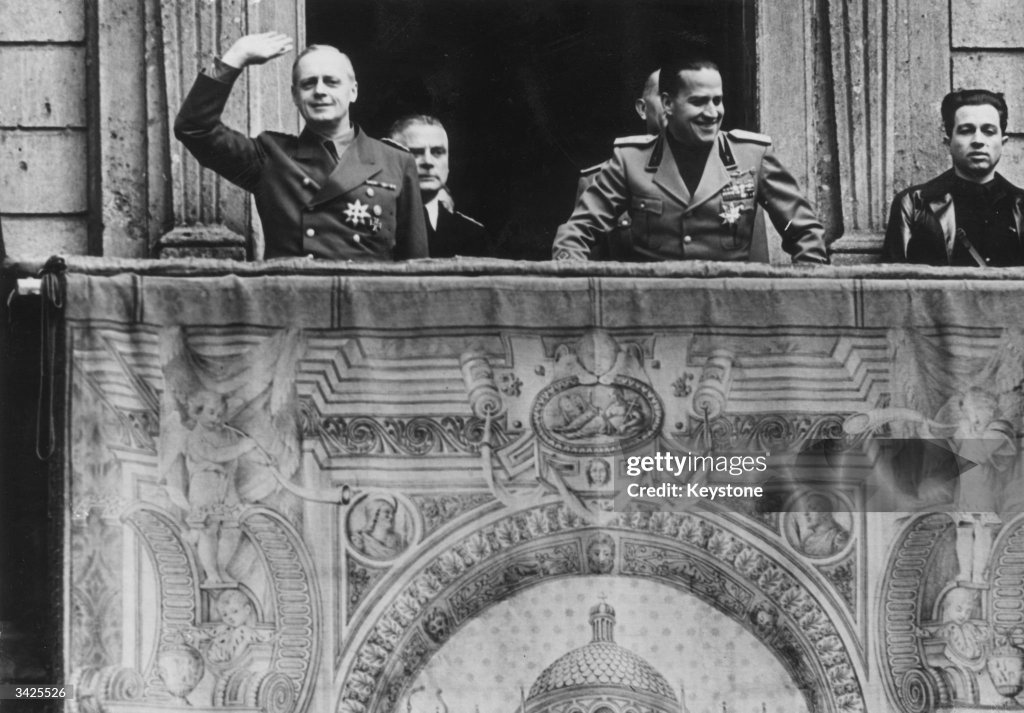
German Chancellor Adolph Hitler was in Berchtesgaden waiting to hear a report from Foreign Minister Joachim von Ribbentrop on the weekend negotiations with Italy by which the relations of the two countries were being converted into a military alliance.
Hitler wishes to negotiate with Stalin. The Reich wants to neutralize Russia with a non-aggression pact and then focus on Poland.
An editorial in the semi-official Hungarian newspaper Pester Lloyd today was interpreted by diplomats as serving notice on Poland that she must choose between the traditional friendship with Hungary and her military alliance with Rumania. The article caused surprise since Hungary’s Foreign Minister, Count Stephen Csáky, last Thursday had reiterated the nation’s “great sympathy” for Poland. The Pester Lloyd, after noting Hungarian faithfulness to Poland “in difficult circumstances,” declared the “attitude of Rumania toward Poland and other allies is more than ambiguous.”
Observers said it was notice to Poland that if she firmly entrenched herself in the British-French-Rumanian camp she would find Hungary, close to Germany and Italy, opposing her, Rumania has received a British guarantee of her independence. Hungary hopes to regain Transylvania from Rumania. The newspaper’s stand was interpreted as aid to Germany in attempting to put pressure on Poland for the return of Danzig to the Reich. Criticizing Poland’s friendship for Rumania, the Pester Lloyd said that “truly it is very difficult not to notice the mental reservations that characterize each step of Rumania” and that “certain Polish circles seem to be ignorant of the fact that a two-faced attitude is not a sign of political reliability.”
Francoist Spain announced its withdrawal from the League of Nations. The Nationalist Spanish government informed the League of Nations that Spain was withdrawing from the League of Nations.
Italo Balbo, the Italian Governor of Libya travels to Egypt. He receives a chilly welcome by the press.
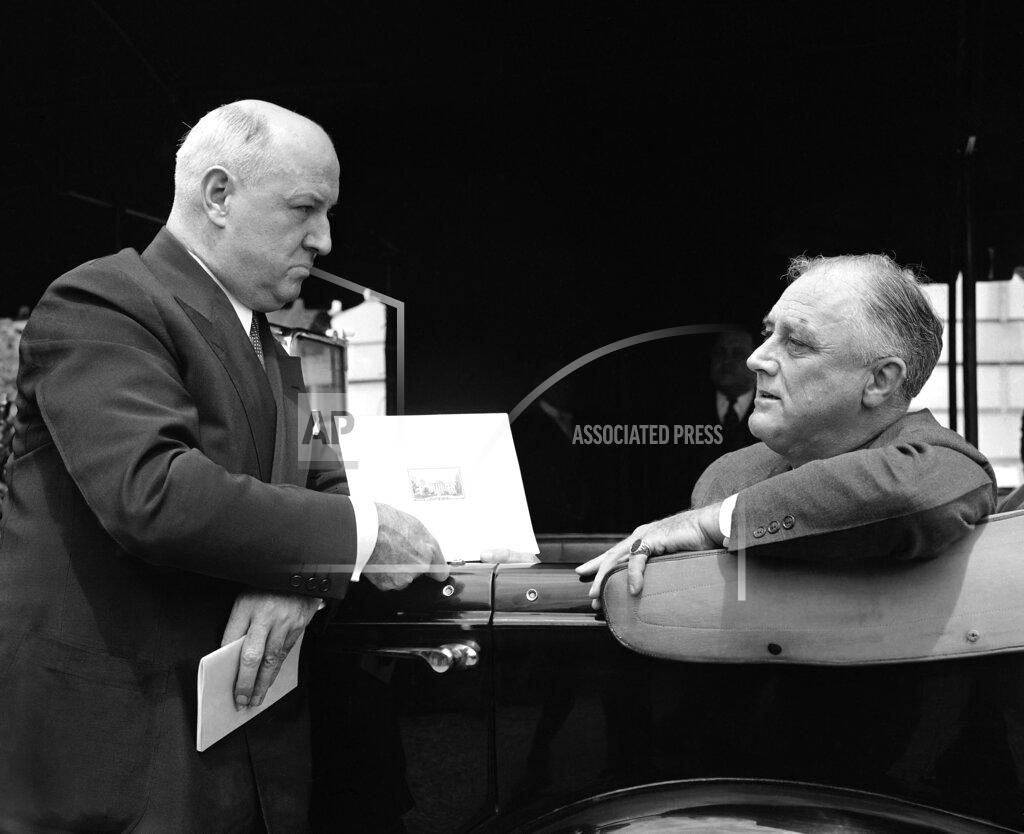
In Washington, President Roosevelt sent to Congress his second plan for reorganization of executive units of the government, conferred with representatives of the bituminous operators and miners, discussed Philippine legislation with Senators and inspected a new electro-turbine locomotive built by the General Electric Company.
The Senate debated the Agriculture Department Appropriation Bill and recessed at 4:53 PM until noon tomorrow. The Temporary National Economic Committee continued its investigation of the beryllium industry. The Education and Labor Committee continued hearings on proposed amendments to the National Labor Relations Act.
The House received the Martin resolution asking the Works Progress Administration for names of persons on its administrative staff receiving $100 per month or more, heard Representative Cox oppose the Labor Committee’s amendments to the Wages and Hours Law and adjourned at 3:16 PM until noon tomorrow. The Appropriations subcommittee which is Investigating the WPA heard testimony of Mayors of Milwaukee, Detroit, Louisville and Amarillo, Texas, regarding relief problems.
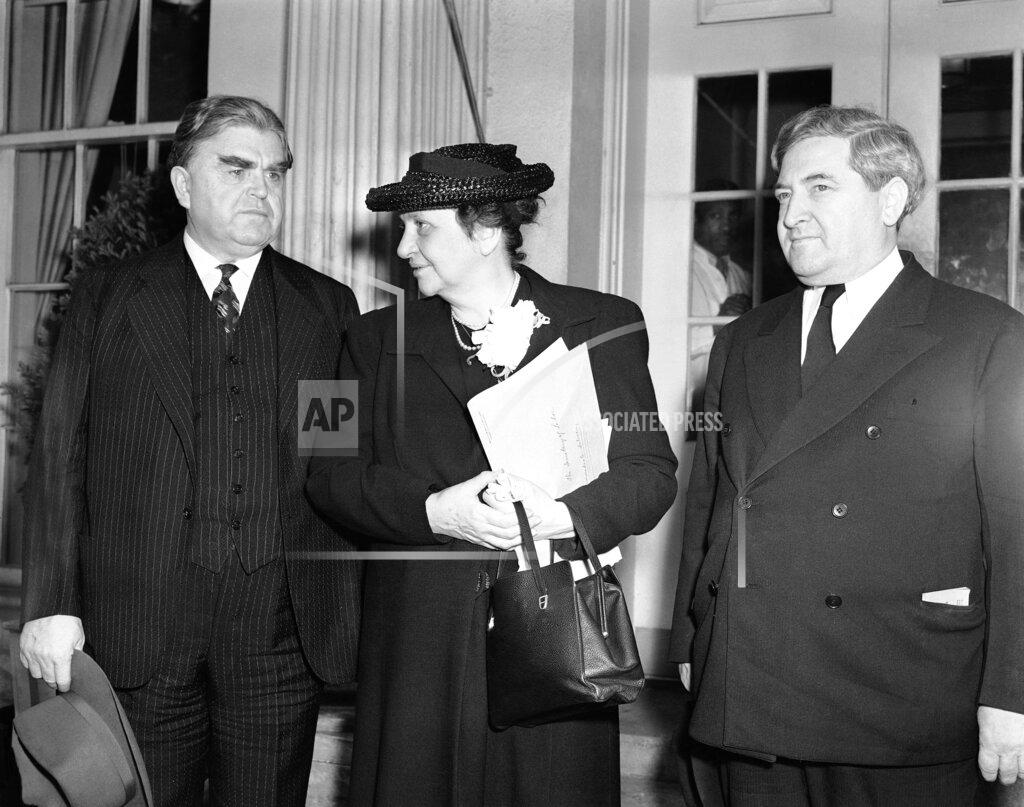
Identifying a “coal emergency,” President Roosevelt asks union and company officials to present a plan for resumption of mining. Brushing aside the issues that divide them as of secondary importance in the coal emergency confronting the nation, President Roosevelt today asked representatives of the United Mine Workers and the bituminous operators, deadlocked in negotiations for a new agreement, to submit to him by tomorrow night a plan for immediate resumption of coal mining.
The President’s request, couched in terms that gave it the aspect of an ultimatum, was presented at a conference in the White House that lasted for an hour and fifteen minutes, attended by members of the joint subcommittee of the Appalachian Wage Conference, which had been meeting in New York since March 14. The conferees returned to New York this afternoon to resume negotiations tomorrow morning. They did not indicate to what extent, if any, they would be able to comply with the President’s demand. Nor would Mr. Roosevelt say what his next step would be in the event the coal deadlock continued.
Prior to the conference at the White House, Frances Perkins, Secretary of Labor, who took part in the meeting, was reported as having warned of a “stern alternative” that confronted the disputants if they failed to resolve the conflict. It was not disclosed what the government had in mind, but it was recalled that in the Pennsylvania mine strike of 1902, which likewise gave rise to a serious fuel crisis, President Theodore Roosevelt compelled a settlement. Ten years later it was revealed that the President had contemplated taking over the mines to be operated by the army.
At a press conference this afternoon President Roosevelt said he had told the representatives of the United Mine Workers and the operators that they were first and foremost American citizens and that they should make this their first consideration, and demanded that they submit to him by tomorrow evening some method by which resumption of mining could take place without further delay. Some 450,000 miners are idle in the Appalachian area and other States.
A second plan of reorganization calling for a broad regrouping of about a score of governmental bureaus and agencies among the various executive departments and designed to reduce the cost of government by $1,250,000 a year was sent to the Capitol by President Roosevelt today with notice that it would be the last plan submitted at the present session of Congress.
Among the changes recommended were abolition of the National Bituminous Coal Commission and the National Emergency Council, and the consolidation of the foreign service of the State, Agriculture and Commerce Departments under the direct supervision of the Secretary of State. The functions of the Coal Commission would go to the Interior Department and those of the NEC to the White House. To expedite consideration of the plan. Senator Byrnes introduced a concurrent resolution proposing rejection. The resolution was referred immediately to committee with indications that it would be scuttled promptly and the plan favorably reported back to the Senate tomorrow, where it is to remain on the calendar the required sixty days before becoming effective.
Except in one or two instances, notably the proposed shifting of the Bureau of Biological Survey and the Bureau of Fisheries from the Agriculture and Commerce Departments to the Department of the Interior, the plan contained little that had not been discounted by the agencies concerned or which might provoke more than perfunctory opposition in Congress.
There was definite promise of a fight, however, against shifting forestry service functions to the Department of the Interior, as the President said he would recommend at the next session of Congress. On this proposal, against which most non-commercial forestry and conservation agencies are aligned, the President said: “In so far as crops, including tree crops, are involved there is something to be said for their retention in the Department of Agriculture. But where lands are to be kept for the primary purpose of recreation and permanent public use and conservation they fall more logically Into the Department of the Interior. I hope to offer a reorganization plan on this early in the next session.”
American Federation of Labor leaders and the National Labor Relations Board, bitter opponents on the issue of changing the Wagner act, met in a surprise conference tonight for the purpose, it was reported, of talking compromise. The meeting was held in the office of Chairman J. Warren Madden. None of the conferees would discuss the meeting, but the CIO general counsel, Lee Pressman, sharply criticized the development in a statement.
Mr. Pressman asserted that AFL spokesmen “are now pleading for mercy and trying to make a backdoor deal with the National Labor Relations Board.” He added that he knew of no reason why the board should give the AFL leaders “an opportunity to work behind closed doors to avoid the penalties of their treachery. This is no time for any barter to save the face of these discredited bellyachers.”
The CIO previously had said that the AFL leaders drafted their amendments to the Wagner act with the aid and advice of the National Association of Manufacturers and other corporate interests. The federation was represented at the Labor Board conference by its general counsel, Joseph A. Padway, John P. Frey and two members of Mr. Padway’s legal staff.
A thinly veiled warning that he would demand tax increases to compensate for any large dislocations to his budget was raised by President Roosevelt today in an effort to stem the farm-spending splurge which broke loose in the Senate yesterday and administered the death blow to the already wounded economy drive on that side of the Capitol.
Declaring at his press conference that legislative leaders had broken a pledge to him by their failure to provide means, for financing $212,000,000 in farm payments voted last year, the President placed upon Capitol Hill responsibility for the tentative increase of nearly $400,000,000 in the new agricultural appropriation, of which another $225,000,000 was earmarked by the Senate for parity compensation to producers of five basic crops.
Thus, Washington was witnessing what appeared to many as a strange turn in events, with the President who hitherto had declared himself openly for deficit-spending as a recovery measure, demanding the pay-as-you-go principle for additional farm aid; and leaders of the economy group at the Capitol running for cover under the pressure of the stronger farm group.
The Catholic Church beatifies the first Native American, Kateri Tekakwitha.
Bolivia has sent a representative to Berlin to seek German assistance in exploiting the petroleum fields confiscated from the Standard Oil Company and in the establishment in Paraguay of an export outlet to European markets. Bolivia is offering to supply petroleum to Germany in a giant barter deal under which Bolivia would accept German manufactured goods, especially machinery, in exchange. The Bolivian agent is charged especially with negotiating a barter deal amounting to approximately $15,000,000 by which Germany would supply a 350-mile pipeline across the Chaco and install a refinery in Paraguay from which Bolivian petroleum products could be shipped down the Paraguay and Parana Rivers to Buenos Aires for transshipment to Europe.
This barter deal is to be based on a concession granted by the Paraguayan Government last month giving the Bolivians an absolute and unqualified monopoly to refine crude oil and supply all Paraguay’s requirements for thirty years. Paraguay agrees not to charge any export tax or other levies on petroleum products shipped from the Bolivian-operated refinery. The deal with Paraguay was made possible by a treaty between Argentina and Bolivia by which Argentina permits the transit of Bolivian petroleum through Argentine territory as long as the Bolivian oil fields are not returned to Standard Oil. President Roberto M. Ortiz of Argentina recently put this treaty into effect by decree following the adjournment of Congress without having ratified it.
The British ambassador to Japan, Sir Robert Craigie, had been instructed protest to Japan against the bombing of the British Consulate at Chungking the previous week.
Japan rejects protests on its raids, saying it cannot help damaging foreign property near targets. Bombings of Amoy and nearby towns continue. A Japanese spokesman announced today that from now on, Japan would prevent third-power relief organizations from supplying food and medicine to Chinese refugees in cities under attack. The spokesman’s statement applied specifically to Ningpo, in Chekiang Province, 100 miles south of Shanghai, and nearby ports. It was believed, however, that the policy would be extended to other Eastern and Southeastern China ports where aerial bombardments continued today.
Asked about the refusal of Japanese to permit the landing at Ningpo of 300 bags of American Red Cross rice and quantities of medical supplies purchased with American funds, the spokesman said: “The policy of the Japanese Navy is to prevent the landing of such supplies.” The shipment was aboard an Italian-registered coastal steamer which the Japanese forced to return to Shanghai from Ningpo on Friday. Dispatches from Amoy, a port in Southeastern Fukien Province, said that cargo boats carrying rice to Chuanchow, fifty miles to the north, had been bombed and machine-gunned by Japanese naval planes. Several seamen were said to have been killed.
Amoy and nearby towns and villages on the southern coast were heavily bombed, with a number of casualties, apparently in line with a policy previously announced by the Japanese — to bomb without restraint wherever Chinese military personnel or materials were found. Dispatches described the Amoy bombing as the heaviest in six months and said that residences of foreigners on Kulangau Island, off the port, were shaken. They said that planes operating against South China coastal cities were based on an aircraft carrier off Amoy.
A correspondent at Foochow, Southeastern port, said that attacks continued there. The Japanese also were bombing Yenping and other important cities in the interior and at the headwaters of the Min River. In Central China, midway between Hankow and Chungking, Ichang was attacked yesterday by twelve planes that dropped fifty bombs.
Chinese leadership called off the offensive toward Nanchang, Jiangxi Province, China.
The Battle of Nanchang ended in Japanese victory.
The Japanese claimed that their counter offensive in Northern Hupeh smashed the Chinese attempt to recapture Hankow. The Japanese were said to be deployed on an 80-mile front between Sinyang and Hanlu. They claimed to have routed 20 Chinese divisions.
Dow Jones Industrial Average: 133.67 (+2.00).
Born:
Ralph Boston, long jump track athlete (Olympics, Gold medal, 1960; Silver medal, 1964; bronze medal, 1968), in Laurel, Mississippi (d. 2023).
Mark Smolinski, NFL and AFL fullback and tight end (AFL Champions, Super Bowl III Champions-Jets, 1968; Baltimore Colts, New York Jets), in Alpena, Michigan.
Herb Hippauf, MLB pitcher (Atlanta Braves), in New York, New York (d. 1995, from cancer).
Pierre Desproges, humorist, in Pantin, France (d. 1988).



 History Diaries