A clash between Cambodians and ARVN leaves seven Cambodians dead. Cambodian students demonstrate in demanding the ousting of all U.S. military personnel in their country. It is then alleged (but later denied) that Cambodian jets strafed ARVN troops searching for Việt Cộng. The crisis cools when Cambodia asks that the UN send a mission to Cambodia to disprove charges it shelters Việt Cộng.
A terrorist is captured trying to place an explosive charge under a Saigon bridge over which Defense Secretary McNamara’s car is to pass on 12 May. A plot to assassinate U.S. Secretary of Defense Robert S. McNamara was foiled, three days before his visit to South Vietnam, with the arrest of Việt Minh agent Nguyễn Văn Trỗi. Trỗi, who would be celebrated as a martyr in North Vietnam after his October 15 execution, had planned to detonate a bomb as McNamara was being driven across the Công Lý Bridge in Saigon (now Hồ Chí Minh City) on May 12.
Ngô Đình Cẩn, youngest brother of the late President Ngô Đình Diệm, was executed at sundown today by a firing squad. The slight figure of the 53-year‐old man who ruled Central Vietnam until November of last year hung limply from a prison stake for a few moments while Vietnamese photographers recorded his end. He was the most prominent member of the once-powerful Ngô family remaining in South Vietnam. For the last moments before his death, Mr. Cẩn faced a 10-man firing squad alone, his lips still moving after a Roman Catholic priest had delivered a final benediction and moved aside. About 300 people, mostly military officers and newsmen, witnessed the execution. A crowd outside the prison showed no signs of emotion. Mr. Cẩn was convicted of murder, extortion and other offenses committed during the presidency of his brother, who was overthrown in a coup d’état November 1. Mr. Diệm and another brother, Ngô Đình Nhu, his political adviser and chief minister, were killed a day after the coup.
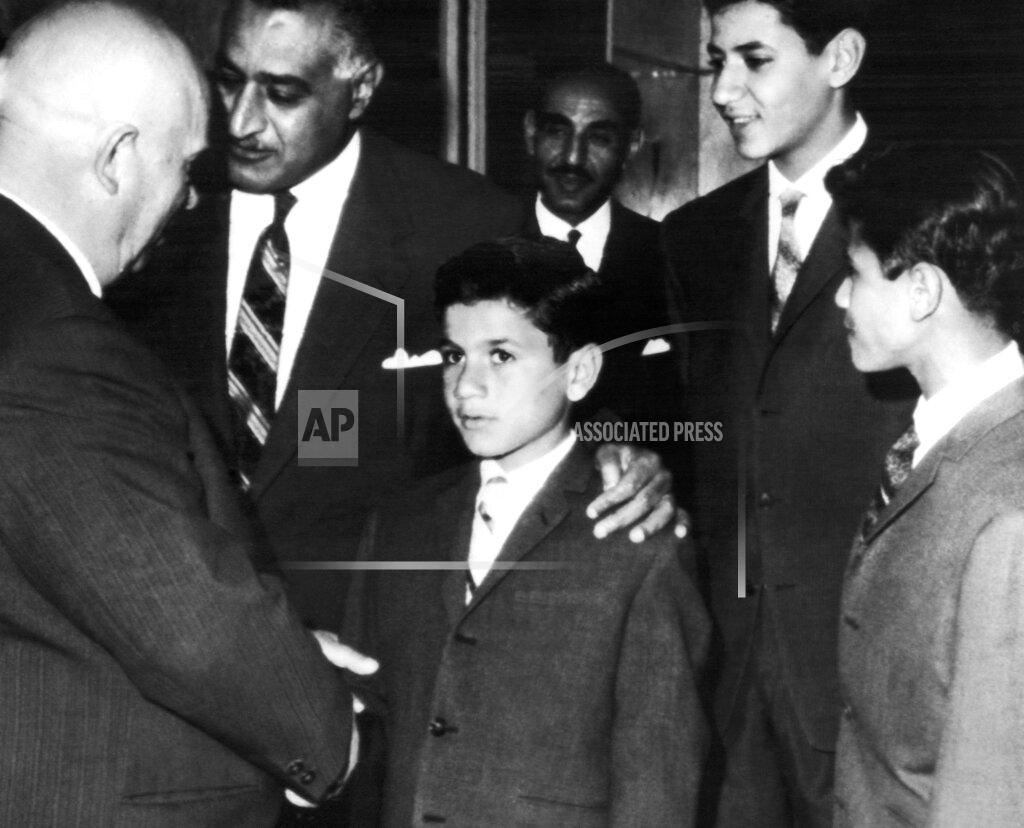
Soviet Premier Nikita Khrushchev visits Egypt. Premier Khrushchev told thousands of cheering Egyptians today that he was making his first trip to Africa “for peace and the struggle for liberation.” “The Soviet Union is carrying out a great task for the sake of liberating nations and consolidating peace all over the world,” he said. Mr. Khrushchev spoke at dockside in Alexandria as he disembarked from the Soviet motorship Armenia to begin a 16‐day visit to the United Arab Republic. President Gamal Abdel Nasser, greeting the Soviet leader and a party including members of his family and 100 aides and ministers, hailed Mr. Khrushchev as a “courageous warrior.”
Crowds standing three and four deep cheered Mr. Khrushchev when he rode five miles through downtown Cairo. The Premier, wearing a dark blue suit, stood beside Mr. Nasser in an open American car. The beaming visitor waved his arms and Cairenes applauded and waved back. In remarks of greeting, Premier Khrushchev showed he planned to stress the theme of the Soviet desire for peace and coexistence. He is scheduled to make at least seven public addresses. He alluded to the Soviet Union’s dispute with Communist China by telling the welcoming throng that his policy of peaceful coexistence was “truly Leninist‐Marxist.” Mr. Nasser brought his distinguished visitor to Cairo immediately for a big public reception and a state dinner in Kubbeh Palace, a residence of former King Farouk.
Mr. Khrushchev, who recently observed his 70th birthday, is here ostensibly to attend ceremonies next week marking the completion of the first stage of the Aswan High Dam project, which the Soviet Union is assisting. It became clear during the receptions in Alexandria and Cairo that the Soviet leader intended to utilize his visit to make political propaganda.
A British bomber flew over the Radfan Mountains north of Aden today and dropped leaflets warning dissident tribesmen in revolt against the Federation of South Arabia to clear out. Meanwhile, it was disclosed that a British bomber dropped 14 bombs in a raid on tribesmen on a mountain peak last weekend. Group Capt. Alex Blythe, commander of the Royal Air Force station at Khormaksar near here, said the 1,000‐pound bombs had inflicted “considerable damage to rock entrenchments” and had been carried out with permission of the British Defense Ministry. “A number of persons were killed,” he said, adding that it was the first time in the operations against the tribesmen that there had been such a raid. A Shackleton bomber made seven runs over the target — a peak near the British advance headquarters of Thumair — dropping two bombs each time.
In today’s flight, about 60 miles north of Aden, the British bomber dropped Arabic‐language leaflets along a strategic escarpment of jagged precipices where a large number of warring tribesmen were believed hiding.
The Yemen radio said Radfan tribesmen in a “fierce” battle had killed 30 British soldiers, including 13 paratroopers whose bodies were seen on the rocks, and had wounded more than 20 soldiers. But a British spokesman denied the report. He said British casualties so far totaled two killed, two missing, presumed dead, and eight wounded. The Yemen radio said two men, two women and a child had been killed in the “heroic battle by the people of Radfan fighting British occupation forces.”
Greek and Turkish Cypriotes exchanged gunfire today in Nicosia and the Kyrenia Mountains in northeastern Cyprus. British troops of the United Nations, meanwhile, manned positions between the warring communities in the south‐central village of Louroujina. There were no reports of casualties in the fighting which was reported to be raging in the Kyrenia area, where Turkish Cypriotes were clinging desperately to their mountain strongholds. During the night, there were sporadic exchanges of fire in Nicosia. No casualties were reported. Louroujina was quiet but tense. No shooting was reported there since yesterday, when a Turkish Cypriote was wounded by Greek gunfire. The Greeks had dug into hilltop positions overlooking the village. The Greek Cypriotes have refused to give up their gunposts in spite of United Nations efforts to get them to withdraw and avert the possibility of new violence.
U.S. Secretary of State Dean Rusk said today that absolute national sovereignty in the nuclear age was an outmoded concept unable to protect the non‐Communist world’s vital interests. Without mentioning President de Gaulle of France by name, Mr. Rusk gave Washington’s reply to his demand for a louder and fully independent voice in world affairs. Departing from the prepared text of a lengthy foreign policy speech at a luncheon meeting of Belgian‐American associations, he said Americans “simply cannot understand the revival of the notion of absolute independence in dealing with affairs within the free world.”
Americans, he said, have little of it themselves nowadays, with their freedom of action “rigorously circumscribed” by various commitments. These include a commitment to defend France against attack and to consult Paris on affairs within the area of the North Atlantic Treaty Organization. The Secretary gave Western Europeans this message: Unity is succeeding and should be increased. More, not less, unity needed. The question is not whether Europe and the United States should work together, but how to do it better. Thus, he set the stage for next week’s meeting at The Hague of foreign ministers of NATO countries, which will take up the organization’s development in the light of General de Gaulle’s position. Mr. Rusk advocated further steps for political, economic and military cooperation both within Europe itself and across the Atlantic toward the goal of partnership between the United States and a united Europe.
Sheik Mohammed Abdullah, the Kashmiri leader recently released from prison, is advocating an Indian‐Pakistani condominium as a solution for the Kashmir problem. Under the plan, India and Pakistan would share sovereignty over the disputed and divided state of Jammu and Kashmir. This report was confirmed here tonight on good authority after its publication by The Times of India. It was not made clear whether the condominium would cover the entire state or leave some parts under the exclusive sovereignty of one or the other country. However, authoritative sources emphasized that the plan would reunite the essential parts of Kashmir now divided by a cease‐fire line. Kashmir was the scene of fighting between Pakistani and Indian forces after Britain gave up its rule of the subcontinent in 1947. A United Nations ceasefire January 1, 1949, left one‐third of the state in Pakistani control and the rest, including the rich Vale of Kashmir, under India.
Part of the cease‐fire plan called for a plebiscite on Kashmir’s status. India later declared, however, that the part of Kashmir she controls is an integral part of her territory because of an act of accession by the Maharaja of Kashmir later approved by a Kashmiri assembly, and has refused to permit a plebiscite. Advocates of the condominium solution say it would eliminate antagonism between India and Pakistan, which has generated religious antagonism in the two countries. India, though it is officially secular, is predominantly Hindu, and Pakistan is officially Islamic. Most of Kashmir’s people are Muslim.
South Korean President Park Chung Hee reshuffled his Cabinet, after a series of student demonstrations against his efforts to restore diplomatic and trade relations with Japan. Choi Tu-son, the publisher of South Korea’s largest newspaper, resigned as Prime Minister and was replaced two days later by Foreign Minister Chung Il-kwon.
The United States and Rumania will open high‐level economic and political discussions here on May 18 in what may become the most important development affecting Washington’s relations with Eastern Europe since World War II. The announcement that the two governments had agreed on wide‐ranging talks was made by the State Department here and simultaneously by the Communist Government in Bucharest. The United States announcement said “these talks will deal primarily with economic subjects, especially trade, but will also cover other matters which affect relations between the two countries.”
The steam engine GWR 4073 Class 7029 Clun Castle ran between Plymouth to Bristol Temple Meads non-stop in a record time of 133 minutes and 9 seconds. Had it not been restricted to 80 mph down Whiteball bank near Wellington, it could have improved on the time.
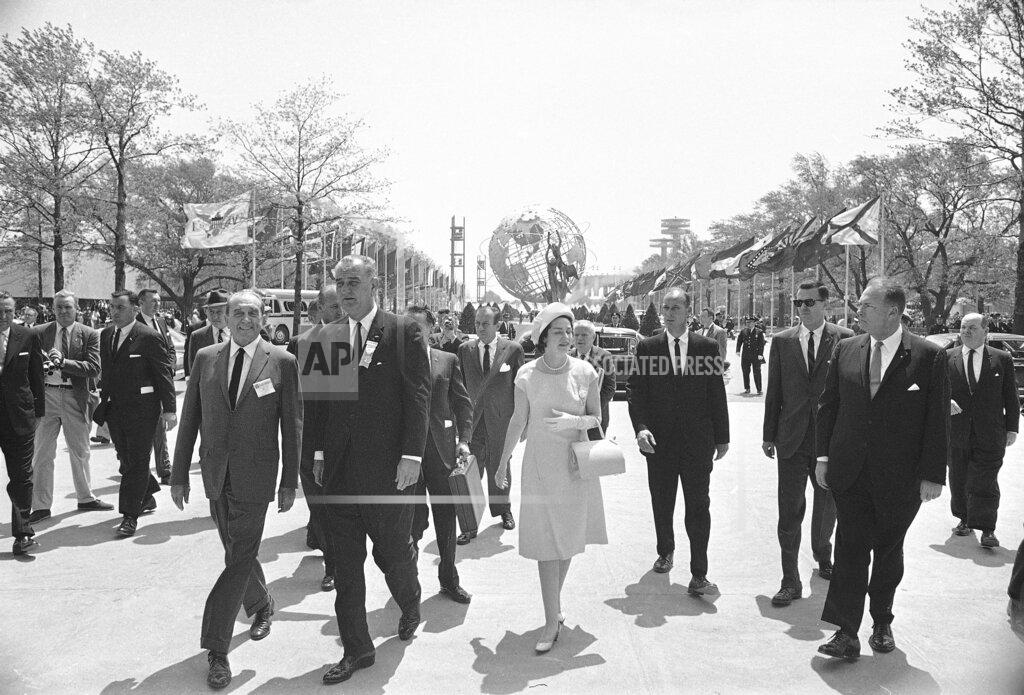
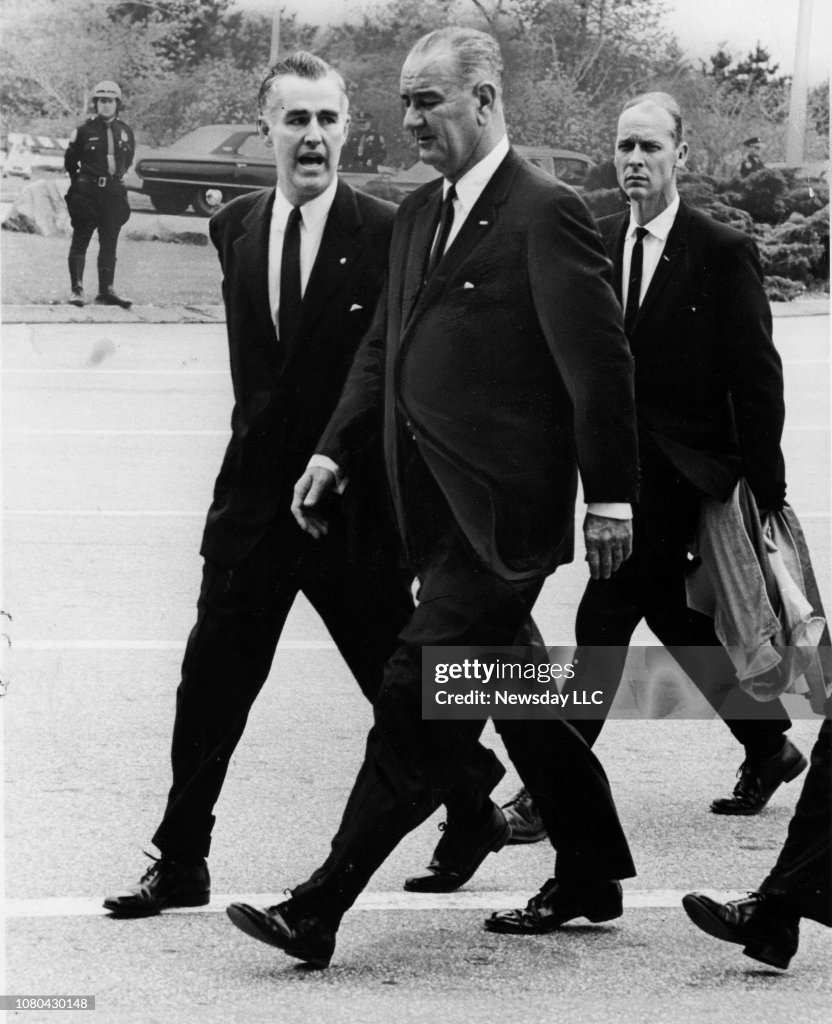
In a busy day of talks and travel in and around New York yesterday, President Johnson made strong pleas for the civil rights bill and his program against poverty. Appearing at the World’s Fair before 7,000 persons attending the opening of the 50th anniversary convention of the Amalgamated Clothing Workers, the President announced that a $1 million federal grant had been approved to help start a major drive in Harlem against juvenile delinquency. More than 100,000 persons were inside the fairgrounds when the President arrived, but most of them were kept behind wooden barriers during his visit. Bright sunny skies came to the fair with Mr. Johnson’s arrival, following a morning of cloudy weather.
The $1 million grant — through the President’s Committee on Juvenile Delinquency and Youth Crime — will help bring about improvements in schools, vocational training, employment services and crime prevention, Mr. Johnson said. These are improvements, he added, that have been planned by people here. The grant will be the first part of a previously disclosed $110 million, three‐year program of aid for Harlem, scheduled to start July 1. Mr. Johnson’s speech before the clothing workers was the beginning of an active day for him in this area. Flying up from Washington, he went immediately to Singer Bowl for the address, then to the Venezuelan Pavilion to snip a ribbon opening that building. From there he went to the Federal Pavilion to hold his second news conference of the week, in the wilting heat of an auditorium where fans were turned off so he could hear reporters’ questions.
The President then attended a luncheon at Roosevelt Raceway in Nassau County (he did not see the special races there) and followed this with a stop at Mitchel Field to dedicate the John F, Kennedy Educational, Civic and Cultural Center. Immediately after that came a helicopter flight to Atlantic City to join the New Jersey Democrats in a fund‐raising dinner. In his address at the fair, the President emphasized his programs for fighting discrimination and poverty and for providing medical and hospital care for the aged. The nation must open wide the door of equality and invite all the nation to walk through that door, the President said, “not from charity, not from coercion but from a deep commitment to justice.”
President Johnson’s visit to the World’s Fair yesterday was made under tighter security precautions than those on his first visit, on opening day, April 22. On that day 3,000 New York City policemen, 1,000 World’s Fair policemen and an undisclosed number of Secret Service and Federal Bureau of Investigation agents made up the security force. Yesterday the total force was increased by more than 500. No explanation was given. All transportation was halted yesterday except for the Presidential motorcade. A brief flurry occurred a few minutes after the President arrived at 11 AM, when two men were halted at a gate, one of them carrying a .30‐caliber rifle in a case. The men said they were from the Winchester Arms Division of the Olin Mathieson Chemical Corporation in New Haven, Connecticut, and were taking the rifle to the New England Pavilion as a replacement for one to be returned to the company. The two identified themselves as John Nassit of Hamden, Connecticut, and Edmund G. Dunn of New Haven and were escorted to the pavilion by New York City Detective Joseph B. Cook.
Northern Senators — particularly those in the Midwest — are the people responsible for keeping a civil rights bill from coming up for a vote, Senator Hubert Humphrey said here today. “The problem of the civil rights bill is not with Southern Senators. We know where they stand,” the Minnesota Democrat told a news conference. “Our problem is with the 81 members of the Senate from the North, West and East,” he said. “The destiny of the civil rights bill is in their hands.” Mr. Humphrey urged voters in the Midwest to do “just one thing — ask their Senators to permit us to vote on the civil rights bill.” Mr. Humphrey, in Des Moines to speak at the Iowa Jefferson Day dinner, said he did not expect passage of a civil rights bill this month. He said, however, that he was optimistic about the bill’s chances. Passage of the bill is the most important crisis facing the nation he said. “This is much more important than the crisis in Vietnam or anywhere else,” he asserted. “This involves the internal strife — which is worse than external strife.”
Michigan Governor George Romney was endorsed as favorite son Presidential candidate and leader of the delegation to the Republican National Convention at the party’s state convention here today. Although the resolution is not binding, it is expected that almost all of the 48 delegates will follow its recommendation to go to San Francisco July 13 with no commitment to any other candidate. The resolution was put forward by Romney supporters with the governor’s acquiescence and was viewed as a blow to backers of Senator Barry Goldwater of Arizona.
At this stage in Republican maneuvering for the Presidential nomination, it is the field of liberal and moderate hopefuls against conservative Senator Barry Goldwater of Arizona. “Who can stop Barry, if anybody?” automatically is asked, discussed and speculated about wherever Republicans congregate. The situation somewhat resembles that of the Democrats in late spring, 1960, when their main talk was of coalitions and strategies that might thwart front‐runner John F. Kennedy. But the experience is unique for Republicans, and hardly a pleasant one for those who prefer someone other than the Arizona Senator as party standard bearer.
With approximately half the 1,308 delegates chosen and only two Presidential primary contests remaining, the Republican Presidential picture two‐and‐a-half months before the National Convention in San Francisco shapes up as follows: Senator Goldwater has at least 280 delegate votes “locked up,” and appears to be within calling distance of a majority on the first ballot. The California primary on June 2 between the Senator and Governor Rockefeller has become the key to Goldwater success or possible failure. At stake is a huge block of 86 legally committed delegates, and a thumping psychological boost — or flop.
When the chairman of the Federal Reserve Board, whoever he is, evaluates the health of the American economy he chooses his words as carefully as a bride putting away her new crystal glassware. Thus, when the present chairman, William McChesney Martin Jr., observed on Wednesday that “the threat of inflation rears its ugly head once again,” some of his auditors at an Advertising Council meeting wondered whether he was saying, in effect: it’s time to make credit scarce and more expensive. Mr. Martin, however, went on to say that he saw “no immediate question” of higher interest rates “based on supply and demand factors.” The Federal Reserve, he added, “hasn’t led a move toward higher interest and the Federal Reserve shouldn’t try to lead the move.” But he also said, in keeping with his first remark, that the authorities must be alert to “an inflationary surge, which could come at any time.”
Expenditures of $79.5 million on 31 specific channel and harbor improvements were recommended last week before the House Committee on Appropriations by the American Merchant Marine Institute. In advocating spending about $15 million more on three more projects than the $64 million for 28 projects provided in the Presidential budget for the coming fiscal year, the ship trade association called attention to the fact that today’s larger ships required deeper channels. In testimony presented to the committee the group said, “The great savings in labor costs inherent in the operation of the larger vessels is one of the principal factors which accounts for the construction and operation of large vessels.” Larger ships, the institute said, result in lower transportation costs per ton of cargo. “Since the shipowners are not responsible for ever‐increasing labor costs, they certainly should not be criticized for building larger vessels requiring deeper channels,” the testimony added.
In a holiday mood, Mrs. Lyndon B. Johnson, wearing a bright yellow dress, made an impromptu, hurried walking tour of the World’s Fair yesterday. “Oh, those tinkling temple bells,” she said, pointing to the Thai pavilion. “It’s just so typical. And look over there — what’s that? What’s that?” Mrs. Johnson was excitedly pointing to the bright red pavilion of the Republic of China. Several moments passed because no one knew the answer. Angier Biddle Duke, chief of protocol of the State Department, and Norman K. Winston, United States Commissioner of the World’s Fair, who were accompanying Mrs. Johnson, finally managed to come up with the name of the pavilion. Mrs. Johnson’s visit was unexpected. The President was to have been accompanied by his daughter, Lynda Bird. But Lynda Bird had ideas of her own. “She had a date back in Washington tonight and decided she would rather go back there to her date than see the fair,” Mrs. Johnson explained. She and her daughter had seen “Il Trovatore” at the Metropolitan Opera Friday night.
At Cleveland, Pedro Ramos gives up 4 home runs to New York — Tony Kubek, Mickey Mantle, Joe Pepitone, and Hector Lopez — as the Yankees win 6–2.
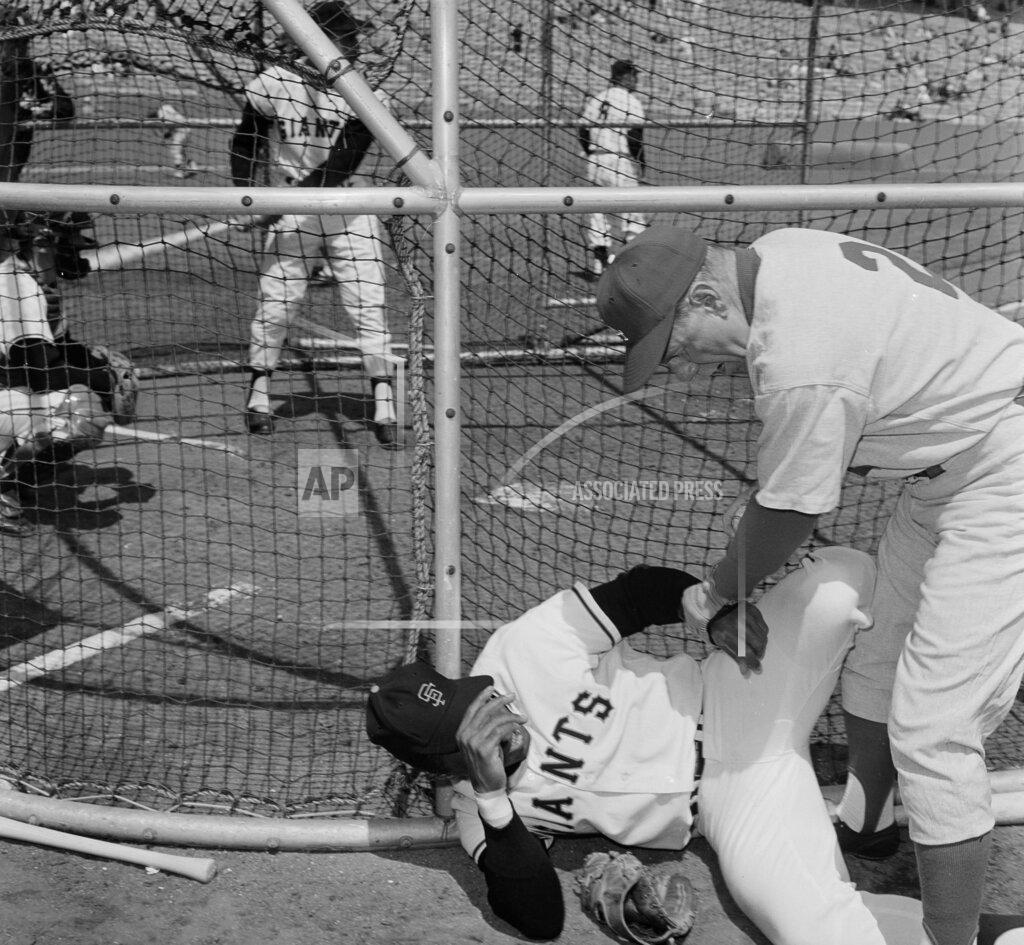
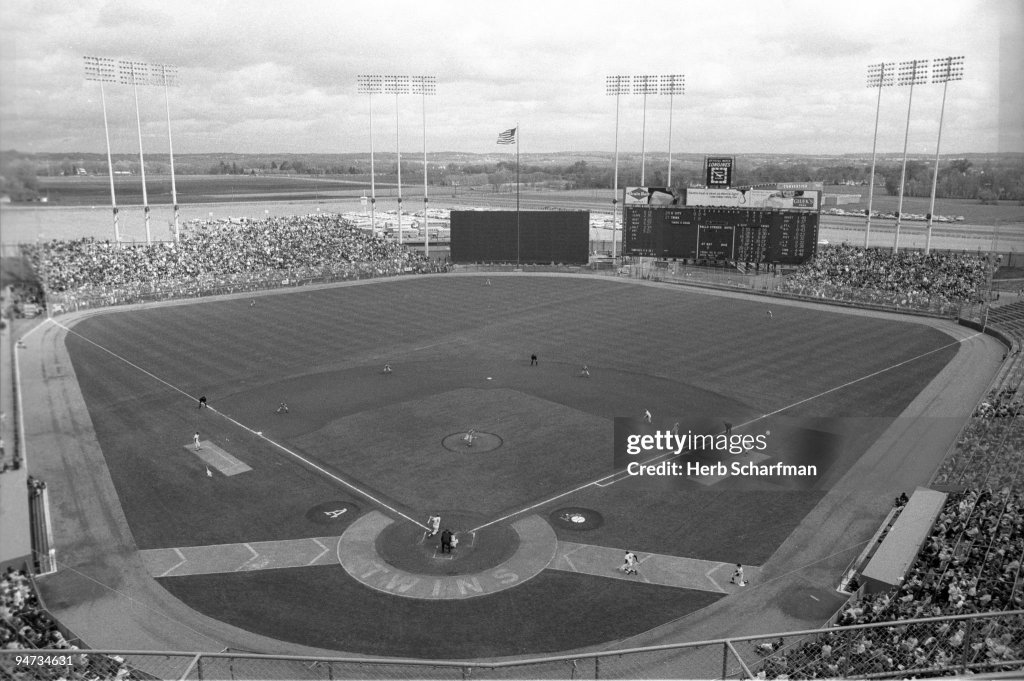
The San Francisco Giants beat the Los Angeles Dodgers, 3–2. Willie Mays got a double to extend his hitting streak to 16 games.
Born:
Miloslav Mečíř, Czech tennis player (Olympic gold medal, 1988), in Bojnice, Czechoslovakia.
Robert Niehoff, NFL defensive back (Cincinnati Bengals), in Cincinnati, Ohio.
Victor Simmons, NFL linebacker (Dallas Cowboys), in Chicago, Illinois.
John Lott, NFL center and guard (Pittsburgh Steelers), in Denton, Texas.
Kevin Saunderson, American electronic music producer and Detroit techno artist; in Brooklyn, New York, New York.
Died:
Ngô Đình Can, 53, South Vietnamese politician who had brutally governed the area around the city of Huế after being picked by his older brother, the late President Ngô Đình Diệm. Convicted by the military government of murder, extortion and illegal arrests, Can was refused asylum by the United States embassy after the assassination of Diệm and another brother, Ngô Đình Nhu. Because he was severely ill with diabetes and heart trouble, Can was taken on a stretcher to a sporting field in Saigon, tied to a wooden stake, and executed by a firing squad. Earlier in the day, Phan Quang Đông, the former chief of Can’s secret police force, was executed at the municipal stadium in Huế before a crowd of 40,000 people.

 History Diaries