Cambodian Communist forces, shifting their dry-season offensive from Phnom Penh to the country’s only deepwater port at Kompong Som, overran two government battalions and a village only 14 miles inland from the port. The Cambodian government, terming the situation “very grave,” has moved about 1,000 reinforcements into Kompong Som, 134 miles southwest of Phnom Penh.
The Việt Cộng canceled further talks with South Vietnam and walked out of the Joint Military Commission negotiations. The source said the chief Commuist delegate, Major General Hoàng Anh Tuấn, announced that his delegation had decided to sever the negotiations. The source said that the meeting had lasted only 15 minutes. Mr. Tuấn reportedly gave a handwritten letter to the Saigon delegation chief, Brigadier General Phan Hòa Hiệp, calling off the discussions. Then he walked out without a word, the source said. Meanwhile, Communist shellings and running battles took place near Huế in the heaviest fighting in South Vietnam’s northern sector since the 1973 peace agreement.
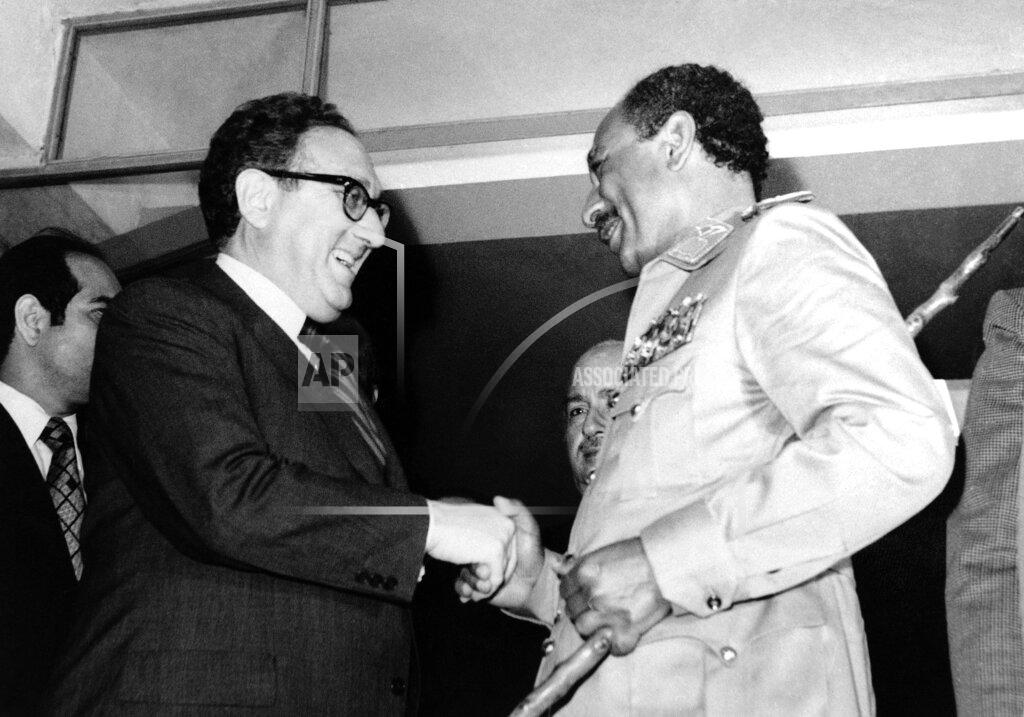
Secretary of State Kissinger received an endorsement from Saudi Arabia in his drive for an Israeli-Syrian military disengagement, then flew to Cairo to seek additional backing from Egypt. For the peripatetic Kissinger party, the day began in Jerusalem and included a stop in Riyadh, the Saudi capital, before winding up in Cairo.
Despite diplomatic efforts to end the battle of attrition, the long-range fighting between Israel and Syria continued at serious levels today and spilled once more, into Lebanese territory. It seemed increasingly clear to soldiers and others here that during his trips between Damascus and Jerusalem, Secretary of State Kissinger had had little — if any — success in his efforts to damp down the combat. Syrian gunners last night and today shelled large areas of the Syrian territory occupied by Israel since October, at times using salvos of Soviet-made Katyusha rockets that fall in a tight and destructive pattern. One Israeli soldier was reported killed.
Israeli fighter‐bombers, in turn, bombed and strafed Syrian targets in the area of Mount Hermon, which overlooks the Israeli‐occupied enclave in Syria. The top of the mountain and its southwest ridge are held by Israel. In what appeared to be coordinated action, other planes also attacked an area under the western slopes of Mount Hermon in Lebanon. An Israeli announcement said that “terrorist concentrations,” by which it meant bases for Palestinian guerrillas who are assisting Syria in the fighting, were hit in the raids on Lebanon. Israel asserted that all her aircraft returned safely. The Israelis have reported no aircraft shot down since late last month, indicating that the Israeli Air Force has found a way to avoid destruction by the Soviet‐made surface‐to‐air missiles that Syria uses.
The Israeli announcements today said that both in the morning and afternoon, shells hit Har Dov in the northwestern part of the Golan Heights area — occupied since 1967 — and this seemed to indicate that the shelling came from Lebanon and from weapons manned by Palestinian guerrillas. The Syrians said that they began using artillery and tank cannon fire against Israeli positions on Mount Hermon last night and then attacked other targets during the day. Militarily, what is going on is restricted and limited warfare of a peculiar nature. Except for a road ambush on Mount Hermon last week, the Syrians have not undertaken any ground initiatives, nor is there any present evidence they intend to do so. A long series of interviews during visits to the front indicate that patrolling is very limited and in many sectors of the front nonexistent. Correct or not, the general assessment of senior Israel military sources is that any major ground attack is unlikely to take place. Israeli planners do not believe Syria can wage, a one‐front war of even limited duration with Israel without assistance from other Arab states.
The International Institute for Strategic Studies said that early agreement between the United States and Russia on significant strategic arms limitations is now unlikely. The Soviet Union wants to preserve its numerical edge in any permanent treaty on offensive arms curbs, the London-based institute said. The annual report by the International Institute for Strategic Studies said strains between the superpowers had increased despite all the emphasis in the United States on detente last year and President Nixon’s desire for diplomatic successes to offset “the damage of Watergate.” it said the “euphoria and expectations” surrounding American‐Soviet relations at the outset of 1973 had disappeared by the year’s end.
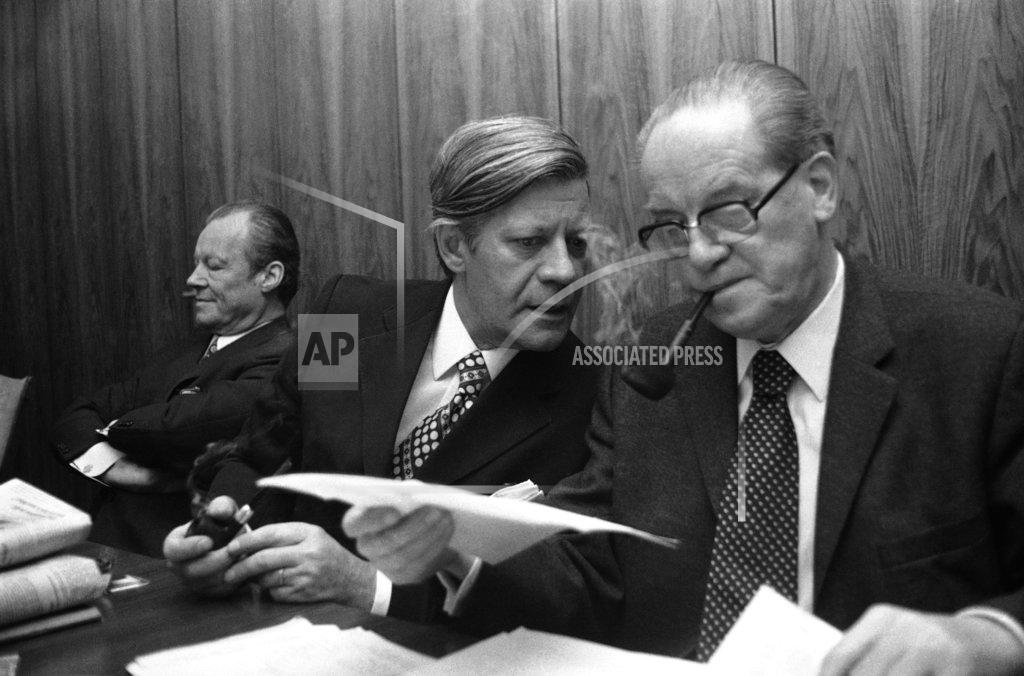
Helmut Schmidt, Willy Brandt’s expected successor as Chancellor of West Germany, will place far less emphasis on developing relations with the Communist countries than Mr. Brandt did, according to a close associate. Aides also say that Mr. Schmidt, known as pro-American and an “Atlanticist,” is also expected to work at easing the strains in the European Common Market.
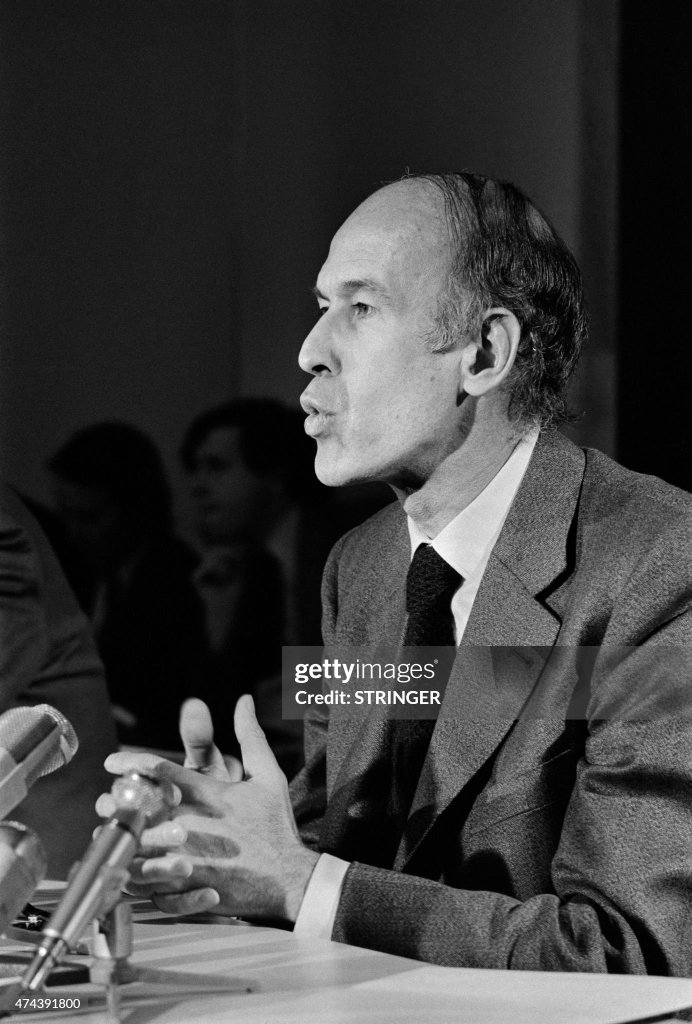
With the election of a new President of France nine days away, there is a major effort to attract Gaullist voters, who appear to be the key to the run-off.
Danish government spokesmen said elections would be held June 11 after the nation’s two biggest political parties announced they would not support two key economic bills offered by the minority Liberal government to combat soaring trade deficits. Thousands of workers had left their jobs and threatened a general strike if the bills to hike sales taxes and cut welfare services were not withdrawn.
Nazi-hunter Beate Klarsfeld was freed from a prison in Cologne following massive protests against her arrest. A spokesman for the prosecutor’s office said the court was convinced that Mrs. Klarsfeld would appear at her trial June 25. She was arrested April 17 at the site of the former Dachau concentration camp near Munich on a warrant charging her with conspiring with her journalist husband in the abortive 1971 kidnaping of Kurt Lischka, a former Gestapo leader in World War II occupied Paris.
Two U.S. senators and three House members joined in introducing a resolution to deny all military and economic aid to Turkey if it resumes opium production. “There are some prices that are just too high to pay for friendship,” said one sponsor, Senator James L. Buckley (Cons-R-New York). The bill’s sponsors said a massive drop in U.S. heroin supplies occurred during the two-year Turkish ban. They fear the trend will be reversed if Turkey resumes full poppy production in the fall.
Prime Minister Pierre Trudeau and the leaders of Canada’s two principal opposition parties began the campaign for parliamentary elections set for July 8 by pinpointing inflation as the chief issue. Few observers are willing to predict the results, but the vote is expected to produce another minority government.
Six years after he won a landslide victory, Mr. Trudeau found himself unable to piece together a Parliamentary majority for his budget proposals, partly because of the inflation and opposition charges that he was not doing enough to check it.
An earthquake killed 25 people and injured about 100 southwest of Tokyo, Japan. The quake swayed buildings and set off landslides that buried entire villages. The 1974 Izu Peninsula earthquake occurred at 08:33 local time. The epicenter was located off the Izu Peninsula, Japan. Twenty-five people were reported dead. Landslides and damage to roads, buildings, and infrastructure were reported. This earthquake triggered a small tsunami. The magnitude of this earthquake was put at Ms 6.5.
Food prices continued to rise and consumer items became scarce as the effects of a two-day-old nationwide rail strike spread in India. About 7,000 militant railroad workers were reported in prison as police continued a roundup and the government was attacked from both left and right for failing to negotiate a settlement with the 1.5 million workers.
A group of Roman Catholic bishops and missionaries released a 28-page document denouncing as “fatal” the Brazilian government’s policy toward its primitive Indian populations. Banned from publication in Brazil’s press, “The Indian, the One Who Must Die,” was signed by six bishops, all in the western and northwestern regions where many Indians live, and six missionaries. They condemned the government’s “capitalistic economic policy” as milking the poor to benefit a small minority and “international groups.”
The House Judiciary Committee formally began its inquiry into the conduct of the President of the United States. The Judiciary Committee of the U.S. House of Representatives, composed of 21 Democrats and 17 Republicans and chaired by Peter W. Rodino, opened hearings on whether there was probable cause for a vote of the full House on impeachment of the U.S. president, Richard Nixon. After a brief public ceremony in which committee leaders pledged to use the “awesome” impeachment power wisely, the committee reconvened in secret session to begin examining evidence assembled by its staff. The initial three-hour session was devoted to a summary of events leading up to the Watergate burglary in June 1972. The opening of the hearing, the first on impeachment of a U.S. President since 1868, was nationally televised for 20 minutes before moving to a closed-door session for the next two and a half hours.
Pressure against Mr. Nixon continued to mount in his own party as the House minority leader, Representative John Rhodes of Arizona, suggested that Mr. Nixon reconsider resigning and Representative John Anderson of Illinois, the chairman of the House Republican Conference, predicted that the President would be impeached if he did not resign. However, White House spokesmen said the President remained adamant against resigning — “even if hell freezes over,” as one put it.
The Los Angeles Times, The Cleveland Plain Dealer, and The Kansas City Times all of which endorsed President Nixon in his 1968 and 1972 campaigns, called today for Mr. Nixon’s impeachment or resignation. The editorials followed by one day a similar call in The Chicago Tribune.
Vice President Ford said that disclosures of “corruption, malfeasance and wrong-doing” at the highest levels of government were “hammer blows to the confidence the American people have placed in their government.” In what some construed as Mr. Ford’s harshest criticism of the Nixon administration, the Vice President told a university audience in Illinois that a “grave situation” existed in the government.
Democratic representatives, their leaders sharply divided, voted to sidetrack proposals for a sweeping reorganization of House committees. The 111-to-95 vote of the Democratic caucus appeared to doom the immediate prospects for passage of the plan, which, for the most part, would limit House members to a single committee, forcing many to give up choice assignments. The action sent the plan back to a bipartisan committee for reconsideration.
Industrial prices continued their rapid rise in April, but a drop in agriculture prices slowed the increase in the overall Wholesale Price Index to its smallest advance in six months, the government reported. Nevertheless, the adjusted increase of 0.7 percent left the important inflation indicator 18.8 percent above April, 1973.
A federal judge in Indianapolis ruled that a presidential order extending the Construction Industry Stabilization Committee’s authority to monitor economic controls on the building industry has no legal force. U.S. District Judge Cale J. Holder said the committee officially no longer existed as of April 30, despite an order by President Nixon last week prolonging it to June 30. “We’re back to free America,” Holder said. The ruling came when the judge dismissed a request from the Evansville, Ind., Contractors Assn. for an injunction against a strike for higher wages of 3,000 building trades union members.
The Senate killed all efforts to retain any wage-price control authority after Democrats accused Republicans of making the attempt meaningless. The vote to shelve the legislation came after Republicans had shown they had the strength to water down even a limited price and wage monitoring agency. Senator Edmund S. Muskie (D-Maine) said the Republicans were offering “only a shadow agency which could not begin to do the monitoring job. There is no use for us to pass a sham.” Also killed was an amendment proposed by Senator William Proxmire (D-Wisconsin) to clamp a $295 billion ceiling on federal spending for fiscal 1975, which starts July 1. It was $9.4 billion less than the President has recommended.
A 15-year-old boy, arrested in the brutal slayings and sexual mutilations of two brothers, faces a hearing in Houston to determine if he should remain in custody. The youth, whose name was not disclosed, was arrested by sheriff’s deputies investigating the murders of Kenneth A. Elliott, 11, and Ronald L. Elliott, 12. Kenneth’s body was found Wednesday in a wooded area near his home in eastern Harris County. The body was found near where the body of his brother was found six months ago. Authorities said they would move to have the accused certified as an adult so he could be tried for both murders.
The Justice Department has filed its first suit challenging the legality of lawyers’ minimum fee schedules. The suit, filed in Portland, Oregon, accuses the Oregon State Bar of violating antitrust laws by requiring members to abide by certain minimum fees which eliminate competition. The court was asked to order the bar association to halt the practice. Local and state bar groups traditionally have set minimum fees for a variety of services but critics have demanded they be abolished so people can shop around for the most reasonable rates when looking for a lawyer.
The Senate approved and sent to the House a bill that would authorize a $753.7 million subsidy to help newspapers, magazines, book companies, and nonprofit organizations adjust to rising postal rates. The bill was attacked by Senator Hiram L. Fong (R-Hawaii) as a “raid on the U.S. Treasury and a rip-off,” but Senator Gale W. McGee (D-Wyoming), chairman of the Senate Post Office Committee, said the subsidy was “designed to benefit the general public by strengthening the free press.” The bill gives publishers time. Instead of having to pay their full proportionate share of mailing costs within five years, they would be given eight years. Nonprofit organizations would be given 16 years.
A day after retiring as Secretary of the Treasury, George P. Shultz announced today that he would join the Bechtel Corporation, a large privately held international engineering and construction company.
The judge in the so‐called Zebra murders case placed a gag order today on reporters and news media executives. The three black Muslims accused of the slayings pleaded not guilty in Municipal Courts and bail of $250,000 each was set for their release pending their trial. Judge Agnes O’Brien Smith had previously ordered, under threat of contempt, that officials, the police and attorneys not discuss the evidence, possible confessions and probability of guilt of the three young men. The gag order was expanded to include “any newspaper, television or radio station, or any person connected therewith,” and “any person connected with the dissemination of news.”
It prohibits release of opinions about the case, of prior criminal records of the defendant; statements about any confession; results of any tests that the defendants took, or the fact they refused to take tests; comments on, identity or credibility of prospective witnesses; possibility of pleas to a lesser offense; or opinions on guilt or innocence. Twelve white persons were killed and six wounded in five months in mysterious, unprovoked attacks on the streets of San Francisco. The attackers, where witnesses survived to describe them, were always said to be young black men. Last week, seven black men, all members of Temple 26 of the Nation of Islam, were arrested. Two days later, four were released for lack of evidence.
Dow Jones Industrial Average: 865.77 (+14.78, +1.74%).
Born:
Stephane Yelle, Canadian NHL centre (NHL Champions, Stanley Cup-Colorado, 1996, 2001; Colorado Avalanche, Calgary Flames, Boston Bruins, Carolina Hurricanes), in Ottawa, Ontario, Canada.
Brian Deegan, American motocross racer, summer and winter X Games gold medalist.
Lowie Vermeersch, Belgian automobile designer for Carrozzeria Pininfarina; in Kortrijk.
Dylan Lauren, American businesswoman (Dylan’s Candy Bar); daughter of American fashion designer Ralph Lauren, in New York, New York.
Died:
Charles Katz, 46, American mathematician and computer scientist, co-developer of the compiler programs for the UNIVAC programming languages, died after an illness.


 History Diaries