Pope Pius XII has invited the Prime Ministers and Foreign Ministers of five European countries to confer in Vatican City, it was disclosed last night. The reactions of these countries are somewhat as follows: Germany, believed favorable; Britain, not opposed; France, divided in cabinet opinion; Italy. favorable; Poland. undecided, since she would have to make the concessions. This proposal, it is understood, was submitted by Papal Nuncios at Berchtesgaden and Paris and was communicated to the governments of the other invited powers. The Pope’s suggestion is that the meeting take place as soon as possible. He would open the first session in person and would put his palace and staff at the disposal of the plenipotentiaries. He would take no part personally in the discussions but would be at the disposal of the conference through his Secretary of State as counselor and conciliator if needed.
A move for peace came from another quarter when the Duke of Windsor, in a broadcast that was banned from the air in Britain, called on political leaders to rise above “purely national interests” to avoid war. The Duke of Windsor appealed to “all political leaders” above “purely national interests” to avoid war. He urged national leaders to vary “jealousies and suspicions” to negotiate by “mutual concessions in which conflicting claims can be adjusted. Before the Duke spoke from this famous First World War battle sector, a responsible source said he had exchanged communications with his brother, King George, who was understood to have given his personal sanction for the peace broadcast. The Duke of Windsor was King Edward VIII until his abdication on 11 December 1936.
Britain offered to mediate in the German-Polish dispute over Danzig.
Informed German sources tonight scorned the possibility that Britain might arbitrate Polish-German differences over the Free City of Danzig. “Are the English living on the moon or what?” exclaimed a high official. “They certainly seem to be awfully naive. The Danzig trouble arose because Great Britain mixed in and now the same Great Britain stands piously by and offers to mediate!”
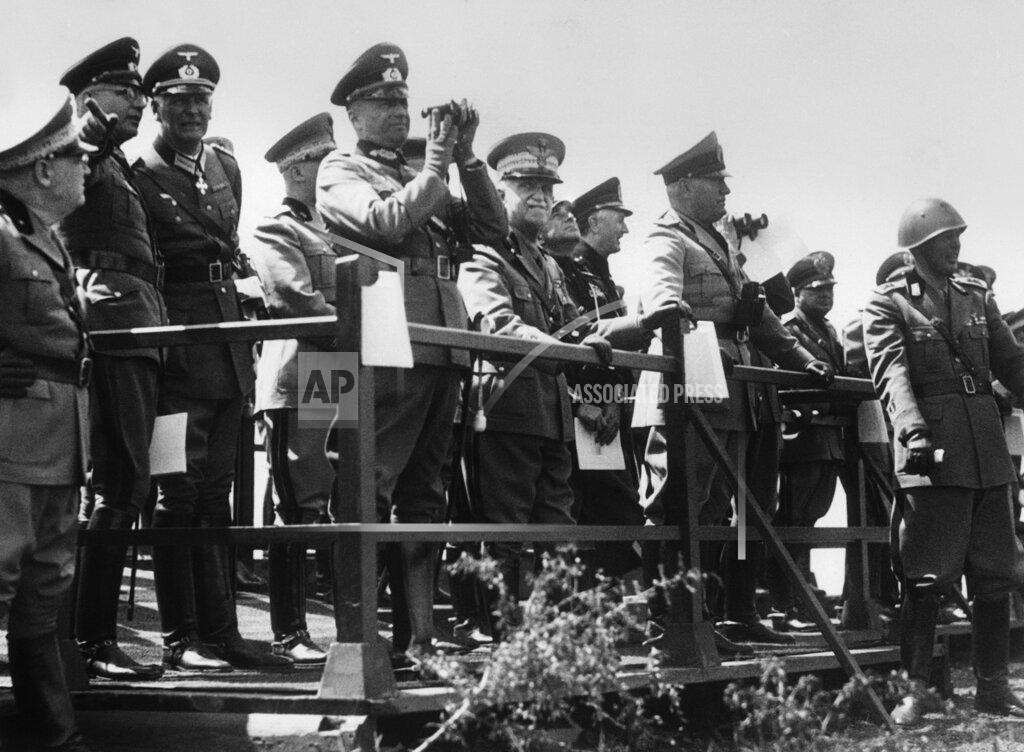
The political and military alliance decided upon yesterday between Germany and Italy will be formally ratified in Berlin at the end of this month or early in June. The event will be made the occasion for a highly ceremonious demonstration of Italo-German solidarity and it is possible that King Victor Emmanuel and Premier Benito Mussolini will both be present at the signing formalities. A visit to Berlin by the Italian King has been under contemplation for some time and the recognition of the expansion of the Berlin-Rome Axis into a formal alliance suggests an auspicious time for reciprocating Chancellor Adolf Hitler’s visit to Rome last year. Yugoslavia’s Regent Prince Paul and Princess Olga are scheduled to arrive in Berlin early in June for an official visit of several days.
With the text that will bind the Axis partners to a hard and fast military pact still in the process of drafting, it was stated in informed quarters that the alliance to which German Foreign Minister Joachim von Ribbentrop and the Italian Foreign Minister, Count Galeazzo Ciano, have pledged their respective governments will be unlike any former commitment between two States. It will be founded on the principle of unrestricted mutual obligations and contain no fixation of military responsibility for either signatory. The alliance, it was explained, provides “solidarity without compromise or limitation.” Herr Ribbentrop will stop over in Berchtesgaden tomorrow on his return to Berlin to report to Herr Hitler on his conversations with Count Ciano.
While Germany rejoiced in the decision to transform the Axis into a military alliance, which, Berlin said, would be unconditional, and while Italy mobilized her propaganda efforts to win a favorable opinion of the decision among her people, Britain plodded ahead with her coalition efforts. She seemed hopeful that some agreement with Russia would be reached shortly, possibly before the end of this week. Her ambassador called at the Soviet Foreign Office and conferred for more than an hour with Foreign Commissar Molotov.
The United Kingdom today rejected what would be the last Soviet request to form a British-French-Soviet pact to contain German aggression.
Having tied Premier Benito Mussolini to himself with what is described here as an unconditional political and military alliance, Chancellor Adolf Hitler today concentrated on “appeasing” Joseph Stalin to bring Soviet Russia out of the British “peace front” and thereby pave the way for a revision of the Polish-German frontiers. That, in brief, is the European political situation as it presents itself to both German and foreign observers in Berlin.
Officially German policy toward the Soviet is described as one of watchful waiting now that Foreign Commissar Maxim Litvinov, who is regarded as a symbol of an ideological foreign policy with a Western orientation who “has done great harm to the Russian people,” has been replaced by a Soviet “realist.” But mere waiting never has been part of Chancellor Hitler’s policy, and the possibility of a German-Russian non-aggression pact, as outlined by this correspondent on Saturday, became common talk over the weekend in German political quarters as well as in diplomatic circles here.
Although there is no official confirmation, there is also no denial that preliminary overtures for “normalization” of German-Russian relations already have been made, and diplomatic quarters reckon with them in their calculations. It is no secret here that the Soviet Government itself has been in favor of such a development; it took active steps to bring it about not only in years past but as late as last February. And German quarters are confident that Mr. Stalin is still in a receptive mood because, for one reason, he still distrusts Prime Minister Neville Chamberlain of Britain and Premier Edouard Daladier of France and fears that Russia might get into a war with Germany to fulfill joint guarantees to Eastern European powers without the help of the British and French co-guarantors. But German quarters specify that there is no question of a German-Russian “alliance,” and even the word “rapprochement” is declared to go too far. “Normalization” and “neutralization” are the words the Germans prefer.
Some indication of Russia’s attitude toward the coalition might be evident in her decision to fill the ambassadorship at Warsaw, which has been vacant two years. Nevertheless, the talk in Berlin was of German efforts to “appease” Russia and get a non-aggression accord to neutralize her.
Germany hails the fall of Soviet Foreign Minister Litvinov, seeing this as the end of active Russian opposition.
Speaking before a mass demonstration in the Sportpalast in Berlin tonight, Dr. Alfred Rosenberg, cultural leader of the Reich, declared that National Socialism has shown other nations that the period of unrestrained capitalism in the past and during the World War represented “a catastrophe for the old order of life.” Representing Democracy as decadent in comparison with National Socialism and Fascism, Dr. Rosenberg stated that the “alleged equality of peoples is one of the most false contentions ever proclaimed in political life.” Furthermore, he exclaimed, “with the emancipation of the Jews the betrayal of Europe began.”
The emancipation of the Black, he added, is another step which, if it continues in the political sphere, must result in the fall of a great civilization. Many of those governing a nation today proclaim the antiquated principles of the French Revolution, Dr. Rosenberg continued, but the fact that millions are now forsaking the altars of democracy indicates that democracy no longer possesses the authority it once did and that peoples are beginning definitely to lose their belief in its power. Democracy, he said, had its decisive test at Versailles — and failed.
[Ed: Nice of Rosie to make it so damned easy to hate them.]
Today four Scandinavian States will meet to consider a joint stand on Germany’s proposals for non-aggression pacts.
Archaeologist James Brown begins excavating at Sutton Hoo in Suffolk, goes on to find a royal 7th century Anglo-Saxon burial ship — one of the greatest archeological discoveries on British soil.
Marshal Italo Balbo, Governor of Italian Libya, arrived in Cairo at noon today, having piloted his own plane from Tripoli on what is officially described as a private visit to the Italian Minister here, Count Mazzolini. Despite the description of the visit as private, the marshal was met at the airport by the Vice Governor of Cairo and head of the Egyptian air force.
It is understood that during his four days’ stay Marshal Balbo will be received by King Farouk and by Premier Mohammed Mahmoud Pasha, who is giving a dinner party in honor of the visitor. The Italian Legation tonight gave a dinner, followed by a reception, to which the Egyptian Cabinet, members of the diplomatic corps, British military and air commanders and other notables had been invited.
Marshal Balbo received permission from the Egyptian Government to fly over the western desert, where Egypt recently has been erecting strong military fortifications. When Dr. Joseph Goebbels, German Propaganda Minister, recently flew here the Egyptian Government refused permission to him to fly over the same area.
Today in Washington, President Roosevelt discussed the soft coal deadlock and other matters with Administration legislative leaders, signed the $1,701,189,114 Treasury-Post office Appropriation Bill and sent to the Senate the nomination of Edward H. Foley Jr. of New York to be general counsel of the Treasury Department.
The Senate heard President Somoza of Nicaragua advocate construction of the Nicaraguan Canal, approved additions to the Agriculture Department Appropriation Bill of $225,000,000 for farm parity payments and $113,000,000 for distribution of farm surpluses, confirmed the nominations of Daniel C. Roper to be Minister to Canada and Harcourt A. Morgan to the Tennessee Valley Authority and recessed at 4:52 PM until noon tomorrow.
The Temporary National Economic Committee began a study of the beryllium industry, the Education and Labor Committee questioned Joseph A. Padway on proposed amendments to the National Labor Relations Act, and the Foreign Relations Committee resumed hearings on neutrality legislation.
The House passed the Naval Appropriation Bill, heard President Somoza and adjourned at 3:40 PM until noon tomorrow. The Appropriations subcommittee investigating the Works Progress Administration heard Mayor La Guardia and other Mayors on relief problems.
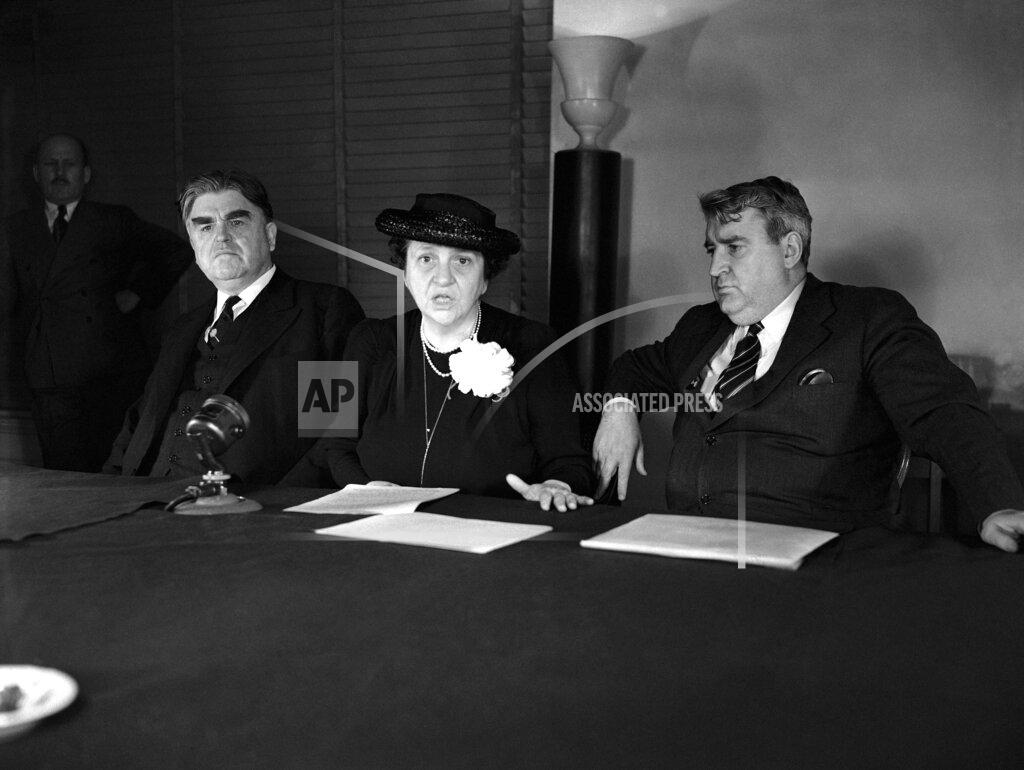
President Roosevelt tonight invited the deadlocked representatives of the United Mine Workers and soft coal operators in the negotiations for a new Appalachian agreement to meet him at the White House tomorrow. Both sides accepted the proposal. The President’s invitation was extended to the conferees through Secretary of Labor Frances Perkins, who conferred with them today for nearly five hours at the Hotel Biltmore and obtained detailed information upon which the President is expected to make a truce proposal under which mine operations would be resumed pending continuance of the negotiations.
Two stenographers accompanying Miss Perkins were kept working alternately taking down a record of the discussion, which covered all vital aspects of the controversy. Emphasis was placed on the central point of the dispute, the union’s demand for elimination of the penalty clause under which miners are penalized for striking and operators for declaring lockouts during the term of the agreement.
Shortly before 9 o’clock tonight Secretary Perkins announced that the time for tomorrow’s White House meeting had not been set but she indicated it would be some time in the morning. Miss Perkins informed President Roosevelt of the acceptance of his invitation by telephone tonight and at midnight she left for Washington from Pennsylvania Station together with the operators’ committee and the union group.
In extending the President’s invitation Miss Perkins told the conferees the government had not sought to intervene in the situation directly while there was hope that the parties could adjust their differences. But, she added, the time was now “very close at hand, only a matter of hours,” when a real emergency would confront the nation because of lack of coal. Stressing that the President felt a deep responsibility because of the impending crisis and an obligation to the American people, Miss Perkins declared that the nation was now so near a fuel crisis that “no one quite dares measure the degrees to which there may be crises in individual places here and there.
In a sharp reversal of what has appeared to be an economy trend, the Senate today added $383,484,959 to the Agriculture Department bill as passed by the House, raising the total of this appropriation bill to $1,218,603,572. The Senate adopted programs of parity payments and Federal purchase of surplus commodities, despite House defeats already administered to these items. In addition to controverting action by the House, the Senate also rejected economy warnings by Secretary Morgenthau, who, while the Senate was voting, reiterated the necessity of stopping “deficit spending” and warned that the proposed increases in agricultural benefits might involve changes in the tax program of the government.
Secretary Morgenthau estimated that, as the agriculture bill stood tonight, it called for expenditures, in the fiscal year beginning July 1, of about $372,000,000 more than projected in the budget, which presumably would be added to a deficit of $3,300,000,000 already in prospect next year. “This disturbs me,” Mr. Morgenthau told reporters gathered in his office for a press conference. “The deficit in the budget for the next fiscal year is now estimated at $3,300,000,000. It seems to me it’s up to Congress to find additional revenue if this deficit is to be increased.
“It is about time to taper down on these estimates, but this sort of action is going the other way. It adds to the difficulty of our tax problem.” When the Secretary was asked directly if this increase in the prospective deficit, assuming the House should concur with the Senate on the bill, would necessitate revision of the tax program, he replied that it was yet too early to make a prediction.
Resolutions adopted by the Chamber of Commerce of the United States at the meeting last week “indicate a fundamental disagreement” with Administration policies and “spread gloom,” Harry L. Hopkins, Secretary of Commerce, asserted today in his first press conference in ten weeks. The conference followed an overnight yacht trip on the Potomac with President Roosevelt and Supreme Court Justice William O. Douglas.
Mr. Hopkins said that the word “appeasement” with reference to business was coined “by opponents” of the Administration. He refused, under persistent questioning, to say whether he stood upon his Des Moines speech of February 24, which was interpreted as indicating a desire of the Roosevelt Administration to cooperate with business. “I think during the next twelve months it is extremely important that the fiscal policy of the government be carried out,” Mr. Hopkins declared: “On the other hand, everything that can, should be done to stimulate the use of private funds.”
There have been perceptible indications of a growing feeling in inner New Deal circles that business and industry intend to require complete surrender on its policies by the Administration as the price of putting new money to work and expanding. President Roosevelt, his advisers say privately, has no intention of dropping basic Administration policies, although he is disposed to be lenient within limits in order to promote business. Mr. Hopkins’s statements today were interpreted in informed circles, therefore, as a warning that the government expects business to do what the Administration regards as its fair share of cooperating rather than a decision by the Administration at this time to adopt a more bellicose attitude and halt cooperation attempts.
In a 4–2 Cubs win at the Polo Grounds, Cubs first sacker Phil Cavarretta breaks his leg sliding into a base. He’ll be out of action until July 25, and will appear in just 7 more games this year, all as a pinch hitter.
Chuck Klein hits a pinch triple with the bases loaded off the Reds Johnny Vander Meer, and the Phils win 8–7.
At Ebbets Field, Cards veteran Pepper Martin breaks up a pitching duel between Brooklyn’s Red Evans and Bob Weiland by swiping home in the 6th inning. Martin’s two-out steal is the only run of the game as the Cards win, 1–0.
A military airplane crashed in downtown Guayaquil, Ecuador today, taking the lives of at least eighteen persons in the crash and a fire that started from an explosion of the plane’s gasoline tanks. Piloted by Captain Cristobal and Warrant Officer Galo Espinoza, the plane plunged suddenly to the city streets. Fire spread quickly from the exploding gasoline tanks and burned down four houses before it could be controlled. The two aviators were burned to death in their plane. A mechanic was slightly hurt. First rescue efforts resulted in the extraction of sixteen burned bodies from ruins of the houses. Authorities feared numerous other dead and injured would be discovered.
The death toll rises in Chungking. Estimates range from 3,000 to 10,000. Hundreds of thousands of people have fled the wartime capital.
Declaring that Japan had been left out of calculations in Britain’s recent pledges, former British Prime Minister and Liberal Party politician Lloyd George, in the House of Commons, said the Japanese march towards the Empire’s frontiers was spear like. George stated that the Japanese had marched 2,000 miles nearer India since the present government took office. Reinforcements from India, which were available during the First World War might not be available in the future.
In Shanghai, a Japanese spokesman used the term “belligerent rights” as justification for the attack on Chungking. He said a state of war existed, despite the absence of a declaration. Japan will accept responsibility for bombings that damage third-power properties only when they are obviously the result of mistakes, such as the attack on the American gunboat Panay, a Japanese naval spokesman announced this evening. He outlined the technical difficulties such as invisibility of foreign flags from great heights, wind drift and other factors, The spokesman then declared that Japan could not be responsible when bombs damaged third-power properties accidentally if such properties were located near unmistakably military objectives.
The spokesman also denied a report that Japanese planes had yesterday bombed Mokanshan, a famous summer resort thirty miles north of Hangchow, where about 2,000 civilian refugees are living. This is tacitly understood to be a refugee zone and has been avoided by both sides in the conflict. The spokesman said that yesterday afternoon Japanese planes had bombed the vicinity of Thing, which is about” twenty-five miles north of Mokanshan.
Chinese reports of their attacks in the suburbs of Nanchang were ridiculed and denied while Chinese reports of an entry into Anking were also derided. The spokesman said that the only basis for the latter report was an attempted attack on Anking last Wednesday by two forces of guerrillas totaling 700 men. These, he said, were easily driven off with heavy losses. The Japanese claim significant gains on the Han River sector in Northern Hupeh where they say they have launched an offensive on a sixty-mile front extending from Sinyang on the Peiping-Hankow Railway southwest to Anlu, a town on a tributary of the Han River.
The Japanese renewed air raids on Ichang today, twelve planes dropping fifty bombs on the important Yangtze River city, midway between Hankow, the old Chinese provisional capital, and Chungking, the new. A brief dispatch from a British gunboat telling of the attack did not report any casualties, but they were feared to be large. The invaders also continued attacks on eastern coastal cities in an effort to cut trade arteries. A Japanese spokesman in Shanghai warned that both military and non-military objectives in any cities where troops are stationed are likely to be raided from the air.
The spokesman said that the Japanese considered the presence of troops in a city sufficient cause for bombing all parts of that city, whether defended or not. He added that for this reason the bombing of the civilian sections of Chungking and other cities was “justified.” Chungking, which was bombed last Wednesday and Thursday, suffered casualties estimated at between 4,000 and 5,000. The toll of civilian life was heavy.
The Japanese advance in Hubei Province, China was briefly halted by a counterattack conducted by 31st Army Group of the Chinese 5th War Area and the 2nd Army Group of the Chinese 1st War Area.
Dow Jones Industrial Average: 131.67 (-0.07).
Born:
Keith Lincoln, AFL fullback (AFL All-Star, 1962-1965, 1967; San Diego Chargers, Buffalo Bills), in Reading, Michigan (d. 2019).
Booth Lusteg, AFL and NFL kicker (Buffalo Bills, Miami Dolphins, Pittsburgh Steelers, Green Bay Packers), in New Haven, Connecticut (d. 2012).
Jim Collier, NFL tight end (New York Giants, Washington Redskins), in Van Buren, Arkansas.
Paul Drayton, American athlete (Olympic gold medal, 4x100m relay, 1964), in Glen Cove, New York (d. 2010).
Naval Construction:
The U.S. Navy Griffin-class submarine tender USS Pelias (AS-14) is laid down as SS Mormacyork by the Sun Shipbuilding & Drydock Co. (Chester, Pennsylvania, U.S.A.).
The Royal Navy “J”-class destroyer (flotilla leader) HMS Jervis (F 00; later G 00) is commissioned. Her first commander was Captain Philip John Mack, RN.


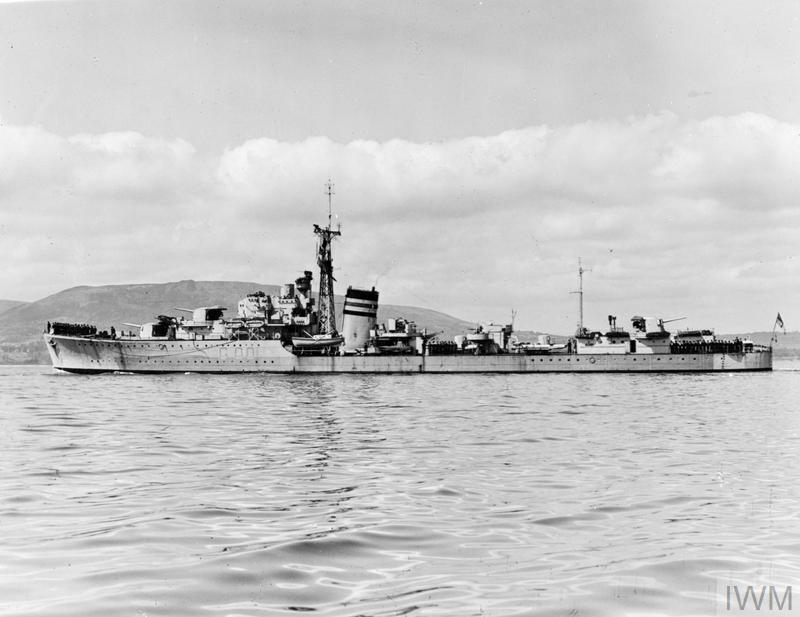
When war broke out in September 1939, Jervis was under the command of Captain Philip Mack, and was leader of the 7th Destroyer Flotilla (DF) based in the Humber. The first six months of hostilities was taken up with sweeps across the North Sea, in “appalling weather conditions” which saw the Flotilla suffer a succession of storm and collision damage. During this time Jervis captured three blockade runners, one on the second day of the war, and helped search for the merchant ship SS City of Flint. In March 1940 Jervis was involved in a collision with SS Tor, a Swedish freighter, that put her in dock for the next three months for repairs.
During this time Mack, as Captain (D) led the Flotilla from Janus, and in May 1940 sailed with her for the Mediterranean to take command of the 14th Destroyer Flotilla. Jervis’ pennant number changed to G00 around this time. In July, after working-up trials, she joined him in Malta, where he resumed command. For the next two years Jervis saw action in a constant round of operations; sweeps along the coast, bombarding shore targets for the Army, protecting convoys to Malta, and screening major fleet movements.
In 1941 Jervis was involved in a number of fleet actions. In March she was at Battle of Cape Matapan. In the course of the battle, she was involved in the destruction of the Italian cruiser Zara which had been crippled by heavy guns in attempting to recover the Italian cruiser Pola, which had been stricken by an aerial torpedo. Then Jervis came alongside Pola and boarded her, taking off the wounded before, with the destroyer Nubian, torpedoing and sinking Pola. In April she led the force that annihilated an Axis convoy at the action off Sfax. In May she was in the Battle of Crete, where many Royal Navy ships were lost, including her sister ship Kelly. During the summer Jervis ran supplies to the beleaguered port of Tobruk and in December led the destroyers at the First Battle of Sirte. On returning to Alexandria, she was damaged in an Italian human torpedo attack which left her in dock for six weeks. The same attack badly damaged the battleships Queen Elizabeth and Valiant. Her Chaplain, George Sherlock, was awarded the DSC for “outstanding zeal, patience, and cheerfulness and for setting an example of wholehearted devotion to duty.”
Released at the end of January, she resumed operations. In April she joined the Malta Strike Force, although without Mack who left Jervis in March due to ill-health and was replaced as captain of Jervis, and Captain (D), by A.L Poland. He would command her, and lead the 14th Destroyer Flotilla, for the next year. In March 1942, under Poland’s leadership, she again led the destroyers at the Second Battle of Sirte.
On the night of 1/2 June 1943, an Italian convoy of two supply ships escorted by a destroyer and a torpedo boat, was intercepted off the Straits of Messina by Jervis (commanded by Captain A.F Pugsley) and the Greek destroyer Vasilissa Olga. A Wellington bomber dropped flares and after a short battle lasting half an hour, the two Allied destroyers sank the Italian torpedo boat Castore.
Jervis also saw action during the landings in Sicily, Calabria, Salerno, and Anzio, as well as operations in the Adriatic. She supported both the Eighth Army and Yugoslav partisans. In the autumn of 1943, Jervis was in the Aegean supporting the ill-fated operation against the Dodecanese Islands. On 16/17 October with HMS Penn, sank the submarine chaser UJ-2109 at Kalymnos.
On 23 January 1944 Jervis had her bows blown off while in company with Janus, the other destroyer being sunk by a German Fritz X guided bomb. There were no casualties and the damaged destroyer made it to Naples under her own power where, on 28 January her commanding officer, Captain Henderson, took over command of the flotilla leader Grenville while the latter’s captain, Lieutenant Commander Roger Hill became CO of the damaged Jervis. The damaged destroyer subsequently steamed to Gibraltar where a new bow was put on the vessel. Then returning to Britain, no longer a Flotilla leader, Jervis saw action at the Normandy landings under Lieutenant Commander Roger Hill in the closing stages of the war. She was decommissioned in September 1944, paying off at Chatham prior to a further, major re-fit.
Re-commissioned in May 1945, Jervis saw further service in the Mediterranean, policing the aftermath of World War II. She paid off into the reserve at Chatham in May 1946, and was then laid-up in the Gareloch where she was used for training of local Sea Cadets. Placed on the Disposal List in October 1947, she was one of a number of ships used for explosives trials in Loch Striven during 1948.
Jervis was handed over to the British Iron and Steel Corporation for demolition in January 1949 and allocated to Arnott Young, arriving at Troon, on the Firth of Clyde for breaking up in September.
 History Diaries