A Cambodian armored vehicle destroys an ARVN armored troop carrier that strays into Cambodia in pursuit of Việt Cộng. Khánh immediately apologizes, but South Vietnam asserts that Cambodia does allow Việt Cộng to take refuge there. A Cambodian armored vehicle destroyed the South Vietnamese armored personnel carrier that had strayed about half a mile into Cambodian territory today in “hot pursuit” of Communist guerrillas, according to reliable military sources. The sources said that some men escaped from the flaming wreckage of the personnel carrier, which remained inside Cambodian territory.
The incident took place about 45 miles northwest of Saigon within a few miles of the Cambodian town of Chipou, but well away from any Cambodian settlement. No Cambodian casualties were reported. The half‐mile distance traversed by the South Vietnamese vehicle inside Cambodia could be covered in less than a minute at the speed the M113 personnel carriers move in battle. Military officials here have long accepted as a fact that the Việt Cộng guerrillas use Cambodian territory, particularly the “duck’s beak” jutting into South Vietnam, as a haven. Prince Norodom Sihanouk, Cambodia’s Chief of State, denies this.
Premier Nguyen Khanh is reported to have expressed hope that the incident would not result in a crisis similar to that following the attack of South Vietnamese troops and planes on the Cambodian village of Chantrea March 19. Cambodia charged that 17 villagers were killed in that raid and broke off talks with South Vietnam aimed at resolving disputes over the common frontier, which have long troubled relations between the countries. Secretary of State Dean Rusk admitted that American military advisers had been involved in the action. Relations between South Vietnam and Cambodia have remained clouded since then. Premier Khanh has declared his willingness to meet Prince Sihanouk to resume the border talks. No American advisers were involved in today’s border penetration, sources said.
One reinforced battalion of Vietnamese troops — about 750 men — had been engaged since yesterday in an operation in Tây Ninh Province against a Việt Cộng force estimated to be at battalion strength, sources said. During a sweep across dried rice paddies this morning, one of the armored personnel carriers apparently swung too wide and crossed into Cambodian territory along the desolate and unmarked frontier. Vietnamese officers and some American advisers have been urging that the border be disregarded when units are pursuing the Việt Cộng in battle.
About a dozen young Buddhists lie in a special ward for the mentally disturbed at the Cộng Hòa Hospital in Saigon. Their minds are still twisted from the brutality of Government troops at a protest demonstration in the town of Huế a year ago today. Nine persons were killed as troops broke up the protest against religious persecution. The incident set off a wave of hostility toward the regime of President Ngô Đình Diệm, a Roman Catholic, who was killed last November in a military coup d’état. Premier Nguyễn Khánh paid a visit to the patients a few days ago. The Buddhists, mostly young nuns, drowsed motionless on their beds until General Khánh and his party arrived. The Premier, a Buddhist, wore his usual fatigue uniform.
When he entered the room one of the disturbed nuns spotted his military clothes and burst into a paroxysm of anguish. She hit at the bed and pounded her fists against the wall and her head. The others in the room started screaming and sobbing. One girl fought off a restraining nurse and fell to the floor, trembling in fear and hysteria. “I guess I had better go out,” General Khánh said quietly. The gifts he had brought lay unopened.
Thai Foreign Minister Thanat Khoman has told Britain and the Soviet Union that Thailand might be obliged to reassess her position as a party to the 1962 Geneva agreements guaranteeing Laotian neutrality, it was learned today. The warning was contained in a note handed to the ambassadors of the two countries, which were co‐chairmen of the 14‐nation conference in 1962. The note was made public today. The blatant violations of the agreements by the pro‐Communist Pathet Lao faction are an imminent threat to the security of Thailand, which shares a long common border with Laos, the note said.
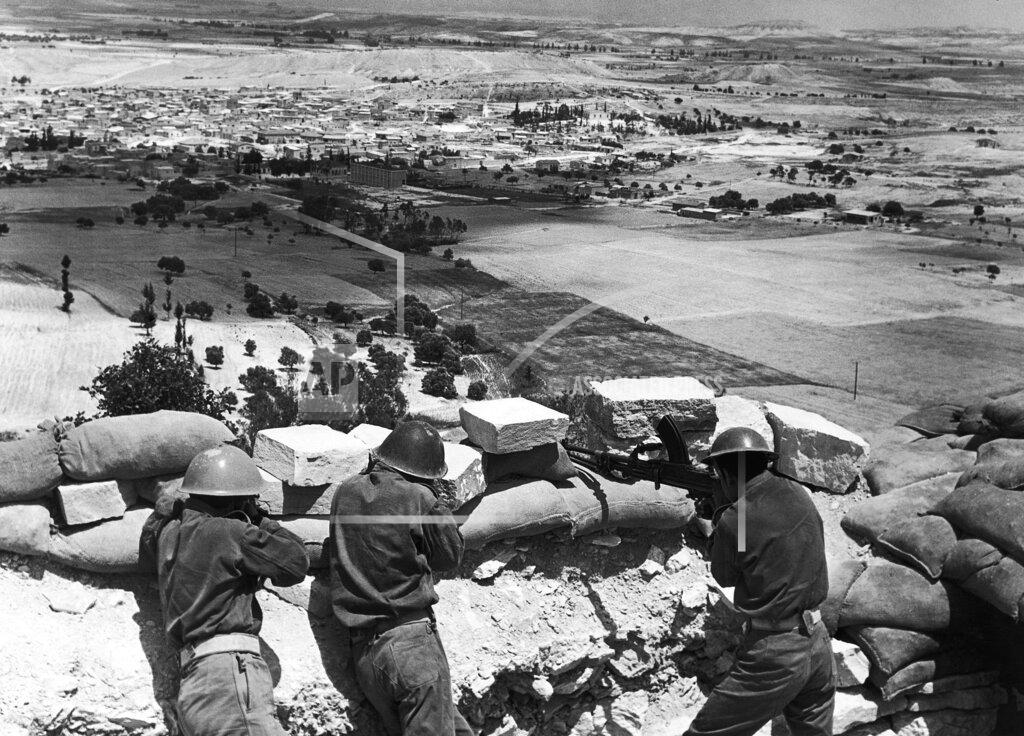
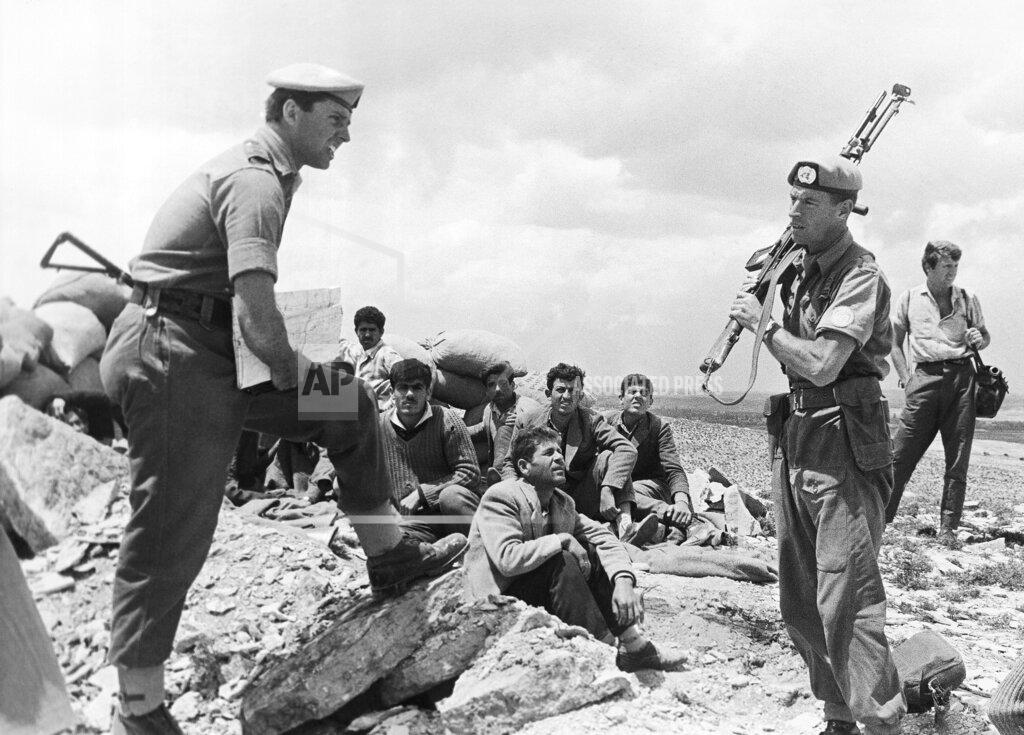
While Greek and Turkish Cypriotes continued intermittent gun fights in the Kyrenia Mountains, heavy fighting erupted today around the Turkish Cypriote village of Louroujina, southeast of the capital. One Turkish Cypriote was wounded. Tension in Louroujina has been mounting since last weekend when a Turkish Cypriote was shot and killed while riding in a bus from Nicosia to the village.
Last night Greek Cypriote security forces in the neighboring village of Lymbia moved to new positions on the ridges surrounding Louroujina. Twice during the night and again this morning there was heavy and extensive fighting between the two sides. A British patrol of the United Nations peace‐keeping force moved into the area and obtained a cease fire. Then the peace‐keepers sought to get the combatants to move back from their positions facing each other on the hill crests. The situation late in the day was reported quiet but uneasy.
British forces operating in the region of the strategic Dhala‐Aden road have captured a third peak overlooking the road, insuring its security. The 1,500‐foot peak, Jebel Mahlay, was taken by a company of troops of the army of the Federation of South Arabia. The troops were supported by the Fourth Royal Tank Regiment. The peak dominates the eastern end of the Wadi Taym. The troops advanced up the Wadi Rabwa, which forks east from the Dhala‐Aden road just below Thumeir, without meeting any opposition from dissident Radfan tribesmen. Other British troops now hold two major mountain tops north of Wadi Taym, where a group of tribesmen were entrenched. These diversional attacks apparently have virtually cleared the Ahl Muzahim basin of guerrillas.
Communist China rejected today a Soviet call for an early world conference of Communist parties to resolve the ideological dispute between Peking and Moscow. In a letter to the Central Committee of the Soviet Communist party, Peking said that “it may require perhaps four or five years or even longer” to complete the preparations for such a conference. The Chinese Communist party asserted that the convening of a conference this fall, as proposed by Moscow on March 7, might result in an open split of the world Communist movement. It warned that Moscow would “bear responsibility for the split” if it attempted to summon a conference of pro-Soviet parties.
Under the present tense circumstances, the Peking letter said, it would be more appropriate to take a first step toward a world conference about next May by holding Moscow-Peking talks. It said this should be followed by a preparatory meeting of 17 Communist parties. Analysts here said the Chinese Communist strategy seemed to be to delay the convening of a world conference while Moscow retained majority support within the movement and was able to take action against Peking. Through the encouragement of anti‐Soviet factions in foreign parties, Peking has been able during the last year to gain adherents.
France’s independent nuclear force does not yet have an operational capacity, a qualified source at allied Supreme Headquarters said today. President de Gaulle’s atomic striking force, one of the bases of his foreign policy, may be operational next year, but it may not join the Western armory until 1967, the source said. This view contradicts the impression given by the French Government that its nuclear force is already operational. Supreme Headquarters hopes that, when the French force is ready, its operations will be coordinated with those of other North Atlantic forces in Europe. The French are already studying such coordination, which, in the source’s view, would be in the national interest of France.
The general view from Supreme Headquarters, in advance of the North Atlantic Council meeting at The Hague opening Tuesday, is that the alliance is appreciably stronger today than it was a year ago. One reason is the increase in missile strength, particularly the Sergeant and Pershing missiles. For the moment, these are covering the alliance in the difficult period of transition from aircraft to missiles as the prime means of tactical defense. The alliance still lacks the medium‐range ballistic missile for which the commanders of the alliance have repeatedly asked. The Polaris A‐3 missile is heavy and immobile, but there is a prospect that a lighter model can be developed. It would have a range of 1,500 miles compared with 400 miles for the Pershing. The ideal is considered to be a medium‐range missile that could be easily transported and sited without extensive preparation.
Another pressing requirement is a perfected vertical‐take‐off, short‐landing tactical aircraft. With such a plane in general service, the vulnerability of the present tactical air force, dependent on scores of large airfields, would be reduced. Modernization of military equipment has increased allied strength in the last year, the source said. This process is most marked in regard to tanks, artillery and armored personnel carriers. There has also been a strengthening of naval antisubmarine and coastal defense forces. Missile strength is growing and so is coordination among the allies on its use in the event of Soviet aggression.
Three Italian priests have fled their mission in the Congo’s Kivu Province near the country’s eastern border, after an attack by machete‐wielding terrorists. Diplomatic sources said the priests had been captured but had escaped and had arrived uninjured at a Belgian‐run sugar refinery near Uvira. They apparently walked about 20 miles through rugged, mountainous country from their mission at Mulenge. Swedish and Norwegian missionaries at the Lemera mission, about six miles north of Mulenge, were surrounded by terrorists on April 14. However, they were rescued by a detachment of Congolese troops. They have stayed on with a guard of 85 soldiers.
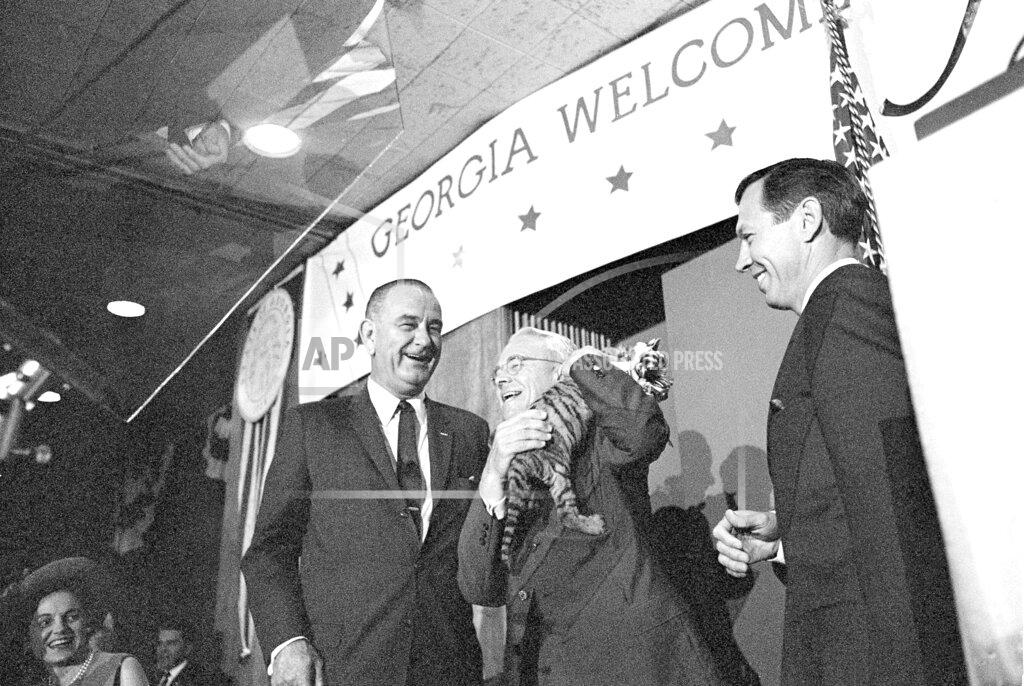
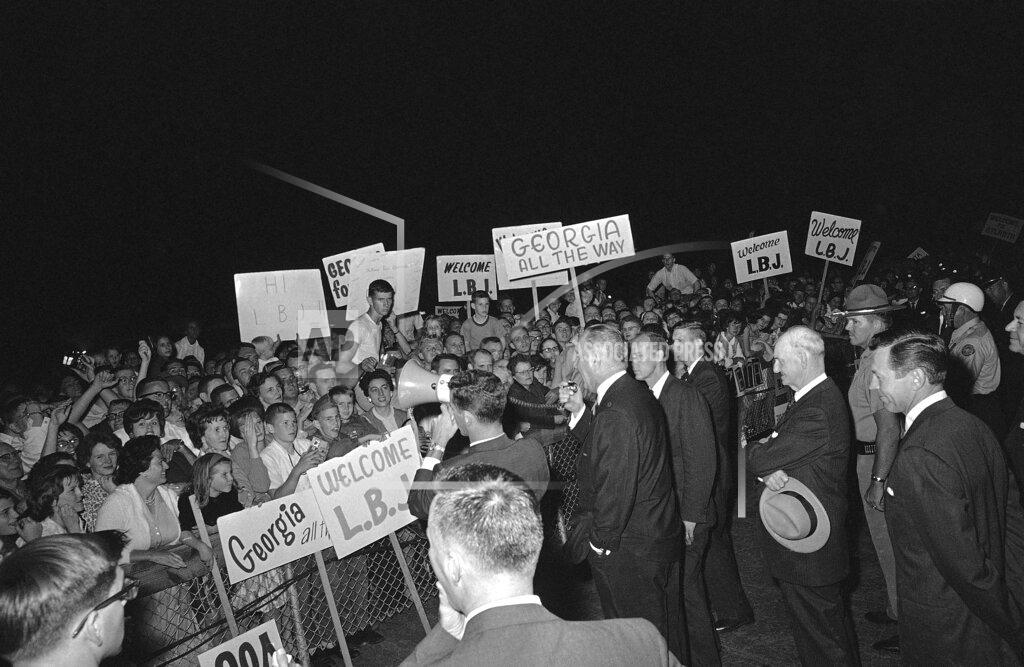
President Johnson, almost mobbed by enthusiastic Georgians here and in Atlanta, stood up in the South today to say in his deep Texas accent that “full participation in our society” can no longer be denied men because of their race or color. “The rights of no single American are secure,” he told a breakfast meeting of Georgia legislators, “until the rights of all Americans are secure.” Mr. Johnson, given a roaring reception by more than half a million Southerners in the state where General William T. Sherman marched, repeatedly urged the Old Confederacy to bury forever its “dead issues” and move fully into “rewarding and fruitful union” with the rest of the nation. The President identified himself wholeheartedly as a Southerner with family roots in the red earth of Georgia, where one of his forebears was sheriff of Henry County; and when his daughter, Lynda Bird, rose to speak, she said “y’all” as naturally as she smiled.
“But I come to you today to speak to you as an American,” Mr. Johnson said in Atlanta. “As I am President of all the people, you are part of all the people. I speak to you, not, therefore, as Georgians, this morning, or as Southerners, but as Americans. Your hopes are the nation’s hopes; your problems are the nation’s problems. You bear the mark of a Southern heritage proudly, but that which is Southern is far less important than that which is American.” Mr. Johnson got an ovation both from the Atlanta audience of more than 1,000 legislators and their guests, and from a crowd estimated at more than 40,000 jammed into every inch of sun‐baked Franklin D. Roosevelt Square in Gainesville. In Atlanta, more than a half-million persons lined 15 miles of streets to watch his motorcade. The crowd was so over, whelming that Police Chief Herbert Jenkins was moved to remark: “I’ve never seen anything like it in 18 years, including Franklin D. Roosevelt and ‘Gone with the Wind.’”
Attorney General Robert F. Kennedy and Senator Everett McKinley Dirksen, the Republican leader, were confident today of reaching agreement on the public accommodations section of the civil rights bill. After a meeting this morning; the Attorney General told reporters: “We’re making good progress.” And the minority leader said: “We have got an understanding on a few basics of Title II.”
Title II is the section of the bill prohibiting discrimination, or segregation, in hotels, motels, restaurants, theaters, sports arenas and gasoline stations. With the possible exception of Title VII, dealing with job discrimination, it is the most controversial section in the omnibus bill. The thorniest problem in both these titles is that of enforcement, and it is precisely here that Mr. Dirksen parts company with Senators Hubert Humphrey of Minnesota and Thomas H. Kuchel of California, the Democratic and Republican floor managers of the bill, and also with the Justice Department.
The crux of the problem is whether the Federal Government should have power to initiate civil action to enforce compliance, and if so, at what point and under what conditions. Mr. Dirksen is averse to Federal action if it can be avoided. He would give as much scope as possible to voluntary compliance through persuasion. And he would rely, wherever possible, on state and local agencies. He notes that 34 states and the District of Columbia have statutes outlawing discrimination in public accommodations. many of them providing criminal penalties, whereas the pending bill is a civil act.
Sargent Shriver asked American business tonight to contribute at least $30 million in cash to the Administration’s drive on poverty. He made the appeal in a speech to the Business Council, nearly all of whose more than 100 members are chief executive officers of large corporations. In particular, he asked for contributions to help areas so poor that no local resources are available. Mr. Shriver, who heads President Johnson’s program against poverty, also asked for business help in the training of illiterate, unskilled and unemployed workers and for the, formation of a business committee to combat poverty. The committee would, among other things, he said, establish a job‐placement service for workers receiving job training under the antipoverty program.
A group of the nation’s leading corporate executives expressed almost unqualified confidence today in President Johnson and in the prospects for continued business expansion. The business leaders, members of the Business Council, said they saw no reason why prices should rise in the near future unless wages went up first. They did not blame President Johnson for the one problem they feel they have at the moment — excessive regulation by too many different government agencies. The theme of confidence in the Johnson Administration ran through the formal sessions and informal conversations held by the Council.
About 100 presidents and board chairmen of giant corporations make up most of the membership of the Business Council. The Business Council is an organization of executives in business and finance that was formed in 1956 at the suggestion of President Eisenhower. Its predecessor, the Business Advisory Council, served as adviser to the Commerce Department during the administrations of President Roosevelt and President Truman. The Business Council is a private business group, but it does offer advice and research services to the Government — on its own terms. “He understands business,” W. R. Murphy, president of the Campbell Soup Company, said of Mr. Johnson. Mr. Murphy is chairman of the council’s committee on domestic economy.
Twenty-six persons, including the Speaker of the Massachusetts House of Representatives, were indicted today in an investigation of crime and corruption in the state government. Among the 26 were three persons previously indicted on evidence gathered by a crime commission created by the Legislature in 1963. The special grand jury’s indictments included 137 counts chiefly charging bribery and conspiracy. Officials of several small loan companies were among those named.
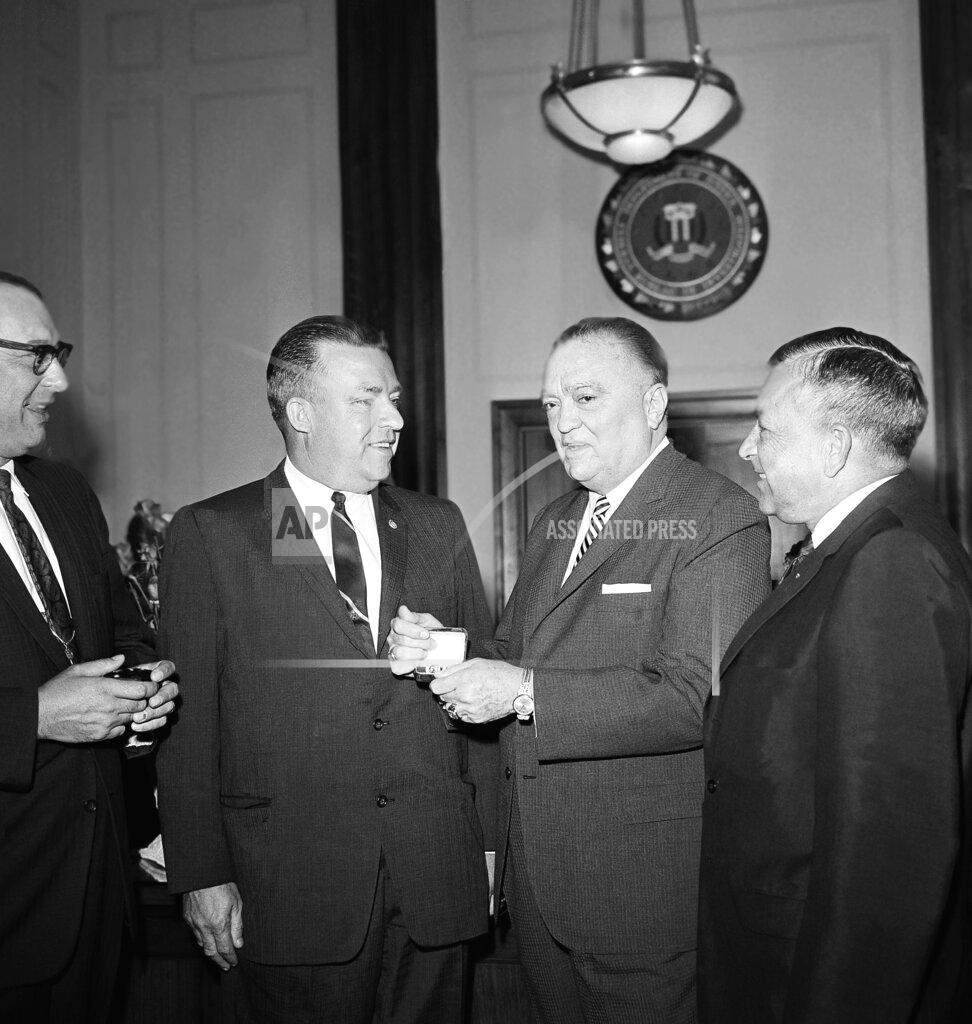
President Johnson cleared the way today for J. Edgar Hoover to remain as director of the Federal Bureau of Investigation. Mr. Hoover will reach the compulsory retirement age, 70, on January 1. Minutes before meeting with Mr. Hoover in the White House Rose Garden late this afternoon, President Johnson signed an Executive order exempting him from the Federal retirement law for “an indefinite period of time.” Mr. Johnson said he signed the order because the nation needed Mr. Hoover. “I know you wouldn’t think of breaking the law,” the President told Mr. Hoover, who stood ramrod straight beside him. The brief ceremony, attended by a few Congressional leaders, was held shortly after Mr. Johnson returned from a two‐day tour of poverty areas in Appalachia.
The pilot of the airliner that crashed near San Francisco yesterday killing 44 persons was apparently shot at the controls by a passenger, a reliable source said tonight. The Federal Bureau of Investigation was checking the possibility that not only the pilot, Captain Ernest A. Clark, but also other crewmen, had been shot with a magnum revolver that was later found in the wreckage. The last tapes that recorded radio transmissions between the pilot and his control tower were reliably reported to have contained a somewhat garbled section that was deciphered as follows: “My God, I’ve been shot. I’ve been shot.” The F‐27 prop‐jet of Pacific Air Lines flew almost straight into the side of a hill near Dublin, about 40 miles east of San Francisco. Federal officials took possession of the heavy revolver found in the wreckage.
The New York State Supreme Court ordered yesterday the arrest of Representative Adam Clayton Powell for contempt of court. However, the court upheld his claim to Congressional immunity against arrest as long as the House of Representatives is in session. Justice Thomas C. Chimera criticized the conduct of the Harlem leader in the case as being “so flagrantly contemptuous of the authority and dignity of this court as to promote a tragic disrespect for the judicial process as a whole.”
Ronald Wolfe became the last person in the United States to be executed for the crime of rape without homicide, after his conviction for a brutal attack in 1959 against an 8-year-old girl in Troy, Missouri. Wolfe was put to death in the gas chamber at the Missouri State Penitentiary in Jefferson City.
In Cleveland, there are tornado warnings, but New York supplies damage when Mickey Mantle cracks a 3-run homer off Tommy John in the 4th inning to lead New York to a 10–3 win.
Charlie Lau hits a pinch homer in the top of the 10th as Kansas City edges the Twins, 6–5. Nelson Mathews contributes a 3-run double for KC and Jimmie Hall has a 3-run homer for Minnesota. Left fielder Harmon Killebrew throws out Ed Charles at home in the 9th to send it into overtime. It is the Killer’s only assist this year as he plays the outfield exclusively.
Dow Jones Industrial Average: 828.57 (-1.60).
Born:
Melissa Gilbert, American actress (“Little House on the Prarie”) and TV director, former President of the Screen Actors Guild; in Los Angeles, California.
Cheryl Richardson, American actress (Jennie-“General Hospital”), in Palo Alto, California.
Bobby Labonte, American stock car racer and 2000 NASCAR Winston Cup Series champion, 2000; in Corpus Christi, Texas.
Dave Rohde, MLB pinch hitter, second baseman, and third baseman (Houston Astros, Cleveland Indians), in Los Altos, California.
Lou Brock, Jr., NFL defensive back (San Diego Chargers, Detroit Lions, Seattle Seahawks), in Chicago, Illinois.
Dave Rowntree, English drummer for the rock band Blur; in Colchester, England, United Kingdom.
Died:
Kichisaburo Nomura, 86, former Japanese Ambassador to the United States at the time of the attack on Pearl Harbor.
 History Diaries