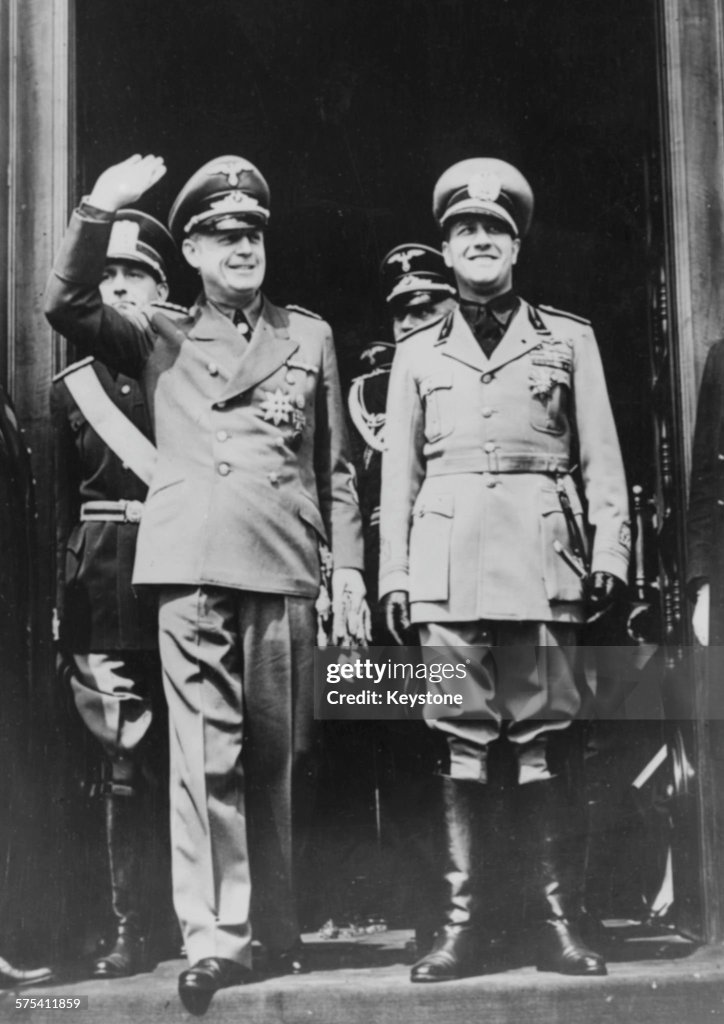
Germany and Italy announced a military and political alliance known as the Rome-Berlin Axis. Italy and Germany announced today that they would sign an open military and political alliance as a result of the conversations between Foreign Minister Galeazzo Ciano and Foreign Minister Joachim von Ribbentrop, which ended at Milan this afternoon. The announcement came as a surprise because it had been declared in all official quarters during the last few days, and repeated in the Informazione Diplomatica bulletin, that “nothing sensational” was to be expected from the Milan meeting.
“In the conversations Count Ciano and Herr von Ribbentrop held in Milan May 6 and 7,” the communiqué issued this afternoon reads, “close examination was made of the present general political situation. The perfect identity of viewpoints of the two governments was again noted and it was decided to definitely fix the relations between the two Axis powers, from a formal viewpoint, in a political and military pact. In that way Italy and Germany are determined to contribute efficaciously to assure peace in Europe.”
It was expected in Rome tonight that the Italo-German alliance would soon be expanded to include Japan. Some weeks may elapse before it occurs and perhaps there is more optimism about it than the possibility warrants. But even Japanese circles here, which last week scouted the idea, now admit that it is probable. Germany has been very anxious to get an Italian alliance which would bind Italy tighter to the Axis than ever before and inevitably would reduce the ability of one or the other of the two powers to maneuver for itself. It means, it is surmised, that if there is war over Poland, although Italy has no direct interest in Danzig or Pomorze the Polish Corridor], she will automatically have to join Germany’s side.
Paris saw Rome thus brought completely under Berlin’s thumb and felt that the Axis was moving swiftly while the coalition negotiations dragged on.
But the British received the announcement calmly, believing it represented nothing new. While they thought Chancellor Hitler was likely to postpone any showdown until July, they were concerned over their negotiations with the Russians and feared a breakdown might precipitate matters. The announcement that Germany and Italy had decided to conclude a far-reaching political and military treaty was received calmly in British official quarters tonight. It was argued that the very openness of the move was an indication that the Axis powers planned no decisive action in the immediate future. The British believe that there is already the fullest understanding between Germany and Italy and that if the impending agreement means anything really new, it would have been shown by action instead of a public announcement.
It is feared, however, that an open alliance will give the Germans an excuse to send still more soldiers and more secret police agents to Italy, thus strengthening their growing influence on both the internal affairs and the external policy of their Axis partner. Meanwhile, despite concern over the progress of the Anglo-Russian negotiations, there is an air of relative optimism in Whitehall-to the extent that it is now believed that Chancellor Adolf Hitler may postpone his real showdown with the democracies until July. This would give him time to develop a press campaign for Danzig, and although there is an important school that believes that a fundamental crisis will be postponed until the Nazis have gathered in the harvest, it is pointed out that most of the crops in Southern Germany will have been gathered by July.
Failure to obtain Russian help, however, might precipitate matters, and it is acknowledged that a critical stage has been reached in the negotiations between Britain and Russia for a common front against aggression. Sir William Seeds, the British Ambassador, hopes to have an audience in Moscow tomorrow with Premier Vyacheslaff M. Molotov, Maxim Litvinov’s successor as Foreign Commissar, but it is not believed here that the new proposals will deviate substantially from the line that the British Government has been taking in recent weeks.
No further clue to the Soviet’s intentions was forthcoming, but some circles thought Moscow might flirt with Berlin to prod the British and the French. Meanwhile Vice Commissar Potemkin talked to the Bulgarian King about a Black Sea pact.
Berlin expected that the Milan announcement would be a blow to “encirclement” efforts and a shove to nations still unwilling to accept Axis policy. The announcement that the Berlin-Rome Axis would be formally converted into “a comprehensive political and military alliance” did not surprise Berlin diplomatic quarters which had anticipated it after Foreign Minister Joachim von Ribbentrop’s week-end talks with Count Galeazzo Ciano, Italian Foreign Minister.
It is suggested here that the Axis partners considered the present European situation an opportune time to give concrete expression to the obligations jointly assumed when the Berchtesgaden protocol of October, 1936, became the Rome-Berlin Axis. That the pact then concluded implied other than political commitments was uniformly assumed. Confirmation of such an interpretation was obtained in several recent addresses by Chancellor Hitler. As understood at its Berlin end there never was doubt that the Axis also committed both partners to military aid. The military pledges of the Axis received fresh recognition through the recent staff talks.
German political quarters stressed that the formal announcement that the Axis would be made into an all-inclusive commitment could not fail to carry moral as well as political weight at this time. It will be welcomed by the Reich’s political friends and allies, it is contended, and will definitely destroy “the malicious fabric of wishful thinking” that has stirred hopes of a break between Italy and Germany. The announcement that the Axis also would be expanded into a formal military alliance, it was stated, would hearten States that still may be wavering in their acceptance or rejection of the Continental policy championed by the Axis powers.
The decision reached today, says the official communiqué, represents the logical continuation of the policies of Chancellor Hitler and Premier Mussolini and conforms to the will and sentiments of both peoples. It is primarily, the communiqué continues, a new constructive contribution to the maintenance and security of European peace. This comment designates the pact as “a blow to the aggressive encirclement campaign which Britain and France, with the aid of certain other States, have been waging against the Axis powers.” The newspaper Montag says: “The statesmen of Europe must now choose between accepting the policy of Germany and Italy as an effective bulwark for peace and those forces that stand for encirclement.”
Nevertheless, Poland remained unaffected. What she looked for now was a campaign of intimidation. It is also thought probable that some dramatic diplomatic gesture will be made to maneuver the Poles into a difficult position from which only the intervention of a third party could save them. This third party would be Premier Benito Mussolini in the role of peacemaker between Germany and Poland. It is suspected here that such a scheme was discussed by the German and Italian Foreign Ministers in Milan this week-end. The Italian press comment on Colonel Beck’s speech — some reminiscent of the German press attacks and some conciliatory and even favorable — would seem to indicate that the Italians, not wishing to become involved in a conflict over faraway Danzig, want to offer their services as mediators. Signor Mussolini, it is felt, has advised Herr Hitler to act with moderation in the Baltic area.
In Danzig there seemed to be a possibility that the Senate would crystallize the issue by decreeing return of the Free City to Germany.
German Generals Rundstedt, Manstein, and other General Staff members presented to Hitler an invasion plan for Danzig and Poland.
In a new poll, 61% of British respondents support Chamberlain’s limited conscription plan.
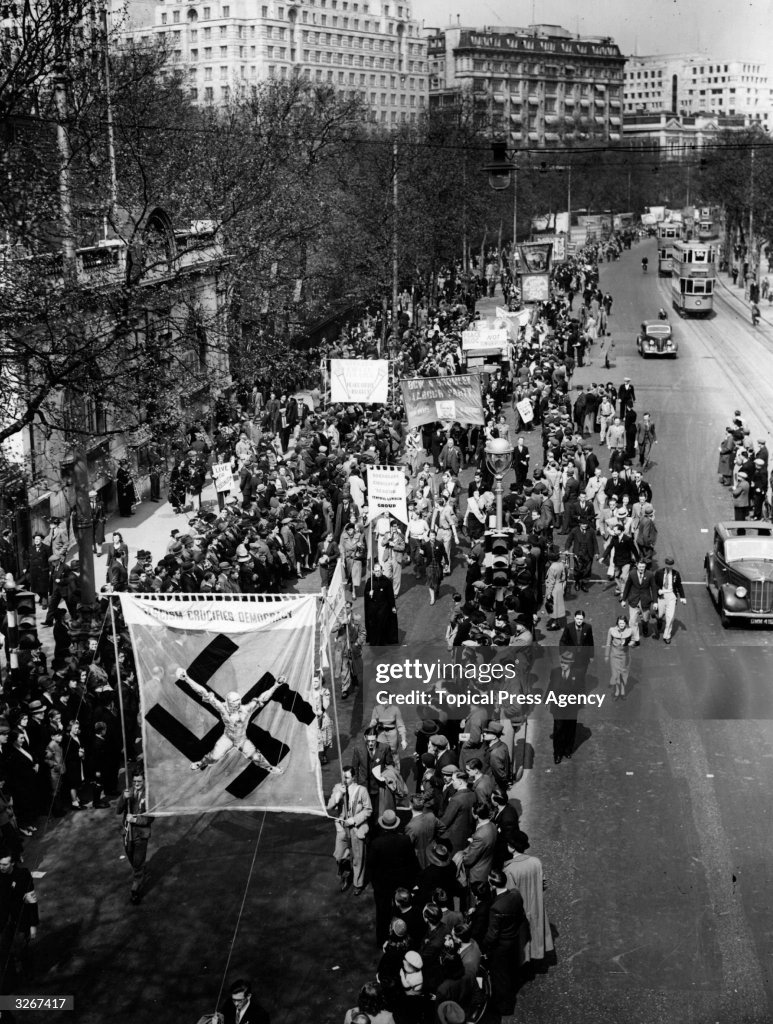
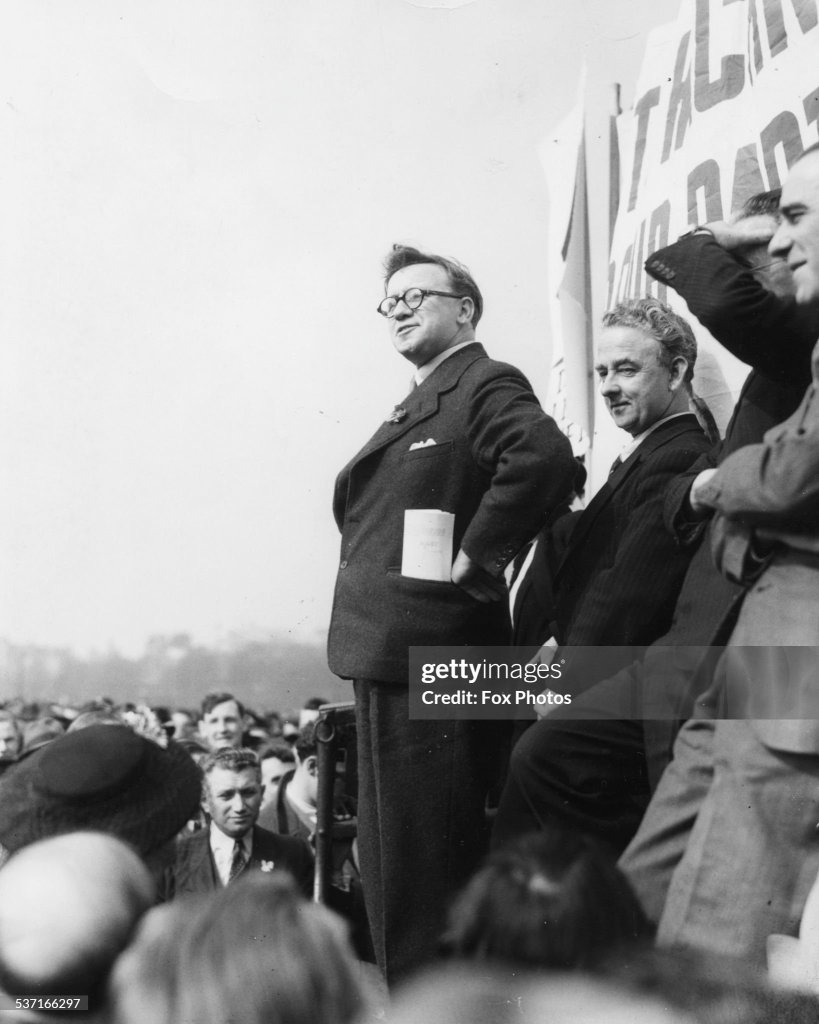
Britain’s Labor party observed May Day today with a parade to Hyde Park in which massed thousands shouted such slogans as “Chamberlain must go!” “No conscription!” “Unite with Soviet Russia and save peace!” The Labor party observes May Day on the first Sunday after May 1 to avoid conflict with the traditional Communist observance.
Pope Pius followed up his peace efforts with a broadcast prayer for concord to banish the anxiety of nations.
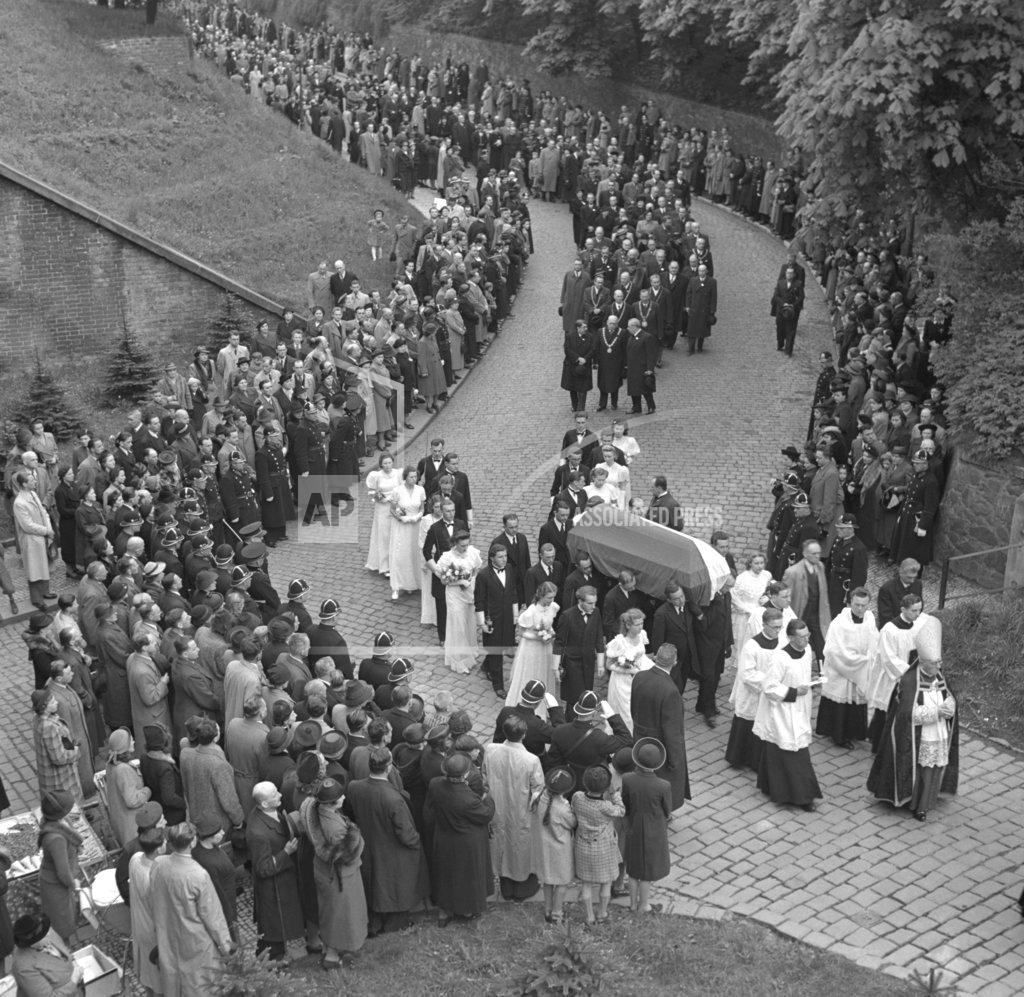
For the first time under the German occupation the people of Prague have celebrated a national festival without promptings from their German masters. The occasion was the reburial yesterday of the poet Karel Hynek Macha, who died at the age of 26 years more than a century ago. Macha was the first Czech writer to fully exploit the lyric possibilities of the Czech language. Every Czech youth and maiden knows his love poems, which at times have a Byronesque quality, and his tragic life is a national legend.
Hungary announced the arrest of 52 “Hungarists” — underground members of the Nazi Party there, working clandestinely.
Congress appeared today to be heading into an indefinite period of heated debate and hot weather. Administration leaders who had hoped to avoid discussion of controversial issues in the interests of early adjournment were pessimistic over the prospects of getting away from the capital before the summer heat became oppressive. Seasoned observers of the Washington Summer climate, however, were predicting that rising temperatures would cool the zeal for controversy and permit adjournment before July 4.
Some of the leaders feel that with the bulk of its routine business disposed of, Congress could adjourn well before July 1 and leave issues involving broad questions of national policy to be discussed at the next session. The groups which are insisting upon getting something done about such questions as neutrality, revamping the relief set-up, revising the National Labor Relations Act and the Wages and Hours Law, extending the scope of the Social Security Act and changing the tax laws so as to give some encouragement to business recovery show no disposition, however, to fall in line with this program.
Except for necessary legislation to extend or renew certain important provisions of the tax law which will expire by limitation before the next regular session would convene, Congress has few remaining routine matters on its schedule. A few departmental appropriation bills must be enacted but this could be done without prolonging the life of the present session beyond June 15, if the legislators were so disposed. Even the $1,750,000,000 requested by President Roosevelt for relief during the 1940 fiscal year is not regarded as an obstacle to early adjournment.
In the Senate, however, Senator. Johnson of California already has declared that he will fight adjournment as long as he believes there to be any danger that acts or policies of the Administration might involve the United States in a possible European war. Advocates of changes in the neutrality laws also are lining up for a struggle to prevent adjournment until legislation satisfactory to them is enacted.
Spurred by President Roosevelt’s appeal Saturday that they come to a speedy settlement and restore the country’s normal soft coal supply, representatives of the United Mine Workers and bituminous operators continued yesterday their efforts to reach an agreement. There was no joint conference, but spokesmen of each side conferred separately with Dr. John R. Steelman, chief of the United States Conciliation Service, who declared he planned to make a new proposal when the disputants met again in joint conference at the Hotel Biltmore this morning.
The stoppage of 320,000 miners in the Appalachian area, resulting from the deadlock that has marked the negotiations for a new collective agreement, will enter its sixth week today. An additional 130,000 men outside the Appalachian field, who struck in sympathy last week, are continuing their walkout. Government officials, municipalities and industrial leaders fear a coal famine if the deadlock is not broken by the end of this week.
Dr. Steelman impressed upon the miners and owners again yesterday the importance of bringing their dispute to the quickest possible settlement. The negotiations have been in progress for seven weeks, and the impasse which developed April 1, with the expiration of the old agreement, is due to the refusal of the operators to grant the union’s demand for a closed shop or elimination of the penalty clause and the union’s equally insistent stand on these issues. Various compromise offers made by the operators have been rejected.
The American Federation of Labor tonight rejected a six-point proposal advanced by John L. Lewis for settling labor’s civil war. The proposal of the CIO chieftain was made at a peace conference in President Roosevelt’s office. The federation’s negotiators declared that the plan of the Congress of Industrial Organizations was not advanced in good faith, but merely in the interests of capturing newspaper headlines. They charged Lewis with using the White House as a sounding board for his proposal. The Lewis plan called for the formation of an American Congress of Labor, which would embrace the AFL, the CIO, and the railroad brotherhoods. It would have precluded the election of either Lewis or William Green, AFL president, as head of the new group.
England has already begun a propaganda campaign to enmesh the United States in the next war, the Rev. Charles E. Coughlin said today in his weekly broadcast. “The propaganda machine is already at work and the press, the cinema and well-known citizens are either wittingly or unwittingly conditioning America for war,” he declared. To fight this campaign, Father Coughlin said, a “real neutrality bill should incorporate clauses penalizing all propagandists whose object is to condition this nation for war.”
Two bills passed in the Illinois state senate to allow women to serve on juries.
Clark Gable was in San Fernando, California tonight to marry Carole Lombard, but he would not say when the event will take place. His second wife, Mrs. Rhea Gable, obtained a divorce this afternoon in Las Vegas, Nevada. “We have made no plans for the time or place,” Gable said, smiling. He will be busy for weeks on his part as Rhett Butler in “Gone with the Wind.” As a result, friends expect him and Miss Lombard to visit one of the nearby Gretna Greens for their ceremony and take a honeymoon after the film is completed.
Four thousand observe a baseball game in Cooperstown, New York, to honor baseball’s centennial.
Joe Gordon smacks two homers and Red Rolfe one to pace the New York Yankees to a 15–4 hosing of the Chicago White Sox. Red Ruffing is again the easy winner; in his last outing the Yanks scored 22 against Detroit.
After seven straight road wins, the Boston Red Sox lose to the St. Louis Browns, 6–3, and drop to 2nd place. Bobo Newsom’s 7-hitter stops Boston. The Yankees take over first place, and remain there the rest of the season.
At Shibe Park, the Reds take a 9–0 lead after two innings and coast to a 13–4 win over the Phils. Frank McCormick hits a 2nd inning grand slam off Hugh Mulcahy.
In Detroit, the Philadelphia A’s George Caster tames the Tigers, 10–3. The Quakers spot the Bengals two runs before coming back. Catcher Earle Brucker has a grand slam for the A’s.
Before 36,005 at the Polo Grounds, the New York Giants crush the Chicago Cubs, 10–3. Mel Ott has a triple, double, and two singles, while ex-Cubbies Jurges and Demaree have two hits apiece. Cliff Melton is the winner for the Giants, now 8–8.
Chungking is still removing bodies from the buildings destroyed in the Japanese air raids Wednesday and Thursday. Estimates of the dead range from 3,000 to 10,000. Wholesale evacuation of the populace continues although the fire in the heart of the city has been quenched. Progress is being made in caring for tens of thousands of destitute homeless persons and in restoring power, water, telephone and other municipal services.
By Saturday evening the hospitals had treated uncounted thousands of walking casualties. As the toll of dead and injured mounted, it became apparent that Thursday’s bombings, which caused most of the casualties, were the most disastrous inflicted on any Chinese city since the war began. Nearly all motor vehicles in Chungking have been mobilized to assist in evacuation of the civilian population. Officials turned over their cars for the task and loads. of tattered refugees were transported to the countryside in luxurious American automobiles. The Generalissimo and Madame Chiang Kai-shek gave up their cars for use by the fugitives and this afternoon walked through the ruined streets making official calls.
Education Minister Chen Lifu used a rickshaw on his trips through the capital. Severely injured persons have been moved from hospitals in the heart of the city to six new municipal hospitals scattered through the countryside. General Chiang ordered the preparation of 700 new beds for casualties expected in the next raid. The National Health Administration established six emergency hospitals along the roads leading to nearby cities. Staff of government offices were sent to the suburbs to help refugees find accommodations in villages. Nearly 2,000,000 Chinese dollars were appropriated for immediate relief.
The food shortage is rapidly becoming acute with prices soaring. Eggs, which are normally two dozen for one Chinese dollar, now cost 80 cents each. One chicken costs $8.50 Chinese. The Chungking police force has been augmented by 600 neatly uniformed girls and women who after being trained for six months took up their duties Saturday, relieving regular policemen, many of whom had been on uninterrupted duty for sixty hours. The women energetically and efficiently went about directing the panicky traffic and enforcing a semblance of order.
The Japanese claimed a rapid advance to the Taipeh Mountains, to the borders of Hoan and northwest Hankow and claimed to have killed 360 Chinese and repulsed 5000 who attempted to recapture Fengsin. 2,000 pro-Japanese Chinese defeated a portion of the Chinese Fourth Army at Kweiteh and wiped out 800 remnants of the Chinese army at Quaheng.
Japanese troops captured Suizhou and Zaoyang in Hubei Province, China.
Born:
Ruud Lubbers, Dutch politician, Prime Minister of the Netherlands (1982-1994), in Rotterdam, Netherlands (d. 2018).
Jimmy Ruffin, American soul singer (“What Becomes of the Brokenhearted”), in Collinsville, Mississippi (d. 2014).
Johnny Maestro, American rock vocalist (Crests – “16 Candles”; Brooklyn Bridge), in Manhattan, New York, New York (d. 2010).
José Antonio Abreu, Venezuelan conductor, pianist and teacher (El Sistema), in Valera, Venezuela (d. 2018).
Marco St John, American actor (Rayford-“Ball Four”), in New Orleans, Louisiana.
Sidney Altman, Canadian-American molecular biologist (Nobel Prize, 1989), in Montreal, Quebec, Canada (d. 2022).
Volker Braun, German writer (“Provocation for me”), in Dresden, Germany.
Amos Marsh, NFL fullback, halfback, and kick returner (Dallas Cowboys, Detroit Lions), in Williams, Arizona (d. 1992, after suffering a series of strokes, due to diabetes).

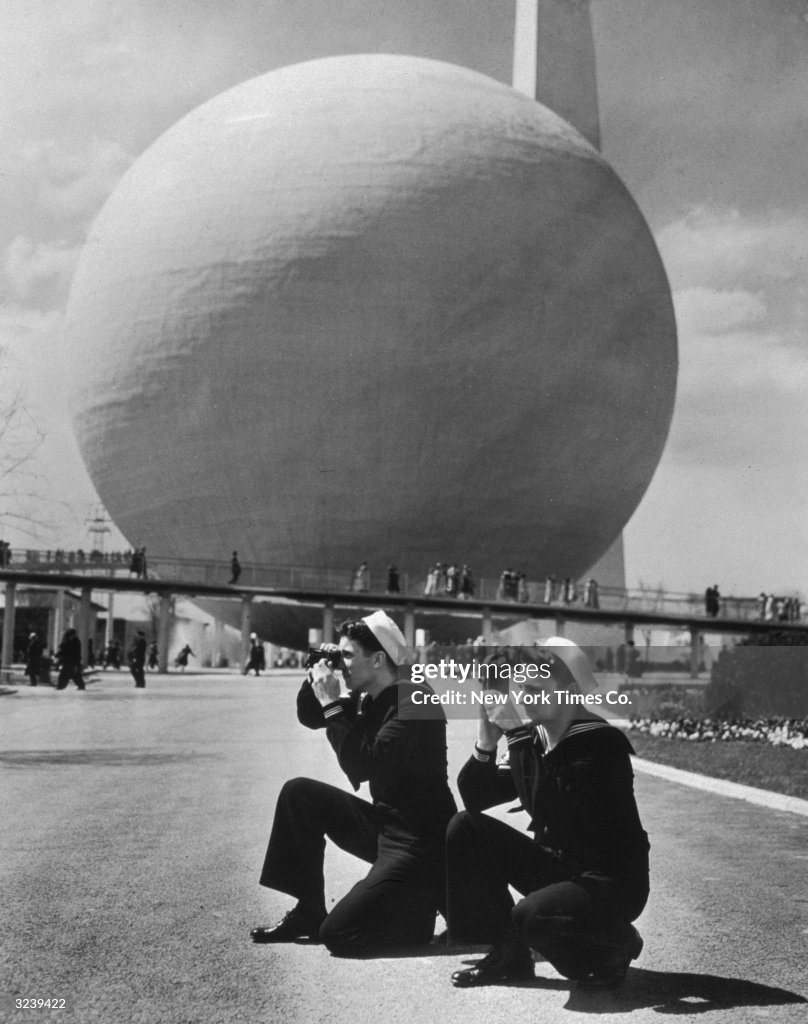
[Ed: I can’t help but wonder if they were still on the Langley when she met her fate in 1942…]
 History Diaries