In South Arabia, British troops are being increasingly committed to an indecisive war in forbidding country. Where even the craggy, desolate landscape is an enemy, where a withering sun burns out the clutches on vehicles and forces a British soldier to drink two gallons of water a day to stay conscious, Britain is trying to contain rebel tribesmen and Yemenis who slip easily into South Arabia across an open frontier. The British say they have plenty of evidence that their elusive foes are getting supplies and weapons from the United Arab Republic. Indeed, President Gamal Abdel Nasser, himself heavily committed to an indecisive war in Yemen, has championed the cause of getting Britain out of the whole of the Arab world. He said so last month on his visit to Sana, and again on his return to Cairo: “I declare that our primary mission is to expel the English from every part of the Arab homeland — to expel the English and to liquidate their bases.”
This prompted R. A. Butler, Britain’s Foreign Secretary, to suggest to Secretary of State Dean Rusk that the United States suggest that its aid to the U.A.R. might be reduced if Mr. Nasser continued to harass the British. Washington rejected that suggestion so sharply that the British are wondering now whether they should prepare for a long, lonely war with President Nasser, or begin to recast their whole unwieldy load of commitments and objectives in the Middle East. What are Britain’s interests in the Middle East? What is the importance to her of Middle Eastern oil? What is being achieved by the British troops and bases in the area?
Britain’s, main base in the Middle East is at Aden, the tiny colony where 200,000 people thrive mainly on work provided by the oil refineries, by the biggest oil‐bunkering facilities in the world, and by a volume of shipping that is exceeded in the British Commonwealth only in London and Liverpool. Aden is considered vital to Britain’s sea route to the Far East. The base is considered necessary to the protection of her oil interests in the Persian Gulf, and as a staging post when trouble flares in the Middle East, East Africa, or even in the Far East. The troops at Aden are needed to meet Britain’s obligations to those Arab states she has undertaken by treaty to protect. These include Muscat and Oman, the seven states of the Trucial Coast, Qatar, Bahrein, Kuwait and the South Arabian Federation, where 3,000 British troops and British‐armed native troops are struggling now to contain the guerrillas.
The 10th anniversary of the fall of Điện Biên Phủ is not recognized officially in South Vietnam, but General Khánh says that his country would appreciate aid from other countries than the United States, and the United States is known to agree that such aid would be valued for psychological and political reasons. The United States is urging its allies to step up their contributions to the war effort in South Vietnam as much for psychological and political reasons as to get extra technical help. Washington has made this clear in recent approaches to Western and Asian allies, qualified sources said today. Top Administration officials are known to believe that if more flags can be shown in the frustrating guerrilla war, it will give the Vietnamese people badly needed encouragement when war weariness and talk of neutralization are running strong.
Further, in the view of officials in Washington, an increasing show of solidarity will help to discourage the Việt Cộng and the Communists in North Vietnam at a time when success has made them increasingly bold. Expanded contributions from such nations as West Germany, Britain, Italy, Australia, the Philippines and others, it is said, would also serve as a concrete sign that the non‐Communist world generally rejects French proposals for neutralizing Vietnam. On the domestic political front, a number of observers believe, such support would strengthen the Administration in its disputes with such critics as Senator Wayne Morse, Democrat of Oregon, who has been urging that the United States null out of the war.
In effect, what officials appear to have in mind is not only to obtain technical assistance but also — in view of the fact that contributions from some smaller nations will necessarily be rather limited — to convey to the Communist world a picture of a coordinated effort on behalf of South Vietnam. In this sense, it would resemble the joint United Nations campaign in Korea, although it would not be channeled through the United Nations. Although several other countries have been providing military and technical assistance, the search for broader support got its first high‐level push during Secretary of State Dean Rusk’s appearance at the meeting of the Southeast Asia Treaty Organization in Manila last month.
Prince Souvanna Phouma, Lao’s neutralist Premier, flew to the royal capital of Luang Prabang today to see King Savang Vatthana after his latest proposals to make the coalition Government work were rejected by the pro‐Communist Pathet Lao. Prince Souvanna Phouma recently announced a new alliance uniting the rightists and neutralists, and has been pressing for the Pathet Lao to join. The Pathet Lao rejected his bid, asserting that the 1962 Geneva accord on Laos was based on the existence of three distinct political groups. It was understood that certain measures the rightists and neutralists plan to take would be outlined to the King. General Phoumi Nosavan, right-wing Premier, said these measures would be carried out despite the Pathet Lao.
United States authorities said today that they would welcome proposals for fundamental changes in the Atlantic pact, but they warned against “tinkering” with it. The United States has some suggestions for changes in the structure of the alliance, but is not yet ready to divulge them, according to high authorities. The proposal to move the Standing Group, the top‐level military panel of the North Atlantic Treaty Organization, from Washington to the European headquarters near Paris, is not considered by authorities here to be basically important. It would not be supported or vigorously opposed by the United States.
The Government made clear privately, and underscored publicly in a speech by Under Secretary of State George W. Ball, that the United States was interested primarily in moves toward European political unity and broad policies against Communist aggression throughout the world. Mr. Ball, in an address on NATO problems at an international conference at the Georgetown University Center for Strategic Studies, said: “Effective solutions will not be achieved merely by tinkering with the NATO structure but rather by progress in achieving a greater cohesion in relations among member nations.”
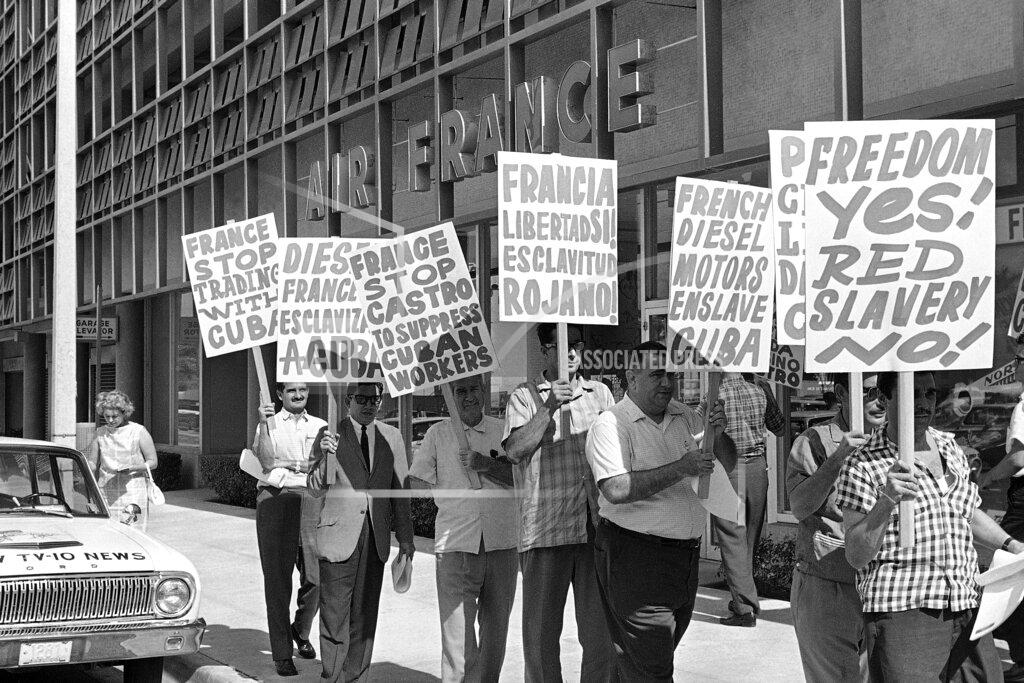
The United States has received support from all other Atlantic Pact allies in criticism of British policies on trade with Cuba and the Communist countries of Eastern Europe, qualified sources said today. A clash on this issue between Secretary of State Dean Rusk and the British Foreign Secretary, R. A. Butler, is expected, at the meeting of the North Atlantic Treaty Organization’s Ministerial Council in one Hague next week. The vote in the Council has been 15 to 1 against Britain when the question has been debated at previous meetings. The French, who recently concluded a deal under which Cuba is to get 20 locomotives on Government‐backed credit, are not considered the real American target. The United States apparently accepts the French explanation that if they had not made the deal Britain would have done so.
The United States insists that a viable alliance must be “solid” in the political and economic fields as well as in military strategy. Many of the allies, in the American view, now realize that although the alliance was established to deal with European problems, its responsibility has widened to include Communist threats elsewhere. The American attitude seems to be that if the British can be persuaded to forgo trade with Cuba or the Communist bloc, the other Western allies will not offer any serious difficulties in this field. The British counter‐argument is that such trade as they do with Cuba does not increase Premier Fidel Castro’s mischief‐making capabilities in Latin America. Rather, they say, it draws the Cuban leader away from dependence on the Soviet Union.
The Administration, recognizing the need for a formula that will re‐establish North Atlantic unity, is pushing the American project for an allied nuclear force as a means of reasserting the principle of military integration. The principle has been sharply attacked by General de Gaulle. The United States is understood to expect that the allied force will be offered, once it is established, to NATO and the supreme commander of the alliance. But at the moment, it is prepared to agree that, if a European political authority is established by that time, the force would be handed over to that authority. The force is to consist of 20 surface ships armed with Polaris‐type missiles. Mixed crews are to be drawn from the contributing North Atlantic navies.
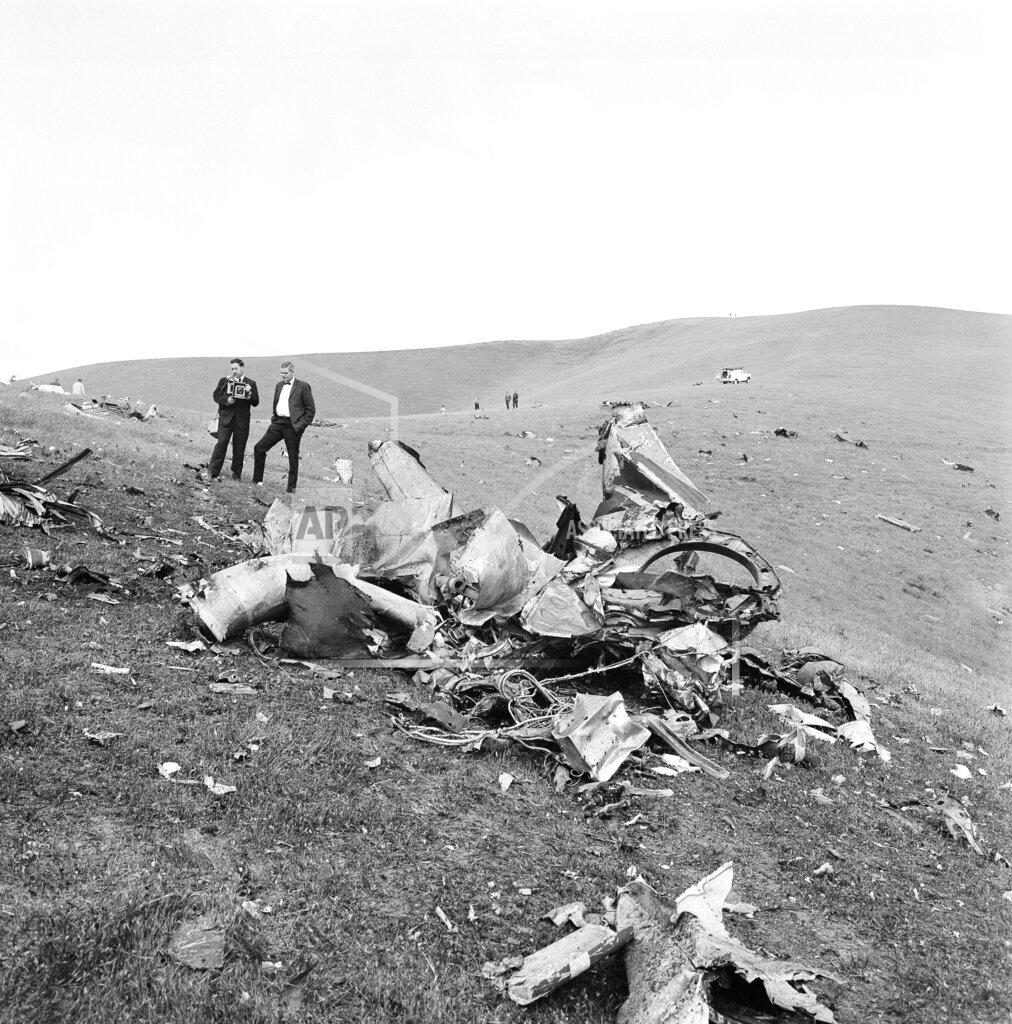
Two people were killed by the explosion of a rocket in a demonstration of rocket mail on Hasselkopf Mountain, near Braunlage, West Germany, by aeronautical engineer Gerhard Zucker. The West German government banned civilian rocket launches after the disaster.
The Labor party has scored a victory in municipal elections, the last big‐scale test before next fall’s general election. Last month the Laborites triumphed in County Council elections. With results in from 377 of 390 Town Councils in England and Wales in yesterday’s balloting, Labor had a net gain of 254 seats, mainly at the expense of the Conservative party. The Conservatives suffered a loss of 132 seats, the Liberals a loss of 59, independents a loss of 64 and the Communists had a gain of one. Labor’s gain of 254 seats more than made good its reverse in the 1961 municipal elections, when it lost 220 seats. Jubilant party leaders, translating the local polls into national terms, predicted a runaway victory in the general election, expected in the first half of October.
India told the UN Security Council today that Pakistan, with Communist China’s backing, was seeking a pretext for invading the border state of Kashmir. The charge was made by Mahomedali Currim Chagla, Indian Minister of Education, who alleged that a threat to disturb the peace had been made by Foreign Minister Zulfikar Ali Bhutto of Pakistan in a speech Tuesday reopening the Kashmir debate. The Pakistani Minister said on Tuesday that while he was not threatening India, “the people of Pakistan may find it extremely difficult to stand aside” if what he called Indian “police measures” were intensified.
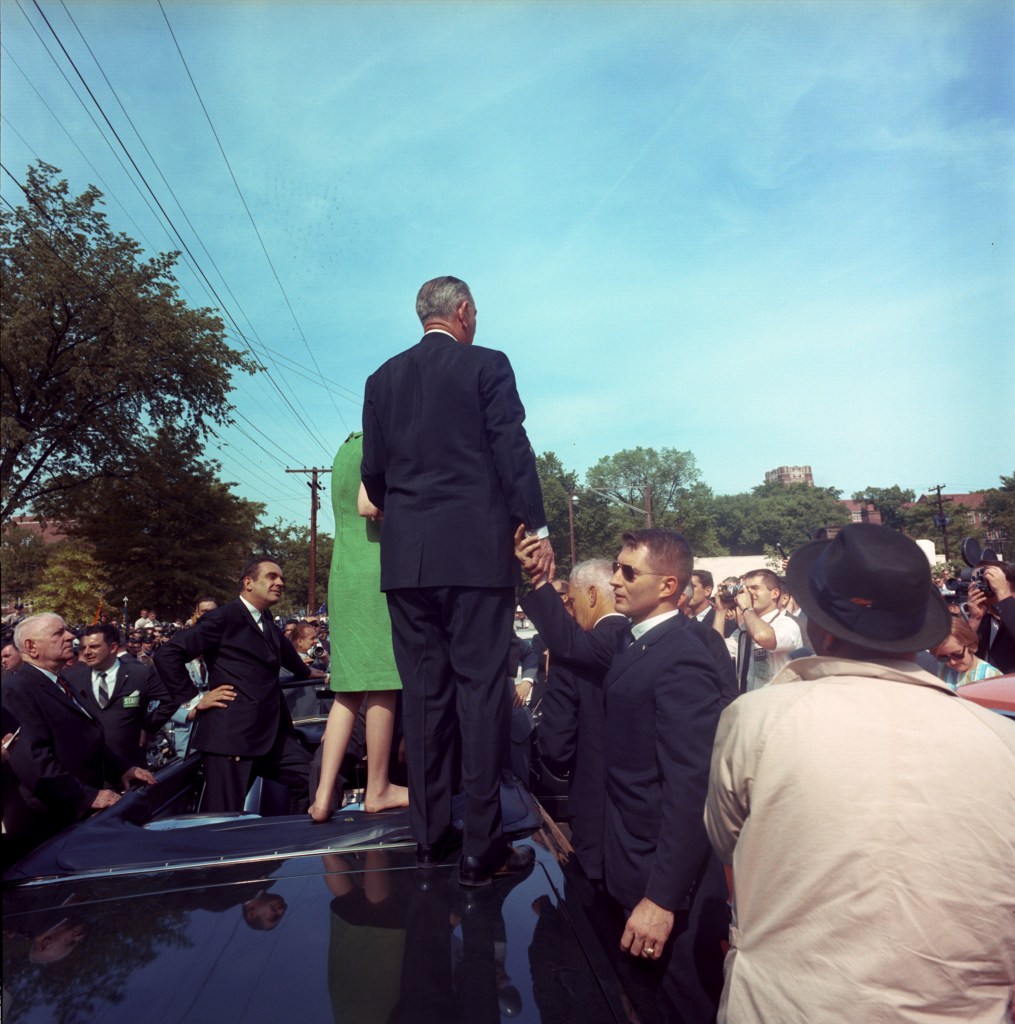
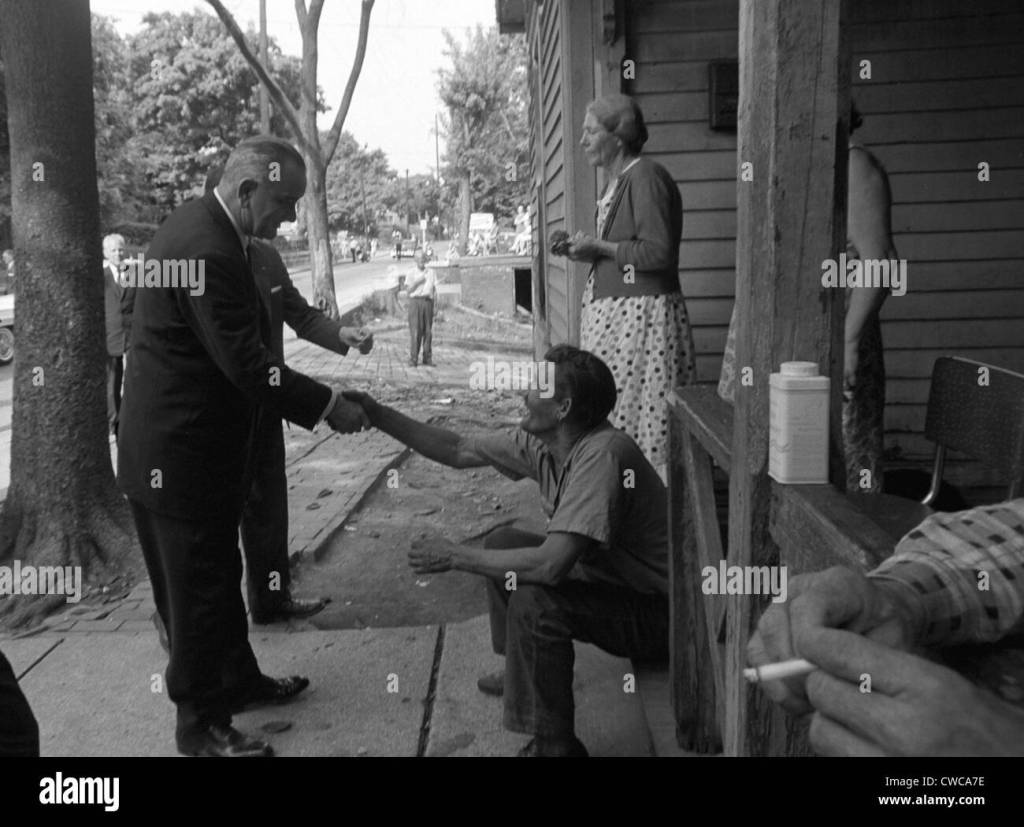
U.S. President Lyndon Johnson first used the term that would describe his vision of federally-funded social programs to create “the Great Society”. Speaking to college students at Ohio University in Athens, Ohio, President Johnson said, “America is yours — yours to make a better land — yours to build the great society.” He would describe the concept further at the University of Michigan on May 22. President Johnson, echoing Franklin D. Roosevelt at every stop, paraded his anti-poverty campaign through six Appalachian states today. But he aimed his message at the nation. Mr. Johnson got an overwhelming reception, particularly in Knoxville, Tenn. His visit to that state was only his second trip into the South since he became President. But there was nothing regional about the message Mr. Johnson gave everywhere he went today.
“We will not win our war against poverty until the conscience of the entire nation is aroused,” he said in a speech from the steps of the Cumberland, Maryland, City Hall. “We will not succeed until every citizen regards the suffering of neighbors as a call to action.” Later, in a campus speech at Ohio University in Athens, Ohio, he said: “Poverty hides its face behind a mask of affluence. But I call upon you to help me go out there and unmask it, take that mask off of that face of affluence and let the world see what we have, and let the world do something about it.“
Pacific Air Lines Flight 773 crashed near Concord, California, killing all 44 people on board. The Fairchild F-27 had started from Reno, Nevada, made a stop at Stockton, California and was 40 miles short of its San Francisco destination when it went down. Among the first clues of what had happened was the discovery of a cocked .357 caliber revolver, found in the wreckage, with six spent cartridges. The next day, the FBI confirmed that the cockpit recorder had picked up pilot Ernest Clark shouting, “My God, I’ve been shot!” before the plane went down. The revolver’s serial number was traced to passenger Francisco “Frank” Gonzales, who had represented the Philippines in sailing at the 1960 Summer Olympic games, and who had taken out a $100,000 life insurance policy before boarding at Reno.
The outlines of a satisfactory compromise on the controversial fair employment practices section of the civil rights bill began to take shape today. The essence of the compromise — if it can be agreed upon — would be a provision authorizing the Attorney General or the Commission on Equal Employment Opportunity to initiate legal proceedings to obtain compliance with the law where there was an evident pattern of “massive resistance.” This was the fourth consecutive day that Senate leaders, the floor managers and captains of the bill and officials of the Justice Department had met in the office of Senator Everett McKinley Dirksen to discuss the proposed amendments of the Republican leader. Today’s conference was devoted to the 11 amendments Mr. Dirksen has offered to Title VII, which bans discrimination by employers and unions.
The most controversial of these amendments goes to the heart of the title. It involves the crucial question of enforcement. Under the provisions of the House‐passed bill, the five‐member Commission on Equal Employment Opportunity is empowered, to initiate a suit against an employer or union if it has failed by persuasion to get voluntary compliance. Mr. Dirksen does not wish to give the commission this power. His amendment provides that an aggrieved person must file suit himself after the commission’s efforts at voluntary compliance have failed. The Dirksen amendment would permit the court to appoint free counsel for the complainant and waive the usual fees. But the commission could intervene in the case only after an employer or union had failed to obey the court’s order to cease an illegal practice.
Employment rose more last month, after discounting seasonal factors, than in any month in the postwar period except one, the Labor Department reported today. Unemployment, on a seasonally adjusted basis, stayed about the same, however. Consequently, the gain in the number of people working failed to cut the unemployment rate from 5.4 percent, its level since February. Labor Department experts said they were ”startled” by the large increase in the number of jobholders. But they were cautious about attaching much economic significance to it because many of the new workers were women in part‐time household service.
The nation’s three leading automobile companies have agreed to discuss their employment practices with the National Association for the Advancement of Colored People. Herbert Hill, the civil rights organization’s national labor secretary, said today that the General Motors Corporation, the Ford Motor Company, and the Chrysler Corporation had accepted his call for meetings, made earlier this week. NA.A.C.P. representatives will meet here with officials of Ford on June 8, Mr. Hill said. They are trying to set up meetings the same week with Chrysler and General Motors, he added. The N.A.A.C.P. maintain that the automobile companies and particularly General Motors, have been lax in providing sufficient job opportunities for Blacks at supervisory levels.
Malcolm X has informed a New York friend in a letter from Saudi Arabia that he will return to the United States in two weeks with new, positive insights on race relations. The Black Nationalist leader said he had gained them from his religious experience in Mecca, the holy city of Islam. He said that for the first time in his life he had felt no racial antagonism toward whites nor had he sensed any antagonism on their part against him. The letter from Mecca, dated April 25, described how he had arrived at his new insights on race relations while on a pilgrimage.
“There are Muslims of all colors and ranks here in Mecca from all parts of this earth,” he wrote. “During the past seven days of this holy pilgrimage, while undergoing the rituals of the hajj [pilgrimage], I have eaten from the same plate, drank from the same glass, slept on the same bed or rug, while praying to the same God—not only with some of this earth’s most powerful kings, cabinet members, potentates and other forms of political and religious rulers —but also with fellow‐Muslims whose skin was the whitest of white, whose eyes were the bluest of blue, and whose hair was the blondest of blond—yet it was the first time in my life that I didn’t see them as ‘white’ men. I could look into their faces and see that these didn’t regard themselves as ‘white.’
Richard M. Nixon called tonight for a national campaign for interracial understanding and compliance with the rule of law. This, he said, is needed to make civil rights legislation effective. The kind of campaign he has in mind, the former Vice President said, is not primarily the responsibility of Government. It should be conducted, he asserted, by churches, church‐oriented organizations and individuals. Mr. Nixon’s forum was a meeting of the National Conference of Christians and Jews. He also outlined his proposal to reporters in a planeside chat after arriving from New York. Mr. Nixon, a prominent, though unannounced, candidate in the contest for the Republican Presidential nomination, eschewed politics in his address, honoring a pledge to the organization.
A recurring theme, “if Senator Barry Goldwater is to be stopped, he must be stopped in California,” was sounded again in San Francisco today on the eve of a one-day campaign visit to Oregon by Governor Rockefeller. It came from Joseph Martin Jr., state Rockefeller coordinator. And it came amid a flurry caused by a ‘new attack on extremist support for Mr. Goldwater in the California campaign. The former Republican national committeeman, a San Francisco lawyer, yesterday made public a list of alternate delegates for the proposed Rockefeller delegation to the party’s national convention. At the same time Mr. Martin assailed the Goldwater campaign leaders for not publishing a similar list and accused them of withholding it because of embarrassment over the number of John Birch Society members it included.
Chief Justice Earl Warren, speaking at the dedication of Washington Cathedral’s newly completed bell tower, says that the Constitution’s separation of church and state is “for the protection not only of the state, but of faith itself.” The House Judiciary Committee is now hearing testimony on proposals that the Constitution be amended to permit prayer and Bible reading in the public schools.
The Internal Revenue service, making its first announcement on the matter, though widespread publicity was given to it at the time the tax cut law was enacted, tells wage-earning taxpayers that most of them will get smaller refunds in 1965 — and others will have to pay more out of their pockets — than they might expect from a law with the purpose of putting more money into the economy.
The University of Notre Dame’s new 8-million-dollar library, with room for 2 million volumes, is dedicated with a solemn high mass before an outdoor throng of 3,000 persons. Red velvet thrones of three attending cardinals flank the altar set up beneath clear blue skies. The library has an 11-story mural of Christ, the disciples, the saints, and scholars designed in granite by Millard Sheets, a Claremont, California, artist.
A crowded school bus is rammed by a skidding dump truck at Morehead, Kentucky, and plunges 100 feet down an embankment, injuring 52 pupils and the driver. At least five of the children suffer fractures; 14 are taken to hospitals.
Tony Oliva collects 4 hits, including 2 homers, one a grand slam, to drive in 6 runs as the Minnesota Twins beat the California Angels, 9-1. Jim Kaat is the winner giving up a single run on a Joe Adcock homer.
Dow Jones Industrial Average: 830.17 (+1.99).
Born:
Leslie O’Neal, NFL defensive end and linebacker (Pro Bowl, 1989, 1990, 1992-1995; San Diego Chargers, St. Louis Rams, Kansas City Chiefs), in Little Rock, Arkansas.
Ronnie Harmon, NFL running back (Pro Bowl, 1992; Buffalo Bills, San Diego Chargers, Houston-Tennessee Oilers, Chicago Bears), in Queens, New York, New York.
Monte McGuire, NFL quarterback (Denver Broncos), in Abilene, Texas.
Mark Boggs, NFL tackle (Indianapolis Colts), in Kankakee, Illinois.
Brian Kilmeade, American TV and radio host (“Fox and Friends”, “The Brian Kilmeade Show”), in Massapequa, New York.


 History Diaries