Secretary of Defense Robert S. McNamara will go to South Vietnam again, following a trip to West Germany at the end of the week. President Johnson announced at his news conference today that Mr. McNamara would leave for Bonn Friday to discuss West German weapons purchases from the United States. In recent years the United States has arranged sales of American weapons to the Germans to offset, at least in part, the dollar drain resulting from maintaining our troops there. Such purchases are under continuing discussion. The Defense Secretary will go from Bonn to Saigon, the South Vietnamese capital, with General Earle G. Wheeler, Army Chief of Staff, and Assistant Secretaries of Defense John T. McNaughton, who is responsible for international security affairs, and Arthur Sylvester, who is the public affairs aide in the department.
The President said that Secretary McNamara was going to Saigon at his request. “He expects to receive first‐hand reports on the progress of military and civilian operations in South Vietnam since his last visit,” the President said. The President was asked whether any progress had been made in the announced effort of the United States to get other nations to join it in support of the South Vietnamese struggle against Communist insurgency. “Yes, progress has been made,” the President answered, “and further progress, I believe, will be made following Secretary Rusk’s visit in the next few days to the NATO ministers’ meeting.”
The coming trip will be Mr. McNamara’s fifth to South Vietnam. He last visited there in March, shortly after the coup d’état that placed Maj. Gen. Nguyen Khanh in power. Upon Mr. McNamara’s return to Washington he conceded that the fighting was difficult, but that prospects for victory over the Communist insurgents had improved. Since that visit, however, events have been going badly. Secretary of State Rusk was in South Vietnam two weeks ago and also returned with expressions of hope. But Mr. Rusk conceded that the South Vietnamese anti‐Communist struggle was difficult. The subject came up again today in Secretary McNamara’s appearance before the Advertising Council at the group’s annual meeting. He termed the situation in South Vietnam “a very serious” one, but added that improvement in the coming months was likely.
A possible attempt to blow up the destroyer USS Swenson of the United States 7th Fleet, now berthed in Saigon, was prevented Tuesday by a watchman, a United States spokesman said today. The watchman on the deck of the Swenson told Navy authorities he saw a trail of bubbles leading to the ship at 6:30 PM yesterday. He threw a concussion grenade into the murky Saigon River “as a precautionary measure.” Nothing came to the surface, the spokesman said. Communist guerrillas sank the United States converted aircraft carrier Card with an explosive charge last Saturday. The Swenson, which arrived in Saigon Monday, has sonar detectors going twenty‐four hours a day while she is in Saigon. Maximum security is in effect around the ship.
The neutralist Laotian Premier, Prince Souvanna Phouma, and his right‐wing deputy appeared to be at odds today on the issue of getting the pro‐Communists to work again in the coalition regime. In a speech over the Vientiane radio last night, General Phoumi Nosavan, the right-wing leader, said Prince Souvanna Phouma would appoint two personal representatives to run two ministries held by absent pro‐Communist leaders. Asked about this, the Premier said the absent ministers would remain members of the coalition Cabinet. The two are his half‐brother, Prince Souphanouvong, Deputy Premier, who also is Minister of Planning, and Phoumi Vongvichit, information minister.
Negotiations to get the two to return from the pro‐Communists’ headquarters at Khang Khay, in northeastern Laos, collapsed when rightist generals seized Vientiane April 19 and demanded a larger voice in the regime. General Phoumi Nosavan has said he conceded the leadership of his faction to Prince Souvanna Phouma but he went on the air to speak in the Premier’s name. Diplomatic quarters considered that the tone of his speech gave the impression of an imminent break with the pro‐Communists, which they said the Premier was striving to avoid.
The lull in the Cyprus conflict ended today with an outburst of shooting incidents. The skirmishes and other incidents were comparatively minor, but coming after five days of relative quiet they contributed to tension on the island. Two areas were particularly tense: Trakhonas, a Nicosia suburb, and Famagusta, the eastern port that has been virtually undisturbed by violence since fighting began in December between Greek and Turkish Cypriotes.
A Turkish Cypriote motorist in Famagusta was fatally wounded by a Greek Cypriote policeman when the Turk tried to drive through a checkpoint on the outskirts. The police station is in a mixed section of the town. Within moments both Greek and Turkish Cypriotes rushed armed reinforcements into the area. A serious clash seemed imminent but an Irish patrol of the United Nations peace force moved in and managed to calm the Cypriotes.
In Trakhonas, one of the capital’s most troubled suburbs, there were several exchanges of fire between Greek and Turkish Cypriotes. A Greek Cypriote civilian was wounded. The Greek Cypriote security forces threatened to open fire against the Turkish Cypriotes with machine guns if the Turks continued firing. Canadian patrols put an end to the shooting. Shortly before 10 PM shooting was resumed in the area. Greek and Turkish Cypriotes continued to shoot at each other with rifles and automatic weapons in the Kyrenia Mountains but not in the immediate vicinity of the Turkish Cypriote stronghold of St. Hilarion.
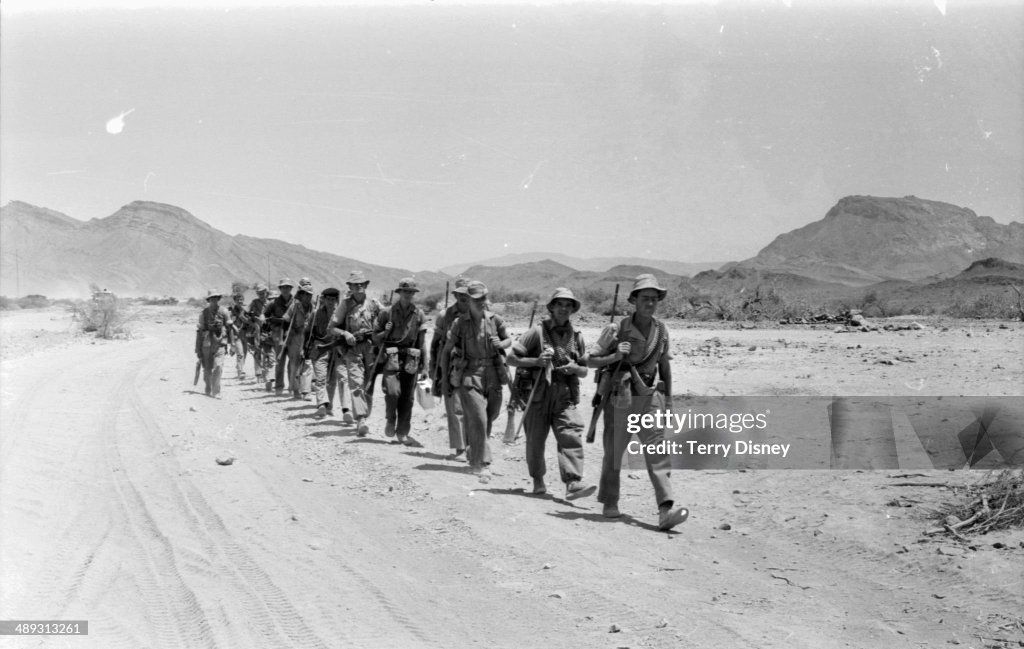
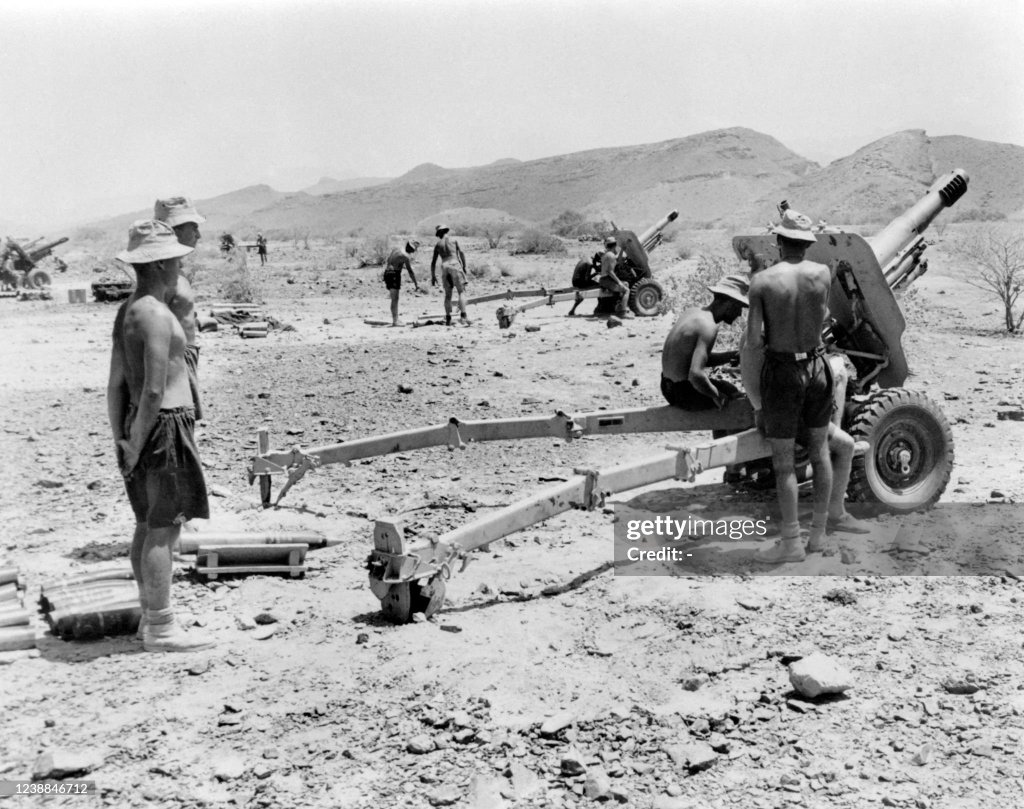
The British commander of land forces in the Middle East said today that British troops had achieved their immediate aim against rebel tribesmen 60 miles north of Aden. Lieutenant General Sir Charles Harington said that his men were now firmly established inside the territory of the “Red Wolf” rebel tribesmen in the Radfan mountain region. He also said the British dominated two settled areas that had been a refuge for hard‐core detachments of the tribesmen. Tribesmen have been interfering with traffic on a main trade route in the Federation of South Arabia, which is under British protection. Britain has accused the tribesmen of incursions into federation territory from Yemen with military help from the United Arab Republic.
The military threat has by no means been eliminated, General Harington said, but he declared that British and Federation forces were now in position to deal swiftly with any trouble, either in Radfan or in surrounding areas. The general deplored the present situation which he said had arisen as a result of external subversion. If the Radfan people could be persuaded to settle down, he said, there was much useful development work to be done.
Members of the North Atlantic Treaty Organization will debate differences on strategic planning at a special meeting of defense ministers here late next month or early in July, reliable sources reported tonight. Agreement on the strategy for the defense of Western Europe, and the forces and resources required to implement this strategy, will be the goal of the special meeting, the sources said. Dr. Dirk U. Stikker, retiring secretary general of the alliance, hopes to preside. He will retire August 1 for medical reasons. Accompanying reports of the forthcoming extraordinary session was the disclosure that the secretariat itself believes that the alliance’s command system is outdated. French objections to the command system are that it is outdated and hypocritical. They say it is outdated because it does not take into account differences between 1950, when the command was set up by General Dwight D. Eisenhower in a weak Europe, and 1964, when the European members are politically, economically and, in some cases, militarily powerful.
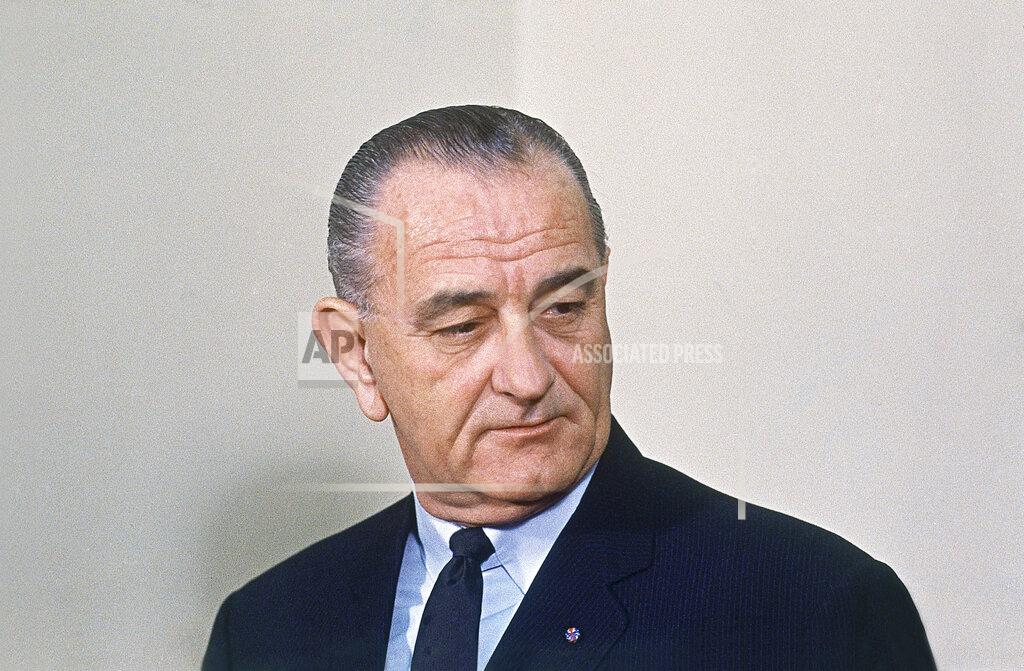
President Johnson and Secretary of Defense Robert S. McNamara reasserted in separate statements today the Administration’s determination to wage economic war on Cuba and to continue with aerial reconnaissance of the island. The President said at his news conference that the United States’ economic boycott of Cuba had been effective despite the reluctance of certain allies, notably France and Britain, to cooperate. He said he regretted that some of the allies did not feel they could “cooperate with us all the way.” “Nonetheless,” he said, “we are going to continue our policy of economic isolation in the hope that we can prevent the spread of Castro’s Communism throughout the hemisphere.”
In the case of Dering v Uris, Dr. Wladislaw Dering won a Pyrrhic victory in a court of the Queen’s Bench division against novelist Leon Uris and his publisher, Kimber and Company, in a suit for libel arising from Uris’s bestselling novel “Exodus.” Judge Frederick Lawton agreed that Dr. Dering, a physician at the Auschwitz extermination camp, had been defamed by an untrue statement that he had failed to use anesthesia in some of his experimental operations on Jewish inmates, but awarded the doctor damages of a single halfpenny — and ordered Dr. Dering to pay more than £25,000 (about $75,000 at the time) as the plaintiff’s one-half of the court costs. Dr. Dering would pass away later in the year before the costs could be paid. In 1970, Uris would publish another bestseller, QB VII, loosely based on the Dering trial.
On the first substantive vote on the civil rights bill, the bipartisan coalition supporting it won a hairbreadth victory tonight. The Senate rejected, 46‐45, a jury‐trial amendment opposed by the Democratic and Republican leaders. The vote came on a so-called “perfecting” amendment offered by Thruston B. Morton, Republican of Kentucky, to the original jury‐trial amendment proposed two weeks ago by Herman E. Talmadge, Democrat of Georgia. Where the Talmadge amendment would provide the right of a jury trial in all cases of criminal contempt of court, the Morton amendment would have extended this right only to criminal contempt proceedings under the various antidiscrimination provisions of the civil rights bill.
Although the Morton amendment had Republican sponsorship, it was identical with a second amendment introduced by Mr. Talmadge, which had not been called up. It had the solid backing of the Southern opponents of the bill. The civil rights bill as passed by the House provides for jury trial only in connection with Title I of the bill, dealing with voting cases, and Title II, dealing with discrimination in public accommodations. It provides that an accused person can have a jury trial if a judge has imposed a penalty for contempt of more than 45 days in jail or $300 in fines. Four drama‐laden rollcalls were necessary before the bipartisan leadership won its victory. On the first rollcall, the Morton amendment lost on a tie vote, 45‐45.
Thereupon Senator Richard B. Russell, Democrat of Georgia, leader of the Southern forces, moved to reconsider. Immediately Senator Mike Mansfield of Montana, the Democratic leader, countered with a motion to table — that is, to kill‐the motion to reconsider. The tabling motion lost, 47‐44. The motion to reconsider carried. 46‐45. Then, on the second vote on the Morton amendment, the opponents picked up one vote—that of Frank E. Moss, Democrat of Utah, who had arrived a moment too late to be recorded on the first rollcall. On the final and deciding vote, 35 Democrats and 11 Republicans voted against the Morton amendment, and 26 Democrats and 19 Republicans voted for it.
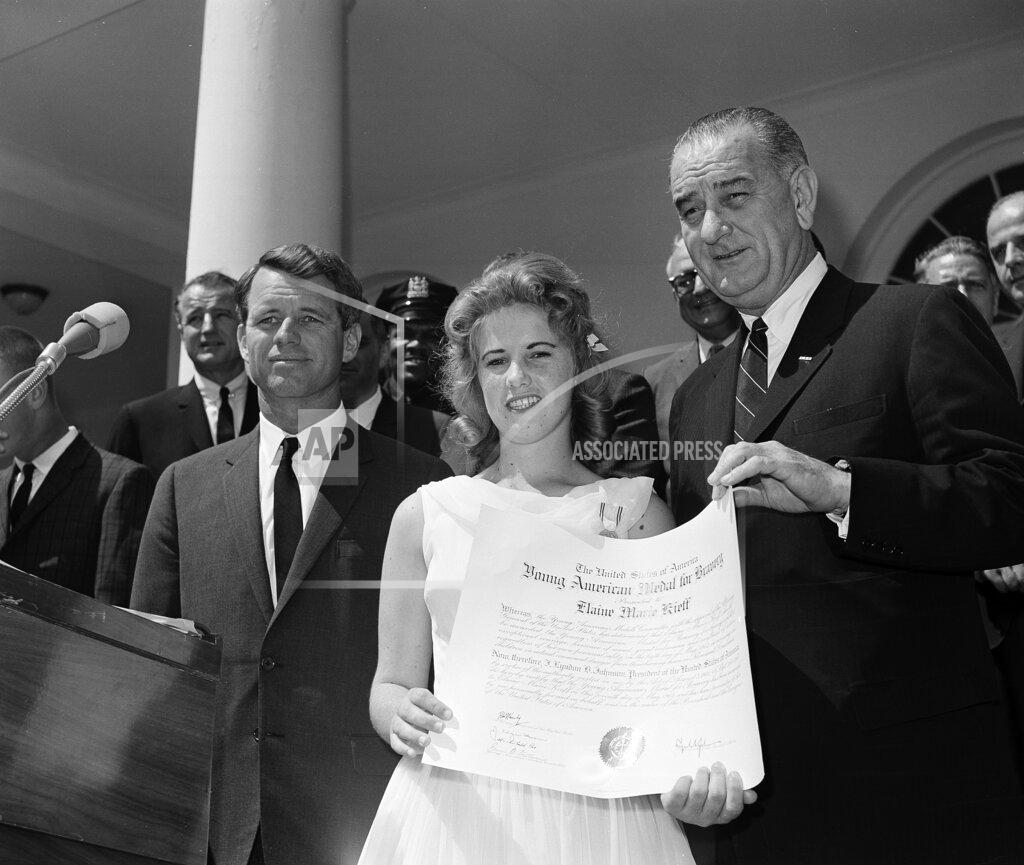
President Johnson said today he might call Congress into special session after the political conventions if it did not soon end the civil rights debate and move on to other measures. Mr. Johnson listed as matters on which he expected action this year his food‐stamp plan, the antipoverty bill, the Appalachian program, the medical care for the aged program, and a pay increase for federal officials. “The people’s business must come first,” the President said at a news conference on the south lawn of the White House. “And I think that the people of this country are entitled to have a vote on these important measures, this Administration is entitled to have a vote on them, and I’m going to ask the Congress to vote them up or down.”
These remarks were among the relatively few serious matters allowed to intrude upon one of the most colorful news conferences ever held by a President. It was attended by hundreds of the wives, children and in some cases the parents and grandparents of Washington reporters. Despite the carnival air and the warm spring sunshine, Mr. Johnson found time to conduct some reasonably serious business at the news conference. It began with a number of announcements, including another of Mr. Johnson’s familiar recitations of pleasing economic statistics. He reported a large gain in employment in April. But he tacitly indicated that the national unemployment rate had not gone down.
Governor George C. Wallace’s showing in Northern primaries was discounted by President Johnson today as something less than an “overwhelming endorsement” of the Alabamian’s record. The President, at his news conference, took much the same line as Administration Democrats did in an exchange on the Senate floor. Southern Senators disagreed. The President noted that Governor Wallace had polled 24 percent of the total vote in Wisconsin on April 7 and less than 20 percent in Indiana yesterday. “I wouldn’t think that less than 20 percent of the total vote polled would be any overwhelming endorsement of a man’s record,” he remarked.
Governor William W. Scranton of Pennsylvania said today that his willingness to accept a genuine draft for the Republican Vice‐Presidential nomination was not limited to particular presidential nominees. The question arose in the context of a possible convention victory for Senator Barry Goldwater. The Arizonan’s conservatism would be vigorously resisted by some of Pennsylvania’s most powerful political centers, such as union labor and Blacks. The Governor and the Senator are as far apart in their political philosophies as two Republicans can be, but they are on friendly personal terms. Mr. Scranton said he did not expect any “honest and sincere” draft to develop for either place on the ticket. As for reports that he was Mr. Goldwater’s first choice for Vice President, the Governor said. “This is news to me.”
Republicans accused President Johnson today of playing partisan politics with the nation’s poor. Denouncing Democratic efforts to “patch up” the Administration’s antipoverty program without their help, the Republicans laid the blame at the White House door. “This is one of the lowest political campaigns I have ever seen,” Representative Thomas B. Curtis, Republican of Missouri, told the House. “We Republicans were ready to extend a helping hand to the Democrats when the President of the United States declared war on us,” Representative Peter Frelinghuysen Jr., Republican of New Jersey, said.
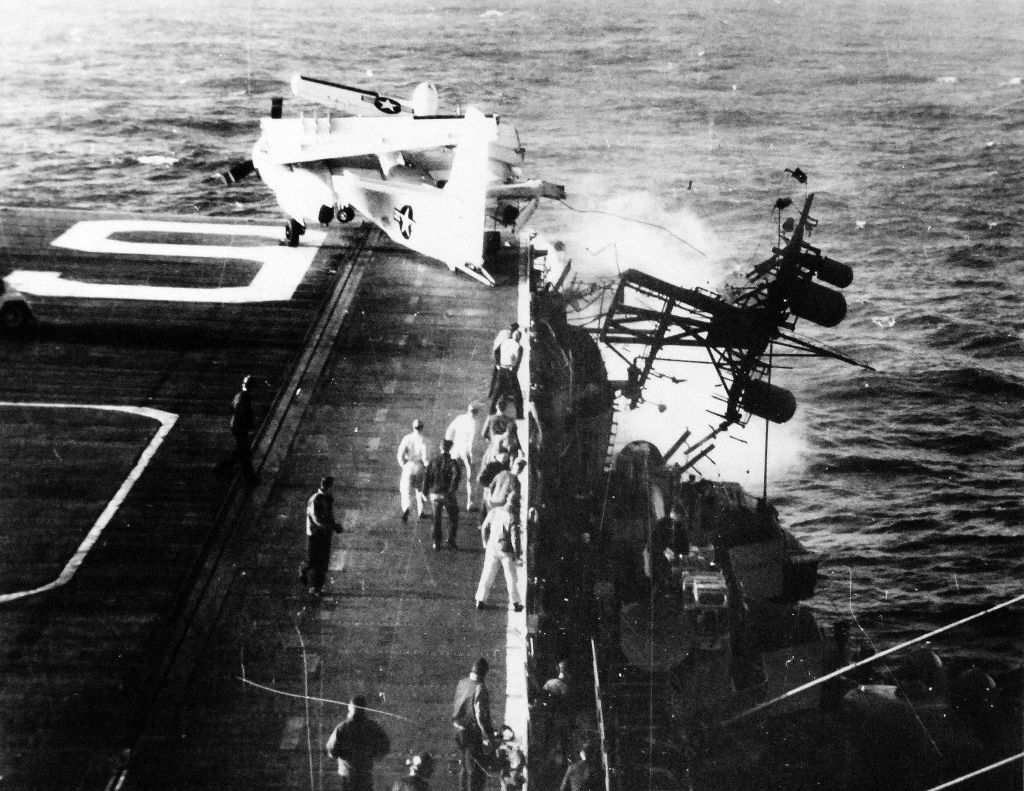
On 6 May 1964, while operating in an ASW exercise off the Virginia Capes, the destroyer USS Decatur (DD-936) suffered severe superstructure damage — both masts were lost over the side and the bridge and both stacks were crushed, remarkably injuring only one sailor — in a collision with support carrier Lake Champlain (CVS-39). Towed into Norfolk, she received temporary repairs alongside Shenandoah (AD-26) before returning to Newport at the end of the month. Tapped for conversion to a new class of guided-missile destroyers, Decatur subsequently sailed north to Boston and, after entering the Naval Shipyard in Charlestown, she was placed in reserve on 1 November and then decommissioned on 15 June 1965. While in the yard, conversion work was begun — which included the installation of the TARTAR missile system, new fire control radars, an ASROC system, and new sonar and other electronics equipment — and she was reclassified DDG-31 on 15 September 1966.
Mrs. Lyndon B. Johnson was “seeing double” today. Her First Lady counterpart in the theater, Helen Hayes, was performing in “The White House” at the White House. Miss Hayes and a cast of nine presented the first half‐hour of A. E. Hotchner’s new play before Mrs. Johnson, the wives of more than 100 Senators and 9 Cabinet officers. It followed a festive lunch in the State Dining Room. The play opened in Philadelphia Monday; it will make its debut at the Henry Miller Theater in New York on May 19. A dramatic curio, it is a freeform work without plot that uses the words of Presidents and their First Ladies, from George Washington through Woodrow Wilson, as the basis for the script. President Johnson found time to pop into the East Room as the presentation ended to say a few words and meet the cast, which included Fritz Weaver as Thomas Jefferson and James Daly as Washington.
Joe Orton’s black comedy “Entertaining Mr Sloane” premièred at the New Arts Theatre in London.
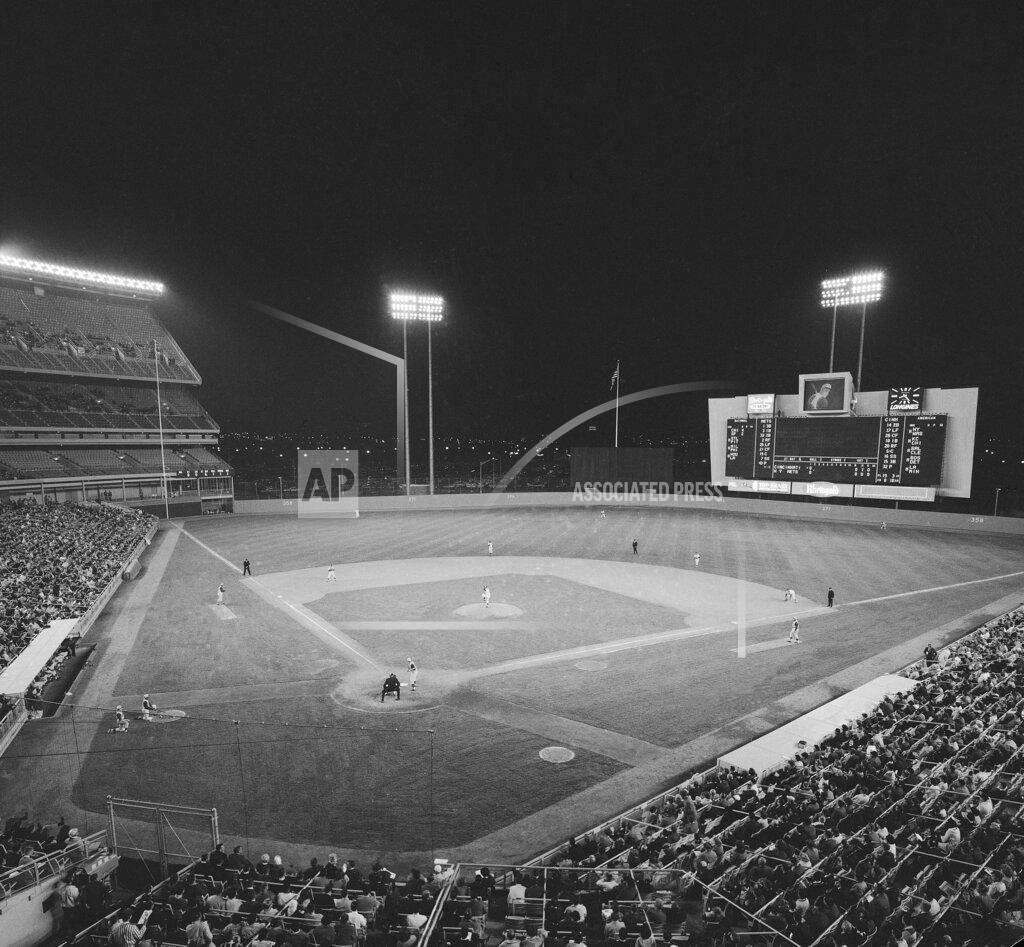
The New York Yankees hit 4 home runs — two by Hector Lopez and one apiece by Mantle and Maris — to back Jim Bouton’s 9–2 opening win over the Senators. Washington comes back from a 4–0 deficit to win the nightcap, 5–4, despite a 3-run Mantle homer off starter Claude Osteen.
Chicago’s Dave Nicholson hits a tape measure home run that lands on the back of the left field roof before bouncing out of Comiskey Park in the White Sox’s 6–4 victory over Kansas City. The outfielder’s monstrous shot becomes the source of a great exaggeration when unidentified team officials announce the ball traveled 573 feet, landing outside the Chicago south side ballpark.
Dow Jones Industrial Average: 828.18 (+1.55).
Born:
Mike McGruder, NFL cornerback (Green Bay Packers, Miami Dolphins, San Francisco 49ers, Tampa Bay Buccaneers, New England Patriots), in Cleveland, Ohio.
Andrew Jackson, NFL running back (Houston Oilers), in Los Angeles, California.
Myron Jackson, NBA point guard (Dallas Mavericks), in Hamburg, Arkansas.
Dana Hill [as Dana Lynne Goetz], American film actress (“Fallen Angel”, “Shoot the Moon”), in Encino, California (died of diabetic stroke, 1996).
Died:
Harold Morris, 74, American pianist and composer.


 History Diaries