
With the ending of advance formal censorship of news in Moscow as the first act of the new Foreign Commissar, it was revealed that the retirement of Maxim Litvinov marked a swing by Russia from her collective-security policy. But one objective of the shift may be to frighten the British into a pact on Russia’s terms. Western diplomats at this time strongly doubt this signals any Soviet rapprochement with Germany. [They are, of course, dead wrong.]
There was no doubt that the British were mystified and worried, but they went ahead as if nothing had happened. Prime Minister Chamberlain, pushing the new conscription bill, avoided one snag by exempting Northern Ireland from its provisions. He also acted to bolster Britain’s war supplies by accepting the principle of a barter deal with the United States.
Warsaw awaited tomorrow’s speech by Foreign Minister Beck, which is expected to reject Germany’s demands but leave the door open for negotiations. On the eve of the speech France made her attitude clear when Premier Daladier said the country would stand by its pledges. On the eve of Foreign Minister Josef Beck’s statement in the Sejm, it was generally expected in Warsaw today that he would reject German demands for the return of Danzig to the Reich and for a motor road from Germany to East Prussia through the Polish Province of Pomorze, so-called Polish Corridor, but would leave the door open for further negotiations.
This will be Poland’s reply to Chancellor Adolf Hitler’s Reichstag speech and to his repudiation of the non-aggression pact between Germany and Poland. Colonel Beck is expected to propose a new arrangement regarding Danzig, embodying wider guarantees for Poland than those contained in the Free City’s present statute. But, contrary to rumors, he will not make any territorial claims.
The main lines of the Polish Foreign Minister’s speech will resemble the principle that he formulated six years ago, before the signature of the non-aggression pact and hence before the Polish-German rapprochement. “Poland’s attitude to Germany will be exactly the same as Germany’s attitude to ourselves,” he said then, and he is likely to repeat those words tomorrow. So long as the Germans kept their promise not to attack Poland and did not demand any change in the status of Danzig or Pomorze, the Poles abstained publicly from enumerating their grievances. Now the situation has changed, it is felt, and Poland must make clear that she too has claims on Germany, that her interests clash with Germany’s and that her living space overlaps Germany’s.
Having lost faith in Germany’s word, Poland will ask special guarantees in any future agreement with the Reich regarding Danzig or regarding Polish-German relations generally. For all these reasons tomorrow’s speech is likely to have historic importance and to write a new chapter in the age-old struggle between Slavs and Teutons in Eastern Europe. This time the Slavs will assume the offensive. The Poles will tell the Germans that conversations can be held only on a footing of equality and that understandings must be concluded on equal terms.
Germany was not idly awaiting the speech; her diplomats lined up Latvia in a non-aggression pact and were making progress with Estonia. Moreover, Foreign Minister von Ribbentrop and Field Marshal Goering were both on a secret mission to Italy.
Field Marshal Hermann Göring arrived at San Remo this evening on a visit, the purpose of which is not divulged. However, when it is considered that he precedes Foreign Minister Joachim von Ribbentrop by one day and that Colonel General Walther von Brauchitsch, Commander in Chief of the German Army, is in Libya in close contact with Italian military leaders, it is obvious that something important may be expected. Never before has Germany employed so many highly placed men and put so much effort in bringing Italy to see eye to eye with her. In this case the crucial subject almost certainly is Poland.
Italian sources agree that the dismissal of Maxim Litvinov, as Soviet Foreign Commissar well may have important repercussions on the Axis and so far as Germany and Italy are concerned they should be favorable ones. Everyone here feels that a hard blow has been dealt to Anglo-French efforts to encircle the Axis powers and in some circles, one hears talk even of an understanding between Premier Mussolini, Chancellor Hitler and Joseph Stalin, which might alter the whole balance of European power. The idea is not too fantastic because it must be remembered that Italy and Russia essentially are on excellent terms despite the noise made in speeches and newspapers. There is a non-aggression pact that has never been denounced and an important commercial treaty was signed between the two countries only a few months ago. Italy has even been building war vessels for Russia.
It has only been in recent days when the treaty with Britain and France has been under discussion, that the press has made any attacks on Moscow. If now that pact strikes a snag — as the Italians hope and expect — friendliness will probably return. Mr. Litvinov’s resignation will be another subject of discussion for Herr von Ribbentrop and Foreign Minister Galeazzo Ciano when they hold their conversations on Lake Como Saturday and Sunday.
The Housing Segregation Law is enacted in Germany. The long-expected law regulating the housing of Jews in Germany was issued today. It is based on two premises: that Jews and non-Jews shall not live in the same house and that Jews now have dwelling places proportionate to their number in the population whereas many Germans are without adequate living quarters. The law provides, therefore, that large Jewish-owned houses shall and can be forced to take in other Jews and that leases Jews hold with “Aryan” landlords can be terminated by authorities when another dwelling is provided for the Jew.
Werner Mölders of the Luftwaffe and Condor Legion was awarded the Medalla de la Campaña and Medalla Militar by Spain.
Britain exempted Northern Ireland from conscription to avoid tension with the Irish Republic. Prime Minister Neville Chamberlain today finally ruled out conscription for Northern Ireland and thus removed any possible cause of friction with Premier Eamon de Valera of Ireland, who opposed the inclusion of Northern Ireland.
The novel “Finnegans Wake” by James Joyce was published.
Today in Washington, President Roosevelt discussed the problem of European refugees with Myron C. Taylor and other United States representatives on the Intergovernmental Committee on Political Refugees, conferred with Representative Rayburn on rivers and harbors legislation and with Governor Blanton Winship on Puerto Rican affairs. He sent to the Senate the nomination of Norman Armour to be Ambassador to Argentina. The White House announced detailed plans for the reception tomorrow of President Somoza of Nicaragua.
The Senate confirmed the nomination of Leon Henderson to the Securities and Exchange Commission, approved a bill creating the office of Under-Secretary of Commerce and another establishing the office of deputy chief of staff of the army, received the Vandenberg bill to re-enact the “cash-and-carry” provisions of the Neutrality Act and adjourned at 1:40 PM until noon on Monday. The Foreign Relations Committee heard Bainbridge Colby on neutrality policies. The Naval Affairs Committee reported favorably the bill authorizing $54,000,000 for construction of naval facilities in the United States.
The House debated the $770,473,241 Navy Department Appropriation Bill and adjourned at 4:28 PM until noon tomorrow. The Labor Committee opened hearings on amendments to the National Labor Relations Act.
Virtually complete paralysis of the U.S. coal industry was imminent yesterday as the result of a breakdown of negotiations for a new agreement between the United Mine Workers and bituminous coal operators of the Appalachian area. Because of the inability of the union and the operators to break their deadlock, the stoppage in the soft coal industry in that area that has kept 320,000 miners idle for nearly five weeks will be extended today to Illinois, Kentucky, Indiana, Ohio, Iowa and Washington, in accordance with notices served upon mine owners by John L. Lewis, president of the miners, fifteen days ago.
An additional 50,000 miners are scheduled to quit work today, to be joined by at least an equal number tomorrow. A stoppage of 100,000 miners in the anthracite field Monday also was feared as a consequence of demands presented by the operators for lower wages, longer hours and modification of working conditions regarded as unacceptable by the union. In Washington, however, Secretary of Labor Perkins expressed hope of a settlement of the bituminous controversy this afternoon. There was talk again of direct intervention by President Roosevelt as the threat of a serious coal shortage began to assume ominous proportions.
Congress resumes its “Red Hunt” with the WPA, and may ask arts project workers if they are Communists.
Repeal of the Wages and Hours Law, amendment of the National Labor Relations Act, drastic curtailment of government expenditures and thorough revision of Federal tax laws were proposals that stood out in a twenty-six-point program advanced today by the Chamber of Commerce of the United States as “the key to recovery.”
A few hours after formulating these views In resolutions and following the selection by the board of directors of W. Gibson Carey Jr., New York business executive, as their new president, the delegates to the annual convention heard Senator Harrison express the belief that corporation taxes would be so revised this session as to “encourage private industry to increase employment, add to the purchasing power of the people and stabilize the revenues of the government.”
Mr. Harrison spoke at the final dinner of the convention tonight. The Mississippi Senator, a “moderate,” who is chairman of the Finance Committee, warned against any expectation of a general revision of the tax structure at this time, however. The House and Senate would accept “without question,” he predicted, the “freezing” of old age Insurance taxes as recommended by the Treasury, and would continue the “nuisance” levies expiring on June 30. He recalled that something had to be done toward re-enacting the corporation tax structure, which expires on December 31. It was in this connection that he offered the hope of recovery-encouraging revision.
“No definite conclusions have been reached,” he said. “My colleague in the House, Chairman, Doughton, and I, as heads of our respective committees, believing that we expressed the sentiment of our respective groups, congratulated Secretary Morgenthau on his fine expressions with reference to the modification or elimination of those provisions of the tax law which act as a deterrent to business. We expressed to him and others in the executive branch of the government our earnest and sincere desire to cooperate in effectuating the purposes recently announced by those in high authority in the Administration.”
A small white-haired 68-year-old grandmother arraigned yesterday in Brooklyn Supreme Court on seventeen counts of first-degree perjury in connection with fraudulent bail bond transactions was remanded to a detention prison under $50,000 bail after Special Prosecutor John Harlan Amen had described her in open court as “one of the principal figures in at least three of the most vicious rackets in Brooklyn.” The woman is Mrs. Rose Gold of 574 Vermont Street, Brooklyn, operator of a candy store at 779 Saratoga Avenue, in the Brownsville and East New York section of Brooklyn, concerning which Mr. Amen asserted “we have information that this store was the headquarters for large policy and bookmaking games, the prostitution racket and similar underworld enterprises.”
The U.S. Navy plans to change its enlistment term from four years to six. No one under age 18 will be accepted.
In Detroit, Ted Williams belts two homers for the first time in his career to lead the Red Sox to a 7–6 win over the Tigers. Off Bob Harris, Williams thumps one homer over the right-field roof, the first ever hit out over the double deck at Briggs Stadium. Mickey Mantle will hit the next three homers to leave the park.
Executive vice president Larry MacPhail is elected president of the Brooklyn Dodgers.
Japanese bombers killed at least many hundreds in an evening Chungking raid last night. The planes cause huge damage in China’s capital. Japanese raiders yesterday inflicted on the new Chinese capital one of the most disastrous bombings in the history of the Chinese-Japanese war. Vast areas of the city were laid waste, hundreds and perhaps thousands were killed or injured, one foreign embassy and consulate was reduced to smoking ruins and another was wrecked by four direct hits. The bombing was carried out at dusk by twenty-seven planes that swept in from the north and loosed a barrage of incendiary and heavy demolition bombs indiscriminately in a line across the heart of the city from the Kialing River waterfront to the southern fringes of the metropolis on the Yangtze River side.
The foreign diplomatic missions smashed were the German Embassy and Consulate, where incendiary and demolition bombs wrecked buildings and started a fire that soon burned the structure to the ground, and the British Embassy and Consulate. At the latter one large bomb on the tennis courts killed more than a score of Chinese who had sought safety, smaller missiles demolished part of the house of Consul General Stark Toller and another was hurled through the roof of the embassy building, causing extensive damage. Six foreigners’ precincts miraculously escaped serious injury, although John Tahourdin, secretary to the British Ambassador, Sir Archibald Clark Kerr, suffered a nasty head wound from a piece of flying shrapnel. The Japanese attack climaxed a day of raid alarms that kept the city in a state of near panic.
Fires raged through at least an eighth of this Chinese provisional capital today in the wake of the second Japanese air raid in two days — an attack estimated to have killed and wounded 2,000 persons. Twenty-seven planes showered the heart of Chungking with incendiary bombs at 6:30 PM yesterday, adding to fires that had been burning since a less damaging raid of Wednesday.
Japanese Prime Minister Hiranuma Kiichiro sent a personal message to German Chancellor Adolf Hitler. The message became known as the Hiranuma Declaration and in it Hiranuma expressed his admiration for Hitler’s work in Germany, and advised that he was similarly engaged in the work of maintaining Japan’s “New Order in East Asia.” He also indicated that Japan would support Germany and Italy with political, economic, and military aid if they were attacked by a power other than the Soviet Union, but not immediately.
Japan’s Foreign Minister Hachiro Arita pledges not to harass law abiding Jews.
Dow Jones Industrial Average: 131.86 (-0.44).
Born:
Paul Gleason, American actor (“Breakfast Club”, “Die Hard”), in Jersey City, New Jersey (d. 2006).
Leon Rochefort, Canadian NHL right wing (NHL Champions, Stanley Cup-Montreal, 1966, 1971; NHL All-Star, 1968; New York Rangers, Montreal Canadiens, Philadelphia Flyers, Los Angeles Kings, Detroit Red Wings, Atlanta Flames, Vancouver Canucks), in Cap-de-la-Madeleine, Quebec, Canada.
Naval Construction:
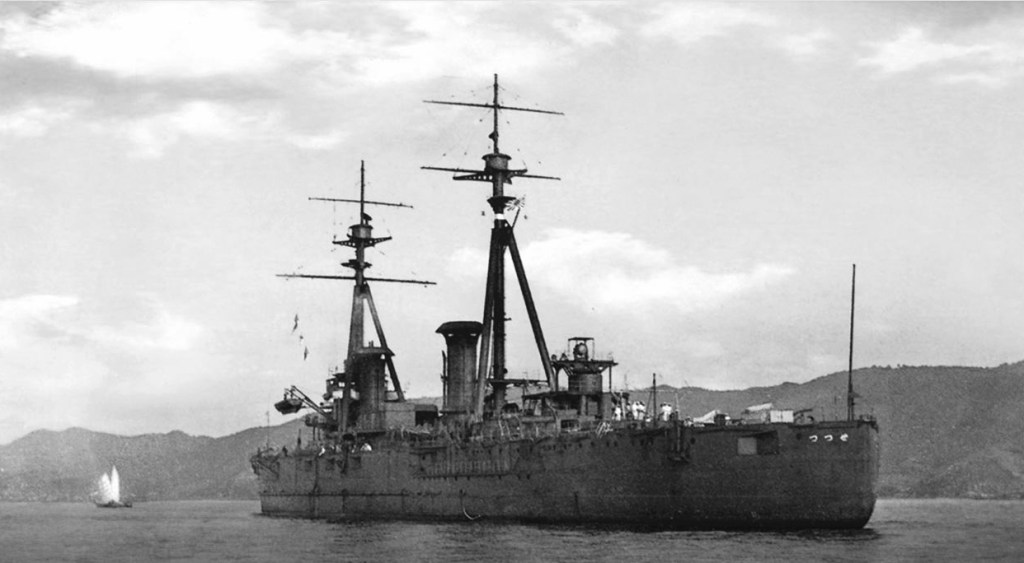
The Royal Navy Net-class boom defense vessel HMS Martinet (Z 41) is commissioned.

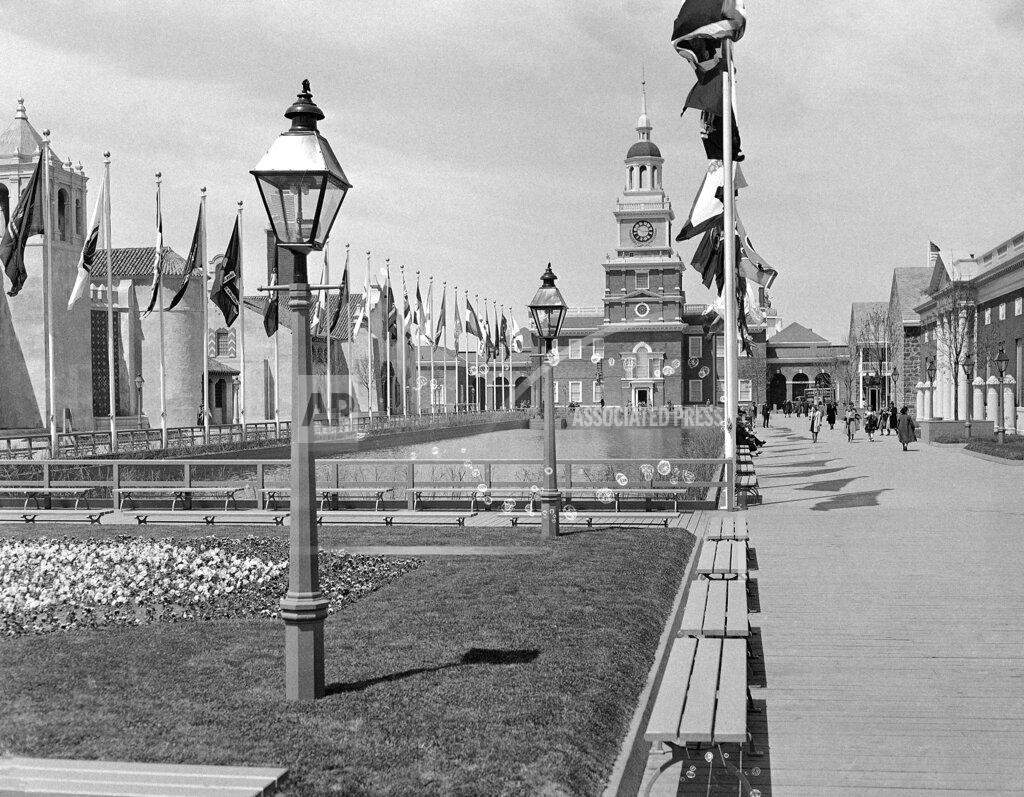
[Ed: I grew up just a few blocks from here, in the 1960s and 1970s.]

 History Diaries