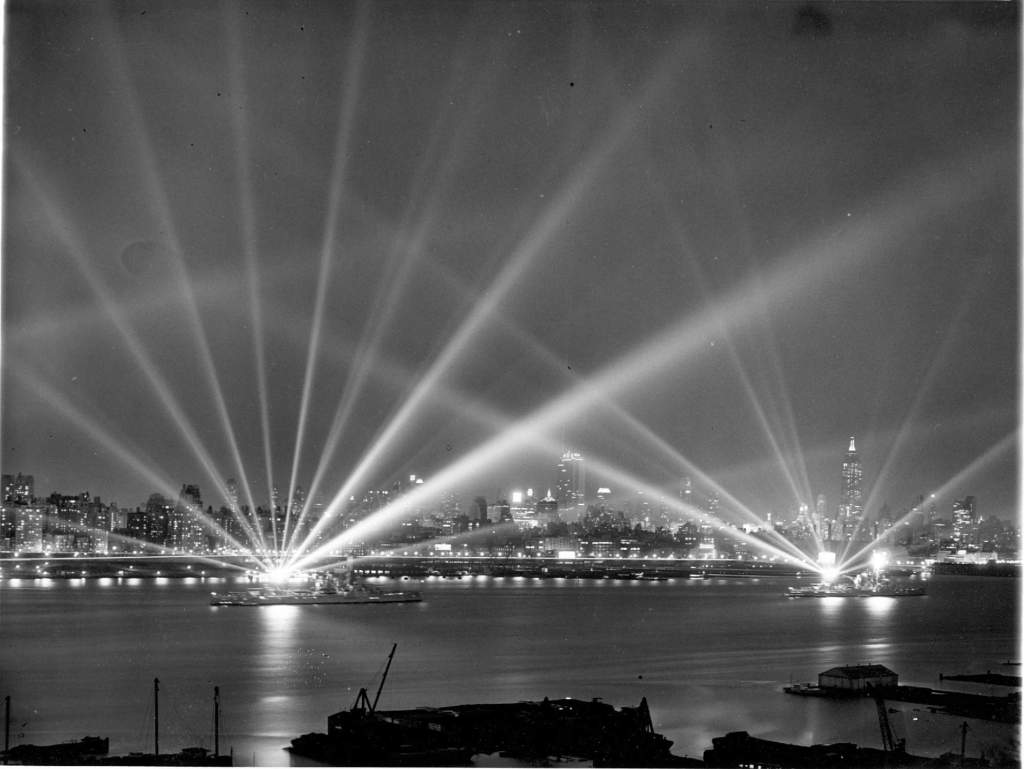
Vyacheslav Molotov became the new Foreign Affairs Minister of the Soviet Union. Maxim Litvinov, a Jew and Soviet Foreign Minister for eighteen years, is replaced by Stalin with Vyacheslav M. Molotov, a gentile. Hitler is said to have been greatly pleased that Stalin seemed to be removing the last Bolshevik Jews from positions of power. (Note: Molotov will serve as Foreign Minister from 1939-49 and again from 1953-56. Litvinov will become Soviet Ambassador to the U.S. 1941.) Commissar Molotov sharply criticized the British suggestions of a defensive alliance against Germany and Italy. During the summer, the Soviets rejected a series of drafts in negotiations with the British and French governments and demanded guarantees for the Baltic States, insurance against internal revolution, and the right to send Red Army troops into Poland in the event of a German invasion. The Western Powers were unwilling to concede these points.
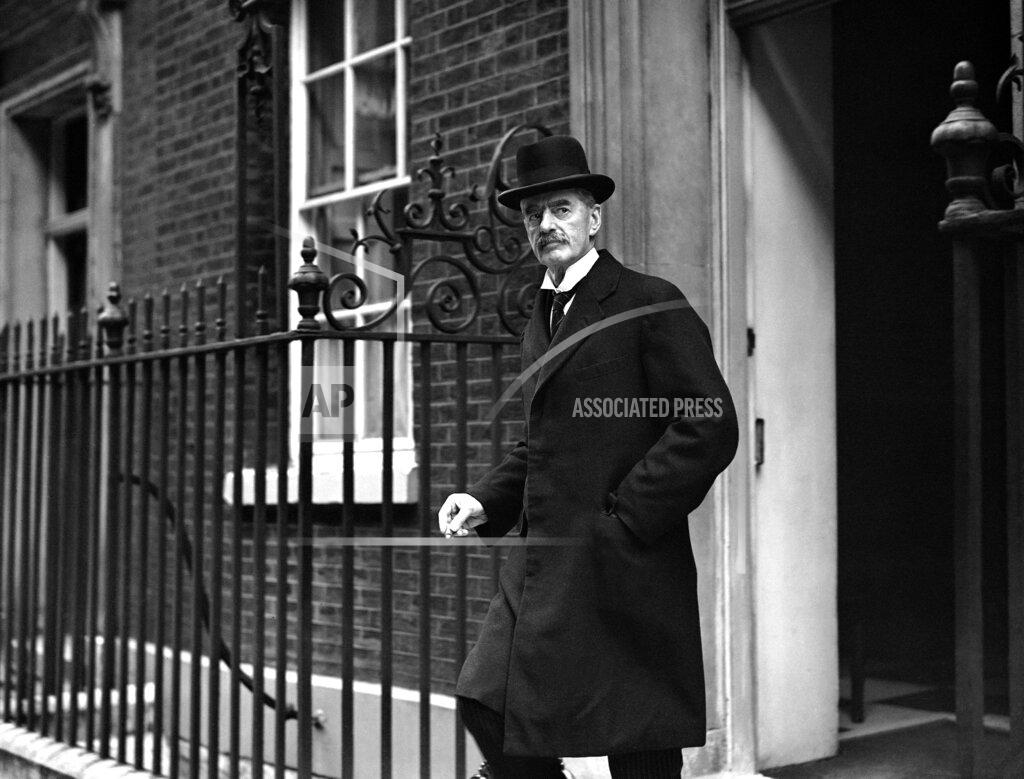
British Prime Minister Neville Chamberlain told the House of Commons today that the British Government was ready to consider an exchange of non-aggression pledges with Germany. It was the Prime Minister’s first answer to the cries of “encirclement” raised in Chancellor Adolf Hitler’s Reichstag speech last week and it coincided with the first revival of “appeasement” talks in influential quarters here since the German Army marched into Prague in March.
This development was followed within a few hours by tonight’s news of Maxim Litvinov’s withdrawal as Soviet Foreign Commissar, which brought an almost instinctive “I told you so” from many British Conservatives who have never really trusted the Soviet regime and never relished the thought of an alliance with Moscow. At first sight it seemed to portend Russia’s retreat into isolation — perhaps because Joseph Stalin had grown exasperated by the British hesitations of the last few days, perhaps because his army chiefs had more deep-seated objections to Mr. Litvinov’s negotiations with the Western capitalist powers.
If it really meant Russian isolation — and it was too early for anyone to be certain tonight — Mr. Litvinov’s departure was the most serious blow yet suffered by the builders of the new anti-aggression front in Europe, for the British always had been confident that Russia would “come in” in her own interests after an actual German attack against Poland or Rumania. The British also hoped for great things from Russian support because it might strike fear into the heart of Chancellor Hitler in advance of a war. After all, the British aim has been not only to win the next war, but to prevent it. The British have wanted Russian support as a window-dressing to convince Herr Hitler that an attack on Poland or any other country would not be worth his while.
If such a window-dressing should prove impossible, it would make Britain’s new commitments in Eastern Europe seem less attractive and more dangerous than before. It might make Mr. Chamberlain more anxious than ever for a “compromise” on the Danzig question that could satisfy Germany and avert the danger of an armed attack. “Appeasement” tendencies here might be revived in full force, although the British obligations to Poland are so definite that it would be hard for any British Government to wriggle out of them even if it wanted to do so.
In any case, the British have not finally rejected the Russian offer of an alliance; they have simply hesitated to accept it for fear of driving Japan irrevocably into military cooperation with the Axis powers and also for fear of offending Spain, Portugal and the Vatican. The Cabinet discussed the negotiations with Russia at its regular meeting today, but apparently left matters in the hands of Viscount Halifax, the Foreign Secretary, pending a meeting he had hoped to have with Mr. Litvinov at Geneva at the end of next week.
The British still think Russia should make a unilateral declaration of her willingness to help Poland or Rumania against attack on condition that Britain and France first fulfill their part of the bargain. In the hope of overcoming Russian objections the British and the French are ready now to follow a Russian declaration with a joint Anglo-French declaration making the attitude of the two Western governments clear beyond all doubt.
The German Government has made an informal inquiry of Denmark, Sweden, Norway and Finland whether the governments of those countries desire the conclusion of bilateral non-aggression pacts with the Reich and, if so, what form it is desired to give them. Reports that Berlin has submitted drafts of such pacts to the four countries are said to be incorrect. It was stated that the diplomatic step taken was wholly in line with the proposal that Chancellor Adolf Hitler made in his Reichstag speech.
It is understood that Germany has also approached the governments of Latvia and Estonia with offers of non-aggression pacts. The Reich concluded a similar agreement with Lithuania some time ago. Meanwhile, German quarters are awaiting Foreign Minister Josef Beck’s speech in the Polish Parliament Friday in reply to Herr Hitler’s demands with a certain show of unconcern. What more intrigues these quarters is the tenor of the Polish press and the motives behind its hostility.
The Polish terms as reported here are designated “megalomaniacal outbreaks of Polish chauvinism.” They will not provoke Herr Hitler into any precipitate action, it was emphasized, and he will quietly await Colonel Beck’s pronouncement at Berchtesgaden. He appears more concerned with normalizing diplomatic relations with the Western powers, and with the British and French ambassadors back at their Berlin posts it is now expected that Dr. Herbert von Dirksen and Count Johannes von Welezeck will return to their respective embassies in London and Paris next week.
German retaliation for Polish press attacks is becoming bolder, and the exchange of editorial acerbities, judging by statements attributed here to Polish newspapers, appears to be moving on a common level. A warning is issued to Poland by the moderate Frankfurter Zeitung, which writes: “In view of her national substance, geographical position and history, Poland has always been regarded differently by Germany than the artificial Czecho-Slovak State created at Versailles, which disappeared in the shadow of a greater, strong Germany. There exists, therefore, no reason for Poland to pursue a policy analogous to the policy of perished Czecho-Slovakia.”
Rome was awaiting a visit from the German Foreign Minister von Ribbentrop, who is expected to press Italy for a closer tie. This would take the form of a military alliance, which, according to information in Tokyo, may be announced Saturday.
Hungary enacts anti-Semitic laws similar to the Nuremberg Laws. Hungarian Jews are forbidden to become judges, lawyers, schoolteachers, or members of Parliament. Those who converted to Christianity before 1919 and Jewish war veterans are exempted. The drastic anti-Jewish laws which may cut off an estimated 300,000 Jews from their means of livelihood and compel them to seek new homes abroad within five years were adopted by the Hungarian Parliament today without dissent.
The measures limit Jewish participation in business and the professions roughly to 6 to 12 percent of the total number of persons engaged in the various callings and line up Hungary with her friends, Nazi Germany and Fascist Italy, in the “control” of Jews. The adoption of the laws came only a few hours after the return of the premier, Count Pál Teleki, and his Foreign Minister, Count Stephen Csáky, from talks with Chancellor Adolf Hitler and other Nazi officials in Berlin. The measures will be operative as soon as Premier Teleki and the Regent, Admiral Miklós Horthy, sign them.
In Washington today, the House of Representatives overwhelmingly approved President Roosevelt’s first reorganization proposal as submitted for approval. The vote was 264 to 128 against a resolution by Representative Taber, Republican, of New York, to reject the consolidation. Under the law the Presidential order will go into effect on June 25, or sixty days after it was submitted to Congress.
No other attempt can be made in either branch of Congress to nullify the order, since the Reorganization Act of this session provided that a nullification resolution must be passed by both branches. Blocked in an effort to reduce the debate limit, which under the rules was ten hours, the Democrats took their adversaries by surprise by announcing that they would not reserve more than ten minutes for their arguments on the resolution.
Representative Warren, Democrat of North Carolina, who with Representative Cochran, Democrat of Missouri, piloted the Reorganization Act through the House recently, declared that he would not contest the right of Republicans to debate the resolution for five hours, the time allotted to the minority, but announced that he would reserve only ten minutes of the majority’s five hours for rebuttal. “Go ahead and shell the woods,” Mr. Warren said, looking toward the Republicans. After less than three hours, the Republicans announced that they had had enough and were willing to vote. The House voluntarily cut off debate and proceeded to the vote by roll-call.
The House approved the plan submitted by the President for reorganization and adjourned at 4:50 PM until noon tomorrow. The Ways and Means Committee voted to authorize payment of Social Security Act old age annuities two years ahead of schedule and recommended plans to reduce unemployment compensation payroll taxes; the Naval Affairs Committee reported a bill authorizing reconditioning of five battleships.
President Roosevelt signed the Second Deficiency Bill, conferred with Navy Department officials and with Harold Smith, Director of the Budget, and others on further plans for governmental reorganization. A White House secretary said that the President had no intention now of elaborating on this country’s position with regard to the European situation.
The Senate was in recess. The Foreign Relations Committee continued hearings on neutrality policies, the Education and Labor Committee heard Joseph Padway, counsel for the American Federation of Labor, on proposed amendments to the National Labor Relations Act and the Temporary National Economic Committee continued its study of milk marketing practices.
Alfred M. Landon, Republican Presidential candidate in 1936 and titular head of the Republican party, crossed party lines in an address here tonight and offered his support to any efforts of President Roosevelt to bring about a world peace conference. He insisted that Chancellor Hitler’s address of last week did not close the door to such action. The Republican leader spoke at a special session in the municipal auditorium here at the Methodist Uniting Conference. His address was broadcast nationally on two major networks and was carried to many foreign countries by shortwave radio.
In the event of a general European war, he warned, it will be virtually impossible for the United States not to become involved, and because of this danger Americans cannot remain indifferent to the European situation. The American people should realize, said Mr. Landon, that President Roosevelt “in so far as he speaks and is able to do so has abandoned neutrality for the United States.”
“Of course,” he continued, “the Congress is the final authority as to what our position will be. Until the American people make known their decision through the Congress, no President can speak with certainty for them.” Mr. Landon called on all Americans to support the President in his efforts to assure world peace.
“It is always a dangerous thing for a political leader to cross party lines,” he said. “Nevertheless, to support my President, I do so. Whether he deserves it or not is not the question. The Republic deserves it and that is all that should count with every citizen. We must face the situation as it is, and in doing so let us face frankly the fact that the blunderings of statesmen in Britain, France, and even in America, are to some extent at least, responsible for what has come to pass, including Herr Hitler, also.”
A Gallup poll found that 84 percent of Americans surveyed believed that the United States should stay out of a European war.
Many Senators oppose the suggestion to delay deciding upon the Neutrality Act until the next session.
Apparently despairing of reaching lasting peace with the administrative arm of the government, organized business as represented by the Chamber of Commerce of the United States began to center its attention today more upon Congress. Senators and Representatives from forty-four States were invited to twenty-four regional dinners given tonight as closing events of the third day of the chamber’s annual convention. The purpose was to bring together, for closer and more practical contact, the national legislative and business leaders of all parts of the country.
Senators and Representatives to the number of 300 accepted invitations to attend the dinners, which represented a new technique in localized influence upon government. Any expectation that the chamber might seriously renew its oft-repeated gesture to the Administration for business-government cooperation seemingly was dissipated as delegates in a half dozen separate meetings increased their barrage of criticism of New Deal policies. Applause greeted every blast aimed at particular measures or the Administration in general.
On one occasion business leaders broke into uproarious applause at the mention of the name of Vice President Garner, considered by them the symbol of their possibilities in Congress. Mr. Garner’s name was mentioned at a general luncheon meeting at which Senator Burke predicted that the chances were “50-50” that the National Labor Relations Law would be changed at this session.
U.S. Methodists renew their crusade against alcohol and create a temperance board to promote public morals.
In an 11–10 win over the host Browns, Washington first baseman Jimmy Wasdell makes 4 errors to equal the Major League mark. But the Senators shrug it off, scoring 2 runs in the 7th and again in the 8th, and 3 in the 9th to win. Wasdell has 2 hits in the 18-hit attack.
While the Dodgers are calling off their game in Brooklyn because of frigid weather, the Giants forge ahead, playing a 3-hour match at the Polo Grounds with the Reds, winning 6–4. There are 19 walks in the game — 4 by Ival Goodman and 3 by Mel Ott — a balk, and 3 wild pitches.
The All India Forward Bloc is formed by Subhash Chandra Bose. The All India Forward Bloc was created as a left-wing alternative to the Indian National Congress.
Fighters of the Chinese 4th Air Group intercepted 54 Japanese bombers en route to attack Chungking (Chongqing), China, shooting down 7 Japanese bombers.
Japanese bombers hurled death and destruction into the heart of Chungking today and smashed buildings in a mile-long zone along the populous Yangtze waterfront section in the first successful air raid here since January. The casualties may run as high as 1,000. Within two hours after the raid the Canadian Mission and the Municipal Hospital had treated 200 injured and the death toll enumerated had reached 400.
Fires sprang up after the bombing. An hour after the attack this correspondent counted thirteen major fires in separate sections of the city. Scores of persons were buried when jerry-built structures, characteristic of Chungking construction, collapsed near places where bombs fell.
The raid occurred at noon, the Japanese taking advantage of the bright, sunny day, a rarity here. Forty-five Japanese planes were reported to have participated in the raid. Fifty or more bombs were dropped over the city. Chinese pursuit planes attacked the raiders, and observers in the city saw one Japanese bomber hurtle to the earth in flames in a suburb. Two Chinese fighters are believed to have been lost. Three men descended in parachutes, but their nationality could not be ascertained.
Dow Jones Industrial Average: 132.30 (+2.98).
Born:
Jonathan Harvey, English composer (“Bhakti”), and writer (“The Music of Stockhausen”), in Sutton Coldfield, Birmingham, United Kingdom (d. 2012).
Died:
[Karl Eduard] Wilhelm Groener, 71, German general.
Naval Construction:
The Royal Navy Net-class boom defense vessel HMS Signet (Z 10) is launched by the Blyth Shipbuilding & Drydock Co. Ltd. (Blyth, U.K.).
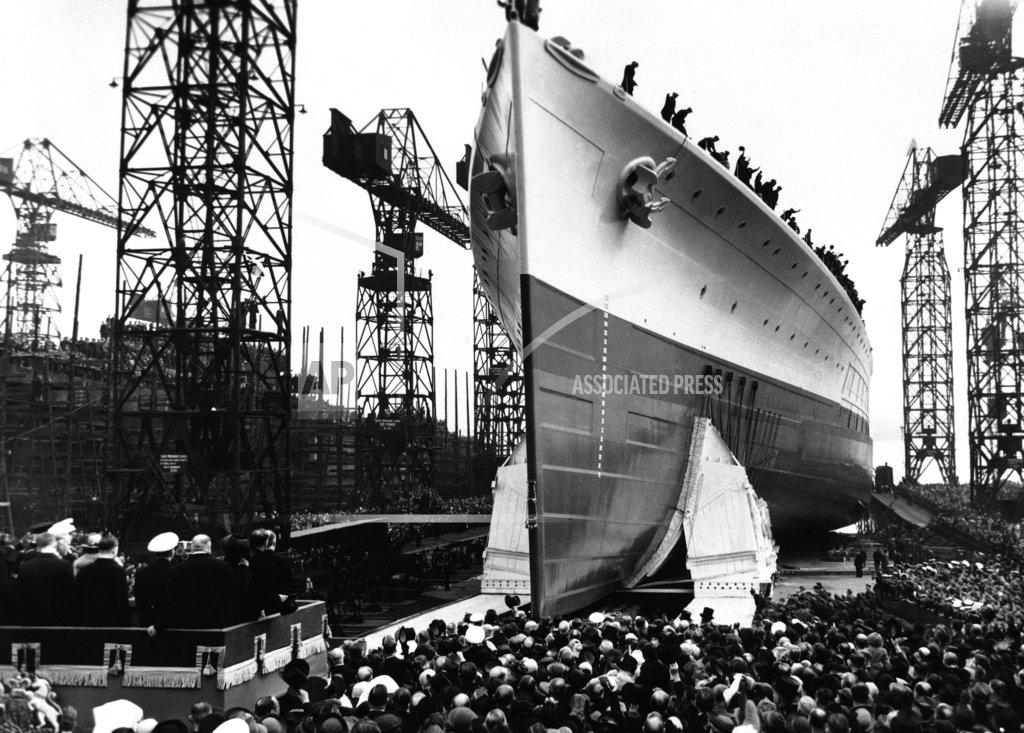
The Royal Navy King George V-class battleship HMS Prince of Wales (53) is launched by the Cammell Laird Shipyard (Birkenhead, U.K.).
The Royal Navy Net-class boom defense vessel HMS Falconet (Z 19) is commissioned.
 History Diaries