A terrorist throws a bomb into the crowd viewing the USNS Card, sunk at its dock. The explosion wounded eight American servicemen, including five officers, and a Vietnamese pedestrian in sight of the vessel, an aircraft ferry. She lay at her pier in the Saigon River crippled and waterlogged after having been temporarily sunk by a massive explosion early yesterday. Security officers said the blame for both incidents rested on the Communist guerrillas, who were said to have chosen the May Day weekend for the terrorist attacks. The wounded Americans were in a crowd of Vietnamese moving along a boulevard about 200 yards from the United States Embassy. A man either in a car or on a bicycle — witnesses disagreed — tossed the bomb, possibly a grenade.
Pumps and a rising tide freed the aircraft ferry from the bottom muck into which she had settled. Divers installed temporary patches, but the stern floated low. All compartments below the second deck were flooded and Captain Borge Langeland of New Orleans, the master, said no progress could be made in lowering the level until a better patch had been secured. A United States demolition expert speculated that terrorists used poles to shove the charge against the ship’s side from under the adjacent commercial wharf and then detonated it electrically from a distance. He said the explosive might have weighed 50 pounds and could have been plastic.
The United States is considering returning to South Vietnam two detachments of military police withdrawn in December, William P. Bundy, Assistant Secretary of State for Far Eastern Affairs, said today. Their principal role, Mr. Bundy said, would be to protect Americans against terrorists. The United States believes it is much wiser for the South Vietnamese to assume the greater responsibility for protection of the populace as a whole, he said. Mr. Bundy, who recently returned from South Vietnam was speaking on the American Broadcasting Company’s television program “Issues and Answers.”
He said the sinking of the United States ferryboat Card in Saigon harbor possibly indicated a stepped‐up terrorist campaign for May Day and the 10th anniversary, on May 7, of the collapse of the French fortress of Điện Biên Phủ. Mr. Bundy said that the police problem in Saigon was acute but that the protection of vital installations was “as secure as you can make it” under the circumstances. He said that the idea of carrying the offensive into North Vietnam was always a possibility but added that he believed it was much better to continue to fight the war on the present lines. He largely discounted reports that the government forces had lost ground in the last few weeks. He said that in the final reckoning they had held their own.
The official refused to speculate when the South Vietnamese would launch an attack against the “iron triangle,” about 40 or 50 miles north of Saigon, although he conceded that it would have to be eliminated “in due course.” It is a “very tough target,” he said.
One hundred ARVN Rangers are wiped out by a Việt Cộng attack, 25 miles northwest of Saigon.
A jeep carrying Polish members of the International Control Commission was ambushed today on a coastal road about 20 miles south of the frontier between North and South Vietnam. A major, whose name was not immediately available, suffered a head wound from small‐arms fire, according to reliable sources. The extent of the injury could not be determined but one source said a single shot had grazed his head. The incident took place on a road from Huế just outside Quảng Trị, where American military medical aid is available. The jeep was reported to have been damaged but no injuries to the three other passengers were reported.
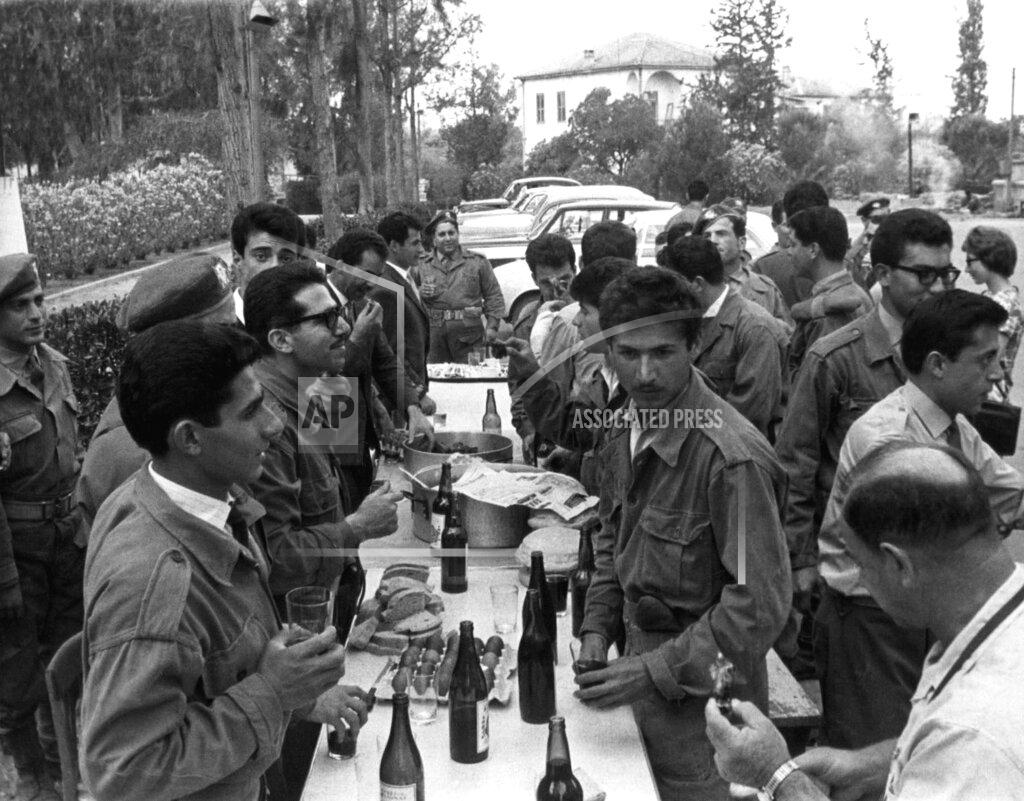
Two British soldiers of the United Nations peace‐keeping force in Cyprus were slightly wounded Sunday night in an unexplained explosion at the line between the Greek and Turkish sectors of Nicosia, The Associated Press said.
The White House announced today that Senator J. W. Fulbright would fly to Greece and Turkey at President Johnson’s request to convey United States concern over the Cyprus crisis. The Arkansas Democrat, who is chairman of the Senate Foreign Relations Committee, called on Mr. Johnson this afternoon to discuss his trip. He will leave tomorrow. Senator Fulbright expects to spend one day each in Ankara and Athens. He described his trip as a “fact‐finding” mission suggested by the President. It was understood that the request originated late last week.
The Kennedy round of GATT tariff negotiations will begin officially tomorrow afternoon with a public display of agreement on broad objectives, while in private the negotiators have not been able to agree on whether to agree. The Kennedy round is the broadest round of international trade negotiations ever held, involving more countries, more products, and, assuming success, more trade liberalization than has ever been accomplished before in a single negotiation. The immediate question is whether this week’s meeting will be largely ceremonial or whether it will achieve something substantial. The event is a meeting of trade ministers from around the world under the auspices of the 37‐member General Agreement on Tariffs and Trade. Preliminary negotiations have been underway almost steadily for more than a year now, and have been going slowly.
It is commonly agreed among the major powers that the serious issues between them cannot be decided in the two or three days that this week’s meeting will last. The serious issues are so‐called tariff disparities — where a key country’s tariff is disproportionately high — and trade in farm products. The United States would like this meeting to produce firm, general commitments on the depth of the general tariff cut that is to be made, and on special concessions to the underdeveloped countries. It would also like to solidify arrangements for negotiating on trade restrictions other than tariffs, and to set a timetable for the bargaining on tariffs. The British support this position, but the position of the European Economic Community, or Common Market, is in serious doubt.
Hundreds of Bulgarian Christians were reliably reported to have rioted early today when armed policemen prevented them from attending a midnight mass in the cathedral in Sofia in observance of the Orthodox Easter. Reports from Communist Bulgaria’s capital said clashes between the Orthodox faithful and the police had occurred in front of Alexander Nevski Church. The huge building, constructed of native granite and white stone, serves as the cathedral of the Bulgarian Orthodox Church. Situated on a large square in the middle of the city, it was erected in the last century as a monument to the Russians. who drove out the Turks and set up the Bulgarian nation.
According to information available here, Patriarch Cyril, head of the Bulgarian Eastern Orthodox Church, was to have preached at the service but did not appear because of illness. His place was taken by the rector of the Academy of Theology, Msgr. Nikolai. When the crowds arrived for the mass, they found the entrances blocked by youths shouting atheistic. slogans. The police intervened, according to the report, and closed the doors “to prevent incidents.” It was then that the clashes occurred. Last year there were similar incidents at Easter services. Observers in Sofia recalled that in 1963 young Communist militants mixed in the crowds entering Sofia churches and started disturbances after the services had begun.
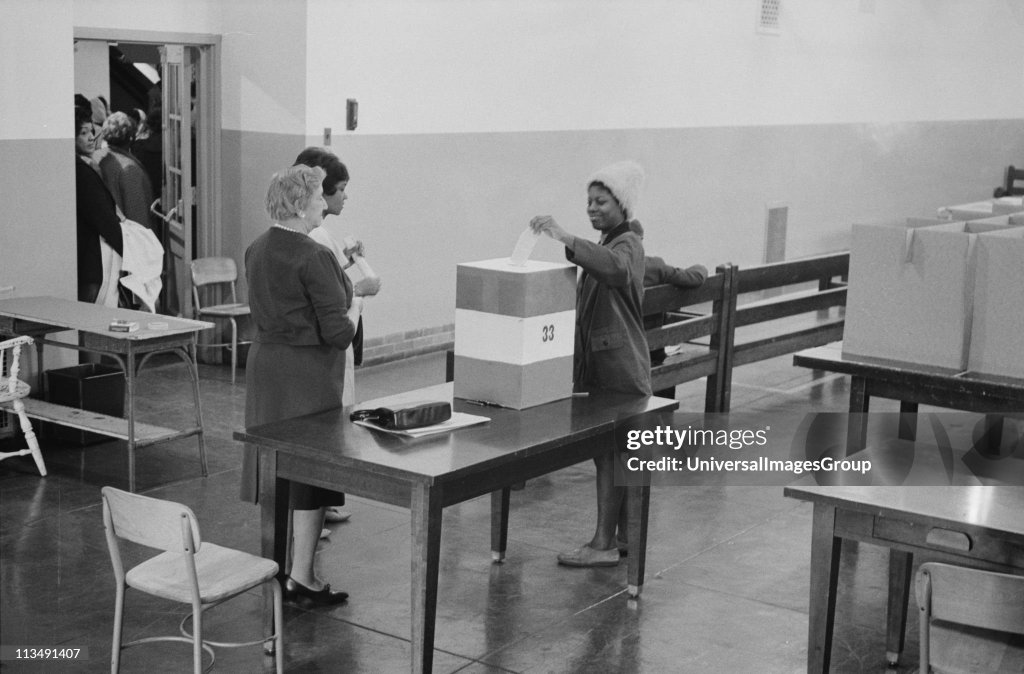
Voting on independence for the European islands of Malta concluded after three days, with 54.5% of the valid votes in favor of a proposed constitution that provided for Malta as a parliamentary democracy with a British Governor-General. On the question “Do you approve of the constitution proposed by the Government of Malta, endorsed by the Legislative Assembly, and published in the Malta Gazette?”, 65,714 voted “yes” and 54,919 voted “no”.
President Abdel Salam Arif of Iraq moved his regime closer to President Gamal Abdel Nasser’s Cairo Government today by announcing “forthcoming constitutional unity with the United Arab Republic.” He proclaimed a provisional Constitution that set as a main aim “Arab unity, beginning with constitutional union” with the U.A.R. Field Marshal Abdel Hakim Amer, the Egyptian First Vice President, begins a four‐day state visit to Baghdad, Iraq, tomorrow. In a speech introducing the provisional Constitution, President Arif indicated he was seeking Egyptian support against the Baathist regime in Syria and against the return of the Baath party in Iraq.
The Baathist party has ideas on socialism and Arab unity that are similar to President Nasser’s except that the Baathists oppose President Nasser as leader of the Arab world. The Baathists took power in Iraq and Syria early last year, but were overthrown in Iraq Nov. 18 by a right‐of‐center army faction headed by President Arif, who had been a figurehead chief of state in the Baathist regime. “We support President Nasser in the United Arab Republic,” President Arif declared in the broadcast. “We support President Nasser against the imperialists in South Arabia.”
Voting for the 99-seat Parliament of Lebanon concluded after five consecutive Sundays, with independent candidates winning 70 of the contests. The other 29 seats were scattered among six political parties, with Camille Chamoun’s National Liberal Party getting 7 of the seats.
Recent international events and domestic developments in Cuba appear to have raised severe problems for Premier Fidel Castro. This impression is growing among officials and other analysts of Cuban affairs in Washington who have studied Dr. Castro’s most recent speeches and various developments affecting Cuba. The consensus among many of them is that the Premier seems to be showing greater concern over the future of the revolution than at any other time since he took power five years ago. Dr. Castro has given these observers the impression that he expects Cuba to be attacked in some way soon, presumably by the United States, and that if this happens, he will not be protected by the Soviet Union.
In contrast with a widespread belief among businessmen and others, a number of influential officials in the Government are convinced that President Johnson will continue his basic philosophy of economy in government beyond the election, assuming he is re‐elected. This does not mean that the federal budget will not rise at all. But it means that increases, if any, will be modest — far less than the average rise of $5 billion a year under President Kennedy, most of it for defense and space. It is even possible that the President next year may be able to repeat this year’s performance of submitting a budget with no increase at all.
This general outlook is part of the explanation for the surprise disclosure by the President last week that there might be another tax cut in a few years. His economic advisers believe that after a few years either a tax cut or a substantial rise in government spending would be needed to prevent the federal budget from becoming a drag on the economy by generating a large surplus. The outlook for holding the budget in line next year and thereafter is considerably better than is generally realized.
First and foremost, no further rises are foreseen in defense spending, and modest reductions are possible. There will be no sweeping cuts, according to authoritative Defense Department sources, but the days of increases are over. Almost as important, space spending has also hit its peak rate after three years of steep increases. Declines are possible, and even likely, in several sectors of the budget. Foreign‐aid spending, for example, is now trending gently downward. Farm spending may drop a little. Atomic energy is another area of heavy spending where reductions are more likely than increases. These potential declines would make room for the inevitable increases in the areas of education, the war on poverty and interest on the national debt. Whether the increases will outweigh the decreases is impossible to foresee now, but it is clear that some programs can show higher spending without pushing up the total budget substantially.
Federal tax revenue rose $1.5 billion in the first three months of 1964 even though the tax cut was in effect for part of the period, government sources said today. The total collected in the first quarter was $24 billion, slightly more than Administration economists had predicted. The government experts believe that the figures support other statistical evidence that points to a still strong, still expanding economy. While the tax bill was before Congress, the Treasury said there would be no drop in revenue from one year to the next as a result of the tax cut. Additional revenue, generated by business expanding under the stimulus of the tax cut, would wipe out the loss from the reduction, they said. The January‐March collections seem to bear this out. However, a truer test will come in a few months, after the tax cut has been in effect for a while longer.
One economist said that one reason revenue was higher than the prediction made a few months ago was that the tax cut went into effect March 1 while the forecasts had been made on the basis of a February 1 effective date. The January‐March period of 1964 was the 10th consecutive quarter in which revenue showed a year‐to‐year gain. Income tax payments by individuals are a particularly strong factor in the revenue increase. Administration economists are particularly pleased by the long, steady growth of the business expansion. They assert that the tax figures augur well for a continuation of the trend for 12 months or so without any serious decline. The expansion set a peacetime record of 38 consecutive months in April, if the recovery of 1933‐37 is treated as a special situation and left out of the calculations. The increased revenue in the first quarter is attributed to increased corporate profits, higher individual income and other factors.
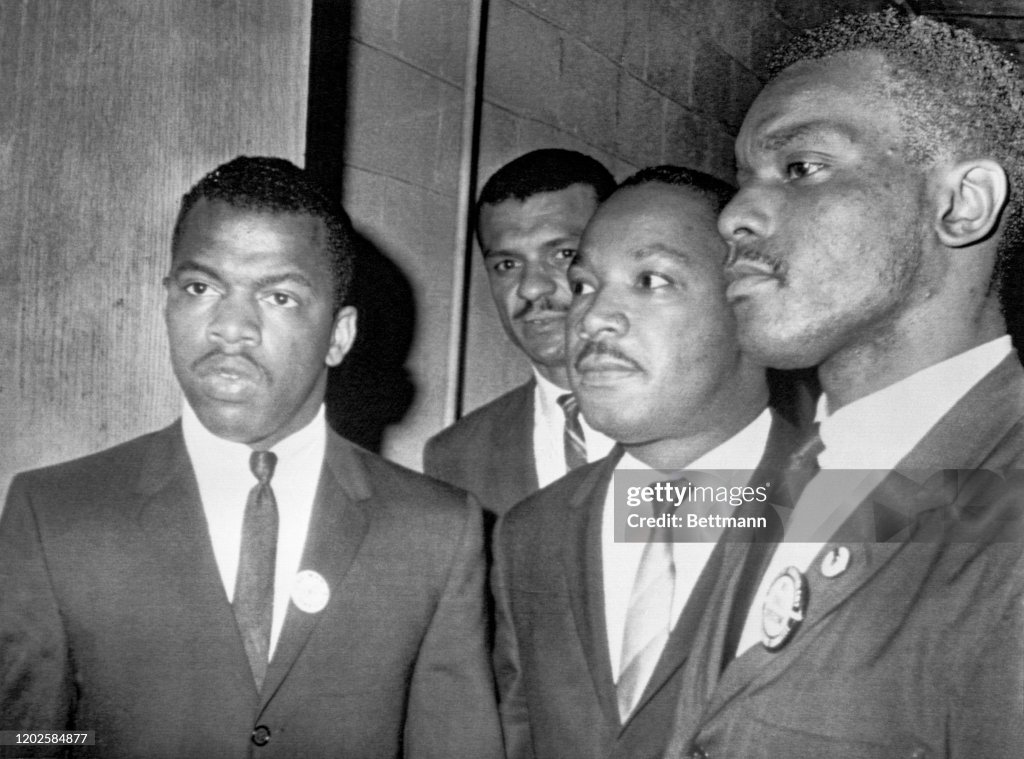
The Rev. Dr. Martin Luther King Jr. called tonight for a wave of demonstrations to make Nashville the first “totally desegregated” city in the South. The integration leader told 2,000 Blacks and whites at rally that demonstrations that began here last week must continue until Nashville becomes “a total community for total freedom.” Dr. King said demonstrators should set as a target passage of a local public accommodations law. He said such laws, barring discrimination in places of public accommodation, exist now only in border cities of the South. Earlier today, Blacks turned out in apparently small numbers in response to an invitation by white clergymen to attend interracial services, aimed at easing tensions resulting from the demonstrations last week.
The Congress of Racial Equality declared today that demonstrations at the Republican and Democratic National Conventions would be focal points of a “long, hot summer” of civil rights activities. The program was formulated over the weekend by the organization’s 21‐member National Action Council, which met at the Philadelphia Athletic Club. In making the program public at a news conference, James Farmer, national director of CORE, said: “The council decided that the 1964 Presidential election year is a most crucial one for the civil rights struggle and must be utilized to give pointed substance to the demands and ongoing activities of CORE. “We think the major political conventions provide a very meaningful focus for militant demands.”
At the Democratic convention, Mr. Farmer said, his organization will “support in every way possible” the challenge of the Mississippi delegation by the Council of Federated Organizations. This council is composed of the National Association for the Advancement of Colored People, the Student Nonviolent Coordinating Committee, the Southern Christian Leadership Conference and CORE. Mr. Farmer said his organization would demand that a Mississippi “free party” delegation be seated at the Democratic convention in place of the regular party delegation on the ground that the latter was “illegally elected because Negroes were excluded from the regular election process.” At the Republican convention, Mr. Farmer said, CORE will demand repudiation of the “historic alliance the party has had with Dixiecrats on civil rights and social legislation affecting Negroes.”
A New York minister has asked the quadrennial general conference of the Methodist Church to place its official endorsement on orderly demonstrations for civil rights. The minister’s request would, in effect, put the church on record as approving yesterday’s kneel‐in in front of Pittsburgh’s new Civic Arena. The minister is the Rev. Dr. Harold A. Bosley, the pastor of Christ Church, Methodist, in New York. Sometimes called the Cathedral of American Methodism, the church is at Park Avenue and 60th Street. The kneel‐in involved about 1,000 students and adults who knelt as in prayer before the arena entrance to protest racial discrimination, and particularly segregation within the church.
President and Mrs. Johnson attended services today at the National City Christian Church. They were accompanied by Secretary of Agriculture and Mrs. Orville L. Freeman and Secretary of Labor and Mrs. W. Willard Wirtz.
Reliever John Wyatt picks up two wins for the A’s in a sweep of the Twins. Wyatt totals 3⅔ innings of work.
Trailing the Mets 5–1 in the 7th at Crosley Field, pinch hitter Marty Keough belts a 3-run homer and Hal Smith adds a 2-run pinch single in the 8th for a 6–5 Reds win.
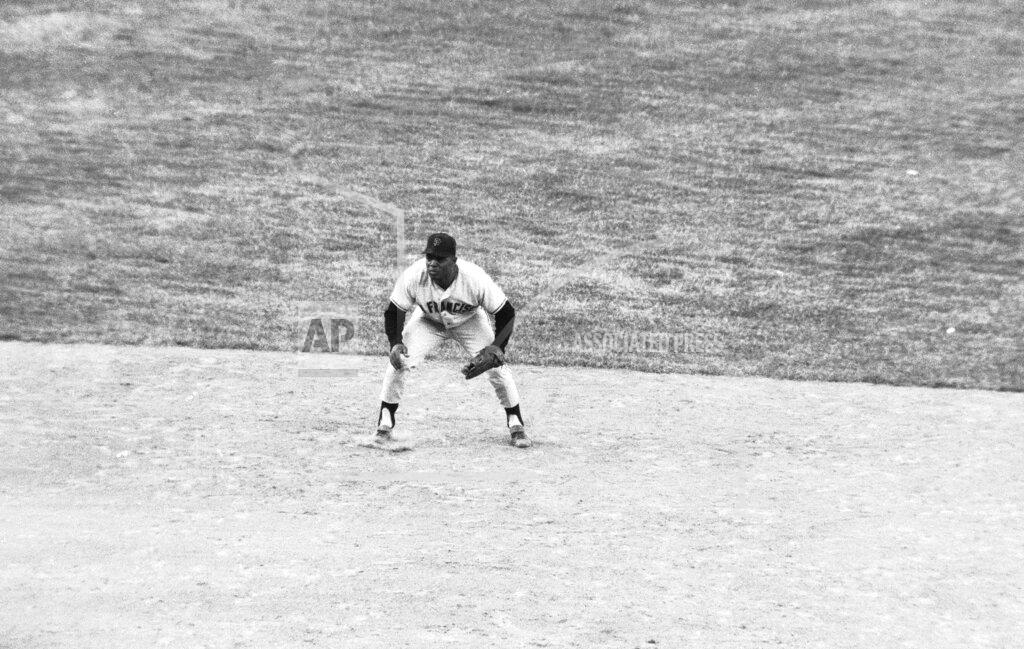
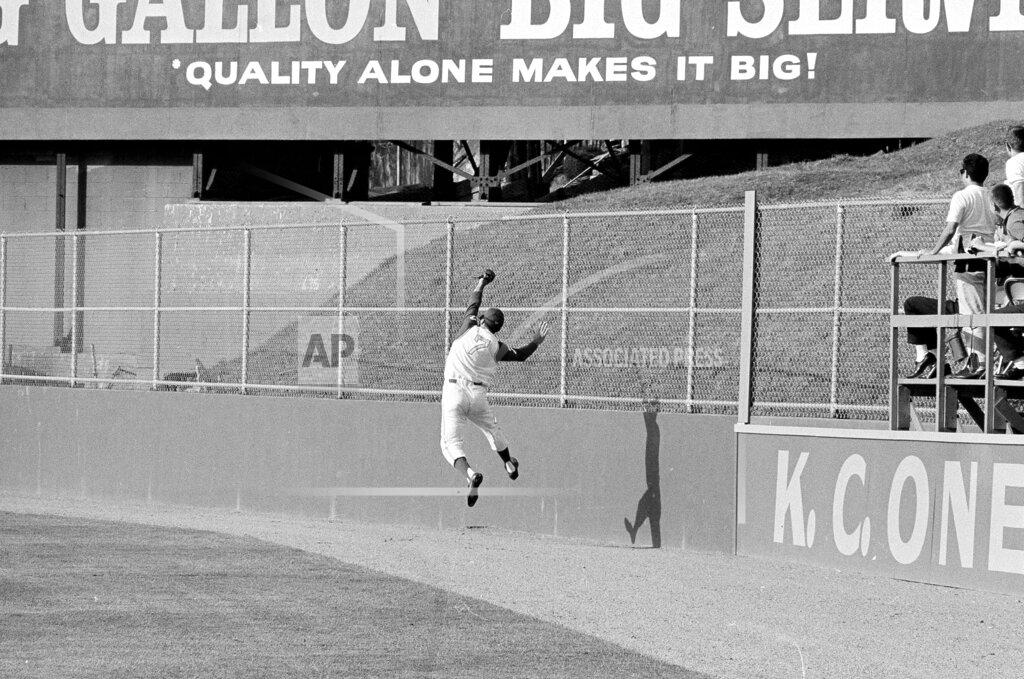
Chuck Hiller singled in Jesus Alou from second base in the 12th inning last night to cap the San Francisco Giants’ uphill 5–4 victory over the Los Angeles Dodgers before a capacity crowd of 55,822. Hiller’s hit to center off Bob Miller came after Alou had opened the inning with a bunt single and stole second. Duke Snider sent the game into extra innings with a home run following a walk to Willie McCovey in the ninth inning.
At Boston, Carl Yastrzemski has 3 hits, including a grand slam, and 6 RBIs as the Red Sox outslug the Tigers, 11–7.
Sadaharu Oh of the Yomiuri Giants hits 4 home runs in one 9-inning game against the Hanshin Tigers to set a Japanese record, and tie the American Major League record held by 7 players.
Born:
Ron Hextall, Canadian NHL goalie (NHL All-Star, 1988; Philadelphia Flyers, Quebec Nordiques, New York Islanders), in Brandon, Manitoba, Canada.
Died:
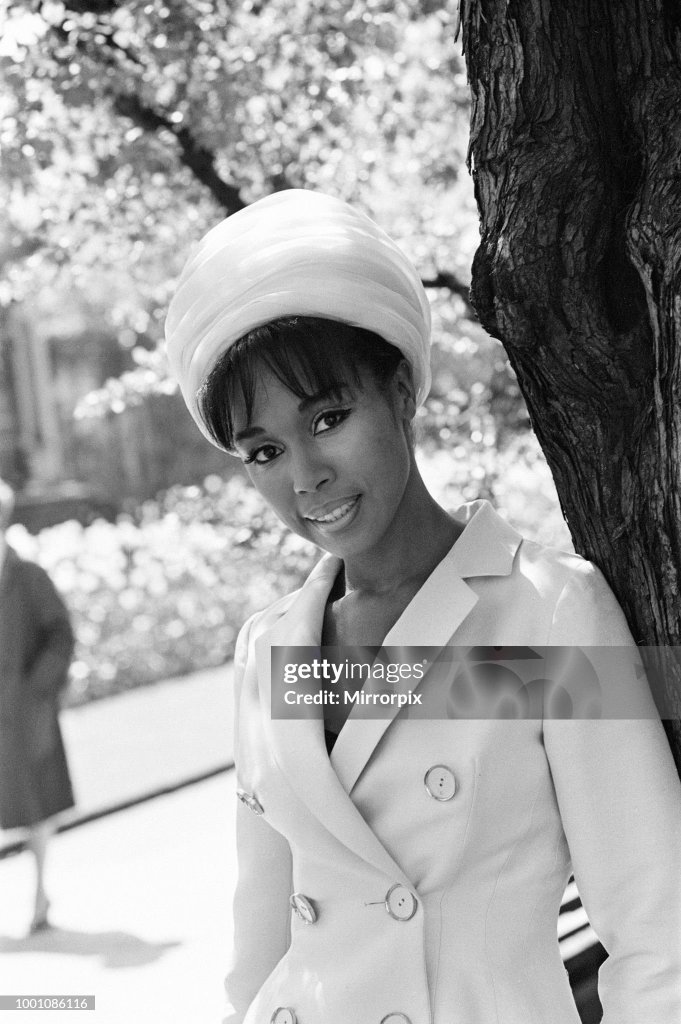
Diana Wynyard, 58, British stage and film actress (“Cavalcade”), of renal disease.
 History Diaries