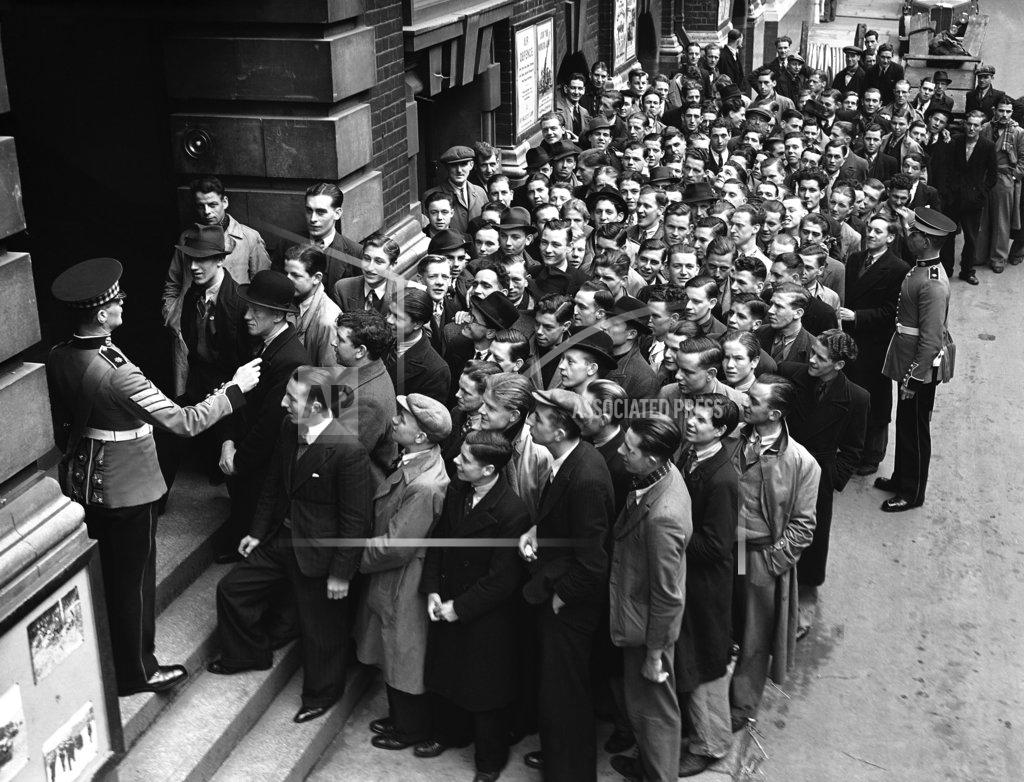
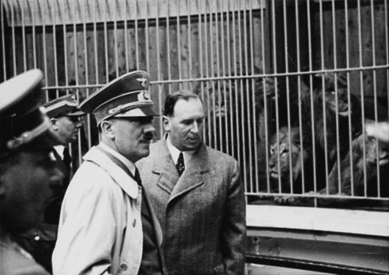
German-Polish relations, which Chancellor Adolf Hitler in his Reichstag speech last Friday compared with the situation existing between Germany and Czecho-Slovakia last year, today entered the stage of open press hostility that always precedes a final showdown. The entire German press, having given a full account this morning of the May Day denunciations of the democracies by Herr Hitler, Propaganda Minister Joseph Goebbels and Field Marshal Hermann Goering, and their call to unity and “armament with all means,” turns to the immediate business in hand — namely, Poland and “revision” of the Polish-German frontier.
The initial blast is concentrated on beating down what is called the “brazen, insane, ridiculous and provocative Polish chauvinism” that presumes to put Poland on a basis of equality with Greater Germany as a great power and to meet German demands for frontier revision with counter-demands for revision in favor of Poland’s own “Lebensraum” (living space). In this connection the German press cites claims allegedly advanced by the Polish press and radio not only for a Polish “protectorate” over Danzig but also for “the return of East Prussia and Silesia as “ancient Polish soil” and for the freedom of the Baltic as part of Poland’s living sphere.
The initial German concentration on this point rather than on stories of oppression and of atrocities against Germans in Poland — which are presumably being held in reserve — due to the expectation that in his own foreign political exposé Friday Foreign Minister Josef Beck of Poland will also advance some counter-claims. These counter-claims are expected to be along the lines of the last Polish memorandum proposing a joint Polish-German regime over Danzig in place of the present League of Nations regime in return for Polish facilitation of German traffic through the so-called Corridor. But the exploitation of such far-reaching Polish suggestions is designed to discredit them in advance.
At the same time, Great Britain and France are openly accused of inciting Poland to this chauvinistic stand in order to come to terms with “the Bolshevist firebugs in Moscow on a new system of collective security that would make peace and with it also war indivisible.”
Nazi minister Joseph Goebbels scorns the culture of the United States, saying the country has contributed nothing of value and that Nazis are far ahead in that regard.
Following Chancellor Adolf Hitler’s declaration in his Reichstag speech that he was willing to give guarantees to all neighboring States named by President Roosevelt in his peace appeal, it is learned that the German Government has offered the Danish Government, and probably Sweden, Norway and Finland, a bilateral non-aggression treaty. No official statement is available, but it is understood that negotiations have already begun, and there is reason to believe that Northern statesmen are interested in the offer, which they are carefully considering from all viewpoints. The belief that Herr Hitler is trying to gain friendly influence among the Scandinavian States was strengthened tonight by German acceptance of the Swedish-Finnish plan for the defense of the Aland Islands in the Baltic.
The Swedish Foreign Office announced tonight that the German Government had approved the joint Swedish-Finnish plan for partial remilitarization of the Aland Islands, which were demilitarized in 1921. If, as may safely be expected, the Italian Government gives a similar reply within the next few days, this will mean that all the signatories of the 1921 convention have approved the plan for the defense of the islands. Russia, which also was approached, although a signatory only of the earlier Aland convention concluded after the Crimean War, has apparently withheld her answer until all the 1921 signatories have replied, but objections are not envisaged from that quarter. There is thus every indication that the question may be presented to the meeting of the League of Nations Council May 15.
The French Cabinet debates Premier Édouard Daladier’s term. The Cabinet may need to resign May 10. The question of whether the Cabinet will have to resign May 10 when President Albert Lebrun begins his second term will be decided by the Cabinet tomorrow. The matter has more than academic interest, because if the Cabinet must resign the full powers given Premier Daladier by Parliament would expire. It is argued that while it is traditional for a Premier to resign when a President is inaugurated there is no constitutional obligation for him to do so and even if he does the President has full liberty to reject the resignation. The inauguration procedure probably will be reduced to the sending of a message to Parliament by M. Lebrun, officially accepting re-election. The following day Parliament will reopen. The few questions in sight are not expected to provoke more than mild debate.
Prime Minister Neville Chamberlain asks for the patience of Soviets. He says that the views of many must be considered to form a peace bloc. Prime Minister Neville Chamberlain answered Laborite criticisms in the House of Commons today with the assertion that “there is no want of goodwill on the part of His Majesty’s government” in reaching an understanding with Russia on resistance to fascist aggression. Otherwise, however, the Prime Minister revealed nothing as to the progress of the long-drawn-out negotiations, and in government quarters it was said that Britain was adhering to her position that Russia ought to make a declaration that Poland, Rumania and other Eastern European countries would receive help as and when required. The British still contend that this is preferable to an alliance because, despite the Nazi menace, all the countries concerned are still suspicious of Russia.
The British also believe that if war is averted for a time there is a good chance that Generalissimo Francisco Franco may keep Spain neutral, and they do not want to offend him. As if giving warning of the effect that such an alliance would have, the Duke of Alba, the Spanish Ambassador, today reiterated that Nationalists’ aversion to any dealings with “communist countries,” and at the same time he looked forward to a renewal of the old tradition of friendly “maritime intercourse” between Spain and Britain. Nevertheless, the British believe that the march of events will dispel the reluctance of threatened countries to accept Russian help — as has been largely the case in this country — and there is a distinctly hopeful outlook in Whitehall. It was particularly emphasized today that Britain and France would not leave Russia in the lurch if she went to war in defense of any country guaranteed by the Western democracies.
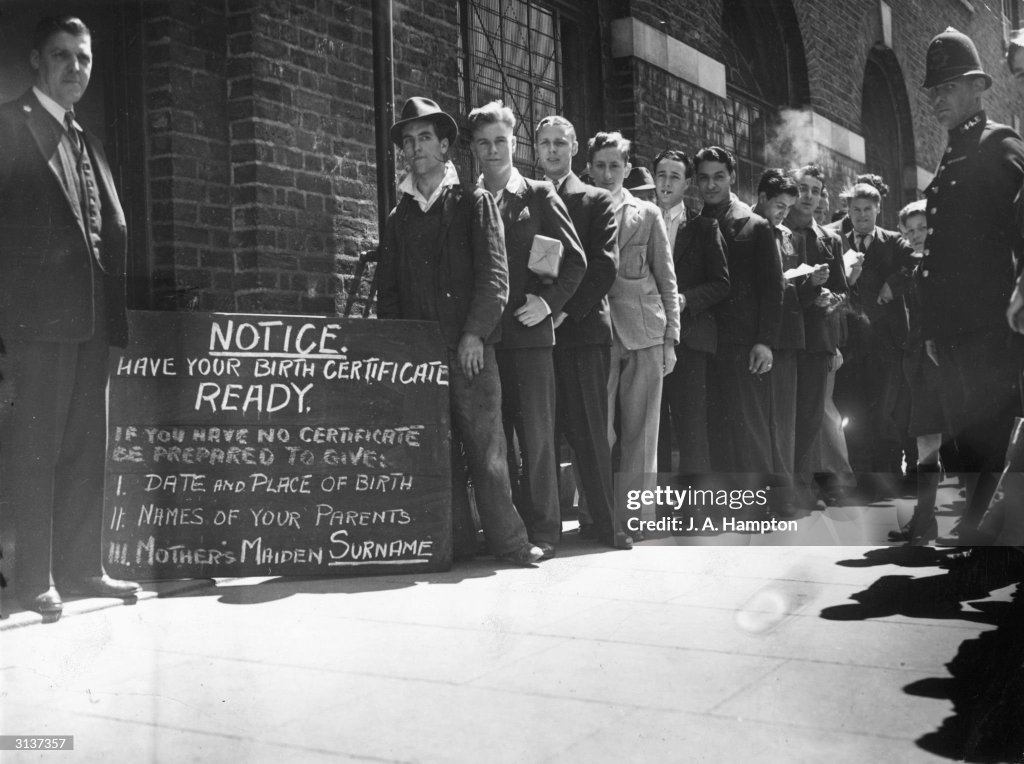
Another large batch of German nationals, including spies caught in the net of the British secret service following the sale to Germany last month of a highly confidential plan of the ordnance factory at Euxton, Lancashire, is now en route to Germany. Society women, journalists, organizers of the Labor Front and distributors of pamphlets held to be “subversive” by the British Home Office have been quietly making their departure, not entirely voluntarily. No charges have been brought against them, though the Home Secretary, Sir Samuel Hoare, is expected to give the House of Commons within a few days some estimate of the number of Germans concerned and the nature of their activities.
Although German newspapers are rigidly controlled, there are more correspondents of German newspapers in Britain than representatives of the press of any other country. Several times in recent months, their number has been reduced by the Home Office to proportions regarded more in keeping with the volume of news sent from Britain for publication in the Nazi press. Many of these correspondents never presented themselves at the regular press conferences at the Foreign Office and elsewhere. The explanation recently given by one was, “It is no use going because we get no news.”
When Premier Eamon de Valera rose to speak in the Dail Eireann tonight there was a feeling of crisis in the air. Party divisions seemed absent, and Deputies of all parties looked to the Premier as the nation’s leader who deserved all their support. It was a serious and solemn Premier who addressed the House in restrained, carefully chosen words. He told the Dail that the government had made a strong protest to Britain against the proposal to conscript Irishmen in the six counties of Northern Ireland into the British Army. Lawyers might argue, he said, that Britain had a right to do this, since Northern Ireland was part of the United Kingdom, but Mr. de Valera declared with emphasis: “We claim the whole of Ireland as national territory, and conscription of Irishmen in that portion of the country we will regard as an act of aggression.”
A law went into effect in Slovakia depriving 30,000 Jews of their citizenship.
Today in Washington, President Roosevelt returned from Hyde Park.
The Senate passed the Barkley Trust-Indenture Bill, received the Bankhead resolution for adjourning Congress on June 15, completed Congressional action on the $172,604,000 Interior Department Appropriation Bill and adjourned at 5:47 PM until noon on Thursday. The Banking and Currency Committee approved the nomination of Leon Henderson to be a member of the Securities and Exchange Commission; the Education and Labor Committee heard further testimony from William Green, president of the American Federation of Labor, on proposed amendments to the National Labor Relations act, and the Temporary National Economic Committee heard Theodore C. Montague, president of the Borden Company, and others. on milk-marketing methods.
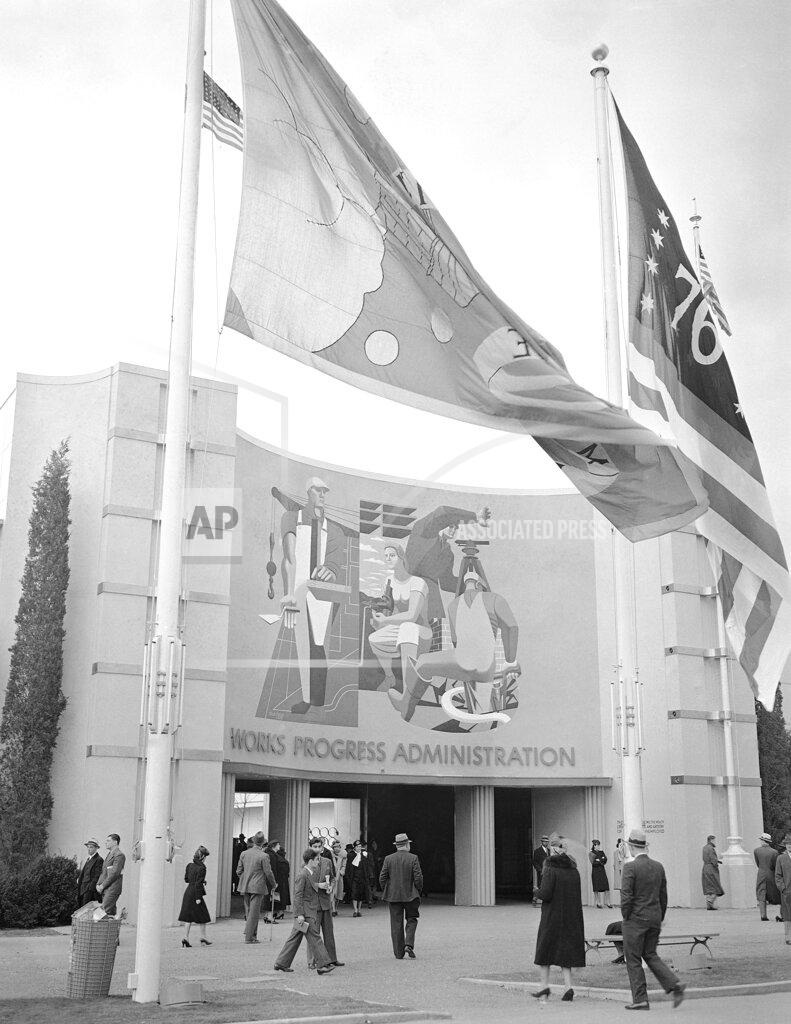
The House considered bills for the detention of certain classes of criminal aliens and adjourned at 4:45 PM until noon tomorrow. The reorganization committee reported unfavorably the Taber resolution to reject the President’s first reorganization plan, an appropriations subcommittee questioned witnesses on administrative practices of the Works Progress Administration, and the Foreign Affairs Committee concluded hearings on neutrality legislation.
Congress fights to continue to hold sessions during crisis. The fear is that the United States will become involved in a foreign war. Fears that unless Congress remains in session the United States will become involved in a European war were voiced today by two veteran Senators, Connally of Texas and Johnson of California as a rejoinder to a proposal by Senator Bankhead that June 15 be set for adjournment time, regardless of the status of the legislative schedule. Other opposition was voiced to the Bankhead proposal, notably by Senator Barkley, the majority leader, who disowned the projected concurrent resolution on the grounds of legislative necessity.
In their demand that Congress reject the idea of adjournment until the foreign situation is clarified, Senators Connally and Johnson expressed apprehension that some step involving the United States in a European war might be taken if Congress were not in session during the crisis.
When Senator Johnson exclaimed, “Let us keep out of war!” applause of extraordinary proportions broke out in the galleries, crowded with tourists from most sections of the country. The applause, which was in defiance of Senato rules, lasted until attendants cautioned the crowds that silence must be preserved.
Senator Bankhead asserted that he acted on his own responsibility. He is looked upon as a loyal follower of the Democratic leadership. The Senate was told that some tax legislation must be enacted, and that the House leadership plans to offer three resolutions to continue current nuisance taxes, preserve the “skeleton” of the undistributed profits taxes and postpone increases in social security taxes. Senator Barkley agreed with Senator Bankhead on the difficulties facing the writing of new neutrality legislation, but indicated that this is on the “must” list, regardless of those difficulties.
The U.S. Army says it needs three months to mobilize a fighting force of one million men.
An insistent demand for tax revision to encourage recovery, in which organized business and organized labor joined today, was met with a warning from Senator Byrd of Virginia that no substantial changes could be expected, except upward, in federal levies so long as government spending continues at its present level. The tax-revision demand was made by half a dozen business leaders participating in the convention of the Chamber of Commerce of the United States, and by Matthew Woll, vice president of the American Federation of Labor, a guest speaker at one of the day’s sessions.
It was at the same meeting that Senator Byrd made his remarks, in which he charged that the present government in Washington was the “most wasteful and autocratic bureaucracy that this or any other country has ever been inflicted with.”
“No downward tax revision can come until there is retrenchment and economy in government,” declared the Virginia Senator, a leader of the Democratic economy forces in the Senate.
“What business needs more than anything else is a long-range tax plan, so it will know four or five years in advance what the burden is to be,” he said. “But that is impossible so long as the Federal Government continues to spend two dollars for every dollar collected. Changes in the tax laws may bring a small amount of temporary relief, but you will not get any fundamental relief until there is a fundamental move toward retrenchment.” The Senator added that debt-payment by taxes was the only alternative to repudiation or inflation.
Crosses blaze in Miami. A motorcade carrying 35 white-robed figures tell Blacks not to vote. African Americans in Miami ignore the threats and vote in record numbers. The total was estimated at about 1,000, while previously in city elections “scarcely more than 150” had voted, said city clerk Frank J. Kelly.
Relief construction costs in New York City have run as much as two and a half times those of work done under private contract, engineer investigators testified today before the House Appropriations subcommittee investigating the administration of relief. The testimony was by Albert Stephens and Peter L. Hein, whose services were lent to the subcommittee by the Procurement Division of the Treasury Department. In preliminary reports, which they said would be made more complete later, they compared costs of WPA and privately constructed projects.
Mr. Stephens said under examination that the efficiency of WPA construction he had examined in New York was “in the neighborhood of 40 percent.” Representative O’Neill, Kentucky Democrat, asked him if he meant that it cost two and a half times as much in some instances to construct WPA projects as privately constructed projects. He said that was correct. The hearing was devoted mostly to construction and labor costs on WPA projects, but the committee digressed twice to hear the testimony of the Deputy WPA Administrator, Howard O. Hunter, and his assistant, F. R. Rauch, regarding alleged Communist and Workers Alliance influence on the WPA Administration.
Officers of the U.S. Navy fleet get a war warning. They may get called upon to defend the country at any time.
Baseball player Henry Louis Gehrig, “the Iron Horse,” asked to be taken out of the New York Yankees starting lineup in a game where the Yanks beat Tigers 22-2. Gehrig went to manager Joe McCarthy before a game against the Detroit Tigers and asked to be benched. He had played 2,130 consecutive games. After carrying out the scorecard to the umpires, Gehrig voluntarily benches himself “for the good of the team.” He is batting .143 with one RBI. His consecutive-game string stops at 2,130. Babe Dahlgren, his replacement, has a homer and double, as the Yankees rout Detroit 22–2. New York bats around in three innings to make it easy for Red Ruffing. Ballyhooed Tiger teenager Fred Hutchinson makes his major league debut and the Yankees light him up for eight runs in ⅔ of an inning. Hutch gives up 4 hits and walks five. A few weeks later he was diagnosed with amyotrophic lateral sclerosis (ALS), a fatal neuromuscular disease.
In New York, Mel Ott’s three-run homer with two out in the 9th gives New York a dramatic 8–7 win over Cincy. Ott’s blow is hit off Cincy righty Gene Thompson.
It’s showtime in Hollywood as Gilmore Field premieres with the Stars (Pacific Coast League) losing to the Seattle Rainiers, 8–5. The stars are in the stands as well including a number who own stock in the team: Gracie Allen, Gene Autry, George Burns, Gary Cooper, Cecil B. DeMille, George Raft, Gary Cooper, William Powell, Robert Taylor, and the owner’s wife Gail Patrick (Mrs. Bob Cobb).
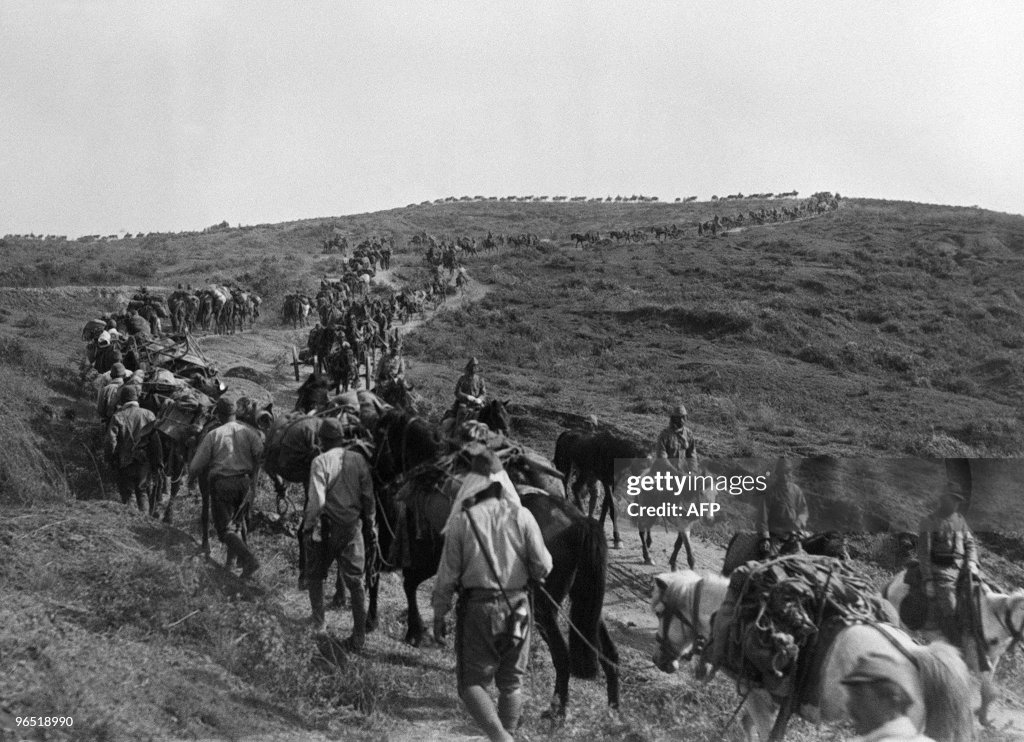
Chinese troops launched a second counterattack on Nanchang, Kiangsi (today Jiangxi) Province, China, but all conquered positions would be retaken by the Japanese by the end of the day.
Japanese officers said 250 Chinese soldiers were killed at Suchow, an important railroad junction in Northern Kiangsi Province, when 1,000 Chinese attacked the city. West of Suchow, near Kaifeng, Honan provincial capital, the Chinese were said to be still fighting.
Japanese planes bombed densely populated coast cities in Southern China today and inflicted heavy losses of life and property. Many bombs fell near the foreign settlement of Foochow during repeated attacks on that capital of Fukien Province, but no one in the settlement was hurt. Wenchow, in Southeast Chekiang Province, and Ningpo, just south of Hangchow Bay, where a heavy export trade has flourished, were also attacked.
A thinly disguised threat of Japan’s intention ultimately to take over the Shanghai International Settlement and French Concession forcibly is contained in a written warning issued jointly by the army and navy authorities tonight, supplemented by a lengthy statement by Colonel Itsuo Mabuchi, chief of the army press bureau, who admitted he was officially voicing the view of the highest Japanese commands in Central China.
Dow Jones Industrial Average: 129.32 (+1.49).
Born:
Gates Brown, MLB pinch hitter and outfielder (World Series Champions-Tigers, 1968; Detroit Tigers), in Crestline, Ohio (d. 2013).
Sumio Iijima, Japanese physicist, in Koshigaya, Saitama, Japan.
Tony Asher, English-American lyricist (“God Only Knows”; “Wouldn’t It Be Nice”; “That’s Life”), in London, England, United Kingdom.
Taomati Iuta, I-Kiribati politician, on Beru Island (d. 2016).
Died:
Phillips Smalley, 73, American film actor and director.
Naval Construction:
The Marine Nationale (French Navy) Élan-class Avisos dragueur de mines (minesweeping sloop) Commandant Dominie is launched by A & Ch Dubigeon (Nantes, France).
The Royal Navy “T”-class submarine (First Group) HMS Triumph (N 18) is commissioned. Her first commanding officer is Lieutenant Commander John Wentworth McCoy, RN.



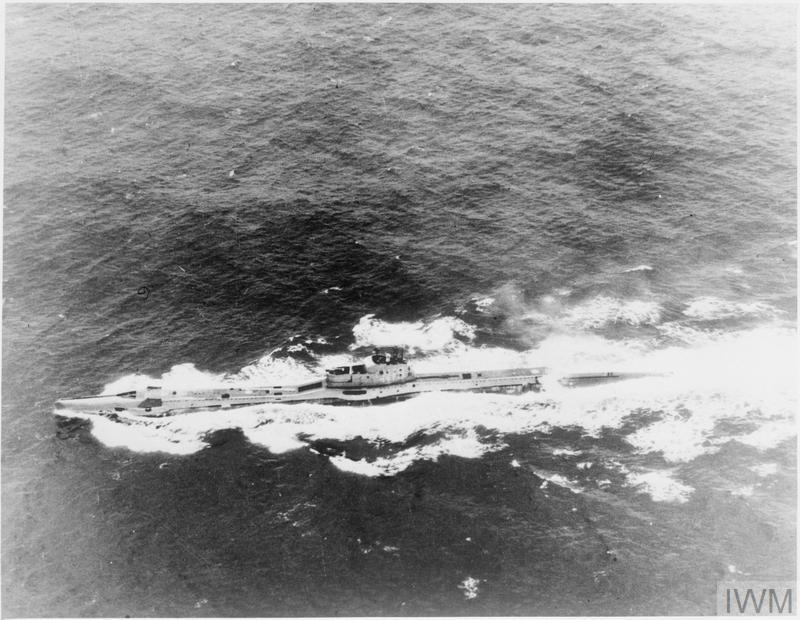
At the onset of the Second World War, Triumph was a member of the 2nd Submarine Flotilla. From 26–29 August 1939, the flotilla deployed to its war bases at Dundee and Blyth. On 26 December 1939, Triumph hit a German mine in the North Sea. She lost 18 feet (5.5 m) of her bow when it was blown off. Her pressure hull was also damaged, but her torpedoes did not detonate. She managed to limp home under the protection of fighter aircraft and destroyers, and was under repair at Chatham Dockyard until 27 September 1940.
Operating in the Mediterranean from early 1941, Triumph sank the Italian merchants Marzamemi, Colomba Lofaro, Ninfea, Monrosa, the Italian auxiliary patrol vessels V 136 / Tugnin F, Valoroso, V 190 / Frieda and V 137 / Trio Frassinetti, the Italian tug Dante de Lutti and salvage vessel Hercules, the German merchant Luvsee, and the Greek sailing vessels Panagiotis and Aghia Paraskevi. She also damaged the Italian armed merchant cruiser Ramb III, the Italian tankers Ardor and Poseidone, the Italian merchant Sidamo and the German merchant Norburg. In June 1941 she sank the Italian submarine Salpa near northern Egypt. Triumph was also used for covert operations, such as landing agents in German-occupied areas. She was planned to be used as a rendezvous for commandos in Operation Colossus, but this had to be cancelled when the landing site became untenable.
Lost circa 14 January 1942. HMS Triumph (Lt. John Symons Huddart, RN) sailed from Alexandria on 26 December 1941 to land a party at Antiparos before proceeding on a patrol in the Aegean Sea. She reported making the landing on the 30th, but did not show up on 9 January 1942 when she was to pick the party up again upon completion of her patrol. She was declared overdue on 14 January 1942. It was thought she had most likely been mined or was lost due to an accident. A memorial plaque to the boat and her lost crew members was placed in All Saints’ Church, Lindfield, West Sussex.
In June 2023 Greek researchers led by Kostas Thoktaridis discovered the lost submarine in the Aegean Sea at a depth of 203 meters. The submarine rests on the seabed of the open sea with an 8-degree starboard list, dozens of kilometres away from the shores of Sounion. The lowered periscopes and sealed hatches testify that the Triumph was in a deep dive during its final moments. The diving planes and rudder are in a straight position, indicating that it was at a steady depth.
 History Diaries