Europe is four months from the abyss.
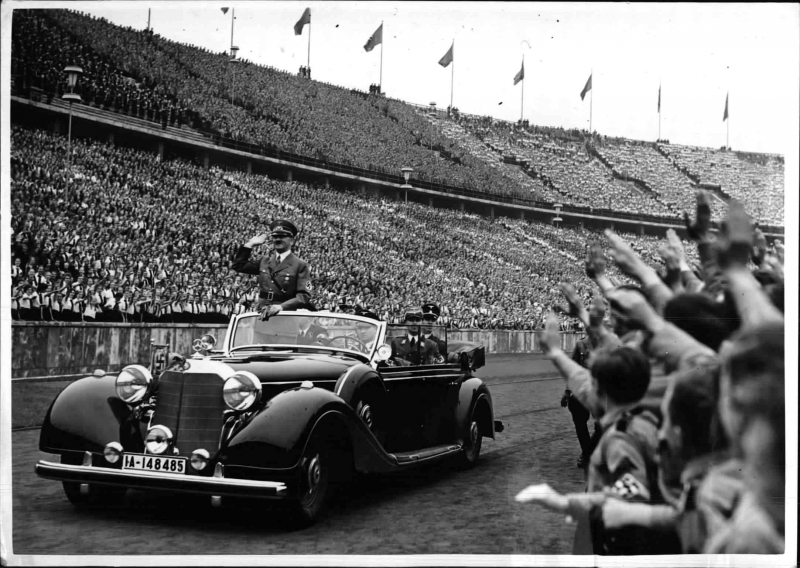
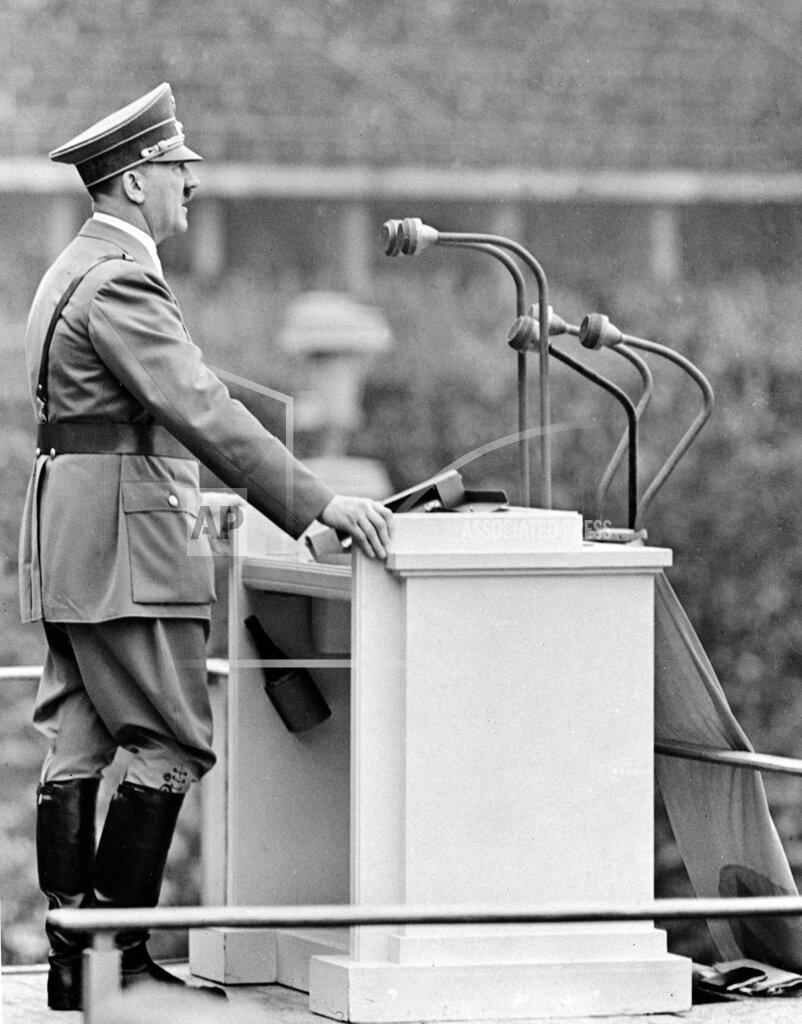
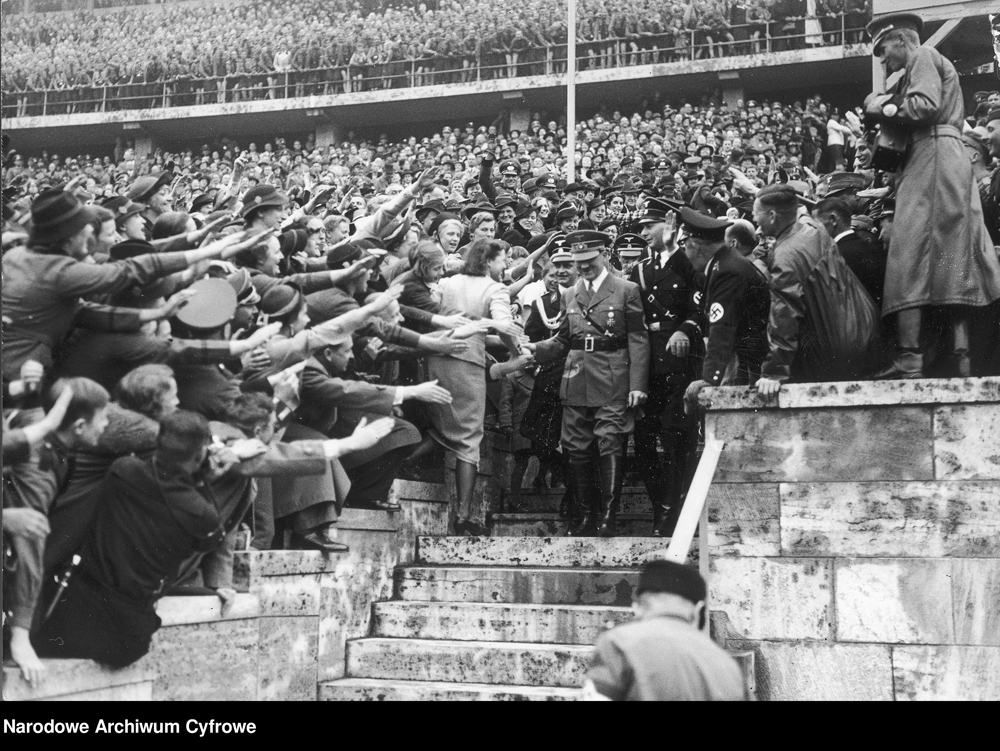
During May Day celebrations at the Olympiastadion in Berlin, Adolf Hitler spoke of an “international clique of war agitators” trying to encircle Germany and declared, “If we want to survive, we must be unified.” In May Day speeches today Chancellor Adolf Hitler assailed the boycott of German goods in the United States, appealed to labor for national unity and Increased production and denounced the “warmongers and panic-makers” of the democracies. The Chancellor spoke three times in programs that were part of today’s mammoth popular festival in Berlin, which was marked by parades throughout the day by 1,500,000 men, women and children and was concluded tonight by Maypole ceremonies in the Lustgarten.
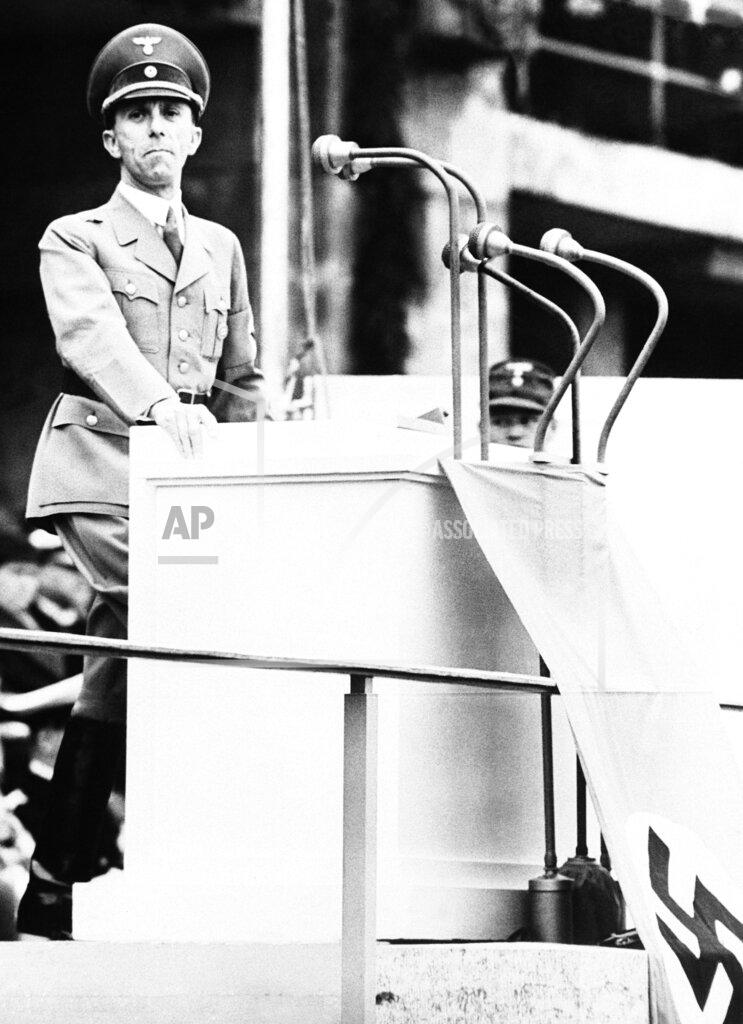
In two of his speeches Herr Hitler put emphasis on the need for internal unity, and this plea was repeated in a talk by Field Marshal Hermann Goering. Late this afternoon the Chancellor left for Bavaria, where he is to remain for a fortnight. Startling developments in international politics apparently are not expected by the Foreign Office, although the press gives considerable space to reports from London alleging that British newspapers are promoting a biased pro-Polish sentiment.
Early in the day Herr Hitler motored to the Olympic Stadium, where he addressed 100,000 boys and girls of the Hitler Youth, who awaited him in a colorful formation that spread over the entire arena. The keynote of his brief speech there was an admonition to defend the national colors. He told the boys and girls that they would have to fight for their rights because nothing would come their way as a free gift. At noon Herr Hitler addressed a huge meeting of workers banked around the 175-foot, gayly beribboned Maypole in the Lustgarten. In this speech he called for national unity, stressed the importance of productivity to the national economy and assailed foreign critics of his regime.
Herr Hitler declared he preferred to depend “on the word of the German people and on the Western fortifications rather than assertions by governments that have become victims of warmongers and panic-makers.” Referring to the boycott in the United States, he declared: “I believe it would have been more rational to import German commodities rather than the most inferior German subjects. We can be only happy to get rid of them and are content to leave it to others to get on with them. We shall see to it that they do not threaten us, and I have made every provision in advance for such a contingency.” National unity, the Chancellor asserted, is a vital factor in Germany’s “fight for existence.”
“Without unity we cannot solve our national problems,” he said. “We are sworn to each other for success or failure. If anyone ever doubted this, he must recognize it now in the attitude of the rest of the world toward us. Are not the same old encirclement politicians at work again? I believe it is necessary for all Germans to throw aside their old prejudices and draw together in the common conviction that, united, we can withstand any danger; divided, however, we shall fall. You will understand why I place no faith in the words of those who are in the service of warmongers and agitators. I depend alone upon you, my German people. All honor to declarations of the League of Nations — to my mind the fortifications on Germany’s western border are a better guarantee of our freedom.”
Hitler orders his personal physician, Dr. Karl Brandt, to devise a new program for the killing of sick and disabled German children this month.
Indications that Poland’s counter-demands on Germany might include one for a protectorate over Danzig appeared in the press. Alternative suggestions were special powers for the Polish Commissioner in the Free City and economic concessions for Poland there. It was likewise suggested that Poland might Insist upon a reinforcement of her garrison at Westerplatte Island, the Polish munitions depot at the entrance to Danzig harbor.
Presumably some of those demands will be made by Foreign Minister Josef Beck when he addresses the Sejm (Parliament) on Friday in reply to the Reichstag speech of Chancellor Adolf Hitler. The exact character of the reply. and the demands is not yet known. The unanimity of obviously inspired articles in the press today, however, makes it plain that one thing upon which Poland will insist is a more secure basis of any settlement at which Poland and Garmany may arrive. It is generally agreed that Polish rights in Danzig must be better protected than in the present statute in order to avoid such surprises as the eventual repudiation of any new agreement by unilateral action on the part of Germany. This is the position taken by the Gazeta Polska, regarded as the mouthpiece of the Foreign Office. It states that Poland’s interest in the mouth of the Vistula is obvious and vital, and that because of Germany’s demonstrated disregard for international obligations it is imperative that Poland make greater and clearer demands in any new negotiations.
Poland’s Ambassador to the United States, in a government-sanctioned statement in New York, contradicted Chancellor Hitler’s declaration that a twenty-five-year frontier guarantee and a guarantee of Slovakia’s independence had been proposed to Warsaw.
In London, cabinet reluctance to offend Spain, Portugal, Japan or the Vatican was delaying the inclusion of Russia in the military alliance that Britain is forming, but Moscow believed the link would soon be forged.
Prime Minister Chamberlain introduced in the House of Commons a bill for the conscription of men of 20, which is believed acceptable to the Irish, and another bill to permit secret mobilization.
Last night it was learned that Britain, apprehensive over German naval plans, was discussing with the United States and France a lifting of the 1936 treaty ban on heavy cruisers.
Italian and German army chiefs set out on their mysterious trip to Libya, but their flight was halted in Sicily by adverse weather. At the same time the Rumanian Foreign Minister conferred with the Italian King, Premier Mussolini and Foreign Minister Ciano.
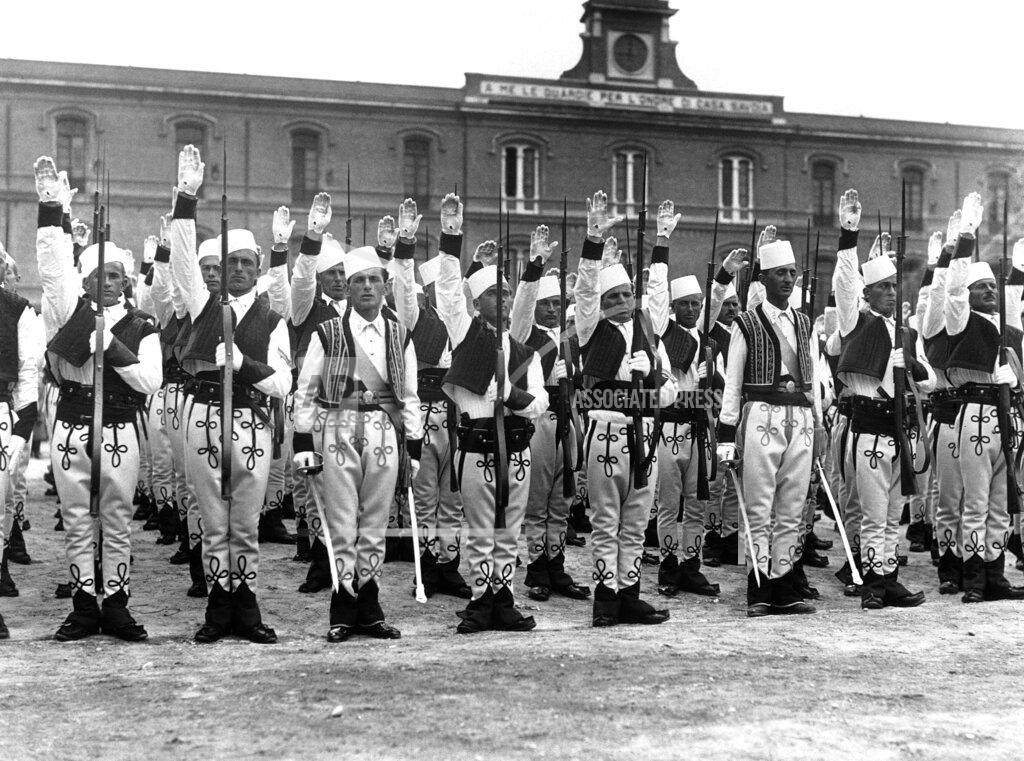
Italy will restrict Jewish citizens in their choice of professions.
Also this month, Fleet Air Arm No. 801 squadron becomes operational with the Sea Gladiator on the Royal Navy’s HMS Courageous.
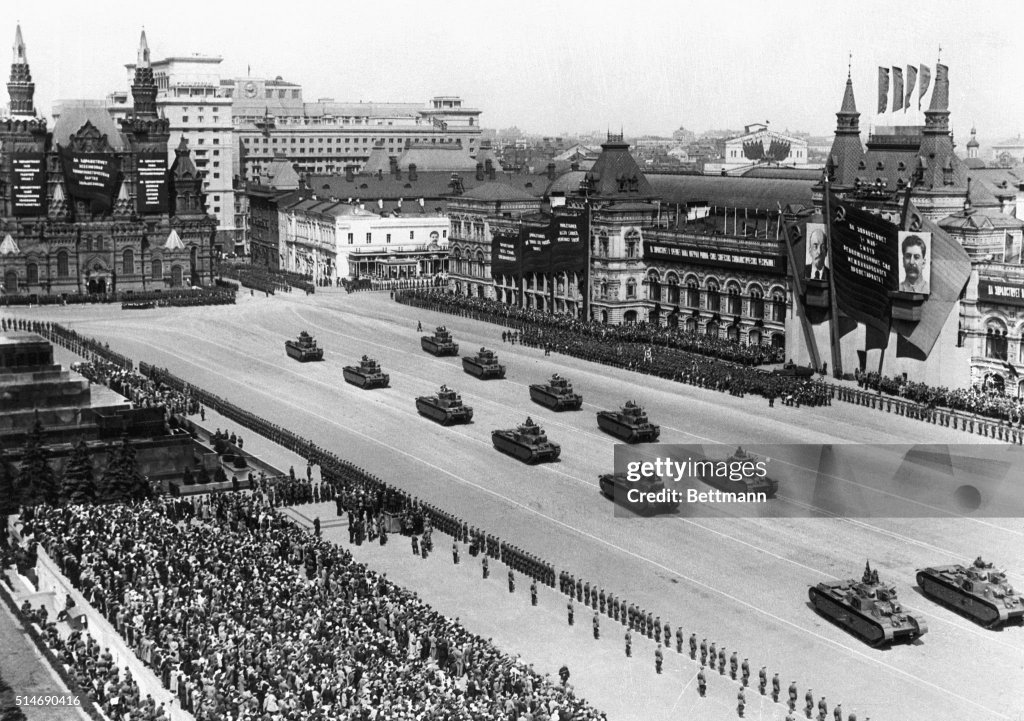
“We love fighting,” War Commissar Voroshilov declared at Moscow’s celebration of International Labor Day, which was marked by a great parade of troops, military equipment and workers. The Commissar’s statement was in the nature of a warning to Russia’s foes, although he too said his country desired peace.
Stalin’s purges have by now cut across Russian society. A total of 98 of the 139 central committee members elected in 1934 have been shot and 1,108 of the 1,966 delegates to the 17th Congress arrested. The secret-police reign of terror annihilates a large portion of every profession. Deaths have been estimated in the millions, including those who perished in concentration camps
Arabs are ready to sign a Palestine accord. Concession is sought from Britain to save face.
The cash-carry portion of the Neutrality Act expires. No attempt is made to extend it.
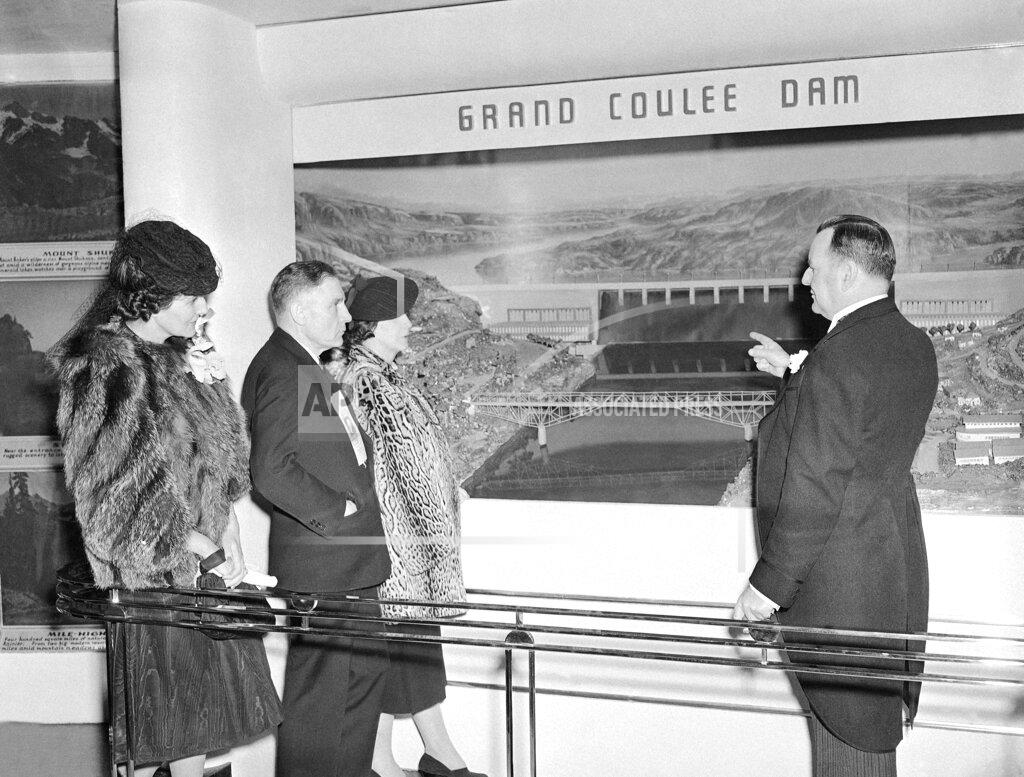
In the United States, 5,000 hear Prince Olav of Norway speak. He is gloomy on the outlook for peace. Crown Prince Olav and Crown Princess Martha of Norway, who visited President Roosevelt at Hyde Park over the weekend and will make a tour of the country, were the stars of the second day of the World’s Fair yesterday. The Crown Prince dedicated and officially opened the Norwegian Pavilion with an address to a crowd of 5,000 persons in the Court of Peace. He spoke pessimistically of the outlook for world peace, but quoted Shakespeare as warrant to “hope against hope.”
The royal couple, who received a salute of twenty-one guns on arrival, spent most of the day at the Fair. In the morning, besides presiding at the opening ceremonies, they reviewed the American soldiers, sailors and marines stationed at the Fair. They had luncheon there and made a tour of the grounds in the afternoon. After going to the Hotel Waldorf-Astoria for dinner they returned to the Fair last night to attend a concert of Norwegian music in the Hall of Music.
Royalty will take the spotlight at the Fair again today when Crown Prince Frederik and Crown Princess Ingrid will officially open the Danish Pavilion. They also will review the United States armed forces, attend a luncheon in their honor and call on Mayor La Guardia in the New York City Building at the Fair. Other distinguished visitors yesterday were Brigadier General Vladimir Kokkinaki and Major Mikhail Gordienko, the two Russian fliers forced down in Canada last week on their attempted non-stop flight from Moscow to New York. They presented official letters they had carried to the Fair, and General Kokkinaki delivered an address in Russian at the George Washington statue in Constitution Mall, predicting that regular airplane service would soon be feasible between Moscow and New York. He also voiced the greetings of the people of Moscow and Russia to New York and the United States.
After the Norwegians and Russians, the most featured visitors to the Fair were large numbers of sailors from the Atlantic squadron of the United States Fleet, which is in port for a special visit. The sailors’ uniforms were free passes to the Fair yesterday, and will be again today, after which they will be admitted for 25 cents, one-third the regular price.
Advocates of the New Deal assert that President Roosevelt must run again for re-election. With Roosevelt’s attempted purge of the party having backfired, no pro-New Deal candidate other than FDR himself is seen as having a real chance at the Democratic nomination.
Congress speeds its response to President Franklin Roosevelt’s defense plan.
The Army orders all of the Caribbean under unified military command to decrease the possibility of enemy naval lines entering the region. President Franklin Roosevelt sets up a Puerto Rico force to bar enemy bases. To decrease the possibility of enemy naval forces slipping through the ring of Caribbean Islands which guard the Atlantic approach to the Panama Canal, the army today ordered the entire. area placed under a unified military command. At President Roosevelt’s direction, Secretary Woodring established an army department of the Caribbean, to be known as the Department of Puerto Rico, and named Brigadier General Edmund L. Daley to take charge, with headquarters at San Juan, Puerto Rico. In military circles, it was said that the new arrangement in the Caribbean means that more troops and anti-aircraft guns and new air fields would be provided for that area. The opinion also was expressed that the move would serve as an effective complement for naval plans involving a $9,300,000 naval air and submarine base development at Isla Grande, Puerto Rico.
Meanwhile, President Roosevelt asked Congress today to make available immediately $185,440,000 for the new army air corps expansion program. Simultaneously, he requested an appropriation of $21,062,500 “for increasing the permanent military garrison in the Panama Canal Zone.”
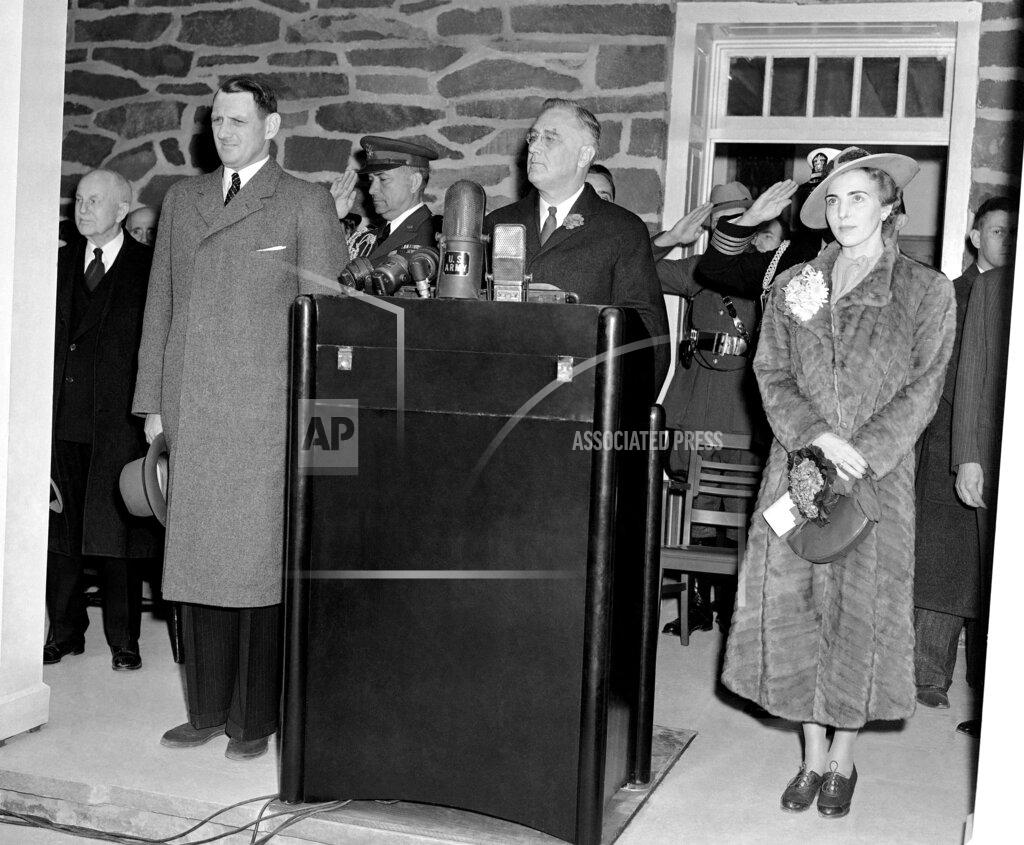
President Roosevelt dedicated a new Post Office in Rhinebeck, New York, just up the road from the President’s home in Hyde Park. Secretary Henry Morgenthau and Post Master General James Farley both spoke before FDR formally dedicated the building.
In Washington today, the Senate passed the Barkley stream-pollution bill, completed Congressional action on the $1,700,000,000 Treasury-Post Office Appropriation Bill, received the nomination of Daniel C. Roper to be Minister to Canada, confirmed the nomination of Edward P. Warner as a member of the Civil Aeronautics Authority, received the Lodge resolution for a constitutional amendment empowering Congress to levy taxes for old-age assistance, and adjourned at 3:21 PM until noon tomorrow.
The monopoly committee reopened hearings on milk-marketing practices, the Foreign Relations Committee resumed hearings on neutrality legislation, and the Education and Labor Committee heard William Green on amendments to the National Labor Relations Act.
The House sent to conference the bill increasing the Federal Housing Administration’s mortgage-insurance authorization to $4,000,000,000, passed a bill liberalizing benefit payments to World War veterans and their dependents, received the President’s request for $250,000,000 to carry out the Army Air Corps expansion program and $38,525,000 to increase the military garrison of the Panama Canal Zone, and adjourned at 5:14 PM until noon tomorrow.
Assertions that Communists not only dominated the Federal Writers Project in New York but that their Influence extended to the WPA in Washington, were made today before the House Appropriations Subcommittee investigating the administration of relief. The committee heard a long line of witnesses, beginning with its investigator, H. R. Burton, and Including former and present officials and workers of the Federal Writers and other “white collar” projects in New York.
Mr. Burton and others testified that the investigation was being hampered by Communist and Workers Alliance efforts, and that Howard O. Hunter, Acting Administrator of the WPA, had backed up the protest of The Daily Worker, Communist newspaper, that New York relief clients ought not to be asked whether they belonged to the Communist party. Mr. Burton described a questionnaire which he attempted to circulate among employees of the Arts Projects. He said The Daily Worker protested the next day against the questions he sought, at the committee’s direction, to propound to the workers as to Communist affiliations. The Daily Worker advised workers not to answer the questions.
Representative Woodrum, acting subcommittee chairman, stated that on April 24 a Workers Alliance delegation from New York filed with the committee a protest against the questionnaire and that its president, David Lasser, protested to Mr. Hunter. Mr. Burton then read a telegram from Mr. Hunter to New York relief officials ordering that there be no circulation of a questionnaire which sought to inquire into the affiliations of employees. Mr. Woodrum rend a letter from Mr. Hunter to his committee in which he interpreted the law against political coercion of a WPA worker to mean that inquiry on the subject of their party affiliation “shall not be tolerated.”
“So it seems that the advice of The Daily Worker, backed up by the administrative advice of the WPA, stopped you from getting information which you had been directed by the committee to get?” Representative Woodrum remarked. “Yes, it did,” Mr. Burton replied. Mr. Woodrum read the section of the law against political coercion of a relief worker and observed that it was not intended to prevent a committee of Congress from obtaining factual information.
Robert E. Sherwood wins the Pulitzer Prize for drama, for his play, “Abe Lincoln in Illinois.” Marjorie Kinnan Rawlings’ novel “The Yearling” also wins a Pulitzer.
The White Sox and Cubs play a benefit game for Monty Stratton at Comiskey Park and raise a purse of almost $30,000. The White Sox defeat the Cubs and Dizzy Dean, 4 – 1.
Chiang Kai-shek ordered Nanchang, Kiangsi (Jiangxi) Province, China to be taken back by 5 May 1939. He also relieved General Duan Lan of his duties for ordering his 79th Division to fall back, while General He Ping, who had also fallen back with his Chinese 16th Division, was told to redeem himself.
The Oga earthquake wrecks 1,000 homes in northern Honshu, Japan. The entire village of Aikawa, with 70 homes, on the northern coast of Akita, disappears into the sea.
A crowd of 10,000 in Chungking pledges loyalty to Chiang Kai-shek.
Dow Jones Industrial Average: 127.83 (-0.62).
Born:
Judy Collins, Grammy Award-winning singer and songwriter (“Send in the Clowns”), in Seattle, Washington.
Max Robinson, first African American network TV anchor (“ABC World News Tonight”), in Richmond, Virginia (d. 1988, of complications due to AIDS).
Frank Beard, American golfer (11 PGA Tour titles; U.S. Open, 1965), in Dallas, Texas.
Ray Aranha, American actor (Nick-“Married People”), in Miami, Florida (d. 2011).
Naval Construction:
The U.S. Navy submarine tender USS Griffin (AS-13), lead ship of her class of 2, is laid down by the Sun Shipbuilding & Drydock Co. (Chester, Pennsylvania, U.S.A.).
The Japanese Nippon Yusen K.K. cargo ship Sanuki Maru (讃岐丸) is completed. She is requisitioned in 1941 by the Nihon Kaigun (Imperial Japanese Navy), and is converted as the seaplane tender HIJMS Sanuki Maru.
 History Diaries