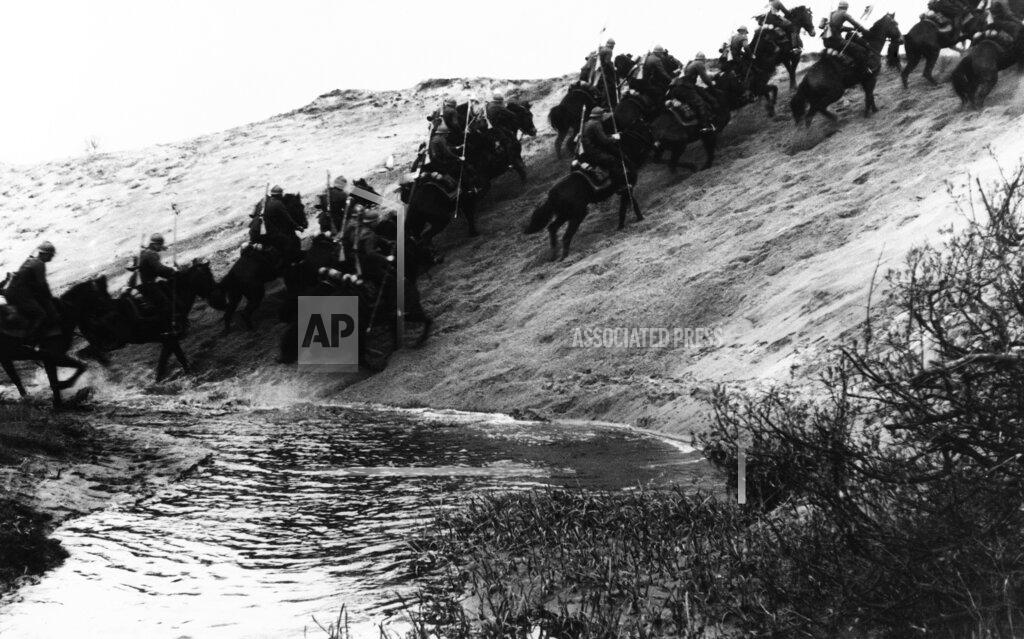
The Polish answer to Chancellor Adolf Hitler’s Reichstag speech and to the German memorandum delivered here yesterday will be given by Foreign Minister Josef Beck next week in Parliament. It is held certain that he will reject the German proposals for the return of Danzig and the construction of an extraterritorial motor road through Pomorze, the so-called Polish Corridor. However, he will leave the door open for negotiations for a new agreement to replace the one that Herr Hitler repudiated. The Poles are ready to discuss a new pact with Germany, but they are not in any hurry to do so. It will necessarily take a long time to find a reasonable compromise solution for the many problems that the German Chancellor raised. Warsaw remains firm and unmoved, as does the rest of the country. The man in the street is not interested in Hitler’s speech, is not afraid of Germany, and does not think the country is menaced. In short, he seems to believe that there will be no war this Summer.
Poland strengthened her border defenses, especially near Danzig, yesterday and planned a firm reply this week to the demands made by Chancellor Hitler in his Reichstag speech. Foreign Minister Beck was expected to reject the German claims in Parliament. Warsaw newspapers, freed from the restrictions of the defunct press accord with Berlin, used extremely harsh words against the Reich.
In Berlin, however, Nazi circles insisted that Herr Hitler’s denunciation of the non-aggression agreement with Poland had freed Germany from all contractual obligations not to take over Danzig, and it was confidently predicted that the problem of the Free City would be the next tackled by the Chancellor. Informed quarters expressed the belief that the Chancellor’s Reichstag speech yesterday, in answer to President Roosevelt’s peace appeal, again pointed to the Free City as the next big problem. The Chancellor was represented as watching world reaction to his denunciation of the ten-year accord with Poland, signed in 1934, as well as his termination of the 1935 naval treaty with Britain. Herr Hitler declared in his speech that “Danzig is German and wants to come to Germany.” He also intimated that he would not seek again to come to terms with Poland because Poland had rejected his “one and only proposal.”
Nazis in Danzig had hoped to return to Germany on Herr Hitler’s fiftieth birthday, April 20. Instead, Herr Hitler merely accepted honorary citizenship in the Free City. Now, however, the breaking of Germany’s treaty bonds with Poland has raised the enthusiasm of the Danzig Nazis again. Their mouthpiece, the Danziger Vorposten, said Herr Hitler’s speech “has relieved us of worry about Danzig’s future. Its fate is now the Führer’s personal concern.”
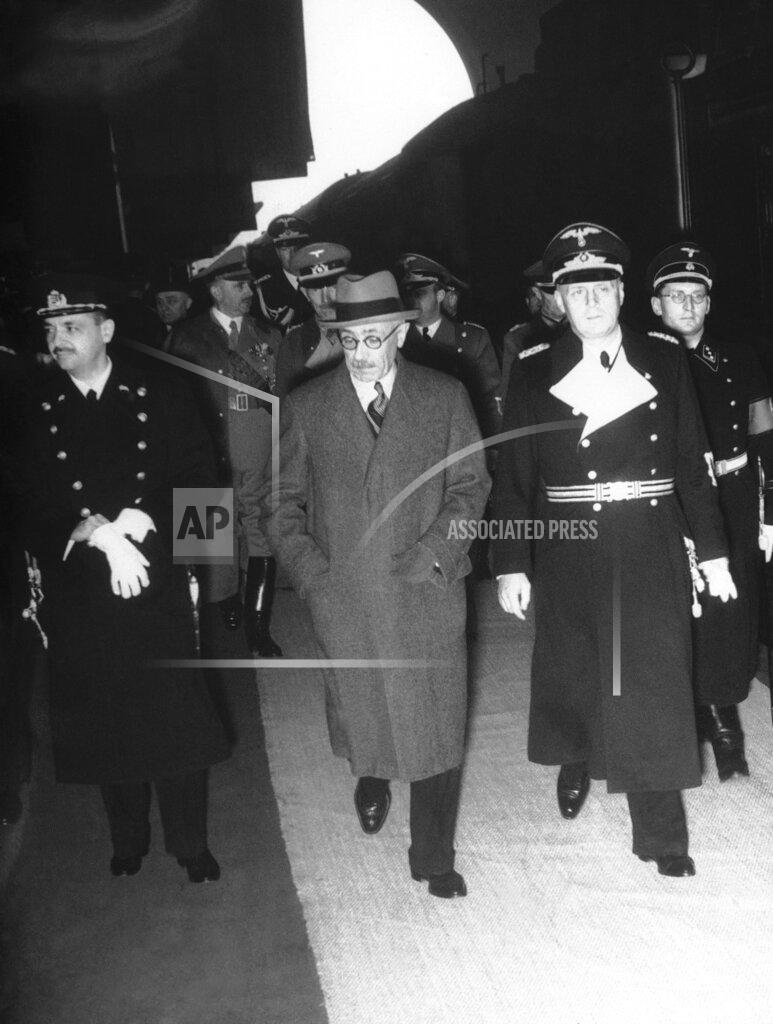
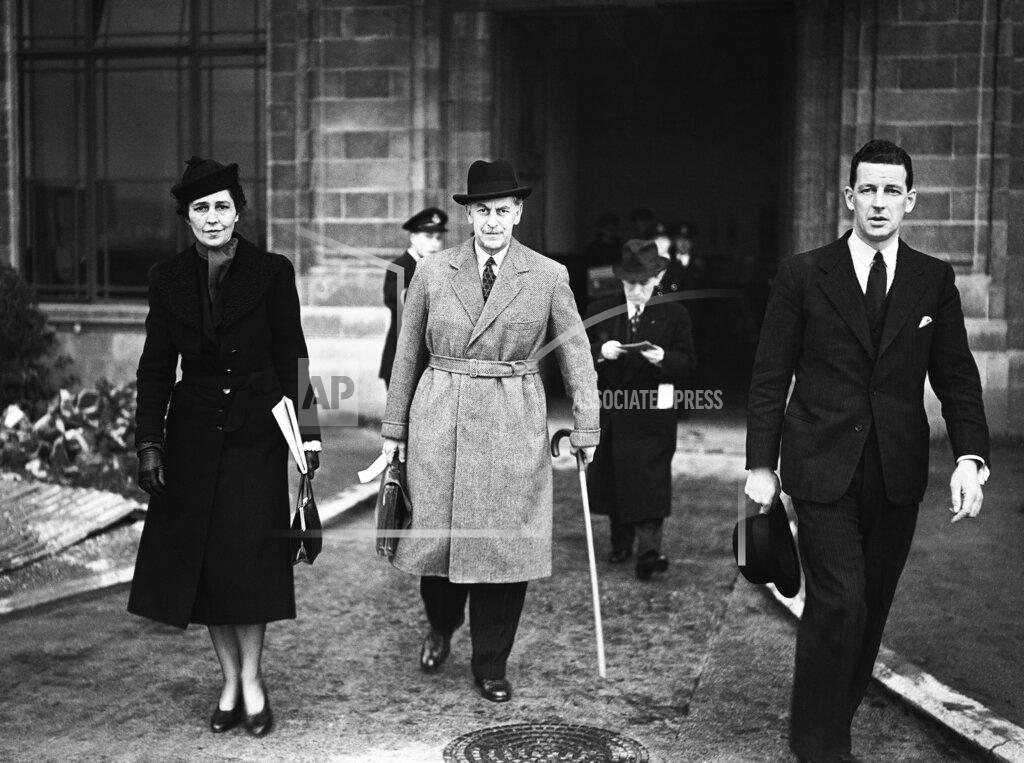
Prime Minister Chamberlain called a special meeting of the British Cabinet for tomorrow to study the effects of Herr Hitler’s most recent moves and discuss a reported Soviet proposal for a five-year military alliance with Britain and France, a project toward which London is cool. Russia still remains the most desirable partner yet to be won in Europe. Viscount Halifax, the Foreign Secretary, had a long talk with Mr. Maisky today. The Ambassador, it seems, had been instructed while in Moscow to ask for a full military alliance with Britain and France — an alliance that would function in any circumstances. That does not appeal to the British, who have in mind a possible conflict between Russia and Japan. The British do not want to do anything to drive Japan, now “on the wobble,” into a similar military alliance with Germany. Mr. Maisky, it is said, also described to Lord Halifax how Vladimir Potemkin, Foreign Commissar Maxim Litvinov’s deputy now in the Balkans, was endeavoring to arrange a Yugoslav-Bulgarian bloc on the side of the democracies.
Italy answered Britain’s adoption of conscription by new financial measures to permit the calling up of more soldiers, the construction of more armaments and the strengthening of fortifications.
In Paris, Foreign Minister Gafencu of Rumania concluded conversations with French statesmen in which he obtained aid to strengthen the “economic independence” of his country against an intensive German trade drive. That may be taken to mean that after their long neglect of Rumania as a purchaser of anything except arms and as a seller of anything except oil, the French and British have decided to try to meet the German commercial offensive in the country by increased business activity. Toward this London has consented to extend a credit of £5,000,000. M. Gafencu left Paris this evening for Rome and will visit Belgrade, Yugoslavia, before he returns home. By this round of visits and the attention he has given to strengthening Rumania’s commercial relationships he has sought to counteract the tendency for Rumania to fall economically entirely under German influence.
It is admitted in Paris and London that Germany and Rumania are economically complementary. Rumania, which has rich agricultural lands, can supply Germany in exchange for machinery and other manufactures. The Rumanian Government hopes other countries will have a large enough proportion of the country’s trade to enable it to preserve independence of economic action and prevent it from coming entirely under German domination, as seemed inevitable because of the others’ neglect.
Colonel Angel Manzaneque, chief of Generalissimo Francisco Franco’s military courts in Madrid, asserted today that “since the moment when the first Nationalist troops marched Into Madrid March 28 until now there has not been a single person shot without a trial.”
“More than 4,500 local cases have been dealt with here by courts martial so far,” Colonel Manzaneque declared in an interview, “and only fifty of these have been condemned to death. No death penalty is executed until we receive General Franco’s personal approval. and to date only seven persons have been executed in the capital itself.” Colonel Manzaneque has more than 600 military officials under his orders in the monumental Palace of Justice, where forty-seven courts of investigation and five full military tribunals function daily. This judicial machinery also is handling cases from provincial capitals. It covers the Provinces of Madrid, Toledo, Ciudad Real and Albacete, which include the cities of Jaen, Murcia and Cartagena.
In the 17,000 cases in this extensive territory tried already here, 223 persons have been condemned, it is asserted, but so far General Franco has authorized the execution of only thirty-three, and he has commuted two sentences to life imprisonment, which in Spain means thirty years. Colonel Manzaneque indignantly declared that those in the United States who accuse the Nationalists of carrying out ruthless reprisals against the Republicans apparently ignore the fact that the colossal task with which he is faced is to find and prosecute extremists who in Madrid alone were guilty, he said, of 100,000 assassinations at the most conservative estimate.
“I know nothing about the criminal code in the United States,” he said, “but I know that our administration of military justice differs not in the slightest degree from that of any other country in Europe, and it should be remembered that we are concerned chiefly with prosecuting criminals. For the first time in history, I believe, a chief of state here in Spain has pardoned unconditionally everyone who merely volunteered for military service in his enemy’s camp excepting only officers, who must be tried under our law fixing political responsibilities. No enlisted man in the Republican Army who has no common crime on his conscience has anything to fear from General Franco’s Justice.”
The Rumanian Government today announced that it was willing to begin part payment of its debt to the United States Government and to private American bondholders. The communiqué stated: “The Rumanian Government has notified the United States Government that it has decided to submit an arrangement for paying its war debt to America. It was also decided that on the basis of the arrangement between the Rumanian Minister in Washington and the association of American holders of Rumanian post-war bonds placed in the United States, regular payment on this public debt should begin within the framework either of the present transfer possibilities or those that are created through the development of economic relations between Rumania and the United States.”
The Swiss press, commenting on Chancellor Hitler’s speech, finds little to commend and much to condemn. The Neue Zuercher Zeitung sees a cause for alarm in the vociferous applause greeting the denunciation of the German-Polish treaty and asks whether National Socialist Deputies look forward to a radical solution of the German-Polish problem. The Journal de Geneve describes the speech as “plenty of words and two acts” — the two acts being the denunciation of the German-Polish treaty and the Anglo-German naval accord. But on the essential problem of Europe’s future “humanity remains as expectant after the speech as it was before.”
Portsmouth beat Wolverhampton Wanderers 4–1 in the FA Cup Final at Wembley Stadium. It was the last FA Cup Final played until 1946.
The play “Cesare” based on the life of Julius Caesar by Giovacchino Forzano in collaboration with Benito Mussolini premiered at the Teatro Argentina in Rome.
At the final meeting tonight of the representatives of the Arab States and the Palestine Arab leaders, presided over by the Egyptian Premier, a unanimous agreement was reached as to what the Palestine Arabs would accept as the terms for an Anglo-Arab solution of the Palestine question. The Arabs agree to accept the British proposals on condition that they take over the administration of the Palestine Government with great rapidity rather than by gradual steps as proposed by Britain. They insist also that high posts, such as heads of the government departments, be handed over to the Arabs in the earliest stages of the transition period in order to consolidate the Arabs’ position in the country.
Some of the changes in America’s position if war started in Europe after the expiration of the “cash-and-carry” section of the Neutrality Act at midnight Monday were pointed out today by Senator Pittman, chairman of the Foreign Relations Committee. He declared it unlikely that any move would be made when Congress meets Monday to rush through a continuing resolution.
Mr. Pittman said, “Undoubtedly, after the law expires, there will be a lack of control by our government over vessels trading with belligerents and there will be no authority to prevent citizens of the United States attempting to deliver war materials, other than manufactured arms, ammunition and implements of war, to belligerents.”
“As to such matters our government will be thrown back on international law as it was prior to the World War. In the event of a similar war, undoubtedly the same destruction of American vessels and American property would take place, arousing the same controversies that impelled the United States to declare war.
“As to such matters, our government will be thrown back on international law as it was prior to the World War. In the event of a similar war, undoubtedly the same destruction of American vessels and American property would take place, arousing the same controversies that impelled the United States to declare war.
“The failure of Congress to reenact such legislation, or legislation of similar character, would probably be accepted as an expression of policy by Congress. Some of the reason, of course, why Senators who favor such character of legislation hesitate to move its reenactment is that they realize it is deficient in protection against all controversies and might lead us into war.”
Congress’s reaction to the Hitler speech varies. Some see a glimmer of hope for peace while others confirm pessimism. Hitler’s speech seems to have no effect on opinions about the Neutrality Act.
An assertion that amendments to the National Labor Relations Act, sponsored by the American Federation of Labor, were prepared with the advice and counsel of representatives of the National Association of Manufacturers and of several of what he called “the most reactionary and anti-labor corporations of the country” was made today by John L. Lewis, who offered to supply “documentary proof” of his statement to the Senate Committee on Education and Labor. The allegations, contained in a letter sent by Mr. Lewis to the Senate committee, which is holding hearings on Wagner Act amendments, were denied by William Green, president of the AFL. John P. Frey, president of the Metal Trades Department of the AFL, joined Mr. Green in challenging the head of the CIO to produce proof, and Joseph A. Padway, general counsel to the federation, declared that he would meet the statement at the proper time.
President Roosevelt told the National Popular Government League tonight that “electric power cannot be allowed to rest uncontrolled in the hands of a few any more than all the lands and waters of the earth can be.” The President in a letter to the league, which celebrated its twenty-fifth anniversary at a dinner, declared the league had laid the groundwork for public power development of the last few years. More than 500 men and women from all parts of the country, including many members of Congress and of the Administration, attended the dinner.
Edward Keating, toastmaster and editor of Labor, organ of the railroad brotherhoods, read the letter from President Roosevelt. Senator Hill assailed what he called perversion of States’ rights by which he asserted Vermont and other New England States were seeking to protect the private power companies’ monopoly of water power even at the risk of continued floods. If such people had had their way, he asserted, “there could have been and would have been no Boulder Dam, no Bonneville, no Grand Coulee, no Fort Peck and no TVA.”
An anonymous critic of President Roosevelt paints “war maker” on the White House gate in red paint. Secret Service agents quickly scrub it off.
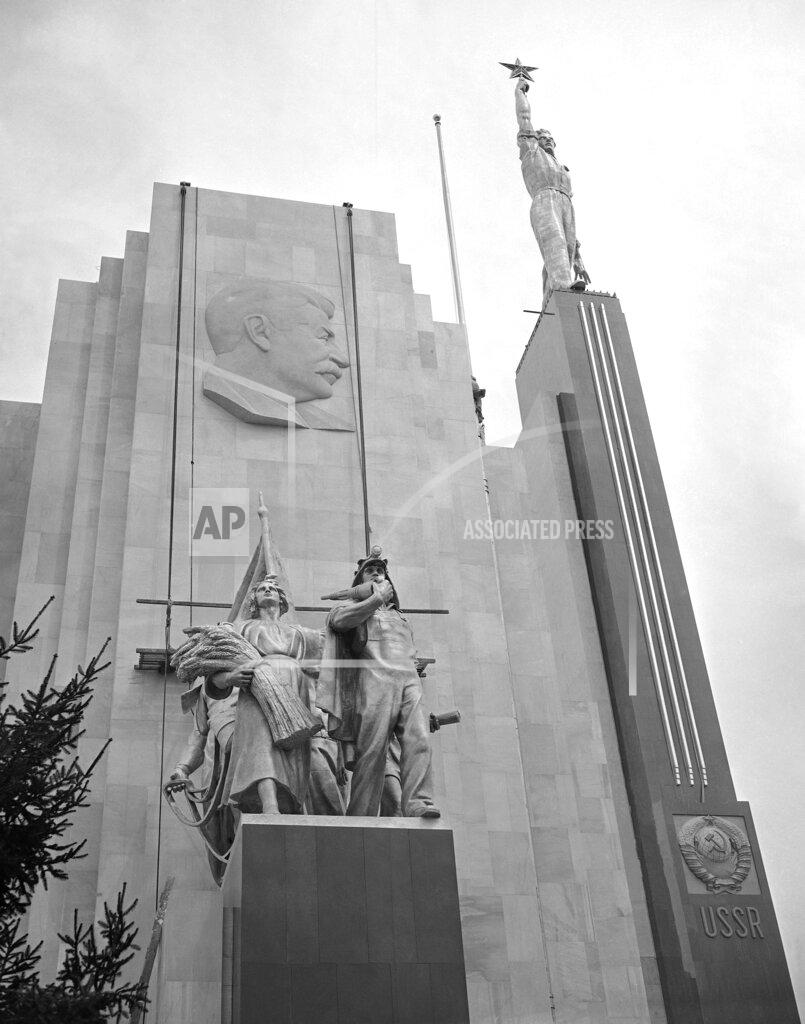
The Bronx–Whitestone Bridge opened in New York City. The slender suspension bridge whose trim steel lines stretch over the East River from Ferry Point Park in the Bronx to Whitestone in Queens was opened by Mayor La Guardia today at noon. It provides direct parkway access to the World’s Fair for residents of Westchester County and New England. The cost of the project, carried out under the Triborough Bridge Authority, of which Robert Moses is chairman, was $17,785,000. Less spectacular but in great demand was the Bronx westerly approach to the Triborough Bridge, also placed in use yesterday by Mr. La Guardia. Combined, they involve an expenditure of nearly $32,000,000, but the Whitestone span is regarded as a certain self-liquidating proposition, while the one-and-a-half-mile approach to the already solvent Triborough Bridge is bound to increase revenue there.
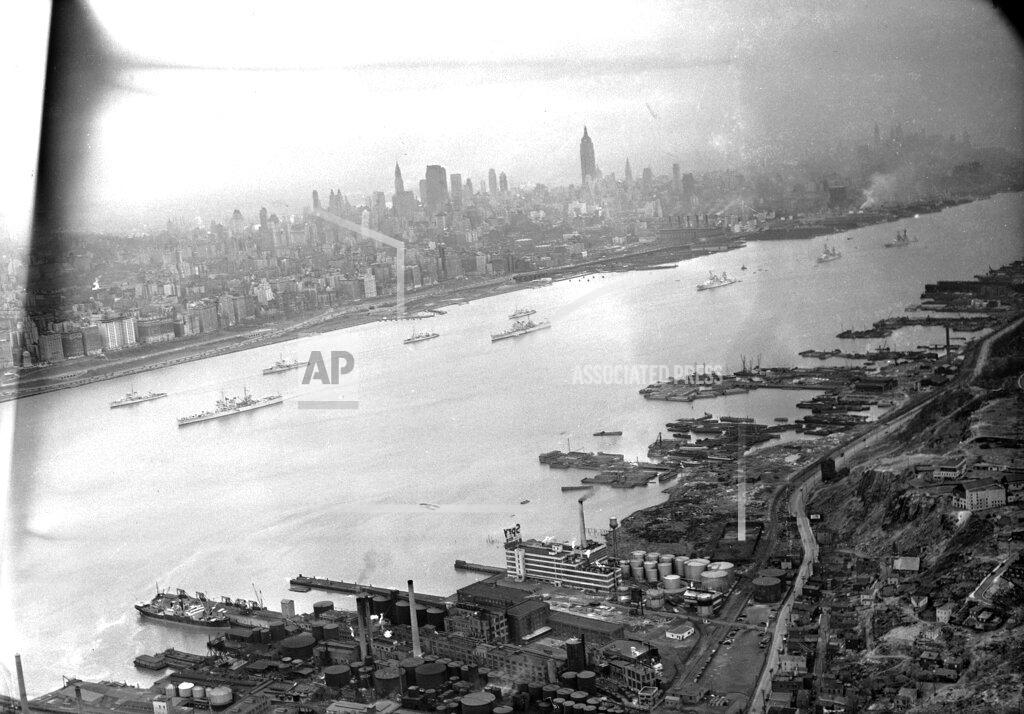
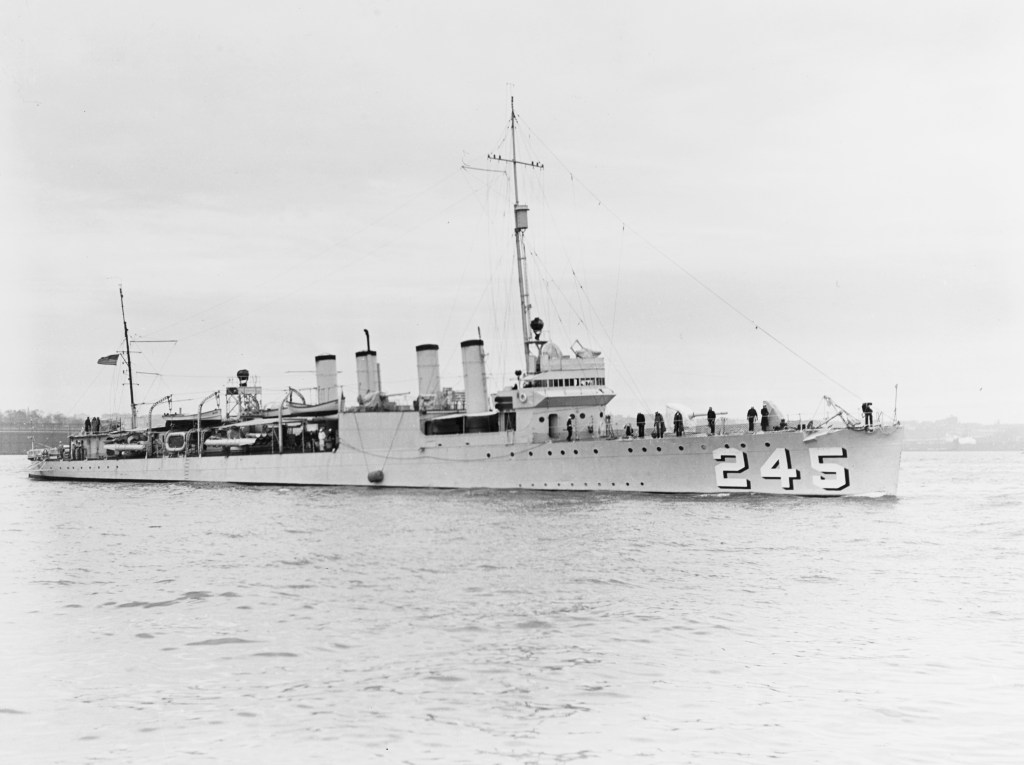
With signal flags whipping in a cold northeast breeze, and the white of the bow waves curling beneath their cutwaters, twenty-eight men-of-war stood in from the sea today to represent the United States Navy at the opening of the New York World’s Fair. The ships under Rear Admiral Alfred W. Johnson, commanding the Atlantic Squadron, joined seven other naval vessels already waiting, and the Hudson was soon crowded with the bulk of battleships, the slimmer grace of cruisers and the busy boats of men-of-war taking bluejackets ashore and thousands of visitors back to the ships.
The thirty-five vessels, with some 12,000 officers and men aboard, represent the largest number of men-of-war to visit New York simultaneously in the past five years, and the city was not slow to take advantage of its opportunity to inspect some of our newest vessels. But Mayor La Guardia, Winthrop W. Aldrich, chairman of the Mayor’s Naval Committee, arranging the reception of the visiting squadron, and Grover Whalen, president of the World’s Fair Corporation, were even more prompt with the community’s official welcome than the lines of visitors with the city’s unofficial greeting.
The mayor and his party climbed up the gangway of the flagship USS New York about 9:50 o’clock, not long after the battleship had anchored off Seventy-fourth Street. The mayor swept off his black sombrero, placed it over his heart in a salute to the colors, and turned to grasp Admiral Johnson’s hand and bid him a warm welcome to New York. This was the first item in a long list of honors, receptions and entertainments arranged for the squadron, a program that extends until May 17, when the last of the visiting ships will depart. The first of the visiting men-of-war steamed through the gray dawn haze at the Narrows at about 5 AM and the last was not berthed until after 3 o’clock.
The Navy Department today called for bids returnable May 25 for nine small high-speed mosquito ships under the experimental construction program authorized by Congress last year. The vessels comprise four 59-foot motor torpedo boats, two 81-foot torpedo boats, two 110-foot submarine chasers and one 170-foot chaser.
Johnstown, favorite for the Kentucky Derby, won the $24,675 Wood Memorial by six lengths at Jamaica yesterday. Johnstown was the 11-to-20 choice in the betting. Volitant finished second and Impound third. El Chico, caught in a jam at the first turn, was sixth.
In the 7th game of the season, Joe DiMaggio makes a sharp turn while fielding a liner against the Senators, and tears muscles in his right foot. The Yankees lose the game, 3–1, and DiMaggio will miss the next 35 games.
On a chilly Saturday afternoon at Yankee Stadium, Lou Gehrig comes to the plate in the fourth inning and singles off Washington hurler Ken Chase for his 2,721st and last hit, the most ever in franchise history. The ‘Iron Horse’s’ record will stand for over 70 years until Derek Jeter, another 35-year-old team captain, surpasses the mark in 2009.
Subhas Chandra Bose, a supporter of Pandit Jawaharlal Nehru and avid Indian nationalist, resigned as president of the Congress Party in light of the rejection of the radical independence plan offered at Tripuri. Rajendra Prasad, a disciple of Mohandas K. Gandhi, was elected the new president of the party. In response, Gandhi introduced a policy of reconciliation with the native Indian princes.
A government spokesman at Chungking, the Chinese capital, admitted today that Chinese forces had withdrawn from recently reoccupied points west of Nanchang. Nanchang, the capital of Kiangsi Province, fell to the Japanese on March 27, and there has been considerable fighting in the region since.
The Chinese admission of a retreat in the area followed Japanese denials of Chinese reports that they had recaptured Nanchang, a strategic gateway to points west.
In Southern Kwangtung Province the Japanese brought in new men and equipment to strengthen their positions northeast of Canton, and to the southwest the Japanese advanced to positions fifty miles from Canton, the Chinese admitted. The Chungking spokesman denied published reports that the Chinese had launched a general offensive, stating that April activity had been “testing” maneuvers to gauge Japanese strength on all fronts.
The U.S. Navy heavy cruiser USS Astoria arrived at Shanghai, China. Five United States ships, a large part of the American naval strength in the Far East, were at Japanese-dominated Shanghai today. The cruiser Astoria arrived from Yokohama, Japan, where she took the ashes of Hirosi Saito, former Ambassador to the United States. The Astoria leaves tomorrow for Manila, en route home. The cruiser USS Augusta, flagship of the United States Asiatic Fleet, arrived after a long stay in the Philippines. The cruiser USS Marblehead arrived from the Philippines a few days ago. The USS Isabel, the yacht of Admiral Harry E. Yarnell, Commander in Chief of the United States Asiatic Fleet, returned with the admiral aboard after a visit to Hankow. The Yangtze gunboat USS Oahu, also from Hankow, and the Isabel brought forty-four foreigners, including twenty-five Americans, long stranded.
Evacuation of the civilian population of Foochow, the capital of Fukien Province, began in the face of heavy Japanese bombardments. Thousands started for the mountains without food.
Japan feels relieved by Hitler’s address. He made no threat of war and did not mention the Orient.
Dow Jones Industrial Average: 128.45 (+0.07).
Born:
Corrie Schimmel, Dutch swimmer, in Bussum, the Netherlands.
Naval Construction:
The Kriegsmarine (German Navy) heavy cruiser Admiral Hipper, lead ship of her class of 5, is commissioned. Her first commanding officer is Kapitän zur See Hellmuth Heye.

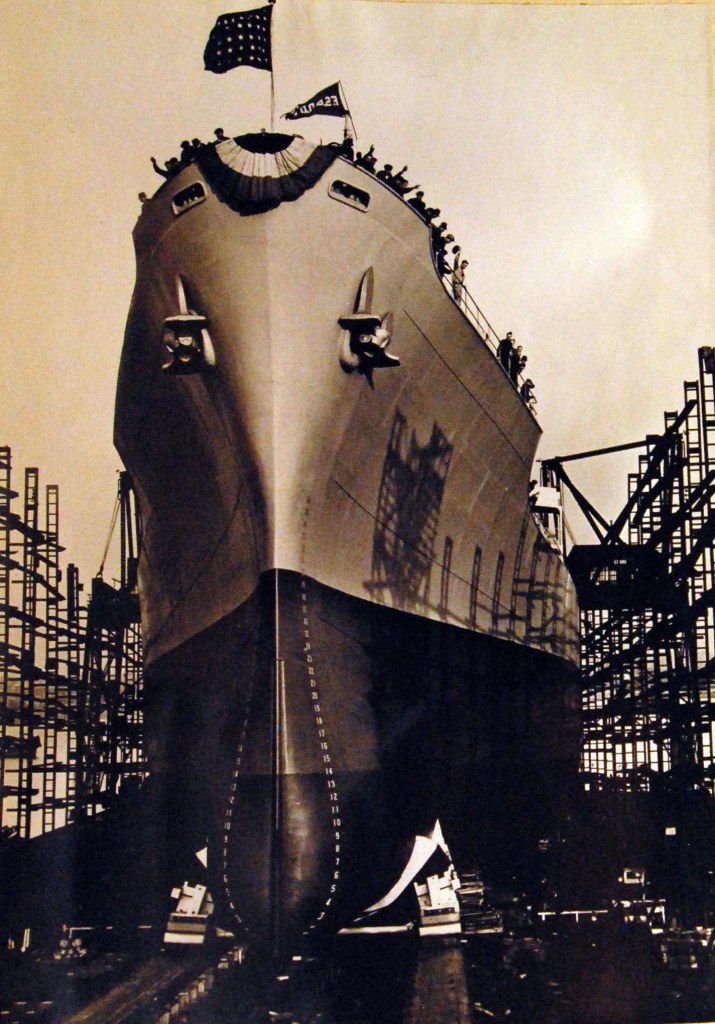
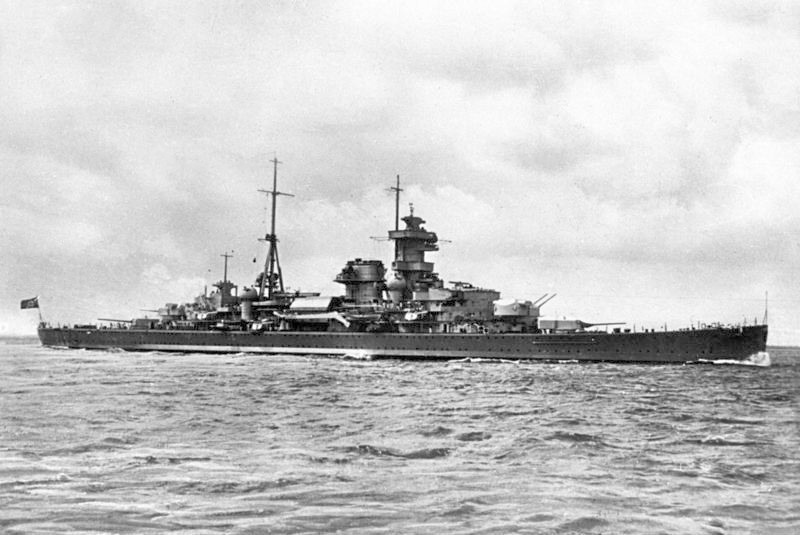
Admiral Hipper saw a significant amount of action during the war, notably present during the Battle of the Atlantic. She led the assault on Trondheim during Operation Weserübung; while en route to her objective, she sank the British destroyer HMS Glowworm. In December 1940, she broke out into the Atlantic Ocean to operate against Allied merchant shipping, though this operation ended without significant success. In February 1941, Admiral Hipper sortied again, sinking several merchant vessels before eventually returning to Germany via the Denmark Strait. The ship was then transferred to northern Norway to participate in operations against convoys to the Soviet Union, culminating in the Battle of the Barents Sea on 31 December 1942, where she sank the destroyer Achates and the minesweeper Bramble but was in turn damaged and forced to withdraw by the light cruisers HMS Sheffield and HMS Jamaica.
Disappointed by the failure to sink merchant ships in that battle, Adolf Hitler ordered the majority of the surface warships scrapped, though Admiral Karl Dönitz was able to persuade Hitler to retain the surface fleet. As a result, Admiral Hipper was returned to Germany and decommissioned for repairs. The ship was never restored to operational status, however, and on 3 May 1945, Royal Air Force bombers severely damaged her while she was in Kiel, Germany. Her crew scuttled the ship at her moorings, and in July 1945, she was raised and towed to Heikendorfer Bay. She was ultimately broken up for scrap in 1948–1952; her bell is currently on display at the Laboe Naval Memorial near Kiel.
 History Diaries