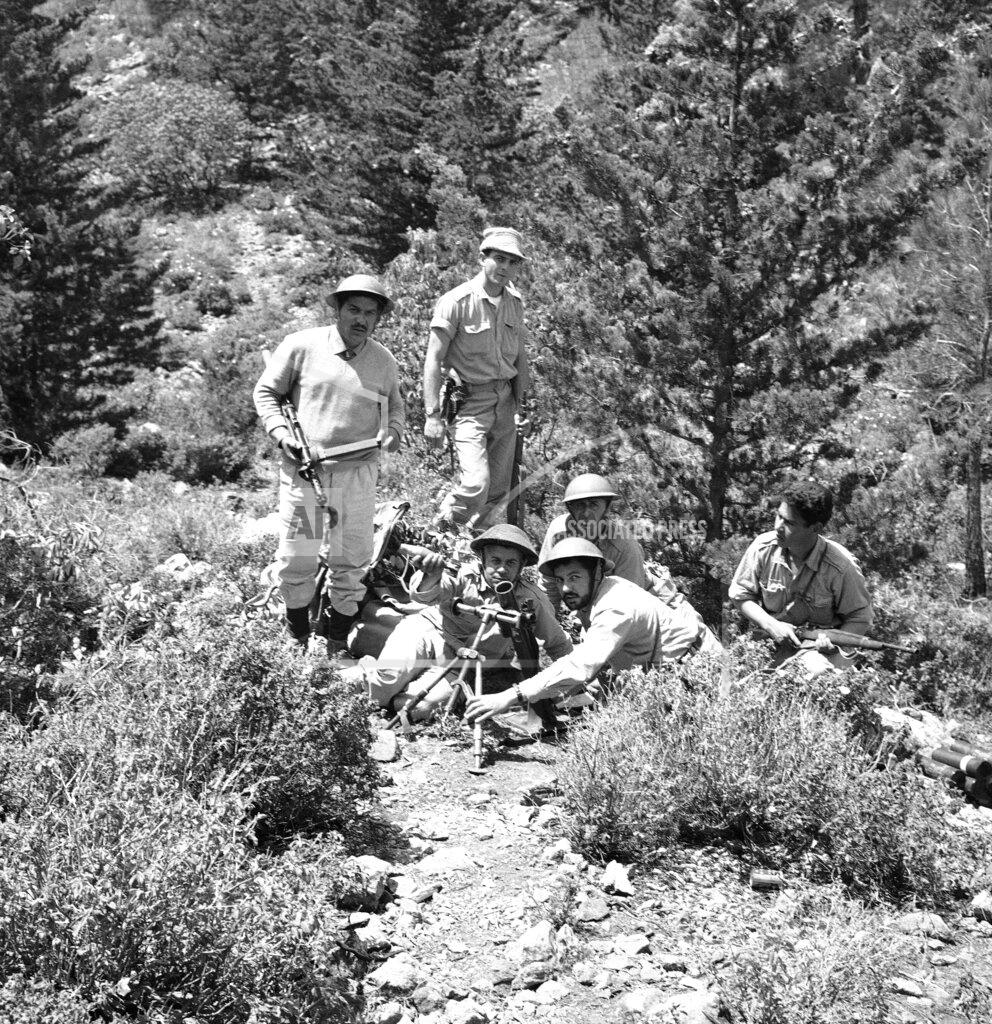
A new peace plan for Cyprus was proposed to the Security Council today by the Secretary General, U Thant. Mr. Thant, who will return tomorrow from Paris, called “urgently” for a “top‐level political officer” to negotiate measures for ending bloodshed and hostility and reintegrating the Turkish and Greek Cypriote communities. Mr. Thant specified that the political officer would seek implementation of his peace program as outlined in his report. This, he said, would not conflict with the work of the mediator, Sakari S. Tuomioja of Finland, who is seeking a long‐term political solution.
Mr. Thant said that if fighting continued it would “surely become necessary to determine responsibility.” “The authorities of the Government of Cyprus and the leaders of the Turkish community must, with a high sense of responsibility, act urgently to bring completely to an end the fighting in Cyprus if that island country is to avoid utter disaster,” he added. The report did not directly accuse the Cypriote Government of hampering United Nations efforts, but criticism was strongly implied. The Government of Cyprus said its forces near the St. Hilarion Castle were ordered to cease fire because they had achieved their objective. A Turkish Cypriote spokesman ridiculed the statement.
Mr. Thant’s report to the 11‐member Council said the attack Monday on the St. Hilarion Castle, held by Turkish Cypriotes, “is especially serious since it clearly was a planned and organized military effort.” That was the view of the operation given him by his military commander, Lieutenant General Prem Singh Gyani, and made public yesterday in Nicosia by General Gyani. The 11th‐century castle has been under heavy attack by Government forces since Saturday. The castle dominates the strategic road from. Nicosia, the capital, to Kyrenia, on the coast. The road, which runs through a pass in the Kyrenia Mountains, had been blocked by the Turkish Cypriote forces for several days.
The highway is one of the island’s main traffic arteries. Above all it is the capital’s link with the seaport of Kyrenia, about 12 miles north of Nicosia. As long as Turkish Cypriote forces hold the castle, they can bar traffic between the two predominantly Greek Cypriote places. Zenon Rossides, Cyprus’s delegate to the United Nations, said that the fighting around St. Hilarion Castle was merely an effort by Government forces to restore normal traffic by clearing out “Turkish terrorist rebels.” As long as they hold the castle, the Turkish Cypriotes control the pass and all traffic has to make a long detour over rough back roads.
Mr. Thant’s peace plan called for the following:
- Freedom of movement on all roads and within the towns.
- Evacuation and removal of all fortified positions, beginning in Nicosia.
- Reintegration of Turkish Cypriotes into their normal positions in the police and other Government services.
- Disarming of all civilians except in the regular police and gendarmerie, with control maintained over extremists on both sides.
- Arrangements for a general amnesty.
- Restoration of the normal functioning of the judiciary.
As first steps toward carrying out the program, Mr. Thant called for “removal of emplacements, fortifications and trenches in selected areas of Nicosia, with a view to repeating this measure subsequently in other areas.” He also suggested the return of refugees to their homes in “selected areas of Nicosia” under a United Nations guarantee of their safety.
The Ministerial Council of the Central Treaty Organization called today for an immediate end of the fighting between Greek and Turkish Cypriotes. In their final communique, the CENTO ministers expressed “deep concern over the violence” in Cyprus and “in particular over the recent deterioration which has created a dangerous situation with grave implications for peace and security in the whole area.” The Turkish Foreign Minister, Feridun C. Erkin, declared that the United Nations peace‐keeping force on the island “must intervene more actively” to restore order. The Foreign Minister expressed his country’s feelings about the United Nations force after meeting for nearly 30 minutes at the White House with President Johnson to discuss the Cyprus conflict. The President met individually with the foreign ministers of Turkey, Britain, Iran and Pakistan, all of whom were here to attend the annual two‐day meeting of the Central Treaty Organization’s Ministerial Council.
The Soviet Union and Britain interceded today to avert resumption of heavy fighting in the Laotian civil war. Sergei A. Afanasyev, the Soviet Ambassador here, and J. B. Denson, the British Charge d’Affaires, flew by helicopter this morning to Pathet Lao headquarters at Khang Khay, east of the Plaine des Jarres. They carried with them an appeal from Prince Souvanna Phouma, the neutralist Premier, to Prince Souphanouvong, his half‐brother and the leader of the pro‐Communist Pathet Lao.
The Premier asked an immediate cessation of fighting. He also asked that Prince Souphanouvong meet with him at Muong Phanh, headquarters of the neutralist commander, General Kong Le, to discuss the crisis arising out of the right‐wing coup d’état staged in Vientiane on April 19. The coup resulted from a right‐wing faction’s dissatisfaction with the coalition government. Mr. Denson said upon his return from the Plaine des Jarres that Prince Souphanouvong had announced he had sent a message to Prince Souvanna Phouma on the questions of halting all fighting and of a meeting between the two. A diplomatic source said Prince Souphanouvong had suggested that the meeting be held at his headquarters at Khang Khay on May 5.
In the past Prince Souphanouvong has declined to meet at Muong Phanh and insisted on a conference in the Plaine des Jarres, where the Pathet Lao troops could guarantee his security. The bulk of the neutralist troops and their families in Vientiane have been leaving for Muong Phanh during the last three days. The move has been considered since last January and is now being undertaken as a result of the coup. The neutralist officers had been uneasy because they felt that the right‐wing commanders had not provided them with adequate security. Neutralist troops were rounded up by General Siho Lamphoutacoul’s rightist forces in dawn raids on the day of the coup but were later released.
The pro‐Communist Pathet Lao forces were reported to have attacked right‐wing and neutralist troops on the fringes of the Plaine des Jarres yesterday and Monday. Prince Souphanouvong, however, is said to have charged that the right‐wing forces provided the fighting. Military sources said the Fifth Paratrooper Battalion of neutralist forces was badly mauled yesterday when it attempted to block a movement of Pathet Lao units toward a road linking the headquarters town of Muong Phanh, west of the Plaine des Jarres, with the neutralist‐held airstrip at Muongkhoung, 12 miles to the north. Qualified Western sources said that the military situation had been stabilized and there was no artillery fire. Pathet Lao troops were reported astride the road between Muong Phanh and the Muongkhuong airstrip.
The United States is negotiating with the South Vietnamese Government for construction of a Voice of America transmitter whose broadcasts would be beamed to North Vietnam, qualified sources said today.
The proposed propaganda campaign is the first of several measures now being planned to exert pressure, both political and military, on the North Vietnamese Communist regime.
An American communications engineer is here this week discussing detailed arrangements with the Ministry of Information.
The idea grew out of a visit last month by Secretary of Defense Robert S. McNamara. It was drawn up in greater detail when Carl T. Rowan, director of the United States Information Agency, was in Saigon last week with Secretary of State Dean Rusk.
The plan calls for a 50-kilowatt relay transmitter in the northern part of South Vietnam, perhaps at the seacoast city of Da Nang.
The sinking of a passenger ferry in East Pakistan (now Bangladesh) drowned at least 250 people. The vessel was on its way from Dacca when it sank in the Bay of Bengal, about 30 miles from its destination of Chandpur.
Pakistan International Airlines began regular scheduled flights to Beijing, becoming the first airline of a non-communist nation to have regular service to both the People’s Republic of China and to the Soviet Union.
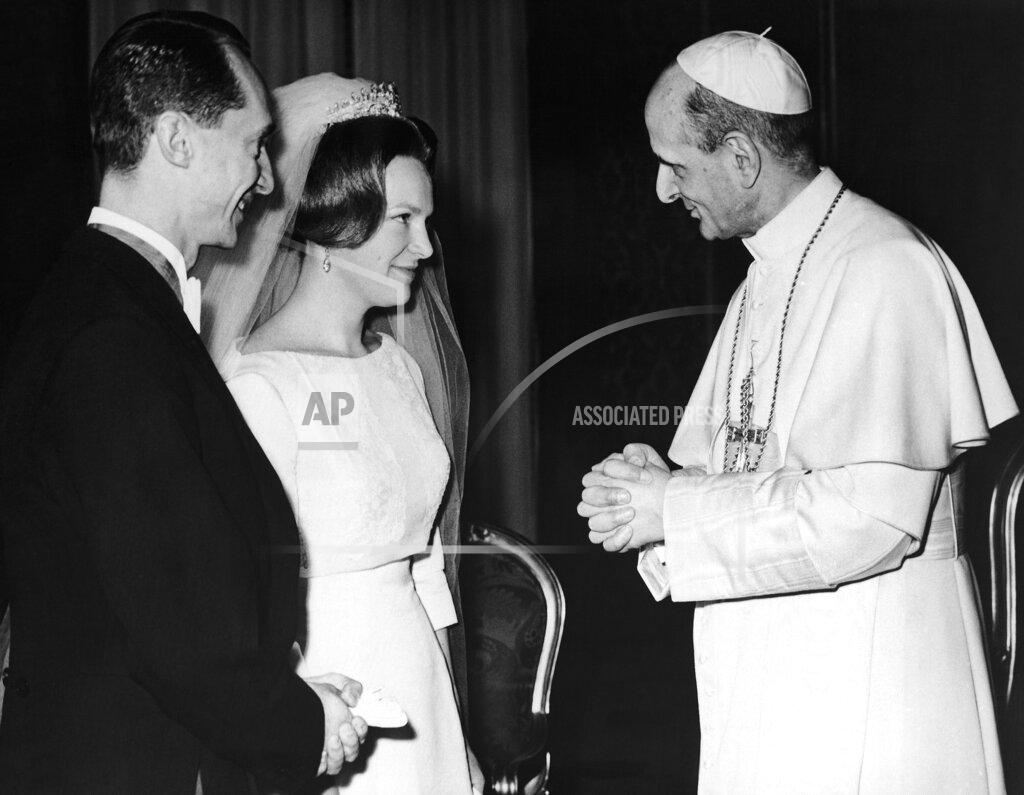
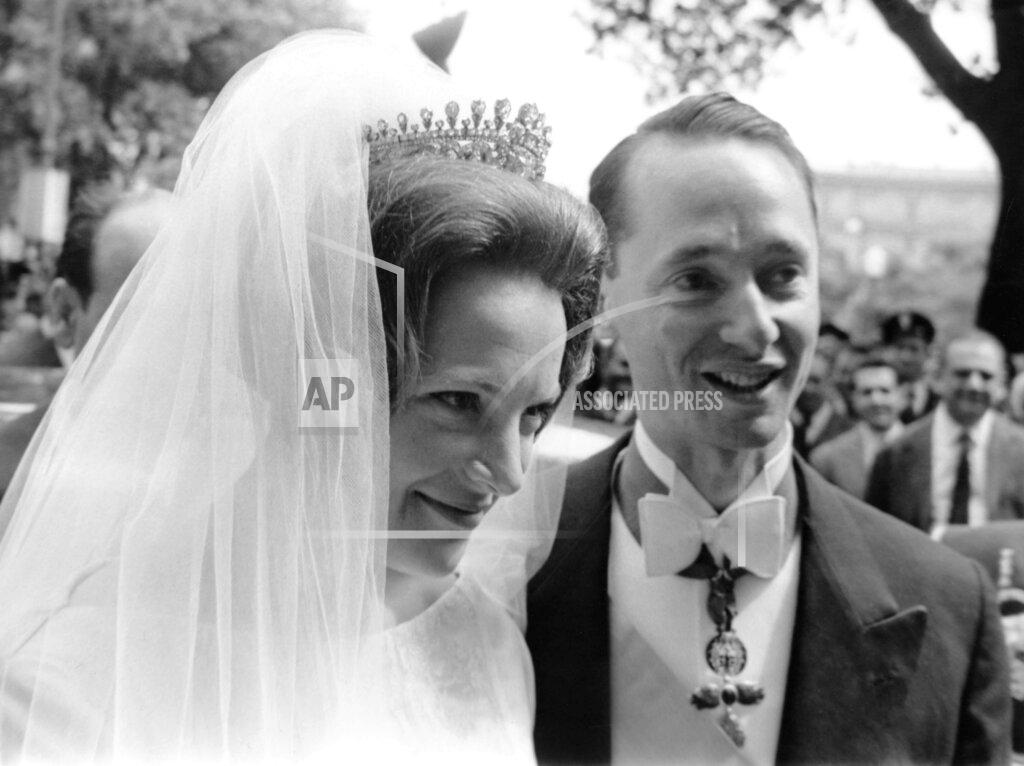
Princess Irene marries Spanish prince Carel Hugo de Bourbon Parma. Her Dutch royal family has cut all ties with her and does not attend the wedding.
The Senate Democratic and Republican leaders moved uncertainly and reluctantly today toward the imposition of closure on a jury trial amendment to the civil rights bill after Southern opponents of the bill refused to set a time for a vote on the amendment. The majority leader, Mike Mansfield of Montana, and the minority leader, Everett McKinley Dirksen of Illinois, said a petition to shut off debate on the amendment appeared to be the “only out” left them by Senator Richard B. Russell of Georgia, leader of the Southern forces. But they said they had not decided when the petition, requiring 16 signatures, would be filed.
And they conveyed the impression to reporters that they were leaving the door open for a compromise that would save face all around, achieve their objective of getting the Senate; started on voting on amendments, and avoid resort to closure. It appears from statements by the Senate leaders and Mr. Russell that both sides were engaged in a war of nerves. Yesterday, Mr. Dirksen told reporters that he and Mr. Mansfield were agreed on filing a closure petition unless the Southerners allowed a vote by next Tuesday on the jury trial amendment submitted by the Readers.
This amendment, offered as a substitute for one by Senator Herman E. Talmadge of Georgia, would allow a judge to decide whether a person accused of criminal contempt under the anti‐discrimination provision of the civil rights act should have a jury trial. But it provides that, in a trial without jury, the penalty must be no more than a $300 fine or 30 days in jail. The Talmadge amendment, on the other hand, would make a jury trial mandatory in all criminal contempt proceedings. Closure of debate requires two‐thirds of Senators present and voting. Mr. Dirksen said to reporters yesterday that while the civil rights forces did not have the votes for closure on the bill itself, they did have the votes to shut off debate on the jury trial amendment.
He said further that he had conveyed to Senator Russell the Georgian’s statement that there would be no vote on the amendment this week. He said he had asked Mr. Russell to consult his troops and then meet with him today. After an hour and a quarter caucus of the Southerners early this afternoon, Senator Russell said they had agreed on not yielding to “any threats or warnings,” and they would not be prepared “to enter an agreement” on a time for a vote. He said the Southerners were determined to debate the amendment the rest of this week, and did not regard this as “unreasonable,” since the leaders themselves had offered this “pale and colorless proposition,” this “judicial monstrosity.”
If Mr. Dirksen does not like this, Mr. Russell went on, “he will just have to file his closure petition.” On the other hand, he said, he is not trying to make Mr. Dirksen invoke closure; he hoped he would not do it; he did not rule out a vote sometime next week, and he would be glad to talk about this with Mr. Dirksen next Monday. Thereupon Mr. Russell went over to Mr. Dirksen’s office, and the two men were quickly joined by Senator Mansfield. The conference lasted 20 minutes. When Mr. Russell emerged his face was set and he declined to talk to reporters. The two leaders then came out. Mr. Dirksen said no agreement had been reached and the “only out” appeared to be a closure petition, but he and Mr. Mansfield had not decided when to file it.
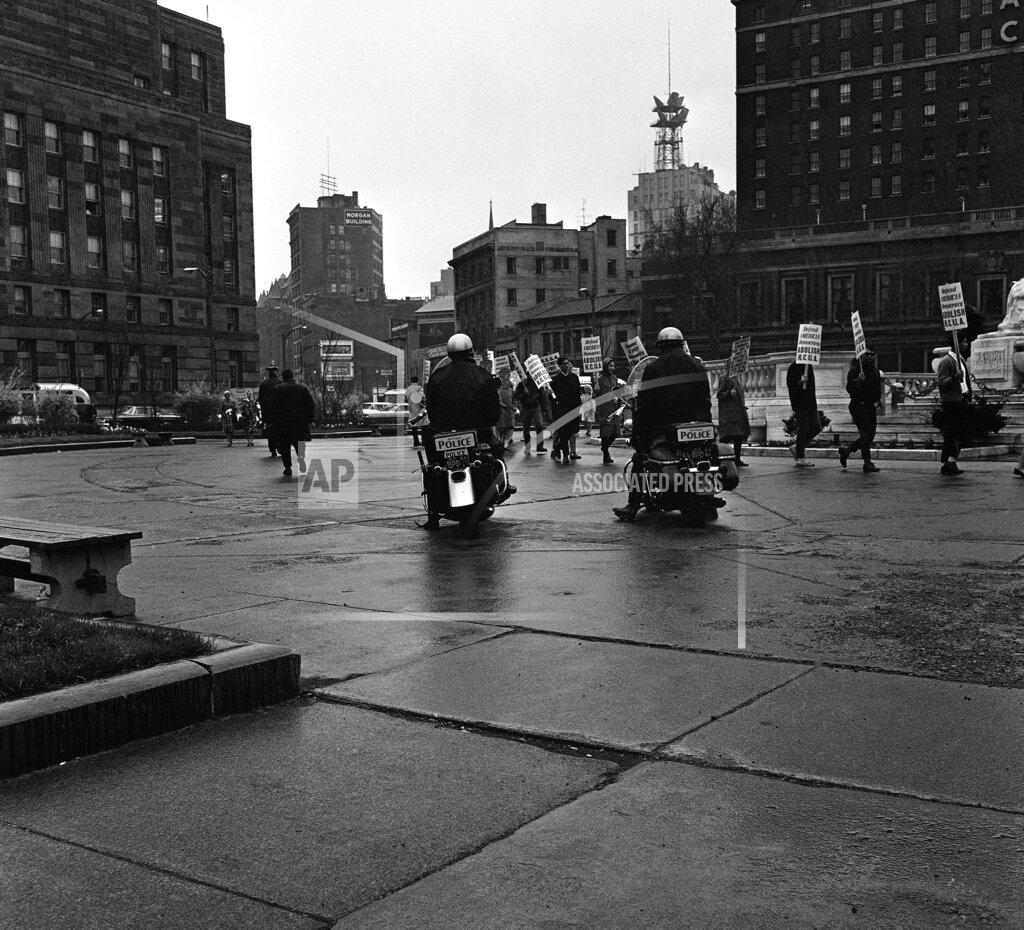
President Johnson today told Protestant, Roman Catholic and Jewish religious leaders that the churches and synagogues of America had a rare historical opportunity. This, he said, is to renew their purpose by reawakening the conscience of the white majority to “the hope for happiness of millions of Negro Americans.” Mr. Johnson summoned to the East Room of the White House 177 church officials and laymen who had participated in last night’s Interreligious Convocaton on Civil Rights at Georgetown University here. The President’s purpose was clearly to thank the 6,300 churchmen and churchwomen who had filled two halls on the Georgetown campus and overflowed into the parking lot outside McDonough Memorial Gymnasium at last night’s “Witness to Racial Justice.” The rally was hailed by civil rights backers in the Senate as a decisive gesture of support.
The President told today’s gathering that “this bill is going to pass if it takes us all summer, and this bill is going to be signed- and enacted, into law because justice and morality demand it.” And he implicitly credited the churches and synagogues with helping to make this possible. But the burden of his 15‐minute talk — some of the churchmen called it a sermon, and at least one punctuated it at the end with a soft “Amen” — was on the role of religion in “remolding social institutions” and “illuminating the dark places of the human heart.”
The General Motors Corporation reported yesterday the largest quarterly profits ever achieved by an American company. The General Motors report underscored the high level of the nation’s economy. It followed reports of record profits by scores of other corporations. A New York Times survey of 355 leading companies, published today, shows an aggregate jump in profits of more than 33 percent during the first quarter over those a year earlier. Total dollar earnings for the period also showed a new high for the period. During the first quarter of this year, G.M., which is the world’s biggest manufacturing enterprise, rolled up earnings of $536 million, equal to $1.87 a common share. That was a spurt of 29 percent over the profit of $414 million, or $1.45 a share, in the period of 1963.
The star of yesterday’s two primaries was Henry Cabot Lodge, an absentee noncandidate who looks more and more like the principal challenger of Senator Barry Goldwater for the Republican Presidential nomination. The Ambassador to South Vietnam polled 80 per cent of the votes cast in the preferential primary in his home state of Massachusetts and an unsolicited 21 per cent in Pennsylvania, where Gov. William W. Scranton, also a noncandidate, gathered 58 percent. Senator Goldwater’s popularity ratings were low in both states, but his managers laughed at Mr. Lodge and Mr. Scranton because they did not do as well in their home states as the Arizona Senator had done in his.
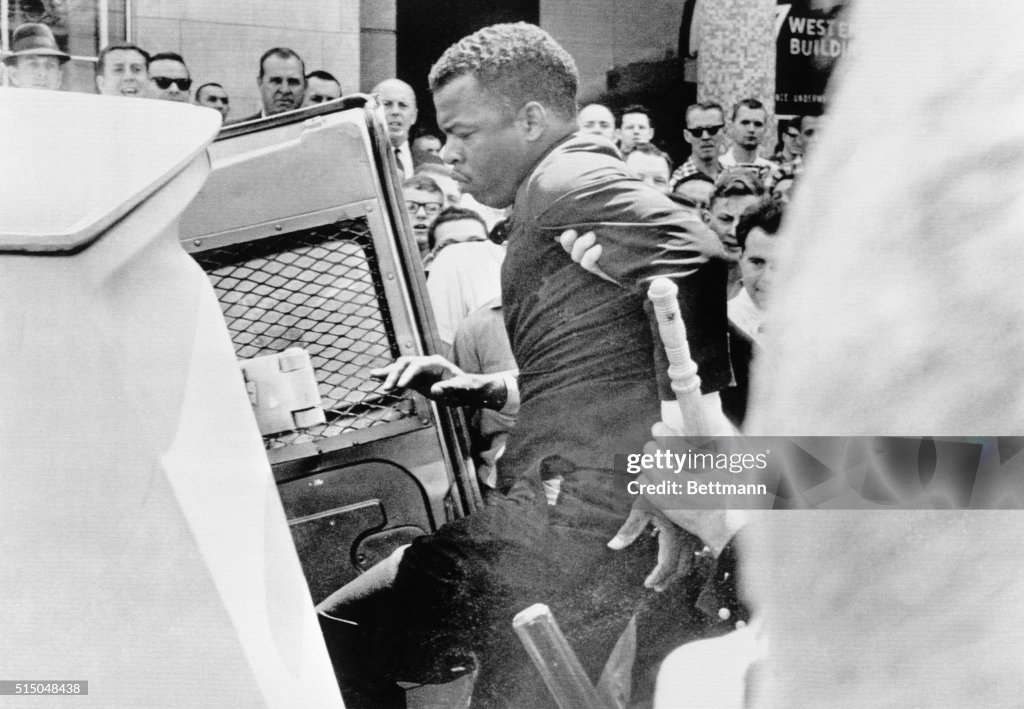
Hundreds of Notre Dame students opposing Governor George C. Wallace of Alabama staged a demonstration tonight that interrupted his speech defending segregation. The men students, some women students from nearby St. Mary’s College and a few nuns took part in the protest at a field house meeting. A crowd of 5,000 turned out to hear the Governor, a candidate in the Indiana Democratic Presidential preference primary May 5.
He was booed and hissed for more than an hour. Midway in his speech a shouting, pushing effort and walkout that included the singing of the integration hymn, “We Shall Overcome,” stopped him for 10 minutes. The students carried picket signs that said such things as “Christ made us all one race.” But the Alabama Governor, who said he thought segregation was best for most white and black races, also won rousing applause at some points. He never lost his composure. The meeting tonight followed a statement by faculty members calling Mr. Wallace the “current lightweight champion of segregation, and America’s number one racist.”
Senator Barry Goldwater asserted today that Governor Rockefeller and Harold E. Stassen, former Governor of Minnesota, were moving to “gang up on me.” He said his two rivals were promising voters they would swing their support to Ambassador Henry Cabot Lodge as a second choice for the Republican Presidential nomination. Campaign aides to the Arizona Senator informally expressed concern that talk to this effect might tend to influence wavering voters away from Senator Goldwater in the California primary. The primary, on June 2 is considered crucial in Mr. Goldwater’s contest with the New York Governor.
Governor Rockefeller, continuing his attack on Senator Barry Goldwater of Arizona, accused the Senator in Los Angeles today of “preposterous efforts to rewrite his own history and delude the voters as to his past positions.” If that is not the case, the Governor told a luncheon of Republican Associates here, then “the shocking thing is that Senator Goldwater, a candidate for the nomination for the Presidency of the United States, does not seem to realize or remember positions he has taken on the vital issues affecting our security and the security and well‐being of the free world.”
“The American people should not have to choose this November between continuation of this dismal record of Democratic failure on the one hand, and a program of irresponsibility and extremism on foreign policy on the other.” This remark drew the loudest applause of the Governor’s speech. But it is just such a program that Senator Goldwater has offered, the Governor said, by taking “positions which would have us quit the United Nations; would withdraw recognition of Russia; would let the NATO supreme commander decide when to use nuclear weapons without reference to the White House; oppose the nuclear test ban treaty; favor an end to foreign economic aid; and would send out the Marines to turn on the water at Guantánamo.”
The U.S. performs a nuclear test at the Nevada Test Site.
C. Howard Robins, Jr., and others in the MSC Advanced Spacecraft Technology Division formulated a tentative flight plan for using a Gemini spacecraft to link up with an orbiting vehicle to achieve a long-duration space mission (dubbed the “Pecan” mission). The two astronauts were to transfer to the Pecan for the duration of the mission. As with similar investigations for the application of Apollo hardware, the scheme postulated by Robins and his colleagues emphasized maximum use of existing and planned hardware, facilities, and operational techniques.
After seven days of technical problems, the first animatronics replication of a human being was unveiled to visitors to the New York World’s Fair, who watched the show “The Disneyland Story presenting Great Moments with Mr. Lincoln” at the Fair’s Illinois pavilion. The figure of former U.S. President Abraham Lincoln was programmed with “nearly 275,000 possible combinations of gestures and movements” that were synchronized with pre-recorded speech, and was the first product of Disney’s Audio-Animatronics engineering. After seven performances, however, “the lifelike electronic Lincoln” stopped working for the day.
The 1964 Cannes Film Festival opened.
Dow Jones Industrial Average: 812.81 (-3.89).
Born:
Federico Castelluccio, Italian-American actor (“The Sopranos”), in Naples, Italy.
Ken Jordan, NFL linebacker (Green Bay Packers), in Birmingham, Alabama.
Died:
J. M. Kerrigan, 79, Irish character actor on film and on stage.
Albert Saverys, 77, Flemish painter.


 History Diaries