Pro‐Communist Pathet Lao troops made a heavy attack last night on a right‐wing battalion holding Phou San, a ridge northeast of the Plaine des Jarres. Military sources said the Pathet Lao had occupied some of the ridge positions. Rightist forces succeeded in evacuating some wounded men from the area and 14 of the casualties were reported to have been flown to a Vientiane hospital. Other pro‐Communist units were reported maneuvering north of Muong Phanh, military headquarters of General Kong Le, commander of neutralist forces. It is believed the Pathet Lao may be aiming to cut the road north of Muong Phanh, eight miles west of the Plaine des Jarres. Western military sources said the Pathet Lao broke off their attack this morning. The positions captured on Phou San gave the pro‐Communists a commanding height over Highway No. 7, a key route that crosses the Plaine des Jarres and is one of the main routes to Vientiane.
It was considered likely that the Pathet Lao attack was a reaction to the right‐wing coup d’état of April 19 against the coalition Government. The pro‐Communist faction may be attempting to exert pressure on rightist forces for political reasons, or it may be exploiting rifts in right‐wing ranks to improve its military position before the rainy season begins next month.
The International Control Commission set up under the 1962 Geneva accords to police the cease‐fire in Laos began yesterday to investigate reports that the Pathet Lao had opened fire. The commission, which is made up of representatives of Poland, India and Canada, has a team stationed at Muong Phanh. The pro‐Communists evidently attacked last night following preliminary artillery fire. As for the reported movement of Pathet Lao units above Muong Phanh, that could have been intended to put pressure on the neutralists for political reasons. The pro‐Communists have been urging General Kong Le and his forces to abandon their ties to the right wing and join with them. Above Muong Phanh the road leads 12 miles north to a neutralist airfield at Muong Khoung. A report that Muong Khoung had been attacked was denied by qualified sources.
It was announced this morning that Prince Souvanna Phouma, neutralist Premier of the coalition Government, had sent a telegram to Prince Souphanouphong, his half‐ brother and leader of the Pathet Lao. The telegram suggested that the two men meet at neutralist headquarters, with the control commission providing security. The meeting would be to enable Prince Souvanna Phouma to explain what steps he was taking to meet the demands of the junta that staged the coup. Troops of General Siho Lamphoutacoul, the rightist security chief, and of General Kouprasith Abhay, the Vientiane provincial commander, have been in control of the capital since the coup.
The Pathet Lao denounced the Revolutionary Committee as illegal and refused to recognize any agreement between it and Prince Souvanna Phouma. Prince Souphanouphong has warned that the coup may result in intensification of the civil war.
More than 5,000 South Vietnamese soldiers, flown into action by United States helicopters, have battled their way into two Communist guerrilla strong‐holds in the rugged central highlands, Vietnamese military officials said today. Government losses were reported to be light, although 18 of 20 United States helicopters were hit by Communist groundfire and four of them and an AD‐6 Skyraider fighter‐bomber were shot down. Two Americans were wounded, one seriously. The Việt Cộng strongholds are Đỗ Xá and Mảng Xin, which have been under Communist control since the Indochina war against France after World War II. Government troops penetrated the area for the first time last year but were unable to wipe out Việt Cộng resistance. Major General Đỗ Cao Trí, commander of the Second Corps, said the battle began yesterday when wave after wave of troops flew into the area and fanned out in search of guerrillas. The operation is expected to last about two weeks, he added.
Government sources said the guerrillas held their fire when the first wave of troops landed. But heavy machine‐gun and small‐arms fire started as the second wave began unloading troops in the Mảng Xin area. The Vietnamese said two government soldiers had been killed and five wounded. In the Đỗ Xá area, believed to be the headquarters for the entire Việt Cộng effort in the central highlands, three government soldiers were wounded. A United States Army helicopter co‐pilot was wounded in the left leg and shoulder. He was flown to a nearby hospital. The other wounded American was a crewman aboard a United States Marine Corps helicopter. His wound was not serious and he returned to duty after treatment. United States sources said three of the four downed helicopters had been recovered. The fourth, which was shot down in the landing zone, was disassembled and was expected to be recovered.
The AD‐6 fighter‐bomber was shot down by machine-gun fire as it swept low, attacking guerrillas with machine guns and rockets. The pilot, uninjured, was rescued. Vietnamese and United States military spokesmen reported two other major clashes with the Communist guerrillas in which 19 government soldiers were killed and 34 wounded and 2 are missing. Việt Cộng losses were not reported. In one action, a government unit clashed with an unknown number of guerrillas in Phú Yên Province in central Vietnam. Four government soldiers were killed and 13 wounded and two are missing. In the other, in the Mekong Delta, Government troops battled the Việt Cộng in Chương Thiện Province, losing 15 killed and 21 wounded.
Father Augustine Nguyễn Lạc Hóa, founder of an anti‐Communist private army in South Vietnam, said today that he hoped to remain as an effective “spiritual leader” of his people despite the naming of a regular army officer to command his sector. He was unable to meet today with the new commander, Major Chương Chinh Quay, as he had hoped. Some sources said there was still a chance that the government’s order would be rescinded. The 56‐year‐old Roman Catholic priest’s successful anti‐guerrilla operations won him the support of the United States military mission here, as well as the jealousy of some South Vietnamese Army officers. Father Hóa’s area called the “Sea Swallow” (Biệt khu Hải Yến) sector, is a small fishing and rice‐growing corner of the Cà Mau Peninsula. The Communists dominate much of the surrounding area, but have been repulsed in the sector itself by about 1,200 soldiers whose principal loyalty is to the priest.
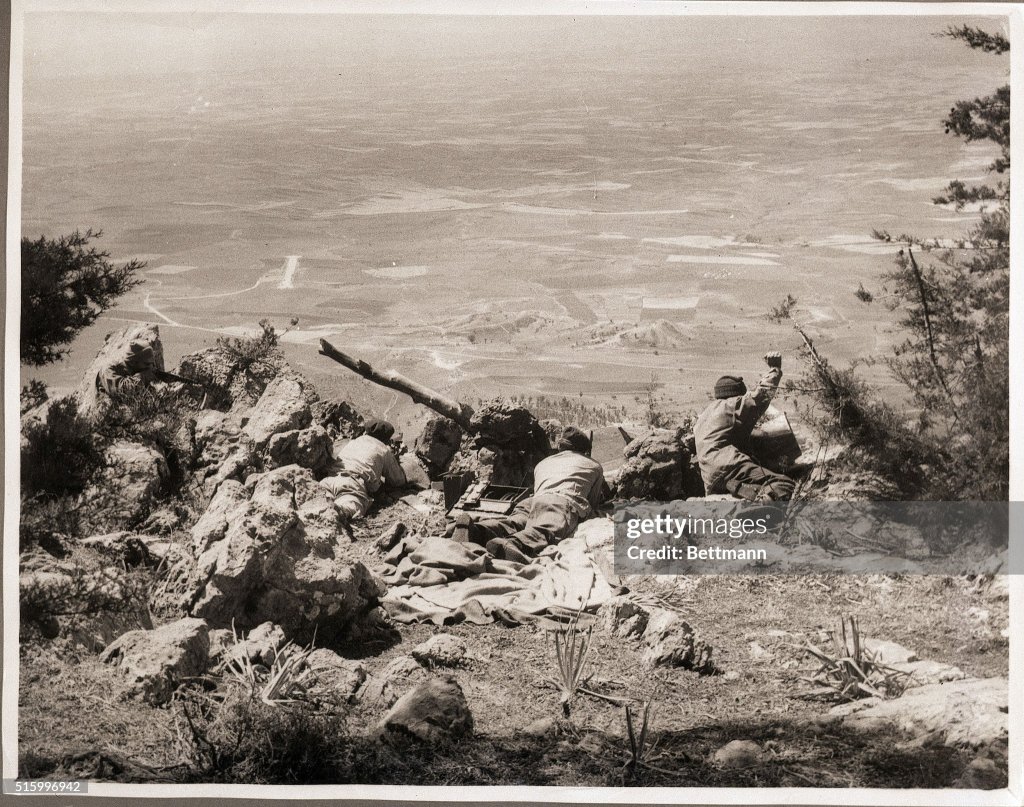
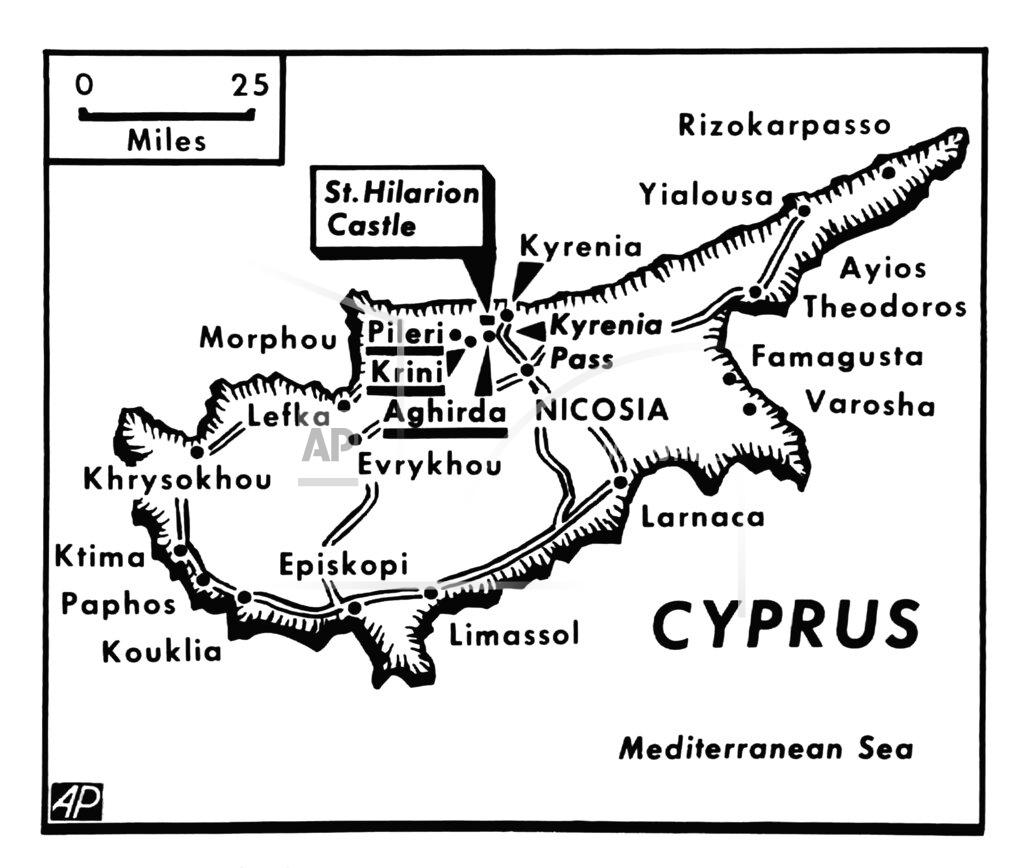
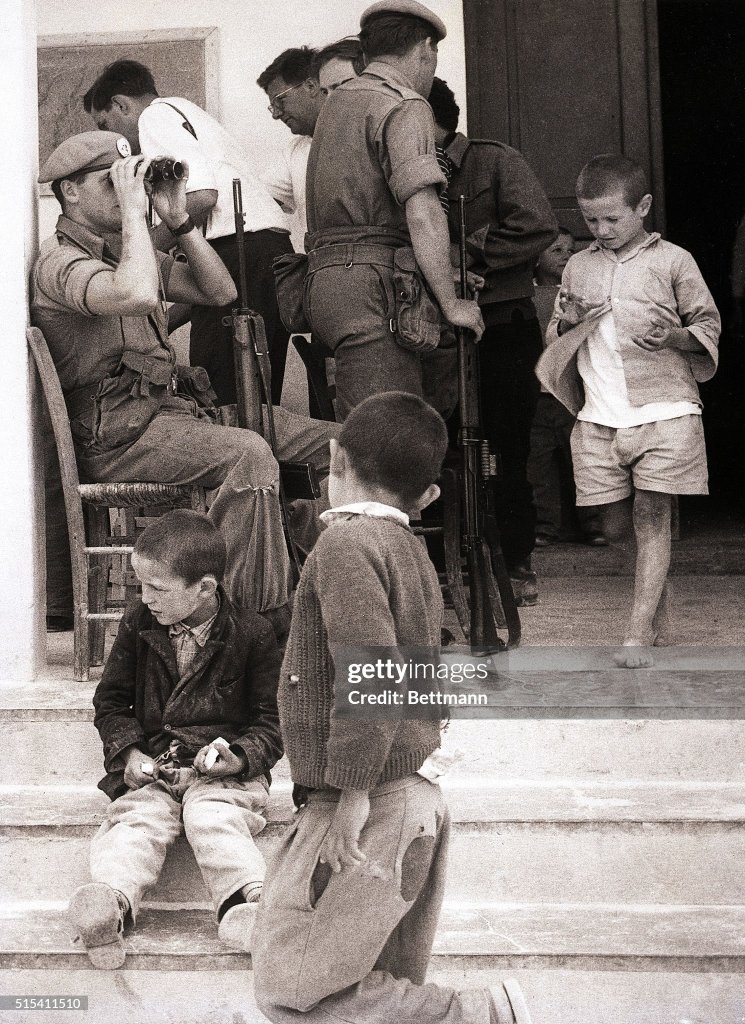
The commander of the United Nations police force administered what amounted to a rebuke to the Government of Cyprus today over the Greek Cypriote attack in the Kyrenia Pass area. Lieutenant General Prem Singh Gyani of India said the attack, carried out yesterday, could have “serious implications regarding the obligations of the Government and the role of the United Nations force.” General Gyani said he had discussed the attack with Archbishop Makarios, President of Cyprus, and had sent a full report to U Thant, Secretary General of the United Nations. Turkey was reported to have warned the Central Treaty Organization conference in Washington that Cyprus might become a “Cuba of the Mediterranean” unless the crisis there were resolved.
United Nations troops in the area have served essentially as observers in the fighting there in the last few weeks. It was believed that General Gyani may have asked Mr. Thant to reconsider this role in the light of yesterday’s attack, which the general said had come as “a complete surprise” to his force. The “obligations” the general spoke of were understood to refer to the request contained in the Security Council resolution on Cyprus, for the Government of Cyprus to promote law and order and halt violence and bloodshed on the island. Perhaps as a result of the vigorous representations understood to have been made by General Gyani yesterday to Archbishop Makarios and this morning to Polycarpos Georgadjis, the Cypriote Interior Minister, the fighting on the mountain range at the pass died down to a few mortar bursts and exchanges of sporadic fire.
General Gyani asserted that “the scale and the manner” in which the Greek Cypriote attack was carried out indicated it had been “pre‐planned.” The Turkish Cypriotes who hold the pass suggested today that General Gyani had given “his blessing” to the attack. However, the Turkish Cypriotes were understood to be pleased with the General’s statement, which was announced after their statement appeared. General Gyani is in mounting disfavor with the Turkish community, which suspects him of siding with the Greek community. The dispute between the two groups on the island produced new violence last December. It stems from Greek Cypriote efforts to limit the governmental powers of the Turkish Cypriote minority. Only a week ago a leading Greek Cypriote official said that the government would not undertake a military operation without informing the United Nations force in advance and asking the force to provide military observers to see that minimal military power was used.
The Soviet Communist party, for the first time, challenged today the legality of the leadership of the Chinese Communist party. The mandate of the Chinese party high command, headed by Mao Tse‐tung, expired several years ago, declared an editorial in the Soviet Communist party newspaper, Pravda. The paper charged that Mr. Mao was violating the statutes of his party by refusing to convene a party congress. It said that the Chinese leader, in this respect as in others, was following the example of Stalin, who, after the 18th party congress in 1939, did not convene another until 1952. The editorial was regarded by foreign observers as a major development since it could be used as a basis for challenging the rights of the Chinese leaders to participate in a conference of Communist parties, if such a conference were called. The Pravda editorial noted that the last congress of the Chinese Communist party was the eighth, convened in 1956. The statutes of the party call for congresses to he held every five years to elect a new Central Committee, Pravda added.
It charged that Mr. Mao, far from calling a congress in 1961 or at any date since, was continuing in power even though seven million new members had been added to the party. These members have not had an opportunity to express their opinion by electing congress delegates who in turn would choose a new Central Committee, the editorial continued. More than that, it added, Mr. Mao has changed the entire course of the Chinese party in the years since the last congress. Pravda said that the 1956 Chinese party congress adopted resolutions that closely parallel present Soviet policies on key points such as “peaceful coexistence,” disarmament, the banning of nuclear tests and the recognition of the principle of different roads to Socialism. The Chinese Communists have been attacking the Soviet Union on all these points since the Peking‐Moscow ideological conflict began in the late nineteen‐fifties and came into the open last year.
Japan became the first new member (and the first Asian member) of the Organisation for Economic Co-operation and Development (OECD) since its founding by 20 western nations in 1961.
Soviet engineers set off a massive conventional explosion as the first step of creating a canal through the massive landslide that had been damming the Zeravshan River since Friday. The dam, created by the toppling of a mountain peak into the river following an earthquake, was reported to be at least 150 meters (490 ft) high and up to 400 meters (1,300 ft) wide.
Four days after his tour of West Virginia and eastern Kentucky, President Johnson sent proposed legislation to Congress for what would become the Appalachian Regional Development Act, “a long-range program of economic rehabilitation of the impoverished 10-state Appalachian region”. In his letter to the President pro tempore of the U.S. Senate and to the Speaker of the House, Johnson wrote that the U.S. economic program had bypassed the 15 million residents of the mountainous areas “for reasons which are cheerlessly clear” and proposed a seven-point program for 2,350 miles of road improvement, construction of flood control, timber management and agricultural enhancement, reclamation of mined lands and modernization of safe mining practices, and vocational training.
The Senate Democratic and Republican leaders have decided to seek closure of debate unless the Southerners agree to vote by next Tuesday on the jury‐trial amendment to’ the civil rights bill. This decision was announced today by Everett McKinley Dirksen of Illinois, the Republican leader, after consultations with Mike Mansfield of Montana, the Democratic leader and with his own Republican colleagues. Mr. Dirksen stressed that if he and Mr. Mansfield found it necessary to file a petition to shut off debate, it would be directed only at the jury‐trial amendment and not at the whole bill. Under Senate rules, debate can be shut off only by two‐thirds of the Senators present and voting.
The two leaders have said repeatedly since debate began 42 days ago that they would make no move for closure until they were certain they had the votes. They estimate that the votes of 22 to 25 of the 33 Republicans would be needed. “This isn’t bluff,” Mr. Dirksen said, and then added, “I can count.” Mounting impatience over the Southern filibuster reached the breaking point at the decision of the Southerners’ leader, Senator Richard B. Russell of Georgia, to drag out for at least a week the debate over jury trials in cases of criminal contempt arising from the proposed civil rights act. A week ago today, Senator Herman E. Talmadge of Georgia, in a surprise move, introduced two amendments. The first would revise the criminal code to give any person accused of criminal contempt in violating a court order the right to a jury trial. The second would limit this right to criminal contempt proceedings arising from the antidiscrimination provisions of the civil rights bill.
The civil rights proponents thought the Southerners wanted this amendment because they were convinced that most Southern juries would not convict on charges of criminal contempt in civil rights cases. At the same time, the civil rights leaders believed in the principle recently announced by the Supreme Court that when a defendant is not permitted a jury in a criminal contempt proceeding, the penalty should be limited to that customarily imposed for a petty offense. Therefore, after consultation with the Justice Department, Senators Mansfield and Dirksen introduced last Friday a substitute for the Talmadge amendment. This would allow a jury trial in all relevant sections of the bill at the discretion of the judge. However, if the accused were tried without jury, the penalty on conviction could not be more than a $300 fine or 30 days in jail.
The Mansfield‐Dirksen proposal was similar to, but milder than, the jury‐trial provision in the Civil Rights Act of 1957. The Southerners were not entirely satisfied with that compromise, but did not contest it. Thus the two Senate leaders were aroused yesterday when Mr. Russell said that their substitute was “totally unacceptable,” and that “there will be no vote this week if we can prevent it.” Mr. Dirksen said that, after reading Mr. Russell’s statement on the news ticker, he conferred with Mr. Mansfield and then went to see Mr. Russell. Mr. Dirksen said he had told the Southern leader of the mounting irritation as the days passed without any voting on amendments. He warned Mr. Russell that Senators who ordinarily would oppose closure were in a mood to vote for it. Mr. Dirksen said he had asked Mr. Russell to talk the situation over with his followers and then meet again with him tomorrow.
American religious leaders demanded tonight that the Senate pass the civil rights bill. They invoked the name of God in calling for immediate enactment of the bill in its present form. More than 5,000 clerical and lay representatives of Protestantism, Roman Catholicism and Judaism took part in the demand. They overflowed the 3,800‐seat McDonough Memorial Gymnasium at Georgetown University and filled the seats at the university’s nearby Gaston Auditorium. Church historians said the rally — “a witness to social justice” — was unparalleled in the annals of worldwide religion. The rally, called the Inter‐religious Convocation on Civil Rights, was sponsored by the National Council of Churches, the National Catholic Welfare Conference and the Synagogue Council of America.
The churchmen called for prayer for passage of the civil rights bill — but that was not all. There were undisguised political implications in their appeal; and church spokesmen said that “not since Prohibition” had religion in this country “roused itself to political action for good or ill.” Speaking for Protestant denominations, the Rev. Dr. Eugene Carson Blake, stated clerk of the United Presbyterian Church, declared: “We will win this contest. New Federal legislation must and will be enacted, and the time is now.” Catholic and Jewish leaders also insisted on immediate passage of the bill to “end the moral crisis” in the nation and “to give complete expression, in terms of law, to our original vision and commitment.”
President Johnson told a group of leading businessmen tonight that the government might be able to cut taxes again in a few years. But, he warned, this cannot be done if inflation starts again. A second round of tax cutting, he said, will be possible “only if we behave ourselves this year.” This was the latest appeal of many made recently by the President to business and labor to hold the price line. But it was the first time he had held out the promise of additional tax reduction as a reward. The President’s talk was made to a group of the country’s leading business leaders who with their wives were dinner guests at the White House.
Henry Cabot Lodge’s undeclared candidacy for the Republican Presidential nomination picked up fresh vigor in two primaries yesterday. An expected victory in his home state of Massachusetts turned into a runaway. He also made a respectable showing in Pennsylvania, where next to nothing had been expected of him. Governor William W. Scranton of Pennsylvania, on the other hand, did not display the smashing popularity his volunteer managers had thought he would have in his home state. In Massachusetts, where no Republican came close to him, Ambassador Lodge even made inroads in the Democratic column.
Fourteen days after he was added to the FBI’s Most Wanted list, serial killer Joseph Francis Bryan, Jr. was spotted at a shopping center in New Orleans and arrested in the parking lot with an 8-year-old boy whom he had kidnapped from Humboldt, Tennessee the week before. Dennis Burke was the fifth young boy who had been abducted by Bryan in the past two months. The other four had been murdered. In the absence of sufficient evidence to support murder charges in the other four cases, Burke would plead guilty to the Tennessee kidnapping and be sentenced to life in prison.
Overcast skies today forced another postponement in a planned attempt to drop test a device called a “parasail,” designed to bring NASA space capsules to safe landings on land. The National Aeronautics and Space Administration said it would try again tomorrow to drop the controllable parachute and a full-scale model of the Gemini spacecraft from a plane flying two miles above Galveston Bay near Houston.
At Fenway, the Baltimore Orioles score 2 runs in the top of the 11th to take a 4–2 lead. Boston comes back in the bottom of the 11th to load to bases for Dick Stuart, who promptly ends the game with a grand slam.
In a see-saw battle in Minnesota, John Romano hits his second homer of the game in the 9th inning to give the Indians the lead, but Jimmie Hall answers in the bottom of the 9th with a homer to tie. Minnesota wins in the 10th, 9–8. Bob Allison has 3 hits and 2 walks and will finish the season with the best American League batting average at home with .342 (.241 on the road).
Dow Jones Industrial Average: 816.70 (+4.83).
Born:
Barry Larkin, MLB shortstop (Hall of Fame, inducted 2012; MLB All-Star, 1988-1991, 1993-1997, 1999, 2000, 2004; World Series 1990; NL MVP 1995; 3 × Gold Glove Award; Cincinnati Reds), in Cincinnati, Ohio.
Eric Nolte, MLB pitcher (San Diego Padres, Texas Rangers), in Canoga Park, California.
Brad Shaw, Canadian NHL defenseman (Hartford Whalers, Ottawa Senators, Washington Capitals, St. Louis Blues), in Cambridge, Ontario, Canada.
Ron Brown, NFL linebacker (Los Angeles Raiders), in Oroville, California.
Lady Helen Marina Lucy Windsor, British royal, only daughter of the Duke and Duchess of Kent, at Coppins, Buckinghamshire, England, United Kingdom.
L’Wren Scott [Laura Bambrough], American stylist and fashion designer, partner of Mick Jagger, in Salt Lake City, Utah (committed suicide, 2014).
Died:
Milton Margai, 68, Prime Minister of Sierra Leone since its independence in 1961. He was succeeded by his half-brother, Albert Margai.

 History Diaries