As Chancellor Hitler prepared to deliver today his anxiously awaited statement on the President’s recent truce plan, it was indicated at Hyde Park that the address would not be considered by this government as a formal reply. Speculation on the tenor and contents of Chancellor Adolf Hitler’s Reichstag speech tomorrow made but slight headway today, and information volunteered in official quarters was positive only in stating that the Chancellor probably would speak for two hours. While the occasion calls for a fighting speech, it will not resolve itself into a belligerent pronouncement as Herr Hitler, it was stated, has no interest in aggravating the existing international tension. His statement earlier in the year that he believed in a long period of peace still holds good, in the opinion of quarters close to the Chancellor.
The chamber in the Kroll Opera House received its final decorations tonight and the stage is now set for one of the most ceremonious and most colorful Reichstag sessions under the Nazi regime. If President Roosevelt’s message has stimulated world curiosity in tomorrow’s reply by the leader of the world’s most powerful authoritarian State, recent developments in Europe also call for the clarification of Anglo-German relations.
On the eve of the speech, which is expected to express the views of both ends of the Rome-Berlin Axis, Premier Mussolini suddenly summoned two of his Ministers for a conference, possibly to devise a way of increasing arms expenditures as a retort to British conscription.
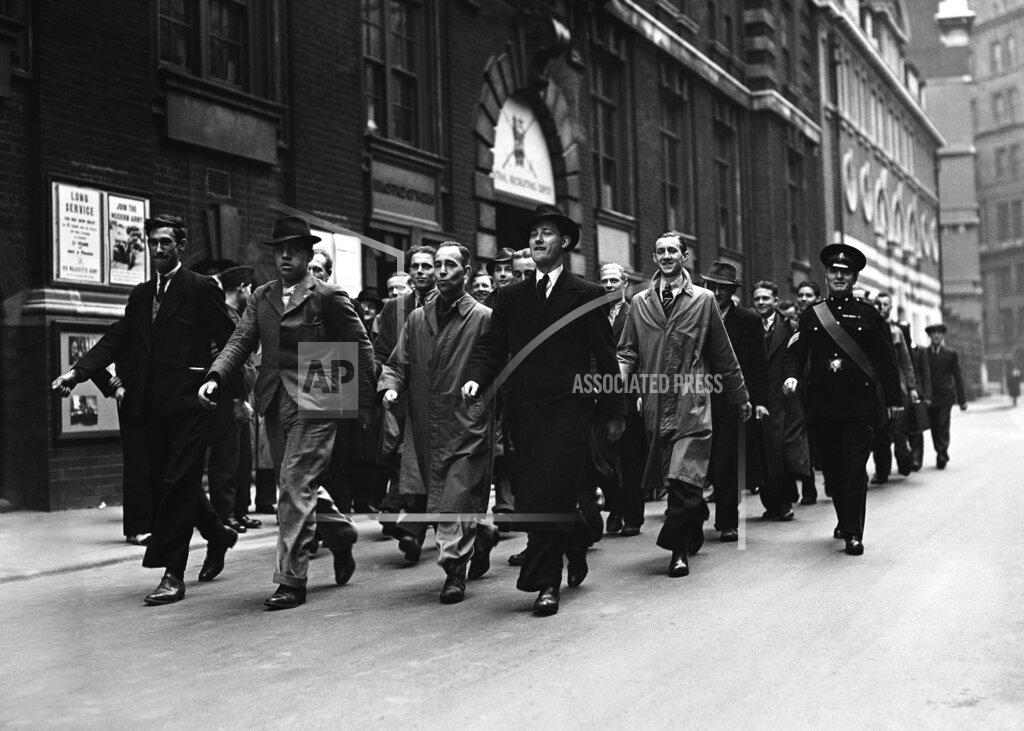
The conscription idea itself was upheld in the House of Commons by a vote of 376 to 145, after Prime Minister Chamberlain had indicated that the nation would draw upon the wealth of individuals in wartime. By the emphatic margin of 376 to 145 the House of Commons tonight approved the introduction of compulsory military training with all that it implies for the future of the easygoing, liberty-loving people of Great Britain. The House was in deadly earnest. Every member knew that tonight’s decision was a revolution in British life as it has been lived for centuries. In a sense, it was an advance answer to whatever threats. might come from across the North Sea tomorrow.
During today’s momentous session of Parliament, government spokesmen announced further measures of defense and determination. One was the decision to remove 1,500,000 persons from the list of exempted occupations, thus providing about 630,000 potential recruits for the Territorial army and about 870,000 potential volunteers for civilian defense services. Another was a decision to send King George and Queen Elizabeth to Canada aboard a liner, so as to keep the speedy battlecruiser HMS Repulse in European waters in case of emergency.
Still another was to appeal to veterans between 45 and 51 years to volunteer for four years special service with the Territorial army. Since April 1, War Secretary Leslie Hore-Belisha told the House tonight, recruits for all branches of the Territorials have been pouring in at the rate of 2,000 every day. Finally Prime Minister Neville Chamberlain announced that in time of war “the wealth and resources of individuals must be considered as being held for the common good, and they should be drawn upon as required.” He hinted that there would be a levy on all wartime increases of wealth, coupled with drastic penalties for profiteering of any kind.
While the conscription move fortified the morale of the French as they awaited the Hitler speech, it pointed to complications in Ireland that caused Premier de Valera to cancel his proposed trip to the United States.
In the diplomatic field there was every indication that Russia had swung into line with the. Anglo-French combination and discussion appeared to be proceeding on what would be expected of her in case of war.
President Roosevelt sounded out Benito Mussolini, and through him Adolf Hitler, on a plan to meet him last year at sea, or near some neutral island such as one of the Azores, and they rejected the idea. The President’s purpose was to learn from the dictators at first hand their minimum terms for pledging lasting peace and, if he found these practicable, to offer his services as intermediary. This disclosure completes the evidence that, far from provoking the situation in Europe, the President was prepared to risk his political future in the interest of world peace.
On behalf of the President, it was suggested that each of the three statesmen board a naval vessel and come privately together for the unprecedented conference. The message was delivered to Signor Mussolini through an agent of Mr. Roosevelt. It is understood here that the Duce transmitted it and was informed that the Führer could not arrange to leave Europe for that purpose even if he believed a settlement could come of it.
Premier Eamon de Valera announced in the Dail Eireann this afternoon the cancellation of his visit to the United States. It was evident that the Irish leader did so with very great regret. Since becoming head of the Irish government in 1932, Mr. de Valera has been looking forward eagerly to the prospect of visiting the land of his birth in an official capacity. Only the serious developments in the European situation, which necessitate his presence at home, influenced Mr. de Valera’s eleventh-hour decision not to board the President Harding at Cobh (Queenstown) Saturday morning. “Certain grave events which occurred yesterday have, however, changed the situation and I have deemed it necessary to alter my plans and postpone my visit,” the Premier continued. “I would like to add that I feel extremely grateful to President Roosevelt and the American people for their invitation to me as the representative of the Irish nation and for the preparations they had made to receive me.”
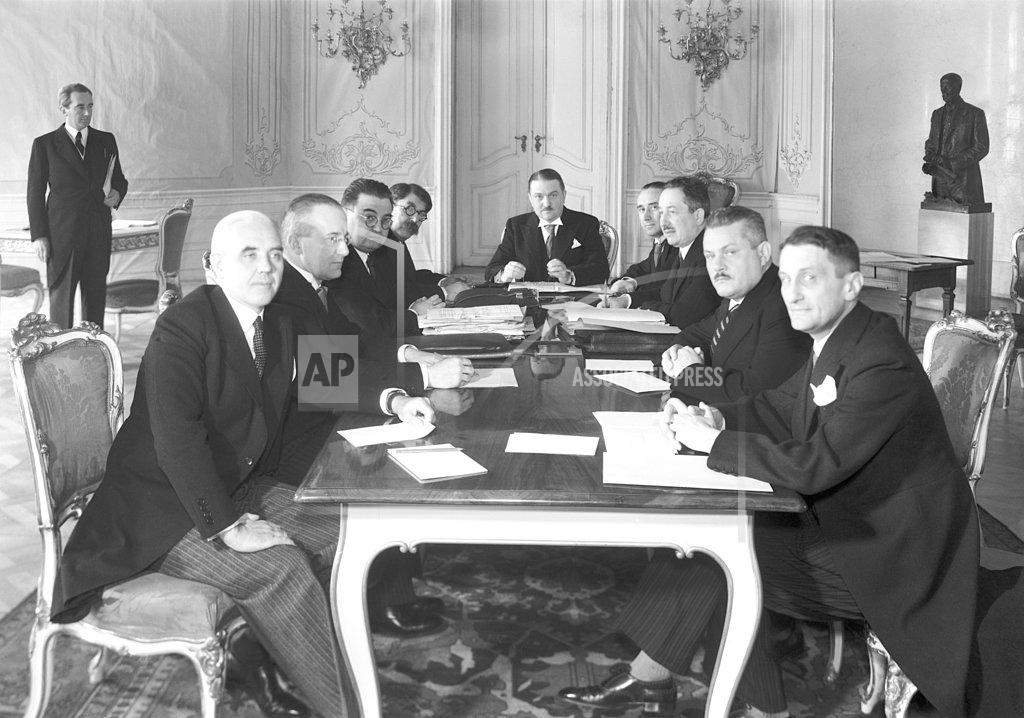
The German Protectorate of Bohemia-Moravia gets a government. General Alois Eliash is the new Premier, appointed by President Emil Hacha.
After three days of conferences with German leaders in Berlin, the Yugoslav Foreign Minister, Alexander Cincar-Markovitch, left for Belgrade tonight. At the Friedrichstrasse station to bid him farewell were the leading members of the German Foreign Office, headed by Foreign Minister Joachim von Ribbentrop, and also the Italian Ambassador. Informed quarters expressed “eminent satisfaction” with the results of the conversations between M. Cincar-Markovitch and the Reich Government, particularly the “similarly close relations” existing between Italy and Yugoslavia. Emphasis also was placed on the agreement reached between Dr. Vladimir Matchek, the Croat leader, and the Yugoslav Premier, Dragisha Cvetkovitch, yesterday which, it was stated, could mean only the increase of the internal strength of the Yugoslav nation and “add increased meaning to the conversations just concluded here.”
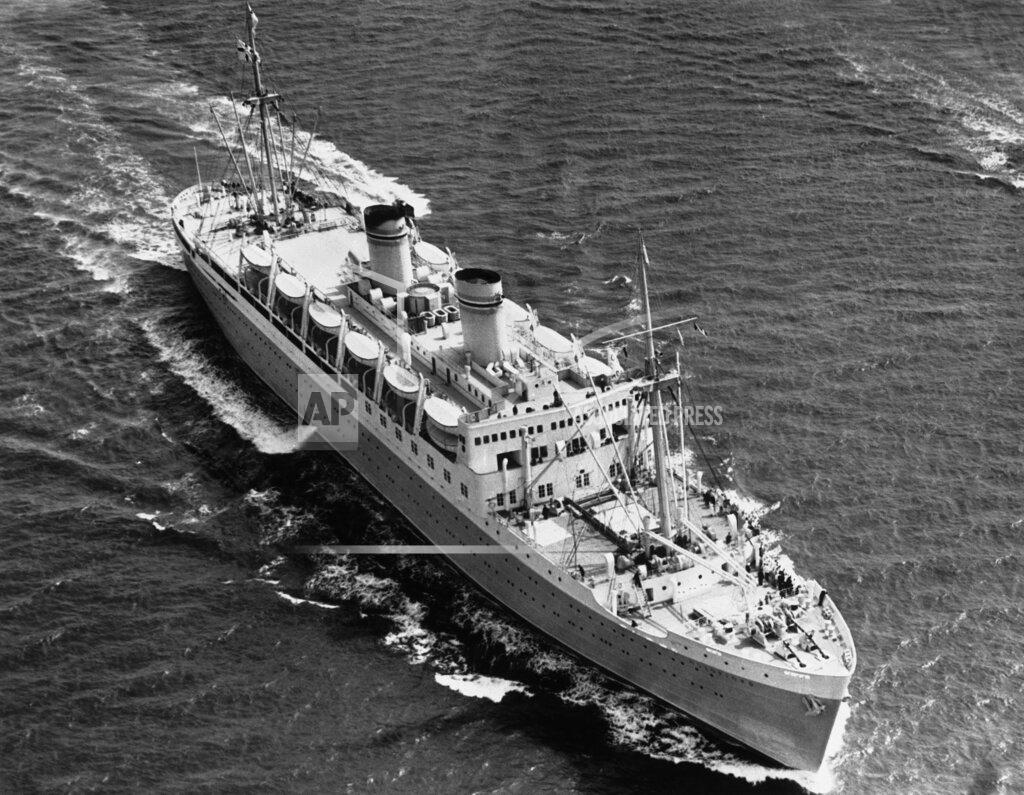
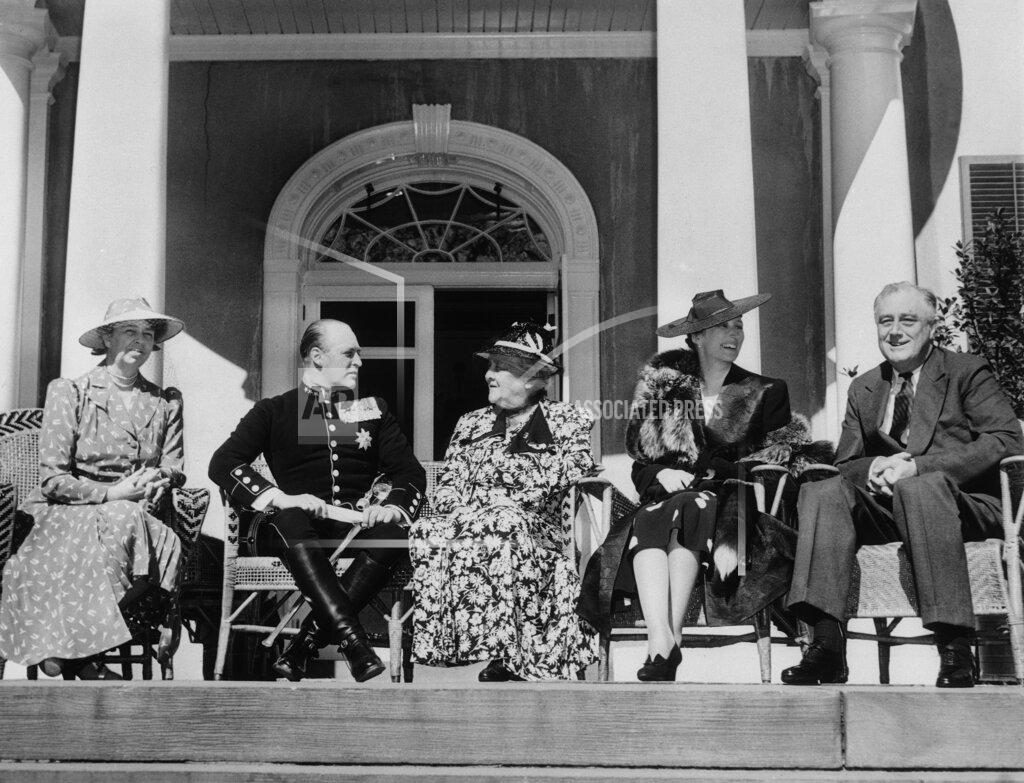
Away from home for the first time on a trans-Atlantic visit, the 35-year-old Crown Prince Olav of Norway and Crown Princess Martha arrived in New York yesterday after a series of trials which had no visible effect on their enthusiasm. On their arrival the harbor was draped in a fog that caused several mishaps, one major and a couple. of minor ones, but through it all they smiled and rushed to fulfill a schedule that had been disrupted.
Because of the fog and because the Norwegian America liner Oslofjord on which they arrived rammed and sank a pilot boat about one mile outside Ambrose Channel at 6:24 AM — the prince was in his bath at the time — they reached the Battery nearly two hours late, but Prince Olav got through a municipal greeting with all honors in time to be reasonably punctual at a luncheon at the Bankers Club shortly after 1 PM. The Oslofjord, creeping through the fog despite an engagement between Mayor La Guardia and the royal party at City Hall at 10 AM, ran into the pilot boat Sandy Hook and sank it. Thereafter caution was redoubled.
Brigadier General George C. Marshall, Deputy Chief of Staff of the Army, was named as the next Chief of Staff by President Roosevelt today. He will succeed General Malin Craig, who will retire from active service at the age of 64 on August 31. General Marshall, 58, and a graduate of the Virginia Military Institute, will be the second officer not a West Pointer to get the highest post in the army. The other was Major General Leonard Wood, who was made Chief of Staff by President Theodore Roosevelt. In naming General Marshall, President Roosevelt passed over twenty major generals and fourteen brigadiers. The appointment will give General Marshall the rank of full general.
A resolution intended to give the President authority until May 1, 1940, to embargo exports to or imports from Japan or any other violator of the Nine-power treaty was introduced today by Senator Pittman, chairman of the Foreign Relations Committee. He said he had taken his step without consulting the White House or the State Department. Secretary Hull made a similar statement at his press conference a few minutes later. The proposed Presidential action would not be taken against Japan, for example, as an “aggressor,” but because “such State is endangering the lives of our citizens or depriving them of their legal rights and privileges through the commission of acts or through failure to perform acts in violation of the express provisions and guarantees in said treaty.” The resolution would give to the President broader powers than Congress has been willing to grant in the “neutrality” statutes of the last four years. The only exports he would be forbidden to embargo would be agricultural products, a concession to those who would not desire to face charges of “starving Japanese women and children.”
President Roosevelt requested Congress today to appropriate $1,750,000,000 to finance the 1940 fiscal relief program. Of the amount $1,477,000,000 would go to the Works Progress Administration to care for slightly more than 2,000,000 persons. The President used the message. as a vehicle for an attack on pending proposals in Congress to change the relief organization. He advocated that the money be spent along the lines pursued by the WPA in recent years, including “white collar” as well as construction projects.
The message did not weaken the determination of the sponsors to proceed with relief changes. Senator Byrnes asserted that he would press for passage of his proposals for revamping the relief mechanism. Representative Woodrum of Virginia, author of a House bill to turn relief back to the states with federal assistance, indicated that he would pursue the investigation of the WPA by his Appropriations subcommittee to the end that facts adduced might guide the House in determining its future relief policy. Aside from the funds requested for the WPA, Mr. Roosevelt asked $123,000,000 each for the National Youth Administration and the Farm Security Administration and $1,350,000 for the Indian Service. In addition, he asked for $25,650,000 for various agencies for expenses incident to the administration of relief.
Included in the message was a request for $12,490,000 for continuation of three agencies closely allied with the relief set-up. The President asked $1,500,000 for the National Emergency Council, $990,000 for the National Resources Committee and $10,000,000 for the Puerto Rico Reconstruction Administration. The total requested in the message was $1,762,490,000. The amount is one-third less than funds appropriated for the same purposes in this fiscal year. The sums asked produced little unfavorable reaction in Congress. There was little comment on the message among the members. A Senator who was asked about the sum requested for the WPA said, “That sounds all right, but who is going bond that it stays at that figure?”
Chief Congressional interest in the message was over the attacks on the pending proposals for changes in the relief program. Mr. Roosevelt asked that the present system be carried through another year, asserting that those. who talk “glibly and without much Information” about cutting down relief costs were obliged to admit, “when pinned down.” that the only ways to reduce the costs were to out down the number of persons on relief or to reduce the per capita work payments. The President criticized both Mr. Woodrum’s measure and Senator Byrnes’s proposal. Grants to States, as suggested by Mr. Woodrum, he said, would produce inefficiency and confusion and would encourage pressure groups who would attempt to increase the amount of grants.
Development of an inter-regional highway system embracing 26,700 miles was recommended to Congress for study today by President Roosevelt. No estimate of probable cost was included in the recommendation, which was buttressed by a report covering several hundred pages, prepared by the Bureau of Public Roads in cooperation with the War Department. The President commended the report, which was unprecedented in its scope, for its delineation of a program “designed to meet the requirements of the national defense and the needs of a growing peacetime traffic of longer range.”
Immediate interest was aroused in the report by the mention of the defense angle, coupled by the President with the statement that “corrective measures of greatest urgency” were involved, but it appeared improbable that Congress would act on the recommendations at this session. While recommending this vast road development, combining new construction with utilization of existing highways, the President and the bureau’s report joined in frowning on proposals for the construction of superhighways to be operated on a toll basis.
“It shows that there is need for superhighways,” the President said of the report, “but makes it clear that this need exists only where there is congestion on the existing roads, and mainly in metropolitan areas.” Such superhighways, the report estimated, would cost $2,899,800,000 for 14,336 miles of this type proposed in pending legislation.
Figuring the average annual outlay for construction and maintenance of this system at $184,054,000, the bureau estimated that revenue of only $72,140,000 could be expected, on the basis of charges of 1 cent a mile for private automobiles and 3.5 cents a mile for buses and trucks. These figures were stated by the report to lead to the conclusion “that the system studied could not be supported by toll collections.”
Senator Robert A. Taft of Ohio, who is frequently mentioned as a possible Republican Presidential candidate in 1940, urged some 1,500 members of the American Newspaper Publishers Association at their closing dinner in the Hotel Waldorf-Astoria last night to spread an appeal “to the people.” He declared that President Roosevelt and Congress had already pushed governmental expenditures above a safe level and that “the great majority of Congressmen and Senators realize that the present condition cannot continue.” He also said, however, that he did not see much likelihood of any great change in the next year because of “divisions of political groups in Congress.”
“Unless we are prepared to wreck the United States,” he continued, “we must find someone to say to the people and to Congress that the government has certain limitations beyond which it cannot tax without choking all industry, and that the expenditures must be brought within that limitation. There is hardly one government activity for which a magnificent argument may not be presented, and if that project is considered without any relation to the entire picture, Congress is likely to adopt it.”
President Roosevelt asks employers to revamp hiring policies to ensure fairness to those aged 40 and up.
With painters, carpenters and other artisans putting the finishing touches on buildings and exhibits, gardeners planting trees and shrubbery, laborers carting away debris, concessionnaires opening hot-dog stands and guards and ushers drilling in brand-new uniforms, the 1939 New York World’s Fair began to take on its final colors yesterday for the opening on Sunday. The last-minute drive to get the Fair ready saw between 30,000 and 40,000 men working on the streets, buildings and exhibits, with the prospect that by Sunday there will be 50,000 on the job. Thousands are working all night on extra shifts, and it is expected that their number will be increased tomorrow night for a final all-night effort.
After several days of rain and cloudy weather, which handicapped the work on exterior jobs, the sun came out yesterday afternoon and the Fair management is hoping for clear weather for the next three days. After the Fair opens no automobiles will be allowed in the grounds except the official Fair buses, but yesterday trucks and automobiles sped back and forth with equipment and supplies in such numbers, and so rapidly that pedestrians had to keep a sharp watch to avoid being bumped.
Following a visit to the Fairgrounds Wednesday by Colonel Edward Starling of the United States Secret Service, which has charge of guarding the President, it was learned yesterday that the plans for the President’s visit to preside at the official opening Sunday had been altered. Instead of riding through the whole Fairgrounds in his automobile, the only motor car to be allowed within the gates, it was said he would go directly to the United States Federal Building, from which he is to deliver his address, from a gate nearby, and leave by the same gate immediately after finishing his speech.
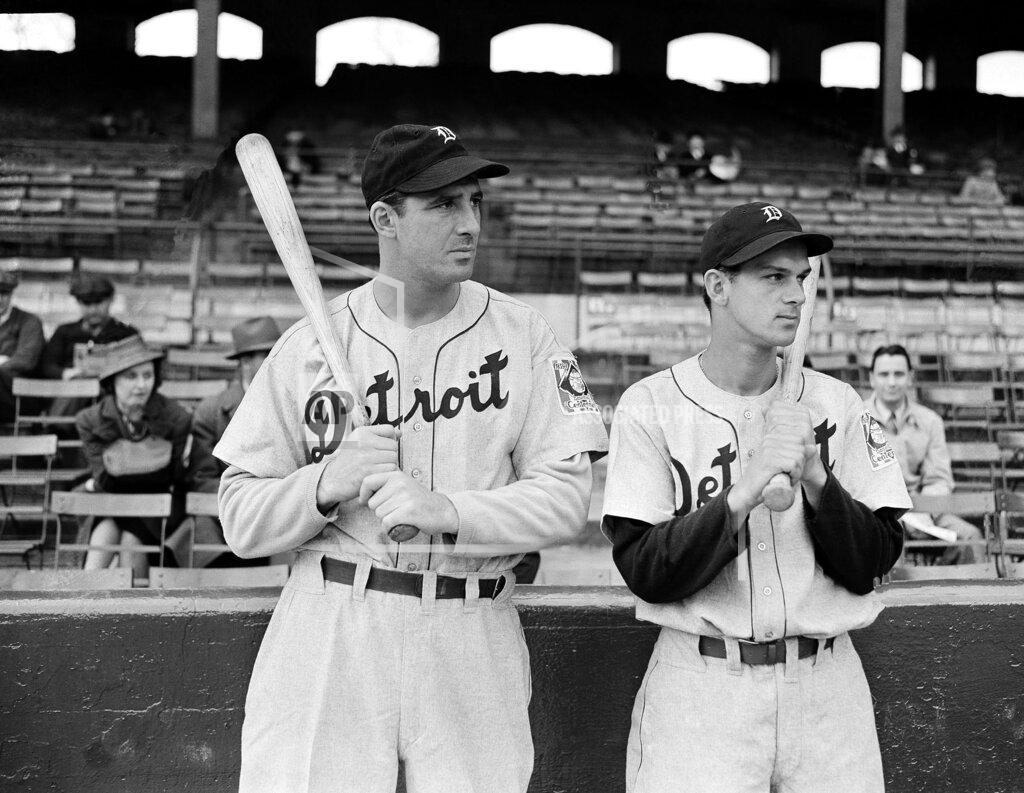
The Reds snap a 3–3 tie with 8 runs in the 8th to beat the Cubs, 11–3.
Ben Chapman hits a grand slam to pace the Indians to a 7–4 win over St. Louis.
Japanese troops counterattacked against the Chinese offensive at Nanchang, Jiangxi Province, China, engaging in combat south and southeast of the city.
The Japanese Army announced today that additional troops “in considerable numbers” were being landed in the vicinity of Tientsin for use on various North China fronts against Chinese irregulars. Independent sources said one division of 20,000 men was arriving. Chinese close to Japanese Army circles said a great Chinese offensive was expected by the Japanese early in May.
Rumors of peace talks between China and Japan were scouted by Wang Chung-hui, Foreign Minister, in an interview today. Mr. Wang denied that the British Ambassador, Sir Archibald Clark Kerr, was here to attempt mediation. Reports of peace discussions uniformly originate in Japanese sources, he said. “There is no doubt,” he asserted, “that the Japanese want to extricate themselves from their unsuccessful adventure in China. So far, they have refused to modify their terms. They still insist on the Konoye declaration of December as a basis of settlement.”
“China still opposes as firmly as ever the Konoye terms,” he declared. “Our attitude continues to be based on the Nine-Power treaty. We reject economic and anti-Comintern ties with Japan and insist on our sovereignty, integrity and freedom to trade with all countries.” Turning to Europe, the Foreign Minister stressed that it was China’s desire to see peace maintained. He showed a keen interest in the neutrality legislation discussions in Washington, expressing the hope that provisions would be adopted not penalizing China through application of the “cash-and-carry” principle.
Australia’s new Prime Minister, R.G. Menzies, appeals to the country to take full part in affairs of the area, stressing defense tasks.
Dow Jones Industrial Average: 129.78 (+1.22).
Born:
Judy Carne, actress (“Laugh-In”, “Love on a Rooftop”), in Northampton, England, United Kingdom (d. 2015).
João Bernardo Vieira, President of Guinea-Bissau (1980-1999, 2005-2009), in Bissau, Portuguese Guinea (d. 2009).
Naval Construction:
The U.S. Navy Tambor-class submarine USS Thresher (SS-200) is laid down by the Electric Boat Co. (Groton, Connecticut, U.S.A.).
The Royal Navy Fiji-class (Crown Colony-class) light cruiser HMS Ceylon (30) is laid down by A. Stephen & Sons Ltd. (Glasgow, Scotland).
The Вое́нно-морско́й флот СССР (ВМФ) (Soviet Navy) “S” (Stalinec)-class (2nd group, Type IX-modified) submarine S-32 is launched by the Marti Yard (Nikolayev, U.S.S.R.) / Yard 198.
 History Diaries