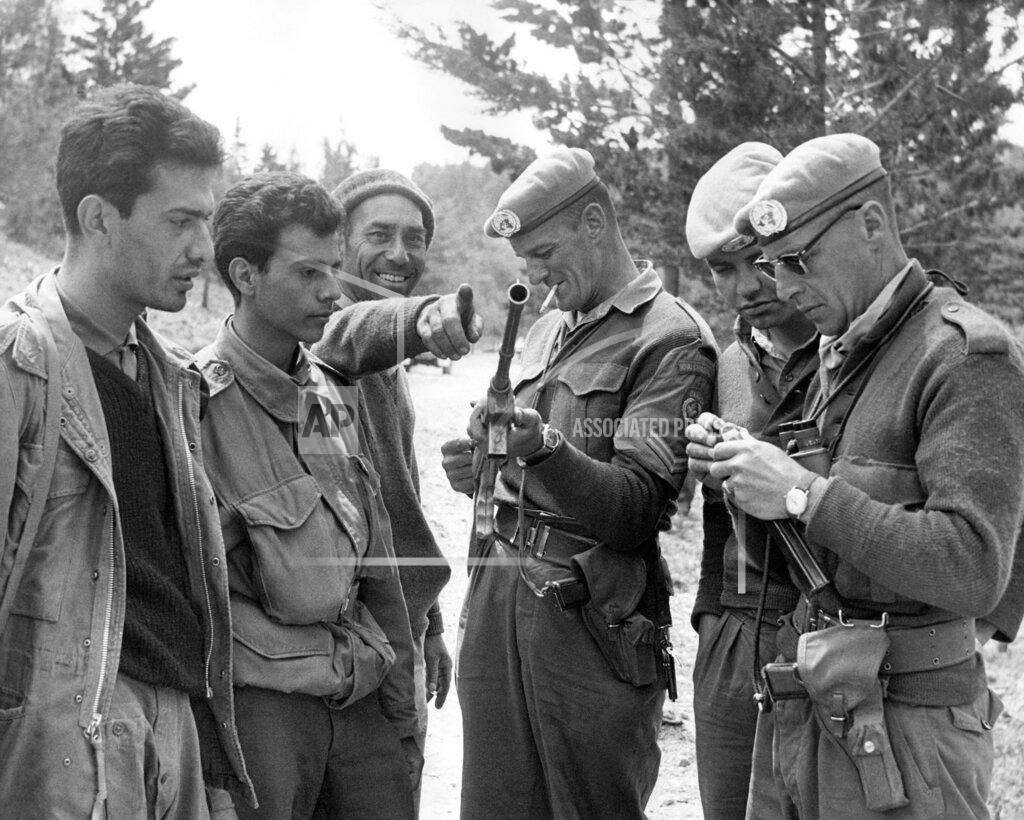
Greek Cypriote security forces, directed personally by the island’s Interior Minister, appeared tonight to have begun a strong drive to capture St. Hilarion Castle and the strategic Kyrenia Pass from the Turkish Cypriotes. Although reports were confused, it seemed evident that Greek Cypriote troops were moving toward the castle from the west and the northeast. There was heavy firing in the area. Mortars were in use and there was a report that a shell had hit the ancient Crusaders’ castle. The Interior Minister, Polycarpos Giorkadjis, was directing the security forces as they moved against Turkish Cypriote positions defending the approaches to the castle. Mr. Giorkadjis was a leader of the E.O.K.A., an underground group during the resistance to British rule up to 1960.
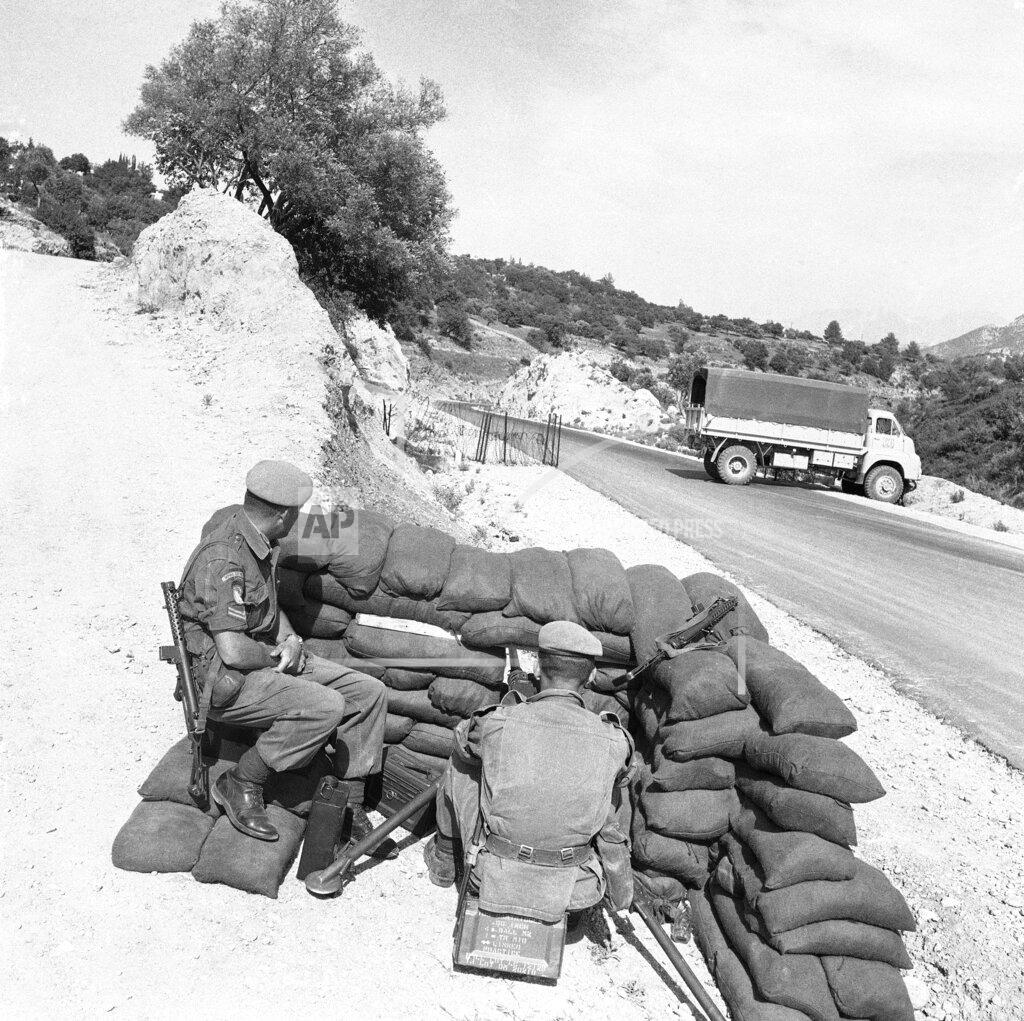
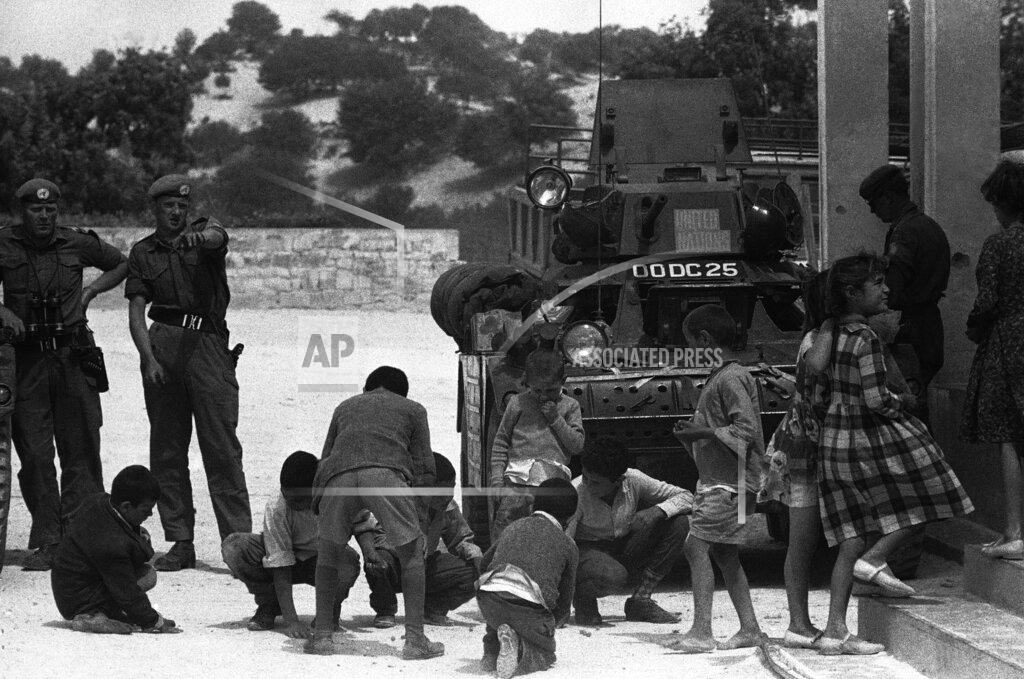
The Greek Cypriote forces overran Turkish Cypriote positions west of the castle before dawn Saturday. Then they halted their advance about two miles from the castle by road, but only half a mile from it by line of fire. Some reports said the Greek Cypriote forces advanced a mile along the road this afternoon and evening. Other reports said they had failed to seize any new ground. To the east of the castle, where the western spur of the mountain range drops down to the Kyrenia Pass, Turkish Cypriote positions also were under fire. Greek Cypriote troops apparently were climbing the northern slope of the range to clear the Turkish Cypriote posts in that sector. Members of the United Nations peacekeeping force were in the area, but were not interposing themselves between the opposing sides because, a spokesman said, “this would serve no value and only result in their getting shot at.” So far there have been no reports of casualties.
Canadian troops in the sector reported that the Turkish Cypriotes had been observed carrying dynamite to the pass. This led to speculation that they planned either to blow up the castle or to block the pass. A 650‐man Turkish Army contingent is based at Guenyeli, on the road midway between Nicosia and the pass. It is stationed in Cyprus, as is a larger Greek army force, under one of the 1960 agreements that gave Cyprus her independence. Archbishop Makarios, President of Cyprus, has denounced this treaty. At the southern village of Ayios Theodhoros, firing also continued, but sporadically. Negotiations between the United Nations and the Greek and Turkish Cypriote leaders resulted in the withdrawal of some of the Greek Cypriote security forces from the hills overlooking the hamlet.
A Việt Cộng terrorist tossed a grenade last night into a civilian recreation center at Rạch Giá, 120 miles southwest of Saigon. Three American military personnel and four Vietnamese were injured. It was the second anti‐American incident of its kind in 10 days. Witnesses said the terrorist appeared at the open door of the club, threw the grenade, then vanished. The explosion shattered the clubroom. The Americans were flown to Saigon, where their condition was described as good. They were an Army officer, a naval officer and a petty officer.
A Roman Catholic priest, whose irregular military methods have carved out a safe haven for his followers in the Communist‐dominated Cà Mau Peninsula, has been deprived of the command of his private army. A major of the South Vietnamese Army has been named commander of Father Hoá’s area, called the Hải Yến, or “Sea Swallows,” sector. The sector, near the Gulf of Siam, has long been a showplace, an example of what highly motivated counterinsurgent operations could accomplish against the Communist guerrillas. The appointment of the commander, Major Chương Chính Quay, came quietly about 10 days ago. Father Hoá, who came here from China, confirmed today that he had in effect been supplanted and might have to leave Vietnam. American officials who have strongly supported the priest’s antiguerrilla activities expressed deep concern at what might happen if his army was broken up.
Father Hoá has made two trips to Saigon to try to clarify the Government’s intentions. He said in an interview that he planned to return to Hải Yến this week in hope of reaching a working agreement with the new commander. Father Augustin Nguyễn Lạc Hoá holds no formal military title or position at Hải Yến. But in the absence of a regular army commander, he has been military leader as well as parish priest. His hope now is that, even though an official commander is to be on the spot, his unusual counter‐guerrilla tactics and the strong loyalties he has established will not be lost. The influence of Father Hoá extends beyond his small sector. Hải Yến, 15 miles square, has 1,200 men under arms to defend a population of 18,000. Most of the troops are Chinese of the Nung tribe of North Vietnam, but two companies are completely Vietnamese. American military sources fear Hải Yến would fall to the Việt Cộng in six months if Father Hoá left.
The husky 56‐year‐old priest has become a symbol to Roman Catholics in Vietnam and abroad. He fled Communist China with several hundred followers in 1951, establishing a home first in North Vietnam, then in Cambodia and finally in 1959 in South Vietnam. Poorly armed and led only by the priest, who had commanded a battalion in the Chinese army, the immigrants cleared the Việt Cộng from the sector and gradually won the support of Vietnamese villagers.
Prospects for a further easing of tension between the West and the Soviet bloc figured prominently today in a broad review of American and British policies by Secretary of State Dean Rusk and Foreign Secretary R. A. Butler. They met for two and a half hours in their second conference in two days. Special emphasis was understood to have been placed on the future of relations with the Soviet bloc in the light of the Soviet Union’s split with Communist China.
In the British view especially, this split is said to offer new opportunities for solving long‐standing differences with Moscow. It appeared that a closer relationship with the Eastern European nations, strongly urged by Britain, might develop as the next step in the easing of tensions. Both the United States and Britain have hopes, however, that progress can also be made with the Soviet Union on disarmament, Germany and Berlin. Trouble spots and confrontations ranging from Cyprus to Malaysia and Yemen were covered in the conversations.
Also, France’s expected decision to make formal the withdrawal of her naval officers from the NATO command structure was reported to be one of the subjects touched upon by Mr. Rusk and Mr. Butler. However, it is generally agreed that this latest French gesture is academic rather than actually significant because France long ago pulled out her fleet from the NATO command. Allied leaders in Paris expected new withdrawals of French forces from NATO’s sea and land commands.
France appointed Lucien Paye today as her first Ambassador to Communist China. The announcement here coincided with one in Peking naming Huang Chen, one of six Vice Foreign Ministers, as the Chinese Ambassador to France. The two countries established diplomatic relations January 27. Announcements said then that ambassadors would be appointed within three months. That period ended today. The two diplomats are expected to take their posts in the next 10 days. France appointed Claude Chayet as chargé d’affaires last February 13. He arrived in Peking February 24, the same day that the Chinese chargé d’affaires, Sung Chi‐kuang, arrived in Paris. The Ambassadors were named at a moment when France’s trade interests in China were showing signs of expansion. Jean‐Pierre Dobler, spokesman for the French Shipbuilders Association, disclosed that the Chinese wanted to buy a passenger ship and one or more cargo vessels in France.
The Special Committee on Colonialism took Britain to task tonight for her failure to intervene in the increasingly critical racial situation in Southern Rhodesia. The committee adopted a resolution to that effect by a vote of 19 to 0 with 3 abstentions. It asked Britain to call an immediate constitutional conference of all political parties in the central African colony as a prelude to independence for Southern Rhodesia. Britain did not participate in the vote. The United States, Australia and Italy abstained. Sierra Leone was absent. One section of the resolution requests Britain to take measures to obtain the release of Joshua Nkomo and other African nationalist leaders in Southern Rhodesia arrested by the Government of Prime Minister Ian D. Smith. Britain’s position has been that she is unable to enter into the domestic affairs of Southern Rhodesia, which has been self-governing for 40 years.
President Ahmed Ben Bella of Algeria discussed international problems and Soviet‐Algerian relations today with Premier Khrushchev and other Soviet leaders. Mr. Ben Bella later said the talks had been held in a “spirit of complete understanding.” Izvestia, the Soviet Government newspaper, reported that “full unity of views” had been reached on “all problems.” The Algerian leader was Premier Khrushchev’s guest at a luncheon in the Kremlin. Later, at the Algerian Embassy, he was host to members of the Soviet Government at a mechoui, a traditional feast of roast lamb. President Ben Bella also addressed about 2,000 cheering Algerians and other African and Arab students at the Moscow University. Speaking in French, he told them that French colonialism had prevented young Algerians from learning proper Arabic and thus had “condemned several generations to ignorance” without education in Algeria. He told the students the Soviet Union intended to set up training institutes in Algeria for agriculture, textiles and petroleum.
The U.S. Supreme Court today refused to consider a union challenge to an arbitration award allowing the elimination of thousands of railroad jobs. The railroads will begin discharging diesel firemen in freight and yard service on May 7. Industry sources estimated that nearly 3,700 working firemen would lose their jobs immediately. Eight hundred who have not worked for two years will be dismissed, and 3,200 who work irregularly and earn less than $200 a month may be offered a choice between dismissal with severance pay or continuing to work when work is available. The award was made by a special panel created by Congress last summer when it acted to block temporarily a national railroad strike.
Congress referred to the panel the two main issues in the dispute — the elimination of 38,000 firemen’s jobs in freight and yard service and a cut in the size of some train crews. The panel sent the issue of the size of train crews back to the individual carriers for negotiation or, if agreement could not be reached, for arbitration. It listed guidelines to be followed if arbitration was necessary. Although the award on the train crew issue has been in effect since January 25, nothing has yet been done. The Brotherhood of Railroad Trainmen, the largest of the train‐crew unions, has refused to discuss the issue with individual carriers.
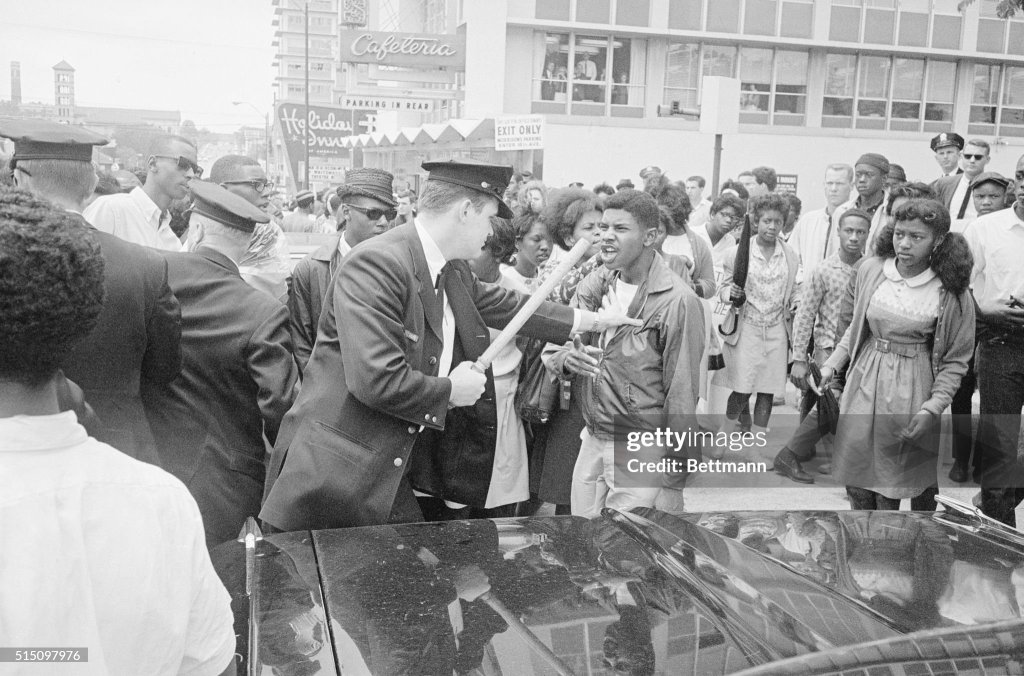
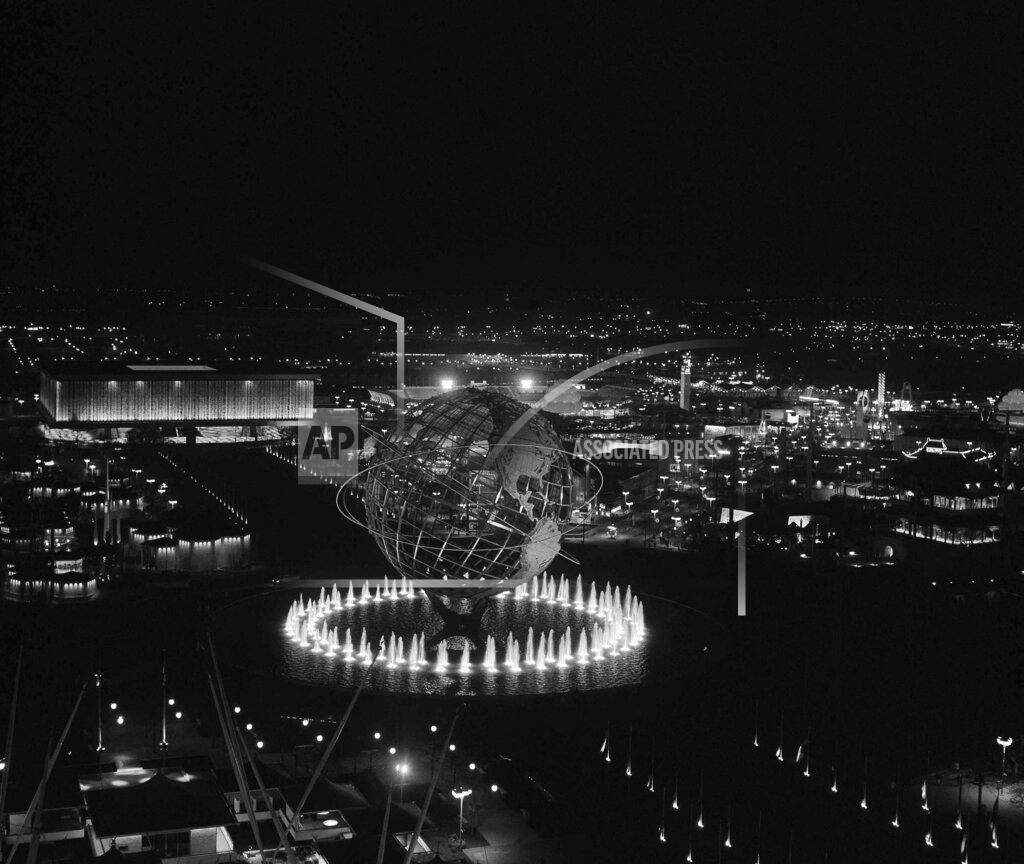
A leader of the Brooklyn Chapter of the Congress of Racial Equality was sentenced yesterday to a year in jail for violation of probation. Immediately upon hearing the sentence the defendant, Arnold S. Goldwag, a 26‐year‐old parttime clerical worker who is the chapter’s community relations director, dropped flat on his back in protest. As he was dragged away by two attendants, he shouted to Criminal Court Judges Benjamin Gassman, Vincent R. Impellitteri and Milton Shalleck: “Look at yourselves! Ku Klux Klan!” Spectators gasped as Mr. Goldwag, who was one of the planners of last Wednesday’s abortive stall‐in at the World’s Fair, was pulled into the hall. His rippled‐sole shoes left marks on the heavily waxed courtroom floor.
He was promptly ordered back into the court by Judge Gassman, who told him and his lawyer, Gene Ann Condon, that he had been adjudged in contempt of court for deliberately falling on his back. Judge Gassman announced that he was to serve an additional 30 days in jail. Mr. Goldwag was given a one-year suspended sentence and put on three years’ probation on his conviction of trespassing in a demonstration against housing discrimination at 103d Street and Manhattan Avenue. One of the terms of his probation was that he was not again to participate in activities similar to that which led to his arrest.
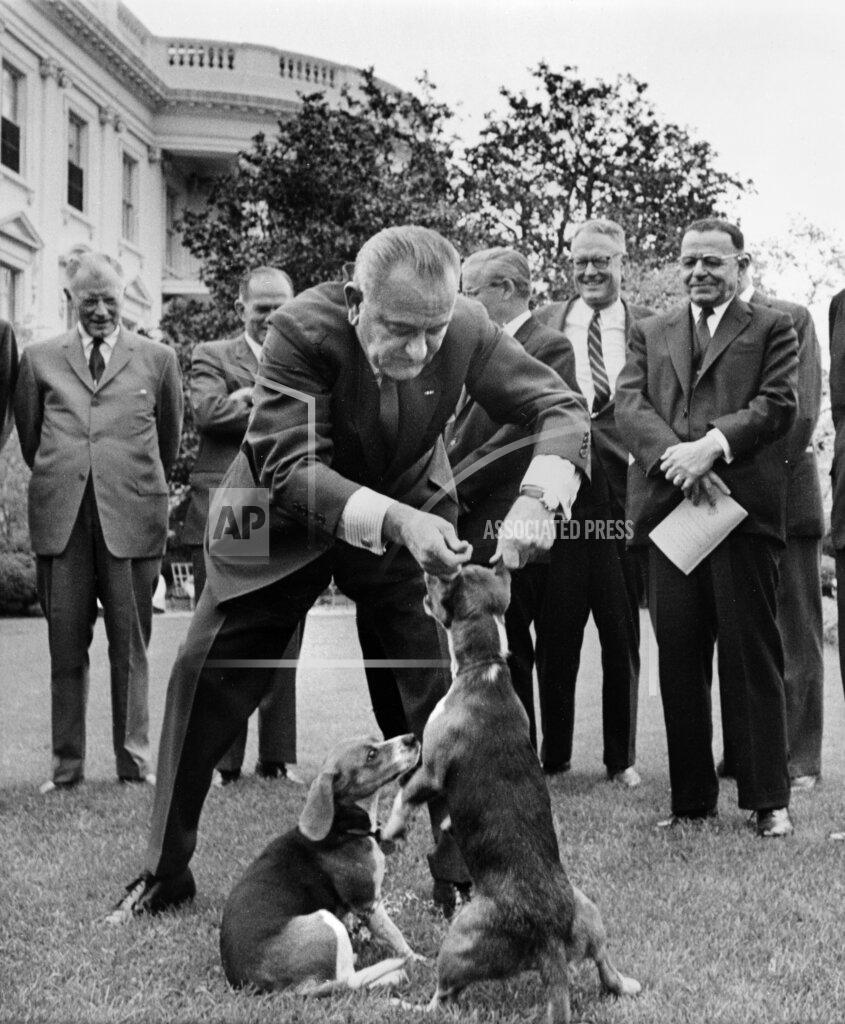
U.S. President Johnson outraged animal lovers during a photo session, when he lifted his pet beagles by the ears while playing with them on the White House lawn. After hearing the dogs — named “Him” and “Her” — yelp, a reporter asked, “Why did you do that?” and Johnson explained that it was to make them bark, adding, “And if you’ve ever followed dogs, you like to hear them yelp.”
President Johnson agreed today to modify his program of relief for Appalachia to include a last‐minute request for more funds from Gov. William W. Scranton of Pennsylvania. After a meeting with the President that lasted nearly an hour, Mr. Scranton said that his proposal would add $10 million to the cost of the program in the fiscal year 1965 and in some cases prevent “five major aftereffects of coal mining.” It had been expected that the president would send his Appalachia program to Congress today. The program calls for expenditures of nearly a billion dollars—$220 million in the coming fiscal year — to help the poverty‐stricken Appalachian region. It will include proposals for new power plants, work projects, road building, job retraining and medical care.
When Mr. Scranton made his request, the President decided to delay the submission of the program. This means that the plan will probably go up to Congress tomorrow. Mr. Johnson said he would ask the Governors of the eight other states involved in the Appalachia program what they thought of Mr. Scranton’s idea. Besides Pennsylvania, the states taking part in the planned Appalachia program are West Virginia, Virginia, North Carolina, Tennessee, Kentucky, Georgia, Maryland and Alabama. The Presidential press secretary George E. Reedy, explained later that either Mr. Johnson or his aides would try to get in touch by phone with each of the other Governors tonight. If they agreed to the idea tonight, the President would include Mr. Scranton’s proposal in his message tomorrow. If not, Mr. Reedy said. “We will try to find some way of sending it up as a supplemental program.”
The Supreme Court agreed today to consider a contention that Southern laws against sexual relations between whites and Blacks violate the Constitution. The Court specifically undertook to examine a Florida law that says persons of different races, not married to each other, shall not “habitually live in and occupy in the nighttime the same room.” Another Florida law prohibits interracial marriage. Potentially, at least, the case could determine the validity of anti-miscegenation laws in general. These are the statutes, in force in the Southern states, that bar marriage between persons of different races. It is the traditional Southern argument that dropping of racial barriers anywhere will eventually lead to intermarriage. The whole subject is one of the greatest sensitivity. Thus today’s case gives promise of new and sharp controversy when it is heard and decided next term.
The case involves Dewey McLaughlin and Miss Connie Hoffman, who were convicted of violating the Florida law by living together in a Miami Beach apartment in 1961. The Florida courts found that Mr. McLaughlin was a Black and Miss Hoffman white. Each was sentenced to 30 days in jail and a $300 fine. They are represented in the Supreme Court by lawyers of the N.A.A.C.P. Legal Defense and Educational Fund. Their legal arguments include a frontal attack on the legality of any state restrictions on personal relations solely because of the race of the persons involved. In 1883, in the case of Pace v. Alabama, the Supreme Court sustained a conviction under an Alabama law against interracial sexual relations. The Court reasoned that there was no discrimination because both the white and the Black partner were punished.
The payment of James R. Hoffa’s legal expenses by the International Brotherhood of Teamsters was suspended today. Hoffa is president of the union. The order was issued by John F. English, the union’s secretary‐treasurer, according to another official of the union. Mr. English acted after two members of the union’s 15-member Executive Board asked him to in separate telegrams. John J. O’Rourke of New York sent his wire Saturday and John B. Backhus of Philadelphia sent his today. In St. Louis tonight, a teamster vice president, Harold J. Gibbons, said that instructions to issue the order had been given by Hoffa himself in a telephone call to “teamster vice presidents.” “It was strictly Mr. Hoffa’s decision,” Mr. Gibbons said.
New York Governor Rockefeller, campaigning in Northern California and Oregon, declared today that the United States should carry the war in South Vietnam into Communist “sanctuaries” in Laos, Cambodia, and North Vietnam. Like Richard M. Nixon, who also favors expansion of the war, the Governor stopped short of advocating that American troops and fliers do the fighting. Instead, he called for “unswerving” American support for South Vietnamese air strikes against Communist Vietcong supply lines and depots in Laos and North Vietnam. He also urged “hot pursuit” into Cambodia, Laos or North Vietnam when the Vietcong found sanctuary in those countries. This, too, would be undertaken by South Vietnamese troops.
The Tobacco Institute, an American trade group of the nation’s cigarette manufacturers, announced that the companies had agreed on a code for future advertising that would guarantee that ads and commercials would “not represent that cigarette smoking is essential to social prominence, distinction, success, or sexual attraction”. Specifically, the tobacco companies agreed to no longer use endorsements by athletes and celebrities, to discontinue distributing free cigarette samples to persons under 21, and to halt promotions on school and college campuses.
John Lennon’s book of poetry and sketches “In His Own Write” is published in U.S.
The last original episode of “The Danny Thomas Show” was telecast on CBS, bringing an end to the 11-year run of Thomas’s situation comedy that had premiered on ABC September 29, 1953 as “Make Room for Daddy.”
Dow Jones Industrial Average: 811.87 (-3.02).
Born:
Lisa Wilcox, American actress (“A Nightmare on Elm Street 4”, “A Nightmare on Elm Street 5”), in Columbia, Missouri.
Died:
Dimitri Alexandrovich Obolensky, 82, Russian nobleman and historian.
Georg Britting, 73, German poet.

 History Diaries