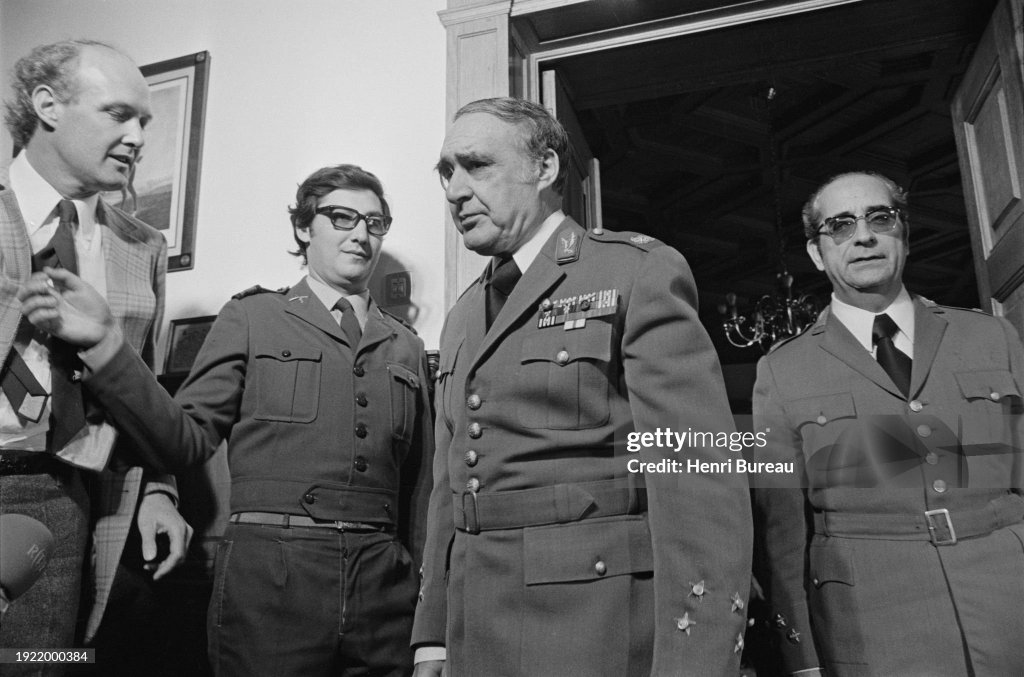
General Antonio de Spinola, who assumed the leadership of Portugal after Thursday’s swift military coup, said that a provisional government of civilians headed by a military man would be formed in three weeks. He promised general elections in one year.
The military junta now ruling Portugal made it clear that it was not prepared to end the war in the African territories by granting independence. General Antonio de Spinola, the junta’s leader, told a meeting of newspaper editors in Lisbon that “self-determination should not be confused with independence.” The statement appeared to indicate the possibility of future conflict between the junta and leftist forces in Portugal, but an open break may not come for some time. General Spinola indicated signs of alarm at some of the activity of the left as it gave vent to feelings that had been suppressed for almost half a century.
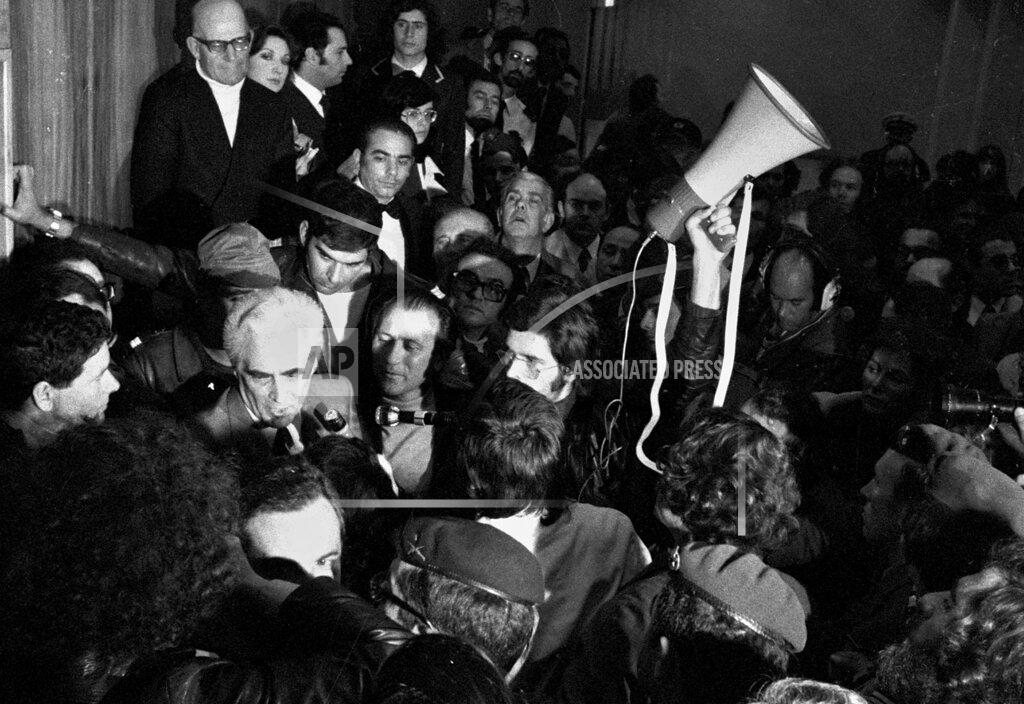
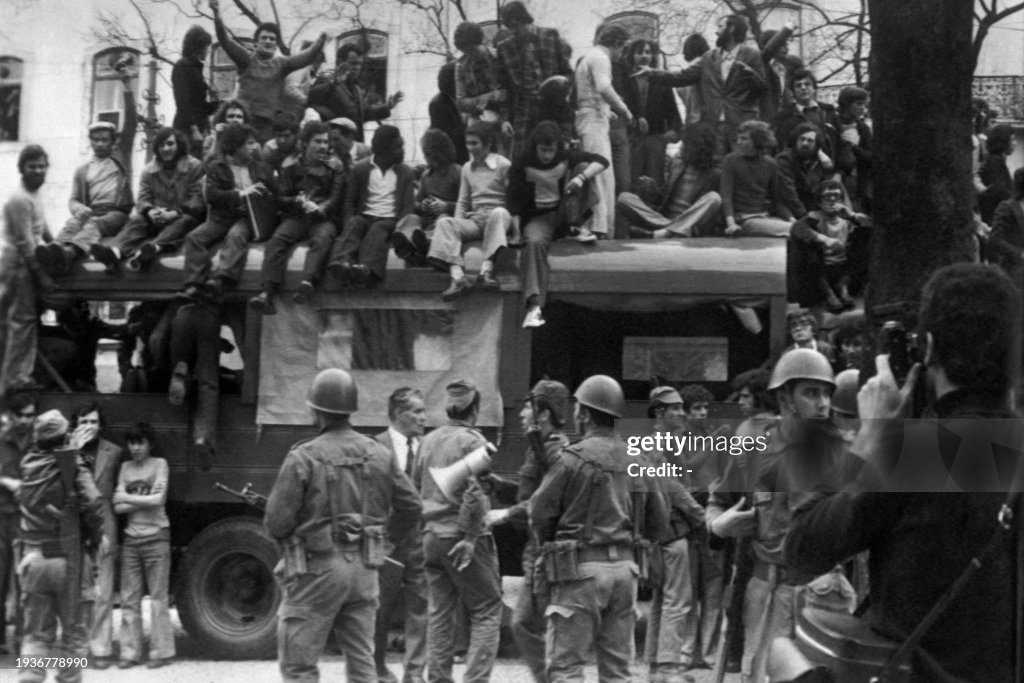
The Portuguese were saying it with flowers. Just what they were saying was not quite clear, even to themselves, except that they were very happy. Carnations have become the symbol of Thursday’s coup and there were carnations all over Lisbon. Women were clutching bunches of them, giving them to everyone they met and especially to the soldiers who stood guard on the streets downtown. Lisbon’s impassive and discouraged look has been erased by excitement, almost boisterous good humor and a newly discovered expressiveness.
Nikita Khrushchev, in reminiscences published this weekend, expressed hope for a “more enlightened Communist society” in the Soviet Union in which people would “enjoy their inalienable rights.” The former Soviet leader, in memoirs dictated before he died in 1971 at the age of 77, also expressed regret that “the progress we achieved after Stalin’s death has slowed down.” Adopting an even more liberal stance than he displayed while head of the Soviet Union, Mr. Khrushchev also denounced excessive military secrecy and defended the right of citizens to judge literature themselves.
A woman with a French accent and four men who carefully selected 19 masterpieces valued at $20‐million from the mansion of a private collector were being sought by the police today. Sir Alfred Belt, the London-born millionaire whose elegant stone mansion in the rolling hills here was the scene of the robbery, said he would pay no ransom for the return of the canvases. The 71‐year‐old heir to a fortune earned by his father and uncle in the South African diamond mines said the paintings were so well‐known that they probably could not be sold publicly. Because of the prominence of the masterpieces, he said, the motive had to be ransom or reward. The police were not discounting the possibility that an extremist organization might have been responsible for the armed robbery that took place shortly after 9 o’clock last night. At a news conference this morning, Sir Alfred recounted how the gang had called him a “capitalist pig” and had accused him and his wife Clementine of “exploiting the workers.”
Secretary of State Kissinger will leave tomorrow on another Middle East trip with the goal of persuading Israel and Syria to make the necessary compromises to bring about an agreement on the separation of their forces in the Golan Heights. Some diplomats in Washington and in the Middle East believe the basic outline for the agreement has been reached in secret by Mr. Kissinger. But he and his top aides insisted all week that they were uncertain about the mood in Jerusalem and Damascus, and had no firm indication that agreement could be achieved on this trip.
The shelling of an Israeli fortress in the Golan Heights by Syrian artillery led to the deaths of 14 IDF soldiers in the Bashan salient, former Syrian property conquered by the Israeli Army in the 1973 war. Eight IDF soldiers were killed when a shell hit their fortress, while six more died in the crash of a helicopter that was on its way to rescue the survivors. Israel retaliated with airstrikes of Syrian army camps. The battle marked the last major fighting in the “War of Attrition that lasted for three months before a disengagement agreement signed between the two nations on May 31.
Eight of the soldiers were killed and seven injured when Syrian shells scored direct hits on top of the now‐capped mountain, where fighting fiat; raged for the last few weeks. An Israeli spokesman said that an Israeli Army helicopter flying to the spot had crashed as it tried to land, apparently because of a technical failure. All six men aboard the helicopter, including a doctor, were killed.
The spokesman also said that an Israeli patrol had killed, two Syrian soldiers who had infiltrated Israeli lines around Mount Hermon. There were no Israeli casualties, he said. The Israeli casualty toll was one of the highest for any single day’s fighting on the northern front, where clashes have continued for 47 successive days. It brought the number of Israeli dead to 41 and the Wounded to 94 since the end of the October war with Syria. Israeli and Syrian forces around Mount Hermon and along the Golan Heights traded artillery and long‐range tank fire all afternoon and evening today after one of the quietest periods in the area. According to the Israelis, the firing from Both sides was sporadic and scattered over a wide region.
In the evening, the Syrians also fired a number of rockets at Israeli positions on Mount Hermon, the spokesman said. Earlier, an Israeli officer on the heights said that the shelling by both sides had dropped off in intensity in recent days from over 1,000 shells daily up to 10 days ago to the present average of about 300 a day.
Israeli officials expect the forthcoming separation‐of‐forces negotiations with Syria to be more difficult than those concluded with Egypt three months ago, but they are guardedly optimistic about the prospects of success. Some of this optimism stems from recent diplomatic communications with Secretary of State Kissinger, who was reported to have told the Israelis that he would not be visiting the area if he did not believe a compromise agreement satisfactory to both sides was possible. In preparation for Mr. Kissinger’s arrival on Thursday, the Israeli Cabinet is expected to hold a special meeting early in the week.
The biggest single obstacle to successful Israeli‐Syrian negotiations, in the Israeli view, is the role currently being played by the Soviet Union. Although information is scarce, the Israelis believe the Soviet Government has been urging the Syrian President, Hafez al‐Assad, to cleave to a hard line in the negotiations. They believe Moscow has promised Syria substantial shipments of new and more sophisticated weaponry and probably has already begun the first deliveries. “Whatever the Soviet role is, it’s destructive,” an Israeli diplomat said. “We may not know, all the details, but it is clear that the Soviets are upset by the diplomatic progress Kissinger has made and are determined to do something about it.” Because of this strong Soviet desire to be involved in the Israeli‐Syrian talks, officials here assume that the final stages of the negotiating and probably the signing of an agreement will take place in Geneva, where the Soviet Union is a co‐chairman along with the United States of the Middle East peace conference.
Twenty‐five Muslims were arrested yesterday when they tried to force their way into the National Assembly in the belief that the prayer leader at their mosque had been arrested in connection with the attack on a military academy here 10 days ago. The official Egyptian press agency denied last night that the prayer leader, Sheik Mohammed Gazali, had been questioned or arrested. It added that he remained an Under Secretary in the Ministry of Religious Affairs but had been suspended as prayer leader of the Amr Ibn el Aas mosque pending a clarification of his role. Sheik Gazali is the former member of the Muslim Brotherhood, the extremist religious society that was banned by Garnet Abdel Nasser in 1964 and again, after resuming clandestine activities, in 1965.
The Ethiopian armed forces announced today that more than 60 former high government and police officials would be investigated on charges of enriching themselves at public expense while thousands of their countrymen starved to death in widespread famine. At the same time the army pledged its support to the current Government and warned Ethiopians against renewed unrest that brought down the former Government last month. Several hundred troops were reported driving through the streets of Addis Ababa in what one diplomat said was the biggest show of military strength since the series of army mutinies that sparked the nationwide revolt in late February. The show of strength, coupled with a pledge of support to the Government, was seen by observers as a new lease on life for Premier Endalkachew Makonnen and his Cabinet. The former government and police officials, who were arrested yesterday and today with the consent of Emperor Haile Selassie, will be detained until the investigation is completed, an army spokesman said.
All 109 passengers and crew on an Aeroflot flight were killed in the Soviet Union, shortly after the Ilyushin Il-18 turboprop took off from Leningrad to Zaporozhye. In accordance with practice at the time, the Soviet news media made no mention of the crash. According to a Western source, “The crash could be clearly seen from the airport and pandemonium broke out in the terminal with relatives and friends of the passengers screaming and crying.”
Seventeen persons were feared dead today in a landslide that buried about 80 homes on the side of a mountain honeycombed with old mine tunnels in the village of Okura 188 miles north of Tokyo. A rescue party of 600 policemen, firemen and soldiers recovered eight bodies from the mud‐engulfed houses. Nine persons were missing and feared dead, and 10 were being treated at hospitals for injuries, the police said. They said the rescue work was suspended until tomorrow morning because of bad weather and the threat of another landslide. The first slide struck yesterday in a raging rainstorm.
At least 21 people were killed and more than 100 reported missing when a series of landslides wrecked three towns in the Peruvian Andes, according to reports reaching Lima today. Local officials said the slides were probably triggered by earth tremors. Large parts of the towns of Huaroto, Anco and Mayoc, in the Huancayo area, 200 miles southeast of here, were buried under a sea of mud, the officials added. A Peruvian television station quoted highway crewmen as saying that the victims of the earth slides numbered about 200 but the report could not be confirmed.
The Anglo-Australian Telescope (AAT), a 390-centimetre (150 in) optical telescope, located at the Siding Spring Observatory on Mount Woorat in New South Wales, was first used.
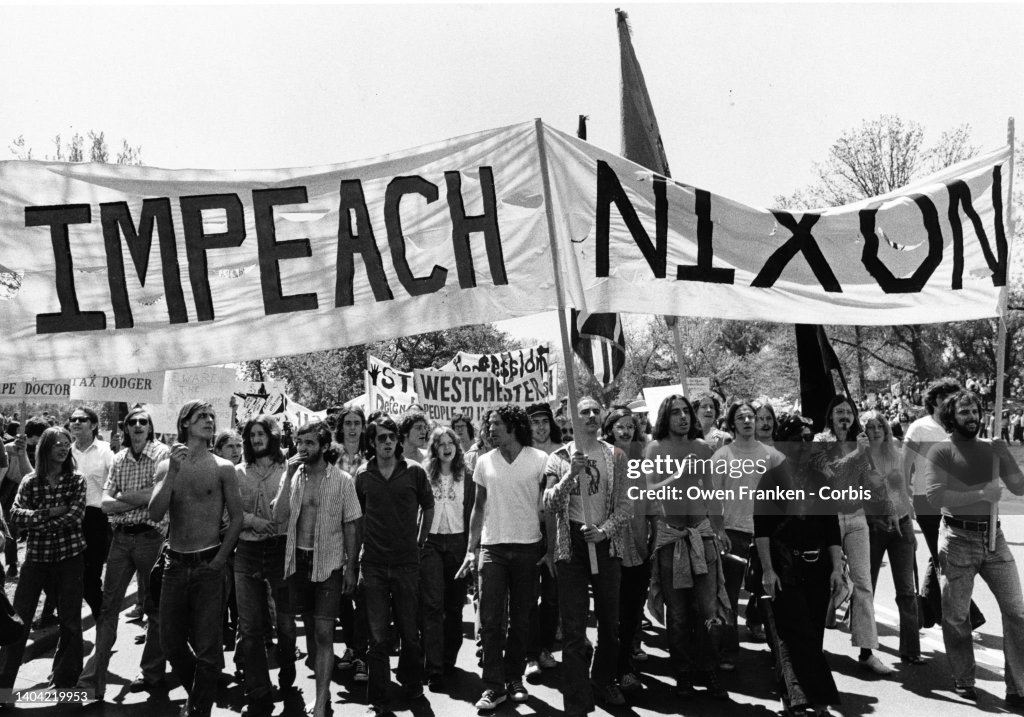
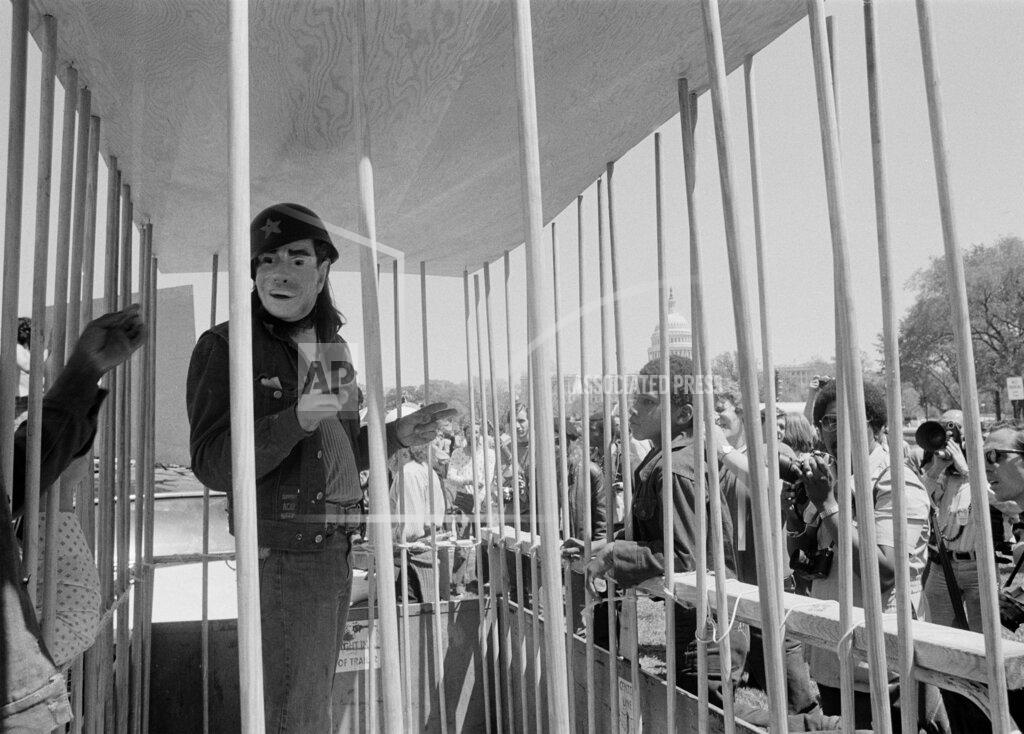
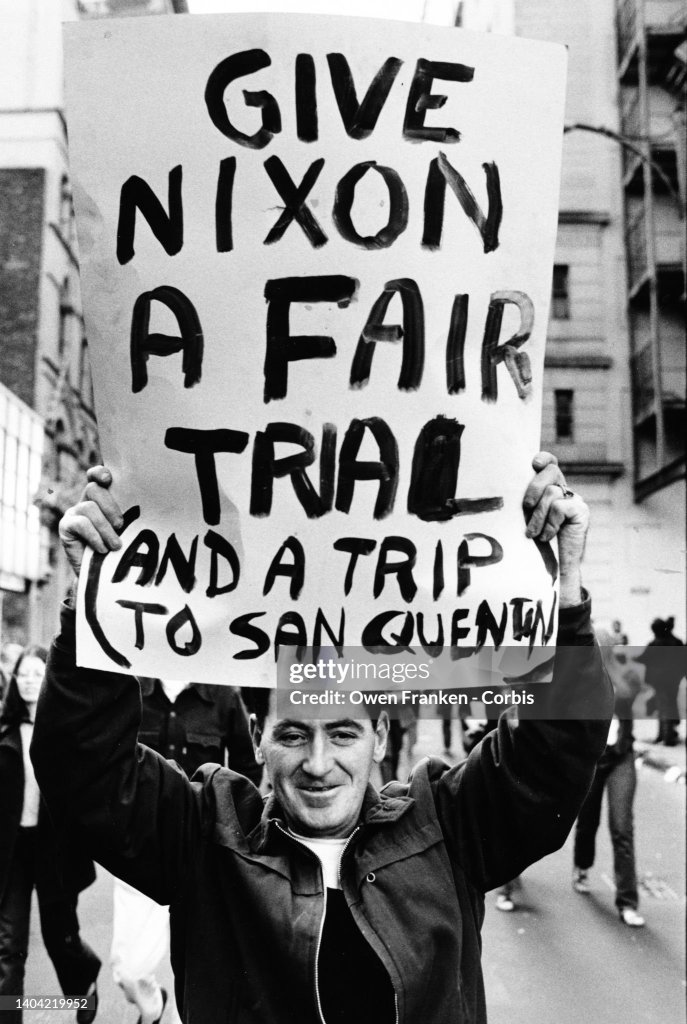
Vice President Ford intensified an apparent campaign to bolster President Nixon by asking Republicans to stand with him for the good of the party in the November congressional elections. In appearances in Texas and Oklahoma, Mr. Ford sought grassroots support for the President, as well as local Republican candidates, while attacking the Democrats for “endless exploitation” of Watergate.
The country’s first experiment with peace-time regulation of prices and wages will end at midnight Tuesday with the nation in the grip of the worst inflation in two decades. Unions and business, conservatives and most liberals oppose renewal of the Economic Stabilization Act, under which the administration operated its controls program. Despite inflation, neither Congress nor the administration has a comprehensive plan for arresting the price trend. There is a growing feeling in Washington that little can be done, that events must be allowed to take their course.
The number of Republican governors in the country — totaling 32 in the early days of the Nixon administration — has declined to 18, and it appears likely that the number will decline further in the 35 governors’ elections this fall. Democrats see an opportunity not only to win a record-high majority in the 50 governorships, but also to re-establish themselves in the giant industrial states where they were virtually shut out in the late 1960’s.
The jury in the Mitchell-Stans trial, in its third day of deliberations, spent at least part of it wrestling with the problem of whether John Mitchell had committed perjury. It asked for a reading of the testimony of Harry Sears, who is a former associate of Robert Vesco, a former New Jersey state Senate Republican leader and a former friend of Mr. Mitchell, Mr. Sears was the first major government witness to testify at the trial and he directly connected Mr. Mitchell with the federal investigation of Mr. Vesco, who is now a fugitive.
Asserting that the power of the presidency has pyramided to nearly that of a monarch, Senator Jacob Javits said that he would introduce legislation aimed at restoring a balance of power between the executive and legislative branches of government. In a speech in New York before the Ripon Society, Mr. Javits criticized the Nixon and past administrations for allegedly usurping war-making and legislative responsibilities that he said belonged to Congress.
The Agriculture Department and the Children’s Foundation are engaged in a dispute over the department’s plan to eliminate food aid programs in 84 counties. The foundation says that some 14,000 needy pregnant women, nursing mothers and preschool children will face a serious health threat if the program is dropped. The department counters that the program has not been particularly significant. If the program is to be saved, it will apparently be up to Congress. The foundation a Washington‐based nonprofit organization, released a report describing the plan to phase out supplemental food programs after June 30 in counties where the Government’s food stamp operation will replace all commodity distribution programs. The supplemental food program, initiated in 1968, is a nutrition program for low‐income pregnant women nursing mothers, and children under the age of six. The program provides free foods, rich in protein and iron to support inadequate diets.
A cloud of caustic fumes caused by a leak at a Chicago chemical storage plant broke up and drifted toward Lake Michigan today while workers tried to seal the leak. The police and officials of the Chicago Environmental Control Department said the situation was much better than it was last night, when a concentration of the cloud, which contained hydrochloric acid, forced 14,000 persons from their homes. Residents of the Altgeld Gardens housing development returned home today, and police officials said they expected no further evacuations. The wind had shifted and the grayish-white cloud was drifting northeast, over commercial and some residential areas toward the lake.
The Illinois Department of Corrections has ordered an end to all malaria experiments on inmates at the Stateville Penitentiary after 29 years of research. Allyn R. Sielaff, the department’s director, who announced the decision earlier this month, said he believed medical experimentation on prisoners was “immoral and unethical.” He said he ordered the controversial Malaria Project phased out because it was not a part of the prison’s rehabilitation program. Critics of Mr. Sielaff’s decision, including the project’s director, said it would cause the loss of “thousands of lives.” Dr. Paul E. Carson, head of pharmacogenetics at the Rush Presbyterian‐St. Luke’s Medical Center here and director of the Malaria Project, said the order would “seriously imperil” the development of the world’s first malaria vaccine and of a new drug to treat malaria.
New York Representative Angelo D. Roncallo and two Oyster Bay officials are scheduled to go on trial Monday on charges of extortion in an alleged kickback scheme involving a company doing business with the town. Along with Mr. Roncallo, Republican who is serving his first terin as Representative from the Third Congressional District comprising parts of Nassau and Suffolk Counties, the indictment handed up by Brooklyn Federal grand jury last Feb. 21 also named Frank Antetomaso, the deputy commissioner of public works, and Frank Corallo, an employe in the Public Works Department.
Randy Jones and the Padres beat the Phillies, 5–2, despite giving up an inside-the-park homer to Mike Schmidt, the first of 3 in the future Hall of Famer’s career.
Well, at least there was no demolition. At Seat Cushion Night at Comiskey, the Tigers down the White Sox, 8–3, as Ed Brinkman clubs a pair of homers off Sox starter Jim Kaat. Fans are given seat cushions, which quickly litter the field, notably after Sox second sacker Santo makes an error in the top of the 6th and again when Bill Melton hits a homer in the bottom of the frame.
Born:
Frank Catalanotto, MLB left fielder, second baseman, and first baseman (Detroit Tigers, Texas Rangers, Toronto Blue Jays, Milwaukee Brewers, New York Mets), in Smithtown, New York.
Steve Connelly, MLB pitcher (Oakland A’s), in Long Beach, Beach.
Pete Chryplewicz, NFL tight end (Detroit Lions), in Detroit, Michigan.
Johnny Devine, Canadian professional wrestler, in Merritt, British Columbia, Canada.
Died:
U.S. Navy Admiral Jesse B. Oldendorf, 87, known for his command of the old U.S. battleships at Surigao Strait in the 1944 Battle of Leyte Gulf.



 History Diaries