A new cloud arose on the troubled international horizon yesterday when it was reported that Germany had made three demands upon little Lithuania. They included a 25 percent increase in the trade between the two countries and revision of all Lithuanian commercial treaties to benefit the Reich. Germany has presented three demands on Lithuania, it was reported tonight from Kaunas, Lithuanian capital. They are:
First- Trade turnover with Germany shall be increased by 25 percent.
Second- Commercial treaties with other countries, including Great Britain, shall be revised to give certain privileges to Germany.
Third- A German trade agency shall be established in Kaunas for buying foodstuffs directly in the open market of Lithuania.
The news of these demands, which thus far have not been officially confirmed or denied, was received too late for authoritative reaction to become apparent. It is expected in Kaunas, however, that the demands will not be granted willingly. They are interpreted as an initial step toward German acquisition of monopoly rights in the domination of the economic life of Lithuania.
After the annexation of Czechoslovakia, Lithuania became the immediate object of German conquest. A hurried crisis in the Memel territory of Lithuania resulted in the annexation of the district by the Reich last month. The Nazi party in Memel had won 87 percent of the votes in an election preceding annexation. Although the Memel district, a strip of 853 square miles with a mixed German and Lithuanian population of 150,000, was considered virtually valueless to Germany, it nevertheless put the Nazis in a position to menace the Baltic Sea and take dominating control in part of Northern Europe.
While the German Army was consolidating the annexation of Czechoslovakia, Berlin was reported to have served an ultimatum on Rumania, virtually forcing that nation to sign a trade treaty giving the Nazis a powerful hold in the economic life of the Black Sea country. Both Germany and Rumania denied there was any ultimatum. Some indication of the Rumanian attitude toward Germany, however, was seen last week when the Rumanians were reported to have replied to Chancellor Hitler’s inquiry whether they feared German aggression that they did not see “how anyone can feel secure in Europe at the present time.” Evidence of a continued German drive to the east was responsible for a stiffening of the British and French against German domination of Europe. With Poland in the center of German expansion, Prime Minister Neville Chamberlain has pledged the full assistance by Great Britain to Poland in the event she feels called upon to resist German aggression.
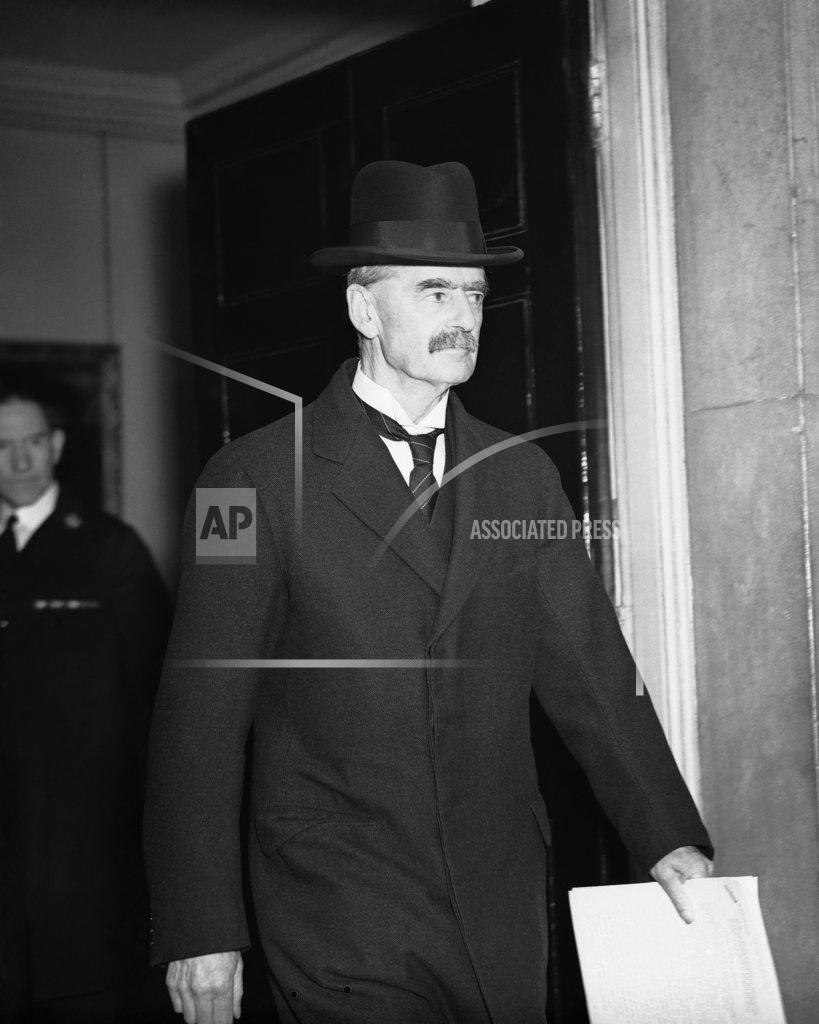
As this new Nazi threat developed, Prime Minister Chamberlain made the historic announcement in the British House of Commons that 200,000 men would be conscripted for army service in each of the next three years. He also declared that he would introduce legislation to permit the calling up of reserves of all services without a mobilization decree. Adoption of these measures was regarded as certain. This momentous announcement, which reversed the traditions of centuries of volunteer service, will be debated by the House of Commons tomorrow. In spite of the angry Labor opposition it will doubtless be approved by an overwhelming majority on the eve of Chancellor Adolf Hitler’s Reichstag speech. It will be intended as another proof that Great Britain is determined to resist any further aggression on the Continent of Europe — “not to wage war, but to prevent it,” as Mr. Chamberlain put it today.
In another passage of his historic statement, the Prime Minister said the object of compulsory training was “to render this country able to carry out the engagements it has entered into, in the belief that in that way the peace of Europe can best be secured.” The government also intends to rush a bill through Parliament Monday enabling all fighting services to call up reservists or auxiliary forces without any proclamation of mobilization. The immediate purpose of this move, which the government regards as more urgent than conscription itself, is to enable the Territorials to be called from civil life to keep the anti-aircraft defenses manned day and night for an indefinite period.
“We are not at war now,” said Mr. Chamberlain today, recalling his pledge not to introduce conscription in peacetime, “but when every country is straining all its resources to be ready for war, when confidence in the maintenance of peace is being undermined and everyone knows that if war were to come we might pass into it in a matter not of weeks but of hours, no one can pretend that this is peacetime in any sense in which the term could fairly be used.”
The House of Commons approved Chamberlain’s conscription plan, 376–145. Great Britain introduces conscription for all men aged 20-21 in an effort to increase the kingdom’s military forces by 300,000 men. The Act applied to males aged 20 and 21 years old who were to be called up for six months full-time military training, and then transferred to the Reserve. There was provision for conscientious objectors. It was the United Kingdom’s first act of peacetime conscription and was intended to be temporary in nature, continuing for three years unless an Order in Council declared it was no longer necessary. The Chamberlain government also increased military expenditures to $3 billion for one year. There was one registration under the Act, of the first cohort of liable males, on Saturday 3 June 1939, and call-up for these men followed. However, the Act was superseded on the outbreak of war in September 1939 by the National Service (Armed Forces) Act 1939.
Simultaneously with its conscription action, London pursued its anti-aggression diplomacy. A four-power pact linking Britain, France, Russia and Turkey was envisaged to meet Polish and Rumanian objections regarding Soviet aid. The British trade delegation in Rumania continued its activities, and it was authoritatively stated that the British planned to help that country develop a chemical industry that would compete with the powerful German dye trust in the Balkans.
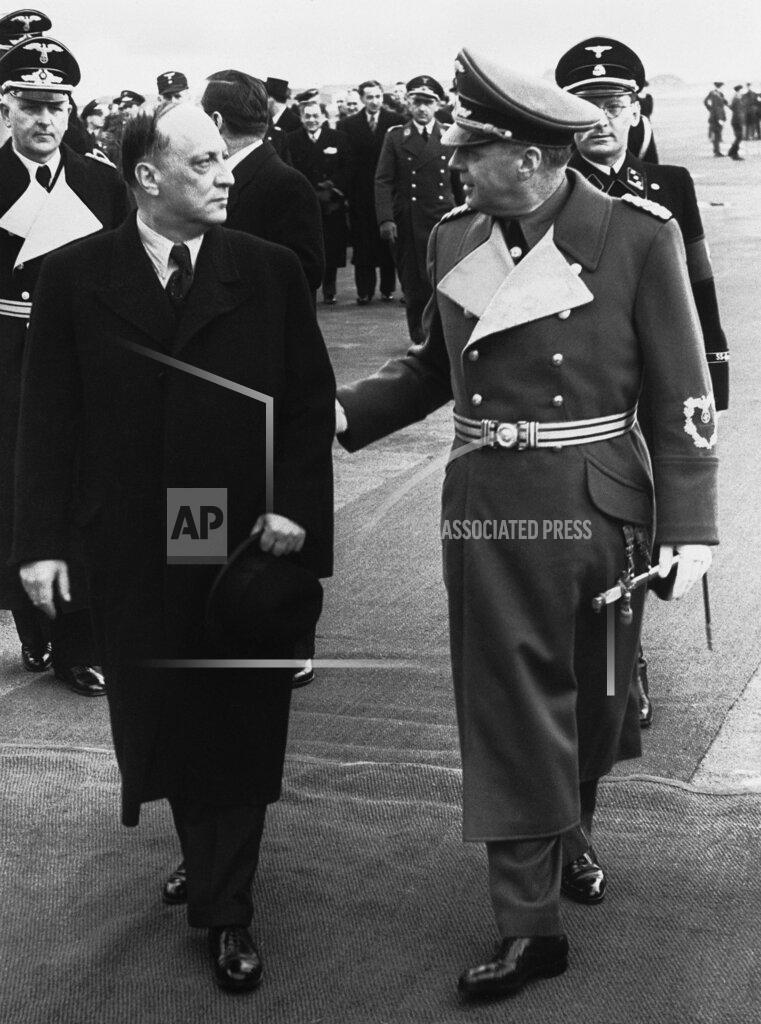
In Berlin the British Ambassador finally managed to obtain an interview at the Foreign Office before Chancellor Hitler’s speech tomorrow but was received only by an under-secretary. The German press made light of Britain’s conscription efforts. Diplomatic contacts between the German and British Governments returned to normal this morning when the newly returned British Ambassador, Sir Nevile Henderson, was received at the Foreign Office by Baron Ernst von Weizsaecker, Foreign Office Under-Secretary.
According to the German version, the visit was wholly in the nature of a routine call, and it was not revealed whether the Ambassador carried a specific message from Prime Minister Neville Chamberlain on the eve of Chancellor Adolf Hitler’s Reichstag speech. Reports that the Ambassador had sought a private audience with Herr Hitler were said to be without foundation. Robert Coulondre, French Ambassador, who also has returned to his Berlin post, will call at the Foreign Office tomorrow. The return of the two envoys, who were recalled by their governments for “consultations” following the dismemberment of Czecho-Slovakia, was registered here as a routine matter.
Resentment at the British move was voiced in Rome and Italians predicted that it might compel the Axis powers to strike suddenly against the growing coalition confronting them. In Moscow, however, Mr. Chamberlain’s announcement served to reduce continuing Russian suspicion of Britain. The British conscription measure is resented in Rome, judging from reaction in official circles. Unofficially one hears talk of counter-measures. The move is recognized as one of the most important steps in postwar history. Although the Italian press will certainly unleash a storm of abuse and ridicule, one may feel sure that full weight is being given behind the scenes to all that the move implies.
Just as with President Roosevelt’s message, the reaction might be good or bad. Some feel it will force the Axis to slow down; others feel it may bring on war by making Chancellor Adolf Hitler feel that he must move quickly before that conscript army is trained or the United States has a chance to throw any more weight on the side of Great Britain and France. Despite the impression given In London that the measure is aimed against Germany rather than Italy, Rome will not accept such an interpretation, it is asserted, since any move aimed at either end of the Axis goes for the Axis as a whole. Italy has identified herself with Germany’s foreign policies and must feel menaced when her partner is threatened.
In Warsaw, already allied to Britain in the anti-aggression front, the semi-official Gazeta Polska placed the blame for the German-Polish rift squarely upon Berlin.
One troublesome European problem was seemingly virtually settled when the Yugoslav Government reached an agreement with its Croat minority granting Croatia and other regions autonomy. The Yugoslav government reached an agreement with Vladko Machek, leader of the Croats, on the reorganization of the kingdom as a federation.
[Ed: This won’t last; after the crown prince tries to extricate Yugoslavia from the Axis, the Germans invade, and Croat separatism takes a decidedly dark and unpleasant turn.]
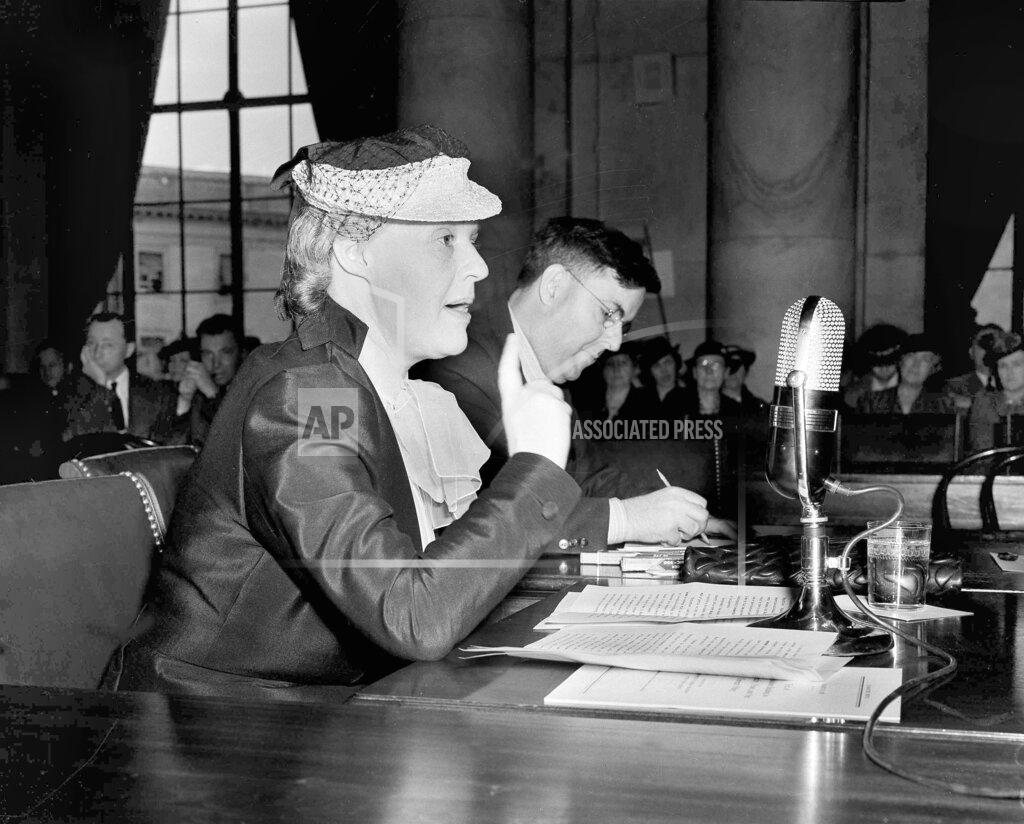
Berlin University rescinds a doctoral degree given to a well-known female Jewish suffragist.
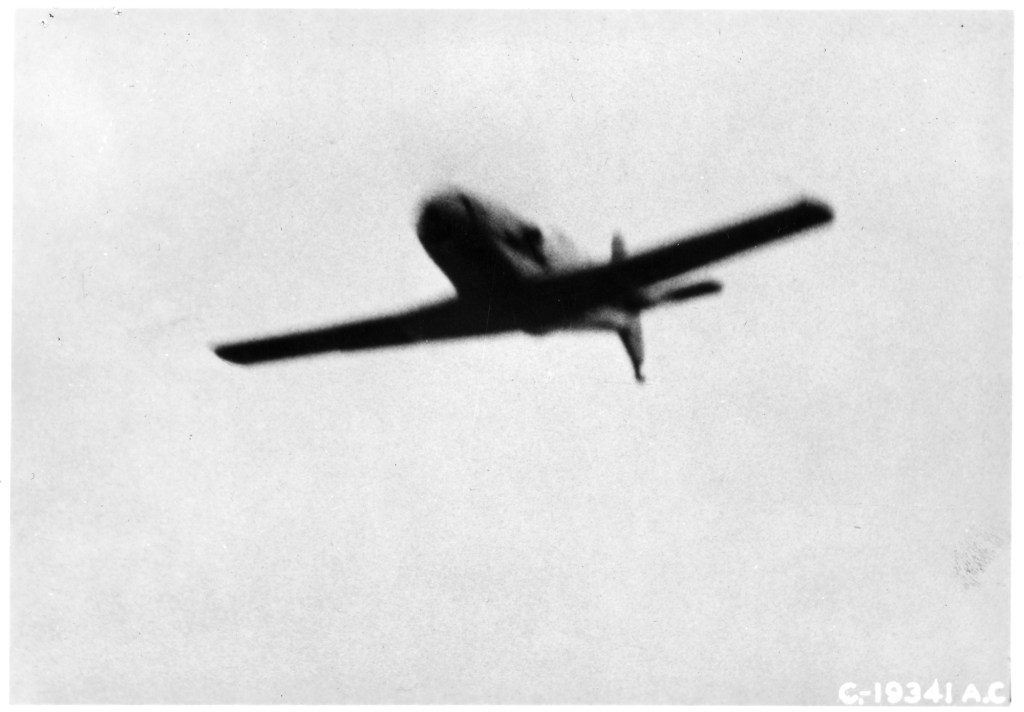
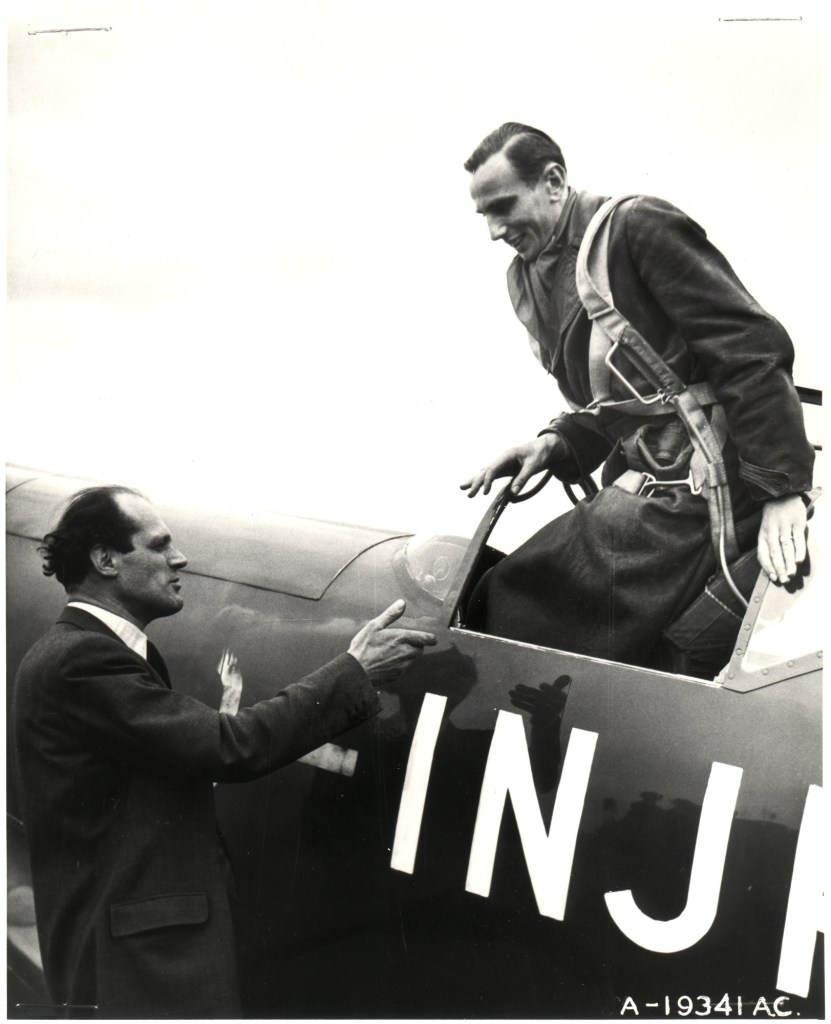
German aircraft manufacturer Messerschmidt captures the world air speed record with a specially prepared Me 209 (later named Me 109R by Nazi propaganda agents) aircraft piloted by Fritz Wendel. The aircraft reached a speed of 469.22 miles per hour, just beating the record set by the Heinkel He H00-V8. The Me 209 V1 (also known as the Me 109 R) was specially built as a speed record airplane. It used a very short fuselage with the cockpit well aft of the wing. A small ventral fin gave the airplane’s tail surfaces a cruciform configuration. To reduce aerodynamic drag, a conventional radiator was not used. Instead, surface coolers of the type used in Schneider Cup racers were placed on the wings.
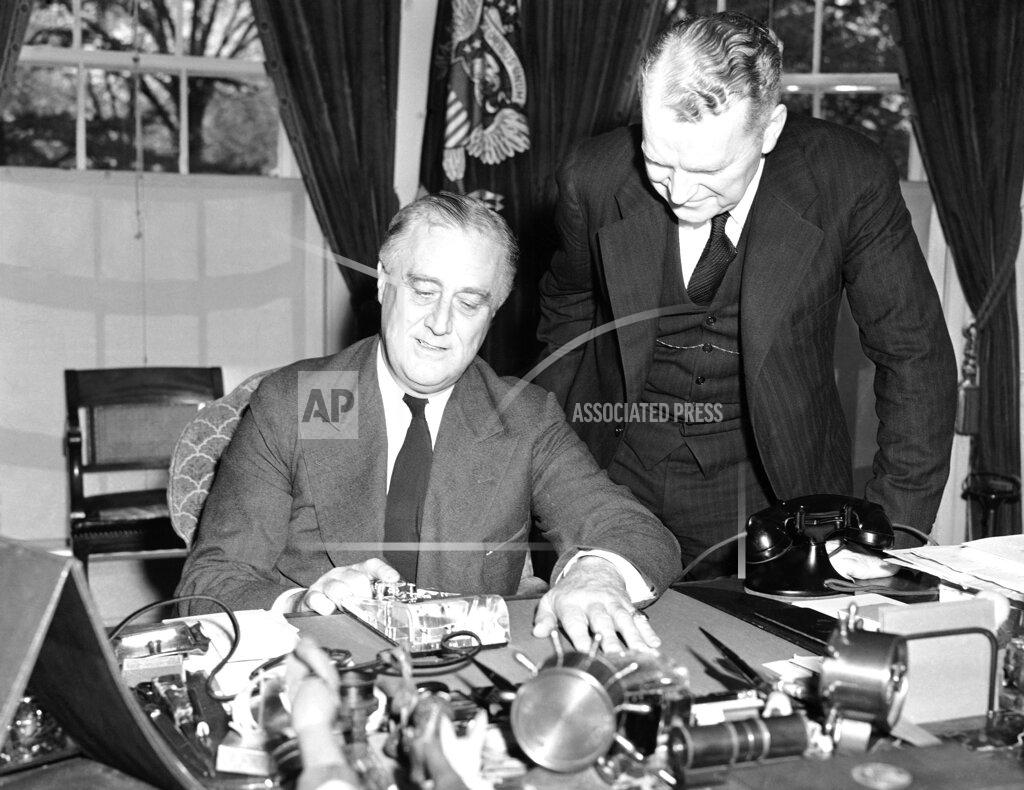
President Roosevelt signed into law today the $549,000,000 War Department appropriation bill and within an hour afterward the War Department gave a record-breaking order for 571 bombing, pursuit and interceptor airplanes to cost about $50,000,000. At the same time, Secretary Woodring announced that his department would ask Congress within a few days for legislation to remove the over-aged and physically unfit, in all grades from captain to brigadier general, inclusive, from the regular army’s 12,500 officers. Mr. Woodring said that the purpose of the proposed legislation was to vest in the War Department the power “to apply to the army’s officer personnel the same rigorous vitalization which is now taking place in its organization and armament.”
Still another defense development today was a request by President Roosevelt that Congress appropriate $31,621,000 to begin the immediate construction of a chain of naval air bases in the Pacific, Alaska, Puerto Rico and continental United States. These developments came only two days before Chancellor Hitler was scheduled to make his speech in reply to President Roosevelt’s recent request for peace guarantees and on the same day that Great Britain announced her plans for conscription. There was no official indication, however, that the action taken today was designed to impress the German Chancellor before he makes his reply to the President.
The U.S. Army Air Corps placed an order for 524 P-40 fighters. This was the largest production order for any U.S.-built fighter since World War I. The total cost was $12,872,398. The order was authorized by the Air Corps Expansion Act, approved by Congress 3 April, and signed by President Roosevelt today. The Curtiss-Wright Corporation Hawk 81 (P-40 Warhawk) was a single-seat, single-engine pursuit, designed by Chief Engineer Donovan Reese Berlin. It was developed from Berlin’s radial-engine P-36 Hawk. The P-40 was a low-wing monoplane of all-metal construction and used flush riveting to reduce aerodynamic drag. It had an enclosed cockpit and retractable landing gear (including the tail wheel). Extensive wind tunnel testing at the NACA Langley laboratories refined the airplane’s design, significantly increasing the top speed.
The cruising speed of the P-40 was 272 miles per hour (438 kilometers per hour) and the maximum speed was 357 miles per hour (575 kilometers per hour) at 15,000 feet (4,572 meters). The Warhawk had a service ceiling of 30,600 feet (9,327 meters) and the absolute ceiling was 31,600 feet (9,632 meters). The range was 950 miles (1,529 kilometers) at 250 miles per hour (402 kilometers per hour). The fighter (at the time, the Air Corps designated this type as a lpursuitl) was armed with two air-cooled Browning AN-M2 .50-caliber machine guns on the engine cowl, synchronized to fire through the propeller, with 380 rounds of ammunition per gun. Provisions were included for one Browning M2 .30-caliber aircraft machine gun, with 500 rounds of ammunition, in each wing.
The first production P-40 Warhawk, 39-156, made its first flight 4 April 1940. The 8th Pursuit Group at Langley Field, Virginia, was the first Army Air Corps unit to be equipped with the P-40. After 200 P-40s were produced for the Air Corps, production was interrupted to allow Curtiss-Wright to build 100 Hawk 85A-1 export variants for the French Armée de l’air, then engaged with the invading forces of Nazi Germany. When France surrendered 22 June 1940, none of these airplanes had been delivered. The order was then assumed by the British Royal Air Force as the Tomahawk I. U.S. Warhawk production resumed as the improved P-40B, and the remainder of the P-40 order was cancelled.
Today in Washington, President Roosevelt discussed the legislative program with Senator Barkley; government reorganization with Harold D. Smith, director of the Budget, and Louis Brownlow; farm legislation with a House delegation; signed the War Department appropriation bill; and addressed the White House Conference on Children in Democracy.
With the Senate in recess its Foreign Relations Committee continued hearings on proposed revisions of the Neutrality Act. Senator Clark of Missouri was appointed a member to replace the late Senator J. Hamilton Lewis.
The House approved a bill to permit naval officers to remain on active duty after being passed by the selection board and a bill to permit the Navy to commission cadets in naval and marine corps reserves, received the President’s request for $31,621,000 to start the air bases construction program and adjourned at 3:34 PM until noon tomorrow.
The Administration’s plan to barter wheat and cotton in exchange for rubber and tin was declared by Secretary of Agriculture Wallace today to be of the utmost strategic importance to the national defense. The State Department, he said, had long been concerned over insufficient supplies of those commodities and had discussed the problem of increasing them long before the barter proposal was formulated. This government might, should the necessity arise, extend credits to Brazil in the event that that country should turn to rubber planting to make up for any loss it might suffer in the world’s cotton markets as a result of United States barter agreements respecting the exchange of cotton for rubber or tin, Mr. Wallace indicated.
Mr. Wallace asserted that in no conceivable respect did the barter proposal run counter to the principle of Secretary Hull’s trade agreements. The State Department, he said, viewed the barter proposal as thoroughly in line with defensive requirements. “There is no thought,” Mr. Wallace said, “of extending barter arrangements beyond cotton and wheat for rubber and tin.”
Agreement between the British and Canadian Governments for the training of British war fliers in this country, under the auspices of the Canadian Defense Department, was announced today in the Canadian Parliament by Defense Minister Ian MacKenzie. Last year the British War Office wanted to establish its own training schools in Canada. Prime Minister MacKenzie King refused because he was anxious not to compromise Canada’s autonomy, but he has consented to an alternative scheme under which Canada will train British pilots.
The new Bolivian regime lists discipline as its goal. The dictator charges that the struggle of privilege and extremism cause chaos.
Troops of the Chinese 3rd and 9th War Areas breached into southern Nanchang, Jiangxi Province, China. The Chinese troops that are attempting to regain Nanchang, former Chinese stronghold in Kiangsi Province, swept to the outskirts of the city today, according to military reports from Chungking. Lientang, ten miles south of Nanchang, was said to have been recaptured and from this point the Chinese were reported to have pushed on, engaging the Japanese at the air field within sight of the former provincial capital. The Chinese positions west and northwest of Nanchang were said to have been strengthened by the capture of points around Kaoan and Tacheng. Huge fires were reported to be raging in Nanchang, which the Chinese believe indicates the Japanese are preparing to abandon the city. After an absence of nearly a month, Japanese planes bombed Ichang, on the Yangtze above Hankow, again today. It was reported they caused intensive destruction in the residential section.
Probably indicating new Japanese advances westward, aiming at the capture of Sian and Lanchow as well as strengthening the Japanese lines against Russia along the Northern Chahar and Suiyuan borders, fresh Japanese troops are arriving at Tangku in large numbers. Official Japanese statements, while refusing to announce the strength of the new arrivals, declare “considerable numbers” have arrived. The Japanese also refused to disclose where the new arrivals will be sent. At the press conference today the spokesman displayed photographs showing lighters approaching Tangku, troops disembarking and entering troop trains and also long trains of tarpaulin-covered flat cars, apparently bearing trucks, tanks and other equipment.
It is conjectured that the new arrivals may be the answer to Generalissimo Chiang Kai-shek’s April offensive with Sian and other important cities as objectives. It is also conjectured that these new forces are designed merely to strengthen the Japanese garrisons before the Summer rainy season arrives, making the transportation of Japanese military supplies over mud roads increasingly difficult. The Japanese have about two months to carry out any projects for an offensive or to establish garrisons before the rains come.
Japanese aircraft today subjected the Chinese coast south of Shanghai to bombings, including a raid on Foochow, in which twenty-five bombs were estimated to have killed 40 persons and injured 100. Farther north the airmen attacked Wenchow, in Southeastern Chekiang Province, a gateway for Chinese foreign trade which the Japanese for some reason had not attempted to blockade. Chinese forts at the mouth of the Wu River, on which Wenchow is situated, were shelled by Japanese warships. Commerce was cut off. Near Amoy Chinese guerrillas were reported to have killed 200 Japanese on Quemoy Island. Following up the occupation of Kuling, a mountain resort south of Kiukiang, Yangtze River port, Japanese forces reported killing 900 Chinese and capturing 300 in occupation of the surrounding mountains.
Chinese spokesmen continued to report pressure against the Japanese along the Tientsin-Pukow Railway in the vicinity of its junction with the Lunghai Railway. Suchow, the junction city, was said to be under attack. Along the Han River west of Hankow the projected westward advance of the Japanese toward Ichang was said to be stalemated. Chinese said they had held the invaders back from a crossing of the Han and had killed or wounded an estimated 5,000. The Chinese air force, which has been staging intermittent raids, reported attacks yesterday on Japanese in Northwestern Kiangsi Province. Chinese fliers said they machine-gunned troops with considerable success.
China’s present sole lifeline, the last open door through which munitions and war supplies can now reach her from the outside world, is about to undergo its supreme test, for the rainy season, due normally to begin about the middle of May, is opening earlier than usual this year. The rainy season lasts until October and rainfall in this part of the world averages 208 inches. This may prove, therefore, a crucial period for China in her struggle with Japan.
For four months heavy rains will sweep over the newly built highway from Lashio, in the Shan States of Eastern Burma, to Kunming, the capital of the Chinese Province of Yunnan, swelling tiny water courses into raging torrents, bringing down rock slides in the mountain sections and washing away the new road’s still-unmetaled surface. Only the most optimistic expect the road to stand up through the rains, although thousands of coolies have been assembled in work camps. throughout its length in an attempt to keep it open. Meantime, supplies are being rushed over the highway, unfinished though it is. A shipload of American trucks arrived here for the Chinese Government two weeks ago. They were assembled in a suburb of Rangoon, carried north by rail and steamer and sent off loaded over the road to China.
The heavy cruiser USS Astoria, her mission to return the ashes of former ambassador Saito complete, departed Yokohama, Japan.
Robert Menzies became 12th Prime Minister of Australia.
Dow Jones Industrial Average: 128.56 (+1.20).
Born:
Bill Smith, NBA guard and forward (New York Knicks), in Jersey City, New Jersey (d. 2023).

 History Diaries