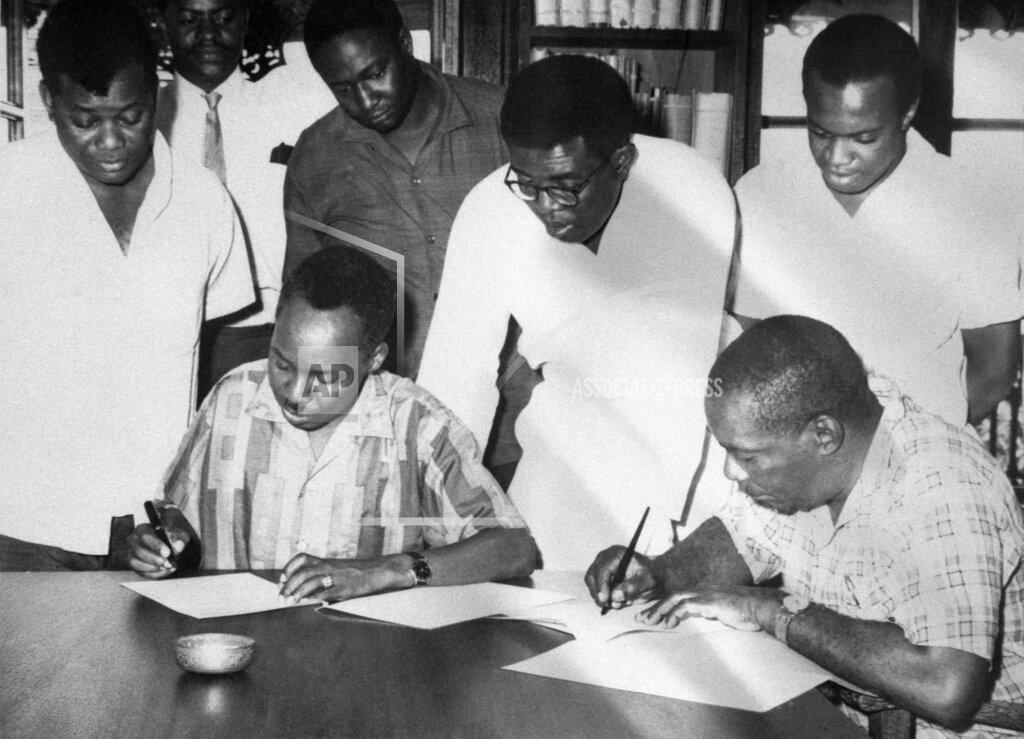
Prince Souvanna Phouma, the neutralist Premier, agreed today to reorganize his coalition Government according to terms dictated by the right‐wing revolutionary junta. The decision was announced in a communique after a Cabinet meeting in the Premier’s residence, which is, still guarded by troops of the military revolutionary committee. General Kouprasith Abhay, nominal head of the Revolutionary Committee, and General Siho Lanphouthakoul, the right-wing security chief whose troops hold Vientiane, said they would remain in military control of the capital until Prince Souvanna Phouma fulfilled their conditions. Tension eased in Vientiane after the announcement that Prince Souvanna Phouma would accept the military junta’s terms, but it was also obvious that the political crisis was not yet resolved. The decision taken at the cabinet meeting must still be submitted to Prince Souphanouvong, the Pathet Lao leader, who is in territory held by his troops in northeastern Laos.
A spokesman for the pro‐Communist Pathet Lao opposed today the demands of a right‐wing Laotian military junta for enlarging the coalition Cabinet of Prince Souvanna Phouma, the neutralist Premier. His declaration followed an announcement from Prince Souvanna Phouma that agreement had been reached on the right‐wing demands. It threatened to block the efforts of the Premier to put his government back into full operation. A leader of the junta that seized power Sunday made it clear that the revolutionary committee would not relinquish control until a government was formed “according to our wishes.”
Souk Vongsak, Secretary of State for the Pathet Lao, declared that his group opposed any Cabinet reshuffle, and refused to deal with the junta. He told a news conference that the aim of the junta was “to sabotage the policy of peace and neutrality in Laos” and to destroy the coalition. He said the junta was “illegal and the Pathet Lao does not recognize it.” Souk Vongsak indicated that a formal turndown would come from Prince Souphanouvong, Deputy Premier and leader of the Pathet Lao.
The Revolutionary Committee seized control of Vientiane Sunday, and began seeking to force the resignation of Prince Souvanna Phouma. General Siho Lamphouthacoul, an extreme right‐winger, had been critical of attempts to compromise with two other major factions, the pro‐Communist Pathet Lao and the neutralists. Under pressure exerted by King Savang Vatthana and the major powers, including the United States and the Soviet Union, revolutionary committee agreed to recognize Prince Souvanna Phouma as Premier. The King and the major powers had sought restoration of the coalition government to head off a new international crisis. A coalition of the right-wing faction, the Pathet Lao and the neutralists was set up under 1962 Geneva accords to halt civil strife. As the cabinet meeting today was going on, the two generals who managed last Sunday’s coup were holding a news conference at the Ministry of Defense. They stressed their determination to keep control until the coalition was reshaped to their liking.
After the Cabinet meeting, General Phoumi Nosavan, Vice Premier and nominal commander of right‐wing forces, left for Luang Prabang, the royal capital, presumably to inform the King of developments. General Amkha Soukhavong, a neutralist officer who is military adviser to Prince Souvanna Phouma, was said to have left Vientiane for Muong Phanh, the military headquarters of General Kong Le, the neutralist field commander. Prince Souvanna Phouma received Leonard Unger, United States Ambassador; Sergi Afanasyev, the Soviet Ambassador, and the envoys of Britain, France and Australia during the day.
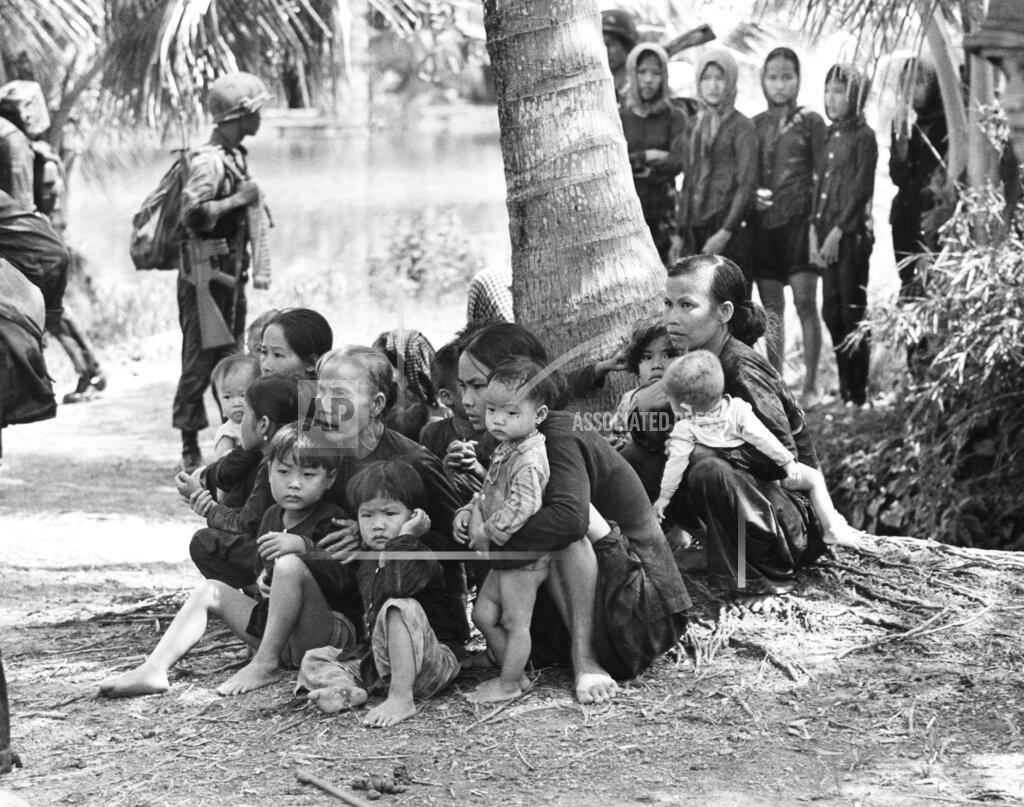
Communist Việt Cộng ground fire today wounded six men aboard the plane of Lieutenant General William C. Westmoreland, second‐ranking United States officer in Vietnam. General Westmoreland and 13 other persons escaped injury. A military spokesman said the incident occurred at an American special forces base in the extreme northern part of South Vietnam. Việt Cộng guerrillas opened fire on the plane with small arms as it took off from an airstrip. The plane, an Army Caribou designed for short runways, was leaving the A Shau Special Forces Camp, at A Sầu, about 500 miles north of Saigon, for Da Nang, when it was attacked. Four Americans, including the pilot and co‐pilot, were wounded slightly, as were two Vietnamese. The four Americans were treated and returned to duty. One of the Vietnamese was hospitalized. The spokesman said the pilot was hit in the face, but got the plane safely off the ground and landed it at its next destination.
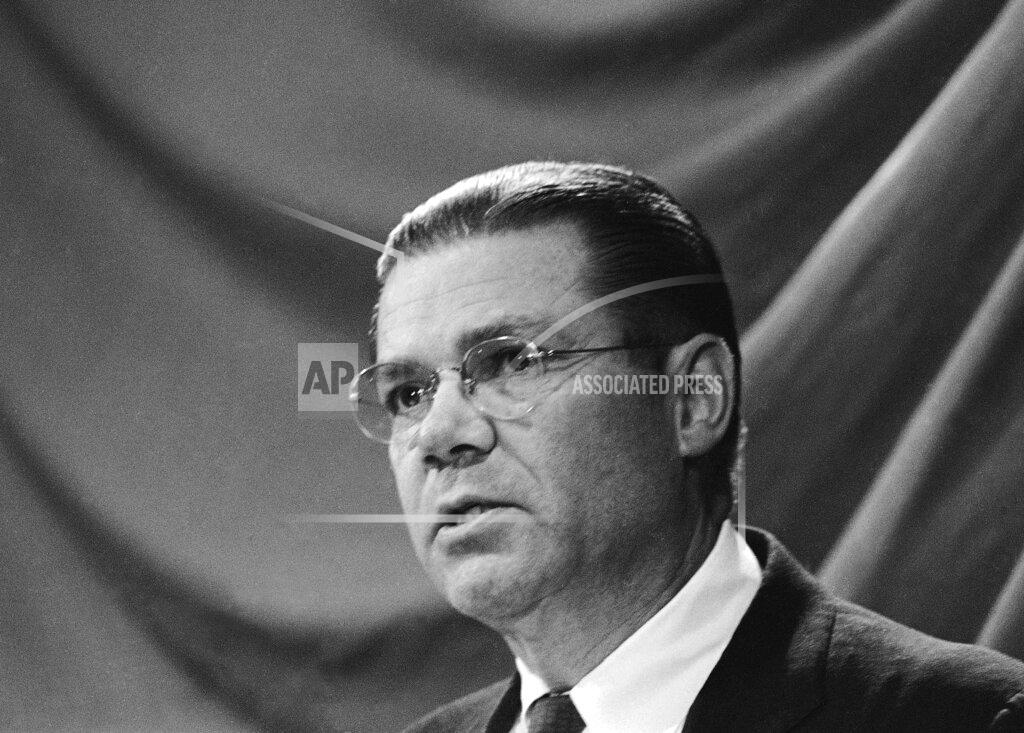
In a news conference, Defense Secretary McNamara says that he does not mind Senator Wayne Morse’s term, “McNamara’s War.” Senator Wayne Morse, Democrat of Oregon, who renewed his attack on United States policy in South Vietnam in a Senate speech, has been calling it “McNamara’s War.” Senator Morse has objected especially to the United States’ commitment to continue supporting the Vietnamese forces as long as it takes to defeat the Communist Việt Cộng insurgents. “I have a high regard for Senator Morse, but not in this respect,” Mr. McNamara said at a news conference. “This is a war of the United States Government. “I am following the President’s policy and obviously in close cooperation with the Secretary of State.”
“I must say,” the Secretary continued, “I don’t object to its being called ‘McNamara’s War.’ I think it is a very important war and I am pleased to be identified with it and do whatever I can to win it.” In a lengthy floor speech, Senator Morse charged that the United States’ participation in the war in Vietnam was “illegal and a menace to the American nation.” He cited the Geneva accords of 1954, which the United States did not sign but agreed to observe. The accords, in addition to other provisions, provided for the partition of Vietnam and limited the amount of outside military assistance that could be brought into the area.
On Capitol Hill, Admiral Harry D. Felt, commander of the United States forces in the Pacific, expressed optimism on the ultimate outcome of the war in South Vietnam. Admiral Felt spoke in closed session before the House Foreign Affairs Committee, but some of his observations were made public. He said it was comforting that the situation in South Vietnam had “not gotten out of hand despite a deterioration during the past year.” The South Vietnamese fighting forces are improving in their tactics and effectiveness, he declared.
Cuba has told the United Nations that United States reconnaissance flights over the island are “intolerable” and asked that they be ended. The Cuban note did not say what Cuba might do if the flights continued. It asked the Secretary General, U Thant, to show “the same concern you showed in October, 1962,” and take whatever steps he thought might be helpful to deal with “the increasing gravity” of the situation. Mr. Thant was credited in 1962 with an important role in relaxing tension between the United States and the Soviet Union over Soviet missile bases in Cuba. Havana accused the United States of “arbitrary, provocative, illegal and irresponsible” conduct that it said could bring the world to the verge of nuclear war.
A crowd of several thousand people demonstrated outside the former United states Embassy here tonight to protest United States “provocations” at the Guantanamo Naval Base and surveillance flights over Cuba.
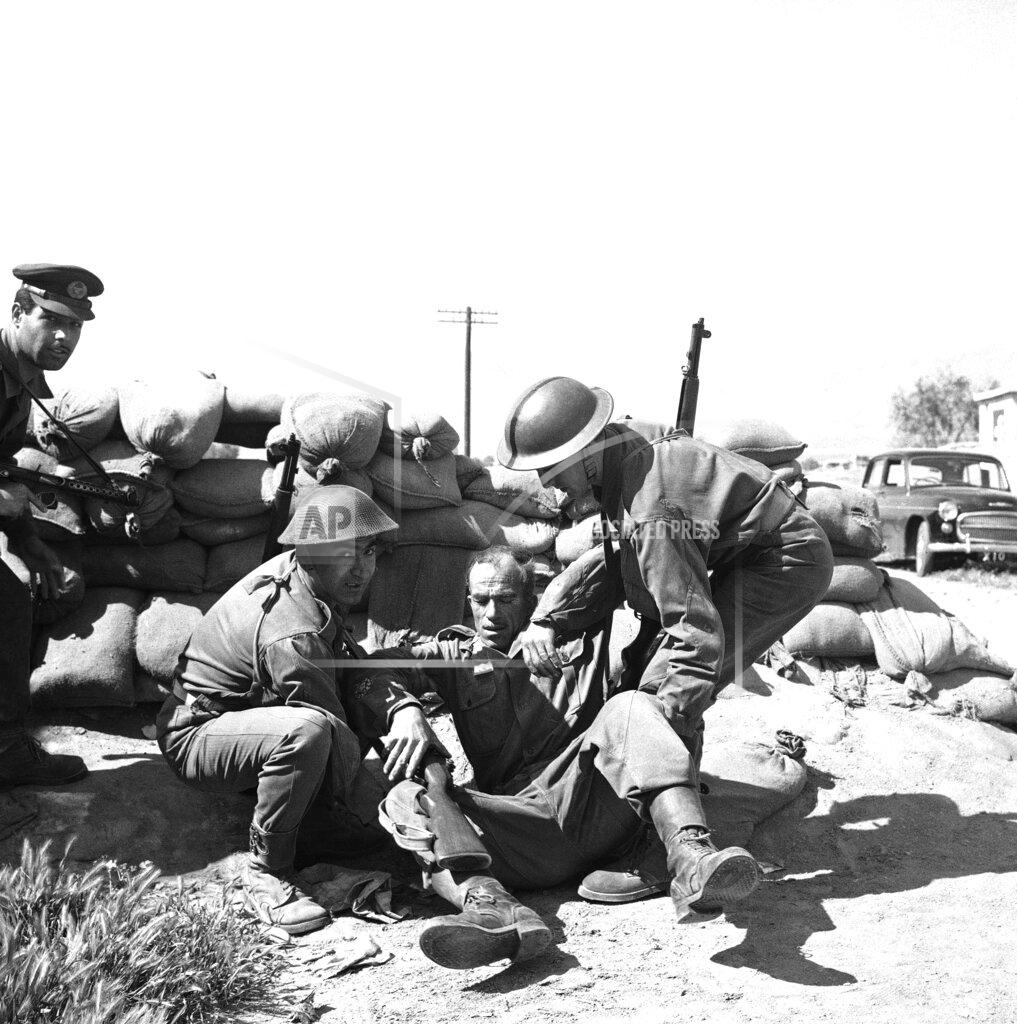
A full‐scale battle began today around the hilltop village of Ayios Theodoros near the southern coast of Cyprus, a spokesman for the United Nations command reported. The spokesman said there was very heavy firing from the tops of the hills surrounding the village, where there has been shooting for the last four days. Lieutenant Colonel Percy Blake, commander of the First Battalion Royal Inniskilling Fusiliers, a British unit with the United Nations force, is trying to negotiate a cease‐fire. The Cyprus Government said yesterday that a “tactical reserve unit of the Greek Cypriote security forces moved into the village and took up positions to protect the lives and properties of Greeks from Turkish attacks.” During fighting today, a British soldier of the United Nations force was wounded by a stray shot in Nicosia.
A new law went into effect in East Germany, designating all lands within five kilometers (3.1 miles) of the nation’s boundary with West Germany as special border areas where residents were required to carry special passes issued by the Stasi, and where a curfew was in effect nightly from 11 p.m. to 5 a.m. A resident within the border area was now required by law to call police to report the presence of any unauthorized person, and failure to do so could result in a term of up to two years in prison.
President Gamal Abdel Nasser of the United Arab Republic told thousands of tribesmen in Sana, the capital of Yemen, today that the people in Aden and the neighboring British protectorates were suffering the “harshest form of tyranny, oppression, and torture at the hands of British colonialism.” President Nasser’s attack on Britain came on the second day of his surprise visit to Yemen. Yesterday, he vowed “to expel Britain from all parts of the Arab world.”
“We are with you, with our blood, heart and soul,” the President declared today. “Britain must quit Arab land, for Arab land belongs to Arabs.” President Nasser also asked the Yemenis to help their brothers in Aden and the “occupied south, suffering in prisons of British colonialism.”
The Vienna Convention on Diplomatic Relations, signed on April 18, 1961, entered into force.
An earthquake in the Tajik SSR of the Soviet Union (now Tajikistan) caused a large section of the Darovorz mountain peak to dam up the Zeravshan River. Residents of the small town of Ayni were evacuated as a large artificial lake was created, with water levels rising 30 feet in the first 24 hours. The expansion of the flood threatened the Uzbek SSR city of Samarkand, about 100 miles downriver from the dam. “Unless immediate measures are taken,” an unidentified official said, “200 million cubic meters of water will accumulate in just one month.”
A new, shortened communion rite for Roman Catholics will go into effect at St. Patrick’s Cathedral today and in other churches in the New York area within a few days. The Vatican announced in Rome yesterday that the ritual of holy communion was to be changed to emphasize participation of the faithful in the sacrament. The new rite will have the priest administering the Host, a wafer of wheaten bread, pronounce the Latin words “Corpus Christi,” meaning “Body of Christ.” The person taking communion will respond by saying, “Amen.” Up to now the priest, before placing the bread in the communicant’s mouth, spoke a longer Latin prayer and said the “Amen” himself.
Thieves stole the head of the Little Mermaid statue in Copenhagen. The Danish government announced that if the stolen head could not be found, a new head would be cast from the original mold and welded on to the statue.
With a little more than a day’s notice to his advisers and the Secret Service, the President and Mrs. Johnson spent the day meeting crowds in Illinois, Indiana, Pennsylvania, West Virginia and Kentucky to prepare his announcement for a comprehensive program to fight poverty in the United States. Following an evening rally in Chicago the night before, the U.S. President flew by helicopter to talk to schoolchildren in South Bend, Indiana. He then flew on Air Force One from an Indiana air force base for a rally in front of 250,000 people at Pittsburgh, then to Huntington, West Virginia for a meeting with eight state governors. From Huntington, Johnson helicoptered to the small mountain hamlet of Inez, Kentucky, and another small town, Paintsville, to meet well-wishers, before catching Air Force One at Huntington again and returning to Washington. During his visit to Inez, Johnson sat on a pile of lumber at the porch of the impoverished, 10-member, Thomas Fletcher family and chatted for half an hour. Along the way, he spoke to everyone about his $250,000,000 plan to help the Appalachian poor.
He came to talk poverty, not politics, he insisted. But somewhere along the way, the roars of the mammoth crowds turned his scheduled poverty tour into a political triumph. South Bend mobbed him. Pittsburgh hailed him. And people from some of the poorest areas of West Virginia and Kentucky came out of the greening hills and coves to tell him their stories of hard luck. His five‐state swing, lasting from daybreak in Chicago until after 9 PM in the mountains of West Virginia, left policemen and other security officers shaken. Bareheaded and smiling, the President repeatedly plunged into the screaming crowds, shaking every hand in sight. Speaking under a bright moon at the Huntington Airport, the President again pledged to erase poverty in America.
Secretary of Defense Robert S. McNamara announced plans today for shutting down or reducing operations at military installations and administrative offices. Sixty‐three locations, most of them in this country but some in Europe, are involved. The savings are estimated at $68 million a year. The Secretary emphasized that with previously announced base closings and curtailments, the Defense Department now was saving $551 million a year that might otherwise have been spent but for the cost‐reduction program. Most of the activities affected by today’s announcement were relatively small. No naval shipyards were included. In response to a question, Mr. McNamara said that a survey of naval shipyards would be finished in six or nine months. He has said that the 11 naval shipyards in the country contain surplus capacity. He emphasized today that many of the yards also were inefficient and work in them too costly.
The Secretary announced the new cost reduction measures at a news conference at the Pentagon. He said: “I have today instructed the service Secretaries to initiate actions to consolidate, to reduce, or to discontinue Defense Department activities at 63 locations in 29 states and four foreign countries. “When completed, these actions will produce annual savings of $68 million per year and will eliminate over 10,000 personnel positions.” Asked whether the economy measures had connection with “the talk we hear about the possibility of a more peaceful world,” the Secretary replied: “No, none whatsoever.” These were purely cost‐reduction efforts, he stressed. He pointed out that the consolidations would be accomplished without “in any way reducing our combat strength or combat effectiveness.”
The Democratic and Republican leaders of the Senate today offered an amendment to the civil rights bill that would provide a limited right to jury trial in cases of criminal contempt. The amendment was introduced by Senators Mike Mansfield, Democrat of Montana, and Everett McKinley Dirksen, Republican of Illinois. It went part way — but not very far — toward meeting Southern demands. The amendment provides that a person accused of willfully disobeying a court order relating to the antidiscrimination provisions of the proposed law could be tried with or without a jury, at the discretion of the judge. The amendment provides also, however, that if the accused were tried without a jury and found guilty, he could not be fined more than $300 or imprisoned more than 30 days.
Senator Dirksen said that he and Senator Mansfield had discussed the amendment with several colleagues and with representatives of the Justice Department. “I trust it will be agreeable to everybody,” Mr. Dirksen said. Senator Mansfield expressed the hope that the amendment could be voted on next Tuesday. This would be the first voting on the bill passed by the House on Feb. 10 after nine days of debate. The Senate has debated the civil rights bill 39 days. The leaders offered their amendment as a substitute for one introduced last Tuesday by Senator Herman, E. Talmadge, Democrat of Georgia, and co-sponsored by several other Southerners. The Talmadge amendment would revise the Federal Criminal Code to provide jury trials in all criminal‐contempt cases if the contempt was not committed in the presence of the court. Federal courts have steadily held that the constitutional right to a jury trial in criminal proceedings does not extend to contempt cases.
James Farmer, the national director of the Congress of Racial Equality, met last night with New York Mayor Wagner to discuss the issues of New York’s civil fights controversy. The Black leader had been released from the City Workhouse on Hart Island only 18 hours before on charges growing out of civil disobedience at the World’s Fair. The mayor received Mr. Farmer at a closed meeting at Gracie Mansion. With the CORE director were representatives of the East River, Downtown, Columbia University, and south Jamaica branches of CORE. These groups took part in the fairgrounds demonstration on Wednesday. The conference lasted an hour and 15 minutes. Afterward, Mr. Farmer described the discussion as “more productive than any previous meeting because we got down to brass tacks.” He added that more such meetings would be held. Mr. Farmer said the subjects discussed had included Black demands for better housing, increased employment opportunities and racially balanced schools, and charges of police brutality.
Federal Judge Dudley B. Bonsal was assigned yesterday to preside at the retrial of Roy M. Cohn on charges of perjury and obstruction of justice. The trial will probably start in early June. Judge Bonsal was selected by Chief Judge Sylvester J. Ryan, under a procedure that the government objected to. After the first trial of Mr. Cohn, and Murray E. Gottesman, a co‐defendant, ended in a mistrial last Sunday, the governments sought to have the case referred to a judge sitting in a part of the court where the United States Attorney controls the calendar. This might have allowed the government to maneuver the case before a judge it felt would be favorable to the prosecution. But Judge Ryan said he thought the case was complicated enough for him to assign a judge to hear all pre‐trial motions and to preside at the trial.
For the first time in more than 30 years, it became legal to possess a United States gold certificate, as U.S. Treasury Secretary Douglas Dillon announced the rescission of a 1933 regulation that had been issued in conjunction with an Executive Order by President Roosevelt. On August 28, 1933, the U.S. government had ordered all citizens to exchange their gold certificates and gold coins for other currency, no later than January 30, 1934. Until Dillon eased the rules, “anyone — collector, dealer, private citizen, or even a museum” was subject to a 10-year prison sentence and a $10,000 fine, although “no one in Washington today could remember that happening.”
A Douglas DC-7A airliner was slammed against a rocky desert slope near Phoenix, Arizona at high speed today in what safety researchers called “a perfect crash.” Damage was far worse than planned but the researchers said they were “delighted.” They considered that a bonus. Wreckage was scattered along the flight path for a distance equal to that of three football fields. Most of the passengers would have survived had the crash been real instead of a remote‐controlled experiment, the researchers said. As it was, only 16 instrumented human dummies and several thousand pounds of engineering‐experiment and recording equipment were aboard. Twelve of the 16 dummies were still strapped in their seats after the main part of the plane’s body came to rest on its left side, but at least two — the pilot and co‐pilot — would have been crushed, experimenters said.
One model of an experimental air bag that inflates in front of a passenger to cushion the shock of his forward motion worked successfully. A lighter‐weight model failed but that had been expected because of the forces involved. The main purpose of the test was to measure accurately the forces acting on the plane in a “marginally survivable” crash so that planes, fuel tanks, seats and other gear can be designed for greater safety. The crippled plane may be used later to see how fast human passengers can get out of it before an imaginary fire starts.
Gene Roddenberry registers his “Star Trek” series with the Writers Guild of America.
Mexico becomes a signatory to the Buenos Aires copyright treaty.
Willie Mays paces the San Francisco Giants attack, hitting a home run and scoring 5 runs as the Giants down the Reds, 15–5. Juan Marichal is the winner.
Dow Jones Industrial Average: 814.89 (-6.77).
Born:
Cedric the Entertainer (Cedric Kyles), American TV comedian and game show host; in Jefferson City, Missouri.
Chuck Sanders, NFL running back (Pittsburgh Steelers), in Pittsburgh, Pennsylvania.
Augusta Read Thomas, American classical composer, in Glen Cove, New York.
Died:
Gerhard Domagk, 68, German bacteriologist and 1939 Nobel Prize laureate who discovered and synthesized the first commercially available antibiotic, Prontosil (sulfamidochrysoidine).
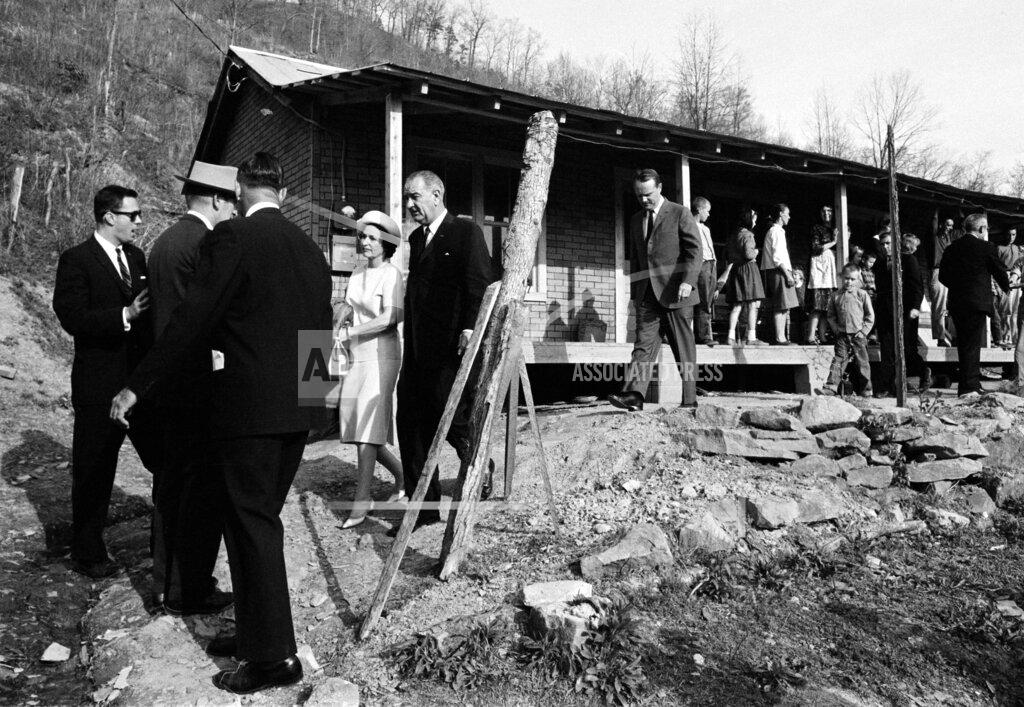
President Lyndon Johnson and his wife, Lady Bird, center left, leave the home in Inez, Kentucky, of Tom Fletcher, a father of eight who told Johnson he’d been out of work for nearly two years, in this April 24, 1964, file photo. The president visited the Appalachian area in Eastern Kentucky to see conditions firsthand and announce his War on Poverty from the Fletcher porch. (AP Photo)

 History Diaries