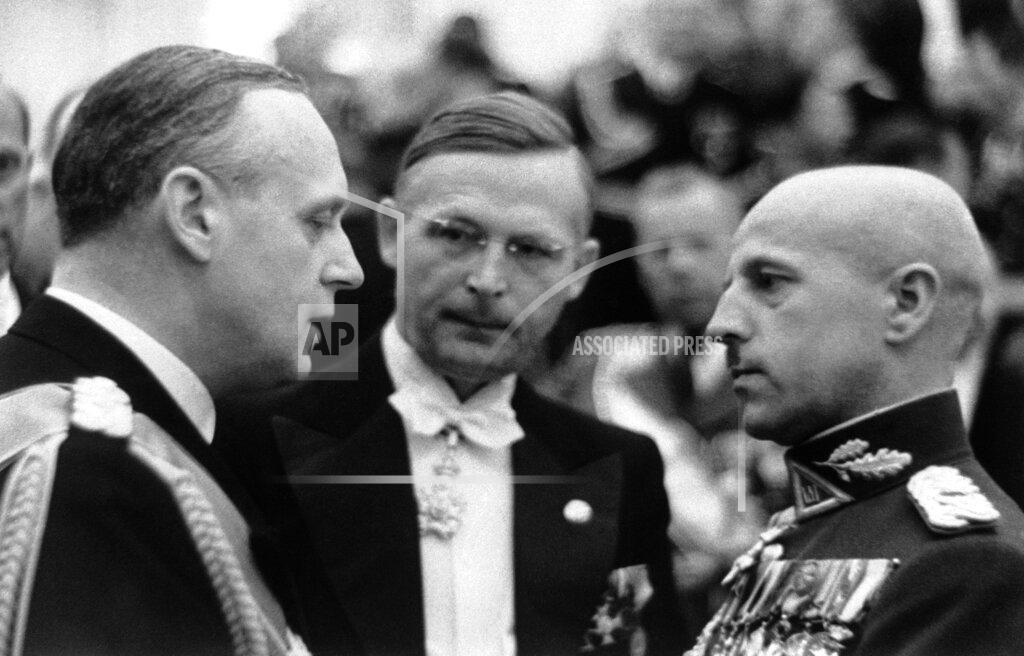
Europe’s small nations replied yesterday to Chancellor Hitler’s question as to whether they feared German aggression. Rumania was reported to have declared frankly that she did not see “how anyone can feel secure in Europe at the present time,” and Switzerland proclaimed her readiness to defend her borders, but the Netherlands and other States answered that they were not afraid that the Reich was planning to attack them. Although Berlin cautiously revealed that it had discussed President Roosevelt’s peace appeal with certain neighboring States and had received replies, news of the move was kept from the German public.
Rumania, replying to Chancellor Hitler’s questionnaire as to whether she considered herself threatened by Nazi aggression, was reported to have told Berlin today that she “does not see how anyone can feel secure in Europe at the present time.” Rumania’s first move after replying to the German questionnaire was to pass along her answer to the British Foreign Office, it was said. An informed source, although declining to disclose the text of the Rumanian reply, said, “I think we can guarantee that Rumania’s answer will be the most amusing of the lot.” He said it “startled” German officials in Bucharest. German officials refused to say who received the questionnaire, but some diplomats expressed belief it was sent only to those countries from which Germany was almost certain to receive the replies Herr Hitler wanted.
As a result of President Roosevelt’s appeal to Chancellor Hitler and Premier Mussolini for assurances against the invasion of any independent State in Europe or the Near East for “ten years at least a quarter of a century, if we dare look that far ahead,” German diplomatic representatives have been asking the following questions in European capitals:
- Do you consider yourself menaced by Germany?
- Did you ask President Roosevelt’s intercession or know in advance of his plea for a minimum of ten years of assured nonaggression?
The answers, as reported by correspondents of The New York Times and The Associated Press, were all “No” to the second question, but to the first one they were:
RUMANIA- Reported to have declared frankly that she did not see “how anyone can feel secure in Europe at the present time.”
SWITZERLAND- The Federal Council “has confidence in the respect for Swiss neutrality, which the Confederation will defend with its army and which Germany as well as other neighboring States expressly recognized.”
THE NETHERLANDS- “In case of a European war the Netherlands must be prepared to face every possibility.”
BELGIUM- Reliably reported to have decided to tell Germany she has no reason to suspect the good faith of the three nations which have pledged themselves to guarantee her independence-Britain, France and Germany.
BULGARIA, YUGOSLAVIA, HUNGARY- Made no announcements, but it was regarded as virtually certain they would say they did not feel themselves menaced by Germany.
GREECE- Has not replied yet, but in view of the fact that her trade is controlled by Germany, it is believed unlikely she will find it expedient to admit any fear. Greece also is expected to deny any fear of Italian aggression.
LITHUANIA- Reliably reported to have referred the German Government to a Lithuanian-German treaty of March 22, in which Germany promised not to resort to or support force against Lithuania.
FINLAND- Said no external complications threatened her.
SWEDEN- Did not feel menaced by Germany.
DENMARK- Informed observers believed Denmark’s reply
was negative.
LATVIA- Had no reason to assume she was menaced by any one, according to informed sources.
Seemingly, Great Britain, France and Poland were not questioned.
Countervailing duties imposed by the United States upon subsidized German exports became effective today. This check upon the trade that Chancellor Adolf Hitler has said. is necessary to the existence of the nation applies not merely to Germany but to all her recently annexed territory. Its imposition undoubtedly will add greatly to the obstacles in the way of effective operation of Germany’s new financing plan which, according to advices to the Department of Commerce, holds little promise of success unless there is sharp reduction of public expenditures, particularly in armament and construction.
The “New Plan,” the department is advised by American officials in Berlin, faces the same difficulties that destroyed Dr. Hjalmar Schacht’s last effort, as president of the Reichsbank, to reorganize and stabilize German finances along orthodox lines. All economies short of sharp retrenchment on armament and construction are regarded as “mere palliatives” so long as the general economy of the State is affected by such expenditures.
Meanwhile, increasing discontent was reported in Rome, the other end of the Axis, where it was hoped that talks that began between the Italian and Yugoslav Foreign Ministers would help to strengthen Italy against her German partner’s onward sweep in the Balkans. Count Galeazzo Ciano, Italian Foreign Minister, and Foreign Minister Alexander Cincar Markovitch of Yugoslavia had a conference in Venice this afternoon which was reported to have resulted in gains in the efforts to tie Yugoslavia to the Berlin-Rome Axis. The groundwork for this meeting was prepared in Rome during the visit of the Hungarian Premier and Foreign Minister, with the Yugoslav Minister in close attendance, so no reason is seen for a hitch now.
Rome expects Hungary and Yugoslavia to sign a non-aggression pact in May, followed within a few weeks by Belgrade’s adherence to the anti-Communist accord. If all goes well there will be a guarantee of Yugoslavia’s frontiers and some economic agreements in which Italy expects to benefit. All this has great international importance, because it is considered here not only as a strengthening of the Axis against the democracies’ attempted encirclement but also as a strengthening of Italy against her German partner. No lesser factor would bring rejoicing here, for it would be a mistake to believe the great strides Germany has taken in recent months have not alarmed Italy to some extent.
It is against Premier Mussolini’s policy to let himself be overpowered by Chancellor Hitler if it can be helped, and one way to prevent this would be for Italy rather than Germany to dominate the Balkans. If the present negotiations succeed the world will see a strong bloc composed of Hungary, Yugoslavia and Albania, controlled in a considerable measure by. Italy. That would split the Balkan Entente to begin with by extracting Yugoslavia and isolating Rumania from her two remaining Balkan allies, Greece and Turkey. It would give Bulgaria a chance, which she probably would welcome, to move closer to the Italian end of the Axis in spite of her trade connections with Germany.
London, awaiting the arrival today of Rumania’s Foreign Minister, prepared to exert all its diplomatic forces upon the smaller European countries being courted by the Axis. It was reported that the British were considering granting a credit to Rumania.
England’s King and Queen plan a North American trip. It will take 10 days to pack the Queen’s gowns.
In the East the Polish High Commissioner in Danzig announced his country’s readiness to settle the problem of the Free City with Germany on condition that the Poles retain unhindered access to the sea and control over the mouth of the Vistula.
Seventy-one United States volunteers in Spain are freed; the former fighters for the Republic cross into France on the way home.
Twenty French fliers are killed in crashes of four bombing planes in France and in Morocco.
Paris ordered work rushed on the French naval base at Mers el Kebir in Algeria, strategically situated across the Western Mediterranean from Spain, and also announced plans for the construction of a number of small naval vessels.
Corruption and irregularities by Democrats in party and public positions, particularly in the judiciary, were denounced last evening by Attorney General John J. Bennett Jr. and United States Attorney John T. Cahill in speeches at the annual Jefferson Day dinner of the National Democratic Club at the Hotel Commodore With obvious reference to the conviction of James J. Hines, Tammany district leader, to recent indictments obtained by Special Assistant Attorney General John Harlan Amen in Brooklyn and to the indictment of United States Circuit Court Judge Martin T. Manton, Mr. Bennett and Mr. Cahill declared it was unfortunate that the derelictions of a few should mar the otherwise superb record of the Democratic party. Mr. Bennett declared that men whose sole object in life was to line their pockets should not be permitted to remain members of the Democratic party. “Let’s get rid of them,” he said.
Mr. Bennett’s speech, in which he declared the Democratic party must clean its own house, called for the elimination of the unclean and criminal element in it and the election of new leaders if the present leaders failed to carry out the clean-up, was received with such mild applause as to indicate disapproval. Frank V. Kelly, Brooklyn Democratic leader, one of the apparently few who applauded the Attorney General, when asked to comment, said: “Every loyal Democrat endorses the sentiments expressed in the speech.”
Secretary of Agriculture Henry A. Wallace declared that, with the Supreme Court upholding the constitutionality of the marketing provisions of the Agricultural Adjustment Act, the farmers of the nation for the first time since the World War had in Washington a sympathetic Congress, President and Supreme Court. He asserted that the task of the national administration was to find ways of harmonizing agriculture, labor, industry and government to reach the goal of a $100,000,000,000 national income, which he said could be attained.
Former President Herbert Hoover heartily endorsed today the Wagner-Rogers resolution to permit entry into the United States, outside the quota, of 20,000 German refugee children. A telegram from him was. read to the Senate Immigration Committee, which is holding hearings on the proposal. Addressed to Clarence E. Picket of the American Friends Service Committee, the telegram was as follows:
“As you know, I strongly favor this bill providing for the admission into the United States of 20,000 refugee children. No harm, and only good, can come to a nation. by such humane action. I have no doubt of their adoption into American homes. I am glad to see support of the measure by such great influences as both the Protestant and Catholic churches and the American Federation of Labor.”
Dorothy. Thompson, New York columnist; Canon Anson Phelps Stokes of the Washington Episcopal Cathedral and Rabbi Stephen S. Wise of New York testified in favor of the measure. Canon Stokes declared that he felt sure the program of the refugee committee was entirely sound, basing this on his own experience in aiding Russian refugees after the World War.
“If it held any danger to American labor you would not find the American Federation of Labor and the Congress of Industrial Organizations endorsing it,” he added. “It is also held that it would divert money from other charities, but I do not believe it. Already more than 5,000 offers to adopt one or more children have been received and I feel sure they come from charitable people who would continue their regular charities as usual. I would feel humiliated if our great country cannot make this small gesture.”
As Canon Stokes testified a woman dashed out of the room protesting loudly. “She has been so shocked at hearing this Christian doctrine that she had to leave,” Senator King commented. “Probably another one of those 200 percent Americans. I hope she stays out.”
A poll shows that 73 percent of Americans agree with a peace conference attempt.
Colonel Charles Lindbergh, starting his tour to survey the nation’s air research facilities, flies to Wright Field.
President Roosevelt returned to the White House late today at the end of a round-about motor trip through the Shenandoah Valley from Charlottesville, where he went yesterday to visit with his third son, Franklin, at whose home he passed the night. Unaccompanied by the motorcycle escort which usually eases the Presidential party through highway traffic, Mr. Roosevelt narrowly missed a collision on the outskirts of the capital when another automobile darted in front of his long black limousine. Only the expert maneuvering of his chauffeur, Monty Schneider, averted an accident as the seven cars of the Presidential motorcade came to a sudden screeching stop.
The President, who had assumed for this trip the role of private citizen and dispensed with the usual formalities of his office, showed none of the tiring effects that were plainly visible among other members of his entourage after the harrowing zigzagging through traffic on the 200-mile drive. The near-crash occurred at Rosslyn, Virginia, just across the Key Bridge from Washington, while the Presidential car was proceeding at about fifty miles an hour. Apparently overlooking the Presidential seal on the side door of Mr. Roosevelt’s car, the driver of the passing automobile shot across the highway within a few feet of the limousine carrying the President.
A father and five of his children are killed as fire destroys their Iowa home; two others are near death.
Johnson Wax Headquarters, designed by Frank Lloyd Wright, opened in Racine, Wisconsin.
Los Angeles (Pacific Coast League) has 13 hits off San Diego’s Howard Craghead, but loses, 13–6, ending their 19-game winning streak. The win matches the Pacific Coast League record set by Seattle in 1903 (one tie).
The Communist Eighth Route Army killed 1,000 men in a Japanese detachment of 1,500 that had been advancing southward from Suenho in Eastern Shansi Province during a three-day battle, according to reports to Chungking newspapers. The Communist New China Daily News said the invading detachment was attacked ten times. The Chinese were said to have captured a large quantity of supplies and ammunition.
The Eighth Route Army also was said to have been successful in the Yangchu-Chinching sector in Northwest Honan, where Japanese communication lines were reported to have been cut and a detachment of puppet troops forced to surrender. Increasing hostilities south of Yochow may herald the opening of a Japanese offensive toward Changsha. Chinese regulars and Japanese troops are reported to be engaged in heavy fighting between Yochow and Matang. North of Yochow Chinese guerrillas are harassing Japanese reinforcements for the Changsha drive, holding up the Japanese by swift assaults from hills.
The numerical strength of the Japanese Army is more than doubled by an amended Conscription Law quietly passed through the Imperial Diet in March. When the new law is in full operation it will give Japan a standing army of 800,000 men. At the beginning of the hostilities in China the number was 250,000. The conscripts will pass through the ranks for their two years’ service at the rate of roughly 400,000 a year — the actual undisclosed number is somewhat higher — and will eventually provide a fully trained reserve of more than 6,000,000 men. The present reserve numbers about 3,000,000.
It is scarcely conceivable that any war in which Japan is likely to be engaged would require her to mobilize 6,000,000 men, and her economic structure could not, at present, stand such a strain, but a widely spread reserve, including every physically fit man in the nation, would allow her to place large forces in the field without disorganizing industry. The War Minister told Parliament that the army would maintain a proper distribution of manpower between the fighting services and industry. The new Conscription Law facilitates this and makes good his declaration on the same occasion that the whole nation must become soldiers in substance as well as in name.
Dow Jones Industrial Average: 128.55 (-0.16).
Born:
Alann Steen, American journalist and educator, and political hostage (Beirut, 1987-1991), in New York, New York (d. 2018).
Jason Miller, actor and writer (“Exorcist”, “Light of Day”), in Queens, New York, New York (d. 2001).
Ann Mitchell, actress (“Widows”), in Stepney, East London, England, United Kingdom.
Simon Napier-Bell, music manager, author and journalist, in Ealing Common, West London, England, United Kingdom.
Yury Sharov, Russian fencer (Olympics-Soviet Union, team foil, gold medal, 1964; silver, 1968), in Saratov, Russian SFSR, Soviet Union (d. 2021).
Naval Construction:
The U.S. Navy Aldebaran-class stores ship USS Polaris (AF-11) is launched as the Type C2 “Liberty fleet” standard freighter SS Donald McKay by the Sun Shipbuilding & Drydock Co., Chester, Pennsylvania.
The Kriegsmarine (German Navy) Type IX U-boat U-41 is commissioned. Her first commanding officer is Oberleutnant zur See Gustav-Adolf Mugler.
The Kriegsmarine (German Navy) Type VIIB U-boat U-48 is commissioned. Her first commanding officer is Oberleutnant zur See Herbert Schultze.




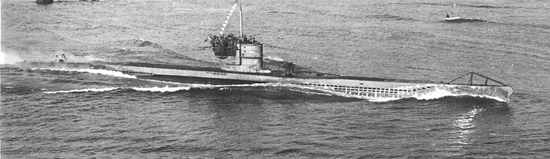
During her two years of active service, U-48 sank 51 ships for a total of 299,477 GRT and 1,060 tons; she also damaged four more for a total of 27,877 GRT over twelve war patrols conducted during the opening stages of the Battle of the Atlantic. She was the most successful U-boat of the war.
Decommissioned on 25 September 1943 and used as instructional boat.
Scuttled on 3 May 1945 at Neustadt.
 History Diaries