The Western Powers and the Soviet Union appealed to King Savang Vatthana of Laos today to preserve the coalition government of the neutralist Premier, Prince Souvanna Phouma. Prince Souvanna Phouma and the diplomats of the powers, including Ambassador Leonard Unger of the United States, conferred during the day with the King at Luang Prabang, the royal capital 130 miles north of this administrative capital of the country. The military junta that seized power here Sunday is asking that Prince Souvanna Phouma continue as Premier. But the junta expects him to resign and then form a new government, it was indicated.
The envoys, who returned during the afternoon from Luang Prabang, were told by the King that he condemned the military coup d’état and that he wanted Prince Souvanna Phouma to stay as Premier. Mr. Unger said that he had delivered to King Savang Vatthana a message from W. Averell Harriman, the United States Under Secretary of State for Political Affairs, urging that the King help in restoring the coalition. Prince Souvanna Phouma also returned to Vientiane late Wednesday, evidently to confer again with the military coup leaders, said The Associated Press. He was noncommittal on developments, saying only that he was “continuing to look for a reasonable solution” of the national crisis.
General Siho Lamphouthcoul, the 29‐year‐old right‐wing security chief who is emerging as a dominant personality of the military junta, was reported opposed to restoration of the coalition Government as it stood. Under the Geneva agreement of June, 1962, the coalition under Prince Souvanna Phouma, a neutralist, included the rightists, nominally headed by General Phoumi Nosavan (who was not involved in Sunday’s coup) as Deputy Premier and Prince Souphanouvong, leftist and head of the pro‐Communist Pathet Lao, also as Deputy Premier. Ministries were divided among the three factions. General Siho and General Kouprasith Abhay, nominal head of the Revolutionary Committee, the junta, have kept Prince Souvanna Phouma under close surveillance since their unsuccessful attempt Sunday to compel his resignation.
The danger overshadowing the political confusion in Vientiane was that the pro‐Communist Pathet Lao forces would exploit the apparently developing rifts in the ranks of the rightist forces and mount a strong military offensive. The envoys of the United States, Britain, France, the Soviet Union, India and Australia flew this morning to Luang Prabang to lodge their appeal with the King. They were insisting on preservation of the 1962 Geneva agreement.
A nine‐man court in Saigon ruled tonight that Ngô Đình Cẩn, younger brother of the late President Ngô Đình Diệm, must die on the guillotine. The 53‐year‐old former overlord of Central Vietnam was convicted on charges of murder, extortion and misuse of power. A diabetic who suffered a heart attack last Friday, the defendant sat slumped in his chair and showed no emotion at the verdict. His only chance now is an appeal for clemency to Major General Dương Văn Minh, head of state under the Premier, Major General Nguyễn Khánh. General Minh led the military coup d’état that overthrew the Government of President Diệm last November. The President and his brother, Ngô Đình Nhu, were killed in that coup. General Minh was ousted in turn last January by General Khánh, but he entered the Khánh regime as titular head of state.
Cẩn denied all accusations against him during the six‐day trial, including a charge that he planned and ordered the torture murder of three persons in 1956, 1957 and 1958. Reflecting a revolutionary drive to eliminate the last vestiges of a family dominant in South Vietnam for a decade, the tribunal ordered confiscation of all the prisoner’s cash and property. He is the second member of the Diệm regime to be tried by a revolutionary court. Phan Quang Đông, former chief of Cẩn’s secret police, was sentenced to death in Hué on March 28. He is still awaiting execution. Cẩn sought refuge at the United States consulate in Hué after the November coup. The Americans turned him over to revolutionary authorities.
The Diệm family’s history is one of death and exile. President Diệm and Ngô Đình Nhu died on November 2 during the revolt against them. Mrs. Nhu is in exile in Paris with her children. Communists killed another brother, Ngô Đình Khôi, just after World War II. The Most Rev. Ngô Đình Thuc, Roman Catholic Archbishop of Hué, is in Rome. It is assumed that he may be assigned to missionary work abroad. Another brother, former Ambassador Ngô Đình Luyện, was last reported hunting for a job in London to support his wife and 12 children. The widowed mother of the brothers, Mrs. Ngô Đình Khả, died in Saigon last winter.
France’s Foreign Minister reaffirmed to the Cabinet today the Government’s view that neutrality in Vietnam is the only way to end the conflict between South Vietnam and Communist guerrillas supported by North Vietnam. Maurice Couve de Murville said he had made this position clear to Secretary of State Dean Rusk at the recent meeting of the Southeast Asia Treaty Organization’s Council in Manila. France’s position, Mr. Couve de Murville said, is that neutrality for Vietnam should be synonymous with nonengagement in the East‐West struggle. Information Minister Alain Peyrefitte said later that Mr. Couve de Murville had not elaborated on his remarks, but that the sense of them was that he wanted a united Vietnam to take no part in the East‐West struggle either in Asia or elsewhere. This did not mean that France would forsake her alliance with the West, Mr. Peyrefitte said.
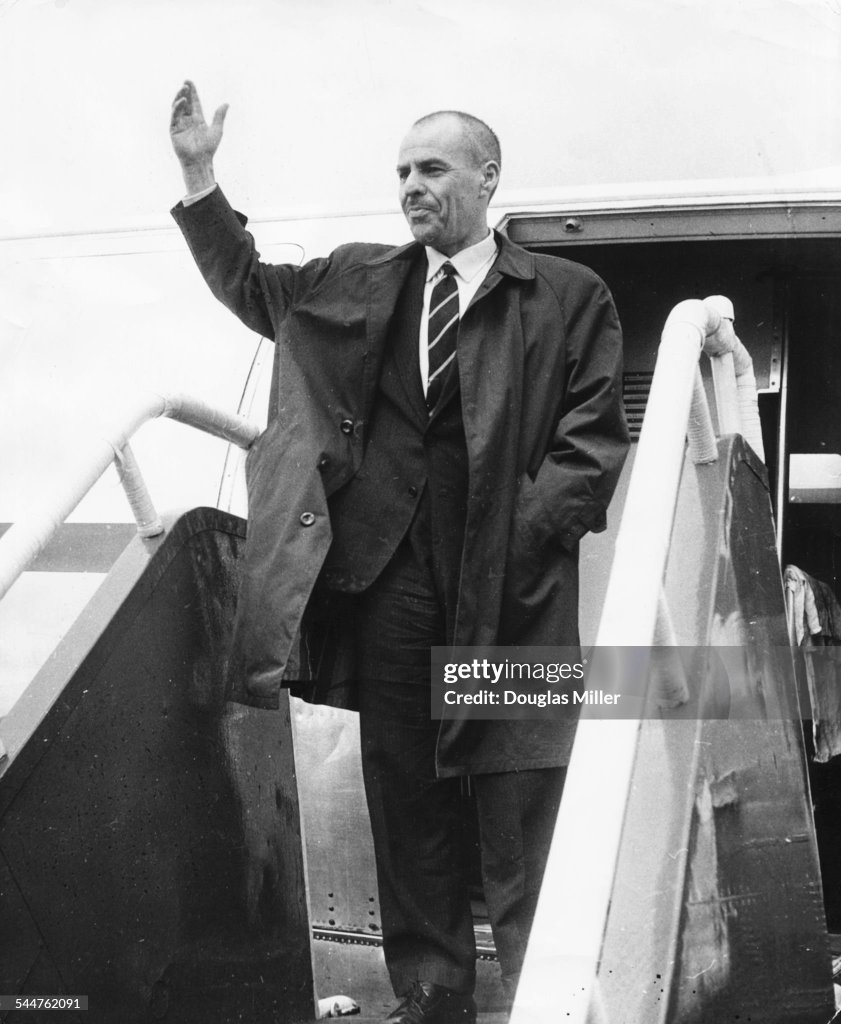
British businessman Greville Wynne, imprisoned in Moscow since 1963 for spying, was exchanged for Soviet spy Gordon Lonsdale. Looking thin and tired, Grevllle M. Wynne, a British businessman whom the Russians sentenced last May to eight years’ imprisonment on charges of espionage, flew to London today for a joyful reunion with his wife and 12‐year‐old son. Mr. Wynne, 45 years old, was exchanged at 5:35 AM for the Soviet spy known here as Gordon Arnold Lonsdale a few hours earlier at a border crossing point between West Berlin and East Germany. Mr. Lonsdale, 40, has been identified by the British police as Konon Trofimovich Molody, son of a prominent Soviet science writer. He was serving a 25‐year sentence as the mastermind of a ring that obtained for the Russians vital information about the Royal Navy, particularly its underwater weapons. At two brief news conferences, at the airport and later in the garden of his Chelsea home, Mr. Wynne gave cryptic answers to questions about his health, which the British Government said had been deteriorating in prison, and his treatment in a Moscow prison. He added nothing to what is known about his case.
A senior West German Cabinet member spoke out sharply today against “détente talk” and the new reduction of United States forces in West Germany. The critical comments from Dr. Heinrich Krone, chairman of the National Defense Council, were expressive of a sense of uneasiness evident in political quarters in Bonn over multiplying signs of Soviet‐United States undertakings to reduce tensions. Chancellor Ludwig Erhard and his ministers have no quarrel with moves such as the parallel decisions in Moscow and Washington to cut back production of fissionable materials. The Chancellor specifically hailed the twin announcements as a step toward general and controlled disarmament.
The uneasiness stems from the technique of coordinated moves, which are thought to be based on private consultations between the Soviet and United States Governments. It is speculated that the time might come for a tacit agreement on matters affecting vital German interests. It is widely believed in informed West German quarters that such an agreement is already in existence between the Soviet Union and the United States with respect to Berlin. It is believed that there is an understanding to “freeze” existing relationships and procedures affecting the Western presence in and access to the former German capital. There have been no significant “incidents” involving the exercise of Western or Soviet rights in the Berlin area for six months.
Convicted Nazi war criminal Walter Zech-Nenntwich escaped from a West German maximum security prison in Braunschweig, a few days after being sentenced to four years at hard labor for his role in helping kill 5,254 Jews in the Soviet city of Pinsk. Zech-Nenntwich was aided by being able to open six unlocked doors and then helped over a 15-foot-high wall. He and a woman friend then hired an airplane at Nordhorn and flew to Switzerland, landing at Basel. From there, he fled to Egypt. After more than three months on the run, he would voluntarily surrender to West German authorities on August 7. By then, it would be revealed that the warden at the Braunschweig jail, Hans Zeeman, had been the escapee’s friend during the Nazi era. Walter Zech-Nenntwich was then jailed in Hannover where, the press was told, “there are no wardens there with Nazi backgrounds.”
The Angolan rebel organization headed by Holden Roberto has accepted for membership a rebel group strongly linked with the Chinese Communists. The National Front for the Liberation of Angola, of which Mr. Roberto is president announced today that it was accepting the application of the group, headed by Viriato da Cruz. Observers here regard Mr. da Cruz as a dedicated Communist who follows the Peking line. The admission of his group is seen as an important new move to the left by Mr. Roberto’s organization. Mr. Roberto, who is also president of the Angolan Government in exile, announced in January that the National Front would accept aid from Communist China and other Communist countries.
This came as something of a surprise because Mr. Roberto had been widely considered a political moderate with pro-Western sympathies. However, he has become disillusioned because the United States and other Western countries have not put pressure on Portugal to negotiate with the rebels. Perhaps even more important, the guerrilla war that the rebels have been waging against the Portuguese for the last three years is not going well. The rebel soldiers are demanding more and better weapons. Mr. Roberto knows he cannot get these from the West. The Communists are eager to supply them.
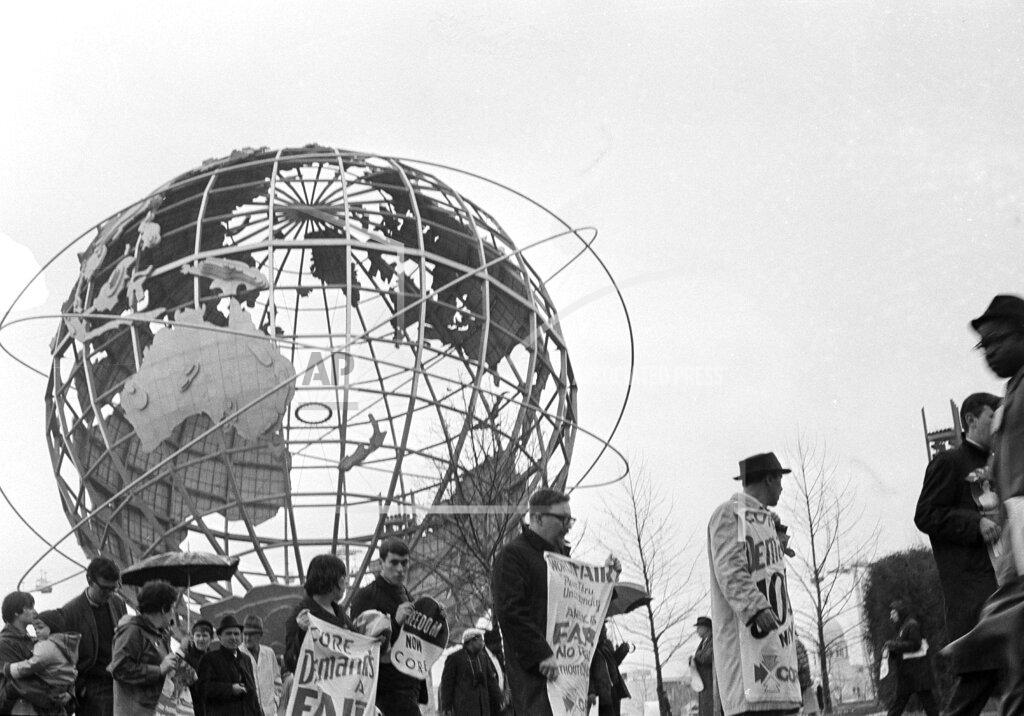
The 1964 New York World’s Fair opened to celebrate the 300th anniversary of New Amsterdam being taken over in 1664 by British forces under the Duke of York (later King James II) and being renamed New York. The fair would run until October 18, 1964, then make a second run from April 21 to October 17, 1965. Since less than ten years had passed since the Seattle World’s Fair in 1962, the New York exposition was not internationally approved, but many nations would have pavilions with exotic crafts, art and food. Five students from St. Peter’s College in Jersey City, New Jersey camped outside of Gate Number 1 for two days so that they could be the first in line. Bill Turchyn was the first of the five to go through the gate.
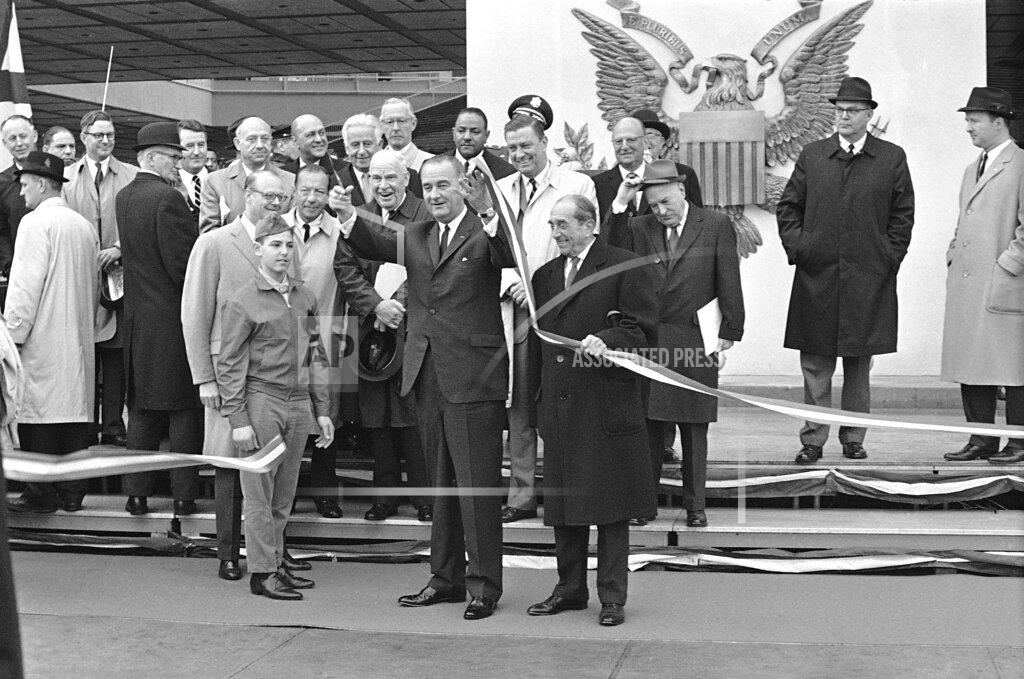
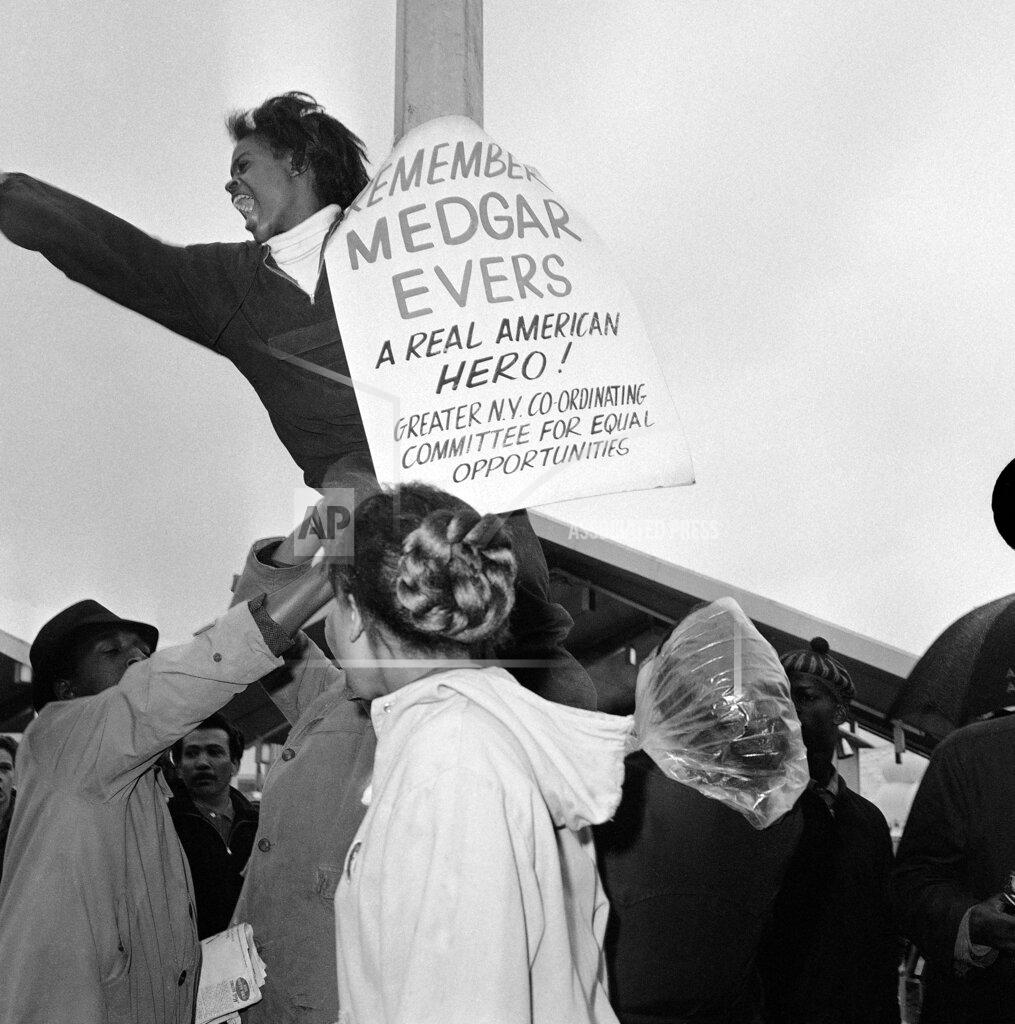
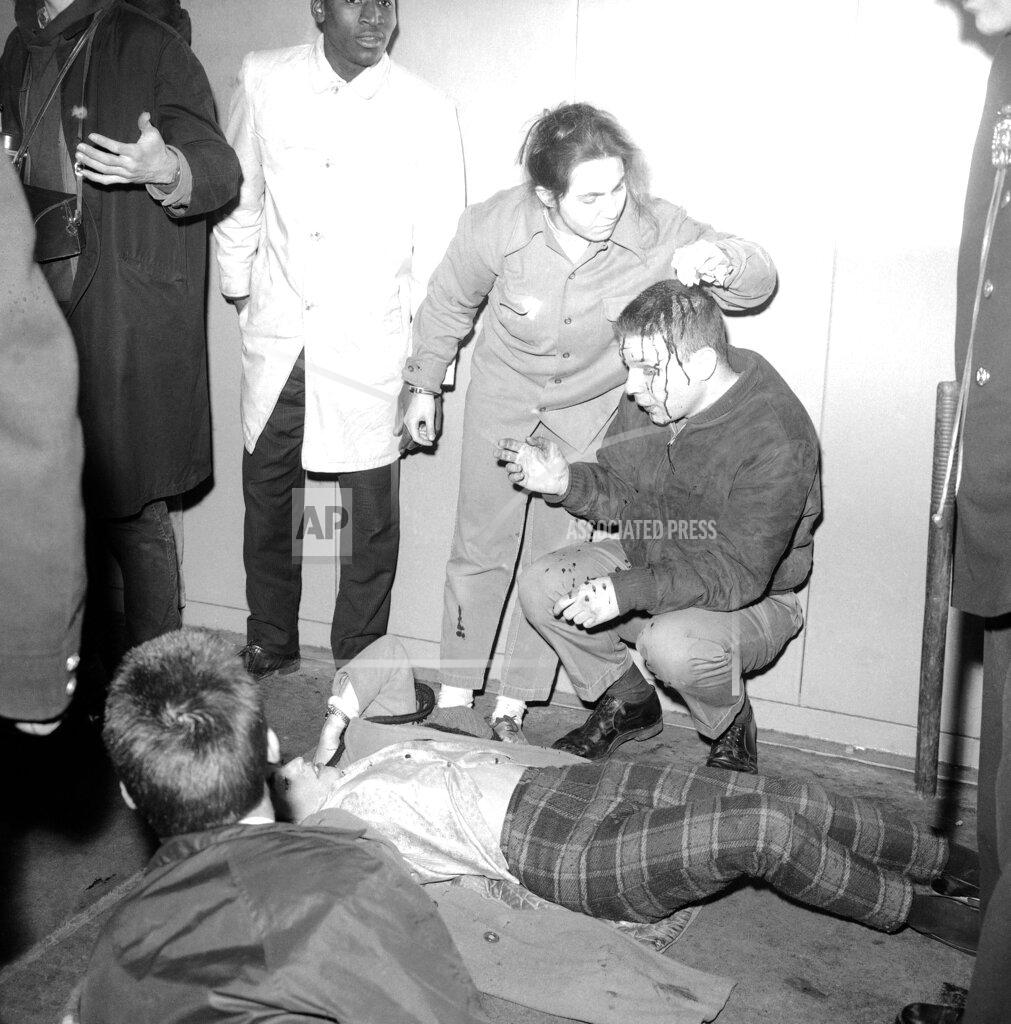
The New York World’s Fair was opened by President Johnson on schedule yesterday, despite the double obstacle of foul weather and civil disobedience. Massive demonstrations that had been threatened by civil rights groups outside and inside the fair failed to materialize. A few hundred Black and white activists did, however, distract and disturb the crowds during the colorful premiere of the great exposition. A band of youthful pickets and sit‐ins assailed President Johnson with rude shouts when he dedicated the Federal Pavilion. It rained most of the morning, and it was cloudy and chilly the rest of the day. The grim, November‐like weather, combined with the fear that integration activists might block access to the fair, undoubtedly kept thousands away. Attendance was 92,646, with 63,791 paid. An attendance of at least 250,000 had been forecast.
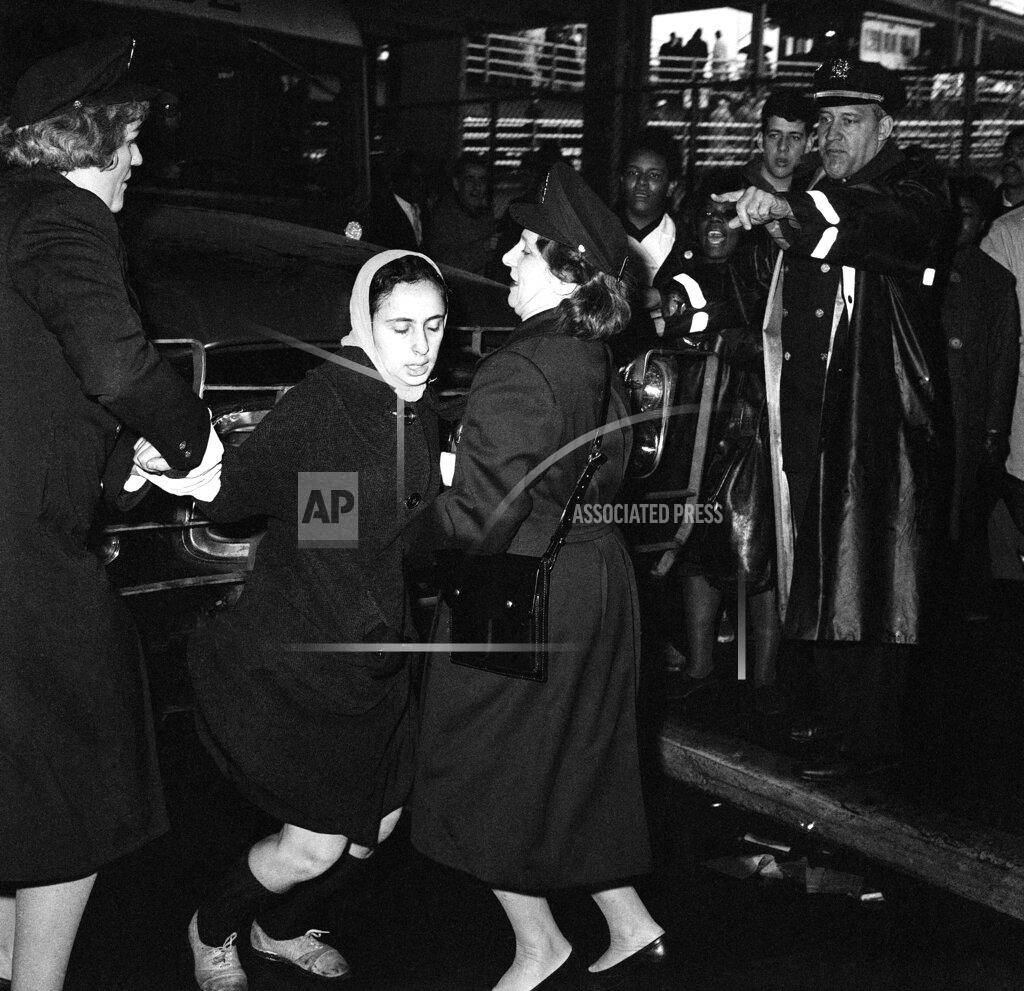
Wide publication of a threat to pull emergency cords on subway trains apparently had alarmed many. Yet there was only one serious attempt to stop a train. Similarly, the forecast of a paralyzing stall‐in evaporated: traffic moved smoothly. By evening about 300 persons had been taken into custody outside and inside the fairgrounds.
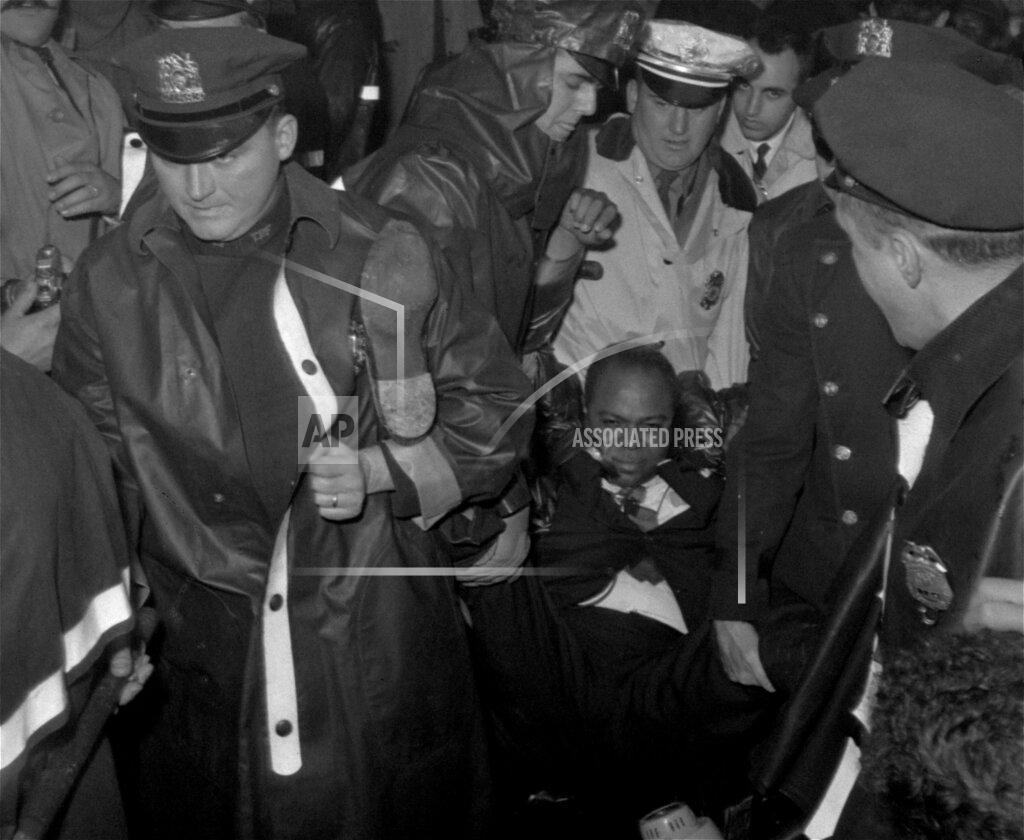
Among those arrested were leaders of the demonstration. James Farmer, national director of the Congress of Racial Equality, and Bayard Rustin, organizer of last summer’s March on Washington, were taken into custody as the police dispersed a sit‐in at the New York State Pavilion. The militant integrationists were unable to disrupt the opening ceremonies, of which the climax was the President’s speech to 10,000 rain‐soaked spectators in Singer Bowl. Entrance to the bowl was by invitation only.
Demonstrators for Black rights failed yesterday to produce their threatened stall‐ins to tie up traffic going to the opening of the World’s Fair. But four demonstrators and three policemen were injured when a crowd tried to stop one morning subway train and there were a number of other incidents. In demonstrations pegged to the start of the fair, whose slogan is “Peace Through Understanding,” 299 persons were arrested. Three youngsters under 16 years old also were held but were not technically arrested. Thirty‐four of the arrests were made outside the fairgrounds in Flushing Meadow. A leader of the demonstrations inside the grounds said more protests were planned in an effort to “awaken the American conscience.”
President Johnson, trying to still the rising protests, summons Congressional leaders to the White House for briefings by Defense Secretary McNamara and CIA Director John McCone. President Johnson called Democratic and Republican Congressional leaders to the White House today for a briefing on the South Vietnam situation. The briefing by Secretary of Defense Robert S. NcNamara, Secretary of State Dean Rusk and John A. McCone, director of Central Intelligence, also covered the factors involved in Mr. Johnson’s decision to cut back on the production of fissionable materials for weapons purposes. There was no immediate reaction from Republicans who participated in the briefing. They included Senator Everett McKinley Dirksen of Illinois, the Senate minority leader, and Representative Charles A. Halleck of Indiana, the House minority leader.
A threatened nationwide strike of United States railroad workers was called off 55 hours before it was to start at 12:01 on Saturday, as federal mediators conferred with representatives of labor and management at a meeting in the private family quarters of the White House. The five‐year‐old railroad work rules dispute was settled today, ending the threat of a nationwide rail strike at midnight Friday. The agreement, which provides for a raise for about 100,000 workers along with other benefits and gives the railroads additional flexibility in assigning work crews, was announced by President Johnson over nationwide television about 6:45 PM. The President said the terms of the accord “are just and are fair.” The settlement was a great personal triumph for Mr. Johnson. He intervened forcefully in the dispute on April 9 to persuade the five operating rail unions and the railroads to call off a national rail shutdown set for midnight that day. And Mr. Johnson clinched the settlement personally today by persuading the railroads to accept it.
Southern Senators were savoring in advance today their first taste of victory in the civil rights battle. But it was only a partial victory in a relatively small skirmish. The leaders of the civil rights coalition said they were willing to meet part way a Southern demand for jury trials in all cases of criminal contempt arising out of injunction suits provided for in the civil rights bill. Last night Senator Herman E. Talmadge, Democrat of Georgia, suddenly offered an amendment to change the Federal Criminal Code to provide a jury trial in all criminal contempt of court cases, not just those involving civil rights. This was identical with an amendment that the Senate appended to the Civil Rights Bill of 1957, but that the House refused to accept.
After a snarl lasting two weeks, House and Senate leaders of both parties finally agreed that, in voting‐rights cases only, a person held on criminal contempt could have a jury trial if the judge fined him more than $300 or sentenced him to more than 45 days in jail. The bill now before the Senate extends this 1957 formula to criminal contempt cases arising out of Title II, the section banning discrimination in public accommodations. Today Senator Hubert H. Humphrey of Minnesota, Democratic floor manager of the bill, said he would be willing to have the same limited right of jury trial for all titles of the bill that authorize injunction proceedings.
The House of Representatives heard a warning from one of its leading members today that the New York, Boston and Philadelphia naval shipyards might be ordered closed before the end of 1964. The warning, by Representative Carl Vinson, chairman of the House Armed Services Committee, highlighted a furious debate as the House unanimously passed a $46,785,867,000 defense appropriations bill for the fiscal year 1965, beginning next July 1. At one point, members shouted at each other, declaring that the naval shipyards — or private shipyards, as the case might be — in their districts would suffer if the present system of contract allocations were changed or not changed, depending on the point of view.
Elizabeth Taylor and Richard Burton were sued yesterday for $50 million in damages in connection with the motion picture “Cleopatra.” Miss Taylor and Mr. Burton, who were married recently, were charged with breach of contract and with depreciating the commercial value of the movie by their “scandalous” conduct before and during the filming. The suit was filed in Federal Court by the producers and distributors of the film, 20th Century‐Fox Film Corporation and 20th Century‐Fox Productions, Ltd. Under the terms of her contract, Miss Taylor was guaranteed a salary of $750,000 against 10 percent of the gross receipts. The film company said that the actress had received in excess of $20 million.
In the first part of the suit, Fox seeks $20 million in damages from Miss Taylor. She was charged with breaching her contract in the following manner: “By not reporting for work; by not reporting for work on time; by not performing her services with due diligence, care or attention; by reporting for work in a condition which did not permit her to perform her services by suffering herself by her own acts and fault to become disabled, incapacitated, or unphotographable, and unable to perform her services. By conspiring with and inducing others to breach their agreements faithfully to perform their services in the pro‐ duction of ‘Cleopatra,’ by suffering herself to be held up to scorn, ridicule and unfavorable publicity as a result of her conduct and deportment both during and subsequent to the production of ‘Cleopatra’ and while it was being distributed so as to become offensive to good taste and morals and to deprecate the commercial value of Cleopatra.”
The second claim for $5 million was leveled against Mr. Burton, the British actor now appearing in “Hamlet” on Broadway. The charges against Mr. Burton, who portrayed Mark Antony in “Cleopatra,” mirrored those against Miss Taylor. The third claim for $25 million is against both Miss Taylor and Mr. Burton. Twentieth Century‐Fox contended that its property had been damaged by “their conduct with each other although each was to the public knowledge at these times, married to another,” and “holding themselves up to the public scorn and ridicule.”
Dow Jones Industrial Average: 823.57 (-2.88).
Born:
Chris Makepeace, Canadian actor (“Vamp”, “My Bodyguard”, “Meatballs”, “Oasis”), in Toronto, Ontario, Canada.
Bob McCann, NBA small forward and shooting guard (Dallas Mavericks, Detroit Pistons, Minnesota Timberwolves, Washington Bullets, Toronto Raptors), in Morristown, New Jersey (d. 2011 of heart failure).
Jack Savage, MLB pitcher (Los Angeles Dodgers, Minnesota Twins), in Louisville, Kentucky.
Sheldon Gaines, NFL wide receiver (Buffalo Bills), in Los Angeles, California.
 History Diaries