
As part of Britain’s Mediterranean fleet assembled at Alexandria, from which point it could keep watch over the Dardanelles, immediate announcement of a British pledge to defend Turkey against aggression was delayed only by Ankara’s desire to dispense with publicity in the hope of avoiding giving offense to Germany. Meanwhile, London was reported to have accepted as a “basis for negotiations” a Soviet proposal for revival of the old Anglo-French-Russian military alliance.
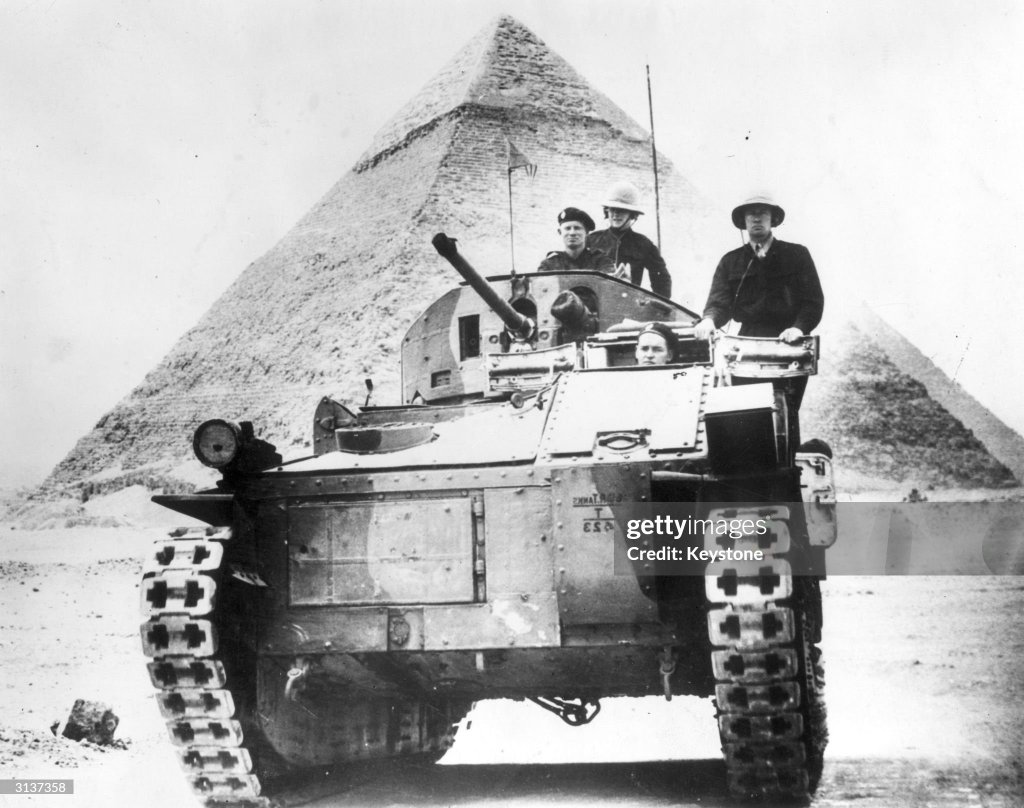
The existence of British commitments to Turkey as well as to Greece and Rumania was symbolized today by the assembling of a portion of the British Mediterranean fleet at Alexandria, Egypt, where warships can guard the twin gateways of the Suez Canal and the Dardanelles. In the light of Great Britain’s new naval responsibilities, Alexandria is regarded as a far more favorable base for possible operations in the near future than Malta, 800 miles to the west. There is no question of abandoning Malta as a naval base even temporarily; indeed, naval experts here laughed at the idea today.
Moscow circles emphasized that the Soviet wanted to include the Far East, where it is threatened by Japan, in any commitments involving a new alignment of the powers. In Moscow it is remembered that Poland and Rumania still are between Adolf Hitler and the Soviet border while the Red Army actually had to fight the Japanese (at Changkufeng) on Russia’s Far Eastern border only last Summer. Nothing is disclosed officially about the conversations with the British except that they are continuing. The Soviet Ambassador, Ivan Maisky, is here from London and has conferred with Mr. Litvinoff and Alexei T. Merekaloff, Soviet Ambassador to Berlin, who also is in Moscow.
Comment in Soviet circles indicates that if there is any serious divergence of official opinion it is because London, rather than Moscow, is cautious. The impression gathered in British circles here when the conversations began was that Far Eastern questions were not even likely to be considered.
Polish skepticism regarding Russia was voiced in the Express Poranny, often regarded as the Foreign Office’s mouthpiece, which expressed doubts as to the value of the Soviet aid and feared that it might be dangerous to the countries accepting it. The armed forces of the Soviet would become an extremely strong influence in certain parts of Europe “after a long European war,” Express Poranny declared, and “many countries instead of enjoying victory would have to face revolution.” The newspaper explained that Poland’s opposition to entering any military alliance with Soviet Russia had been made clear to Great Britain and France from the time the British-French system of guarantees was started.
The Express Poranny also voiced doubt as to the value of Russia as a military ally from the standpoint of defense. “At the present moment the Soviet (Army) does not represent a factor which could have an influence on the development of European events,” the newspaper declared. “Her armed forces are unknown and are led by men without sufficient experience.”
In Paris Foreign Minister Bonnet explained to a Senate commission that the nations to be aided under the anti-aggression plan must be willing to resist attacks in order to make the guarantees operative.
At the same time the French Government decreed a 1 percent sales tax to defray the rapidly mounting coat of armaments and extended the normal work week from forty to forty-five hours
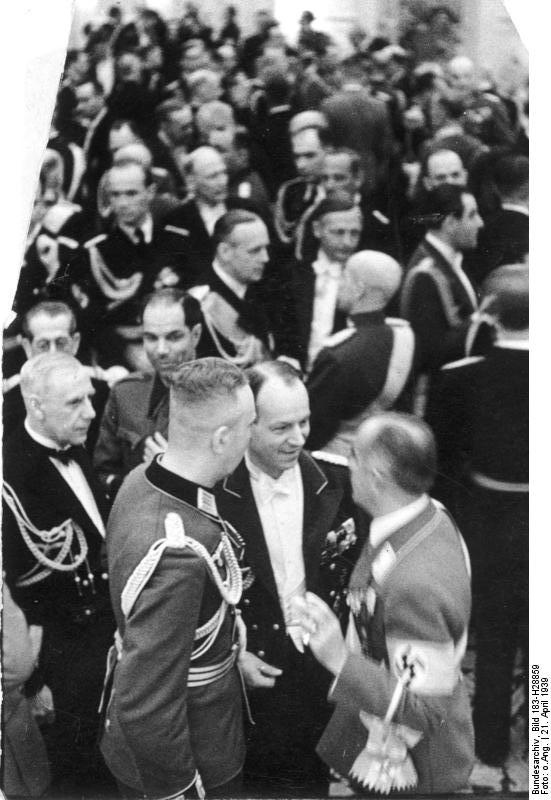
While the German press proclaimed that the world had been deeply impressed by the display of military might at Chancellor Hitler’s birthday celebration, quick moves by Berlin in the Balkans were expected in an effort to counter inroads by the democratic powers in that German sphere of interest.
It was announced that the Yugoslav Foreign Minister would visit Berlin after his conference with the Italian Foreign Minister in Venice today.
The National Party urges Czech unity and seeks to build up resistance to German aggression.
Pope Pius XII approves a crusade of prayer. He suggests that children spend May praying to Virgin Mary for peace.
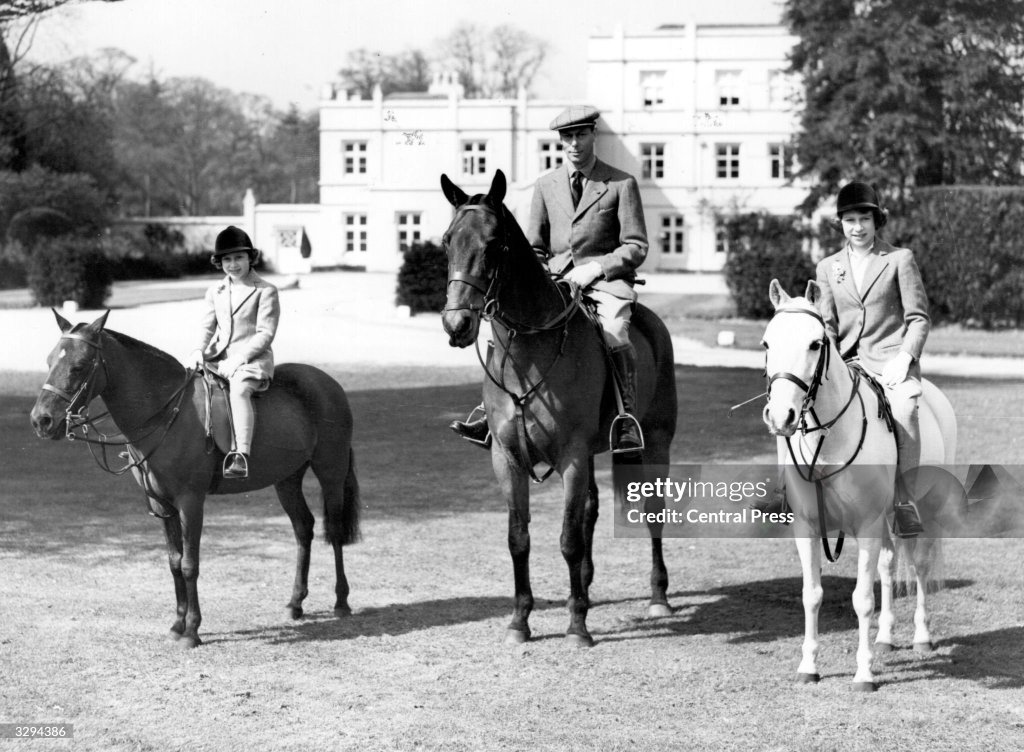
Princess Elizabeth celebrates her 13th birthday on 21 April, 1939. Being her birthday, the young Princess was allowed to plan her own day and after opening her presents in the morning, she went riding in Windsor Great Park with the King and Princess Margaret, her younger sister. The Queen of England presents her daughter, Princess Elizabeth, with silk stockings on her 13th birthday.
A recent ambiguous statement at Malaga by Generalissimo Francisco Franco to the effect that the war was not over and the uncertainty concerning the date of the victory parade in Madrid have been a result of Carlist dissatisfaction, according to Carlist quarters here. The Carlists, who were roused to fight against what was termed the “Soviet yoke,” contend that they provided the largest part of the Spanish troops for the Nationalist victory, and they strongly object to the presence of foreign troops in the victory demonstration. This is understood to be the real cause of its delay.
The day of victory in Spain was not a wholly happy one for the Carlists, since there was to remain in the country an “army of occupation” coming from the two peoples in Europe they most dislike the Germans and the Italians. It must be remembered that when Germany annexed Austria there were violent incidents in Spain between Carlist and German officers and Carlist newspapers condemned the invasion of Austria. They were most indignant over the arrest in Vienna of Archduke Karl Ferdinand, the only grandson of Don Carlos VII. In churches in Navarre, Guipuzcoa and Alava services were held and prayers said for “the Most Apostolic Prince Karl Ferdinand of Habsburg-Lorraine, Archduke of Austria, Infante of Spain, fallen into the cowardly hands of enemies of God.”
But the Italians are possibly still more unpopular with the Carlists than the Germans. To these Puritans of Spain Italian “depravity” is proverbial. In San Sebastián, a Carlist city, where many officers passed their leaves, Italian officers were politely but coldly bowed out of Spanish society. Few Spanish girls would go out with an Italian for fear of being snubbed by her friends. Recently, it is reported, General Franco found that Carlist dissatisfaction had reached such a point that unless the foreigners quit Spain the Carlists might refuse to lay down their arms. This is said to be one of the reasons for the delay in demobilization.
Rome celebrates its 2,692nd birthday.
U.S. Senator William Borah says true neutrality is impossible for the United States. Senator Borah, ranking Republican member of the Foreign Relations Committee, expressed the opinion today that American public sentiment had so taken sides in the European crisis as to make absolute neutrality a practical impossibility. He added that the Foreign Relations Committee itself, which is now considering various proposals to revise the Neutrality Act, would find it difficult to assume a frame of mind “approximating a judicial impartial attitude.”
The Senator’s views were expressed in the course of questioning at today’s public hearings, of Mrs. Helen Taft Manning, dean of women at Bryn Mawr College. Mrs. Manning testified in favor of the amendments proposed jointly by Senators Nye, Clark, and Bone which would retain the present embargo on arms exports to belligerents and would make automatically operative a “cash-and-carry” system for commerce in other commodities.
“Haven’t the people already made up their minds who is right and who is wrong?” Mr. Borah asked Mrs. Manning, after she had attacked the principle of choosing the aggressor which has been advocated by Dr. Charles G. Fenwick, international and constitutional law professor at Bryn Mawr. The thing that is uppermost in my mind,” the Idaho Senator continued, “is that there is no neutrality at this time because of conditions that exist in the world.”
Mrs. Manning replied that people’s feelings naturally tended to involve the United States in the present crisis. “I was simply anxious to know your thought as to the possibility of this committee coming to any agreement which would be accepted as a neutral position,” Mr. Borah went on. He explained that he was not thinking of any specific act or statement of any official or responsible spokesman, but only of the general condition of mind throughout the country toward the totalitarian States, adding that “we have practically passed upon who is an aggressor.” Senator Taft, Mrs. Manning’s brother, came to the hearing to hear her testimony.
The House of Representatives voted today to extend for two years, or until June 30, 1941, the President’s power to determine the gold content of the dollar, and with it the continuation of the $2,000,000,000 stabilization fund and the silver purchase program. The record vote of 225 to 158 against terminating the President’s power over gold found only a few Democrats deserting their leaders. The Republicans had counted upon a defection from the majority to aid their drive, but at every turn they met defeat.
Representatives Dies of Texas and Anderson of Missouri, who had previously expressed opposition to continuance of Presidential emergency powers, failed to lead the expected fight on the bill from the Democratic side. With unfavorable rulings by the chair upon several amendments the Republican efforts collapsed and the burden was laid upon their colleagues in the Senate, to which the bill was sent, where hearings upon it have been started in the Banking and Currency Committee. Aside from the expiration date, the only change in existing law made by the bill is a requirement that an annual report on the stabilization fund be sent to Congress as well as to the President.
The powers granted to the President by the Gold Reserve Act of 1934, which are now extended, authorized him to change the weight of the dollar at any time within limits equal to 50 and 60 percent of its former gold content. The current gold value of the dollar is equal to 59.06 percent of its old value.
President Roosevelt announced he would send the first two plans for reshuffling of Federal bureaus to Congress next week. Shortly after his press conference, he left by motor for an overnight trip to visit his son, Franklin Jr., at Charlottesville, Virginia.
The Senate was in recess. An Immigration subcommittee continued hearings on a bill to permit entry into the United States of German refugee children. The Foreign Relations Committee heard additional testimony on Neutrality Act revisions. The Banking and Currency Committee approved a bill to extend FHA mortgage insurance authority at the present level. The Military Affairs Committee approved a bill for construction of a military highway in Panama.
The House passed the Administration measure for the extension of the stabilization fund and the President’s power to devalue the dollar. It received the Winter bill for repeal of the Agricultural Adjustment Act of 1938. The Foreign Affairs Committee continued hearings on neutrality legislation. The House adjourned at 2:06 PM, until Monday noon.
Secretary of Labor Perkins has notified James I. Houghteling, Commissioner of Immigration and Naturalization, to proceed promptly in the case of Harry R. Bridges, West Coast longshoremen’s leader, and to hold hearings as soon as possible on charges that he was deportable because he believed in or was a member of an organization which advocated the overthrow of the government by violence. Instructions have been sent to the immigration officials at San Francisco, Portland and Seattle to bring together all the evidence they have in order to hold hearings in the case of the Australian-born representative of the CIO.
Miss Perkins said at her press conference today that she acted as soon as the Supreme Court had handed down its decision in the case of Joseph G. Strecker, Austrian-born Hot Springs (Arkansas) restaurant owner. The court held that past membership in the Communist party was not sufficient cause for deporting an alien. While the Secretary said she did not know what the exact effect of the Strecker decision would be, she believed that, in order to deport Mr. Bridges, it would have to be proved that he was a member of an organization, alleged to be the Communist party, at the time the deportation warrant was issued in March, 1938, and that the Communist party advocated overthrow of the government by force or violence. According to her, there was no evidence in the Department of Labor’s files which showed that Mr. Bridges advocated overthrow of the government “by force or violence.” He has denied that he is or was a member of the Communist party.
The New York World’s Fair displays one of four original copies of the Magna Carta.
A New York judge sentences 44 in a bootlegging plot, including four former federal agents and four suspended police officers. The judge says government workers who violate their oath deserve no mercy.
The San Jacinto Monument was dedicated near Houston, Texas.
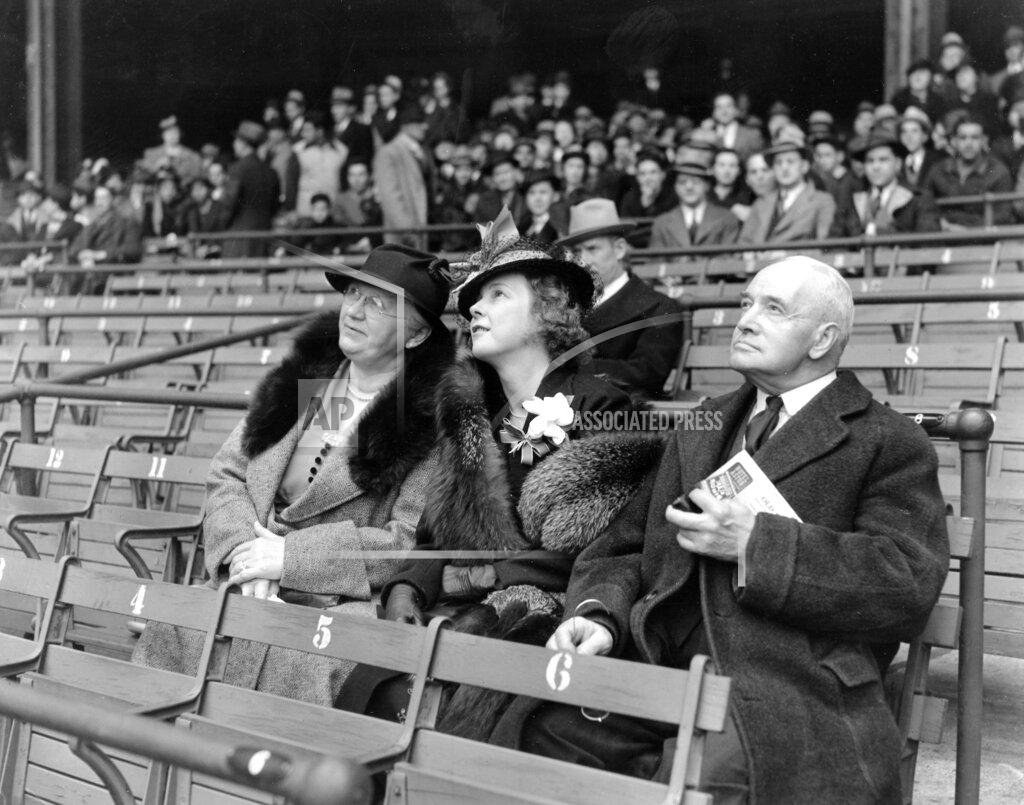
Ted Williams plays his first game at Fenway, scoring the first run for Boston against the A’s on a Frankie Hayes passed ball. The Sox roll to a 9–2 win.
At St. Louis, the Cubs beat the Cardinals, 4-2 in the season opener. Bill Lee allows 11 hits but just 2 runs. Charting every pitch and where each ball is hit and on what pitch count is the Cubs new statistician C.L. Snyder. He took over the spot of Jack Sterrett, who last year filmed 10,000 feet of film on Cubs batters. Subject to a lot of ribbing, Sterrett quit before the year’s end.
Half of the buildings in an important mining city in Chile must be razed following the earthquake.
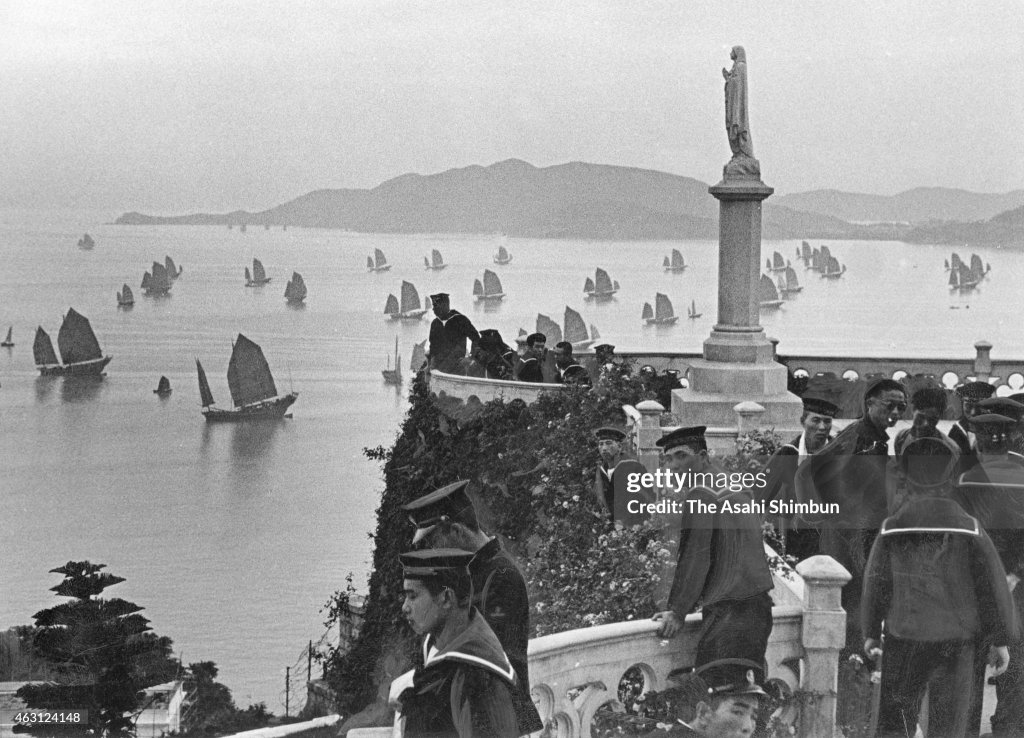
Answering Japanese reports that the Chinese “general offensive” had failed, military headquarters in Chungking declared today that a general offensive had not been ordered. The recent Chinese attacks on nearly all fronts were not a major counterdrive, it was stressed. A statement said it was Chinese strategy not to attack until the Japanese had been lured to unfavorable terrain where mechanized forces could not be used.
Reports to Chungking said Chinese forces were still attacking around Canton and that Shansi Province fighting still raged at important cities along the Tatung-Puchow Railway. In Southeast Shansi the Communist Eighth Route Army was reported to have led frontal attacks, repulsing the Japanese drive toward Wusiang and Singhsiang.
After getting a radio warning that Japanese planes were over Kweichow Province, a passenger plane of the Chinese-German Eurasia Company, en route to Hong Kong, turned back to Chungking today. The flight was the first by a Eurasia plane since the bringing down of a Eurasia airliner by Japanese planes in Southern Yunnan Province last week. Herr Leiting, the German pilot who flew the plane in today’s unsuccessful trip, was a passenger in the airliner that was attacked last week. All aboard were saved when the pilot, Roger Rathje, brought the plane down by skidding its fuselage along a rice field after dodging six Japanese planes in clouds for thirty-five minutes. While six others aboard scurried to hide in the field, Herr Rathje slipped in scrambling from a hatch and broke an ankle and collarbone. He lay unconscious while the Japanese machine-gunned the plane and dropped eight bombs but without injuring the plane or pilot.
Chinese 3rd and 9th War Areas attacked toward Nanchang, Jiangxi Province, China, engaging Japanese troops at Fengxin and Gao’an.
Dow Jones Industrial Average: 128.71 (+0.30).
Born:
Helen Prejean, American Catholic religious sister, writer (“Dead Man Walking”), and a leading American advocate for the abolition of the death penalty, in Baton Rouge, Louisiana.
Rip Hawkins, NFL linebacker (Pro Bowl, 1963; Minnesota Vikings), in Winchester, Tennessee (d. 2015).
John McCabe, British composer and pianist, born in Liverpool, England, United Kingdom (d. 2015).
Died:
Herman Finck, 66, British conductor (Palace Theatre (London), 1900-20), theater and light classical composer (“In the Shadows”).
Naval Construction:
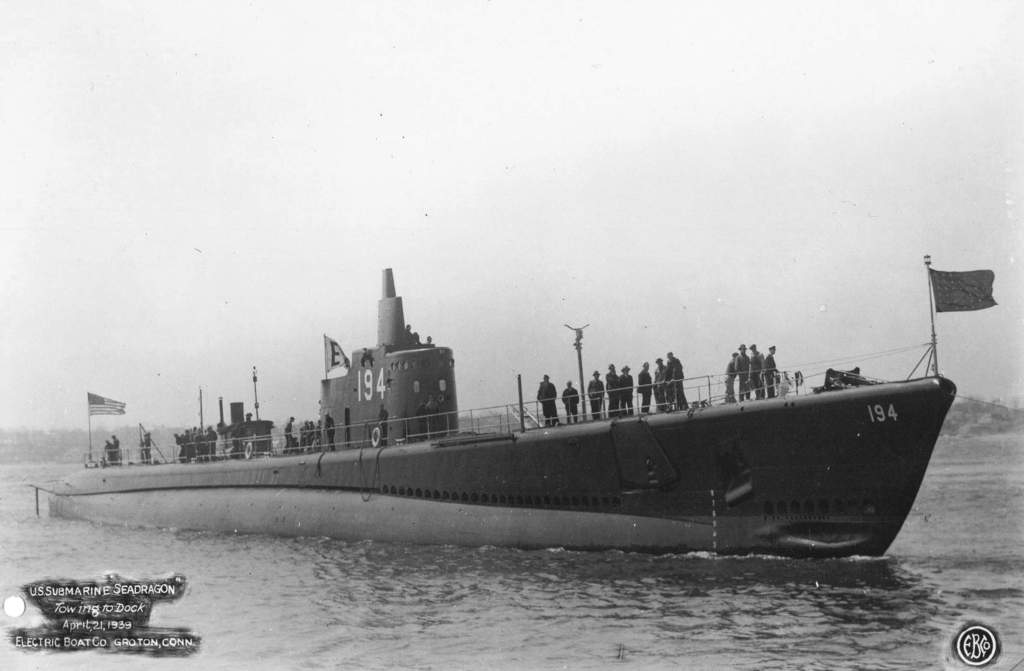
The U.S. Navy Sargo-class submarine USS Seadragon (SS-194) is launched by the Electric Boat Co. (Groton, Connecticut, U.S.A.). She had been officially launched on 11 April 1939 but got hung up on the ways.
The Вое́нно-морско́й флот СССР (ВМФ) (Soviet Navy) Project 7U-class (Storozhevoy-class) destroyer Serdity (Сердитый, “Enraged”) is launched by Sergo Ordzhonikidze Zavod (Leningrad, U.S.S.R.) / Yard 189.


 History Diaries