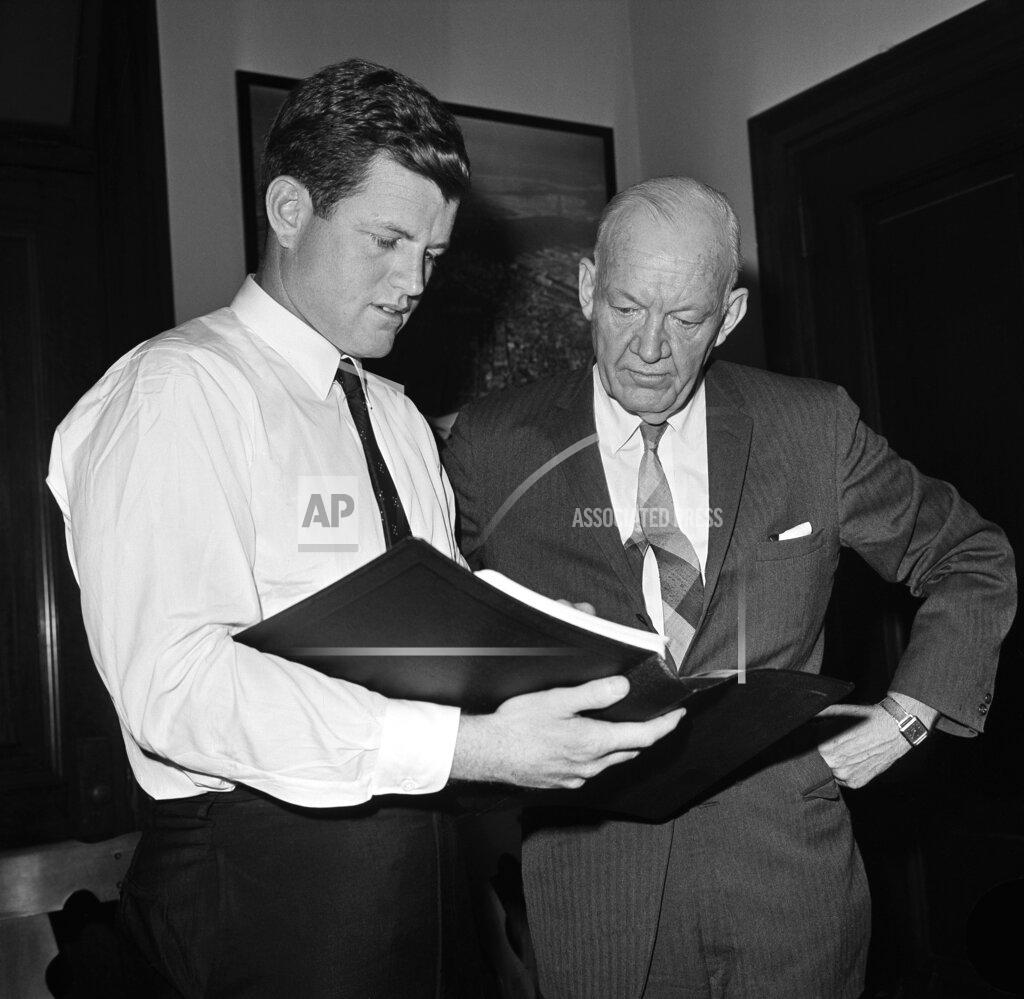
The Republican leaders of the Senate, Everett Dirksen (Illinois) and the House, Charles Halleck (Indiana), hold a joint news conference in Washington and charge that the Johnson administration is concealing the extent of U.S. involvement in the war. Representative Charles A. Halleck of Indiana, the House leader, said there was an average of 42 American casualties a month in 1963 and 91 a month thus far this year. At a joint news conference with Senator Everett McKinley Dirksen of Illinois, he read excerpts from letters written by an Air Force captain before he was killed in South Vietnam last month. The letters were made public by the captain’s widow.
On January 8, Mr. Halleck said, Captain Edwin G. Shank Jr. of Winimac, Indiana, wrote: “I don’t know what the U.S. is doing. They tell you people we’re just in a training situation and they try to run us as a training base. But we’re at war, we are doing the flying and fighting. We are losing. Morale is very bad.”
From a letter dated January 20, Mr. Halleck quoted: “I’ll bet you that anyone you talk to does not know that American pilots fight this war… The Vietnamese ‘students’ we have on board are airmen basics [recruits]… The only reason they are on board is, in case we crash, there is one American ‘adviser’ and one Vietnamese ‘student’… They are… sacrificial lambs… and they are a menace to have on board.”
“If we are going to war,” Mr. Halleck said, “let us prepare the American people for it.”
Casualty figures disclosed today showed that the South Vietnamese Government suffered its worst losses last week in the war against the Communist guerrillas. A spokesman for the United States Military Advisory Command said that casualties among Saigon’s forces in the week starting April 12 totaled 1,000. The total consisted of 200 killed in action, 660 wounded and 140 captured or missing in action. Communist Việt Cộng casualties totaled about 710, the spokesman said, including 660 killed in action and 50 taken prisoner. The figure for those, killed was based on counts or estimates accepted by United States officers as reasonable. During the week 26 American casualties were reported, including one death in action.
The week included a five‐day operation in the southern Mekong Delta near the post of Kiên Long. That operation produced some of the fiercest, most prolonged fighting of the war. The five‐day battle, which started with a Việt Cộng attack on Kiên Long, was declared officially ended Thursday afternoon when government forces finally lost contact with the guerrillas. Official government casualty figures for that operation were 55 killed in action, 175 wounded in action and 17 missing in action. About 50 weapons were lost to the Việt Cộng. Communist losses in the engagement were put at 175 killed in action and one captured. Confirmed checks accounted for 50 of the killed. The estimate of the rest was judged reasonable by United States field advisers. The Việt Cộng forces lost 15 weapons, the spokesman said.
Two rightist leaders refused today to restore Prince Souvanna Phouma’s neutralist coalition regime to power despite urging by Western officials, informed sources reported. Fearing a violent reaction to the coup d’état last Sunday from the pro‐Communist Pathet Lao, the officials, headed by President Johnson’s representative, William P. Bundy, tried to persuade the two generals to step aside. It was a day of great activity for Mr. Bundy, Assistant Secretary of State for Far Eastern Affairs; Ambassador Leonard Unger of the United States, and British and French diplomats.
First, they met for an hour with Prince Souvanna Phouma, the deposed neutralist Premier, who is being held in his villa by rightist soldiers. They presumably assured him that their governments strongly backed his coalition. Then, they talked for an hour with General Kouprasith Abhay, the coup leader, and his deputy, General Siho Lamphouthacoul. “No change,” a diplomat said, emerging from the meeting and shaking his head. Next the Western officials met with General Phoumi Nosavan, the Deputy Premier representing the right‐wing faction, who appeared embarrassed by the generals’ seizure of power.
General Phoumi Nosavan said he had assured the delegation that he would try to get the situation back to normal. But he seemed almost as much a bystander for the moment as Prince Souphanouvong, Deputy Premier and head of the Pathet Lao. Prince Souphanouvong is at his headquarters in the highlands about 100 miles northeast of Vientiane. Prince Souvanna Phouma and Generals Kouprasith Abhay and Siho Lamphouthacoul planned to fly to Luang Prabang, the royal capital 120 miles to the north, for a second meeting with King Savang Vatthana. The King, supposedly aloof from politics, is said to have expressed displeasure at the coup when the three met with him yesterday.
With the United States exerting pressure on the coup leaders, diplomatic sources in Saigon and elsewhere reported yesterday that the coup had failed. At dawn today, however, soldiers were still surrounding Prince Souvanna Phouma’s villa, barring the way to all but diplomats. From a balcony, the prince called to newsmen that his regime was still functioning. Asked how that could be when he was under house arrest, he replied: “I cannot say anything.”
The Soviet Union released today a Briton convicted as a spy, Greville M. Wynne, in exchange for a Soviet spy, Gordon Arnold Lonsdale, witnesses at the Berlin border reported. The exchange took place on the border of the British sector of Berlin and Communist East Germany, the witnesses said. It had been expected to take place on the Glienicker Bridge, where in 1962 the United States exchanged Francis Gary Powers, pilot of a U‐2 reconnaissance plane shot down by the Russians, for Colonel Rudolf I. Abels, a convicted Soviet spy. However, the witnesses said the Wynne‐Lonsdale exchange was carried out at the Heerstrasse Checkpoint at the West Berlin end of a highway leading through East Germany to Hamburg in West Germany.
President Johnson has said that U.S. reconnaissance flights over Cuba are essential and will continue. He warned Cuban Premier Fidel Castro that any effort to stop them “would be a very serious action.” In the face of a new Cuban protest, the President asserted that the flights would be continued so that the United States could know whether any missiles were being shipped into Cuba. The State Department later disclosed that on March 27 it sent a note to the Castro regime through the Swiss Embassy in Havana reasserting the United States position on the overflights. The President’s mention of notifying Cuba’s friends was taken as an allusion to the Soviet Union, but officials said they knew of no formal diplomatic warning to Moscow about the flights.
A Republican group which includes two former NATO commanders urged the United States to revitalize the Atlantic alliance.
The United States and Brazil share responsibility for the maintenance of hemispheric security, and new Brazilian President Humberto Castello Branco pledges his nation “will do everything to guarantee this common destiny.”
The British government, which quietly called a virtual halt to its production of nuclear weapons material more than a year ago, warmly welcomed similar reductions by the United States and Soviet Union.
Queen Elizabeth celebrated her 38th birthday privately at Windsor Castle today with her husband, Prince Philip, and her children.
U.S. President Johnson said the world faces inevitable, violent revolution unless the pressures of poverty are eased in the undeveloped areas. President Johnson told a group of 800 editors and broadcasters that the United States should go beyond the “War on Poverty” at home, and work at eliminating poverty throughout the rest of the world as well, commenting that “if we sit here just enjoying our material resources, if we are content to become fat and flabby at 50, and let the rest of the world go by, the time will not be far away when we will be hearing a knock on our door in the middle of the night… clamoring for freedom, independence, food and shelter — just as our revolutionary forefathers clamored for it.”
New York City awaited a showdown on the traffic stall-in at the World’s Fair opening tomorrow as approximately 3,000 police armed with tear gas prepared to halt the protesters.
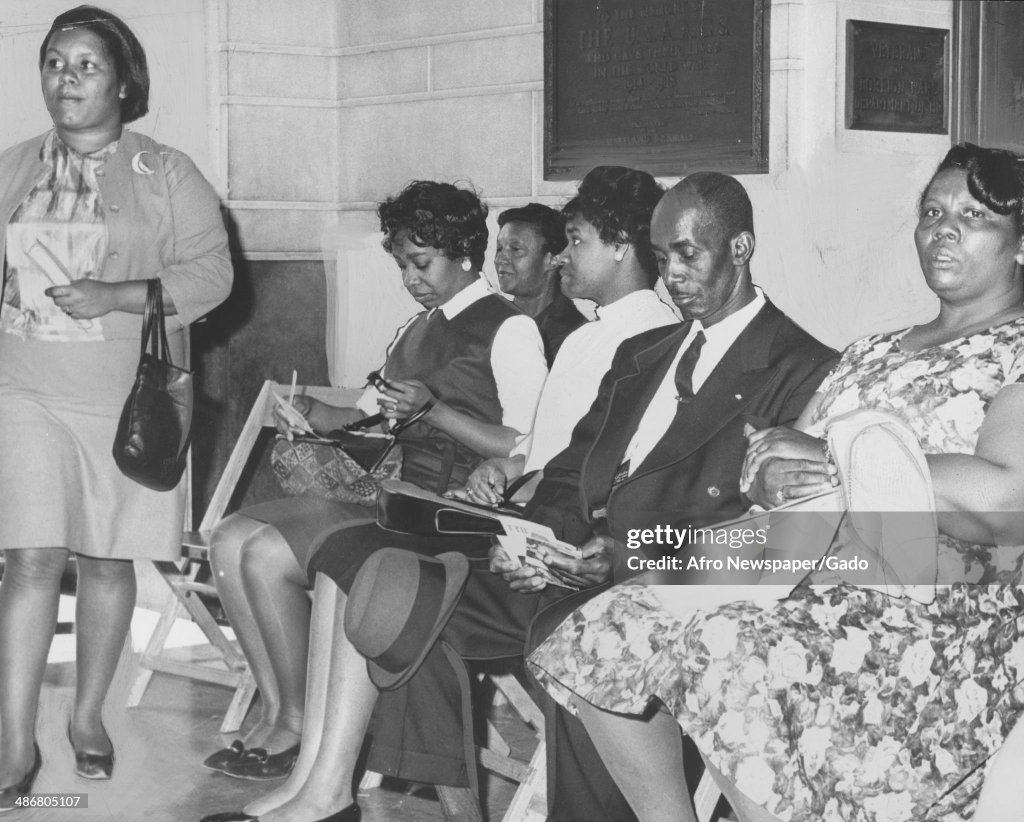
The success or failure of the Black stall-in planned at the New York World’s Fair may help shape the future of the civil rights movement in the United States.
Senate minority leader Everett M. Dirksen (R-Illinois) introduced his long-delayed amendment to the civil rights bill, saying it would strengthen the measure. Senator Everett McKinley Dirksen of Illinois submitted his long‐awaited “enforcement” amendment to the fair employment practices section of the civil rights bill today. In a news conference immediately afterward, the Republican leader said that he regarded his latest amendment, like the 10 he offered last week, as a strengthening proposal that would make the House‐passed bill “workable and practicable.”
Mr. Dirksen’s final language would give more authority to the five‐member Fair Employment Practices Commission than his earlier drafts. Nevertheless, it fell far short of the power accorded the commission in the House‐passed bill. The Senator acknowledged that his amendments would make the fair employment section “largely a voluntary” instrument for dealing with job discrimination. “It keeps the local spirit,” he said. “It starts back home.” When asked if he thought the amendment would help pass the bill, he replied, “Definitely.”
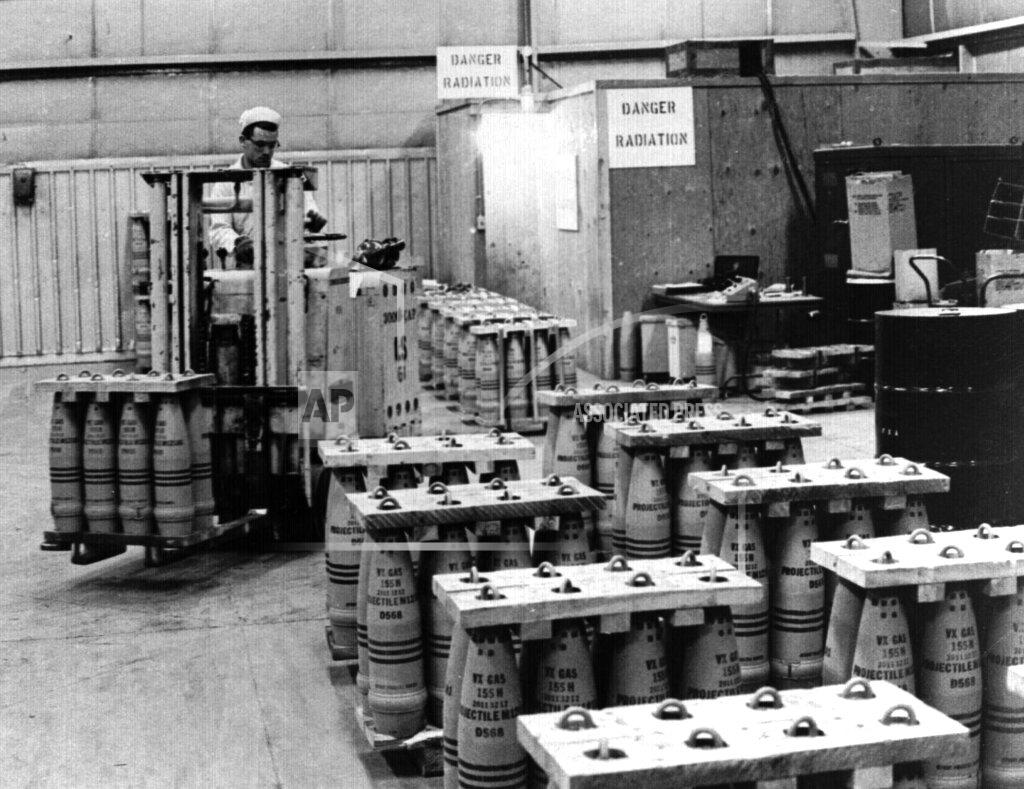
At a plant in western Indiana, the United States is making one of the war’s deadliest weapons — nerve gas — in an effort to stay ahead of any possible aggressor.
Flames starting in an idle shuttle train beneath New York’s Grand Central Terminal burst into an inferno, buckling steel beams and threatening collapse of pavement along busy 42nd Street. Damage was estimated at more than $1 million. A raging subway fire early yesterday knocked out shuttle service between Grand Central Terminal and Times Square and closed two blocks of 42nd Street to all vehicles.
Transit Authority officials said they hoped to restore service on at least one track by noon tomorrow, but the estimate seemed overly optimistic to some observers. It appeared that surface traffic might be detoured for weeks. The blaze, which occurred at the Grand Central end of the half‐mile line before the rush hour, destroyed two trains. No passengers were reported injured, but six firemen were treated for burns and smoke inhalation. The intense heat buckled 40 steel columns in the station, causing the street overhead to crack and sag as much as two feet near Madison and Vanderbilt Avenues. Fearing a cave-in, authorities closed 42d Street between Park and Fifth Avenues. Madison Avenue was closed between 41st and 43d Streets.
President Johnson said that railroad bargaining talks are making some progress and he hopes for a settlement within a few hours or days. The President discussed the dispute in answer to questions put to him in the White House Rose Garden by editors and broadcasters here for a State Department foreign policy briefing. Mediators resumed their efforts this afternoon, after a morning recess that followed a midnight‐to‐7 AM session. During the early‐morning session, the negotiators on both sides submitted their positions on the issues to the mediators in writing. The mediators drew up a three‐page summary, which was used as the basis for continued discussions.
The negotiators were said to have run into some snags during the early‐morning session. They were understood to have hardened their positions on several issues that had been thought close to settlement. Tempers were short, and some sharp words were exchanged. At the meeting that began this afternoon, however, harmony was said to have been restored.
Admirers of Ambassador Henry Cabot Lodge have banded into an informal group seeking a half million petitions.
Three pro-Goldwater candidates fell behind in New Jersey’s listless primary election as an uncommitted Republican delegation pushed ahead. Ambassador Henry Cabot Lodge was leading in scattered write-in votes.
What has been described as “the first major space accident to seriously affect Earth” happened with the failed launch of a SNAP-9A, one of a series of nuclear-powered generators launched by the U.S. Navy between 1961 and 1972. The SNAP (Systems for Nuclear Auxiliary Power) package was included with a payload that carried the Transit 5BN-3 navigational satellite, and was launched from Vandenberg Air Force Base in California but the Thor-Able-Star rocket “failed to achieve orbit” and the SNAP broke up in the stratosphere over the southern Indian Ocean burned up in the upper atmosphere. The result was that a large amount of the radioactive isotope plutonium-238 was showered across a wide area.
With electrical power restored, BBC Two was able to launch programming at 11:00 in the morning with the first episode of Play School, an educational program aimed at preschool-age children.
James Baldwin’s “Blues for Mister Charlie” opened on Broadway.
Eleven runs score on homers as the Pirates win, 8–5, at windy Wrigley Field. Home runs by 9 different players ties the Major League record. The only runs not driven in by four baggers are two by Maz who scores on singles by Pagliaroni. Gene Freese completes the Buc shots with a 3-run pinch homer in the 9th to break a tie, the only one of the 9 homers that is not solo. In the 8th, Pirates reliever Roy Face pulls off an unassisted double play that starts with a wind-swept pop-up by Andre Rodgers that falls in fair territory near the first base bag. Face grabs it and touches first base to double up Ron Santo.
Dow Jones Industrial Average: 826.45 (+1.91).
Born:
Ludmila Engquist, Russian-Swedish track athlete, cancer survivor, and gold medalist (Sweden, 1996) in the women’s 100m hurdles; in Kriusha, Tambov Oblast, Russian SFSR, Soviet Union.
Spencer Tillman, NFL running back and kick returner (NFL Champions, Super Bowl XXIV-49ers, 1989; Houston Oilers, San Francisco 49ers), in Tulsa, Oklahoma.
Derrick Harden, NFL wide receiver and kick returner (Green Bay Packers), in Milwaukee, Wisconsin.
Tony Buford, NFL linebacker (St. Louis Cardinals), in St. Louis, Missouri.
Tony Holloway, NFL linebacker (Kansas City Chiefs), in Puerto Rico.
Died:
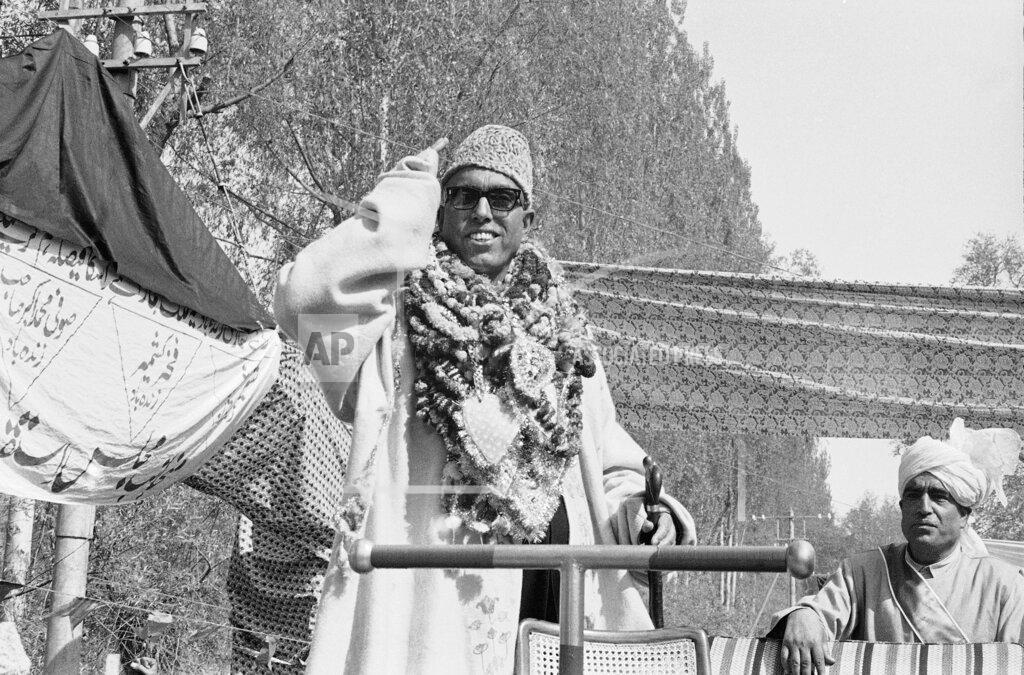
Bharathidasan, 72, Tamil poet and activist.


 History Diaries