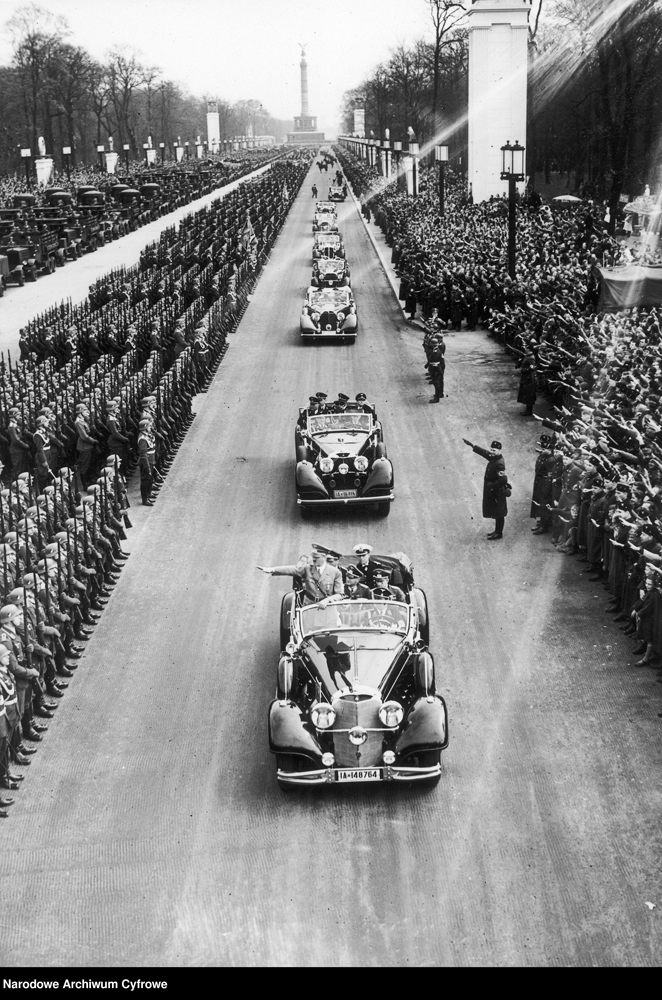
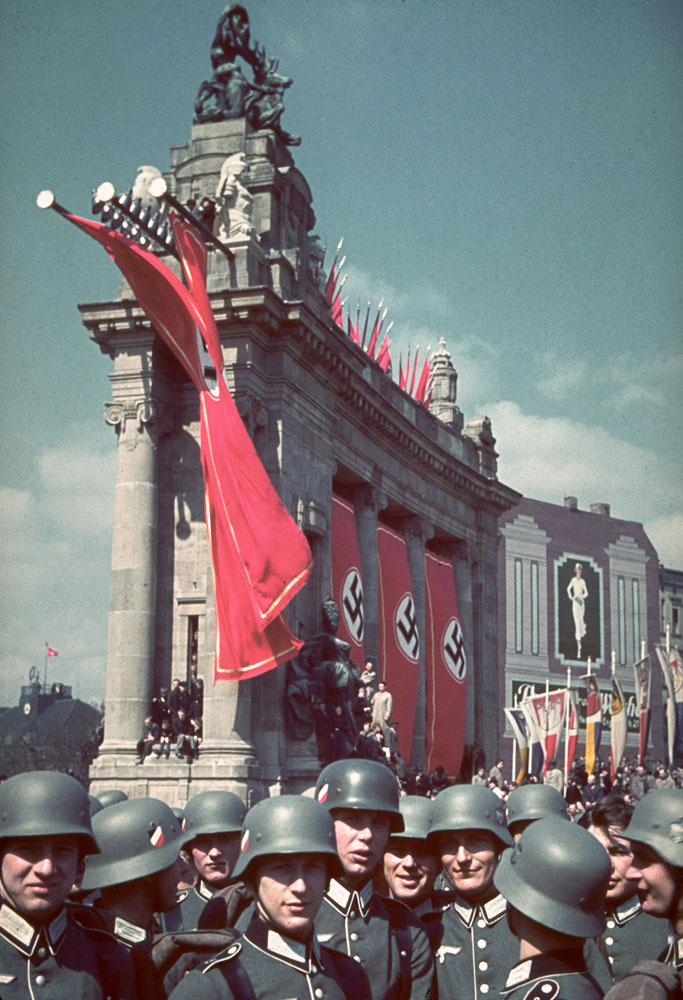
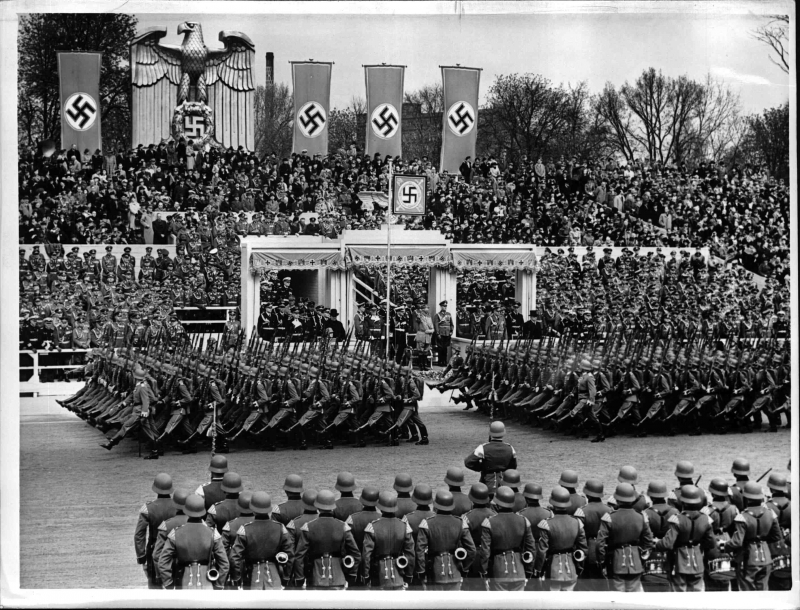
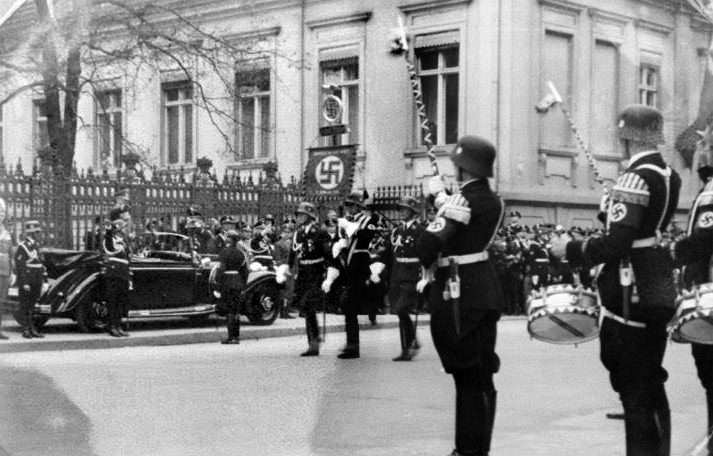
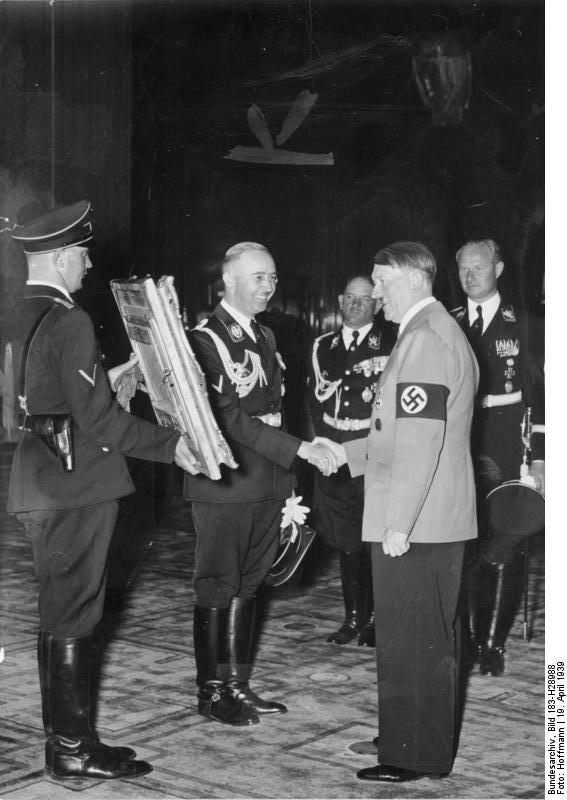
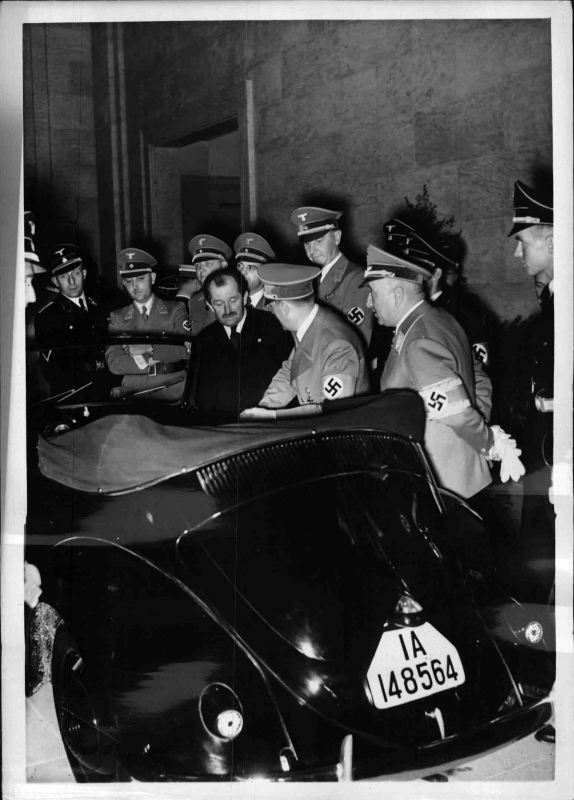
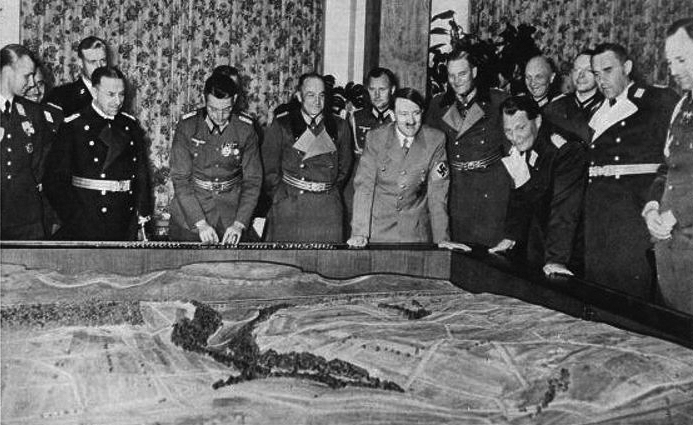
Adolf Hitler’s 50th birthday was celebrated as a national holiday throughout Germany and elsewhere. Hitler celebrates his 50th birthday with the largest military display in German history. It is a clear warning to his enemies. Minister of Propaganda Joseph Goebbels made sure the events organized in Berlin were a lavish spectacle focusing on Hitler himself. The festivities included a military parade with some 40,000 to 50,000 German troops taking part, along with 162 Luftwaffe airplanes flying overhead. The parade was intended in part as a warning to the Allied powers of Nazi Germany’s military capabilities. The parade lasted for more than four hours, with 20,000 official guests, along with several hundred thousand spectators being present.
Goebbels declared in a broadcast address to the German people:
“The Reich stands in the shadow of the German sword. Trade and industry, and cultural and national life flourish under the guarantee of the military forces. The name of Herr Hitler is our political program. Imagination and realism are harmoniously combined in the Führer.”
Official guests representing 23 countries took part in the celebrations. Papal Nuncio Cesare Orsenigo, Slovak State President Jozef Tiso, the heads of the branches of Nazi Germany’s armed forces and mayors of German cities offered birthday congratulations at the chancellery. Hitler and the Italian dictator, Benito Mussolini, exchanged telegrams that assuring each other that the friendship between Germany and Italy, both of which were ruled by fascist regimes, could not be disturbed by their enemies. The ambassadors of the United Kingdom, France, and the United States were not present at the parade since they had been withdrawn after Germany had occupied Czechoslovakia in 1938. The U.S. was represented at the troop review by the chargé d’affaires, Raymond H. Geist. U.S. President Franklin D. Roosevelt did not congratulate Hitler on his birthday, in accordance with his practice of not sending birthday greetings to anyone but ruling monarchs. British King George VI dispatched a message of congratulation to Hitler, but the strained relations between the two countries made his advisors consider whether he should ignore the birthday altogether.
There was no Polish representation at the parade.
As a counter attack to President Roosevelt’s proposal, Paris reports alleged, Chancellor Hitler has asked some of the European nations whether they felt menaced by Germany and whether they had solicited Mr. Roosevelt’s help. The governments of several smaller countries mentioned in President Roosevelt’s appeal to Chancellor Adolf Hitler and Premier Benito Mussolini have been approached by the Nazi government with a request that they tell Berlin if they consider themselves threatened by the Reich in the sense mentioned by Mr. Roosevelt. The same report was current in Warsaw, The Associated Press stated, although Warsaw had received no direct inquiry.
The French Government, it is said, was informed today that a démarche along these lines had been made in several capitals. Its aim, the correspondent says, is clear: Minor countries will find it very difficult officially to inform the German Government that they consider themselves threatened by the Reich, and if they reply in the negative Herr Hitler will doubtless use their replies to discredit the President’s initiative in his Reichstag speech, April 28.
According to Reuters [British news service] some small States are also being asked if they had appealed to President Roosevelt to intervene. France’s attitude toward future events consequent on President Roosevelt’s message to Chancellor Adolf Hitler and Premier Benito Mussolini was defined today by Foreign Minister Georges Bonnet in an address to the American Club of Paris as follows: “France is strong, and she knows it. She has never lacked courage. But she knows also that violence complicates those problems which she seeks to solve.” For that reason, M. Bonnet said, the whole country heartily approved and applauded Mr. Roosevelt’s message. The President, he said, deserved fully that judgment of Erasmus, “Let the greatest honors be paid to those princes who by skill and wise measures prevent war and establish peace. Let them be paid to those who seek by every means to do without soldiers and implements of war.”
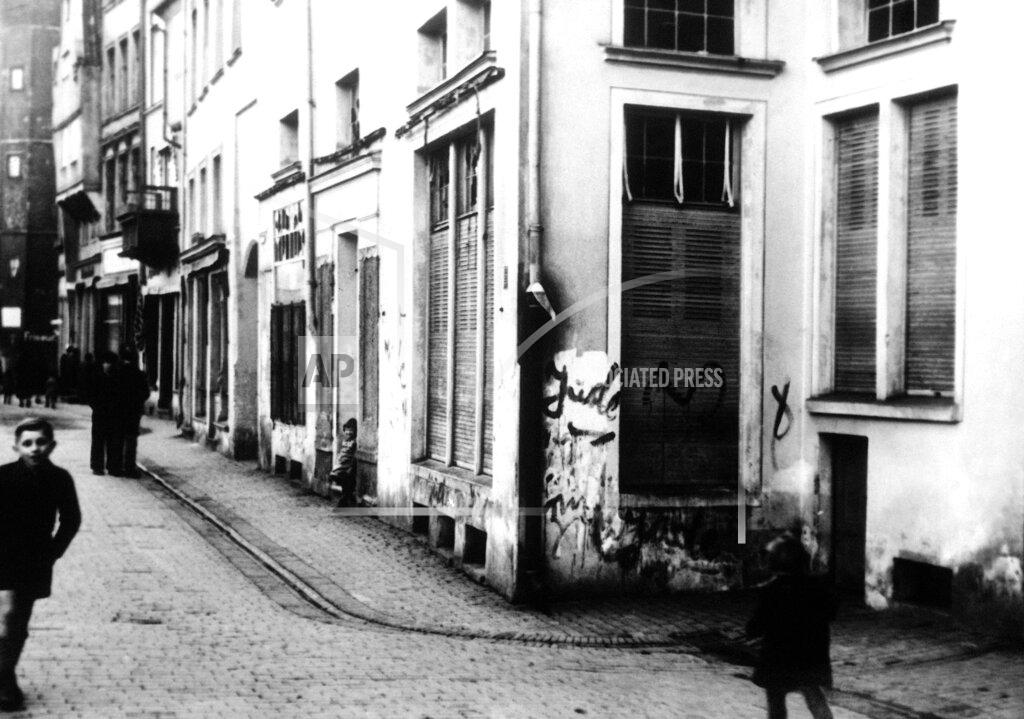
Acclaimed by the people and showered with gifts, Hitler was made an honorary citizen of Danzig.
In the Free City itself Nazis kept vigil, awaiting “orders from Berlin,” but none arrived, and although Oppositionists were active, the community was comparatively quiet.
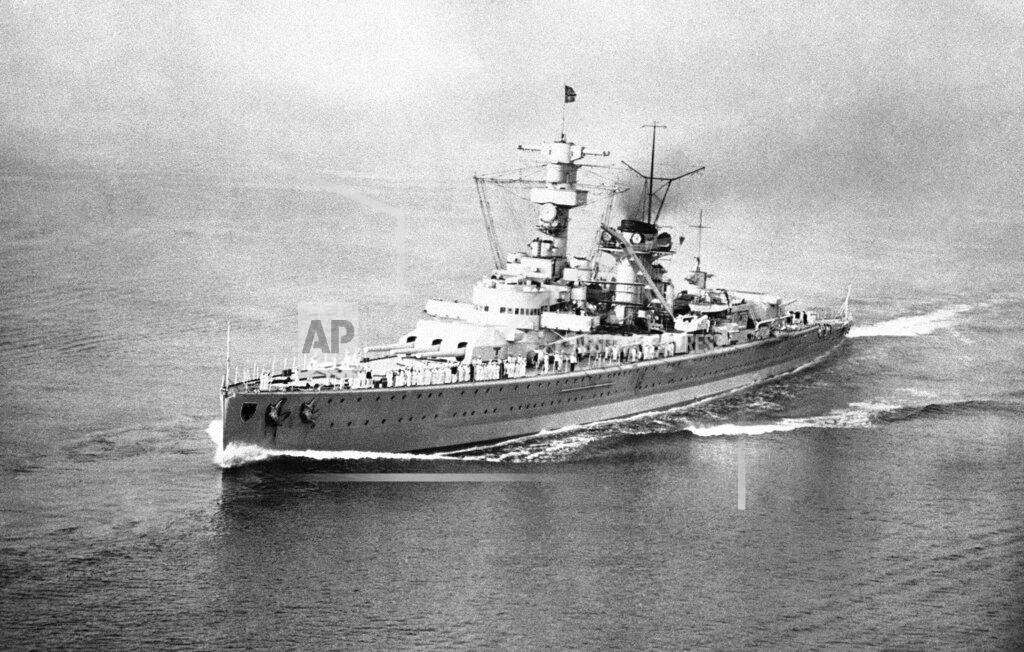
Meanwhile, in the misty English Channel, forty German warships, their radios silent, steamed toward Spain. Their mission is presumed to be peaceful, but even were they to join forces with the Italian Navy, the Axis strength, in the opinion of a British naval observer, would be little compared with the Anglo-French power. No fleet movement in recent years has caused so much speculation and, indeed, excitement as the departure of a portion of the German Navy for Spanish waters. It must in bare justice be pointed out that German naval cruises to the Mediterranean were an annual event before the outbreak of the Spanish civil war and, further, that due notification of the present cruise was transmitted to the British Admiralty some weeks ago. It is possible, therefore, to place two interpretations on this German naval move, one innocent and the other sinister.
In the ordinary course of events no particular interest would have been aroused by this cruise, but there is a feeling in unofficial British circles that it may denote a demonstration of the solidarity of the Rome-Berlin Axis. To put the matter quite bluntly, as most Englishmen are doing today, the Italian Navy left to itself — and, one should add, with the elimination of its shore-based aircraft in Sardinia, Sicily, Libya and Pantelleria — would merely have a nuisance value so far as Great Britain is concerned. But an Italian fleet stiffened by the presence of even a small German squadron might be a very different proposition.
The force that Germany has dispatched to Spain consists of two pocket battleships, a division of light cruisers and a flotilla of destroyers and submarines. Even if this contingent joined up with the Italian Navy, the combined strength of the Axis powers would be greatly inferior to that of the Anglo-French fleet now mustered in the Mediterranean. Nor must it be forgotten that Britain can at short notice reinforce her squadrons there by withdrawing ships from other stations where the local situation is less critical, such as North America, the East Indies and China stations, as was done during the Italo-Ethiopian crisis in 1935-36.
In a preliminary reply to President Roosevelt yesterday, Premier Mussolini denied aggressive designs, but spoke of the President’s message as “absurd.”
A customs union between Italy and Albania was established.
As Italian efforts to win Yugoslavia progressed, Bulgaria became a center of attention. The Sofia Premier proclaimed the country’s strict neutrality, but disclosed that territorial discussions were going on with three of its neighbors.
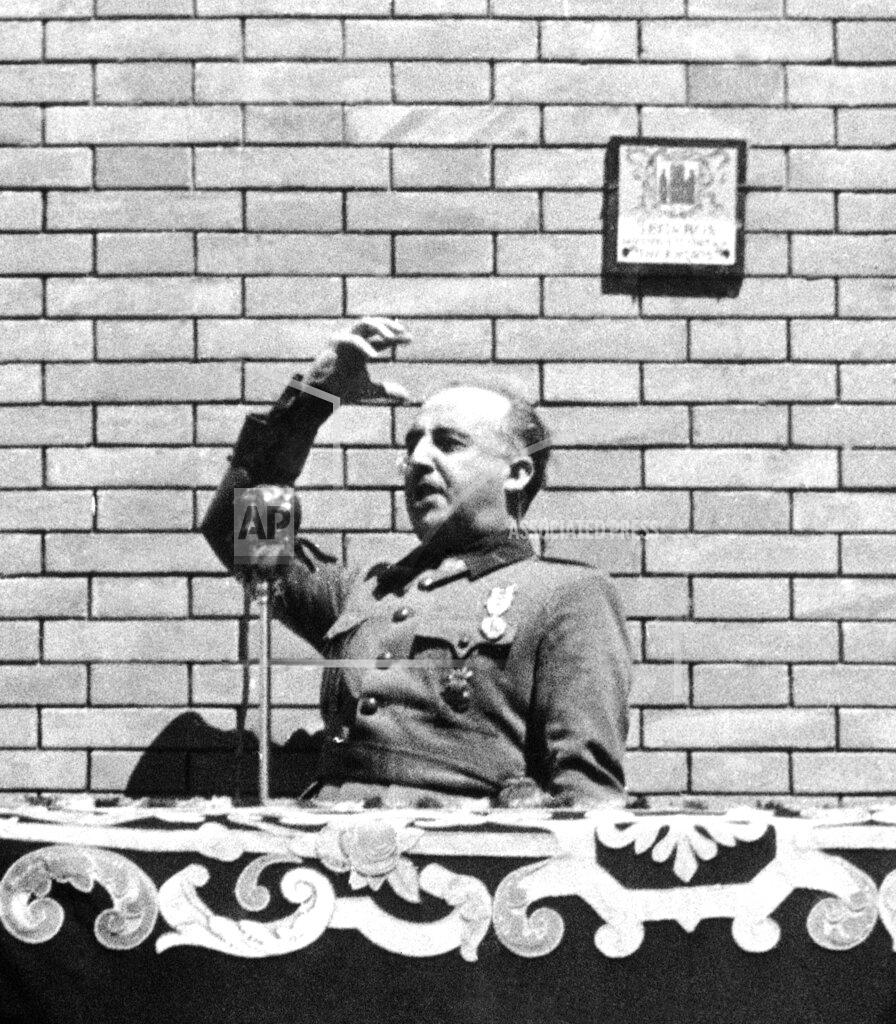
Further delay in complete withdrawal of Italian legionnaires from Spain was indicated today by announcement here that Generalissimo Francisco Franco’s victory parade in Madrid probably would be postponed until May 30. It had been scheduled tentatively for May 15. Although 2,000 Italian legionnaires recently were brought home and some other units were reported at Spanish ports ready to embark, Italian leaders have asserted that the formal withdrawal will not take place until after the victory parade.
Large contingents of Italian troops, including the Red, Green and Black Arrow Divisions, concentrated at Alicante, Almeria and Albacete today preparatory to departure for Italy. It was reported reliably that only the Littorio Division, commanded by General Gastone Gambara, would participate in the Madrid victory review and that the rest would start home before the end of the month. General Francisco Franco is expected to make an “important address” at the Madrid celebration with an outline of foreign policies and reconstruction plans.
Estimates now are that 150,000 soldiers and 700 planes will participate in the victory March. The peak of demobilization of the army of probably over 1,000,000 is expected to be under way by the third week in May. The German colonies at San Sebastian, Seville, Salamanca and Burgos celebrated Chancellor Hitler’s fiftieth birthday today. Spanish newspapers praised his achievements and added thanks for help to the Nationalists in the civil war.
An accretion of weight to the coalition seemed near last night when Russia was reported in London to have made proposals under which she, Britain and France would throw all their power against any aggressor. At the same time the British set up a Ministry of Supply.
[Ed: In fact, the Soviets have all but given up on the western allies, and are investigating an accommodation with the Nazis.]
Reports that Russia is carrying on diplomatic conversations with the Baltic States regarding an offer of military assistance in case their independence is threatened by a third power are now officially confirmed, at least as far as Estonia and Latvia are concerned. The move is attracting great attention in this whole region. It is known the former Soviet Minister to Finland was recently in Helsingfors on a special mission to discuss strategic problems occupying Russia’s mind. There has been no official statement, however.
Special significance is attributed here to the Estonian Foreign Minister’s declaration in Parliament about Estonia and Latvia’s negotiations with the Soviet Government regarding military assistance. He explained that Estonia was resolved to protect her neutrality with all her available resources. It is understood Estonia and Latvia already have sent notes to Moscow stressing that neither country is threatened by war and therefore no outside military support is required. Several members of Parliament have emphasized the urgency that the nation strengthen its defenses by all means, as it is resolved to stand by itself.
Jewish agencies in Palestine ask for aid for 263 refugees from central Europe, who have been stuck on a cattle boat for months.
President Roosevelt seizes upon the war crisis to hide failures, Senator Taft says, and he should focus on ills at home. Senator Taft of Ohio, frequently mentioned as a possible Republican Presidential candidate in 1940, accused the Roosevelt Administration tonight of attempting to divert attention from its failures in the domestic field by “ballyhooing the foreign situation.”
The Senator spoke at the first of four dinners given by the Republican National Congressional Committee to solidify the party. Optimism as to the outlook for 1940 was the keynote of half a dozen speeches and the 700 Republicans present, including newly elected Senators and Governors, appeared to be united and most hopeful of success next year. Senator Townsend, chairman of the Republican Senatorial Campaign Committee, predicted that the Republicans would elect a President and fifteen new Senators in the 1940 elections.
John D. M. Hamilton, chairman of the Republican National Committee, referring to President Roosevelt’s message of yesterday to the Young Democratic Clubs of America, welcomed to the Republican party those whom the President would read out of the Democratic party. He contended that the President’s policies were causing continued lack of confidence and were responsible for economic ills.
“The new Congress has been in session for more than three months and we have come to a time when we can appraise the present situation,” Senator Taft said. “We can summarize it in six words: ‘The New Deal is a failure.’ Do not let page after page of foreign news divert your attention or divert the people’s attention from that fact.”
President Roosevelt, according to the views of some conservative Democrats, is planning a “purge” in the Presidential primaries by opposing conservative candidates just as he fought the Democratic Senators who did not agree with his policies. Some of the conservatives said today that the President, having been bested in the Senate “purge” last year, should do everything in his power to unite the party, instead of which they pictured him as taking a course that would lead to Democratic disaster.
The President is not expected to disclose whether he will be a candidate, or his preference as to his successor, until a short time before the first Presidential primary next year. Such a course, it is argued, would embarrass his critics, and lessen the effectiveness of the conservative opposition. The opinion was widespread that the President’s message to the Young Democratic Clubs of America last night meant either that he would seek renomination or enter into an uncompromising fight to name as his successor a man who has stood four-square with the New Deal.
Vice President Garner, Senator Clark of Missouri and Postmaster General Farley, whom many admirers look upon as possible Democratic candidates, as well as others who also stand for a return to conservative policies, are considered in the capital as not likely to be counted as representative of the President’s desires.
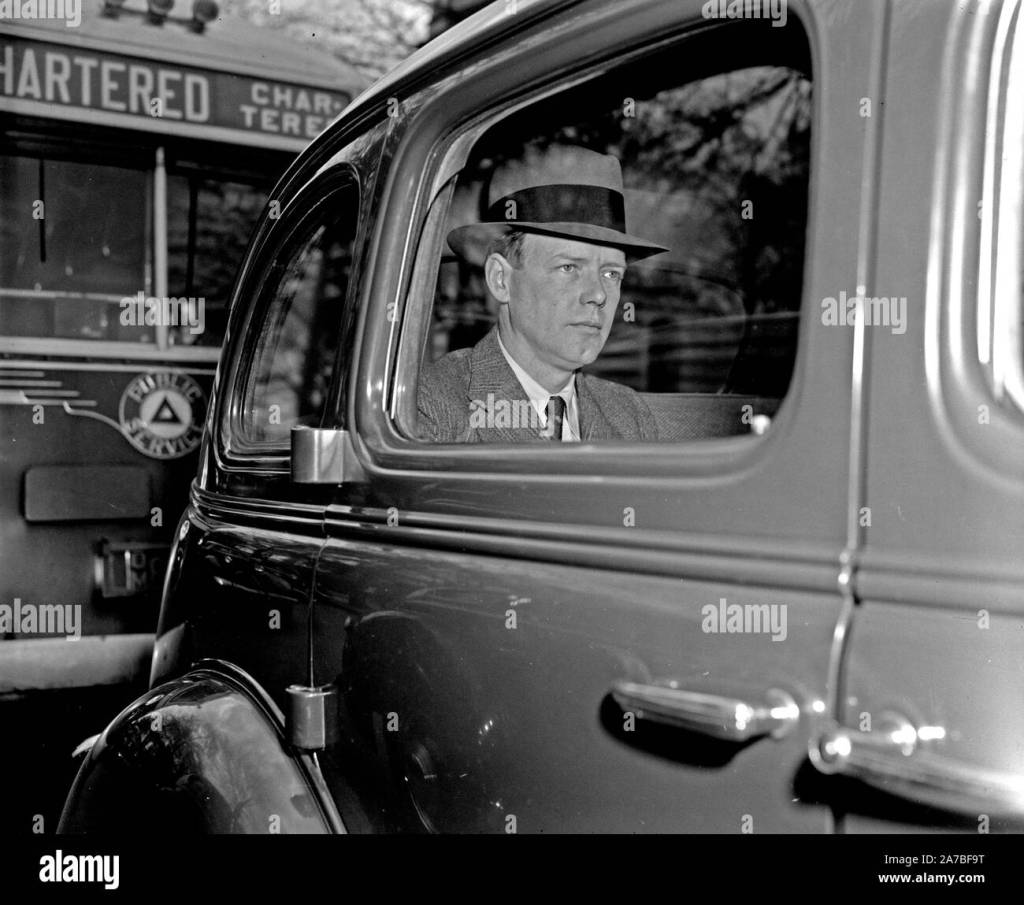
Charles Lindbergh urges more plane research, and says Germany is the leader in Europe.
Joint hearings of the U.S. House and Senate are held concerning the admission, on a non-quota basis, of 20,000 German Jewish children over a two-year period. Speaking ‘as an American mother,’ famous actress Helen Hayes urges their admittance into U.S.
Experiments with a four-bladed controllable propeller on Curtiss P-36 begin at Wright Field.
Marian Anderson’s manager offers DAR a choice of 15 dates, asking them to reconsider banning the singer because of her race.
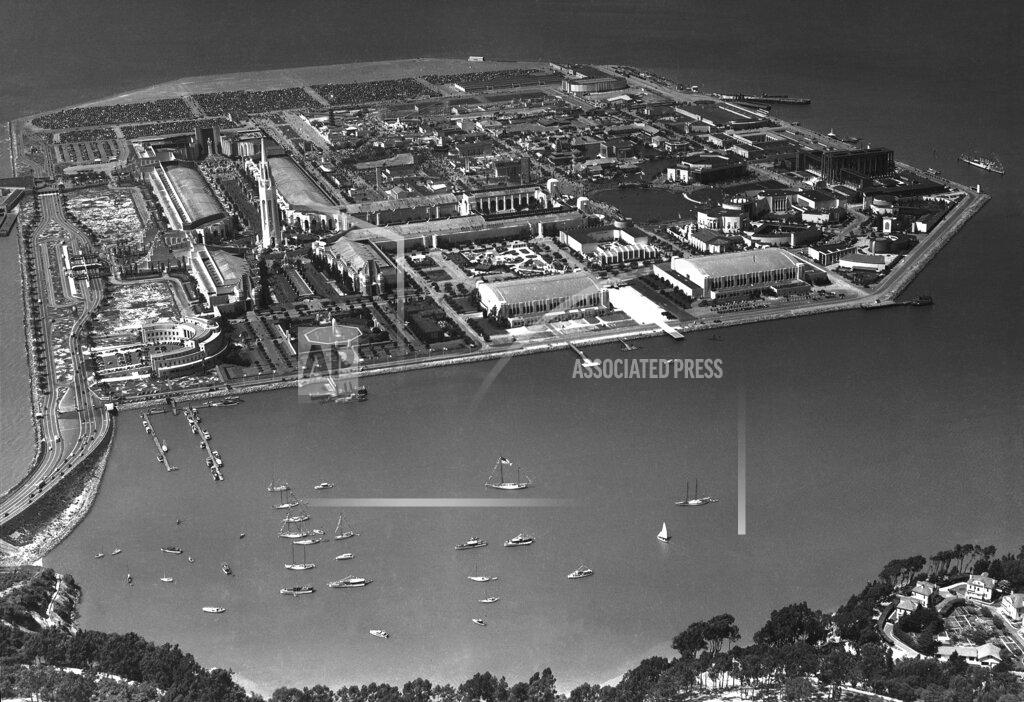
Treasures worth $100 million arrive from 60 foreign countries for the World Fair held in New York.
The free-flight tunnel placed into operation at Langley Aeronautical Laboratory.
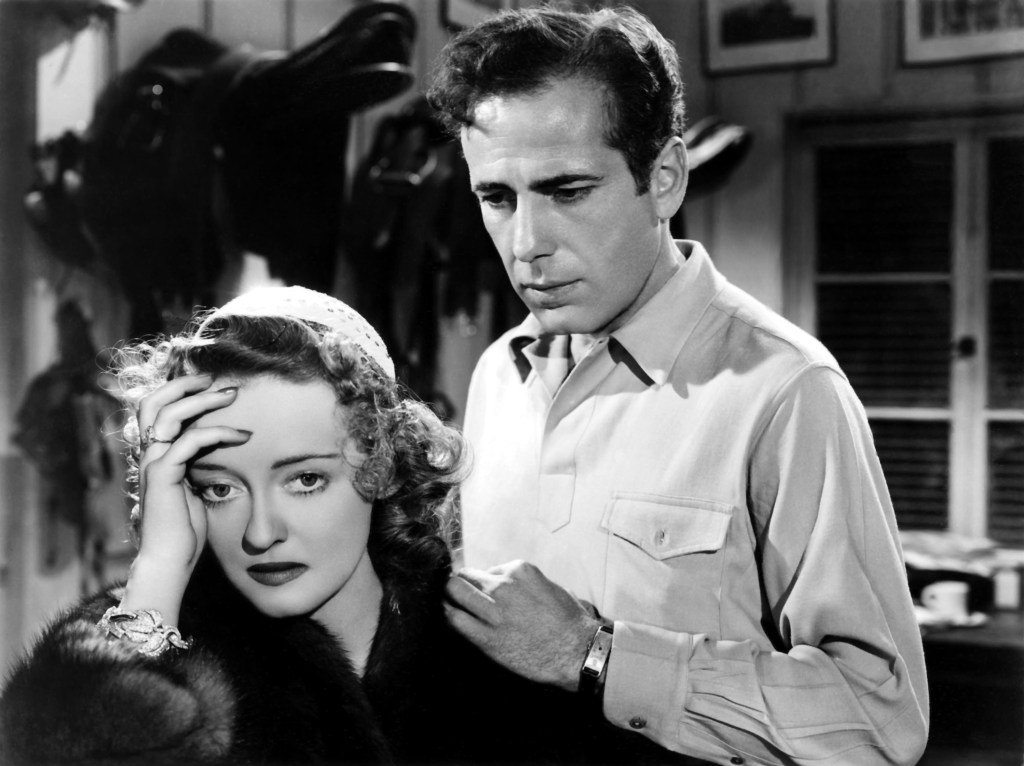
The movie “Dark Victory” premieres; Bette Davis will earn an Oscar for her performance.
American jazz singer Billie Holliday records the single version of “Strange Fruit.”
A minor league attendance record is set at Jersey City as 45,112 see the Giants farm team play Newark (International League).
For the first time in club history, the Philadelphia A’s wear numbers on their uniforms. Connie Mack, the owner and manager of the team, believed the sale of scorecards would suffer because players could be identified by their jerseys.
Ted Williams made his major league debut for the Boston Red Sox, going 1-for-4 with a double during a 2–0 loss to the New York Yankees. The Red Sox show off their prize rookie Ted Williams before 30,278 in the opener in New York, delayed two days because of rain. After striking out twice, Williams collects a double off Red Ruffing, who wins 2–0. Gehrig makes an error, goes hitless, and lines into two double plays in the only game featuring the two great sluggers. Other notables in what will become a historic box score include Joe DiMaggio, Bill Dickey, Jimmie Foxx, Joe Cronin, Bobby Doerr, Red Rolfe, and losing pitcher Lefty Grove. The Yanks score their first run on a homer by Dickey and their 2nd tally on an error by Jimmie Foxx. Boston has baserunners in each inning, but Ruffing tosses just the 2nd opening day shut out in Yankee history. Four umpires work the game including third base ump George Pipgras, the starting pitcher for the Yankees in the 1929 Opener; his opponent for the Red Sox that day was Red Ruffing.
El Salvador’s Nazis celebrate Hitler’s 50th birthday, holding a rally and flying the swastika in the capital of San Salvador.
Chile suffers extensive earthquake damage. An observatory fears more seismic disturbances.
The Battle of Suixian–Zaoyang began. The Battle of Suixian–Zaoyang, also known as the Battle of Suizao, was one of the 22 major engagements between the National Revolutionary Army (NRA) and Imperial Japanese Army (IJA) during the Second Sino-Japanese War. The Japanese launched a major two-pronged offensive that captured many cities and towns. However, their failure to defend against a series of coordinated Chinese counter-attacks forced them to completely withdraw, resulting in territorial control returning to the original status quo. Japanese commanders sought to capitalize on their gains from their successful capture of Wuhan, as well as to relieve pressure on their base in the newly captured city. Thus, they deployed 113,000 troops in three divisions and one cavalry brigade to launch two simultaneous attacks on the cities of Suizhou and Zaoyang, along the Xiangyang-Huayuan Highway and Jingshan-Zhongxiang Highway respectively.
Japanese commander General Yasuji Okamura deployed the 13th and 16th Divisions from Zhongxiang to drive northwards along the Dahong mountain ranges and attack Zaoyang from the south on 1 May 1939. Zaoyang was protected by the Chinese 77th Corps. The single Chinese corps held fast against the fierce attack by the two Japanese divisions. During the month-long campaign, the Chinese incurred a total of 28,000 casualties, a significant portion of which was due to the Japanese Army’s continuous and extensive use of air attacks and chemical weapons. On the other hand, the Japanese suffered 21,000 casualties. Although Chinese casualties were still a third greater than that of the Japanese, it was clear that by now the casualty margin was getting smaller and smaller. Although the Japanese were initially successful in capturing many cities and towns, their inability to hold onto any of them resulted in their offensive operation ending in a complete failure. By the end of the battle, the Chinese Army had not only recaptured all positions, but also gained the ability to utilize mobilized warfare to launch counter-offensive into Japanese-held territory.
The Chinese claim to have recaptured seventy towns and cities since April, admitting, however, that many have been retaken by the Japanese. Heavy fighting continues in Shansi and also in the vicinity of Canton. Japanese reinforcements north of Changsha include 3,000 puppet Mongol troops, according to the Chinese Intelligence Service.
The United States made oral representations today to Japan, urging that American businessmen be permitted to go to the upper Yangtze River to conduct their affairs in China. Sumner Welles, Under-Secretary of State, asked Kenuske Horinouchi, the Japanese Ambassador, to transmit the request of his government. Joseph C. Grew, the American Ambassador to Tokyo, will probably make the same representations to the Foreign Office, Secretary Cordell Hull said.
The United States has previously made several representations to Japan urging that American businessmen be permitted to return to the points on the lower Yangtze from which they were forced by military operations. No satisfactory assurances have been received on this score, the Japanese only promising to permit their return as soon as feasible. The United States has pointed out that Japan was permitting her own nationals to do business along the Yangtze and has intimated that other interests were deliberately being frozen out.
Dow Jones Industrial Average: 128.41 (+1.40).
Born:
Peter S. Beagle, American novelist and screenwriter (“The Last Unicorn”), in New York, New York.
Gro Harlem Brundtland, Norwegian Prime Minister (1981-1982, 1986-1989, 1990-1996) and Director-General of the World Health Organization, in Bærum, Norway.
Elspeth Ballantyne, actress, in Adelaide, Australia.
Died:
Teodoro R. Yangco, 77, Philippine businessman and philanthropist.
Naval Construction:
The Koninklijke Marine (Royal Netherlands Navy) O 21-class submarine HrMs (HNMS) O 26 is laid down by Wilton-Feijenoord (Schiedam, Holland). She will be captured during the German invasion of 1940 and serve in the Kreigsmarine as UD-4.
The Regia Marina (Royal Italian Navy) Soldati-class (First Group) destroyer Alpino is completed.
 History Diaries