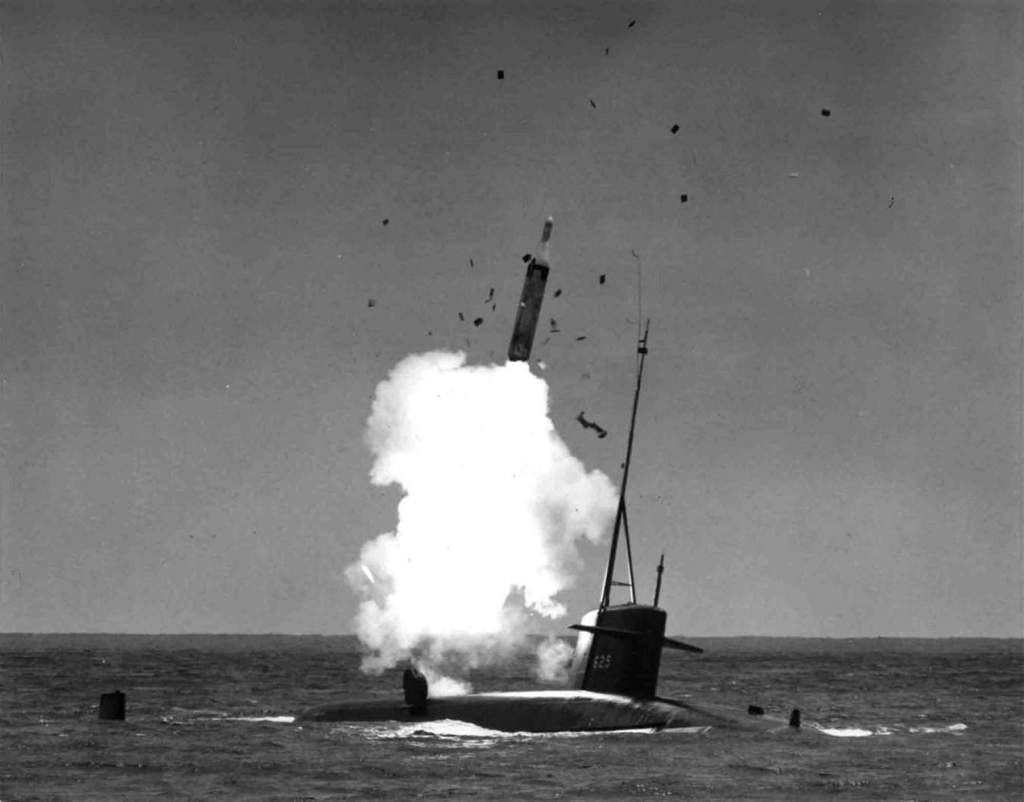
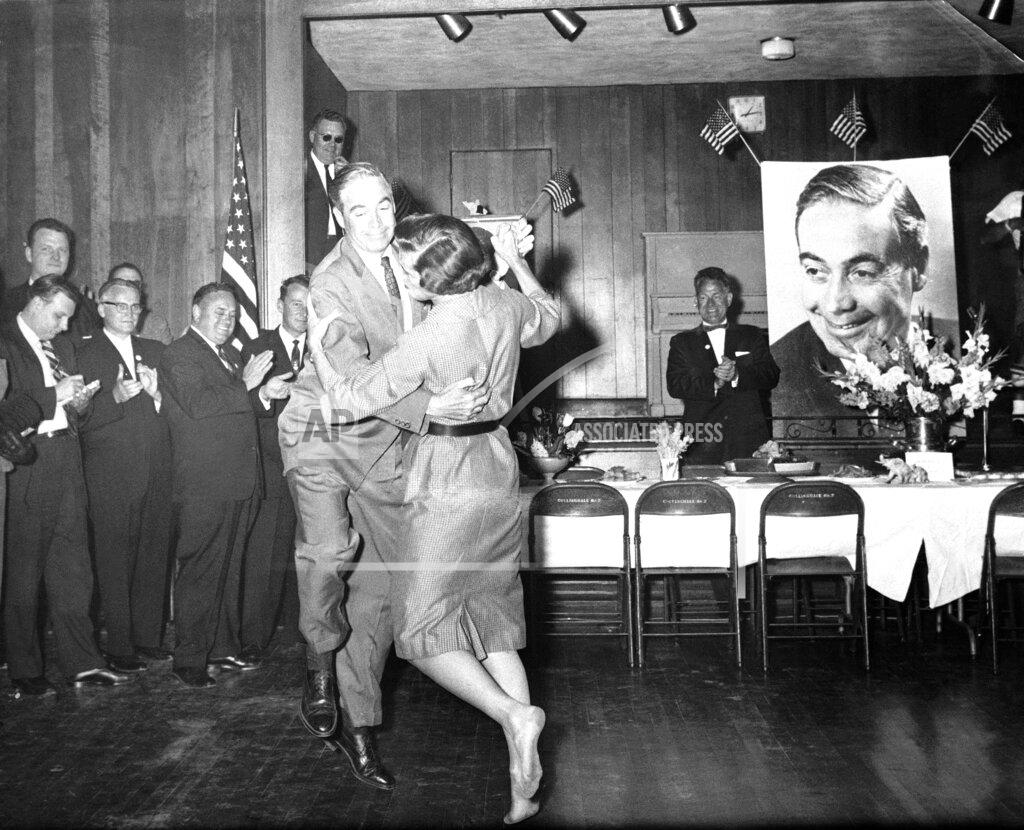
U.S. President Lyndon Johnson in New York, and Soviet Premier Nikita Khrushchev in Moscow, simultaneously announced plans to cut back the production of materials for making nuclear weapons. President Johnson announced that the United States was reducing its production of enriched uranium by 15 percent beyond a move he announced in January, for a total cutback of 40 percent during the coming four years. The 20 percent cut in plutonium production set in January is continuing. The President reported the Soviet Premier’s plan for a simultaneous announcement In Moscow, Mr. Khrushchev announced what Mr. Johnson said at a luncheon of Associated Press executives here were “definite commitments to steps toward a more peaceful world.”
The Soviet move promised to discontinue construction of two big new reactors for producing plutonium, to reduce “substantially” the production of uranium‐235 for nuclear weapons during the next several years, and to allocate more fissionable materials for peaceful uses. Uranium‐235 and plutonium are the basic materials for producing chain reactions in the fission process that made possible the first atomic bombs. They also constitute the trigger for hydrogen fusion bombs. The British Prime Minister, Sir Alec Douglas‐Home, was consulted in the United States decision, President Johnson said. The British leader was planning a similar announcement in the House of Commons today on reducing production of uranium for military purposes.
In a 45‐minute major address at the Waldorf‐Astoria Hotel to 1,700 people at the Associated Press luncheon, a record audience for the news-gathering cooperative, the President also charted a strong drive on behalf of continuing foreign aid. His $3.4 billion request for economic and military aid to other countries is “the absolute minimum consistent with our commitments and our security,” he said. If Congress attempted substantial cuts in this — as it reduced President Kennedy’s request last year from $4.9 billion to $3.4 billion — Mr. Johnson said he would keep submitting “supplemental requests for additional amounts until the necessary funds of $3.4 billion are appropriated.”
French officials declined tonight to comment on President Johnson’s statement that the United States would again cut its production of nuclear explosive and that the Soviet Union would do likewise. “They can afford to,” was one unofficial comment. “They still have plenty.” President de Gaulle warned the nation in a television broadcast last Thursday that it would be disastrous for France to refrain from having her own means of nuclear dissuasion at a time when she was able to procure them for herself.
After the Việt Cộng have seized the outpost at Hương Hoá Hạ, the ARVN counterattacks and inflict heavy losses on the Việt Cộng. U.S. officials publicly praise this as one of the most successful operations of the war, but in private many U.S. military still regard the apathy and inertia of the ARVN as major barriers to victory. South Vietnamese Government troops, counterattacking in Kiến Hòa province 50 miles south of Saigon, inflicted heavy losses on Việt Cộng guerrillas in one of the war’s most successful operations of the kind United States military officials reported today.
The engagement began before dawn yesterday when two companies of Việt Cộng insurgents overran the Hương Hoá Hạ outpost near Ba Tri. The Communists seized as hostages the wives and children of the members of the Self‐Defense Corps who manned the outpost. The corpsmen regrouped and recaptured the post in what the Americans called an “excellent counterattack carried out quickly and efficiently.” Government losses were listed as 14 killed and 26 missing. The guerrilla losses were estimated as much higher. A Defense Ministry communiqué estimated Việt Cộng losses at 100 killed and wounded. United States military advisers counted 15 dead on the battlefield and said aerial reconnaissance indicated that at least 67 killed or wounded were carried away by their comrades. Americans said they were impressed with the action of the self‐defense corpsmen because it reflected a determination to defend their homes in one of the most critical parts of the guerrilla‐infested Mekong River delta.
In another action, the Việt Cộng derailed the Saigon‐Huế train for the 10th time in 20 days. The train, moving on one of South Vietnam’s most vital communication links, was derailed in Phú Yên province 250 miles north of Saigon, midway between Huế and Saigon.
Secretary of State Dean Rusk said today that South Vietnam could use the help of more military advisers from other countries than the United States in its war against Communist guerrillas. Mr. Rusk, who just returned from an 11‐day trip to Asia. including his first visit as Secretary of State to South Vietnam. reported on his findings to President Johnson at the White House this evening. Afterward, Mr. Rusk said that several of this country’s allies had expressed their willingness to help South Vietnam combat the guerrillas of the Vietnamese Communists, or Việt Cộng.
Mr. Rusk said he did not expect that any organized military units would be sent to Vietnam “at this time” to bolster the efforts of 15,500 United States servicemen there. But he said that Saigon might be asking for some military advisers from other countries and could make good use of them. At present, Australia has a 30‐man military advisory mission in Vietnam and Britain has about 10 officers. In the field of economic and technical assistance, the Secretary reported that the Philippines and Nationalist China had offered to help South Vietnam meet its current shortage of fertilizer. South Vietnam is about to enter its spring planting season. Mr. Rusk said he had made several recommendations in the political field in his report to the President, but he declined to discuss them in detail.
General Kong Le, commander of neutralist forces operating between right‐wing and pro‐Communist troops in Laos, is reported to have told an American interviewer recently that the United States should either support an attack on Communist North Vietnam or pull out of the whole Southeast Asia area, “the sooner the better” According to an interview by Charles J. V. Murphy in the May issue of Fortune magazine, the 32‐year‐old neutralist general believes it “reasonable and logical” that the United States should extend the South Vietnamese conflict into North Vietnam. Việt Cộng guerrillas in the south are said to be heavily supported from the north.
Neutralist Prince Souvanna Phouma of Laos and right‐wing military leaders flew to a meeting with King Savang Vatthana today, but returned to Vientiane without word of a settlement of the Laotian crisis. Prince Souvanna Phouma was reported glum and uncommunicative after the King talked with him, the two leaders of the military coup that deposed him yesterday, and General Phoumi Nosavan, the rightwing Deputy Premier. The prince’s obvious dejection gave an impression at variance with earlier indications that strong pressure from the United States, Britain and France had caused the coup leaders to seek a way out of their venture. It was reported that General Phoumi Nosavan had insisted that Prince Souvanna Phouma be restored as Premier. General Phoumi Nosavan accompanied Prince Souvanna Phouma and the leaders of the coup to Luang Prabang, the royal capital. Luang Prabang is 130 miles north of Vientiane, the administrative capital.
There was little communication with Vientiane, where a coup led by Brigadier General Kouprasith Abhay, a tough anti-Communist military man, toppled the coalition Sunday. He was aided by General Siho Lamphoukatoul. head of the rightwing military police. Before Prince Souvanna Phouma returned glumly from Luang Prabang, a United States diplomat in touch with the embassy in Vientiane had stated that “the situation is back where it was 36 hours ago.” He reported that leaders of the coup had apologized to General Phoumi Nosavan for the coup. United States sources said General Phoumi Nosavan had advance knowledge of the coup, opposed it and denounced the leaders afterward.
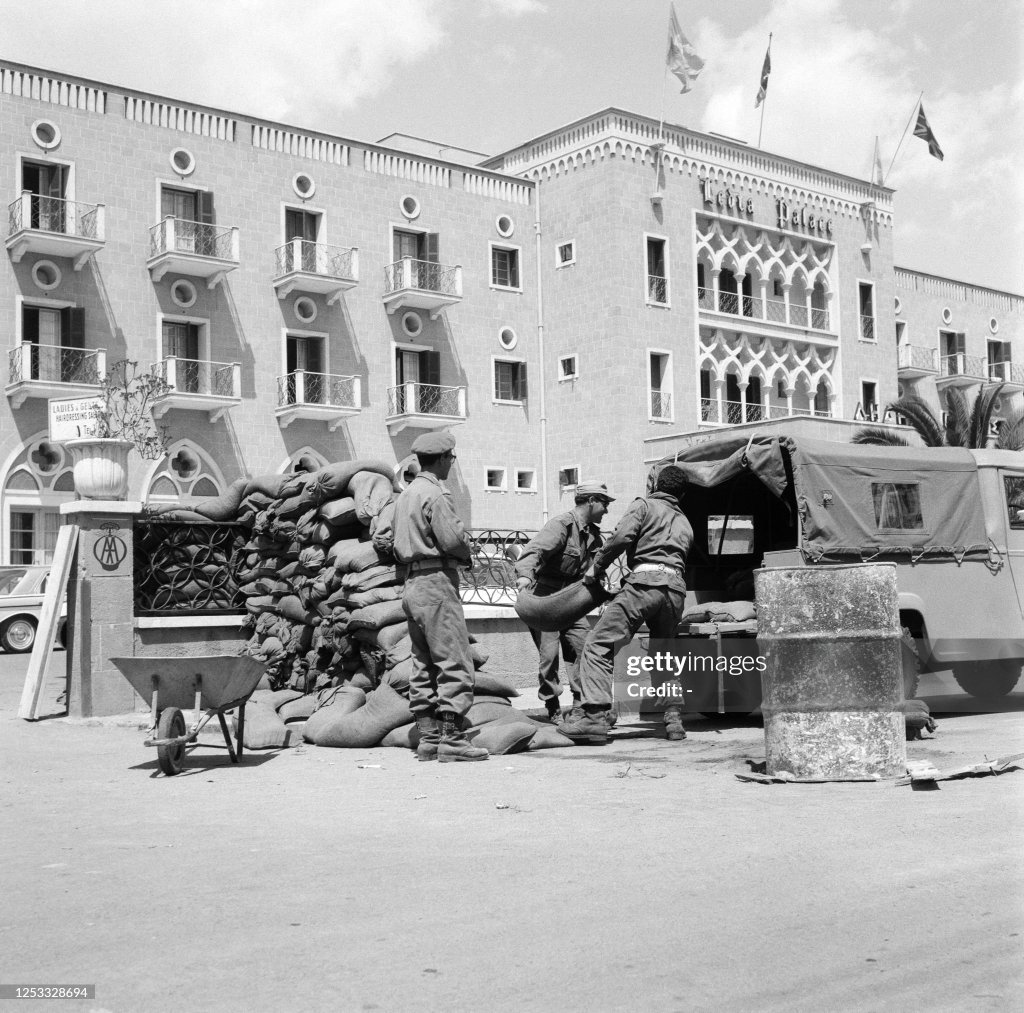
Turkey made public today a protest to the Secretary General, U Thant, charging that actions by the Greek Cypriote authorities constitute “a continuing danger to international peace and security.” Turkey threatened to place the Cyprus issue, which has been simmering since December, before the Security Council “if the above‐mentioned danger to peace shows no sign of being abated.” In Cyprus, a United Nations spokesman reported a deadlock over dismantling gun posts in a contested area of Nicosia that the agency had announced would be neutralized.
Nelson Mandela made his “I Am Prepared to Die” speech at the opening of the Rivonia Trial. The address would become an inspiration in the continuing anti-apartheid movement. He admitted in the Supreme Court in Pretoria today that he had planned sabotage. Mandela, once known as the Black Pimpernel, said he had acted “as a result of a calm and sober assessment of the situation after many years of oppression and tyranny of my people by the whites.” He denied that the struggle in South Africa was Communist‐inspired, and declared: “I am not a Communist and have never been a member of the Communist party.” He said he had dedicated his life to ending white domination, an idea I hope to live and see realized.” He added that the Communists were “great allies” of the African National Congress.
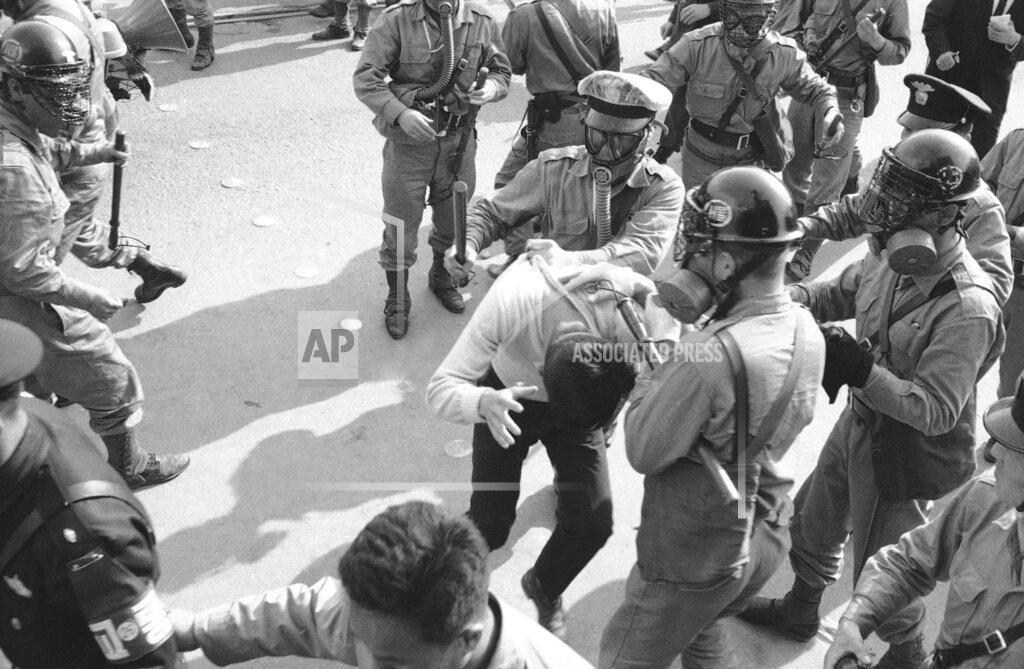
The South Korean Government arrested 57 students today in the fourth day of a wave of anti‐Government demonstrations. About 800 students of two universities in Seoul took to the streets chanting slogans such as “down with corrupt Government officials,” “we detest the traitorous regime” and “stop talks with Japan.” They were protesting against negotiations aimed at establishing normal relations between South Korea and Japan and charges of corruption growing out of them. At the height of the demonstrations, the United States Ambassador, Samuel D. Berger, called on President Chung Hee Park for a one‐hour conference. The Government has issued a warning that further demonstrations will not be tolerated “since they will create social unrest.” The Government has so far refrained from active interference for fear that any harsh measures would arouse further disturbances. It also acknowledged patriotism as a motivation for the demonstrations.
Meanwhile, the Government asked the National Assembly’s consent to the arrest of an Opposition member, Kim Joon Yun, on charges of “defamation and false accusation” against President Park. He charged the President and the chairman of the ruling Democratic Republican party, Kim Jong Pil, with accepting money secretly from Japan during the current negotiations. The charges led to the formation of an Assembly investigating committee. The chief witness, however, testified that he had made no such allegation against President Park.
Enemies of the Baathist regime in Syria maintained today that a revolt there was out of control despite Syrian Government assertions to the contrary. Pro‐United Arab Republic newspapers in Beirut and the Government‐controlled Baghdad radio in Iraq asserted that hundreds of Syrians had been killed and that the disturbances had spread to Damascus and other areas besides Hama and Homs in central Syria. Last Wednesday, Syria announced that she had crushed a one‐day revolt in Hama, inspired by “reactionaries” and “feudalists,” opposed to the Socialist measures of the regime. Syria denied reports that merchants in Homs had been on strike four days over the Hama fighting. Yesterday, bazaars in Damascus, Syria’s capital, went on strike in support of the Hama uprising, in which two were reported killed. Usually-reliable informants told of pro‐Government demonstrations in Damascus.
The five‐year‐old railroad work rules dispute appeared headed toward settlement today. Sources close to the dispute indicated they expected agreement in principle on the major issues before midnight Friday, the deadline for averting a nationwide strike. But if this is not achieved, it was considered likely that if progress continues to be made, a further extension of the deadline would be agreed on. A new crisis would be touched off by resumption of a strike by the operating rail unions against the Illinois Central Railroad. This would cause the nation’s railroads to retaliate by putting into effect changes in work rules over union objections. The unions would respond by a nationwide strike. It was this sequence of events that President Johnson interrupted on the night of April 9, when he persuaded the unions to suspend their strike against the Illinois Central for 15 days. He sought this truce in order to give Administration mediators another chance at trying to settle the dispute. The unions were said to be willing to postpone the deadline further, as long as they thought meaningful bargaining was going on.
Five Democratic Senators challenged today the use by Senator Wayne Morse of the term “McNamara’s war” to describe the Vietnam war. Senator Morse, in many Senate speeches, has blamed Secretary of Defense Robert S. McNamara for United States involvement in the conflict. Senator Pat McNamara, Democrat of Michigan, who is not related to the Secretary, said the description did a grave injustice to a “loyal and brilliant public servant.”
Other Senators who took issue with the Oregon Democrat were Joseph S. Clark of Pennsylvania, Philip A. Hart of Michigan, Stuart Symington of Missouri and Abraham A. Ribicoff of Connecticut. Senator Morse, taking the floor after the five Senators had spoken, said none had answered his contention “that the United States, under the leadership of Defense Secretary McNamara, is fighting an illegal and unwise war in Vietnam.” He challenged supporters of United States policies to get Congress to pass a “declaration of war.”
Civil rights leaders in New York went ahead with plans to conduct a massive traffic stall‐in tomorrow, the opening day of the World’s Fair, despite a court order that was obtained yesterday barring the demonstration. The militant leaders, most of them members of dissident chapters of the Congress of Racial Equality, voiced defiance after attending a 35‐minute conference with Queens District Attorney Frank D. O’Connor, who had obtained the court order against the stall‐in. “Mr. O’Connor was talking to the wrong people,” one of them said. “He should have met with Mayor Wagner and the city fathers. They are the ones responsible for the stall‐in.” While the stall‐in leaders continued to plan for a tie‐up of transportation outside the fair, the national office of CORE disclosed its own plan for dramatic protest demonstrations inside the fairgrounds, partly to counter the stall‐in.
86% of Black students boycott Cleveland schools. Leaders of the United Freedom Movement said it was the most successful public school boycott staged so far in the United States. The Cleveland Board of Education said it could not give exact figures of attendance until tomorrow. School officials conceded, however, that 85 to 90 percent of the Black children were absent. The number of absentees varied from school to school through the East Side neighborhoods populated largely by Blacks. At Glenville High School, in the center of the area where civil rights protests have been most violent, only 100 students attended out of a normal enrollment of 1,900. Rawlings Junior High School received 68 students instead of 1,544, and Hazeldell Grade School had 68 instead of 858.
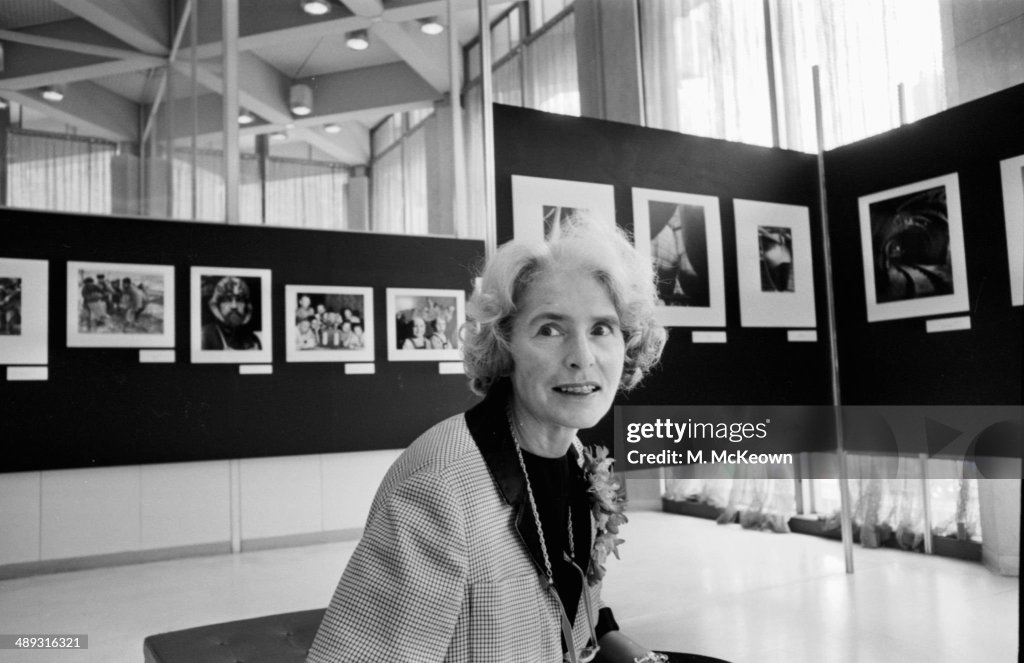
The League of Women Voters opened its 26th biennial national convention today with a pledge by its outgoing president that the group would meet the civil rights issue head‐on. Mrs. Robert J. Phillips of St. Charles, Illinois, recommended that the convention adopt as its principal project for the next two years a study of United States policies and programs relating to equality of opportunity in education and employment. The recommendation, backed by the group’s national board, of which Mrs. Phillips, the outgoing president, is head, was expected to cause debate. The league has traditionally supported international cooperation, voter education and conservation of resources. It is expected to renew that support at this convention. The board’s recommendation, however, is based on suggestions received in response to a poll of leagues throughout the nation taken six months ago. The New York City chapter, nevertheless, wants the league to devote the next two years to study of Congressional procedures.
The John Birch Society has called on its members to continue a “massive” letter writing and advertising campaign against passage by the Senate of the civil rights bill. The campaign is reported to have produced already “half a million messages to Washington.” In the March issue of the John Birch Society Bulletin, official monthly magazine of the conservative group, Robert H. W. Welch Jr., the society president, made his first appeal to members of local chapters. He urged them to plan “the most massive protest‐by mail, telegram, by advertising, by the distribution of literature, by personal conversations, and in every practicable way‐that we have ever undertaken with regard to any legislation.”
Meanwhile, as the Senate entered the 35th day of debate on the civil rights bill, the minority leader, Everett McKinley Dirksen of Illinois, said that he would begin calling up his amendments to the fair employment section of the bill in midweek. Mr. Dirksen said that the first amendment to be called up would be one of the less controversial of the eleven he will offer. Tomorrow Senator Dirksen will make known the text of the only amendment that would greatly weaken the fair employment practices section. This concerns the procedure to be followed in pressing a complaint against job discrimination. At issue is the question of whether the Fair Employment Commission can file suit for the complainant, or whether the aggrieved must file on his own.
At 6:30 this evening Senator Hubert H. Humphrey of Minnesota, the Democratic floor manager of the bill, attempted for the first time to apply Senate rules strictly, in an effort to restrict Southern debate. Mr. Humphrey objected when Senator George A. Smathers of Florida rose to deliver his fourth speech against the bill since the beginning of the legislative day of March 30. Under the rules a Senator is allowed only two speeches on the same subject in the same legislative day unless he is allowed by unanimous consent to make more. After a good deal of heated discussion. Senator Dirksen proposed that Mr. Smathers be allowed to continue because, he said. Senator Humphrey decided to invoke the rule with little warning. However. Mr. Dirksen said he would not protest if Senator Humphrey began invoking the two‐speech rule tomorrow. At that point, Mr. Humphrey agreed to allow Mr. Smathers to continue with the understanding that he would object to any Senator’s making a speech tomorrow over the two-speech limit.
President Johnson surprised Republican rivals for the Presidency this year with an announcement yesterday that he would provide “all” major candidates with briefings on foreign and defense policies. The President’s announcement was made in a speech to the annual luncheon of The Associated Press at the Waldorf‐Astoria Hotel in New York. A White House spokesman said the offer was intended to apply to candidates now seeking the nomination. This would be the first such bipartisan venture before a nominating convention was held, although formal Presidential nominees have received briefings in the last several elections.
Mr. Johnson prefaced his announcement with an admonition to both friends and foes abroad against mistaking election‐year discussion for dissension, conflict over programs for conflict over principles or “political division for political paralysis.” Those at home he went on, should “remember that the world is their audience, and that attack and opposition to old policies must not be just for opposition’s sake, but it requires responsible presentation of new choices.” In the protection of United States security, he said, “partisan politics must always yield to national need.”
The first jar of Nutella, a “hazelnut cocoa spread” now popular around the world, was shipped from the Ferrero SpA factory in Italy.
BBC Two, the third television network of the United Kingdom (after BBC and ITV) was scheduled to go on the air at 7:20 in the evening with a ten-minute segment, Line-Up, with John Stone and Denis Tuohy delivering a brief summary of news and weather and Pamela Donald commenting on programming. With 625 lines resolution, the BBC-2 broadcasting was more clear than the 405-line BBC telecasts, but it was viewable only by people with the newer TV sets. At 7:30, The Alberts Channel Too, a variety program by the comedy team The Alberts, was set to be the first original TV series. Only 25 minutes before airtime, however, a fire at Battersea Power Station caused a power failure in much of London, including the BBC Television Centre. For the rest of the evening, people who could tune in were only able to see a sign that said “BBC 2 Will Start Shortly”. Power would be restored, and broadcasting would begin, the next day.
The 68th Boston Marathon is won for the second straight year by Aurele Vandendriessche of Belgium in 2:19:59.
Yankee rookie Bob Meyer makes his Major League debut at Fenway Park, in a 4–0 loss to the Red Sox. Meyer is the last Yankee rookie pitcher this century to open in Boston. Ralph Terry made his debut there in 1956.
Nellie Fox drives in four runs with a two-run single and a two-run triple to pace a 7-1 win over St. Louis. Dick Farrell tosses a four-hitter.
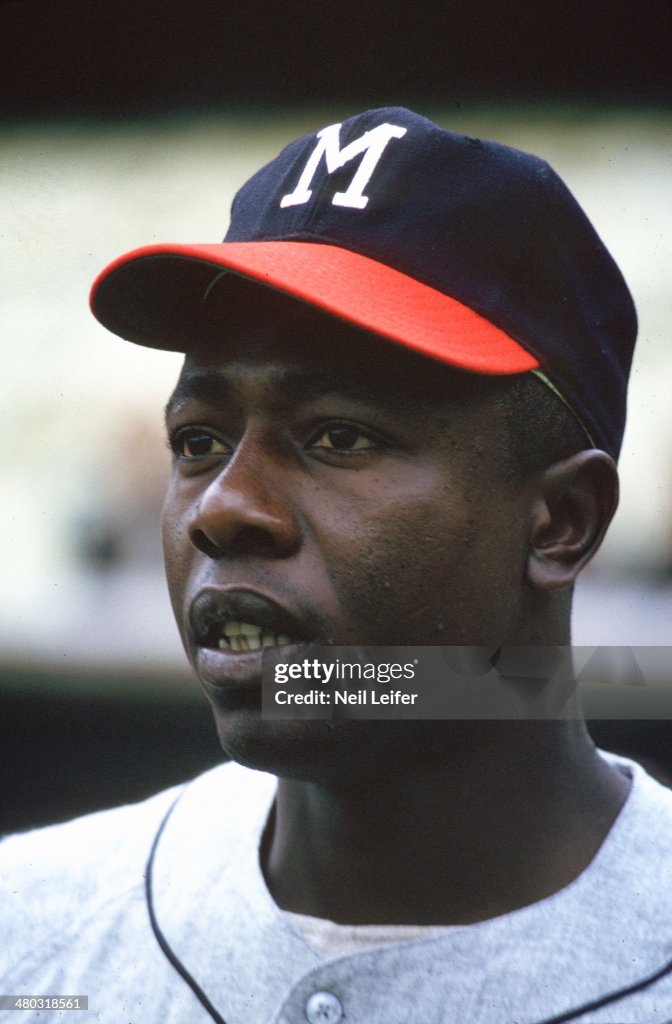
At Los Angeles, Braves pitcher Bob Sadowski notches a 7–1 win and sets a Braves franchise record of striking out 5 times in a regulation game. The only other Braves to whiff five times was Harry Stovey, who did it in extra innings in 1891.
Dow Jones Industrial Average: 824.54 (-2.79).
Born:
Crispin Glover, American film actor (George McFly-“Back to the Future”), in New York, New York.
Andy Serkis, English actor (Gollum-“The Lord of the Rings film trilogy”), pioneer in motion capture animation; in Ruislip Manor, Ruislip, England United Kingdom.
John Carney, NFL kicker (NFL Champions, Super Bowl XLIV-Saints, 2009; Pro Bowl 1994, 2008; Tampa Bay Buccaneers, Los Angeles Rams, San Diego Chargers, New Orleans Saints, Jacksonville Jaguars, Kansas City Chiefs, New York Giants), in Hartford, Connecticut
Jimmy Jones, MLB pitcher (San Diego Padres, New York Yankees, Houston Astros, Montreal Expos), in Dallas, Texas.
Rosalyn Sumners, American figure skater (Olympics, Women’s silver medalist, 1984) in Palo Alto, California.
Died:
Dimitar Ganev, 65, President of Bulgaria since 1959. Ganev’s title as Chairman of the Presidium of the National Assembly of Bulgaria served to make him the nation’s head of state, although actual power was wielded by Todor Zhivkov, the General Secretary of the Bulgarian Communist Party.
Eddie Dyer, 64, MLB pitcher, manager, and farm system official (St. Louis Cardinals).




 History Diaries