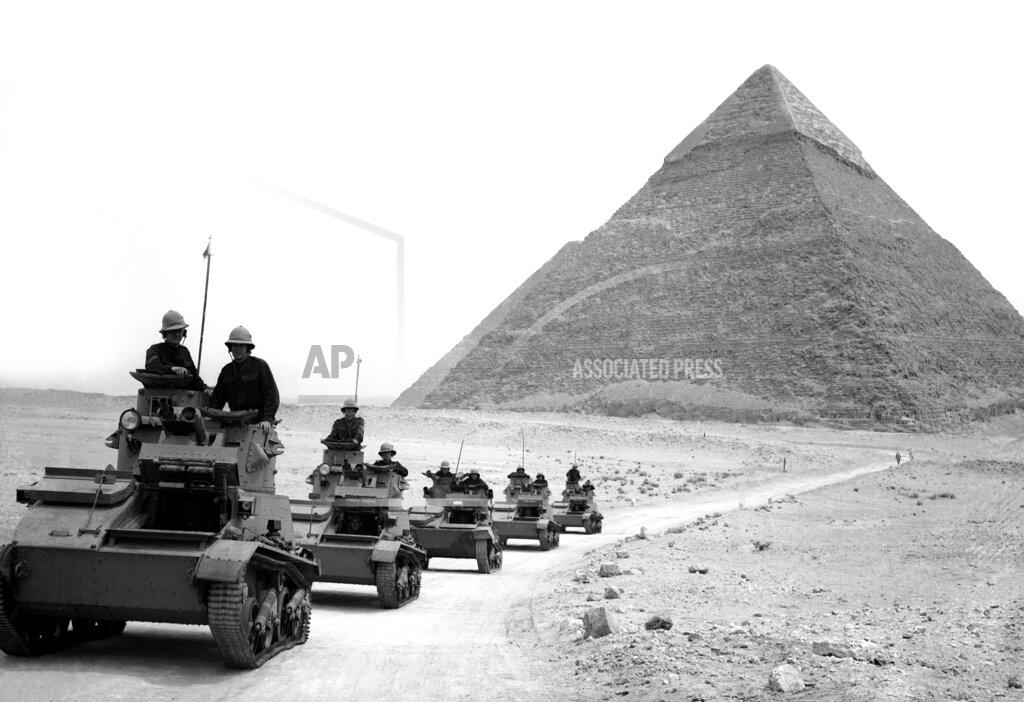
Neville Chamberlain vowed to go to the aid of the Netherlands, Denmark or Switzerland if they were attacked. Britain’s guarantees extend to the Netherlands, Switzerland and Denmark, Prime Minister Chamberlain indicated yesterday, at the same time as he promised that the government would hold military talks with all the countries to which pledges had been given. Prime Minister Chamberlain assured the House of Commons today that Britain was pushing ahead with the formation of the anti-aggression front, although it was apparent from his guarded answers to questioners that the pace of the effort was slowing down.
The Anglo-Russian talks have been suspended pending the arrival in Moscow of Ambassador Ivan Maisky, who flew from London this morning for consultations with his chiefs. The Anglo-Turkish conversations are much farther advanced, but they, too, are moving slowly in their final stages, and their outcome may be affected by decisions reached in Moscow in the next few days.
There is no doubt of the British eagerness to guarantee Turkey or of the Turkish willingness to receive a British pledge and accept important obligations in return. But the Turks are anxious not to give too much publicity to their acceptance of counter-obligations, such as a pledge to other Balkan States and an agreement regarding the use of the Dardanelles to help Rumania in the event of aggression.
The nation’s war preparations went forward with the announcement of the twelve regional “dictators” who will take charge of Britain in an emergency.
Likewise in France precautions were pushed, and there Premier Daladier told the Cabinet that “continuous vigilance” was necessary.
Meanwhile Europe’s process of “choosing up sides” continued. In Rome the Hungarian Premier and Foreign Minister arrived for conversations that may decide the future of Yugoslavia. Apparently a Rome-Berlin-Budapest guarantee for Belgrade is the aim. Yet, since Regent Paul of Yugoslavia is about to meet King Carol of Rumania and possibly King Boris of Bulgaria, forecasts of a Yugoslav affiliation with the Axis seemed premature.
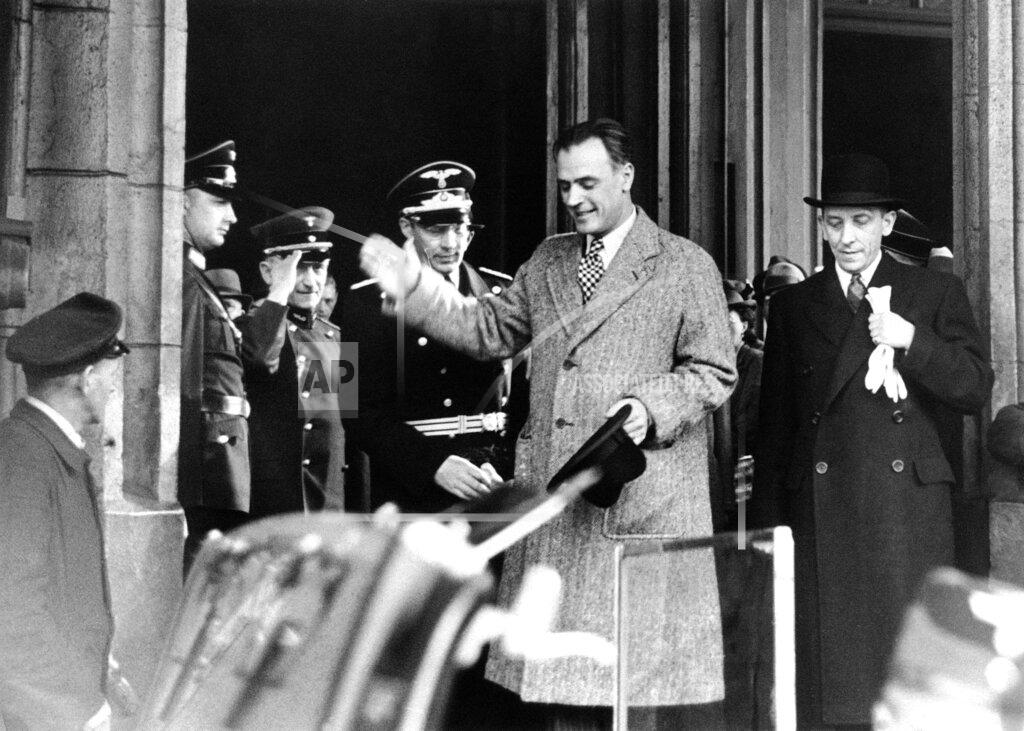
Franz von Papen became German ambassador in Turkey. Germany made a bid to keep Turkey out of the Anglo-French front by sending, as her ambassador there, von Papen, the man credited with a major role in the annexation of Austria.
Berlin’s press saw in Chancellor Hitler’s decision to summon the Reichstag to reply to President Roosevelt evidence that the Axis powers had again seized the initiative. As a result of Chancellor Hitler’s decision to answer President Roosevelt’s “peace ultimatum” personally and to summon the Great German Reichstag in special session for that purpose, the press jubilantly proclaimed today that “the Axis powers have again seized the initiative” and “the world again looks to Berlin.” At the same time, part of the German fleet, including two pocket battleships, sailed for maneuvers off Spain, and the appointment of the veteran diplomat Franz von Papen as Ambassador to Turkey, which Great Britain and France are trying to line up in their anti-aggression front, was disclosed.
It has been a cardinal principle of Herr Hitler’s political strategy to keep “the law of action” in his own hands and to keep others. guessing what he would do next, which concentrated world attention on himself and immobilized his opponents. President Roosevelt’s surprise message has transferred this law of action for the moment to the other side and the desire to recapture it is therefore one motive for the dramatic summoning of the Reichstag.
As the German press presents the world picture, Herr Hitler’s action. has again completely flabbergasted the democracies, whose war-mongers had jubilantly announced that the authoritarian states would let the indictment implied in Mr. Roosevelt’s message stand without answering it and who now face the prospect that Herr Hitler may turn the tables on them by precise counter-proposals that would be hard to refuse and force the democracies rather than the dictators to show their hands. Although the German thesis is that fulfillment of the German demands must come before talk of disarmament, National Socialist quarters profess confidence that Herr Hitler is fully capable of turning Mr. Roosevelt’s message into a boomerang for the democracies.
At the same time, Herr Hitler’s asserted recapture of the initiative is to be strongly underlined by a monster military parade that will serve as the climax of his fiftieth birthday celebration Thursday. For this purpose, three additional divisions, comprising some 50,000 men and including a tank division and motorized division, are being moved up to Berlin to participate in it.
A good-sized German armada set out on a cruise to Portuguese and Spanish ports, which will take it through the Strait of Gibraltar and as far as Malaga, Spain. Its arrival off the coast of Portugal, it was reported in London, is planned as a signal for an uprising by Portuguese fascists intent on linking their country with Spain.
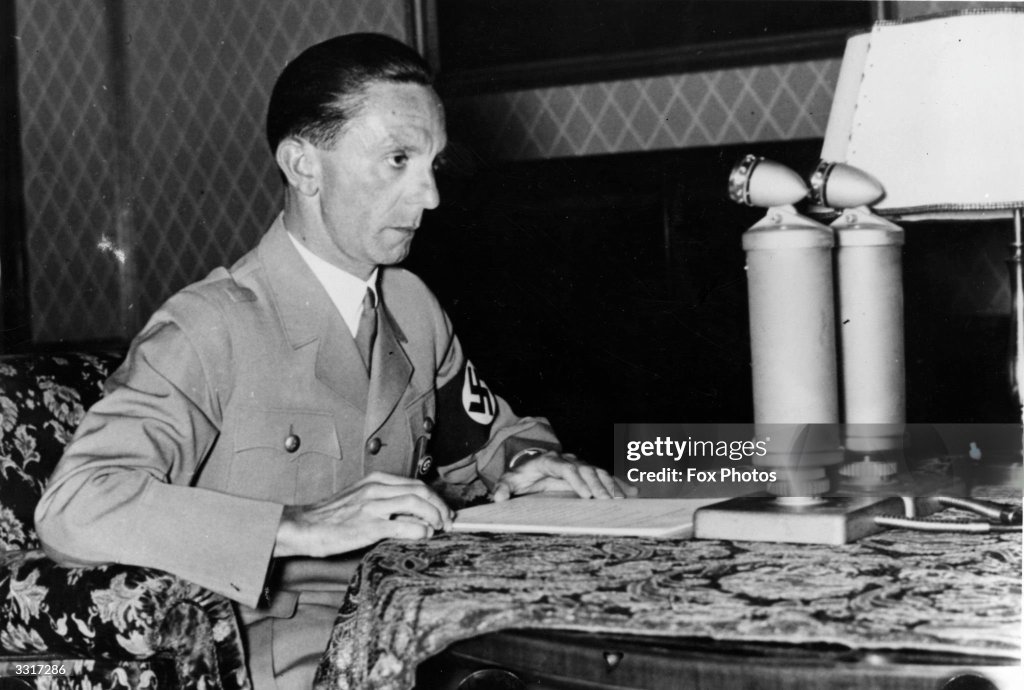
On this day, the German government declared that Adolf Hitler’s birthday (20 April) was to be a national holiday. Festivities will take place in all municipalities throughout the country as well as in the Free City of Danzig. British historian Ian Kershaw comments that the events organized in Berlin by Propaganda Minister Joseph Goebbels were “an astonishing extravaganza of the Führer cult. The lavish outpourings of adulation and sycophancy surpassed those of any previous Führer Birthdays.”
Chancellor Hitler returned to Berlin tonight for his birthday celebration Thursday. He had spent ten days in his Bavarian mountain home; in Munich, where he conferred about President Roosevelt’s weekend peace appeal, and in Austria, where he inspected progress in training Austrian soldiers along the Prussian pattern. A ban on photographs of troops or equipment during the birthday celebration was taken to indicate that a surprise might be in store for the foreign military attachés who will be guests at the military review that is part of the program. During a review when Admiral Nicholas Horthy, Regent of Hungary, visited here last August, the surprise was a group of sixteen-inch howitzers, the biggest ever seen in Germany.
In Berlin, Hitler warns Grigore Gafencu, Romania’s new Foreign Minister that “Rumania will be abandoned by the covetousness of its neighbors” and again offers military aid and support against Soviet aggression.
The Reich church must relinquish taxes, forfeit public rights status, and allow the cathedrals to be used for neo-pagan ceremonies.
Hubert Pierlot forms a new Belgian coalition government of Catholics and Liberals.
Slovakia approved its first antisemitic legislation. An anti-Jewish bill passed in the upper house in Hungary, as well.
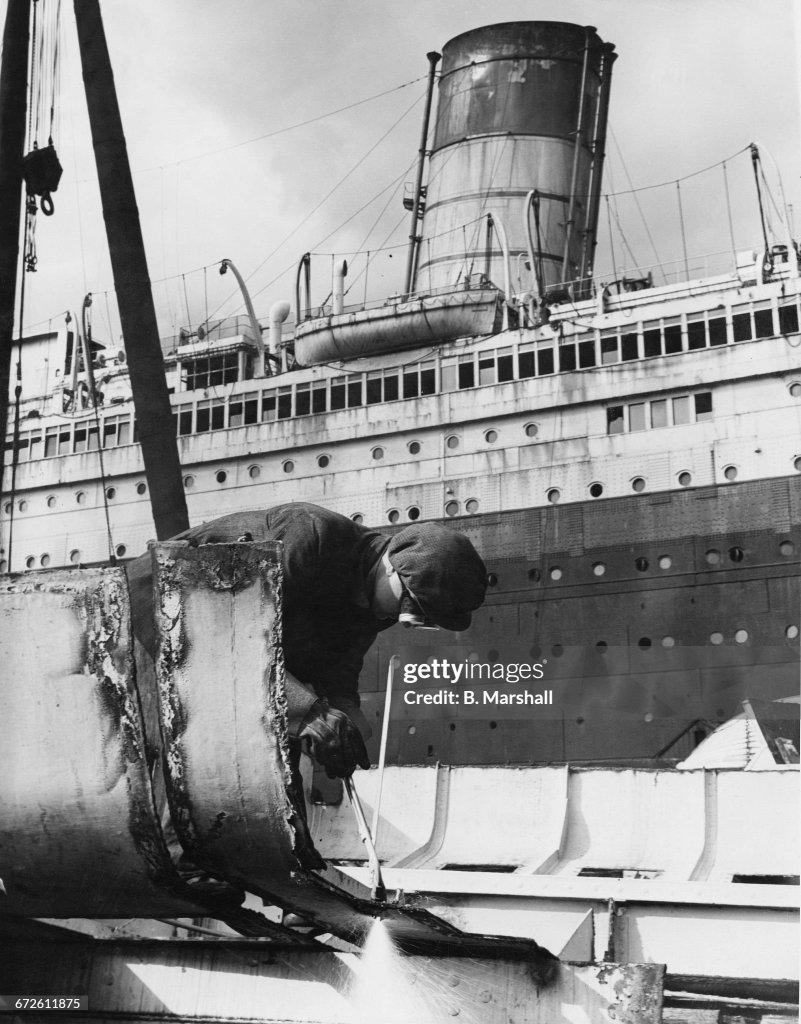
The French ocean liner SS Paris caught fire and sank in Le Havre. The 34,569-ton liner Paris appears to be a total loss following a fire that started shortly before midnight and rapidly consumed the vessel which before the building of the Ile de France and the Normandie was the pride of the French Line’s fleet. Art treasures valued at more than $500,000, bound for New York’s Fair, are believed to have been destroyed. The art was insured but cannot be replaced. The ship was to have sailed for New York today.
The Mediterranean tension was reflected in a decision by some ship lines to route voyages from the Far East to the Occident by way of the Cape of Good Hope.
In Spain, Franco reportedly demobilized 200,000 of his roughly one million troops.
Today in Washington, President Roosevelt conferred on financial policies with Secretary Morgenthau, Secretary Wallace, Jesse Jones of the Reconstruction Finance Corporation, Marriner S. Eccles of the Federal Reserve Board, Jerome Frank of the Securities and Exchange Commission, and John W. Hanes, Under-Secretary of the Treasury, and on military affairs with Secretary Woodring and Assistant Secretary Louis Johnson. At his press conference he said he would send to Congress within a week or ten days his request for the 1940 relief appropriation.
With the Senate in recess, the Banking and Currency Committee heard a delegation urge lower interest rates on Home Owners Loan Corporation loans, the Foreign Relations Committee continued hearings on the neutrality bills and the Education and Labor Committee questioned J. Warren Madden, chairman of the National Labor Relations Board, on amendments to the Labor Relations Act.
The House considered the bill to extend the Stabilization Fund and dollar-devaluation powers of the President, sent to conference the Second Deficiency Bill and the Interior Department Appropriation Bill, and adjourned at 4:35 PM until noon tomorrow. A subcommittee of the Appropriations Committee continued questioning officials of the Workers Alliance in connection with its investigation of the WPA, and the Foreign Affairs Committee continued hearings on Neutrality Act revisions.
A plan to revise the Roosevelt Administration’s monetary policies was determined upon today by House Republicans in conference. They hope for support from the Democratic side to accomplish their aim through amendment to the pending bill, which would extend the President’s powers to fix the gold content of the dollar and continue the stabilization fund.
Whether there will be a large enough defection from Democratic ranks to alter the pending bill was a question in Congressional circles tonight after the Republican conference. But the speech today of Representative Dies denouncing proposals to continue the emergency powers of the President suggested the question whether he would be able to influence enough conservative Democrats to go along with him. The test is not expected to come before Friday, as the House will put aside the bill tomorrow and will not take it up again until Thursday, with four hours more of general debate before it considers amendments.
The Republican policy adopted today was embodied in a report of a committee, headed by Representative Wolcott of Michigan, named several weeks ago by Representative Martin. It recommended that the minority strength be thrown against the present attempt to extend until July, 1941, the powers of the President to determine the gold content of the dollar. The Republicans advocated the ending of this authority, which virtually means a return of the United States to the gold standard.
Colonel Charles A. Lindbergh, Air Corps Reserve, was called to active duty today by the War Department, the order being effective as of tomorrow. Secretary Woodring said that Colonel Lindbergh would be assigned to duty in the office of Major General H. H. Arnold, chief of the Air Corps, and that one of his first tasks would be to make a survey of the aviation research facilities of the United States and report to General Arnold.
The War Department also announced that it would commission the first increment of 400 new flying officers made necessary by the air expansion program, and that applications for these commissions must be filed not later than May 1. An increase in the Medical Corps because of the air and coast defense expansion program also is contemplated. Before the end of the month, it is expected that the first contracts for newly authorized equipment will be signed.
The announcement that Colonel Lindbergh had been called to active duty was made in a bulletin, upon which Secretary Woodring declined to elaborate. The news was unexpected, even in army circles. Neither General Malin Craig, the Chief of Staff, nor General Arnold would comment. They said that the bulletin spoke for itself. It was learned tonight from a high army officer that Colonel Lindbergh had been in Washington for two days and was at the War Department this afternoon, although Secretary Woodring made no mention of that fact in his statement. It was assumed, accordingly, that he would formally report to General Arnold tomorrow.
All that Secretary Woodring would say was that Colonel Lindbergh would have “the task of making a survey of all aviation research facilities in the United States which are available to the Army Air Corps,” and that the survey would include governmental, educational and industrial facilities.
Efforts to compromise the controversy over the revision of the Neutrality Act, debate on which bids fair to keep Congress in session many weeks, met a check today when Senator Pittman, chairman of the Foreign Relations Committee and the Administration’s principal spokesman on foreign affairs at the Capitol, said that the “cash-and-carry” section of the present law would be permitted to lapse by limitation on May 1, unless something was enacted to take its place. “There will be no stop gap legislation, so far as I am concerned,” he said. “The present act is too deficient to be continued any longer than we have to. The more I think about it, the more convinced I am.”
On the other hand, a group of leading Senators has been busy for several days canvassing support for extending for another year the whole present law, of which only the “cash-and-carry” section expires by limitation. These men have concluded that only a bitter fight is in prospect over revision of the law. The threats of war from Europe, public indignation against Japan and the uncertainty in Congress are compelling factors against attempting far-reaching legislation at this session, it is said.
A DAR representative explains the ban on Black performers, most recently Marian Anderson. She says that experiences in the past were “unpleasant” and the policy is “in conformity with current custom.”
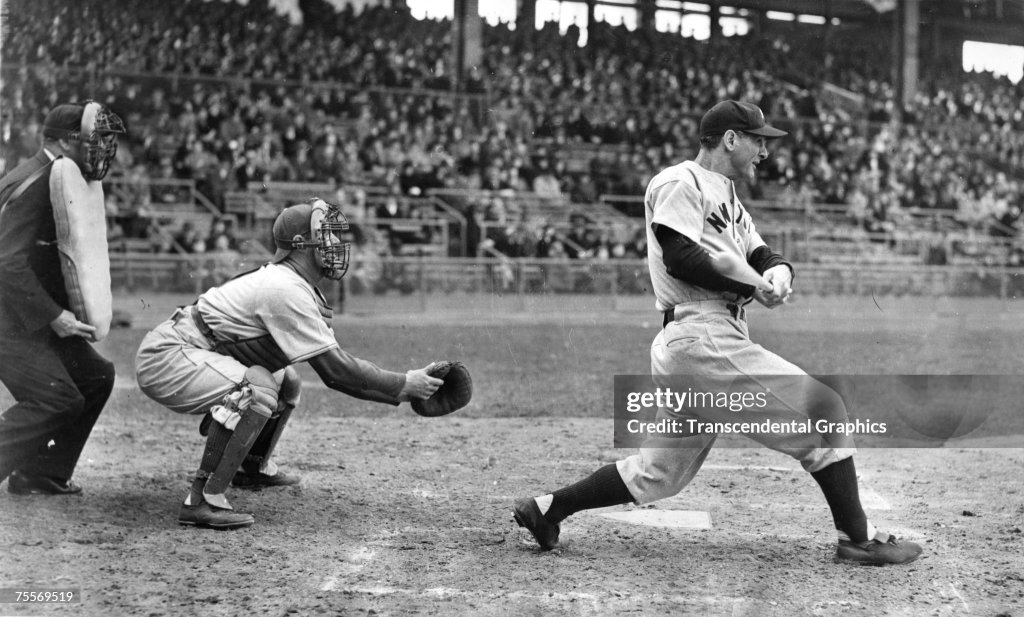
Announcer Red Barber calls the first-ever Dodger game to be broadcast, a losing effort to the Giants, 7–3. New York totals 13 hits in the game. The five-year ban on broadcasting games played by the New York major league teams ends when Red Barber, calls Brooklyn’s loss to the Giants at Ebbets Field. In 1934, the two National League teams and the Yankees agreed not to air their games on the radio, fearing the exposure would reduce the number of fans attending games. Barber, the future Hall of Fame announcer was brought in from Cincinnati by the team’s new president, Larry MacPhail, who had hired the ‘Ol Redhead’ when he was in a similar post with the Reds.
Although President Roosevelt declared at Kingston, Ontario, last August that the United States will fight for Canada, it was learned today that nothing has been done to promote joint defense by the two countries. No plans for assistance or cooperation have been prepared or even advanced and no military information has been exchanged by American and Canadian general staffs, according to authoritative sources. It was learned at the war and navy department that the White House has not followed up the declaration at Kingston, which was widely approved in both countries even though the Canadians have indicated they would favor development of their own defense program.
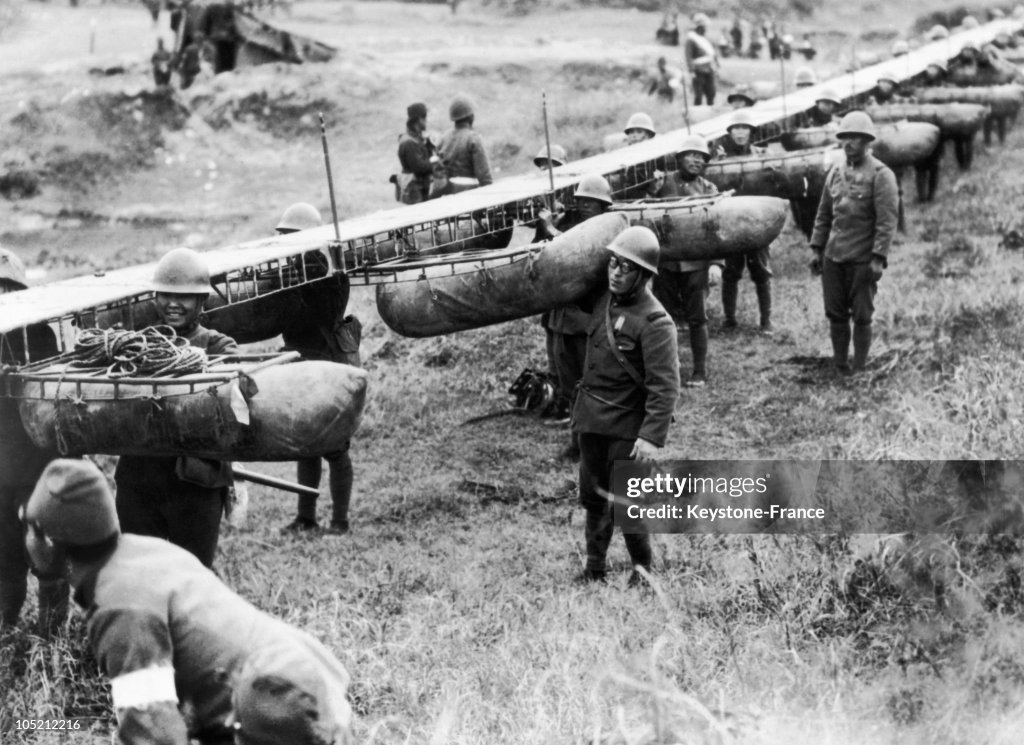
A Chinese military spokesman today predicted early success for Chinese so-called elastic ribbon tactics which he said were stopping Japanese advances over a vast territory extending from Kwangtung province in the south to Mongolia in the north. He cited Chinese attacks north of the Yangtze River which he said prevented the invaders from assembling a force for a drive from Nanchang and Yochow toward Changsha, capital of Hunan province. He added that continuous harrying tactics north of Canton kept the Japanese from organizing an offensive westward. Farther north, Chinese sorties around Kaifeng, Honan provincial capital, were said to have harassed the Japanese so much they have been unable to push toward the Chengchow railway junction. It was said the Japanese were unable to continue the construction of a strategic supply line connecting the Lunghai railway at Kaifeng with the Peking-Hankow railway south of Chengchow.
The United Australia Party chose Robert G. Menzies to lead the party. Menzies thus becomes the next Australian prime minister.
Dow Jones Industrial Average: 125.38 (-1.96).
Born:
Glen D. Hardin, American rock n roll and country piano player, and arranger (The Crickets), in Wellington, Texas.
Thomas J. Moyer, American judge and Chief Justice of the Ohio Supreme Court (1987-2010), in Sandusky, Ohio (d. 2010).
Von McDaniel, MLB pitcher (St. Louis Cardinals), in Hollis, Oklahoma (d. 1995).
Ken Rohloff, NBA guard (St. Louis Hawks), in Paterson, New Jersey.
Died:
Theo Mann, 88, Dutch actress (“Pink Bernd”, “Hedda Gabler”).
Naval Construction:
The Royal Navy Black Swan-class sloop HMS Flamingo (L 18, later U 18) is launched by Yarrow Shipbuilders Ltd. (Scotstoun, Scotland).
The Royal Navy Kingfisher-class (Third group) sloop HMS Shearwater (L 39, later K 39) is launched by J.S. White & Co. (Cowes, U.K.).
The Regia Marina (Royal Italian Navy) submarine Brin, sole boat of her class, is commissioned.

 History Diaries