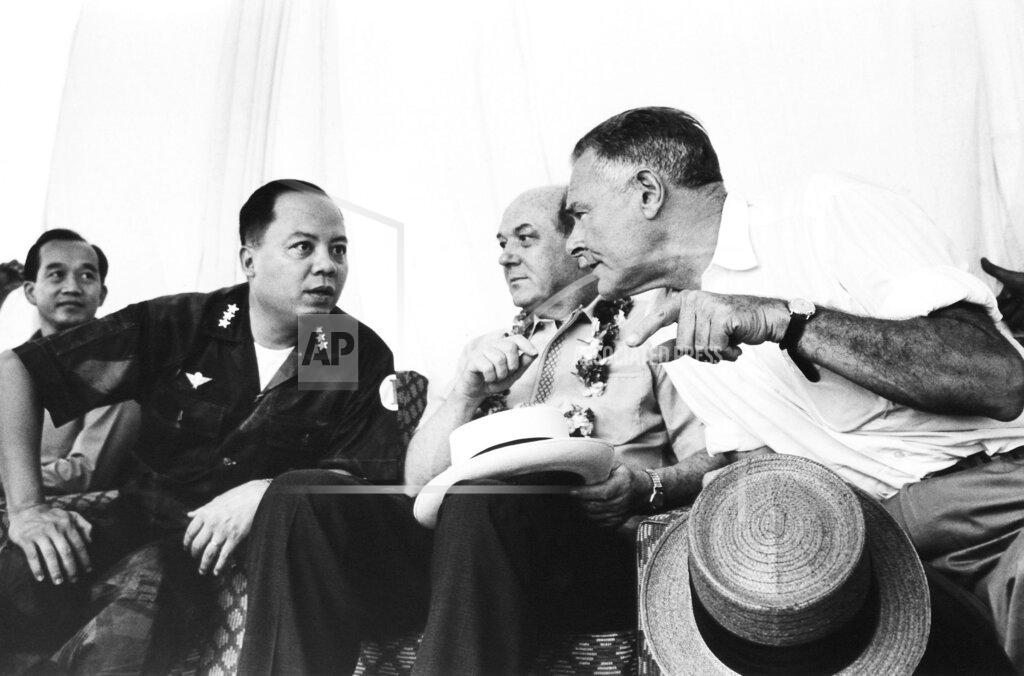
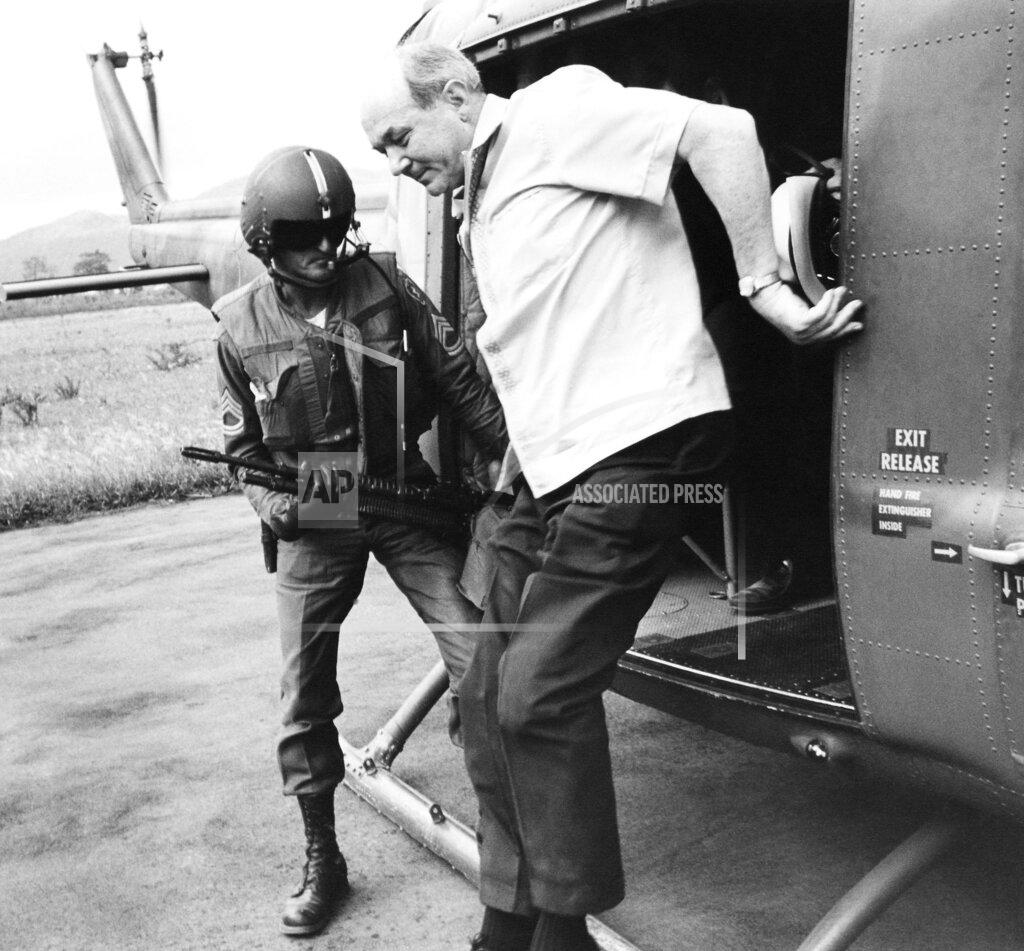
Secretary of State Dean Rusk told the South Vietnamese today that “we are comrades in your struggle” against the Communist guerrillas. “Someday,” he said, “that regime in Hanoi will disappear and you and your brothers in the north will be able to join in a free and democratic Vietnam.” The Secretary made the remarks during a visit to the fortified hamlet of Phước Hưng, where village girls gave him a garland of flowers and schoolchildren cheered as he delivered the personal greetings of President Johnson. Mr. Rusk was accompanied on his tour by Premier Nguyễn Khánh, General Earle G. Wheeler, Army Chief of Staff, and Ambassador Henry Cabot Lodge. He wore an open-necked sport shirt as he walked through the dusty village square acknowledging the cheers of the Chams, a minority people who live in the village.
Earlier, Mr. Rusk met for 75 minutes with the Premier, General Wheeler, Mr. Lodge and William P. Bundy, Assistant Secretary of State for Far Eastern Affairs. Their discussion ranged over the general situation in Asia and General Khánh elaborated on his political and social program, which he is undertaking in connection with the military campaign against the Communist guerrillas. General Khánh said his country had become a primary testing ground for the Chinese Communist theory of attaining power by violent revolution. The general added that Mao Tse‐tung, the Chairman of the Chinese Communist party, would want to show this year that his view is correct and that Premier Khrushchev’s is wrong.
General Khánh made his remarks at Phan Rang, the capital of Ninh Thuận Province on the coast, about 150 miles northeast of Saigon. The hamlet they visited is nearby. The Premier denied rumors that a coup d’état was impending. The general, who came to power January 30 by ousting the military junta, said that a coup, to be successful, would have to be supported by the military and that he was sure this would not happen. Dissatisfaction felt by some military commanders because they have been passed over by the general in his reorganization of commands has been a source of speculation about the possibility of another coup. An informed American source said that General Khánh had been assured by key senior military officers that he would have at least six months in which to prove that he is capable of handling administration of the government.
A Greek Cypriote sandbag position erected yesterday at the entrance to the Ledra Palace Hotel on the truce line was removed today on orders of Archbishop Makarios. The Archbishop, President of Cyprus, acted during a visit to the hotel. It was believed to be the first time that the President had come to the truce line separating the Greek Cypriote and Turkish Cypriote communities the Nicosia area since it was set up last December following the outbreak of intercommunal strife. Shortly before the Archbishop arrived, a bomb went off on a balcony 12 feet below a United Nations position manned by British soldiers on the roof of a building on the truce line in the old walled city. No one was injured.
The floors below the position facing the Turkish Cypriote sector have been occupied by Greek Cypriote security forces. Some observers saw the explosion as the first act of overt Greek Cypriote terrorism against the British since the British became involved as peace‐keepers in the conflict between the Greek and Turkish communities. A Greek Cypriote Government communiqué suggested that the bomb had been dropped on the balcony from above. “Rumors that the explosion was caused by the British troops are being investigated,” the communiqué said.
Sporadic but heavy shooting continued today in the Kyrenia Pass area, north of Nicosia, where Greek and Turkish Cypriotes have been facing each other in strength since last weekend. Greek Cypriote security forces near the villages of Pano and Kato Dhikomo have been firing across the road from Nicosia to the port of Kyrenia. The road is in Turkish Cypriote hands. The United Nations is understood to have warned the Greek Cypriotes that if the firing on the route continues, armored vehicles will patrol it with instructions to fire back.
The police in Bulawayo opened fire on rioting Africans today for the first time as violence and turmoil spread in Southern Rhodesia. One man was seriously wounded when policemen, dodging a barrage of stones, used shotguns to scatter a crowd of 200 Africans. At least 265 Africans were reported to have been arrested in the last 48 hours. They were seized in a widening series of stonings, demonstrations and riots that followed the detention on Thursday of Joshua Nkomo and three other nationalists in this seIf‐governing British colony in Central Africa. All of the country’s nearly 5,630 policemen were said to be on full alert.
Mr. Nkomo was ordered sent to a remote area of the colony by the Government of Prime Minister Ian D. Smith. Mr. Smith was named last Monday to replace Winston J. Field, who was considered too moderate by the right wing of the ruling Rhodesian Front party. Mr. Nkomo’s People’s Caretaker Council has asked Britain to send troops to protect the African majority in the colony. The shooting today took place at Bulawayo, in the southern part of the country. It came a few hours after an African had been shot and wounded outside Salisbury, the capital, in what was alleged to be an attempt to escape arrest.
In Salisbury a band of Africans set upon white women shoppers in a downtown store, punching, slapping and beating them in a fury. About 20 African youths entered the store, the OK Bazaar, and mingled with shoppers. At a prearranged signal‐a whistle‐each youth attacked the white nearest him. One woman was knocked down a flight of stairs. Another ‐was hit with a glass tray. A man who tried to stop the fleeing band was slashed on the arm. At Bulawayo a police patrol surprised a mob stoning a beerhall in Imminyela, an African township just outside the city. The patrol opened fire with a riot gun when the crowd turned on it. A man was found later in a house, bleeding badly from gun‐pellet wounds.
Roving gangs of shouting Africans stoned houses, community centers and cars throughout the night in and around Bulawayo and Salisbury. At Bulawayo they set up crude road blocks with rubbish cans and debris to hamper police riot trucks. They also put boulders on tracks in an unsuccessful attempt to derail a train. Around Bulawayo alone they stoned one store, eight houses, five buses, three beerhalls, three cars, a train and two police patrols. Two African police reservists were stabbed by members of surging crowds in Highfield township, outside Salisbury. In one incident at least 290 panes of glass were smashed at the Mhiza school. Gangs stuffed kerosene-soaked rags under the doors of political opponents’ homes and set them afire. Police with three‐foot‐long riot clubs patrolled the streets of the capital tonight. In Highfield they carried away several truckloads of suspects.
Swedish and Norwegian missionaries in the eastern Congo were surrounded today by. armed rebels Who threatened to attack their isolated station. A United Nations spokesman said a distress call was received this morning from the mission at Lemera, near the Burundi border. The missionaries reported that they were completely encircled by a band of so‐called Jeunesse or youths, similar to groups that have recently attacked missionaries in Kwilu Province. There were also reports of violence in Bukavu, about 40 miles northwest of Lemera. after the police tried to retrieve arms stolen from them. Seven policemen were reported to have been killed. There was no indication of a connection between the trouble in Bukavu and the threat to the mission. However, Congolese leftists based in Burundi have long been seeking to stir up a revolt in the eastern Congo.
Kenya’s security forces believe they have Somali secessionist guerrillas on the run in the country’s parched northeastern frontier. The secessionists are trying to break away from newly independent Kenya and, as they put it, “rejoin” the neighboring Somali Republic on the east. Kenya recently mounted Operation Final Fling with 1,250 troops and riot policemen to flush the guerrillas into the open before the arrival of the imminent rains. There has been no let‐up since on the guerrillas, known as shifta or bandits. Eleven shifta were killed in one running battle with Kenya patrols. It was the largest toll in any engagement so far. Other gangs have been forced to scatter in the 120‐degree heat of the bush, where the glare presses clown until vision blurs and the mind reels. But no one thinks the secessionist struggle is over. The shifta have about 1,000 men — with rifles, machine guns and hand grenades — all of which, Kenya alleges, are supplied by Somalia.
During his visit to New York, King Hussein of Jordan gave a fresh assurance that the “Arab nation” would not go to war if Israel proceeded with her plan to divert water from the Jordan River this year to irrigate the Negev Desert. Nevertheless, King Hussein’s warning that the Arab states would take “steps of a non‐military character” to prevent the diversion, foreshadows a revival of the bitter disputes between Israel and her Arab neighbors which played such a prominent role in the early years of the United Nations. Israel, which had originally planned to divert the water from the Upper Jordan, now intends to take it from the Sea of Galilee, which is entirely within Israeli territory, in the expectation that this will produce fewer international complications. The “nonmilitary” measures threatened by King Hussein call for the damming of upper tributaries of the Jordan which flow through Syria and Lebanon. This would seriously reduce the amount of water flowing into the Sea of Galilee and hence available to Israel.
Israel is reported to be balking at accepting international controls over the atomic research assistance she is receiving from the United States. The Israeli program, consequently, is emerging as a test of how firm the United States will be in urging that nations receiving assistance under the Atoms for Peace policy accept inspection by the International Atomic Energy Agency. In the past, the United States has extended atomic assistance on a bilaterial basis, with American officials conducting periodic inspections to assure that the nuclear materials were not being diverted to military purposes. In recent months, however, the Administration has advocated what officials describe as a “firm policy” of virtually requiring nations to accept international controls as a condition of United States assistance.
RTF Télévision 2, France’s second television station (officially La deuxième chaîne) began regular programming on Channel 22 on the UHF dial after initially experimenting on January 1.
President Johnson said today that Senator Barry Goldwater of Arizona “will be up there pretty high” when the Republican National Convention votes on a Presidential nominee in July. As for himself, Mr. Johnson said, he intends to “stay out” of the political arena “as long as I can.” Mr. Johnson gave his views at a news conference in his White House office. He is trying to keep away from partisanship “and campaigning” in his conduct of the Presidency, Mr. Johnson said, and is restricting his openly political engagements “practically to those” to which President Kennedy had committed himself. The President also said he was trying to acknowledge Republican contributions to “the success of our program.” And the pay rise he has proposed for Federal officials and members of Congress, he said with a smile, will not be “just for Democratic Congressmen.”
President Johnson announced plans today for a comprehensive Government review of the military draft, including the possibility of eliminating it within 10 years. The present draft law is now more than 15 years old, he pointed out. It was extended last year until 1967. The President said he was “concerned” that the original principle of equal sharing of military service obligations “may have drifted” in practice. Mr. Johnson made the announcement at a suddenly called news conference at the White House. He said that he had just “drafted and approved” plans for the study submitted by Secretary of Defense Robert S. McNamara. The study will be completed in one year, the President said.
He said it would cover the draft system and related military manpower policies and that it would constitute “the most comprehensive study of the decade of the seventies.” The review will apparently supplant one that has been under way at the Pentagon during the last year. It also will inevitably serve as at least a partial answer to the growing number of appeals in Congress for studies aimed at revision or repeal of the military conscription law. Members of both parties in the House and Senate have recently called for studies of the draft act, reporting widespread complaints about it from among their constituents.
Federal spending must rise each year by at least $5 billion to provide demand to keep up with the growth of the labor force and gains in productivity, the Democrats on a Senate committee said today. However, Republicans on the Labor subcommittee on employment and manpower registered a sharp dissent from the recommendation of the panel’s Democratic majority. The majority recommendation was one of a sweeping set of suggestions designed to cope with what the subcommittee called the “manpower revolution.” The subcommittee majority said that this “complex” revolution was being engendered by accelerated growth of the labor force, dramatic shifts in its composition toward growing numbers of professional and skilled workers, increased rapid technological change, rising educational and skill requirements, shifting consumption patterns, relocation of industry, the development of new and substitute products, the depletion of some natural resources and other forces.
Rockefeller Republicans believe they have uncovered evidence that President Johnson may prove vulnerable in urban Democratic African-American districts next fall. Supporters of the New York Governor here took a series of polls in Black precincts in the District of Columbia while Mr. Rockefeller was deciding whether to enter the Republican Presidential primary in the district. These samplings in seven Black wards, several of them almost slums, were designed to measure potential Rockefeller popularity. But an arresting byproduct was an apparent reluctance among some Democrats to support Mr. Johnson.
In precincts in which Democratic registration exceeds Republican on the average by nearly 4 to 1, voters were asked whether they would vote for President Johnson or Governor Rockefeller, if that were the choice offered them. Of the 469 who gave preferences 61 percent favored Mr. Johnson and 39 percent Governor Rockefeller, indicating a substantial crossover of Democrats to support the New Yorker. In two of the seven precincts, Mr. Rockefeller outdrew the President and in a third it was a virtual dead heat.
A strong Republican ticket will win the Democratic Vice‐Presidential nomination for Robert F. Kennedy, the nation’s newspaper editors were told today by Richard M. Nixon. A lackluster Republican ticket will mean that President Johnson will pick Senator Rubert H. Humphrey of Minnesota, “whom he likes best,” said Mr. Nixon in a talk at the Statler Hotel to members of the American Society of Newspaper Editors. Mr. Nixon called this “a professional’s judgment.” He said that “if the polls are like they are now” when the Democrats convene in Atlantic City, “it will be Humphrey.” But if they are closer and “it appears there will be a fight, it will be Bobby.”
In a question period that followed a speech devoted to problems of American foreign policy in Southeast Asia, Mr. Nixon startled a room full of newspapermen by saying, in response to a question, of his recent visit to Ambassador Henry Cabot Lodge in Saigon, South Vietnam: “We had a very interesting discussion. In fact, we made a deal. He’s going to put a Pepsi Cola freezer in the embassy.”
He also said that the United States must recognize that “all the chips are now in the pot” in South Vietnam. He said this war concerned not Vietnam, but all of Southeast Asia. If we surrender there, he said, it will be a signal to Asians that the United States has no answer to the Communist thrust there. Mr. Nixon said he did not agree that the contest could be confined to South Vietnam. He asked that it be extended to Laos or to North Vietnam. He would have the South Vietnamese troops “in hot pursuit” of the Communist guerrillas into Laos, he said, adding that he would not limit carrying the fight into North Vietnam to “hot pursuit.” He said the goal of the South Vietnamese Army must be a free North Vietnam, and that the war must be carried north to achieve that goal.
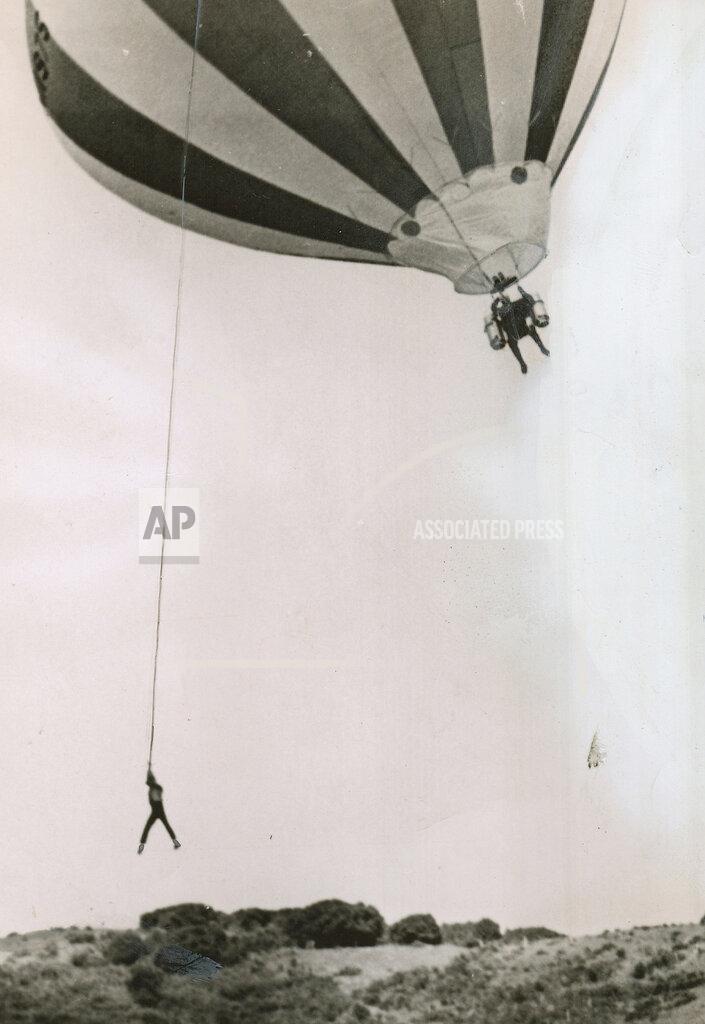
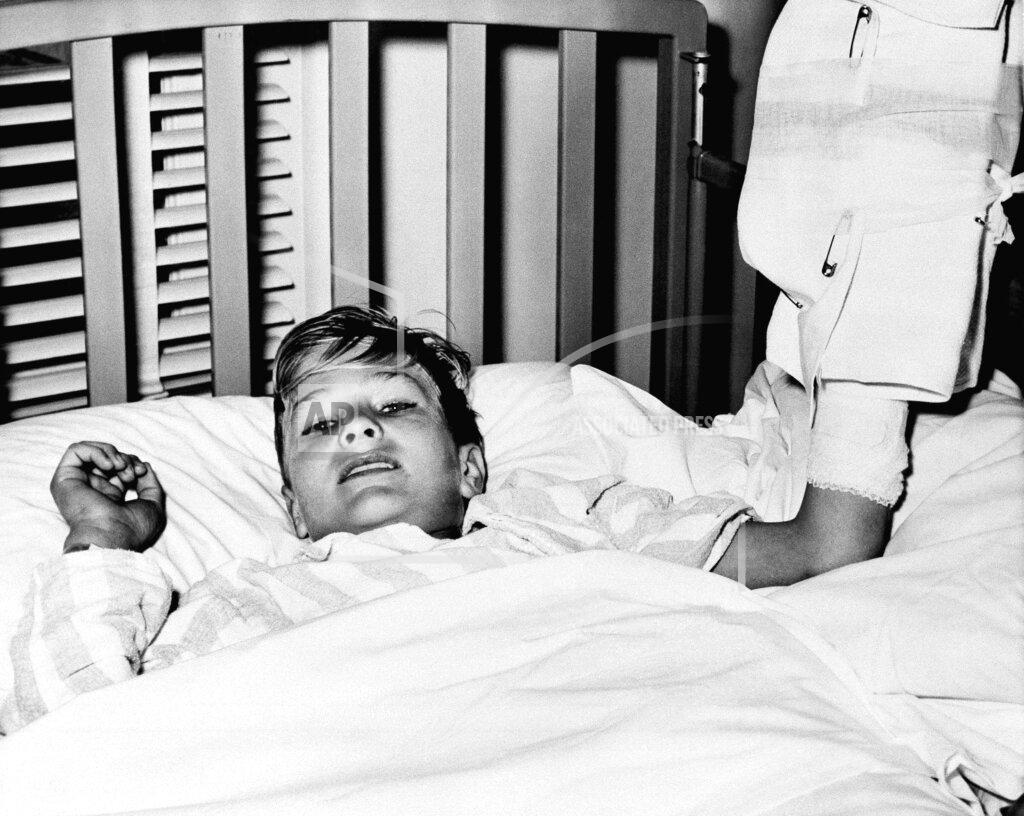
An 11-year-old boy in Mill Valley, California, got his hands caught in a rope and was taken to an altitude of 3,000 feet while dangling below a hot air balloon. Danny Nowell had joined three boys who had volunteered to hold the balloon steady and, as he told reporters later “the balloon took off and everybody let go but me.” The balloonist, William Berry, was unable to hear Danny’s screaming until he shut off the propane gas burners. At that point, Berry realized that the boy was suspended 30 feet below the balloon’s gondola and began spilling air to make a fast descent at 25 feet per second. Ten minutes after the frightening ride began, Danny was safely rescued from a tree in a residential backyard at 537 Browning Court in Tamalpais Valley.
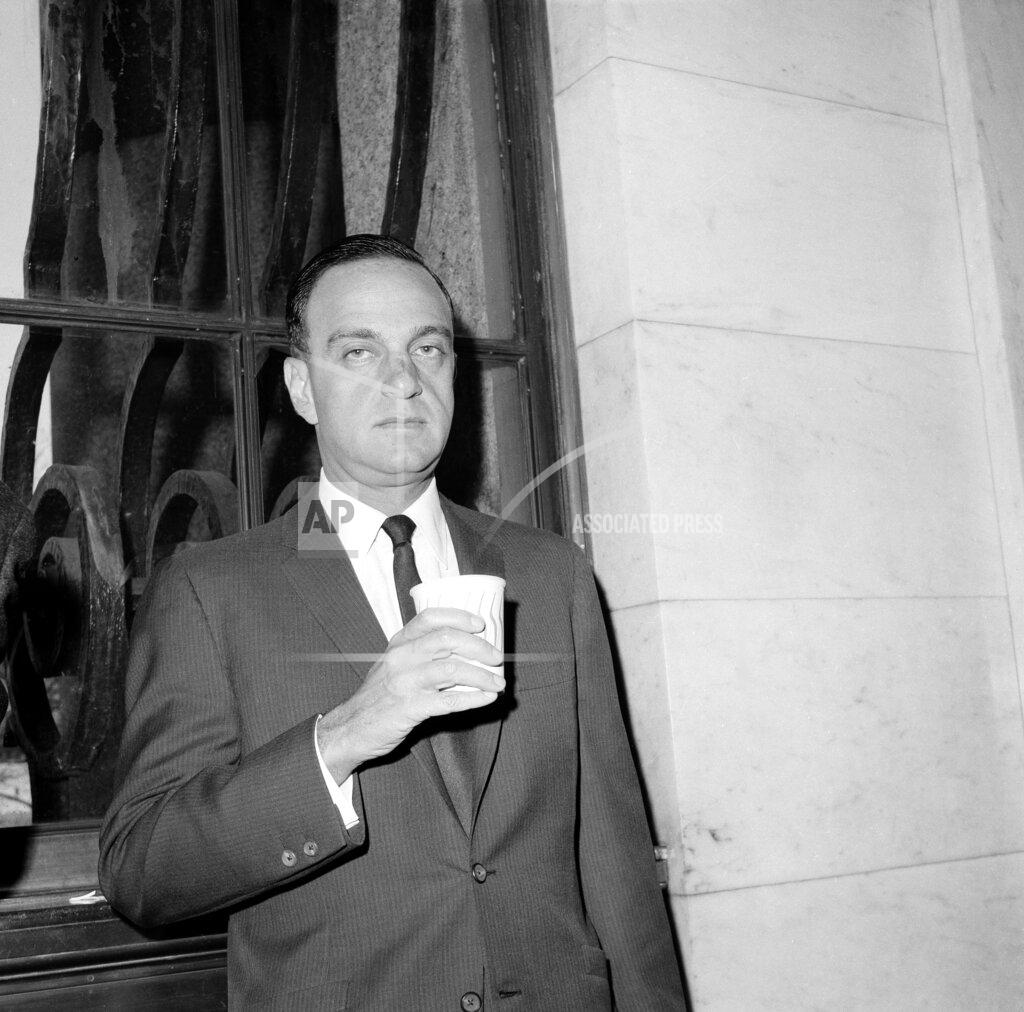
The Roy M. Cohn trial jury failed again tonight to reach a verdict and will begin its fourth day of deliberations at 1 PM tomorrow. Curiously silent, the jurors gave Federal Judge Archie O. Dawson no indication of the nature of the deadlock that has kept them in fruitless discussion since Thursday morning. Without an admission that they were unable to return a verdict, Judge Dawson had no recourse but to lock them up for the third night. He sent them again to a midtown hotel at 10:30 o’clock, and told them they had better eat lunch as well as breakfast before returning to the Federal Courthouse. The courthouse is at Foley Square, an area where most restaurants are shut on Sunday.
Robert Emmett Dolan and Johnny Mercer’s musical “Foxy”, starring Bert Lahr, closes at Ziegfeld Theater, NYC, after 72 performances and a Tony Award win for Lahr
Albert Hague and Marty Brill’s musical “Cafe Crown”, starring Theodore Bikel, closes at Martin Beck Theater, NYC, after 3 performances
The 1964 Aintree 200 motor race was won by Jack Brabham.
Jim Maloney tosses 6 innings of no-hit ball against the Dodgers, before leaving with a pulled muscle. John Tsitouris relieves and pitches hitless ball until two are out in the 9th inning when Frank Howard beats out an infield single. Sandy Koufax fans the side on 9 pitches in the 3rd inning, becoming the first National League pitcher to do it twice (and matching Lefty Grove), but Cincinnati wins, 3–0, on Deron Johnson’s 3-run homer.
Born:
Niall Ferguson, British economic historian (“Empire: How Britain Made the Modern World”, “Civilisation: The West and the Rest”), in Glasgow, Scotland, United Kingdom.
Zazie, French singer-songwriter, as Isabelle Marie Anne de Truchis de Varennes, in Boulogne-Billancourt, France.
Lourenço Mutarelli, Brazilian comic book artist, in São Paulo, Brazil.
Charles Henry, NFL tight end (Miami Dolphins), in St. Petersburg, Florida.
Dave Montagne, NFL wide receiver (Kansas City Chiefs), in Berkeley, California.
Died:
Ben Hecht, 70, American novelist, film screenwriter, and playwright (“The Front Page”).


 History Diaries