The Joint Chiefs of Staff approve Operation Plan 37-64, prepared in the Honolulu headquarters of CINCPAC; the plan details how many planes and what bomb tonnages would be required for each phase of air raids against North Vietnam and also lists the specific targets, for the U.S. planes.
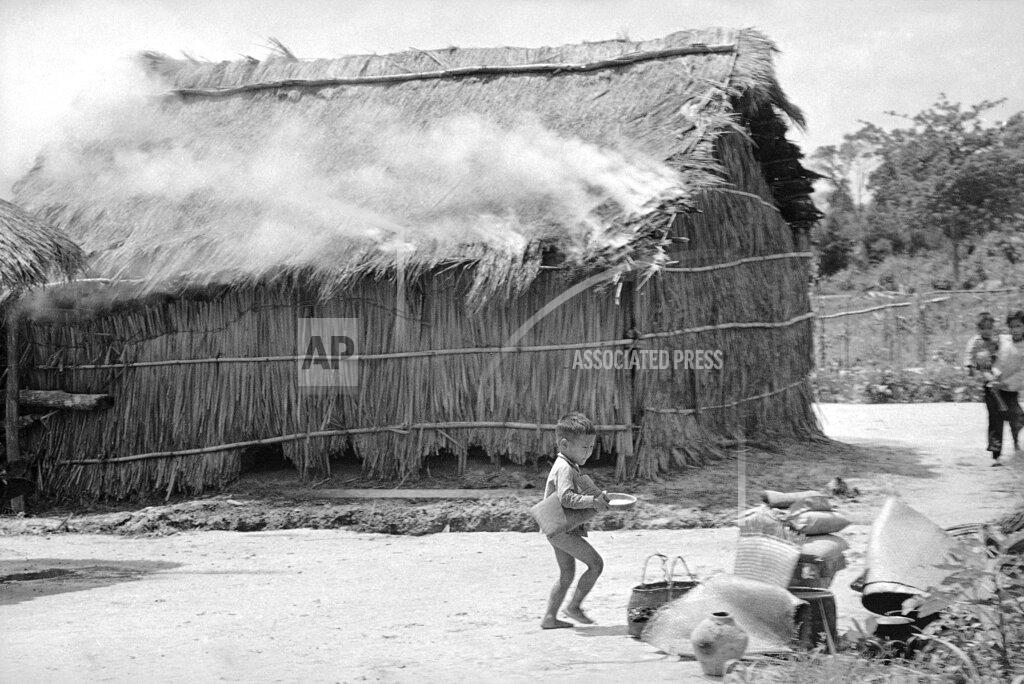
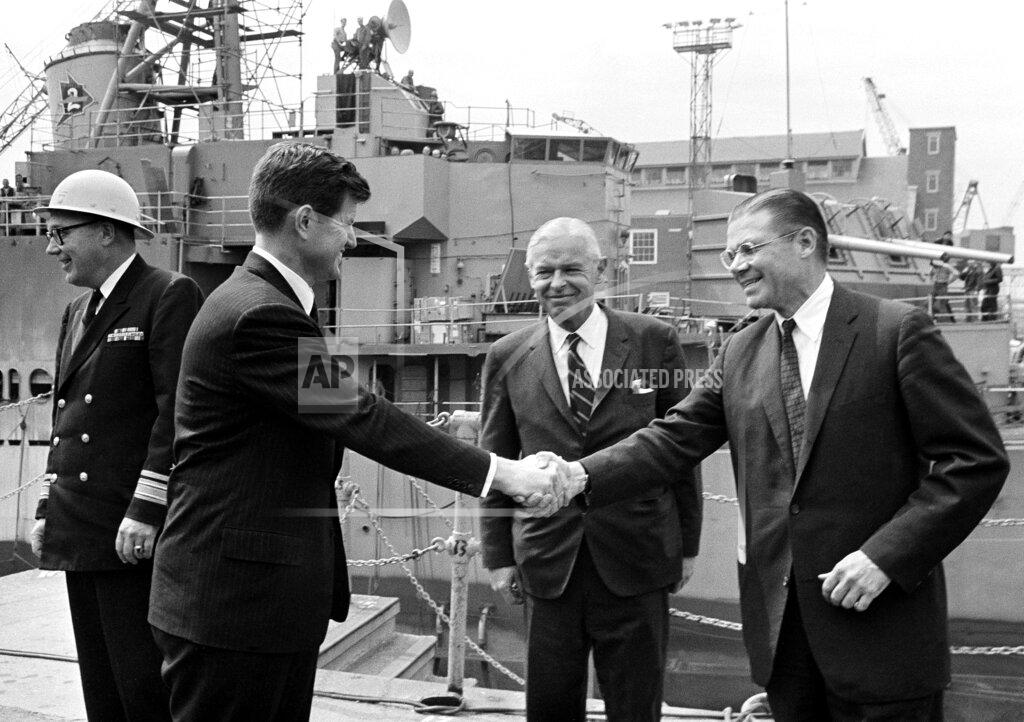
Over three days, Secretary of State Dean Rusk, William Bundy and General Earle Wheeler, Army Chief of Staff, visit Saigon where they reviewed the latest U.S. plans for covert actions against North Vietnam with Ambassador Lodge. In his public appearances, Rusk visits a fortified hamlet with General Khánh and tells the villagers that “we are comrades in your struggle.” Back in Washington, Rusk concedes that the military situation is critical but says that Khánh is ‘on the right track.’
Secretary of State Dean Rusk conferred in Saigon today with senior United States officials on means of strengthening the South Vietnamese Government headed by Major General Nguyễn Khánh. The Secretary arrived on a three‐day visit with the intention of bolstering the internal position of Premier Khánh and of trying to give added momentum to the campaign against the Communist Việt Cộng insurgents. Việt Cộng battalions have recently assumed the initiative in undertaking pitched battles against South Vietnamese troops in the embattled Mekong Delta south of Saigon.
The ability of General Khánh to prosecute the war successfully has been hampered by dissatisfaction among his political opponents in the army and some leading civilian personalities. Robert J. Manning, Assistant Secretary of State for Public Affairs, said that President Johnson had asked Mr. Rusk to express the President’s interest in assisting the Khanh Government. The Secretary of State, who is paying his first official visit to Saigon, is scheduled to make a trip into the countryside tomorrow with General Khánh to confer with representative Vietnamese officials and survey what can be done to strengthen the United States support program.
On arrival at Saigon Airport, Mr. Rusk said in a statement that the Vietnamese people and their allies must defeat the Communists’ efforts to “impose their own misery on you. This will be done, I have not the slightest doubt, and I am here to make it clear once again that we shall help you to do it,” he declared.
In a revival of terrorism in Saigon, a grenade was thrown into a United States military bus Saturday, not far from where Mr. Rusk was, The Associated Press reported. Two Americans were wounded.
In a week-long crisis that will have far-reaching consequences for the U.S. role in Southeast Asia, Laotian leader Souvanna Phouma goes to the Plain of Jars in the north of Laos to confer with leaders of opposing factions in an effort to demilitarize and neutralize Laos. The talks fail, however, and Souvanna returns to Vientiane and announces his intention to resign. On the 19th several generals attempt a coup, but with the support of the U.S. ambassador, Souvanna regains control of a coalition government. The United States supports Souvanna as the only hope for some kind of moderate and stable government, but the Communist Pathet Lao now reject this coalition and go on the offensive.
Premier Souvanna Phouma, the neutralist leader, sounded hopeful after a two‐hour meeting today with General Phoumi Nosavan, the right‐wing Deputy Premier and Prince Souphanouvong, leader of the pro-Communist Pathet Lao party. Prince Souvanna Phouma said the leaders had “found our points of view were quite close to each other.” He added that tomorrow, after they had had time to reflect, it was hoped that they would be able to produce “concrete results.” General Phoumi Nosavan also said he was happy that the meeting had taken place in such a cordial atmosphere and that he was hopeful of a solution.
Quietly and undramatically, the Administration continues to grope for greater flexibility in its attitudes toward Communist China. Two developments in the last 24 hours are being interpreted as evidence of this subtle shift. It represents more of a change of posture than policy, but officials regard it as a significant attempt to adjust to realities and to dampen political passions about the issue. The first item of interest studied here today was Secretary of State Dean Rusk’s statement of support for Nationalist China on his arrival in Taiwan yesterday. He avoided a mere repetition of the standard estimate of President Chiang Kai‐shek’s Government as the “only rightful” representative of China. He also stopped short of opposing Peking’s admission to the United Nations for all time and under any circumstances. Instead, Mr. Rusk gave the softest possible commitment consistent with United States and obligations. There speculation here that this delicate change, undoubtedly noticed in Taiwan, might have been one reason for the absence of the customary communiqué after Mr. Rusk’s day‐long talk with Generalissimo Chiang.
Hitherto, all formal policy declarations about Chinese representation in the United Nations echoed a statement prepared in 1961. It was written for President Kennedy’s news conference on October 12, 1961, but since no one asked him about the issue the statement was issued in his name a week later by the White House. It said: “The United States has always considered the Government of the Republic of China the only rightful Government representing China and has always given full support to the position and to all the rights of that Government in the United Nations. Therefore, the United States firmly opposes the entry of the Chinese Communists into the United Nations or into any of the components of the United Nations.”
But on his arrival in Taiwan, in a 250‐word statement of admiration and support for the Nationalist Government, Mr. Rusk covered the same ground like this: “The United States Government and the American people are associated with you in a treaty of mutual defense. I wish to reaffirm our dedication to the commitments in this treaty, our support of the Republic of China as the Government of China and our opposition to any proposal to deprive the Republic of China of its rightful place in the United Nations and to seat the Chinese Communists in its place.”
Middle East Airlines Flight 444 crashed in the Persian Gulf after overshooting the runway at the airport in Dhahran in Saudi Arabia, killing all 42 passengers and the crew of seven. The Caravelle jet had departed Beirut two hours earlier and had had an uneventful flight until getting caught in powerful winds from a sandstorm as it was preparing to land.
President de Gaulle underwent surgery today for a disease of the prostate gland. The condition of the 73‐year‐old leader was described tonight as “very satisfactory.” The nation’s heart skipped a beat when it learned without forewarning that the President, who had made an address on radio and television yesterday, was in Cochin Hospital here after the surgery. The operation, by Professor Pierre Aboulker, France’s leading urologist, lasted for an hour and 50 minutes. It took place at 8 AM. Nearly 11 hours later Elysée Palace issued this communiqué: “General de Gaulle, President of the Republic, was operated upon this morning for a disease of the prostate. This operation was decided upon some weeks ago.” The following health bulletin is made public: “The operation took place normally. General de Gaulle’s condition is very satisfactory.”
The 18‐day strike by Belgian doctors ended early today when they agreed to return to work while negotiations continue. Marcel Dubuisson, Dean of the University of Liege and a mediator in the strike, announced shortly after midnight that terms of a back-to-work agreement had been reached. The announcement was later confirmed by Justice Minister Pierre Vermeylen, but no details were given. This did not settle the dispute over a new national health insurance law, however. Full‐scale negotiations between the Government and the doctors will be resumed next week. The strike leaders said they had received “sufficient guarantees to re-open negotiations.” Doctors are scheduled to begin making house calls this morning and will open their offices later in the day.
Soviet and foreign Communist leaders gave Soviet Premier Nikita Khrushchev a glowing but restrained celebration on his 70th birthday today. The Premier, in a solemn and introspective mood, made it clear that he was in excellent health and willing to carry on. He also declared that Moscow would not “slash the ropes” that tie it to Communist parties that disagree with it. On the contrary, it will continue to work for unity in the entire Communist camp, he asserted. Foreign observers were struck by the carefully measured tone of the occasion. The day’s activities combined to extol Mr. Khrushchev’s role and to convey the idea of Communist solidarity with him while avoiding the impression of a cult of personality. The Soviet press for the first time dwelt on the fact that the Chinese Communists had made Mr. Khrushchev a personal target of their attacks in the hope of isolating him from the rank and file of Communists in the Soviet Union and elsewhere.
The Johnson Administration is proposing to make another substantial cutback in the production of nuclear materials used in the manufacture of atomic weapons, officials disclosed tonight. The proposed cutback was under intense discussion today among officials of the White House, the Atomic Energy Commission, the Defense Department and the State Department. There were indications that President Johnson had approved the proposed reduction and would announce it in a speech Monday before a meeting of The Associated Press editors. It was understood that the President was planning to make the announcement to dramatize his Administration’s desire to capitalize on the present easing of tension in the East‐West conflict by setting an example toward arms reduction.
The President took the first step toward reducing the production of atomic weapon material in his State of the Union Message in January. He announced then that the Administration would shut four reactors producing plutonium and reduce by 25 percent the production of enriched uranium by gaseous diffusion. It was understood that the proposed new reduction would be of nearly the same magnitude and would bring the total reduction of the two weapons materials to around 45 percent. A combination of diplomatic, military and economic considerations entered into the Administration’s willingness to take the lead in reducing the production of the fissionable materials, which are used to make small atomic weapons and the triggers in large thermonuclear weapons. On the diplomatic side there is a desire to emphasize this country’s willingness to slow the atomic arms race and to set an example for the Soviet Union. From a military standpoint the Administration can afford to reduce the production without significantly impairing the nation’s nuclear strength.
The House Appropriations Committee, siding with Secretary of Defense Robert S. McNamara, expressed confidence today in the dependability of United States long‐range missiles. But the committee sided with the Defense Secretary’s critics in the missiles vs. bombers controversy by calling for an appropriation of $52 million for an immediate start in developing a new manned bomber. The committee also provided money for research on potential weapons of the future. It said that these might include a ray gun, incapacitating chemical and biological agents, and space‐based weapons that it said “might someday supplant” the intercontinental ballistic missile.
The panel cut $500,000 from a requested $6.5 million appropriation for development of an airplane capable of vertical and short take‐offs. The lawmakers declared that the plane would be more expensive than it was worth unless its costs were reduced. The committee’s actions and its views of the United States’ military situation were set forth in a report accompanying the defense appropriations bill for the fiscal year 1965, which will begin July 1. The $46,785,867,000 bill, covering most but not all of the Administration’s military appropriations requests, was scheduled for debate in the House next Tuesday. Appropriations requests for civil defense, military assistance and other related programs are contained in separate measures. For the items covered, such as weapons procurement, pay, research, and fleet and base operations, the committee total is less than the Administration had requested and $434,143,000 less than was appropriated last year.
“The committee explored in detail the question of missile dependability,” the report said, apparently alluding to the contention of Senator Barry Goldwater that the nation’s intercontinental ballistic missiles could not be relied upon because they had not been adequately tested. While no weapon is capable of doing a perfect job, the report said, the committee is “inclined to conclude with the Secretary [McNamara] that “the missile force we have programmed can be depended upon to carry out its military mission under all of the conditions we can foresee.’” At the same time, without explanatory comment, the committee provided money for developing a new manned bomber that General Curtis E. LeMay, Air Force Chief of Staff, had unsuccessfully advocated.
In this stand General LeMay had strong public support from Senator Goldwater. The Arizona Republican, who is seeking his party’s Presidential nomination, has charged that the Administration is endangering the country’s future defenses by overreliance upon missiles and failure to provide a “mix” of bombers and missiles. General LeMay has said that he feels so strongly about the bomber proposal that he would, if given the authority, divert Air Force funds earmarked for other purposes. President Johnson said at his news conference yesterday that he would soon decide whether to accept the general’s plan.
A second mistrial was declared today in Jackson, Mississippi in the murder case against Byron De La Beckwith, the accused killer of Medgar W. Evers, after the jury of white men reported it was unable to agree on a verdict. Two hours later the 43‐year-old defendant was freed, under $10,000 bond, for the first time since his arrest last June 22. He slipped into an unmarked car from the side door of the Hinds County Courthouse and was taken away under police guard to his home in Greenwood. Judge Leon F. Hendrick, who set bail after declaring the mistrial, said the question of a third trial would be decided sometime next month.
District Attorney William L. Waller, who has vigorously prosecuted the case, said he was undecided whether he would seek a third trial. “I think the defense case was much better this time,” Mr. Waller told reporters. “I don’t see any reason to assume we can put on a better case; I don’t know what my attitude will be in the future.” There is no limit under Mississippi law to the number of times a case may be tried. If both sides and the judge agree it can be sent to the files, but the defendant then remains under indictment. The chief defense attorney, Hardy Lott, said he assumed Beckwith would return to his job as a fertilizer salesman.
Mr. Evers, state field secretary for the National Association for the Advancement of Colored People, was shot in the back as he stepped from his car shortly after midnight last June 12. The state proved that an Enfield rifle bearing Beckwith’s fingerprints, was owned by the defendant, who has been an outspoken segregationist. But the defense produced three witnesses who said they saw Beckwith in Greenwood, 94 miles from the scene, 45 minutes before and 35 minutes after the shooting. Beckwith said his rifle had been stolen. The all-white jury was reportedly split 8 to 4 in favor of an acquittal after 10 hours of deliberation.
The Roy M. Cohn trial jury failed again yesterday to reach a verdict and will resume deliberations today. Still deadlocked after nearly 18 hours of discussion of the perjury and obstruction of justice charges against Mr. Cohn, the jury was sent to a hotel by Judge Archie O. Dawson and told to return at 10 AM today. The panel of 10 men and 2 women looked tired and glum. Judge Dawson tried to console the jurors by telling them he would consider any written questions sent to him on the complicated case.
Mr. Cohn and his co‐defendant, Murray E. Gottesman, both lawyers, had been charged with lying to a 1962 Federal grand jury. The jury was trying to determine how four swindlers escaped indictment in a 1959 grand jury investigation of the $5 million United Dye and Chemical Corporation stock fraud. As the hours dragged while the jury deliberated, Mr. Cohn said he was resigned to a hung jury.
The U.S. Air Force completed Operation Helping Hand, an airlift that had started on March 28, after bringing 1,850 tonnes (1,850 metric tons) of relief equipment and supplies to Anchorage, Alaska, in the aftermath of the March 27 earthquake there.
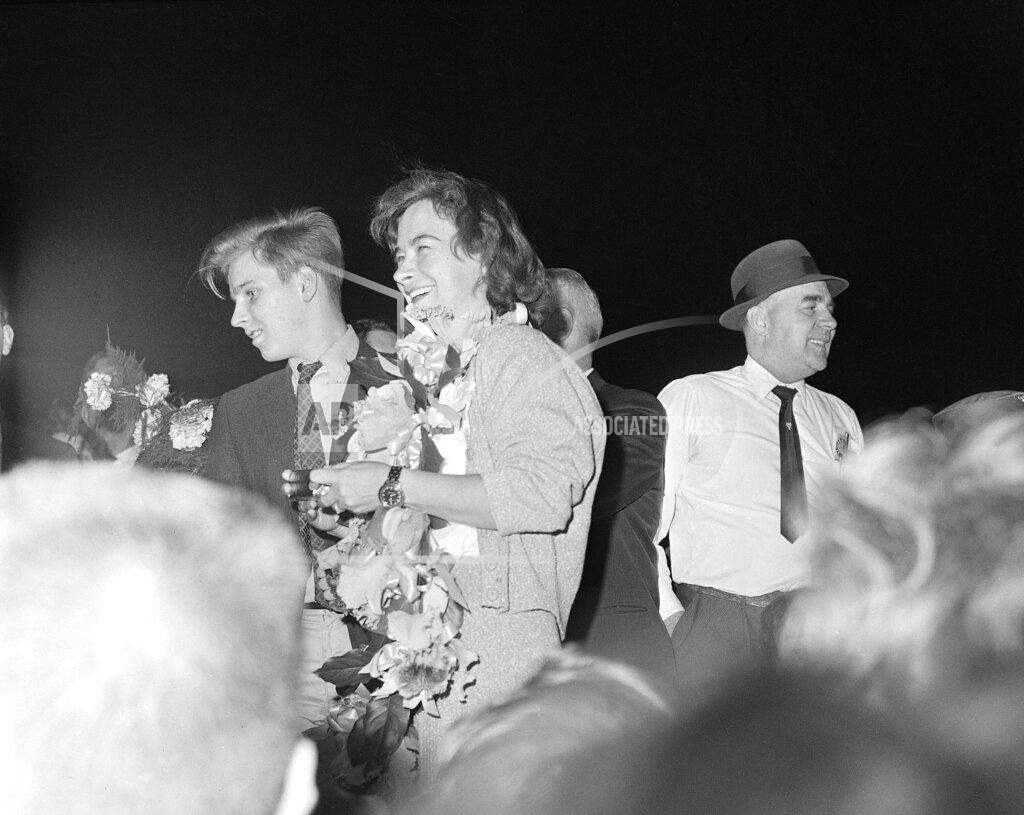
Jerrie Mock arrived in Columbus, Ohio, in a Cessna 180, completing a solo round-the-world flight and becoming the first woman to make such a journey. Mock landed the “Spirit of Columbus” on April 17 at 9:36 p.m., 29 days after her departure from the same airport on March 19. Pilot Joan Merriam Smith, who had departed on her own round-the-world trip on March 17, had made it as far as the Australian city of Darwin on April 17. Jerrie Mock’s circumnavigation had been a journey of 22,858.8 miles and 21 stops.
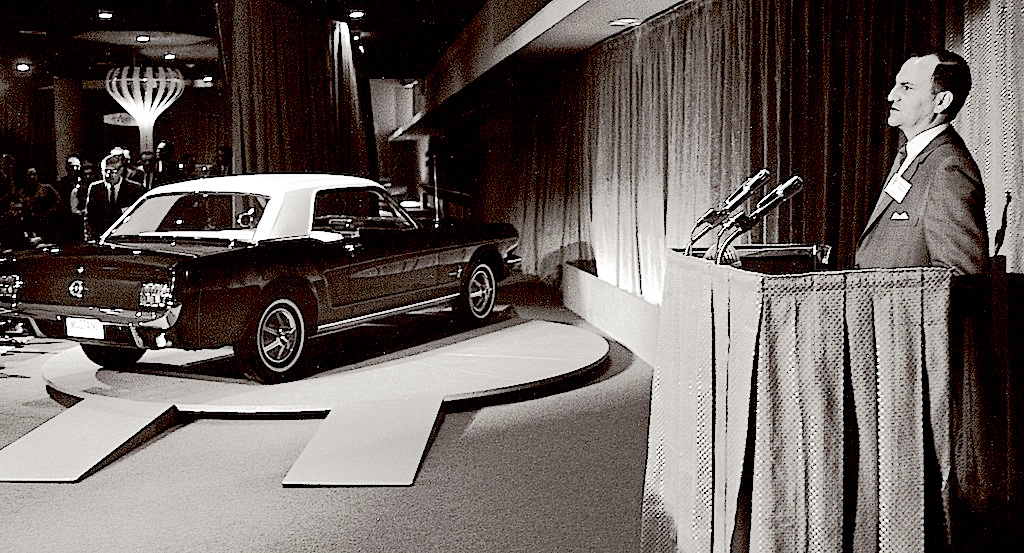
In the United States, the Ford Mustang, was first put on sale at Ford dealerships nationwide, with a suggested retail price of $2,368. and had purchases and purchase requests for more than 22,000 units on the first day. In its first year on the market, there would be 418,812 of the Mustangs purchased, making it “the most successful new car ever introduced.”
Albert Hague and Marty Brill’s musical “Cafe Crown”, starring Theodore Bikel, opens at Martin Beck Theater, NYC; runs for 3 performances
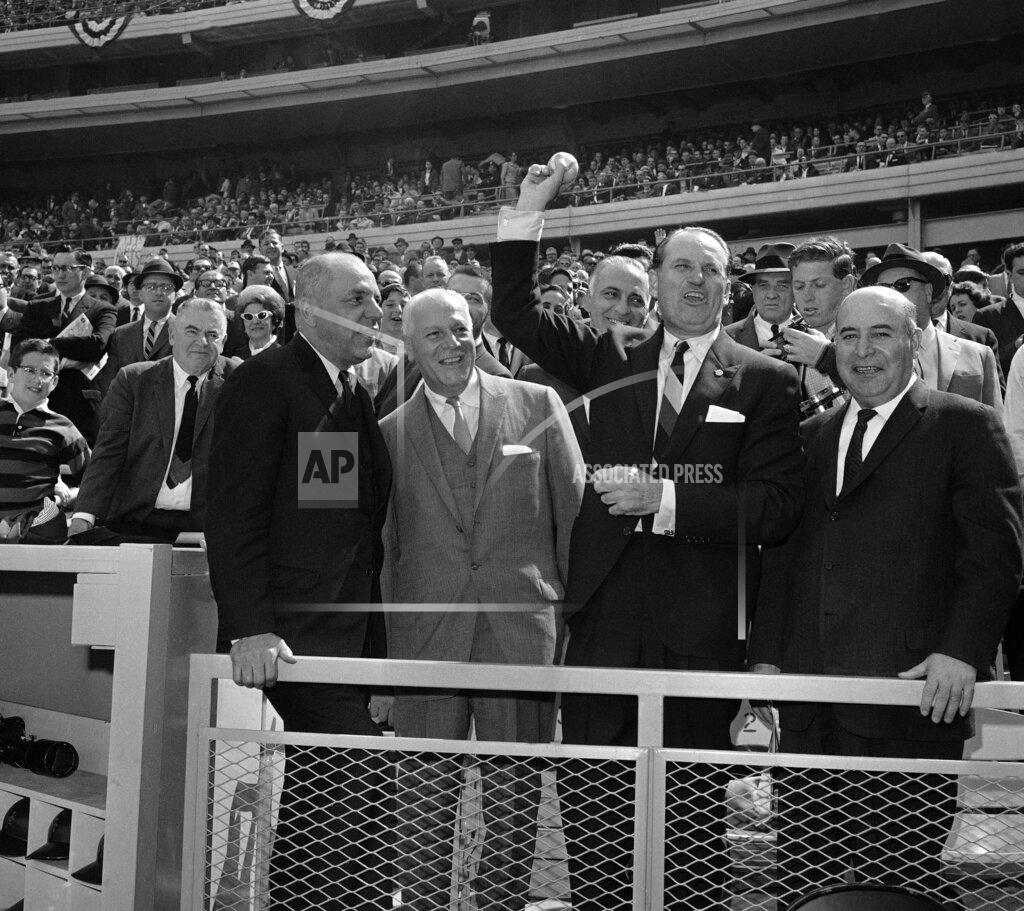
Shea Stadium opened in Flushing, New York as 48,736 people watched the New York Mets host the Pittsburgh Pirates. The Mets, perennial losers in their third National League season, lost the game, 4–3, on a 9th inning single by the Pirates’ Willie Stargell. Bob Friend is the winner over Cuban righty Ed Bauta. Friend was also the winning pitcher in the last game ever played at the Polo Grounds before the Giants moved west.
The wind picks up at Wrigley Field and, in the 5th inning, the Phils loft 3 home runs and the Cubs 2. The Phillies win the derby, 11–8.
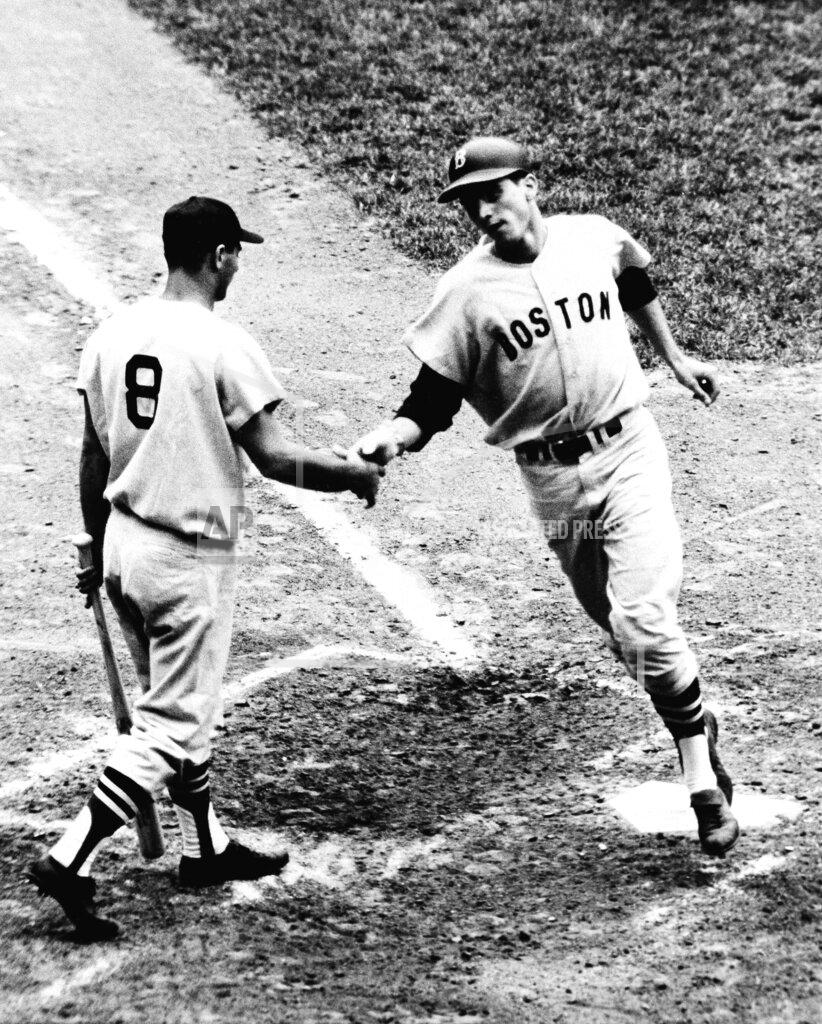
At Fenway Park, in a JFK memorial game, the Boston Red Sox top the Chicago White Sox, 4–1. Red Sox rookie Tony Conigliaro hits his first Major League home run in his first at-bat at Fenway Park, off Joe Horlen, in the 2nd inning. The two-out blast totally clears the Green Monster. the 19-year-old was born in Revere, Massachusetts just a few miles away from Fenway Park. He will become the fastest player to 100 home runs until an awful beaning occurred changing the course of history for the young slugger.
Dow Jones Industrial Average: 827.33 (+1.68).
Born:
Rachel Notley, Canadian politician and Premier of the province of Alberta from 2015 to 2019; in Edmonton, Alberta, Canada.
Andrey Borisenko, Russian Cosmonaut (Soyuz TMA-21 [Expedition 27/28], Soyuz MS-02 [Expedition 49/50]), in Leningrad, Russian SFSR, Soviet Union.
Ken Daneyko, Canadian NHL defenseman (NHL Champions, Stanley Cup-New Jersey, 1995, 2000, 2003; New Jersey Devils), in Windsor, Ontario, Canada.
Darrell Fullington, NFL safety (Minnesota Vikings, New England Patriots, Tampa Bay Buccaneers), in New Smyrna Beach, Florida.
Lela Rochon, American actress (Robin Stokes-“Waiting to Exhale), in Los Angeles, California.
Maynard James Keenan, American singer (Tool; A Perfect Circle”), in Ravenna, Ohio.


 History Diaries