While formal opinion in Germany branded President Roosevelt’s truce appeal a “propagandistic trick,” its impact on the masses within the country and its effect of putting the totalitarian States on the defensive made officials move warily yesterday. Although the appeal is still likely to be rejected, it will not be dismissed out of hand; a reply is believed probable and it was suggested Chancellor Hitler might convene the Reichstag to hear it.
[Ed: The Führer will settle on mockery, as we shall soon see.]
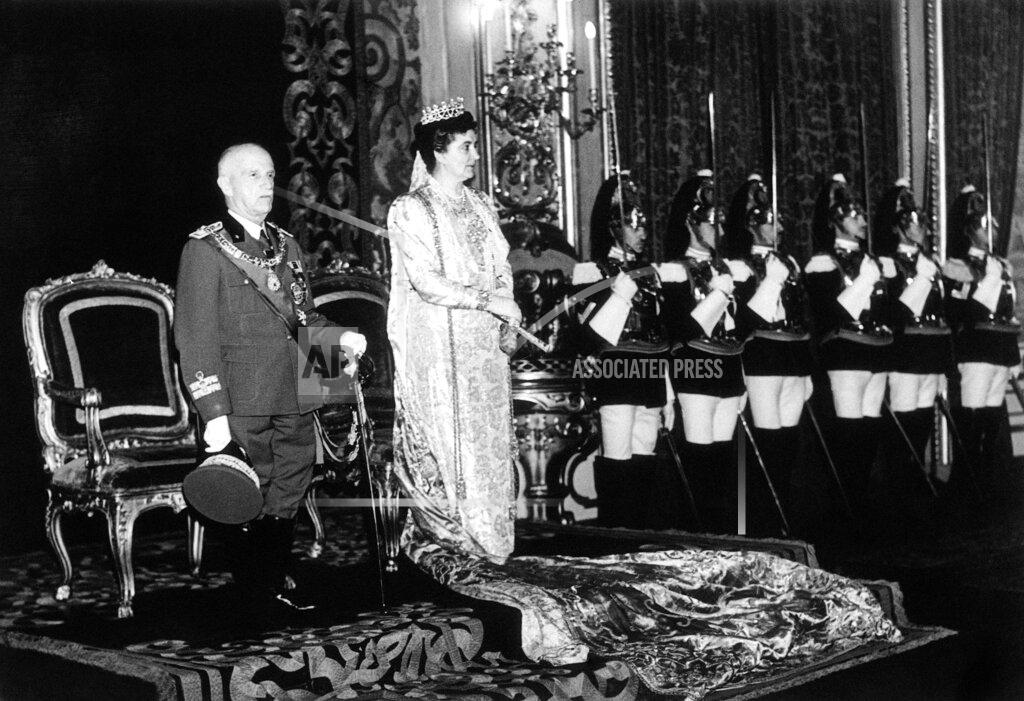
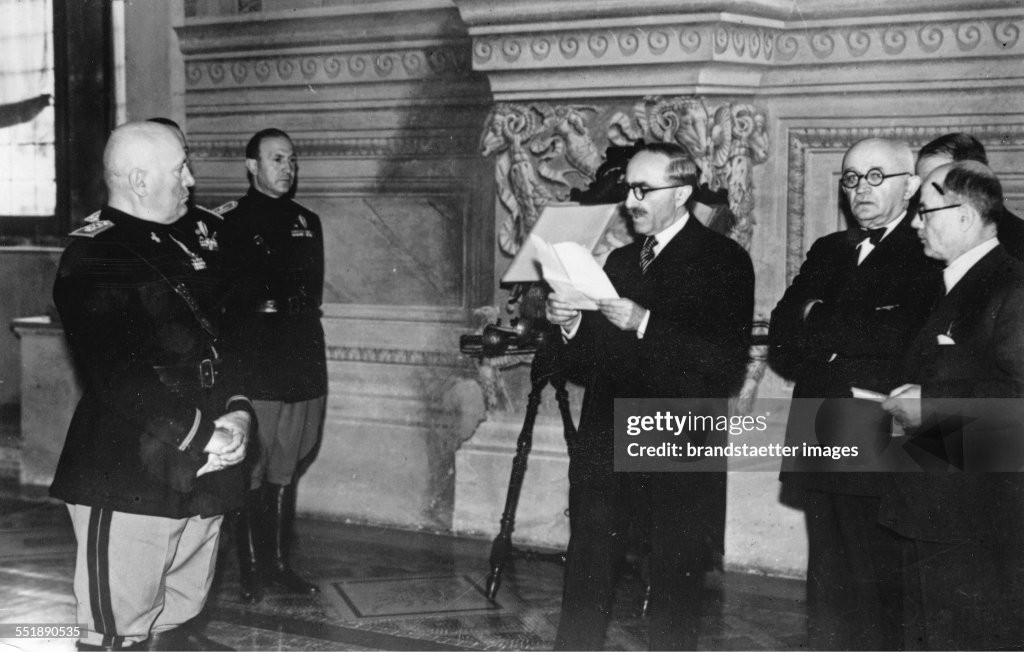
Whatever response is decided upon it seemed probable Italy’s would be parallel. Premier Mussolini had another long meeting with Field Marshal Göring after having attended a ceremony at which the Italian royal couple accepted their new kingdom of Albania. Italy went ahead today with her own policies and activities in apparently serene indifference to the Roosevelt message suggesting a truce on invasions. The presence of Field Marshal Hermann Göring, who had another long talk with Premier Mussolini today, gave emphasis to the common aims of the Axis powers, while Rome’s conquest of Albania was finally sealed in a brilliant ceremony at the palace this morning when King Victor Emmanuel and Queen Elena accepted their new kingdom. A law was published in Italy proclaiming King Victor Emmanuel III’s acceptance of the Crown of Albania.
Yet anyone arriving from abroad must be struck by the absence of any acute war psychology so far as the people and press are concerned. There is always a certain psychological preparation for war inherent in fascist teachings, and the nation is militarized as a normal thing. But beyond that there is no feeling of imminent war. Paris, London and New York newspapers are far more alarmist than Italian papers these days. Nobody seems to believe that war can come out of recent Balkan developments, for instance. If it is suggested one gets a realistic answer: “Well, nobody opposed the Albanian conquest; Greece is virtually a fascist State and Yugoslavia is friendly and weak. Why should there be war?”
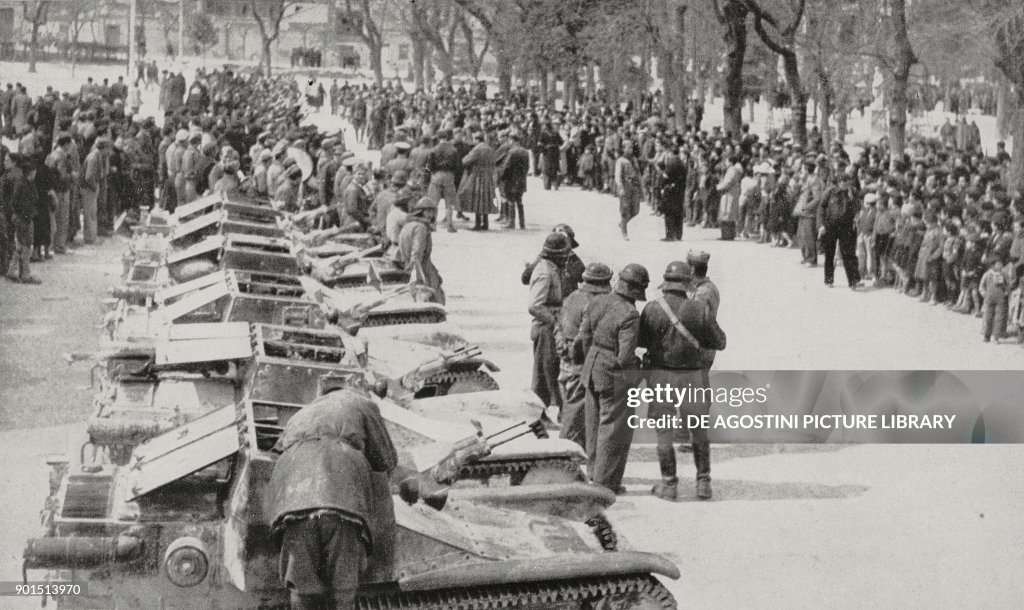
In Spain, where May 15 was the date finally fixed for the march into Madrid that is expected to be followed by the recall of foreign troops, the press joined with that of the Axis Powers in denouncing President Roosevelt.
But Britain was greatly heartened in her effort to fashion an anti-aggression chain and sought with renewed energy and increasingly favorable prospects to line up the biggest link of all — Russia.
Across the Irish Sea, Premier de Valera, applauding the Roosevelt message, said Ireland’s policy was neutrality, and across the English Channel, while the chorus of praise in Paris for the President swelled, the French sent four crack warships to Gibraltar.
One of the first responses to the President’s move came from Moscow, where President Kalinin gave it full endorsement.
Press approval, however, ranged from the Balkan States to the countries of Latin America. Replies and messages pouring into Washington showed that the Western Hemisphere was solidly behind the President.
Meanwhile, Danzig continued to be a danger spot and Warsaw indicated that not only a German Army move but even a local Nazi Putsch would bring Polish troops into action. The Poles welcome Roosevelt’s appeal, but most doubt it can do much more than delay a war that feels inevitable.
Nearing 50, Hitler worries about his ailments: coughing spells, sleeplessness, and his need for glasses. He has six doctors.
Four French warships arrived unexpectedly at Gibraltar today amid reports of intense military and naval activity in the Mediterranean. All arms of Britain’s fighting services buttressed their strength on “The Rock” in an effort to insure the impregnability of her two and one-half square miles of territory — the key to her Mediterranean fighting power.
Two of the French men-of-war were battleships, the Lorraine and Bretagne, and the other two were the destroyers Fantasque and Terrible. It was not known whence the destroyers came and they were understood to be leaving tonight for undisclosed destinations. Their commanders debarked and visited British naval authorities. Continued reports of concentration of troops and war materials in nearby Spanish ports spurred the British activity, particularly the erection of additional barricades facing the neutral zone on the north, between British and Spanish territory.
For defense of the civil population, a £49,000 air raid precautions scheme was being hurried to completion. It includes the hewing out of a tunnel deep under solid rock for shelters for 1,200 persons and the conversion of scores of caves into refuges for Gibraltar’s population of 17,000. Food supplies sufficient for the whole population for several weeks have been stored against possible siege of “The Rock” and 25,000 gas masks have been made available for both the civilian and military population.
After Franco, with the help of Hitler and Mussolini, has successfully defeated the “Loyalists,” Pope Pius XII sends the Spanish Catholics his expressions of “immense joy” and “fatherly congratulations for the gift of peace and victory with which God has deigned to crown the Christian heroism of your faith and charity, proved through such great and generous sufferings.”
The Soviet Union proposed an alliance with Britain and France to contain German aggression in Eastern Europe. The British and French would stall and keep their distance; finally, the Soviets would sign a secret agreement with the Nazis.
Iran hails the Crown Prince Reza Pahlavi and his new bride.
William O. Douglas, who gained a national reputation as a regulator of stock exchanges, will be sworn in tomorrow as the youngest Supreme Court Justice in 127 years. The 40-year-old chairman of the Securities Commission will start his judicial career by taking oaths to support the Constitution and to administer justice impartially. Earlier, Chief Justice Charles Evans Hughes will administer the Constitutional oath in the privacy of an anteroom. Thus the unconventional Douglas will become the youngest member of the court since Joseph Story of Massachusetts was named in 1812 at the age of 32: He will succeed Justice Louis D. Brandeis, who retired February 13 at the age of 82.
The Chicago Tribune opines:
“The most sensational commitments since the world war to cast America in the role of joint underwriter of world peace are being made behind the scenes of official Washington. President Roosevelt's appeal to Hitler and Mussolini to keep the peace for at least ten years is only the outward semblance, it transpires, of a policy designed to give the United States virtually the position in European and Asiatic affairs it was allotted by the league of nations covenant which was rejected by the American people twenty years ago.

“The United States declined to enter the league of nations because of overwhelming public sentiment opposed to entanglement of our country in foreign political quarrels, entailing the possible obligation of sending American armed forces abroad again to redress the balance of the old world. Mr. Roosevelt, then an ardent advocate of the league of nations, is now seen to be moving to attain the same objective in another manner. If the President succeeds in procuring peace pledges from the dictatorships and democracies and calls a world disarmament and economic conference, he will be prepared, unless checked by congress, to commit the United States to participation in some sort of arrangement to maintain the status quo in Europe. Such an arrangement might take the form of the consultative pact which the President offered Europe in the disarmament conference of 1933.

“Norman Davis, head of the American delegation in that conference, announced on behalf of the President that the United States in consideration of agreement on reduction of armament would be willing to join in a consultative pact. Under the terms of such a treaty the United States would be bound to consult with European powers on measures to be adopted to combat any threat to maintenance of the territorial status quo. Such measures might require the United States to furnish troops and ships to help defeat an attempt by Hitler to recover colonial possessions wrested from Germany by the British and French in the world war.

“The genesis of the Roosevelt nonaggression proposal is shrouded in much mystery. Whether it originated on this side or the other side of the Atlantic is not known. There is close cooperation between London, Paris, and Washington and it may well be, as is rumored, that the suggestion came originally from Paris where Ambassador William C. Bullitt, ardent Francophile and fertile diplomatic strategist, exercises a potent influence on the President in the shaping of our foreign policies.”
The First Lady agrees to be a foster mother of a 12-year-old boy orphaned by the Spanish civil war.
Los Angeles wins its 15th straight Pacific Coast League game, sweeping a pair from Portland. The second game, a 16–7 slugfest, is shortened to 5 innings to allow a ring to be set up for a heavyweight championship fight between Joe Louis and Jack Roper. Louis knocks Roper out in the 1st round. LA’s win streak will reach 19, tying a Pacific Coast League record set in 1903, before a loss to San Diego on April 22.
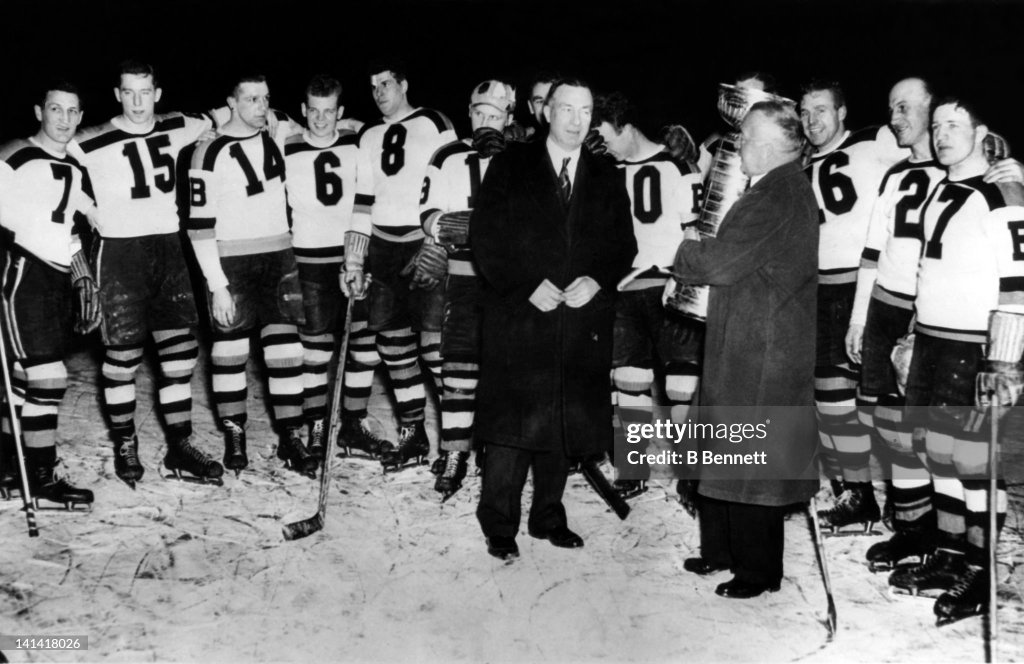
The Boston Bruins defeated the Toronto Maple Leafs 3–1 to win the Stanley Cup, four games to one.
Increased activity by Chinese forces on all fronts has created “difficulties for the Japanese everywhere,” the Chinese military spokesman said today. He declared Chinese troops “are converging on Canton from all sides, some units even penetrating as far as the northeastern outskirts of the city.” The Japanese were said to have been halted in Kiangsi Province and to have lost 1,000 killed in recent Hupeh Province fighting. At Kaifeng, on the Lunghai Railway, the Chinese were said to have overthrown the puppet regime and killed 900 Japanese in two attacks. Chinese attacks in Shansi also had been costly to the Japanese, the spokesman asserted. The Japanese were said to be still moving troops from the interior to Shanghai. Unusual Japanese activity is evident on the Fukien Province coast. A Japanese attack on Fukien ports is expected.
The ashes of Hirosi Saito, former Ambassador to Washington, were brought home this morning to Japan by the United States cruiser USS Astoria. There were silent demonstrations. of gratitude, which according to Japan’s simple faith, will “console his spirit” with the thought that in death his work goes on. The unique thing about this state funeral is not its naval pageantry but its atmosphere. The Japanese millions believe that when Mr. Saito laid down his life, he resurrected American sympathy, the loss of which Japan felt more than the wartime press admitted. It is no secret that Japanese officialdom, under the tactful but inflexible guidance of American Ambassador Joseph C. Grew, had great difficulty in preventing popular emotion from swelling into a national demonstration.
In the last analysis the emotion that is stirring the Japanese people is relief. The public has read into a simple act of international courtesy a sign that American goodwill is not irretrievably forfeited. The newspapers now understand that this solemn courtesy should not be magnified into a political gesture but the Astoria’s mission has released a flood of sympathetic gratitude which reveals that the populace is more sensitive than had been supposed to America’s opinion.
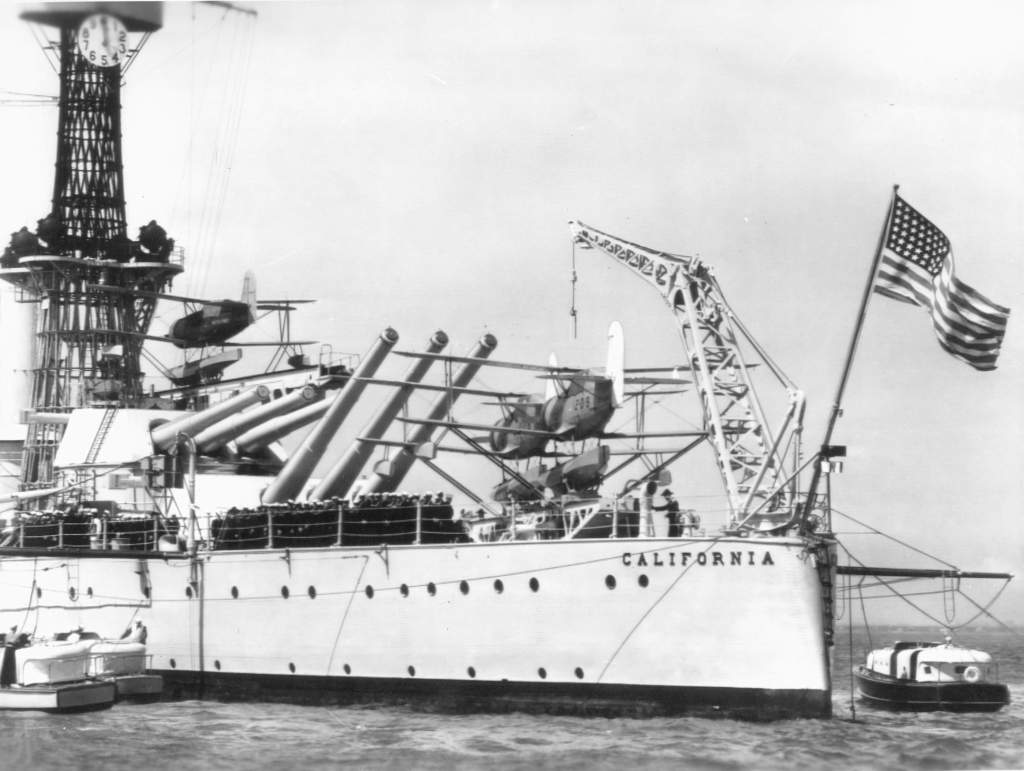
The news that the United States fleet is returning to the Pacific under emergency orders is expected to have a sobering effect upon those Japanese who have been boasting that as soon as war breaks out in Europe Japan will be able to grab everything she wants in the Far East. President Roosevelt’s order to the fleet is considered here as lessening the danger to Hong Kong, French Indo-China and the Dutch East Indies and also appreciably easing the situation of the Shanghai International Settlement, where Japanese drastic action would antagonize the United States, Britain and France.
Mr. Roosevelt’s message to Chancellor Adolf Hitler and Premier Benito Mussolini, while not sent to Japan, is believed to have been indirectly addressed to that country through the fleet’s movement to the Pacific. Japanese naval authorities always have feared to do anything that would antagonize the United States so the presence of 120 additional United States warcraft in the Pacific might even deter Japan from openly aligning with Germany and Italy in case war breaks out. Japan also realizes her economic dependence on United States markets and believes the United States is the only source for money to carry out China development plans, which enhances the restraining effect of the surprise United States naval movement.
Born:
Dusty Springfield [born Mary O’Brien], pop singer (“I Only Want to be with You”, “Son of a Preacher Man”), in West Hampstead, London, England, United Kingdom (d. 1999).
Bernie Allen, MLB second baseman and third baseman (Minnesota Twins, Washington Senators, New York Yankees, Montreal Expos) in East Liverpool, Ohio.
Naval Construction:
The Marynarka Wojenna (Polish Navy) Orzeł-class submarine ORP Sęp (“Vulture”) is commissioned. Her first commanding officer is Kmdr ppor. Wladyslaw Salamon, ORP.

 History Diaries