Richard M. Nixon called yesterday for military strikes against Communist bases in North Vietnam and Laos. The former Vice President, an unannounced contender for the Republican Presidential nomination, strongly implied that this was the only way the war could be won in South Vietnam. He said the “enemy can no longer have privileged sanctuary.” Mr. Nixon refused to say whether he advocated the use of American soldiers across the border in North Vietnam. He said he would answer this question tomorrow in a speech in Washington.
In a sweeping attack on the Johnson Administration’s foreign policy in Asia, Mr. Nixon said that any softening of policy toward Communist China or any hint of recognition of Peking would be the “straw that broke the camel’s back” in Southeast Asia. Mr. Nixon’s speech was warmly applauded by 500 businessmen at a New York Chamber of Commerce luncheon at 65 Liberty Street. The chamber’s president, George Champion, chairman of the Chase Manhattan Bank, introduced Mr. Nixon as a “dark horse candidate with a good Gallup.” Afterward, Mr. Champion called the applause given Mr. Nixon the “finest ovation” he had ever heard in the chamber’s ornate and portrait-studded Great Hall. Mr. Nixon, who returned Wednesday from a 24‐day trip through Asia, declared: “The United States has gone too far in catering to neutrals. Neutralism, where the Communists are concerned, is only surrender on the installment plan. We must make it clear that we intend to win.”
Mr. Nixon said he had been “out of touch” with political developments. But despite the showing of Henry Cabot Lodge, Ambassador to South Vietnam, in popularity polls, several key Republican leaders reported yesterday that a “strong undercurrent for Nixon” persisted among party professionals. One Republican, in daily touch with other leaders across the country, reported that Mr. Nixon was still the choice of “nine out of every 10 leaders.” Before the New Hampshire primary, Mr. Nixon warned that Mr. Lodge might become the “fall guy” and take a “bum rap” for his role in South Vietnam. Mr. Nixon said then he would not join in any criticism of Mr. Lodge until he had talked to him, which he did during his Asian trip.
Ministers of Britain and New Zealand flew here today to deliver their governments’ messages of support for Major General Nguyễn Khánh, the Premier of South Vietnam. Keith J. Holyoake, Prime Minister of New Zealand, and Lord Carrington, Minister Without Portfolio in the British Cabinet and foreign affairs spokesman in the House of Lords, conferred separately with General Khánh. Both discussed sympathetically the possibility of providing more technical assistance to South Vietnam. The official visits, coming on the eve of the arrival of Secretary of State Dean Rusk of the United States, underscored the greater degree of Western support for the Vietnamese war effort against the Communist insurgency. The ministers had come from a meeting of the Southeast Asia Treaty Organization in Manila. By chance, this week’s SEATO endorsement of Premier Khánh’s anti‐Communist position came while one of the largest battles in six years of fighting the Communist guerrillas was going on.
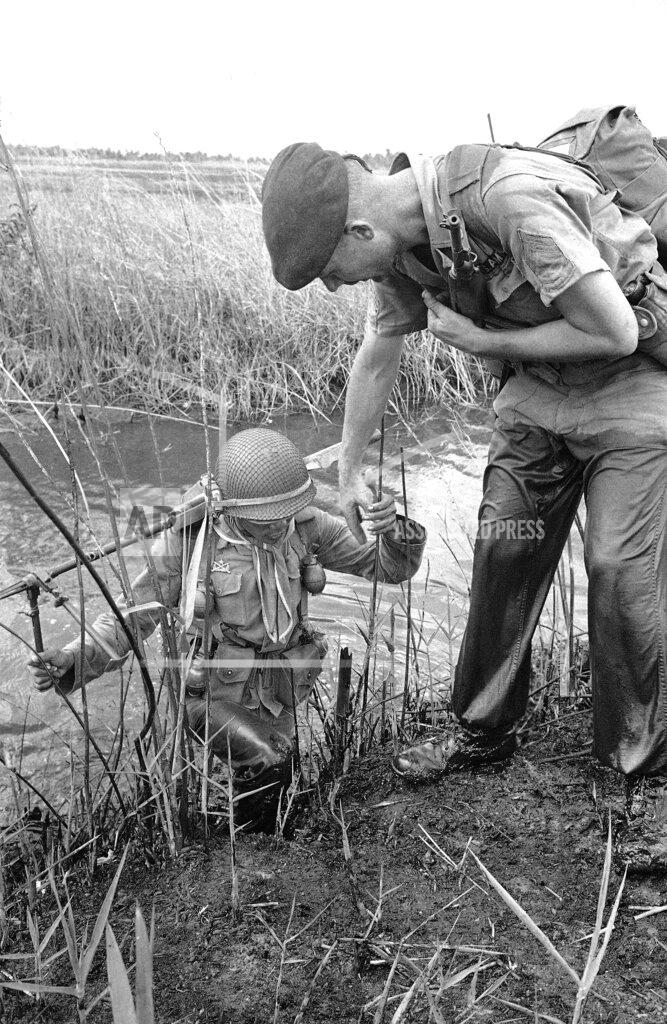
Military sources said several battalions of Government troops were still sweeping the area in the Mekong River delta on the edge of the dense U Minh Forest after four days of large-scale clashes with massed Việt Cộng units. The last reported contact came early this morning with a light and brief engagement southwest of Kiên Long district headquarters, where the Việt Cộng first attacked early Sunday. The military sources said the Communist troops seem finally to have dispersed after a continuous battle against government air and ground assaults that cost hundreds of casualties on both sides. More than a dozen American advisers were wounded in the new demonstration of Việt Cộng strength in coordinated battalions.
In another action in the Delta reported today, government aircraft hit two Việt Cộng companies near town of Bình Đại, dropping 500-pound bombs and fragmentation bombs, killing 40 Việt Cộng troops. No government losses were reported. The quickening pace of both military and diplomatic activity is expected to be discussed in detail by American and Vietnamese leaders starting tomorrow afternoon when Mr. Rusk arrives on his first visit to Vietnam as Secretary of State.
President de Gaulle told the French tonight that they must build a nuclear force whatever the cost or rely on “uncertain” United States protection. Speaking over television and radio, he endorsed continued French economic aid to underdeveloped countries lest the peoples of Africa, Asia and Latin America “surrender” to the American and Soviet hegemonies. These high national endeavors, General de Gaulle emphasized, are compatible with his economic program, which has improved the lot of industry, agriculture and pensioners and is making strides in housing, health, education and science. Foreign observers saw the speech both as a defense of the President’s two most criticized programs — the nuclear force and aid to the “third world” — and as a reminder to the French, couched in electioneering terms, of the benefits of Gaullism.
The President’s robust exposition of the importance to France of her nuclear striking force was introduced by a reference to political critics who have said that the force costs too much and that the money could be better spent elsewhere. General de Gaulle emphasized “the ambition” of the Soviet Union, which “threatens” the free world. While this lasts, he said, France is “in danger of invasion and destruction without having the certainty that her American allies, themselves directly exposed to death, would be able to save France from invasion and destruction.” The suggestion that the United States, to protect itself, might not come to Europe’s aid is regarded by American officials as the classic argument of advocates of independent nuclear forces.
The United States and Colombia have agreed to begin an immediate study of the feasibility of a sea‐level canal linking the Atlantic and Pacific Oceans through Colombia. President Johnson announced the agreement at his news conference this afternoon. He said a team of 10 Defense Department specialists would leave tomorrow for Colombia to start the survey in cooperation with Colombian authorities. “We hope to make similar arrangements with other countries later,” the President said, not specifying the countries. Southern Mexico, Nicaragua and Panama have been mentioned in addition to northern Colombia as potential sites for a canal. The possibilities of an‐ other Atlantic‐Pacific canal, which have been under study for several years, were spurred by the political crisis in the Panama Canal Zone last January.
President Ahmed Ben Bella hailed the “precious alliance” between the Soviet bloc and the “Peoples of Africa, Asia and Latin America,” today. This tribute to Soviet bloc support for “anti‐imperialist” movements came during Mr. Ben Bella’s two‐hour speech opening the first congress of his national Liberation Front, Socialist Algeria’s only legal party. Mr. Ben Bella did not call today for “national unity.” Party sources pointed to the latest issue of the Tunisian weekly Jeune Afrique, where Mr. Ben Bella denounced the idea in an interview. “There are those who are for (socialism) and those who are against, overtly or hypocritically,” he said. “There is no possible compromise.”
Mr. Ben Bella’s foes, notably Mohammed Khider, ousted party chief, and Ferhat Abbas, former President of the National Assembly, have warned that this approach by Mr. Ben Bella will lead to dictatorship or to renewed strife. Greeting the 1,700 delegates, Mr. Ben Bella said that the “hour of confrontation so long desired has come.” He urged them to “overcome the antagonisms of the past” and vowed a fight “without mercy” against opposition groups, including the clandestine Socialist Forces Front led by Hocine Ait Ahmed in the Kabylia region. As Mr. Ben Bella noted, the Congress was the first gathering of Algeria’s nationalists since a meeting at Tripoli, Libya, in June, 1962, on the eve of independence from France. That meeting turned into a three-month power struggle, from which Mr. Ben Bella, with army help, emerged victorious.
King Hussein of Jordan said here last night that “only if we are subjected to open military aggression by the Israelis will we resort to force.” He said this in warning that Jordan would oppose Israel’s plan to divert Jordan River waters for irrigation. The King said his country’s opposition would be by “every legitimate means at our disposal — legal and moral — and the deterring influence of world opinion.” He continued: “If Israel nevertheless takes the water, we intend to take other steps of a nonmilitary nature to limit the damage.” King Hussein noted that the problem had been discussed at a recent Arab conference in Cairo. With this in mind, he said that the policy he had just expressed on the water issue was “our policy and I mean by that the policy of the Arab nation.”
The new Salisbury Government banished Joshua Nkomo and three other African nationalists today for a year to a remote part of Southern Rhodesia and stirred up a riotous protest. The 43‐year‐old Mr. Nkomo is president of the People’s Caretaker Council, one of two principal African nationalist movements in this self‐governing British colony in central Africa. He, two other men and a woman were banished without trial under Southern Rhodesia’s recently strengthened Law and Order (Maintenance) Act, which permits the Government to restrict political suspects for up to a year beyond the reach of the country’s courts. Angry demonstrations broke out as news of Mr. Nkomo’s arrest and banishment spread through Salisbury, the country’s capital, and its outlying African townships.
In Highfield Township, the police fired tear gas to disperse hundreds of shouting, jeering Africans surging through the streets tonight. Gangs threw trash cans, crates and debris into the street in an unsuccessful attempt to block police vehicles. Some Africans attacked whites in downtown Salisbury. A white woman and four white men were reported to have been attacked as racial violence flared. Mr. Nkomo and the others were seized by police in a series of predawn raids and flown by helicopter and plane to a special restriction camp in the southeast corner of the country near the junction of the borders of Portuguese Mozambique and South Africa. Their seizure brought to 141 the number of Africans being held under Southern Rhodesia’s security laws.
Communist China’s leaders sent conciliatory greetings today to Premier Khrushchev, who will be 70 years old tomorrow. The tone of the message was surprising in the light of the heated exchanges between the Chinese and Soviet Communist parties over the last few weeks. Peking’s message was signed by Mao Tse‐tung, chairman of the Central Committee of the Chinese Communist party; Lui Shao‐chi, head of state; Chu Teh, chairman of the Standing Committee of the National People’s Congress, and Premier Chou En‐lai.
Sentences totaling 307 years were passed on 12 men who stole £2.6 million in used bank notes, after holding up the night mail train traveling from Glasgow to London in August 1963 — a heist that became known as the Great Train Robbery. Judge Edmund Davies began with Roger Cordrey, to whom he said, “you are the first to be sentenced out of certainly eleven greedy men whom hope of gain allured.”
The Donauturm, Austria’s tallest structure at 252 meters (827 ft), was opened by President Adolf Schärf in the Donaustadt district of Vienna.
President Johnson coupled a glowing report on the state of the economy today with a warning to business that he believed it “does not need higher price levels.” The President announced at his news conference that the nation’s total output of goods and services had reached a record rate of $608.5 billion in the first quarter of this year. The gain of $8.5 billion in the gross national product in the first quarter was slightly larger than the Administration forecast in January. The rise since the comparable period of last year, amounting to $37 billion, was the largest year‐to-year gain in more than two years. The President also cited recent increases in personal income, gains in the total number of available jobs and a reduction in the unemployment rate. He noted that corporate profits had risen 50 per cent since the first quarter of 1961, when the economy was just beginning to emerge from its most recent recession. Since then, he said, the annual rate of labor income has risen by more than $56 billion.
Southern Senators opposing the civil rights bill began to face up today to their toughest problem of strategy and found themselves divided. Their problem is whether it will be to their advantage to support or oppose the amendments by the minority leader, Everett McKinley Dirksen, to the section of the bill banning discrimination in jobs and union membership. Late this afternoon Senator Dirksen offered 10 amendments, but withheld a more controversial one, which deals with the procedure to be followed by an aggrieved person in pressing his complaint. On this crucial amendment, Mr. Dirksen is continuing to work with several liberal Republicans in an effort to fashion a compromise that will enlist the support of most of the 33 Republicans.
In anticipation of Mr. Dirksens’ move, the Southerners met this morning with their “generalissimo,” Senator Richard B. Russell of Georgia. Some of the Southerners, it was learned later, were in favor of voting for the amendments, and particularly for those giving increased authority to state fair employment agencies and weaken the endorsement power of the proposed five‐man Federal commission. Those advocating support of the amendments realize that Mr. Dirksen is proposing them in order to attract critically needed Republican votes for a later motion to shut off a Southern filibuster. Nevertheless, they are convinced that a bill is going to be passed and that it is therefore to the advantage of the Southern bloc to support any weakening amendments. But other Southerners believed the best course would be to join with their enemies, the all‐out civil rightists, against the Dirksen amendments.
New York Mayor Wagner deplored yesterday the threatened traffic tie‐up by civil rights demonstrators on the opening day of the World’s Fair. He called the plan “most unfortunate and ill-chosen, as well as illegal.” The statement was the first by the mayor on the proposed “stall‐in” Wednesday by the Brooklyn chapter of the Congress of Racial Equality to call attention to its grievances against racial discrimination. He declared that the tie‐up was not the proper means of “demonstrating for their objectives” and expressed confidence that the Police Department would see “that the laws are obeyed and the interests of public safety are adequately protected by whatever means are needed.”
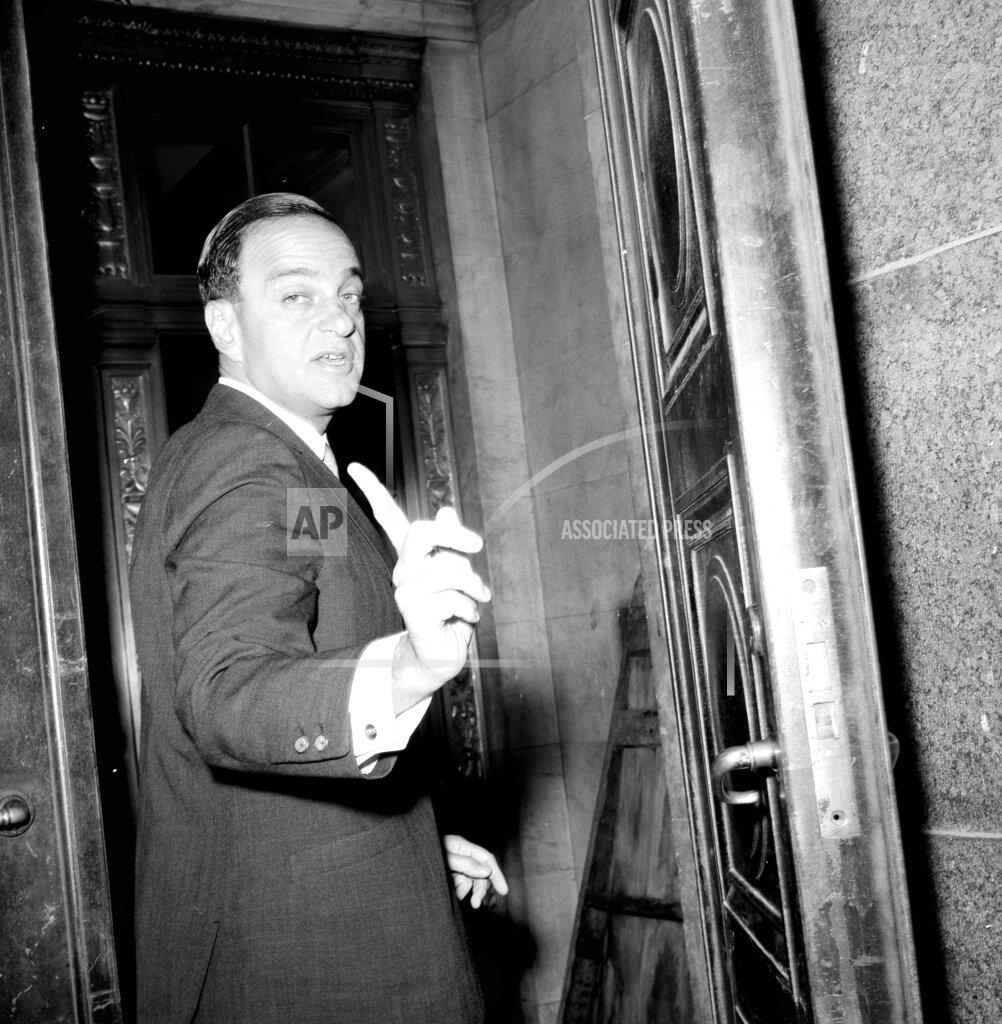
In Washington, Black leaders of the nation’s major civil rights groups denounced the “stall‐in” plan as a “revolutionary proposal” that might harm thousands of persons, and one that would not serve “the broad interests and needs of the Black people.” President Johnson sounded a similar note at his news conference when he said that violence and threats to safety “do the civil rights cause no good.” He urged the passage of pending civil rights legislation “because it is morally right.” Attorney General Robert F. Kennedy, in a speech to the American Society of Newspaper Editors, cautioned against “irresponsible activities” but said the white community must relieve the Black’s desperate frustrations.
President Johnson said today that he hoped the railroad work rules dispute would be settled by the end of the week. The President, at his news conference, put great emphasis on the importance to the free collective‐bargaining system, of a negotiated settlement of the five-year‐old controversy. The President’s remarks came as the Government’s drive for a settlement entered its decisive stage. At issue is the railroad’s plan to change the work rules so they can abolish jobs they consider unnecessary. A White House spokesman said that the tempo of bargaining would be stepped up considerably, with day and night sessions until the mediators report to the President again Monday on the status of the talks. Until now, said George E. Reedy, Presidential press secretary, the talks have been exploratory. Now they have entered a second stage where “the objective is to assist in securing a modification of the positions taken by both sides,” he said.
President Johnson put new life today into the controversial proposal for an immediate start in developing a new manned bomber. The President told his news conference that a decision was pending on a plan by General Curtis E. LeMay, Chief of Staff of the Air Force, to finance the development by using funds currently earmarked for other Air Force projects. Secretary of Defense Robert S. McNamara has opposed the bomber project in the past precipitating attacks by Senator Barry Goldwater, Republican of Arizona, who has supported General LeMay. The President made clear at his news conference, however, that he did not accept allegations of the Arizona Senator that the United States’ military strength was being exaggerated by the Defense Secretary.
Outstanding American public and private high school graduates will be honored as “Presidential scholars” to encourage intellectual attainment among youth, President Johnson announced today. The surprise program was described by President Johnson as “one to recognize the most precious resource of the United States‐the brain power of its young people.” A special Presidential commission will name the first Presidential scholars next month A total of 121 boys and girls from this year’s graduating classes of secondary schools could be designated. They will be invited to the White House and receive from the President a medallion symbolizing the honor. Informed sources said that the idea had originated with the President, who had been a schoolteacher in Texas as a young man. He talked with his consultant on ideas, Prof. Eric Goldman of Princeton University, and others about finding some way to recognize excellence in young people who were about to start college.
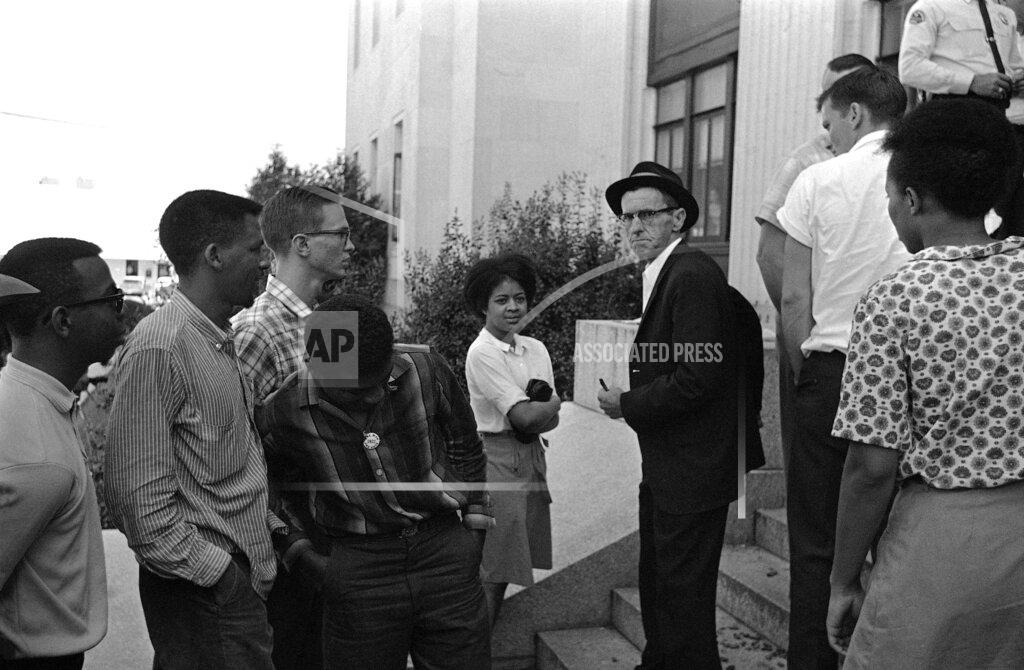
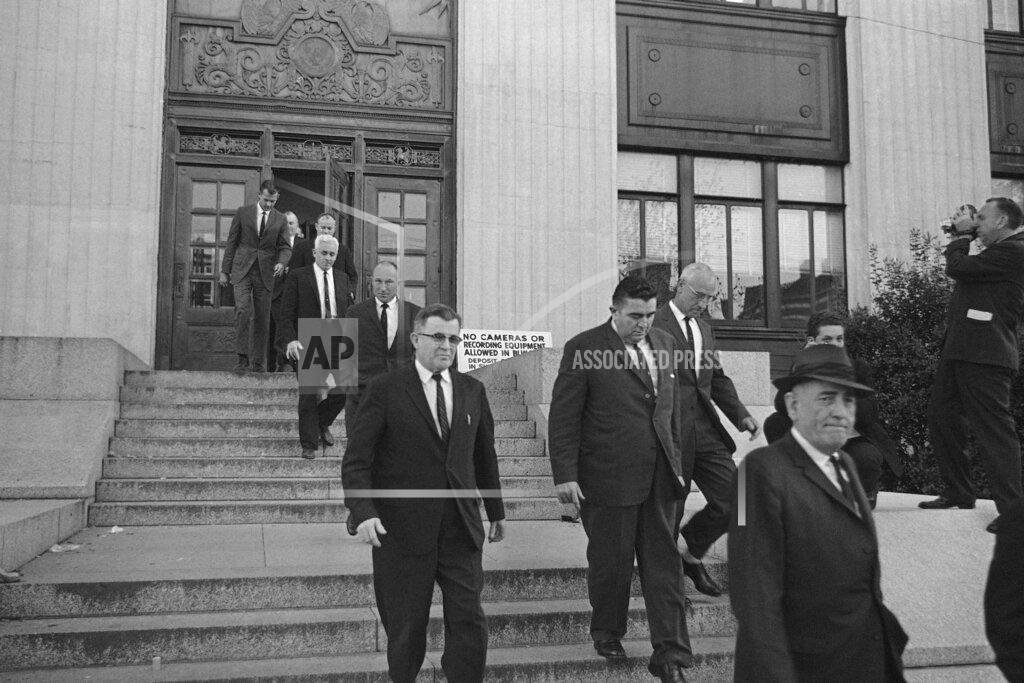
A jury of white men deliberated for seven hours tonight without reaching a verdict in the second murder trial of Byron De La Beckwith, accused assassin of the Black leader Medgar W. Evers. The case went to the jury shortly after noon in a tense courtroom. At 9:45 PM, Central Standard Time, after a dinner recess, Judge Leon F. Hendrick sent word that the panel was to retire for the night and resume deliberations at 9 AM tomorrow. As the evening wore on without a report from the jury room there was speculation around the Hinds County Courthouse that another mistrial was in the making. In the first trial the jury deliberated for 11 hours before a mistrial was called because of a hung jury. The case went to the jury after District Attorney William L. Waller said: “Mr. Beckwith by his own demeanor is guilty. He planned the crime and he had a motive. He came down here to kill the leader of the forces of integration in Mississippi. How can we live with honor, ourselves and what we believe in if we don’t honor the law?”
Representatives of NASA and Boeing signed the contract for the design and construction of the Lunar Orbiter.
Henry R. Luce resigned as editor in chief of Time, Inc., the magazine empire of which he was co‐founder in 1923. The corporation publishes Time, Life, Fortune, Sports Illustrated, Architectural Forum and House & Home. The announcement, which had been expected for several weeks, was made at the annual meeting of Time, Inc.
The Rolling Stones released their first album, “The Rolling Stones,” recorded by Decca and placed on sale in the United Kingdom.
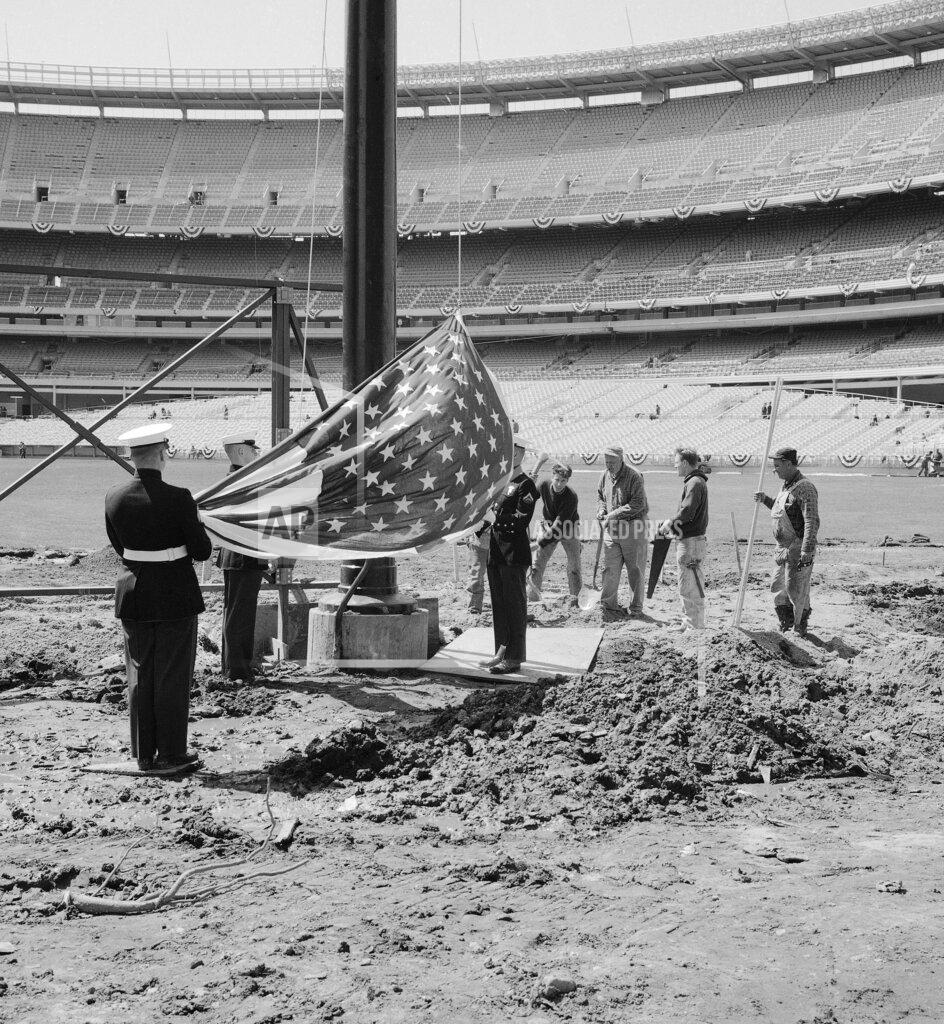
Holy Water from the Gowanus Canal, which passes near Ebbets Field, the Dodgers’ old home, and Holy Water from the Harlem River where it flows past the Polo Grounds, the former longtime ballpark of the Giants and the Mets’ home for the past two seasons is used to christened Shea Stadium. The ballpark’s namesake, Bill Shea, credited with bringing the National League back to New York, pours the water from two bottles, blessing the Flushing Meadow structure on the eve of its debut.
Tony Conigliaro makes his debut against the New York Yankees at Yankee Stadium. The Red Sox win in extra innings and Tony C goes 1-5 in his debut. Whitey Ford pitches 11 innings in losing to the Red Sox, 4–3. Bob Tillman, with three singles, triples in the 11th, and pinch runner Roman Mejias scores on wild pitch. Mickey Heffner pitches the bottom of the 11th, with Dick Radatz getting the win.
Texas Governor John Connally tosses out the first pitch for the Colts’ home opener, a 6–5 loss to the Milwaukee Braves. Connally tosses lefthanded because his right arm is still healing from gunshot wounds suffered in the assassination of John F. Kennedy.
Dow Jones Industrial Average: 825.65 (+0.22).
Born:
Dave Pirner, American rocker (Soul Asylum), in Minneapolis, Minnesota
David Kohan, American Emmy Award-winning screenwriter and television producer (“Will & Grace”), in New York City
Robert Kelker-Kelly, American actor (Bo – “Days of Our Lives”), in Wichita, Kansas
Esbjörn Svensson, Swedish jazz pianist; in Skultuna, Sweden (killed in scuba-diving accident, 2008).
Mark Gehring, NFL tight end (Houston Oilers), in Burien, Washington.

 History Diaries