President Roosevelt asked Chancellor Hitler and Premier Mussolini in identical messages yesterday to pledge ten years of peace. If they did this, he would bring about a world conference for disarmament and to give all nations access to needed raw materials and products.
The response of the totalitarian States to the President’s message was extremely discouraging. The German press said it had been delivered to “the wrong address” and the Reich was expected to leave it “on ice,” while Italian circles termed the appeal “the most incredible document in the whole history of diplomacy.”
The British Government, however, “entirely endorsed” Mr. Roosevelt’s “statesmanlike” initiative, while the French hailed the move as almost more important than the entry of the United States into the World War and Premier Daladier fully accepted the Roosevelt proposals. The small States of Southeastern Europe and other European nations acclaimed the step, as did several in Latin America.
Before President Roosevelt’s peace appeal to Germany and Italy had been received, rumors filled Berlin today that Germany’s troops might help themselves bloodlessly to Danzig next Wednesday to give Chancellor Adolf Hitler a triumphal present for his fiftieth birthday Thursday. These rumors were denied in official quarters, but coincided with renewed publication by the official DNB of dispatches recounting alleged anti-German incidents in Polish Silesia.
Rumors said that troops might march into Danzig on Wednesday from East Prussia without crossing an inch of Polish soil, thus relieving Poland of the necessity of making a dangerous decision whether to yield or to resist Germany’s longstanding claim on the Free State. It was argued here that Poland could have no cause for complaint, provided her treaty rights were respected.
The League of Nations might complain, it was said, but the Nazis do not take the League seriously and, since Germany no longer belongs to the League, would not consider themselves bound by its decisions. The conferences in Rome between Premier Benito Mussolini and Field Marshal Hermann Goering were believed in some quarters to be for the purpose of informing the Fascist leader of an impending move into Danzig. The German Government, through its Ambassador to Warsaw, Dr. Hans Adolf von Moltke, some weeks ago suggested that Poland renounce Danzig-but Poland turned down the proposal.
Foreign Minister Joachim von Ribbentrop similarly suggested to Poland’s Ambassador to Berlin, Josef Lipski, before Germany took Memel, that Poland yield Danzig and permit the building of an automobile road from Germany proper across Pomorze [the Polish Corridor] to East Prussia. M. Lipski, after twenty-four hours, brought back an answer of “No!” from Polish Foreign Minister Josef Beck.
Under the Anglo-French pledge of aid if her independence were threatened, Poland herself can decide whether the seizure of Danzig would merit the invocation of help. German officials feel certain that Poland would not go to war over Danzig. DNB, in a dispatch from Gleiwitz, asserted that anti-German excesses in Eastern Upper Silesia were “increasing in an alarming manner.” It said that reports from all parts of the region agreed that there were “attacks on Germans and their property.” It charged that in the village of Altdorf “three Germans were beaten by Poles with clubs and wire whips and injured considerably because they spoke German.”
In Rome, King Victor Emmanuel added the title of King of Albania to his others when the Italian Parliament sanctioned the personal union of the two countries. Foreign Minister Ciano in a speech sought to reassure the Balkan countries concerning Italian intentions.
Premier Benito Mussolini greets the German Air Minister in Italy. They will seek ways to offset stronger defenses against the Axis. Field Marshal Hermann Göring had his first meeting with Premier Benito Mussolini this afternoon. It is understood that President Roosevelt’s move was the principal subject discussed. Before their talk Signor Mussolini and Marshal Göring were obliged repeatedly to appear on a balcony of the Palazzo Venezia in acknowledgment of the cheers of a considerable crowd.
President Roosevelt’s message was released too late for any official comment but, unofficially, Italian circles style it “the most incredible document in the whole history of diplomacy.” The idea of asking two responsible governments, it is argued, whether they intend to attack their neighbors is like asking a gentleman whether he intends to crack the safe in the apartment next door. Some Italians were heard to remark that if this faux pas were not attributable to Mr. Roosevelt’s inexperience in foreign affairs, his message would be positively insulting and call forth a very sharp reply.
Scarcely less fantastic than Mr. Roosevelt’s request for assurances that Chancellor Adolf Hitler and Signor Mussolini are not planning an attack on their neighbors, these Italians think, is his suggestion that this assurance should be given for at least ten years and preferably twenty-five. With the world in a state of flux, as at present, how is it possible to pledge anything for twenty-five or even ten years, it is asked. The dictatorships maintain that they have no hostile intentions against any one; that their armaments are purely defensive; and that what strong measures they have taken in the past were forced upon them by the pressure of events. Even so, it is maintained here, it would be difficult to foresee the future sufficiently to be able to give such a guarantee as Mr. Roosevelt asks.
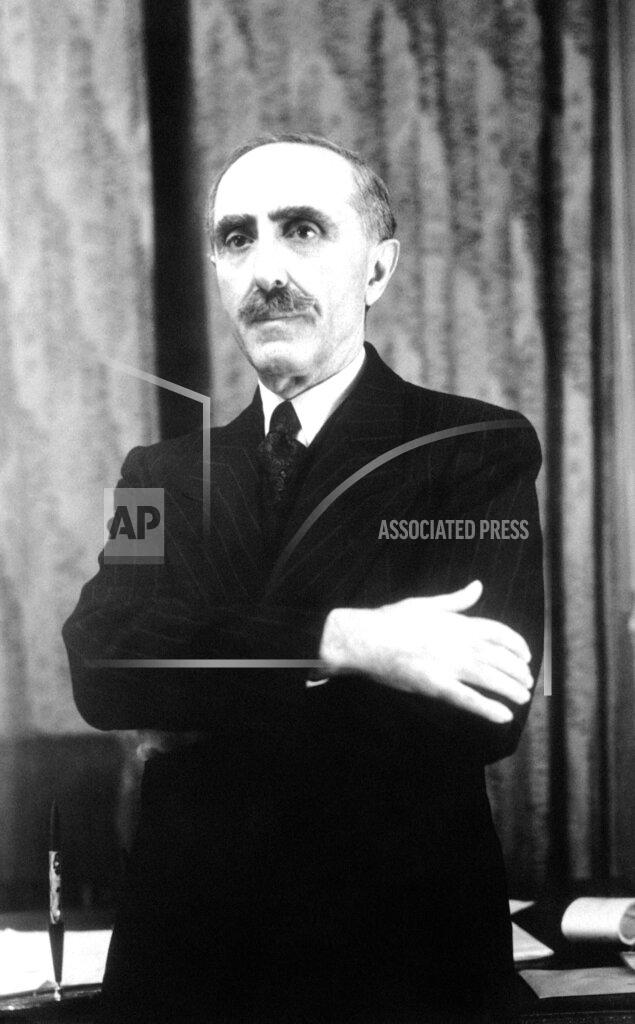
A speck of brightness appeared upon the horizon in Southeastern Europe when Rumania recalled troops from the frontier, greatly easing the tension with Hungary. Rumania began to pull thousands of troops from its border with Hungary following a conference between Armand Călinescu and László Bárdossy.
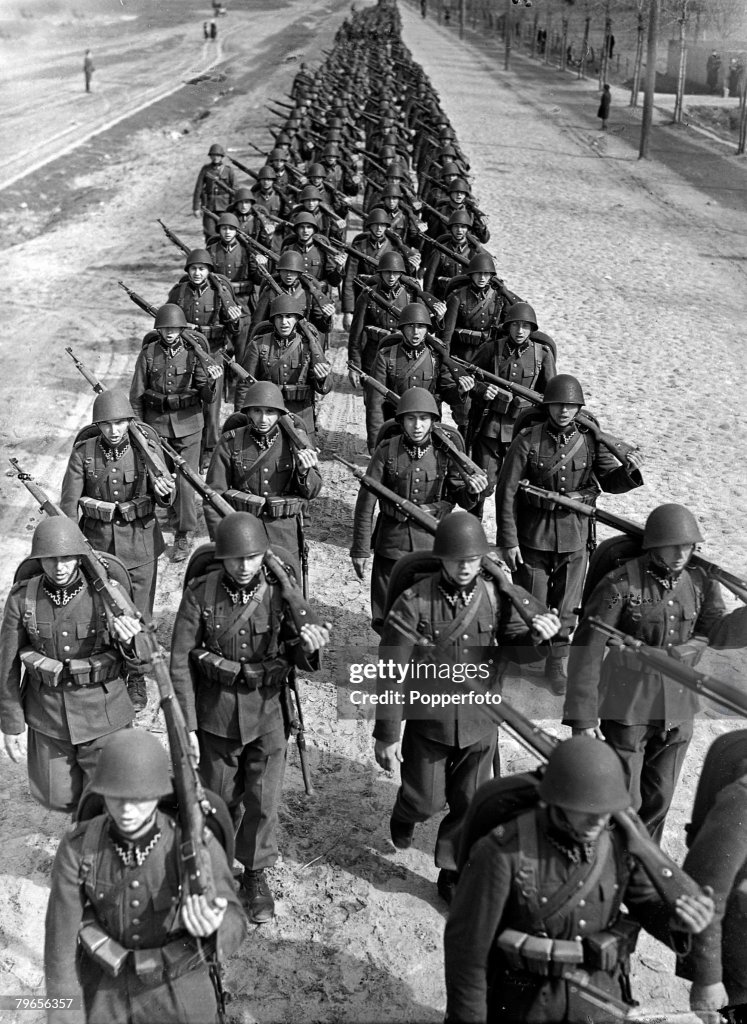
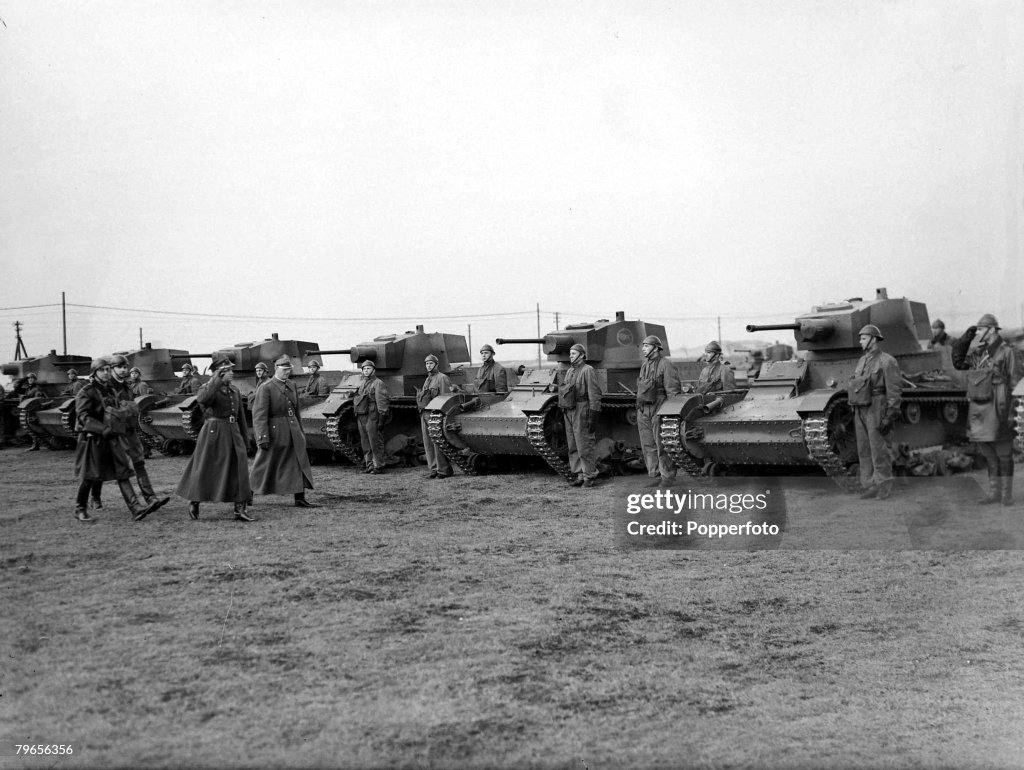
Poland and Rumania pledge to unite in armed resistance to German aggression.
Premier Pál Teleki pushes for the passage of anti-Jewish laws in Hungary, similar to those of the Third Reich.
Alfred Rosenberg opens the Institute of the Nazi Party for Research into the Jewish Question (Institut der NSDAP zur Erforschung der Judenfrage).
Albert Lebrun elected President of France.
The Reich Navy moves near Gibraltar, recalling the old crisis that led to World War I.
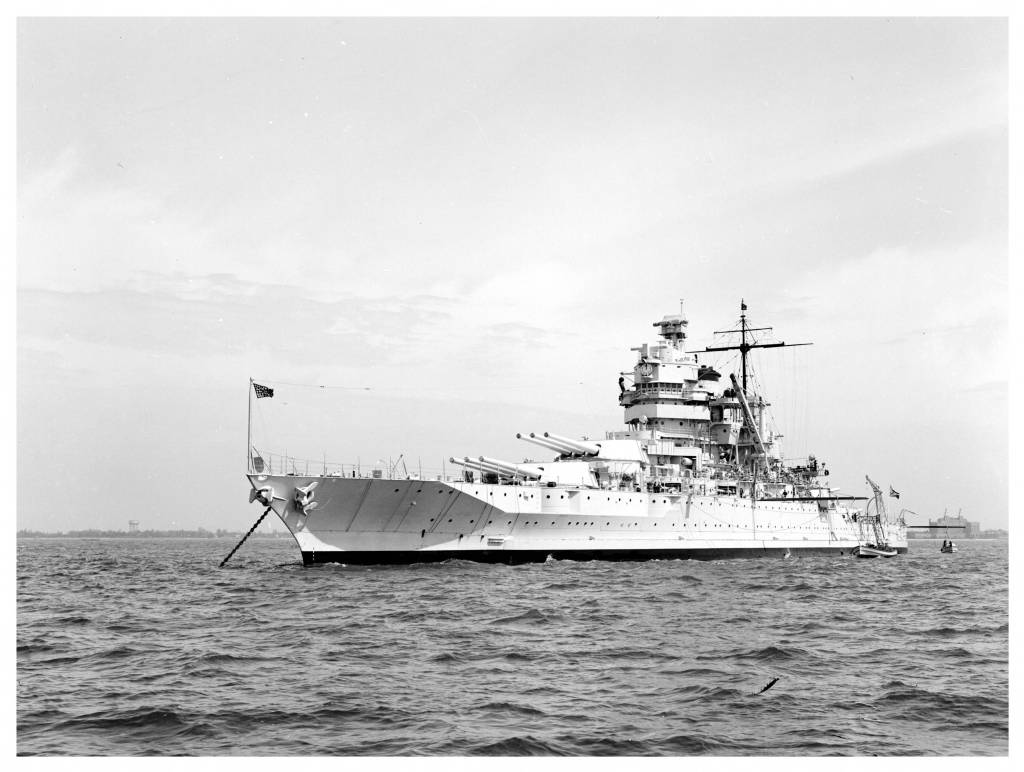
The United States Fleet was suddenly ordered back to the Pacific, the order being issued after a White House consultation. No explanation of it was offered and speculation took a wide range. The State Department denied that the order was a gesture attending President Roosevelt’s peace appeal. Most of the United States Fleet was ordered suddenly today to return to the Pacific. The reasons for the surprise order were kept secret by the government. President Roosevelt personally approved the order, White House attaches revealed. It affects all except about fifty ships now on the Atlantic seaboard, the vessels to move as soon as they can be refueled. It was issued after a consultation by the President with Secretary Hull and Secretary Swanson, being transmitted immediately by Secretary Swanson.
It was learned authoritatively, however, that the decision to move the ships back to the Pacific was reached yesterday between Mr. Roosevelt’s morning speech at the Pan American Union and his address in the afternoon at Mount Vernon. The major units of the fleet were not scheduled to return to the Pacific until about June 1. The reasons for the sudden sailing order were not explained even to ranking naval officers, with the possible exception of William D. Leahy, Chief of Naval Operations. Such a point was made of not explaining the brief official announcement, made at 12:15 PM, that conjecture immediately became general.
From a highly reliable source it was learned that officials were acutely aware of the strategic imbalance involved in having the entire fleet in the North Atlantic in the event of a sudden outbreak of hostilities. Such a situation, it was said, would leave the Panama Canal virtually unguarded, with the fleet many days’ sailing time away. Further, it was said, our interests in Pacific waters demanded a strong force there in case of war, and it would take a much longer time to move the fleet through the Canal than could well be spared in an emergency. In some important naval circles, the fleet order was interpreted as another effort to offset the position of the Berlin-Rome-Tokyo Axis, in connection with the so-called democratic front of nations, in case the Roosevelt peace move and others, should not be successful.
With the British and French fleets concentrating upon the situation in the Mediterranean, those offering this interpretation said, the Japanese were likely to feel free in the Pacific, where a few weeks ago they seized the Spratly Islands, which lie in an important strategic position with regard to British Hong Kong, the Philippine Islands, the Dutch East Indies and French. Indo-China. The movement of the fleet, It was held in these circles — and the view was shared by some army officers — would tend to show Japan that the United States had an eye on the Pacific situation and would, to some extent, allay fears of the British and French with regard to the Far East.
Robert W. Bruere, chairman of the Maritime Labor Board, was in New York yesterday attempting to effect postponement of a strike against six leading tanker concerns on the Eastern seaboard. The National Maritime Union, an affiliate of the CIO, called the strike for midnight tomorrow, after negotiations with the employers had broken down last week.
Joseph Curran, president of the National Maritime Union, announced yesterday afternoon that the union had refused to call off or postpone the strike, but had agreed to resume negotiations with the employers tomorrow morning at 10 o’clock. A spokesman for one company said that the operators undoubtedly would comply with Mr. Bruere’s request for resumed negotiations, but he added that further talk appeared to be a waste of time.
Officials of Eastern Air Lines announced yesterday that passenger bookings were normal and that schedules were being maintained despite the two-day-old, system-wide strike of maintenance mechanics for higher wages and shorter hours. Spokesmen for the Air Lines Mechanics Association, an independent union, asserted, however, the strike was about 98 percent effective in Newark, Washington, Atlanta, Georgia, and Miami, Florida. E. V. Rickenbacker, president and general manager of the airline, and A. P. Martin, president of the union, both declared their organizations would stand firm.
A severe tornado tears across Northwestern Oklahoma today, killing seven and injuring more than thirty people.
A “human fly” saves a man from a Bronx fire. He scales the side of a building and carries the lawyer to safety.
Brazil warns its foreign minorities against any campaign for autonomy or extraterritorial rights such as has happened in Europe.
Japan will seek the active assistance of Germany and Italy in an effort to force other Occidental powers to stop their assistance to China, the newspaper Nichi Nichi reported today. It said this would be the first step in a triple drive against outside aid. for China which would include:
- “Diplomatic pressure” on the Ambassadors from the United States, Great Britain, France and Soviet Russia.
- Curtailment of the commercial interests in China of those four nations.
Nichi Nichi specifically named Britain, France and Russia as objectives in the drive, but the United States would be included, since the newspaper said Japan herself would bring pressure on nations “which have rights and interests in China.” The Japanese Cabinet, Nichi Nichi reported, finally had concluded that Japan’s “overwhelming military victories” in the Chinese-Japanese war were insufficient to end the conflict because money and supplies were sent to China by outside powers.
In return for German and Italian assistance, it said Japan would aid their commercial efforts in China. Japan also will extend “unqualified support” of German and Italian aims in Europe, Nichi Nichi added. It said Japan was determined to take “a cautious attitude” toward important questions in China involving outside nations, such as the reopening of the Yangtze River to their nationals and financial measures against which the United States, France and Britain have protested.
At a moment when the whole French empire is on its guard it is felt here that Indo-China, France’s remotest possession, is not the least threatened. The occupation of Hainan Island in the Gulf of Tonkin and the seizure of the Spratly Islands are regarded as two preliminary moves aiming to place the French colonies at the mercy of Japan. Since the occupation of Hainan there have been indications of preparations for an important naval base. French naval experts expect the Spratly Islands will shortly become a seaplane station.
The Spratlys are uninhabited except for occasional Chinese expeditions and until recent years were avoided by navigators because of their treacherous coral reefs. It was not until 1933 that the French established their claim to the group after the discovery that several coral lagoons offered satisfactory shelter.
Chinese military headquarters reported today that the Japanese had rushed 7,000 reinforcements to Kaifeng on the Lunghai Railway for counter-attacks against Chinese forces, which in the last week were reported to have twice swept into the city to battle the Japanese garrison at close quarters before retiring. The Chinese attacks in and around Kaifeng were said to have halted construction of the Sinsiang-Kaifeng Railway, which would link Peiping to Nanking via the Peiping-Hankow, Lunghai and Tientsin-Pukow railways.
In Kwangtung Province Chinese regulars reported they had occupied Tsengcheng, thirty miles east of Kwangyao and eighteen miles northwest of Canton, after three. days of fighting.
Japanese Army headquarters in Peiping today denied Chinese reports that all members of the Kaifeng pacification commission had been slain in a revolt of bodyguards. The entire report was declared to be without foundation.
Operations against Chinese guerrillas throughout central and southern Hopeh Province and southern Shansi continue. Some Chinese units are reported to number 1,000 to 2,000 men. Japanese reports declare the Chinese were defeated in all encounters, leaving numerous dead and arms, supplies, and munitions.
The Japanese spokesman said Chinese artillery on the south bank of the Yellow River in the vicinity of Tungkwan was intermittently shelling Japanese positions along the north bank in southwestern Shansi.
Dow Jones Industrial Average: 129.61 (+3.41).
Born:
Marty Wilde, English pop singer-songwriter (“A Teenager In Love”), and father of rocker Kim Wilde, in London, England, United Kingdom.
Howard Winstone, boxer, in Merthyr Tydfil, Wales, United Kingdom (d. 2000).
Died:
Oliver Percy Bernard, 58, English architect.
Naval Construction:
The Kriegsmarine (German Navy) Type IXB U-boat U-123 is laid down by AG Weser, Bremen (werk 955).

 History Diaries