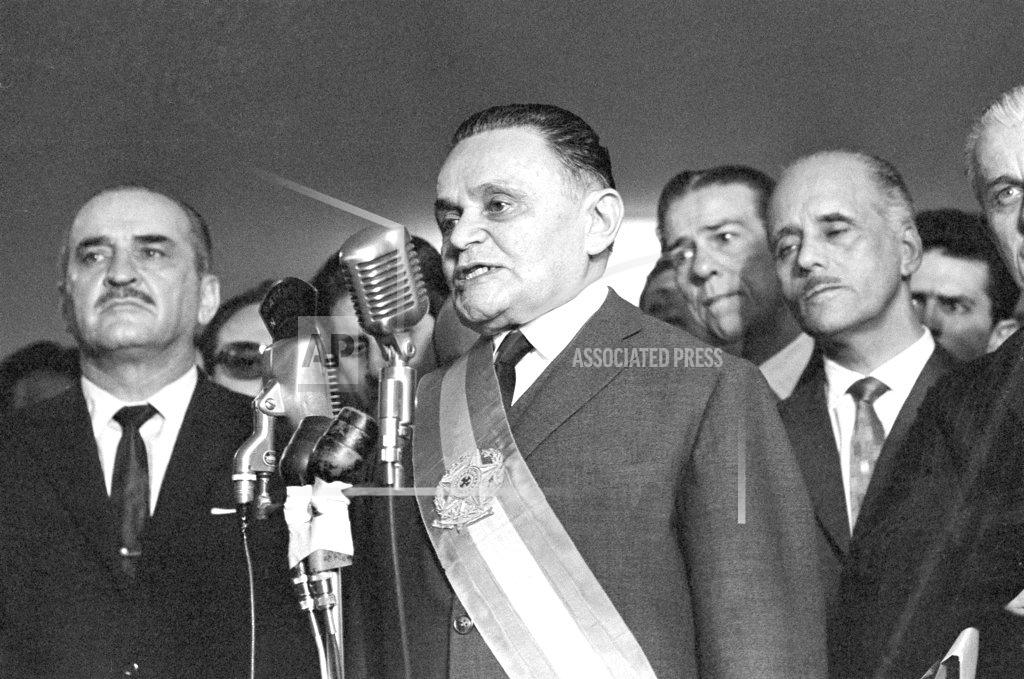
Fifteen days after the 1964 Brazilian coup d’état, the Army Chief of Staff, Marshal Humberto de Alencar Castelo Branco, was inaugurated as president, with the intention of overseeing a reform of the political-economic system. Branco took office before a cheering session of Congress today as Brazil’s 25th President. In his inaugural speech, Mr. Castelo Branco, a former marshal of the army, announced a toughening of Brazil’s foreign policy line toward Cuba, but he rejected “reactionary rightwing” remedies for Communism. For the 22 months he is scheduled to remain in office he promised an economic program that will strive for development without inflation. He pledged support for private enterprise, but he said sacrifices would have to be made by workers and businessmen — “principally businessmen” — for Brazil’s economic recovery.
Mr. Castelo Branco, a military hero of the Brazilian expeditionary force that fought beside United States troops in Italy in World War II, indicated also that Brazil was prepared to take a stronger stand against Communist subversion in the Western Hemisphere. “All free and democratic nations will be our allies, and those peoples that want to be free through representative democracy may count on Brazil’s support for their self‐determination,” said the 63‐yearold President. He added that Brazil wanted to “preserve and strengthen” her alliance with the other American republics. “We respect the independence of all countries in their internal affairs, and we demand the same respect for our affairs, in which we will not tolerate interference however discreet and subtle it may be,” Mr. Castelo Branco said. The President, who resigned from the army yesterday after 46 years’ active service took the oath of office before more than 2,000 people who crowded into the Chamber of Deputies.
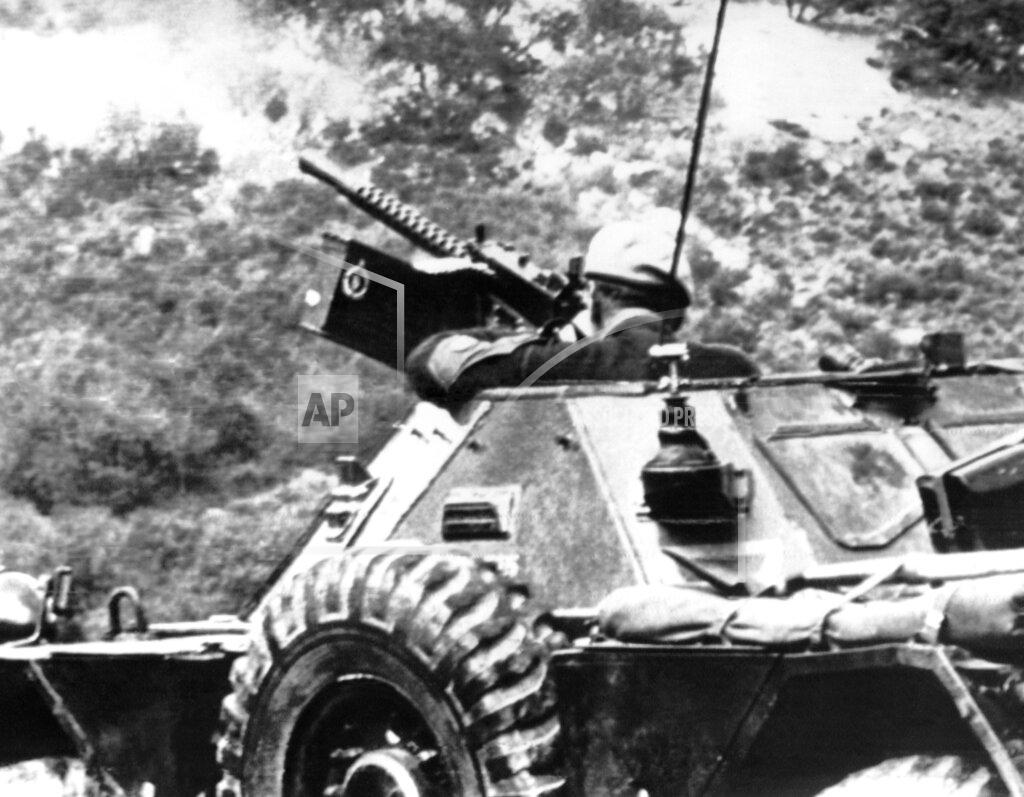
A strong force of Việt Cộng Communists clashed repeatedly with South Vietnamese Government forces today in the fourth day of fighting in the southern Mekong Delta area. Rising casualties totaled nearly 200 on each side as the government threw in new battalions to counter the highly unusual willingness of the Việt Cộng to maintain extended battle contact. American advisers consider this new tactic an ominous aspect of Việt Cộng strength. Three United States casualties were reported in ground and air action last Sunday at the Civil Guard post at Kiên Long, 135 miles southwest of Saigon. The gunner of a helicopter was killed by ground fire and two American advisers were injured in close combat. According to intelligence reports received at 21st Division headquarters here, elements of a third Việt Cộng battalion, the 306th, joined in the action today in addition to two seasoned Communist battalions that have been engaged since Sunday.
Military sources said it was the first time in the recently stepped‐up pace of guerrilla activity that three Việt Cộng battalions had engaged in the same battle under regimental coordination. The battalions are estimated to number 450 men each. At least seven battalion‐size units of government troops, including infantry, rangers and airborne units, moved into the battle, and all aircraft in the southern half of the country were diverted for troop lifts or air attacks against Việt Cộng concentrations. The battle is taking place on the eastern fringe of the U Minh Forest, where the Việt Cộng are believed to maintain a strong ban and supply area carved out of jungle undergrowth and invisible from the air. United States advisers noted that despite this proximity to shelter, the guerrillas have not taken advantage of the many opportunities to withdraw from the battle and regroup for later action as is their usual practice.
There is evidence that the Communists planned a big, coordinated operation and were not deterred by heavy casualties or the stiff resistance put up by some government units. A Civil Guard company of 106 men in Kien Long put up just such a determined fight Sunday. This unit, not part of the regular army, was attacked by strong Việt Cộng units shortly after midnight Saturday. Within minutes the district chief of Kiên Long, his wife and his deputy were killed by artillery and their bodies were mutilated by advancing guerrillas. Contrary to previous reports, the Kiên Long post did not fall to the Vietcong. A young Civil Guard lieutenant took command on one side of the town and held off night‐long assaults. The guardsmen destroyed their weapons to keep them from being captured. Shortly after dawn, when the Việt Cộng pulled back, only 35 of the original guard company remained alive. The Việt Cộng left behind 38 dead.
Former Vice-President Richard Nixon, returning from his 24-day trip through Asia, gives a number of speeches in New York City and Washington in which he calls for extending the war into North Vietnam and Laos. Nixon disagreed today with Senator J. W. Fulbright’s recent appeal for a more flexible approach toward Communist China. The former Vice President said the United States should take a “harder and stronger” position against Communist aggression in Southeast Asia. Returning from a 24“day business trip through Asia, Mr. Nixon said: “We should strengthen our policy toward Communist activities in Asia rather than move along the lines suggested by Senator Fulbright.” He called the Fulbright approach “soft.”
Sporadic shooting continued today in Nicosia on the island of Cyprus. Four Turkish Cypriotes and one Greek Cypriote were reported to have been wounded. Intermittent firing also went on in the Kyrenia Pass area, eight miles north of the capital. A. Canadian patrol of the United Nations peacekeeping force was fired on by Turkish Cypriotes on the northern slope of the Kyrenia range, near Bellapais. The Canadians returned the fire. In the northern suburb of Ormophita, in Nicosia, British troops returned the fire of Greek Cypriotes. Each side says the other started the firing. A government spokesman said that the Turkish Cypriotes were “executing a well‐organized plan to frustrate the efforts” of the United Nations peacekeeping force and the United Nations mediator.
Premier Khrushchev made a personal attack today on Mao Tse‐tung, the Chinese Communist leader, at a rally in the Kremlin. The Premier mentioned Mr. Mao several times with sarcastic contempt. This seemed to enhance the personal aspect of the conflict between the Soviet and Chinese Communists. Observers could not recall a previous occasion on which Premier Khrushchev had criticized the Chinese leader by name in public. Mr. Khrushchev and Wladyslaw Gomulka, the head of the Polish Communist party, denounced the Chinese leaders in almost identical terms from the same platform at the Kremlin rally. Later they were joined by the Czech President, Antonin Novotny, and Premier Yumzhagiin Tsedenbal of Mongolia at a glittering reception.
Premiers Todor Zhivkov of Bulgaria and Janos Kadar of Hungary arrived in Moscow later tonight and Walter Ulbricht the head of the East German Communists, was expected tomorrow. Mr. Khrushchev’s efforts to make a public show of the fact that his Communist neighbors support him in his conflict with Peking thus moved into high gear two days before his birthday. He will be 70 on Friday. During the evening Mr. Gomulka announced that instead of returning to Warsaw tomorrow at the end of his official visit, he would stay on for “another round of meetings and talks.”
Mr. Gomulka hedged his support of the Soviet position on the key point of a world conference of Communist parties. Such a conference would have to be carefully prepared, he said. The Polish Communists would favor a meeting, he asserted, if it served to blunt the differences between the two sides and brought them closer together. His statement appeared to exclude support for a “showdown” conference at which Communist parties would be called on to take a formal stand and to denounce the Chinese leaders.
King Hussein of Jordan said today that Israel was a troublemaker in the Middle East and urged the United States to take “a new look” at its policy on Palestine. The King also called on “adherents of the Jewish faith wherever they live to make a “deep soul-searching and perhaps an agonizing reappraisal of their attitude toward this whole problem of Zionism.” In a major address at a luncheon during his state visit here, the 28‐year‐old monarch vigorously spelled out the Arab viewpoint on the Palestine refugee question and the developing dispute over use of the Jordan River’s waters. In the text of his prepared speech, he expressed regret that the goodwill and friendship in the Middle East toward the United States “should have diminished so greatly during the past two decades as a result” of Washington’s policy on the Palestine issue. He deleted these remarks when he spoke.
During two days of private conversations with President Johnson that concluded today, King Hussein was reported to have given a similarly firm presentation of Arab views. He was also reported to have sought and received the President’s assurances of continuing and substantial American eco‐ nomic aid to Jordan. Mr. Johnson, in turn, urged the young King to spur the economic growth of his country to the point where such heavy doses of foreign aid were no longer needed.
Qualified sources said King Hussein also had asserted Jordan’s need to keep pace with the armaments of her neighbors, for example in the field of supersonic jet planes. The United Arab Republic has Soviet MIG‐21 supersonic jets and Israel possesses French Mystère jets of nearly comparable performance. Jordan’s best fighter planes are British‐made Hawker Hunter jets, which are subsonic and several years old.
Gaston Defferre, French Socialism’s candidate for the Presidency, denounced today President de Gaulle’s championing of an independent nuclear force. The force’s first phase of supersonic planes carrying atomic bombs would deter no one, he said. The second phase, which involves the building of atomic-powered submarines armed with Polaris‐type missiles carrying hydrogen warheads, is beyond France’s capacities, he added. Mr. Defferre’s criticisms were made, he conceded, without complete knowledge of its present state. Generally, however, they paralleled those made by foreign experts in the field.
The South Kasai insurrection in southern Congo finally ended after two years and the deaths of more than 15,000.
The trial of the Great Train Robbers concluded in Aylesbury, Buckinghamshire, with the judge describing the robbery as “a crime of sordid violence inspired by vast greed” and passing sentences of 30 years’ imprisonment on seven of the robbers.
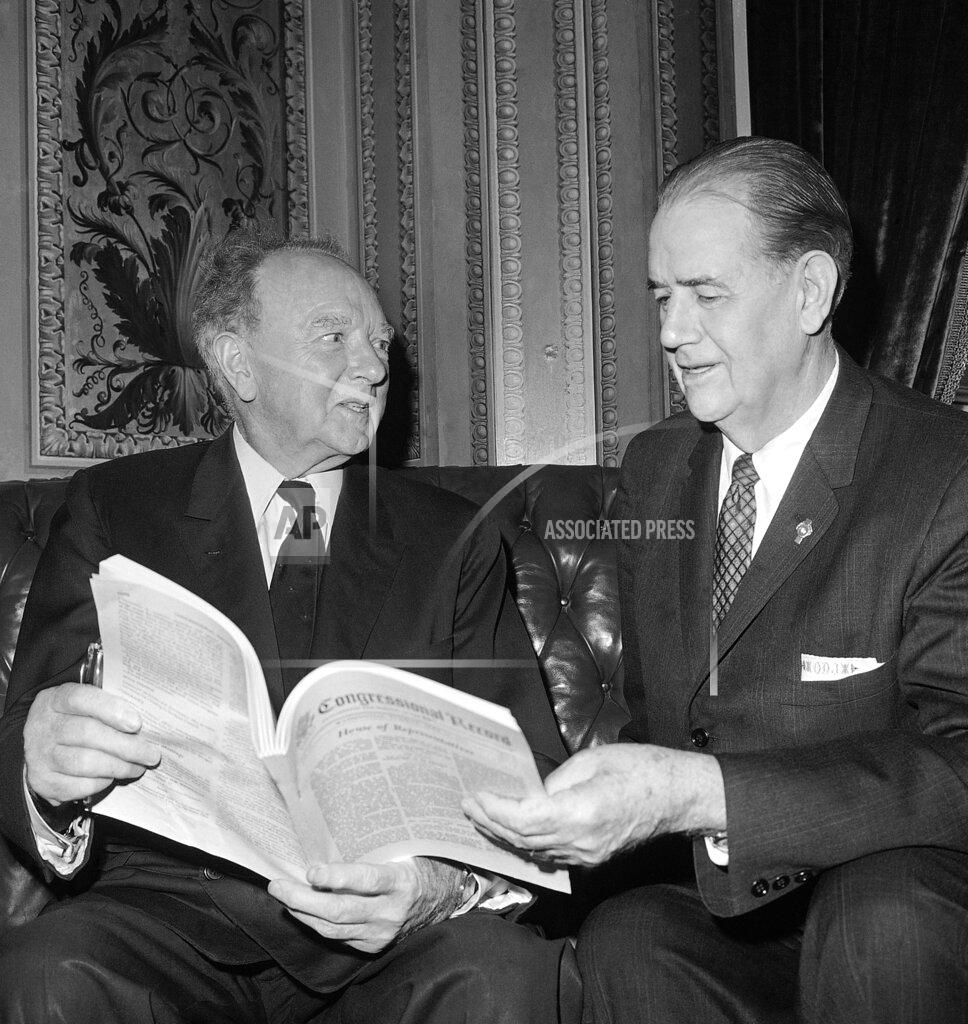
The bipartisan floor managers of the civil rights bill said tonight that illegal and unruly demonstrations were hurting their efforts to get Senate passage of the bill. Senators Hubert H. Humphrey of Minnesota and Thomas H. Kuchel of California. the Democratic and Republican whips in charge of the bill, said in a joint statement: “Civil wrongs do not bring civil rights. Civil disobedience does not bring equal protection under the laws. Disorder does not bring law and order.”
In the last several days, the two leaders have privately expressed their concern about the effects on the bill of the recent violent demonstrations in Cleveland and the plans of the Brooklyn chapter of the Congress of Racial Equality to tie up traffic to the World’s Fair in New York and the talk of the same chapter of creating a water shortage by leaving taps on. After consultation late this afternoon, they decided to issue an admonition to those leaders of civil rights groups who have been encouraging civil disobedience as the only way of persuading Northern Senators to combine for closure of debate and to pass the bill without amendments.
In their statement, Senators Humphrey and Kuchel said: “We are standing for law and order. We are working for fair play. And we are working for equal protection under the laws for all American citizens. This is the purpose of the civil rights bill. The right of petition is a basic right in America, but is also is basic to our system of government that there must be respect for the law. No one can condone violation of law. The main reason we are advocating the civil rights bill is because too many states and too many individuals are defying the law of our Constitution and are denying constitutional rights to our fellow citizens.”
The Senators said those struggling for civil rights would help their cause greatly if they conducted “their peaceful crusade with the same good manners, forbearance and devotion so abundantly displayed last August in the civil rights march on Washington.”
President Johnson said today that there was no settlement yet of the railroad work rules dispute but that both sides “have narrowed the area of difference on some of the issues.” Intensive mediation by five mediators will continue, Mr. Johnson said. “We should know definitely, not later than next Monday, whether the parties to this dispute will settle it by the process of bargaining and by responsible reason,” the President said. “The country expects that answer to be yes.” Mr. Johnson made his statement after having received a report from his panel of mediators of the status of the negotiations and after having met jointly and separately with officials of the railroads and the five operating unions.
Senator Barry Goldwater’s Illinois campaign directors today hailed the Arizona conservative’s two-thirds share of the vote in. the Presidential primary yesterday as precisely what had been expected. Representative Edward J. Derwinski, the Goldwater campaign manager in the state, said he was “very happy” about the nonbinding testimonial vote for Senator Goldwater” and added: “We did real good with the delegates.” He said 40 of the 48 elected yesterday were “absolutely sure Goldwater and the others incline that way.”
Observers were saying today that Senator Margaret Chase Smith of Maine, who succeeded in polling a quarter of the Republican vote without trying hard, was the beneficiary more of anti‐Goldwater than of pro-Smith sentiment.
Senator Barry Goldwater, carrying his attack on American missiles into the Pentagon today, charged Secretary of Defense Robert S. McNamara with a persistent effort to “fool” the American people. The Arizona Republican was replying to the Defense Department statement yesterday that favorably compared United States military power, including missiles, with that of the Soviet Union. He also reiterated his doubts about the Administration’s weapons policy. He stressed what he described as inadequate testing of American intercontinental missiles and deplored the diminishing tole of manned bombers. What made the Senator’s latest volley unusual was the fact that he spoke on the Defense Secretary’s home grounds. He spoke after a perhaps more unusual Goldwater‐for‐President speech by a retired general that sent high Pentagon officials scurrying.
The scene was the Public Affairs Studio Room of the military headquarters. The occasion was an award ceremony honoring Maj. Gen. Benjamin D. Foulois, retired, commander of the United States’ first air squadrons in World War I. General Foulois, who is 83 years old, was presented with a special Congressional medal of recognition “for more than 50 years of dedication and service to development of aviation.” Participating in the ceremony were Deputy Defense Secretary Cyrus R. Vance, Air Force Secretary Eugene M. Zuckert, General Curtis E. LeMay, Air Force Chief of Staff, and Senator Goldwater, a major general of the Air Force Reserve, who sponsored the Congressional resolution that made the award possible.
After the citation was read, Mr. Vance presented the award. Amid applause and good‐natured banter, Mr. Vance asked General Foulois, a spry little man, if he wanted to say anything. “I am speechless,” General Foulois began, somewhat inaccurately, as it turned out. “I want to say,” he went on, “I owe all this to Senator Goldwater.” Then came the bombshell. “I’ve followed Senator Goldwater quite a bit over the years, and especially lately, and I hope to follow him right into the White House,” General Foulois said.
Mr. Vance, turning red, said abruptly, “The ceremony is over,” and left. Mr. Zuckert also disappeared.
Only General LeMay, whose opposition to Secretary McNamara’s policies Senator Goldwater has cited and endorsed, made a leisurely exit. With the barest trace of a smile on his lips, he answered a reporter’s remark. “You seem to have caused quite a stir yesterday, general,” the reporter said, referring to the Air Force chief’s Congressional testimony that the Russians were narrowing the nuclear weapons advantage held by the United States. “I was just an innocent bystander,” General LeMay answered.
Senator Goldwater called tonight for a united Republican party and an end to hatred between Americans, and he predicted a big victory for himself in the Indiana Presidential primary next month. After noting that his wife came from Indiana, the Arizona Republican said that “if I can’t take Indiana like I did Illinois, I’d better quit.” He took approximately 65 percent of the vote in Illinois, where his only opponent on the ballot was Senator Margaret Chase Smith of Maine. His opponent in Indiana will be Harold E. Stassen, former Governor of Minnesota. Most of the Senator’s speech to about 7,500 persons at the Long Beach Arena tonight was a rerun of his differences earlier today in Washington with the Defense Department. But he surrounded this with such other matter as a Plea for racial and religious toleration. He said: “Ask yourself at night before you go to bed ‘Have I used the word hate today?’ If the answer is yes, you should resolve not to use it the next day.”
President Johnson announced today that he would hold a formal, televised news conference tomorrow in the same setting that President Kennedy favored. He will meet reporters in the State Department auditorium at 4:30 PM. Editors in Washington for the annual meeting of the American Society of Newspaper Editors will be specially invited guests.
The 17.6-mile-long (28.3 km) Chesapeake Bay Bridge–Tunnel was opened to traffic after four years and $200 million of construction. The link between Kiptopeke and Virginia Beach, Virginia replaced the car ferry that had been used by travelers driving along the Eastern Shore of the United States.
After reviewing the results of Gemini 1, the Gemini Management Panel remained optimistic that crewed flight could be accomplished in 1964. According to the work schedule, Gemini 2 could fly on August 24 and Gemini 3 on November 16, with comfortable allowances for four-week slips for each mission.
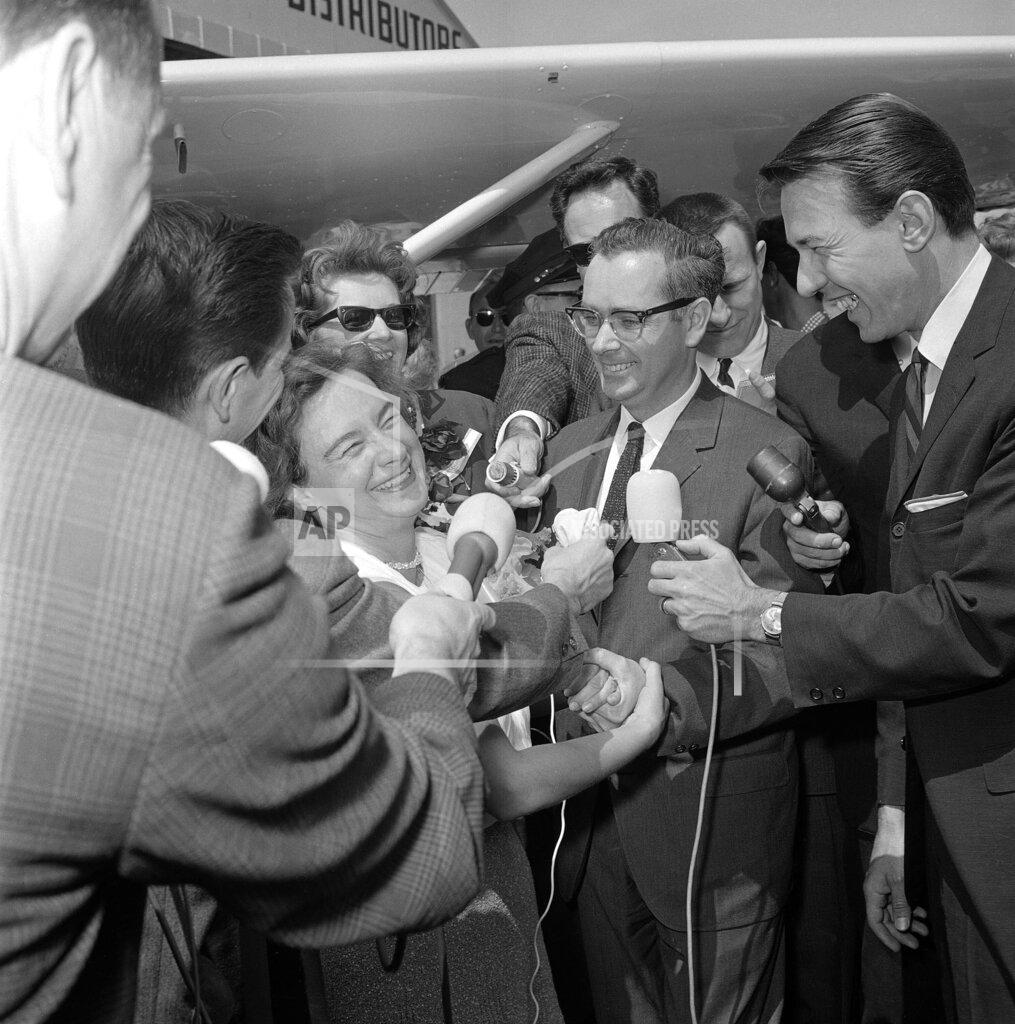
Two days before the official Ford Mustang on-sale date, one mistakenly left the dealership. The lucky new owner was Gail Wise, a 22-year-old school teacher from Chicago. Her parents lent her the money after she landed her new job but had no way to get to and from the school she was to teach at. Cash in hand, she headed to a local dealership in search of a convertible. When she expressed her desires, she was disheartened to learn no drop tops were in stock. Perhaps seeing her dismay, the salesman told her he had a special surprise and led her to a backroom. Much to her relief she found a baby blue Ford Mustang convertible. The car had yet to be released to the public, and the salesman knew the sale shouldn’t occur… yet. But what’s a couple days? Gail offered to pay full price for the car, $3,447.50, without even taking it for a test drive. Gail Wise had just become the first person in the world to buy a Mustang. She still owns the car today. Its value after a recent restoration was put in the neighborhood of $350,000.
Work begins on an $18 million stadium in Atlanta.
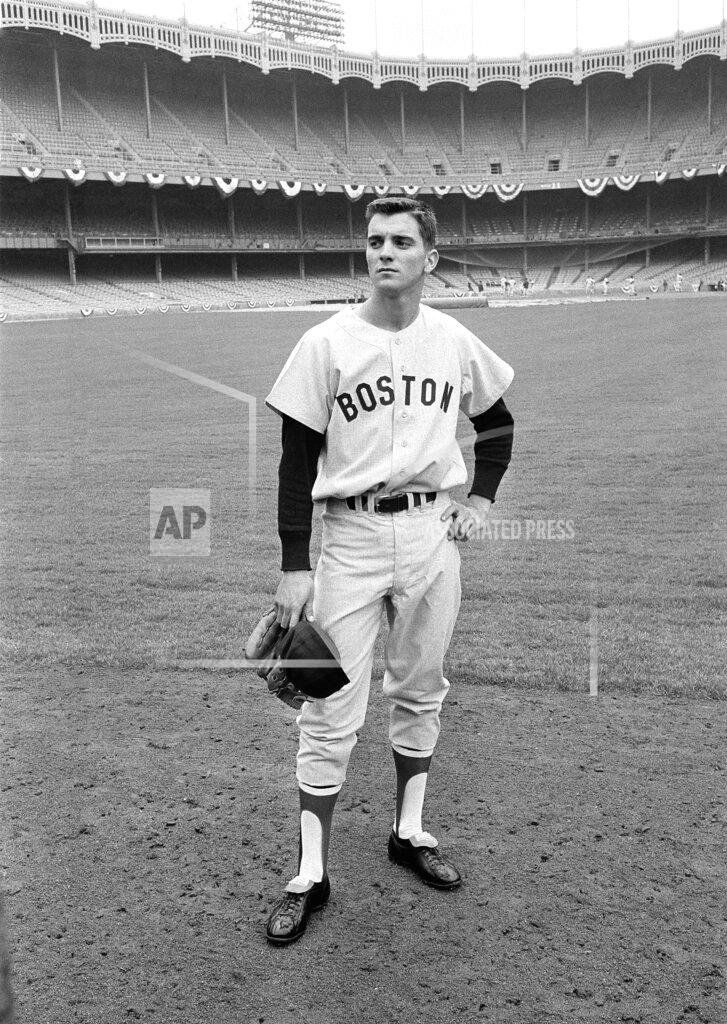
Future Hall of Famer and U.S. Senator Jim Bunning stars for the Phillies at Connie Mack Stadium vs the New York Mets. Bunning strikes out 11 and gives up 1 run in a 4-1 victory.
Dow Jones Industrial Average: 825.43 (+2.48).
Born:
Lydie Denier, French model and actress (“General Hospital”), in Saint-Nazaire, France.



 History Diaries