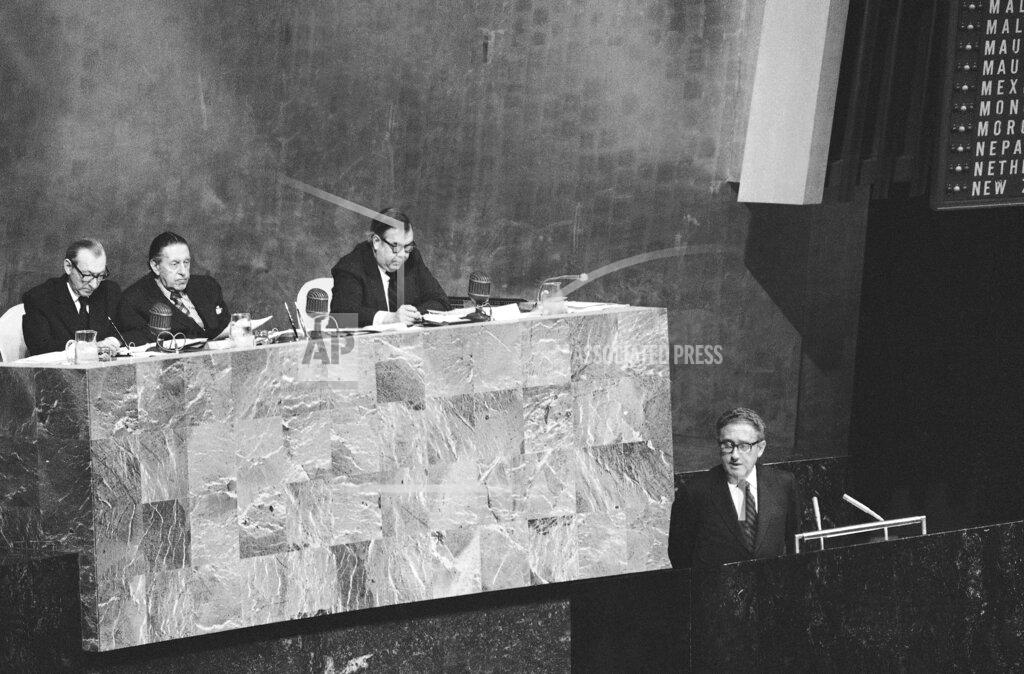
Secretary of State Kissinger pledged “a major effort” by the United States to assist developing countries, but he also cautioned them against resorting “to the politics of pressures and threats.” Making a broad statement of American economic policy before a special United Nations General Assembly meeting, he warned commodity producers against organizing to raise prices along the lines of the Organization of Petroleum Exporting countries.
Syria and Israel remain far apart in their proposals for separating their forces in the Golan Heights, but well-placed diplomats at the United Nations said that Mr. Kissinger believes he can narrow the gap on his forthcoming Middle East trip. A primary element in Mr. Kissinger’s thinking, the diplomats said, was the approach made to him in recent days by Foreign Minister Ismail Fahmy of Egypt, whose comments and suggestions on disengagement were more moderate than those of the Syrians so far. The Egyptians for instance, have talked of less substantial withdrawals by Israeli forces in the Golan Heights than Syria has proposed up to now, the diplomats said. Mr. Kissinger, who has remained in close contact not only with Mr. Fahmy but with President Anwar el-Sadat of Egypt, hopes that Cairo can bring such moderate influence to bear on Damascus.
Syria and Israel today kept up their artillery and tank duel on snow‐capped Mount Hermon, with the Syrians claiming to have inflicted heavy losses. A military spokesman in Damascus said Syrian forces had bombarded Israeli positions and support units on the 9,200‐foot mountain. Fighting also ranged along other parts of the Golan Heights front for the 35th day. The. Syrians also charged that the Israelis had shelled several houses in a village near the front line. For the first time in three days of fierce fighting for control of Mount Hermon, the Syrians made no mention of Israeli air intervention. Syria reported shooting down four Israeli fighter‐bombers yesterday.
Defense Minister Moshe Dayan trudged through knee‐deep snow drifts today during a 90‐minute Syrian bombardment to reach an Israeli position on top of strategic Mount Hermon. The Israeli Army radio, however, noted that today had been one of the quietest days on the front. Israeli planes were not called into action. In Tel Aviv an army spokesman announced more changes in the high command, following the appointment yesterday of Lieutenant General Mordechai Gur as the new Chief of Staff.
The Lebanese Army has moved tanks, armored cars and personnel carriers into the southern area bordering Israel, following a recent Israeli raid on six Lebanese villages, according to reports from the south.
Kurdish officials said today that four Soviet‐built MIG jets of the Iraqi Air Force bombed Kurdish ground forces near Kirkuk yesterday. The attack is regarded, here as a significant escalation of the conflict between the Kurdish rebels and Baghdad. It was the first time that Iraqi jet fighters had been used. against Kurdish forces since the signing of a 1970 peace agreement. The accord was designed to give autonomy to Iraqi Kurdistan by March 11, 1974, but negotiations to carry out the agreement broke down on March 9 and led to renewed fighting. The attack came on the third day of clashes near Chamchamal, 15 miles northeast of Kirkuk, as Kurdish troops resisted an army attempt to break through a Kurdish road blockade to Sulaimaniya and relieve Iraqi troops. Some 2,000 Iraqi soldiers were supported in the attempt by armored cars, tanks and artillery, and casualties were reported to be heavy.
Before the bombing attack, Kurdish officials said that seven of their soldiers had been wounded while 39 Iraqi soldiers were believed killed and more than 70 wounded. Kurdish villagers fled their homes into the mountains as several villages near Kirkuk, the heart of Iraq’s northern oil fields, were attacked from the air, officials said. Kurdish forces reportedly destroyed one tank in the battle. Idris Barzani, son of the Kurdish leader, General Mustafa al‐Barzani, said that his troops had expected the Iraqi Army to start a major offensive around the middle of April — after a month of snow and torrential rains.
He said that 3,000 Iraqi soldiers had been moved from Baghdad to Kirkuk this week and that tanks and soldiers were also reinforcing Mosul, in in the north. According to Kurdish intelligence 12,000 Iraqi soldiers are based in Kirkuk, along with a special commando unit and three squadrons of Soviet‐manufactured jet fighters. In Mosul there are estimated to be 10,000 Iraqi troops. The total of Iraqi forces believed to be in northern Iraq is around 50,000.
Kurdish and Iraqi forces face each other along a 320‐mile front. The front is complex, with enclaves of Iraqi soldiers blockaded by troops of General Barzani’s 40,000‐man guerrilla army. It is estimated that 8,000 Iraqi troops are cut off in Kurdish-held territory — half of them at bases in Zakho, near the Iraqi-Turkish border, and at Spilek, 45 miles southwest of here. Rebel forces surrounding these two garrisons are under orders to shoot down any helicopters attempting to take in supplies or men, The Kurds say that Iraqi food supplies there can last for only 10 to 15 days more.
President Tito of Yugoslavia scoffed at reports that he was dying and said, “As you can see, I’m alive and healthy.” He was speaking to a group of officials in Sarajevo. There have been reports in the West that the 82-year-old leader is ailing.
Ivor Bell, the leader of the Provisional Irish Republican Army terrorist group in Northern Ireland, walked out of Maze Prison in Belfast, only seven weeks after he had been captured. Bell took a release order from, and posed as, another prisoner, Jimmy Walsh, who was being given a four-day furlough for a scheduled wedding. Bell was recaptured 13 days later. Meanwhile, 30 persons, including four teenage girls, are being held in jail as a result of last week’s fire-bomb attacks in Belfast and other Northern Irish cities.
The Portuguese bishop of Nampula, Msgr. Manuel Vieira Pinto, arrived in Lisbon after being ejected from the Portuguese colony of Mozambique by security police. Nine Italian Catholic missionaries were expelled two days ago, a move that the Vatican called particularly painful, since the nation “is so much in need of… moral assistance.”
Art dealer Fernand Legros, extradited to France from Brazil to face charges of selling fake paintings to a Texas millionaire, was rushed unconscious to a hospital on his arrival in Paris. An airline steward said Legros took a sleeping pill after drinking two Scotch whiskeys during the flight from Rio de Janiero and “immediately fell into a coma.” Legros, a naturalized American citizen, was arrested in Brazil last April on an international warrant from a Paris judge. He is accused of selling $600,000 in faked art treasures to Texas oilman Algur H. Meadows.
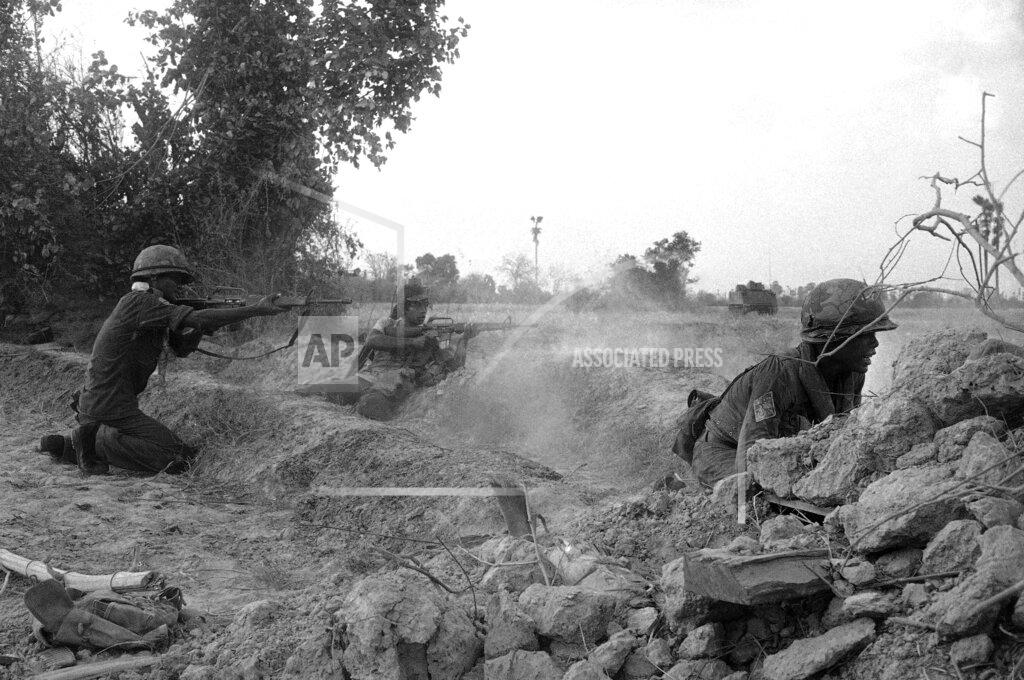
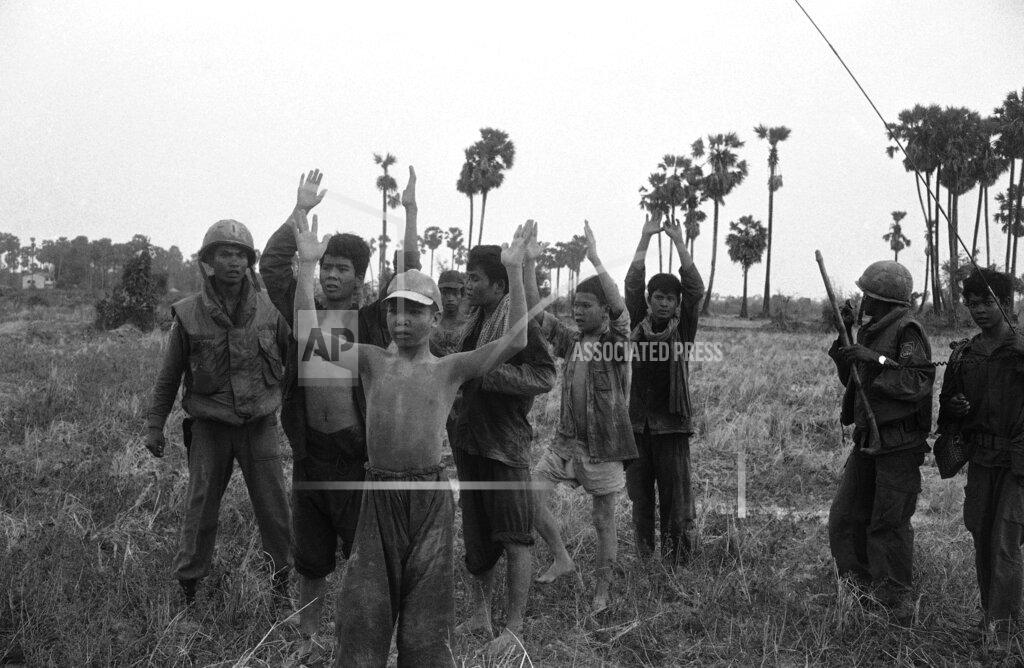
Insurgent forces fired six rockets into the southern suburbs of Phnom Penh today, killing one person and wounding five, Cambodian officials said. The rockets landed near the presidential palace. The barrage coincided with the end of the three‐day Cambodian new‐year celebrations. Last week, the rebels had warned that they would shell the city over the holidays. South of the capital, according to a defector from the insurgents, 2,000 rebel soldiers were attacking Government posts around the city of Takhmau with the intention of assaulting the city itself.
Takhmau, four miles from the capital, is an important link in Phnom Penh’s southern defense network. Several hundred civilians from Takhmau were moving into Phnom Penh, reports from the field said. These reports also said that the insurgents had shelled Svay Rolum, two miles from Takhmau, early today, wounding five civilians. Government troops manning the front lines at Svay Rolum were said to be spread thin and composed of old men and young boys.
A strike that threatened to idle more than 1,000 Japanese merchant ships was averted when a union representing ocean-going sailors reached an agreement with shipping companies. About 130,000 seamen will get monthly pay raises averaging $141, a 32.8% increase. Union leaders had originally demanded monthly wage hikes averaging $180.
Voters in the tiny Himalayan Mountain kingdom of Sikkim went to the polls for the first, and last democratic election in the nation to select a 32-member assembly from 121 candidates. After runoff elections on April 22 for 18 seats where no candidate had won a majority, the Sikkim Congress Party, won a majority of the votes.
Chile’s ruling junta said a leftwing plot had been uncovered to assassinate Cardinal Raul Silva Henriquez, archbishop of Santiago and primate of the Roman Catholic church in Chile. The cardinal revealed during his Easter Sunday sermon that he had received threats against his life and was being protected by bodyguards. The 67-year-old cardinal played a prominent role in trying to promote peace talks between the late President Salvador Allende and the opposition shortly before the four-man junta seized power last September.
Doctors in Cordoba, Argentina, declared U.S. Information Service chief Alfred Laun out of danger, more than 72 hours after Marxist guerrillas shot him in the stomach, kidnapped him and abandoned him. Complications could still arise, a spokesman said, but doctors believed he would be all right.
Ethiopian Prime Minister Endalkachew Makonnen warned that strikes by government employees could plunge the country into economic crisis. Workers in the Finance Ministry, tax and customs offices, and public road and train transport organizations are on strike. Telecommunications workers are reported to have submitted a list of demands to the government, backed by a strike threat. Other civil servants are considering following suit.
The army of Niger, one of the West African countries hardest hit by drought and famine, seized power and announced in a broadcast that it had acted because of the nation’s “catastrophic situation.” The radio in Niamey, Niger’s capital, announced the overthrow of the government of President Hamani Diori, who had ruled the country since it became independent from France in 1960. There was no indication whether power had been seized peacefully. A coup d’état led by Lieutenant Colonel Seyni Kountché overthrew the government of the West African nation of Niger and its first president, Hamani Diori. As the second President of Niger, Kountché would rule for 13 years until his death in 1987.
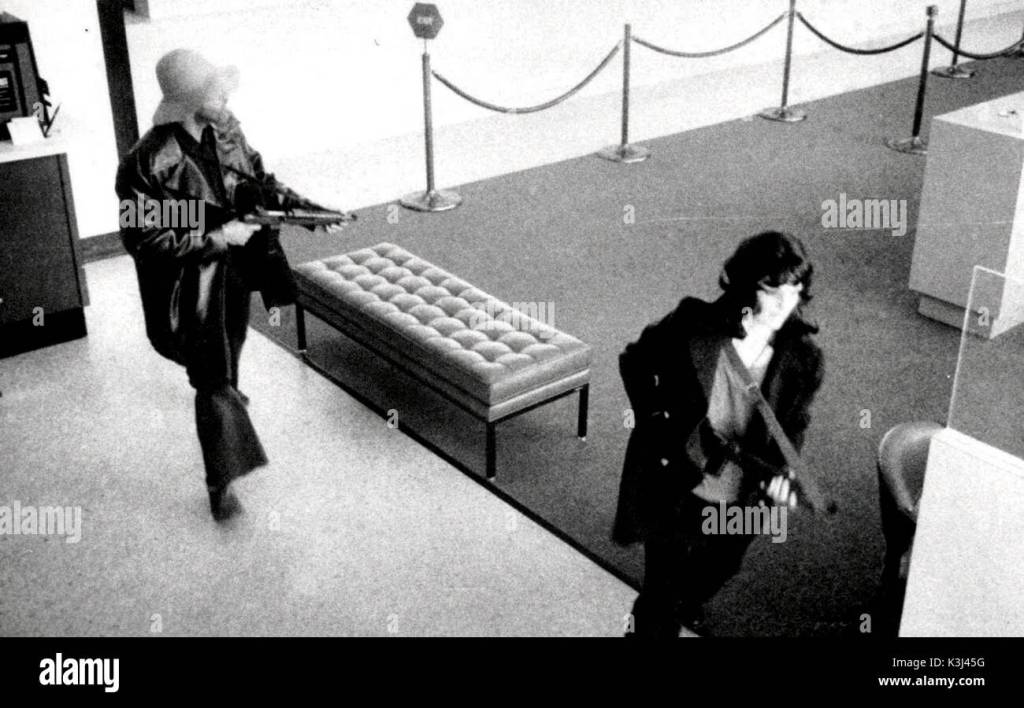
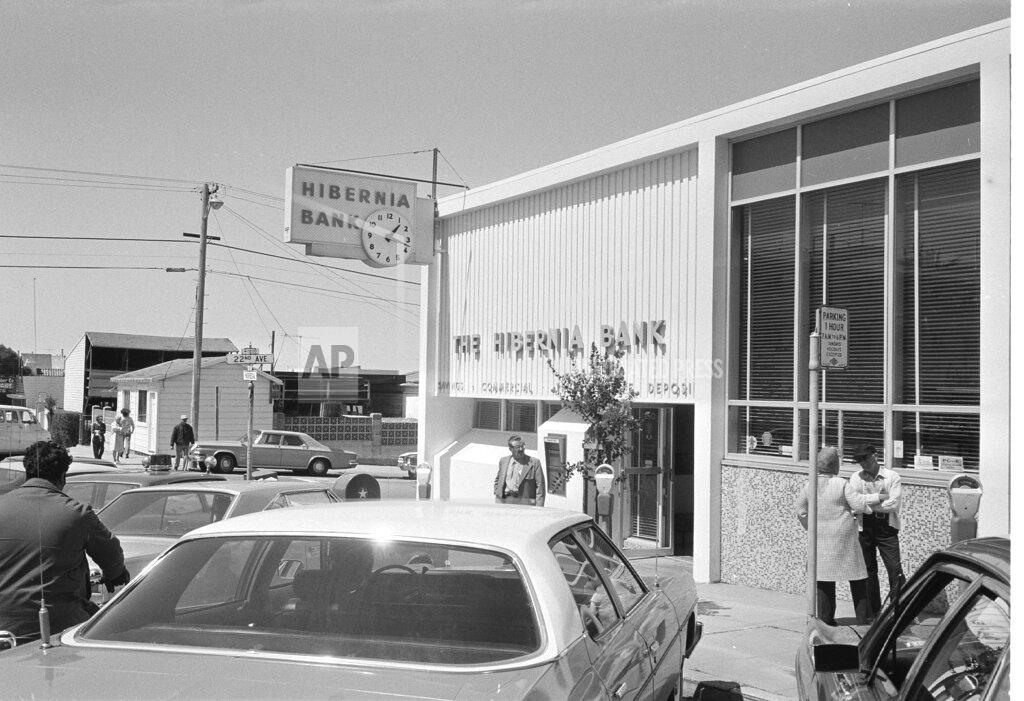
Kidnapping victim Patricia Hearst, who had recently announced that she was joining the Symbionese Liberation Army that had been her captors for two months, turned to crime and aided in a bank robbery. Hearst, who had adopted the SLA alias “Tania”, was photographed holding an automatic weapon while inside a branch of the Hibernia Bank at 1450 Noriega Street in San Francisco.
The Federal Bureau of Investigation said that Patricia Hearst participated in a bank robbery in San Francisco this morning, but strongly indicated that she may have been acting under duress. Two bystanders were shot in the holdup. At least four of the nine persons who escaped with $10,960 were linked to the Symbionese Liberation Army, the underground terrorist group that kidnapped Miss Hearst 10 weeks ago. Eleven days ago, in a tape-recorded message to her parents, Miss Hearst said she had chosen to remain and join forces with the Symbionese group.
The Supreme Court refused today to review a decision that Upheld President Nixon’s right to bomb Cambodia without authorization from Congress. The vote was unanimous, and there was no opinion. The case was brought by Representative Elizabeth Holtzman, Democrat of Brooklyn, and four Air Force officers in an effort to establish the legal principle that a President cannot declare war on his own authority alone. The effect of the high court decision was to leave standing a ruling by the United States Court of Appeals for the second Circuit in New York that the legality of the Cambodian action was a political question not reviewable by the courts and that the initiators of the suit lacked standing.
John Mitchell testified that while he was attorney general, he “willingly contacted” the chairman of a federal agency on behalf of a man that agency was investigating. He said, however, that this was not “improper.” The agency was the Securities and Exchange Commission, the call was made to its then-chairman, William Casey, and it was made on behalf of Robert Vesco.
President Nixon has received more than $47,000 in unsolicited cash and pledges to help him pay his income taxes, the White House press office said. Mr. Nixon, although “heartened and moved in the past 10 days by an outpouring of public support” for his tax debt, decided to keep none of the contributions and pay “every penny himself,” according to his spokesman.
Birth and fertility rates in the United States dropped to the lowest points in history last year, according to a report by the National Center for Health Statistics. It was the second consecutive year in which the rates were at record lows, suggesting a possible trend which, if it continues, means the United States would reach the stage of zero population growth in the first half of the 21st century.
The Cost of Living Council removed the last controls over food retailers and wholesalers, the largest segment of the economy that had still been subject to price and wage restraints. The decision permits the food distribution industry to charge whatever consumers are willing to pay.
A federal judge in Alton, Illinois, dismissed the remaining criminal charges pending against seven undercover narcotics agents involved in six drug raids in the Collinsville area of the state last year. Ten agents, including five of those affected by Judge Omer Poos’ order, were acquitted April 2 after trial on 12 counts of a 17-count indictment issued last August. John F. Conroy, chief Justice Department prosecutor in the case, had announced earlier he had asked the court to drop the remaining five counts. The agents, federal and local police officers, were accused of violating the civil rights of 11 persons after they twice struck at the wrong addresses and without warrants.
A photographer for the Associated Press’ Minneapolis office testified that he gave information on one occasion to FBI agents at a roadblock outside Wounded Knee, South Dakota, during the village’s 71-day occupation. James Mone testified at an evidentiary hearing in St. Paul, Minnesota, that has interrupted the trial of two American Indian Movement leaders. He said he had discussed how many people he had seen in the village and whether they had guns. After his testimony, Mone was suspended by Wes Gallagher, president and general manager of AP, who said the photographer “acted improperly as an impartial newsman” and that it was against policy for an employee “to be involved in any way in any news story.” The special hearing concerns defense charges of an illegal wiretap by the government.
The Nixon Administration used the signing of a historic job discrimination settlement with nine major steel companies to serve notice that it will take similar action against other industries. Labor Undersecretary Richard F. Schubert said that in industries where race and sex discrimination exists “we will be knocking on their doors and moving forward against them as we did with AT&T and the steel industry.” He declined, however, to name the next civil rights targets, but other sources said these were likely to be the copper and aluminum industries.
The Securities and Exchange Commission filed suit in federal court in Washington, D.C., against the American Ship Building Co. and its chairman, George M. Steinbrenner III, for failing to disclose to its stockholders allegedly illegal campaign contributions. The suit charges that more than $120,000 in corporate funds were illegally spent for political campaigns and other non-corporate purposes and were disguised in company books. Steinbrenner, who also is the majority owner of the New York Yankees baseball team, was indicted by a federal grand jury in Cleveland two weeks ago for allegedly contributing corporate funds to the campaigns of President Nixon and influential members of Congress. An SEC attorney said the latest suit resulted from an independent investigation and was not directly related to the Cleveland action.
78th Boston Marathon: Neil Cusack of Ireland takes men’s race in 2:13:39; American Miki Gorman women’s winner in 2:47:11.
Dow Jones Industrial Average: 843.79 (-1.02, -0.12%).
Born:
Danny Pino, American TV and stage actor (“Cold Case”), in Miami, Florida.
Tim Thomas, NHL goalie (NHL Champions, Stanley Cup-Bruins, 2011; NHL Vezina Trophy (top goalie) 2009, 2011; Conn Smythe Trophy (Stanley Cup MVP), 2011; NHL All-Star, 2008, 2009, 2011, 2012; Boston Bruins, Florida Panthers, Dallas Stars) in Flint, Michigan.
Sergei Krivokrasov, Russian National Team and NHL right wing, (Olympic silver medal, 1998; NHL All-Star, 1999; Chicago Blackhawks, Nashville Predators, Calgary Flames, Minnesota Wild, Mighty Ducks of Anaheim), in Angarsk, Irkutsk Oblast, Russian SFSR, Soviet Union.
Leilani Rorani, New Zealand squash player, British Open winner in women’s singles 1999 and 2000, ranked No. 1 in the world by the Women’s International Squash Players Association (WISPA) November 2000 to September 2001; in Hamilton.
Reynaldo García, Dominican MLB pitcher (Texas Rangers), in Nagua, Dominican Republic.
Mike Quinn, NFL quarterback (Pittsburgh Steelers, Dallas Cowboys), in Las Vegas, Nevada.
Died:
Princess Irene, Duchess of Aosta, 70, former member of Greek royalty as the daughter of King Constantine I, sister of George II, Alexander I, and King Paul I.
Aissa Diori, First Lady of Niger since 1960 as the wife of President Hamani Diori, was shot and killed during the coup d’état that ended the Diori government.


 History Diaries