It is announced that the U.S. Military Advisory Group (MAG) in Vietnam will be combined with the Military Assistance Command (MAC) to cut duplication of effort and make more efficient use of U.S. service personnel. Senior American officers said here today that the United States Military Advisory Group would be merged into the Military Assistance Command in Vietnam. The object is to reduce paperwork and duplication of effort and to make more efficient use of the nearly 16,000 United States servicemen in South Vietnam. American sources said they expected a “slight increase” in the number of United States troops in South Vietnam soon, but they doubted that the total would reach 17,000.
There is no indication that the streamlining would alter the subordinate role of the Military Assistance Command to the United States Pacific Forces Command in Hawaii, military officials said. There have been rumors that the command in Vietnam would be made directly responsible to the Pentagon. The merger of the Military Advisory Group into the Military Assistance Command is expected to reduce by 100 the 700 headquarters jobs in the two commands. It is believed that some of the posts that may be eliminated are held by generals. There are now 14 American generals in South Vietnam. There have been as many as 16. The advisory group has been responsible for training Saigon’s armed forces and for distributing United States military equipment About 3,000 officers and men are assigned to it. Under the planned merger, these advisers would continue in their present jobs, except that they would report to different superiors.
The Military Assistance Command, Vietnam, is under General Paul D. Harkins. The command has long had operational control of American advisers in the field, as well as control of the Army and Marine Corps helicopters and Air Force fighters, bombers and transports used here. The advisory group is under the command of Major General C. J. Timmes. It was established in South Vietnam in 1955 to help train and equip the South Vietnamese Army to meet the threat of armed Việt Cộng Communist insurgents. The MilitaryAssistance Command was formed as a result of recommendations late in 1961 by General Maxwell D. Taylor, Chairman of the Joint Chiefs of Staff, for a substantial increase in the American commitment in South Vietnam. The advisory group is a major command under the Military Assistance Command.
Last week, according to data compiled by American officers, the number of “small‐unit operations” reached nearly 5,000, a new high. Battalion‐sized operations were at a near record level, with 65 reported in the week that ended last Saturday. In the same week South Vietnamese forces lost 180 men killed, 310 wounded and 110 missing or captured. Saigon reported 300 Việt Cộng guerrillas killed in the week and 100 captured. So far this year United States losses in South Vietnam have been 31 men killed, 276 wounded and 2 missing. Military sources said that about 3,500 to 4,000 United States servicemen were “regularly exposed” to Việt Cộng fire. The United States casualty rate so far this year is running at the rate of 91 per month killed, wounded or missing. The monthly rate last year was 42.
Sir Garfield Barwick, the Australian Foreign Minister, declared today that France lacked a concrete plan for putting into effect President de Gaulle’s proposal for neutralization of Southeast Asia. Sir Garfield said he had sought clarification of the proposal and found it to be only a generalized concept. He asserted that the floating of such unexplored ideas at this time could weaken South Vietnam’s war effort against the Communist Việt Cộng guerrillas. The minister’s speech was the keynote of a concerted attack on the French proposal by most delegates to the meeting here of the Council of the Southeast Asia Treaty Organization.
President de Gaulle proposed last January the neutralization of Southeast Asia in agreement with Asian Communists. The proposal has become the central issue at the three‐day meeting here. It is scheduled to end tomorrow. The French Foreign Minister, Maurice Couve de Murville, has been unable to elicit support from any of the other delegations. The members of the Southeast Asia alliance are Australia, Britain, France, New Zealand, Pakistan, the Philippines, Thailand and the United States. Other differences also arose among the delegates. Pakistan criticized the United States for having supplied arms to India, which it contended represented a threat to its security.
North Vietnam has protested that Laotian right‐wing troops have crossed its frontier. A communiqué from the North Vietnamese Embassy today said Ambassador Lê Văn Hiền had delivered a note yesterday to Laos’s Premier, Prince Souvanna Phouma, demanding that “an end be put to such acts of provocation.” The communiqué stated that 150 commandos of the rightwing Laotian army advanced deep into Vietnamese territory on the morning of April 4. It said the commandos, armed with mortars, machine guns and submachine guns, had attacked the villages of Sen Nhóm and Con Coi near the village of Keng Đu in the Province of Nghệ An. A spokesman for the rightwing army said, “there’s no truth whatsoever in these charges. It’s quite absurd. How could Laos attack North Vietnam, which is so much more powerful?”
Brazil’s anti‐Communist military leaders prepared today a documented exposé of a leftwing revolutionary plan to seize power under former President Joao Goulart. The plan was confirmed in its general lines by some of Brazil’s left‐wing radicals who are in hiding or in asylum at embassies in Brazil. According to these sources, it was the refusal of Mr. Goulart to arm several key union groups in Rio, in Brasilia, the capital, and in other centers that brought the collapse of the leftist plan and Mr. Goulart’s subsequent flight to exile in Uruguay. The military seized power April 1 in an almost bloodless coup d’état. Documents seized by military policemen and interrogation of hundreds of arrested labor leaders, Communists, political and military figures of the Goulart regime and peasant organizers are expected to produce a detailed case. Prosecution of those responsible for the leftist plan is expected.
The U.S. Administration published this evening an inventory of American and Soviet nuclear power to demonstrate the United States’ increasing superiority and to head off another “missile gap” debate in the election. Responding to new charges of military irresponsibility by Senator Barry Goldwater, the Defense Department distributed a listing of its missiles, bombers and missile‐bearing nuclear submarines and compared them with Soviet strength in each category. The Defense Department has been under attack by the Senator for what he calls an overemphasis on missiles for defense. A Pentagon spokesman said that some of the information was being released for the first time. This included the official estimates of comparative strength.
The Pentagon gave the following breakdown of relative American and Soviet power:
The Air Force has 540 strategic or long‐range bombers constantly on alert. The Soviet Union could send over the United States no more than about 120 heavy bombers and perhaps 150 medium bombers that could return home after dropping their bombs. The Soviet craft would be limited in range to targets in Alaska and the northwestern areas of the country.
The Air Force has on launchers about 750 intercontinental ballistic missiles. The Soviet Union has fewer than one‐fourth that number, or 188, in operation.
The United States has 192 Polaris missiles depIoyed aboard nuclear‐powered submarines. Each missile can be launched from beneath the water’s surface and each has a range of 1,500 miles or more. The Soviet Union has “substantially fewer” missiles on submarines, only a small percentage of which are nuclear-powered. Each Soviet missile has a range of less than 500 miles and can be launched only from the surface.
The Administration was said to be determined to prevent another “missile gap myth” from developing in the election campaign. In 1960, the Democrats made a major issue of an alleged Soviet lead in missile production during the Administration of President Dwight D. Eisenhower. Once they came into office, the Democrats found that the balance of power actually favored the United States.
The Pentagon’s inventory was released at the end of a day in which the public quarrel between Senator Goldwater and Secretary of Defense Robert S. McNamara was renewed. The Arizona Republican, a contender for his party’s Presidential nomination, has cast doubt upon the reliability of the nation’s long‐range missiles. He has condemned what he calls “sole reliance” on missile systems and has urged more attention to manned aircraft and warships of all types.
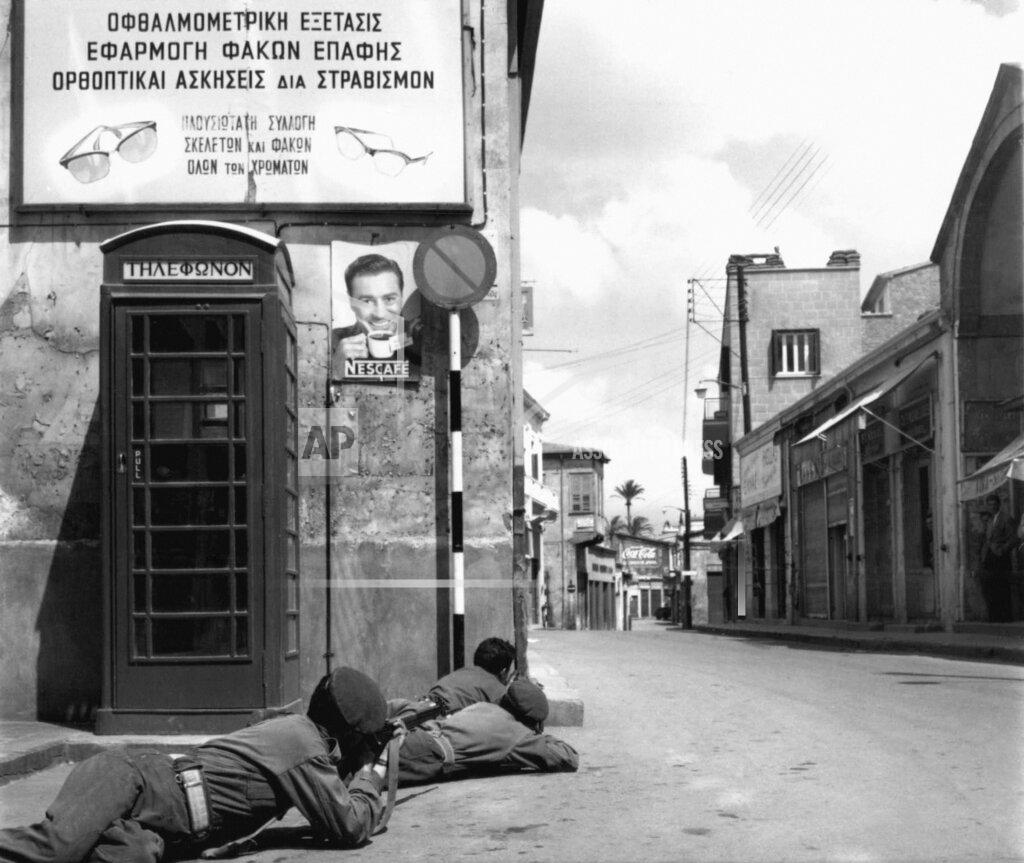
The United Nations Civilian Police (UNCIVPOL) began its first mission, assisting the peacekeeping operations performed in Cyprus by UNFICYP. The agency’s name would later be shortened to the United Nations Police, or UNPOL.
British Chancellor of the Exchequer Reginald Maudling announced at the House of Commons that he was raising taxes on alcohol, beer and cigarettes.
Senator Barry Goldwater of Arizona won the Illinois Republican Presidential primary last night, but Senator Margaret Chase Smith of Maine rolled up a surprising vote. Mrs. Smith, who got less than 3 percent of the vote in the Republican primary in New Hampshire and said she had spent less than $1,000 campaigning in Illinois, had about 27 percent as the returns were counted last night. Mrs. Smith said she had entered the race in a state that had been regarded as a Goldwater stronghold to give the voters a choice. Her name and Senator Goldwater’s were the only ones on the ballot. Former Vice President Richard M. Nixon and Ambassador Henry Cabot Lodge got lesser numbers of write‐in votes. Both had asked their supporters in the state to refrain from conducting active campaigns in their behalf.
The Senator Barry Goldwater of 1964 has softened the speech and reined the combativeness of the Senator Goldwater of 1961‐63. As a free‐wheeling orator, officially running for nothing and speaking largely to admirers, the Arizona Republican used to delight his audiences with verbal bomb‐throwing at the Communists, the United Nations and the welfare state. As an avowed candidate for his party’s nomination for President, speaking to audiences that often ask critical questions Mr. Goldwater has pulled his punches and even his teeth. He is still the conservative he is proud to call himself, but not so militant and belligerent as he used to be. The Goldwater position of 1964 is set down in 21 “issue papers” that were made available today by the Goldwater for President Committee.
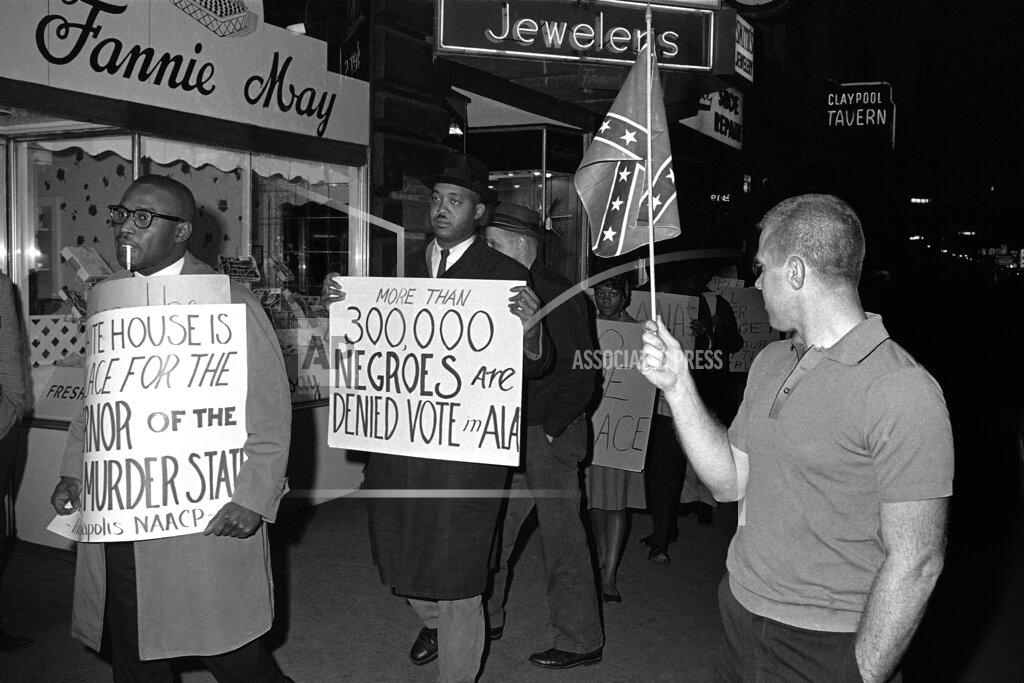
Senator John L. McClellan sought today to enlist the help of a freshman Senator in 1949 named Lyndon B. Johnson for an attack on President Johnson’s civil rights bill in 1964. The Arkansas Democrat read excerpts from a speech Senator Johnson made on March 9, 1949, opposition to a federal fair employment practices commission. Mr. McClellan used the speech to bulwark the Southern argument that Title VII of the present bill ignores constitutional protection of private property rights. Title VII would ban discrimination in hiring, firing, and promotion and in union membership on account of race.
In 1949, the just‐elected Senator Johnson said of a comparable proposal by the Truman Administration: “Such a law would necessitate a system of Federal police officers such as we have never before seen. It would require the policing of every business institution, every transaction made between, employer and employe and virtually every hour of an employer’s and employee’s association while at work.”
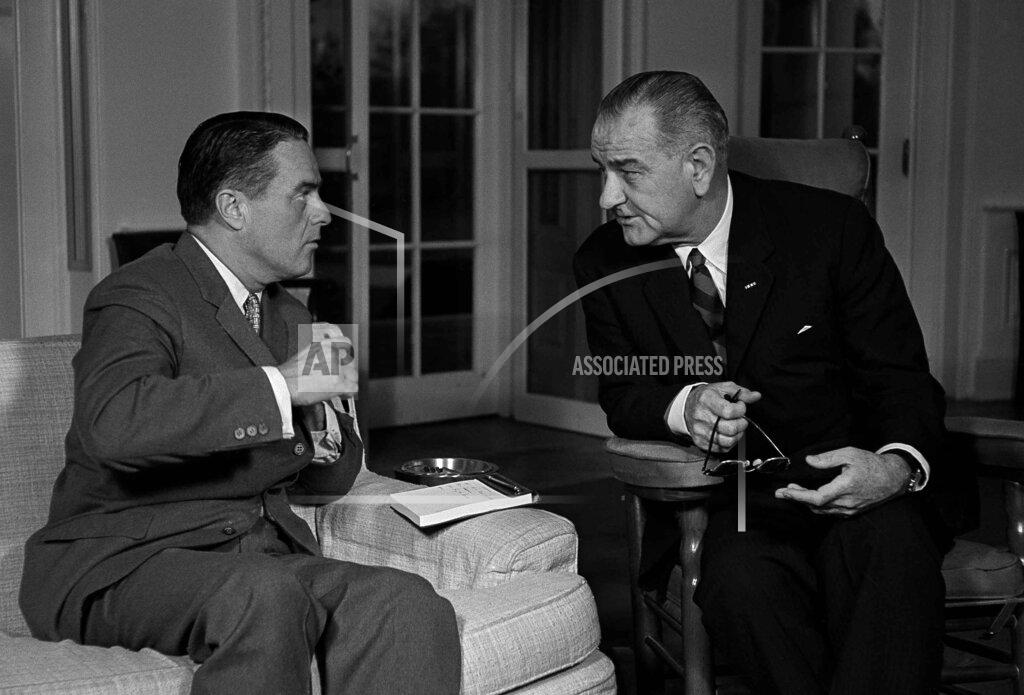
Railroad and union negotiators continued bargaining today in the Executive Office Building, next door to the White House. “There is absolutely no basis for optimism or pessimism and it would be a disservice to the negotiators to characterize it in that way,” a White House spokesman said. Federal mediators met jointly and then separately with the two sides today, the fifth day since President Johnson arranged a 15‐day postponement of a nationwide strike scheduled for last Friday. The postponement expires at 12:01 AM, April 25. The White House was apparently disturbed by published reports of optimism about the outcome of Mr. Johnson’s emergency efforts to settle the complicated work‐rules dispute.
Representatives of five unions and nearly 200 railroads are involved in the talks. The spokesman said the President would be available all day tomorrow to receive the progress report he has ordered. No specific time is set for the mediators’ report, the spokesman said. The White House emphasized again that the report is to give Mr. Johnson a chance to evaluate “the progress and the effectiveness” of the talks so far, and whether any other steps might be helpful in trying to reach a voluntary settlement.
President Johnson took another surprise stroll in public today and returned to the White House leading a group of tourists. The President met a crowd of about 100 persons outside the White House gate and signed autographs, shook hands and posed for pictures. “He’s so nice. He’s so human,” said one of three young nurses from England, Israel and Malaysia, who had their picture taken with Mr. Johnson. “He’s taller than I thought he was,” another woman said. “He looks younger in person than he does in photographs.”
The President had just driven King Hussein of Jordan from the White House to Blair House, the official guest house, about a block away and across Pennsylvania Avenue. A crowd gathered across the street to watch the two leaders shake hands and part. Then, with traffic halted, instead of returning to the White House in his black limousine, President Johnson ducked under a rope barrier designed to keep passersby and struck out across Pennsylvania Avenue. Once across the street, Mr. Johnson was enveloped in a group of passersby and sightseers He shook hands and signed autographs. At one point, he asked the crowd to open so he could get through with his Secret Service guard.
President Johnson, in an unannounced move in his drive to lower Government spending, has ordered a slowdown in the rate of promotion of Federal employees. Under the President’s orders, the Budget Bureau has sent a letter to every major Federal agency citing the “almost continuous rise in the average grade of Federal employes” as a “cause for concern.” The letter specifies the need to curb a “particularly large increase in the higher‐grade jobs,” with their higher rates of pay. About two million civilian employes of the Government in all parts of the country are potentially affected by the move.
Three NASA technicians were killed and eight others injured when a motor on the third stage of a Delta rocket ignited inside an assembly room at Cape Kennedy and sprayed burning fuel on the people who were placing a payload atop the stage. Sidney Dagle, L. D. Gabel and John Fassett were burned over more than 83% of their bodies and died soon after the accident, while four other men were seriously injured.
In St. Johns, Newfoundland, a Ford dealership made the first retail sale of a Ford Mustang, three days before the car was to be introduced. Stanley Tucker, a commercial pilot for Canadian Eastern Provincial Airlines, spotted the car at the George Parsons dealership and “made an offer that could not be refused to one over-zealous salesman”. The Ford Motor Company would reacquire the vehicle a year later, in return for giving Mr. Tucker a new 1966 Mustang convertible, and the vehicle is now located in The Henry Ford Museum in Dearborn, Michigan.
Rachel Carson the biologist and writer on nature and science, whose book “Silent Spring” touched off a major controversy on the effects of pesticides, died yesterday in her home in Silver Spring, Maryland. She was 56 years old. Her death was reported in New York by Marie Rodell, her literary agent. Miss Rodell said that Miss Carson had had cancer “for some years,” and that she had been aware of her illness.
Senator Kenneth B. Keating, Republican of New York, told the Senate today that something was wrong with the United States draft law if Cassius Clay, the world heavyweight boxing champion, could not pass its tests when more frail young men were able to qualify easily. Keating called for the creation of a special commission to study the selective service law and‐determine whether it needed improvement. He received the Senate’s consent to add cosponsors to legislation he had offered calling for the study.
The New Yorker said it must be startling to a young draftee who saw his able‐bodied friends excused from service and “even more startling to see the heavyweight champion of the world excused from any kind of service whatever.” Meanwhile, the Government agreed to release about two-thirds of the $2.5 million it had withheld from Clay’s heavyweight title fight with Sonny Liston. A spokesman for the Internal Revenue Service said that after consultations with Liston it had decided that the Government’s tax interest would be adequately protected by a lien covering more than $800,000. The lien is against Liston and his wife, Geraldine.
Sandy Koufax throws his 9th complete game without allowing a walk as he beats St. Louis 4–0 in his only start as an Opening Day pitcher.
San Francisco’s 5 home runs match the mark for Opening Day round-trippers. Juan Marichal beats Warren Spahn and the Braves 8–4.
The Giants purchase Duke Snider from the Mets, answering the trivia question: Who played for the Brooklyn and Los Angeles Dodgers, the Giants, and the Mets?
Dow Jones Industrial Average: 822.95 (+1.64).
Born:
Jim Grabb, American professional tennis player, 1986-97 (Grand Slam wins: French Open Doubles, 1989; US Open Doubles, 1992), in Tucson, Arizona.
Chris Geile, NFL guard (Detroit Lions), in Anaheim, California.
Gina McKee, English actress (“Our Friends in the North”), in Peterlee, England, United Kingdom.
Rebecca Richards-Kortum, American bioengineer (MacArthur prize for medical technologies for poor communities), in Grand Island, Nebraska.
Died:
Rachel Carson, 56, American marine biologist and conservationist, of a heart attack brought on by cancer and radiation treatment.
Tatyana Afanasyeva, 87, Russian-Dutch mathematician and physicist (fields of statistical mechanics and statistical thermodynamics).





 History Diaries