
Israeli and Syrian forces fought their biggest battle since the October war atop strategically vital Mount Hermon. After several hours of bitter fighting in which the Israeli air force was called in to pound the Syrian positions, the Israelis reported they had driven off a Syrian commando force that had occupied Hermon’s peak. A military spokesman reported at least 12 Syrians killed in the battle and 12 Israelis wounded. He said another five Israelis were wounded in artillery exchanges before and after the incident. The intensity of the fighting reflected both rising military tension along the cease‐fire line and the importance of the Mount Hermon area. In addition, Israeli officials believe the Syrians are stepping up the fighting as preparation for Secretary of State Kissinger’s scheduled trip here later this month.
“The Syrians are anxious to do everything they can to improve their position on the ground before the hard bargaining begins,” one official said. “Mount Hermon is a major trump card for both sides.” The 9,200‐foot‐high mountain straddles the borders of Israel, Syria and Lebanon. It dominates the entire area and provides a commanding view of the Damascus plain, the Golan Heights and Northern Israel. The side that controls the peak would be able to track all the aircraft in the Damascus area and call in artillery anywhere on the Golan Heights. In the early days of the October war, a helicopter‐borne Syrian force overran, an Israeli position just below the peak. It was a major coup for the Syrians, who also carried away sophisticated electronic equipment from the position. According to foreign reports that have never been denied here, the equipment had been provided and installed by the Central Intelligence Agency.
The Israeli forces retook the position on the last night of the war and also occupied second Syrian position, about 200 yards closer to the peak. The actual rocky summit is unoccupied, mainly because of the lack of natural protection. It is routinely buffeted by gale-force winds and is covered with snow much of the year. For the last several days, the Syrians, have mounted a number of determined efforts to establish a position on the peak itself. They have brought up heavy earth‐moving equipment, presumably in an effort to open a road to the summit that could be used by tanks and other armored equipment.
Their latest assault began late last night. The Israelis reported spotting a Syrian commando force, estimated at about 30 men, moving toward the peak about midnight. Israeli artillery began shelling the area about 2:30 AM. According to a military spokesman, an Israeli unit searching the area encountered Syrians about two hours later. A heavy fight developed, and at about 7 AM, Israeli Air Force planes were called in against Syrian artillery positions that were providing covering fire for the commandos. When the fighting finally subsided, the spokesman said, the bodies of 12 Syrian commandos were found in the snow.
Four Israeli planes were shot down by Syrian air defenses today, a Syrian military spokesman said. An Israeli Army spokesman denied Damascus reports that four Israeli planes had been shot down in operations on the Syrian front today. The spokesman said that all planes employed in operations on Mount Hermon had returned safely to base.
Secretary of State Kissinger handed over to Israeli’s Ambassador to the United States, Simcha Dinitz, the latest Syrian plan for troop separation in the Golan Heights and then flew from Washington to New York to hold his first extensive exchange of views with a senior Chinese official in five months and to address the United Nations General Assembly.
Israeli President Ephraim Katzir gave outgoing Prime Minister Golda Meir’s Labor Party two weeks to choose her successor to head a new government. Political sources said Katzir would ask the right-wing opposition Likud bloc, which made sizable gains in the last parliamentary elections, to form a new government if Labor could not agree on a candidate by the deadline.
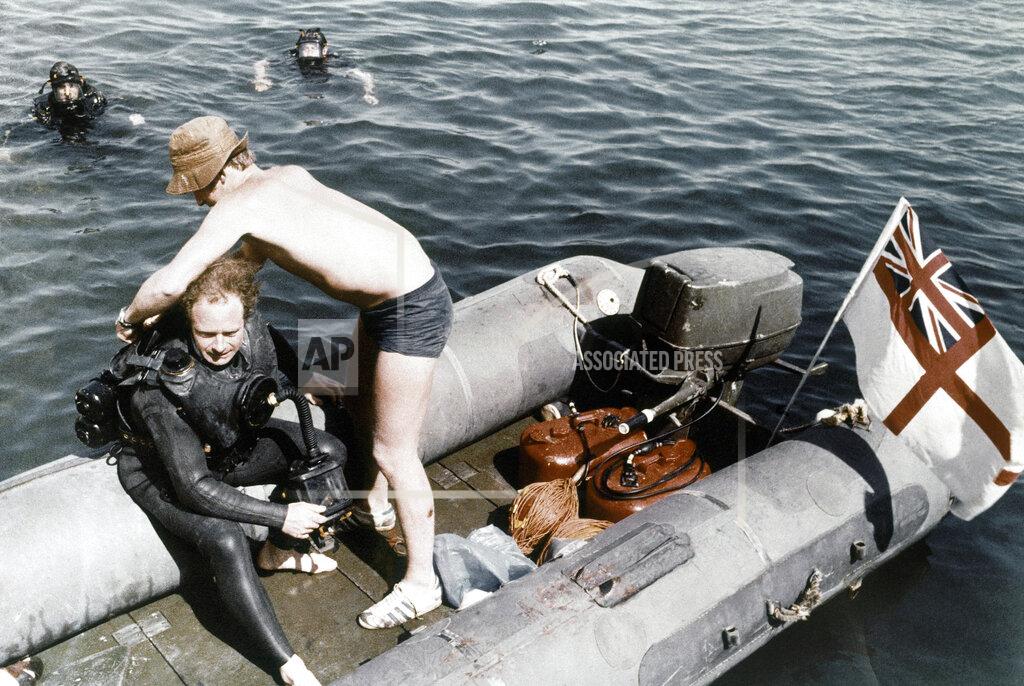
American operations to sweep the Suez Canal of mines will begin before the end of the month aria last six to eight weeks, said the man in charge, Rear Admiral Brian McCauley, today. But he estimated that it would take “about a year” to clear the canal zone of other explosives and dangerous obstructions left behind by many years of war. The admiral said that it was up to the Egyptians to decide when to open the canal to civilian shipping, adding that from a technical point of view, this could be accomplished some time before the year‐long mine‐clearing operations had been completed. Egyptian officials had originally estimated that the canal would be restored to pre‐1967‐war conditions within six months. This estimate, made in the heady days immediately after the signing of the troop separation agreement with Israel, has now been drastically revised.
Iraqi jets and tanks went into action against insurgent Kurdish forces in major pitched battles near the oil center of Kirkuk in northern Iraq, witnesses reported. They said Iraqi armored columns converged on strongholds of the 20,000-man Kurdish irregular army, cutting the main road to Chammal.
Kurdish rebel forces fired at Iraqi helicopters airlifting reinforcements into a beleaguered 3,000‐man garrison near the Kurdish headquarters in Northern Iraq and immediately imposed a total blockade on the garrison’s supplies, Kurdish commanders said today. The incident occurred at Spilek, 45 miles southwest of here, as the Iraqi Army attempted to drop 200 men flown from a military base at Kirkuk into the surrounded garrison six days ago. This is the second army base completely cut off in the northern Iraqi mountains and represents a further heightening of the crisis between Baghdad and the Kurds over Kurdish demands for self‐rule.
“We shot at the helicopters and they didn’t come again,” said Idris Barzani, son of the 70‐year‐old Kurdish leader, Gen. Mustafa al‐Barzani. “We shall try to stop them landing there in the future as well.” An estimated 8,000 Iraqi troops are cut off in the Kurdish mountains, but the Spilek base and a 1,000‐man garrison, at Zakho on the Iraqi‐Turkish border are under a total blockade. Helicopters are being allowed, however, to provision four other garrisons also surrounded by units of General Barzani’s 40,000‐strong guerrilla army.
Andrei Sakharov, the nuclear physicist, joined Aleksandr Solzhenitsyn, the writer, in calling on the Soviet leadership to renounce Marxism as its ideology and to give up hegemony over Eastern Europe and over non-Russian republics within the Soviet Union. But Mr. Sakharov declared himself at odds with “the nationalistic and isolationist direction” of the proposals Mr. Solzhenitsyn made in a recent letter to the Soviet leadership, and said that emphasis on Russian nationalism and withdrawal from world trade and international cooperation was wrong and “potentially dangerous.”
A mob in Londonderry, North Ireland, shot and killed a British soldier in civilian clothes who was assigned to watch their Catholic Easter parade. The mob broke away from the march in Bogside and attacked two soldiers with guns and sticks. One of them escaped after being beaten and shot.
A Czech who identified himself as Ladislav J. Kubricky has surrendered to Japanese police and told them he entered Japan illegally under orders from Soviet intelligence to spy on Japan’s munitions industry, a police spokesman said.
Emperor Haile Selassie of Ethiopia unexpectedly named one of his grandsons as the eventual successor to the throne. In an Easter speech to a large group of notables in Addis Ababa, the Emperor, who is 81 years old, said his successor would be Prince Zera Yacob Amha Selassie, “either as acting Crown Prince or Crown Prince.” Zara Yacob is the son of Crown Prince Asfa Wossen, the Emperor’s only living son, who suffered a severe stroke more than a year ago. Haile Selassie would be overthrown five months later, on September 12, 1974.
Police fired on feuding upper caste Hindu and untouchable Harijan mobs in central Bombay and killed four persons, officials reported. Harijans are members of India’s nearly 100 million untouchable community in a population of 560 million. Tension between the two groups has been mounting since January.
Pakistan’s prime minister, Zulfikar Ali Bhutto, announced an end to military operations against guerrillas in Baluchistan province and an amnesty for all prisoners not involved in “crimes of a serious criminal nature.” He said the army had largely accomplished its job of restoring law and order in the province.
Philippine authorities are investigating the possibility that members of the outlawed Communist New People’s Army killed three U.S. officers at the Subic Bay Naval Base, a Philippine military spokesman said. The base is about 60 miles northeast of Manila in an area where the Communists were active before martial law was declared in September, 1972. The Navy officers were identified as Comdr. Leland R. Dobler, Capt. Thomas J. Mitchell and Lt. Charles H. Jeffries.
Australia’s Governor-General, Sir Paul Hasluck, ordered that elections take place on May 18 for a new parliament.
Alfred A. Laun, U.S. Information Service official who was kidnaped and shot by leftist guerrillas in Argentina, is progressing favorably, hospital spokesmen said in Cordoba. Guerrillas of the People’s Revolutionary Army shot Laun, 36, when they could not subdue him by pistol-whipping him. After dosing him with drugs, they later abandoned him.
Ronald L. Ziegler, the White House press secretary, sharply criticized today as “inappropriate” remarks by Vice President Ford on his plans should President Nixon resign or be compelled to leave office. Mr. Ziegler said President Nixon “is going to be here until 1977.” Mr. Ziegler made the comment to a television interviewer as he left the Key Biscayne Community Church, where Mr. Nixon and his family attended Easter services. It was the first public comment by a White House official on an interview that Mr. Ford gave to John Osborne of The New Republic magazine. In the interview, the Vice President discussed a possible Cabinet should he assume the Presidency before Mr. Nixon’s second term ends. Mr. Ford said Mr. Ziegler definitely would not be asked to remain as press secretary.
Vice President Ford said that he sought to work out a compromise last week between the White House and House Judiciary Committee to avoid a confrontation over tape recordings sought by the impeachment panel. This was the first indication that Mr. Ford had been involved in trying to head off the committee’s subsequent decision to subpoena the tapes.
Senator Hubert Humphrey, Minnesota Democrat, has resumed a full schedule of work, travel and speech making after an ordeal of severe pain that he said was “the most terrible experience of my life.” In November and December, he underwent six weeks of daily treatment by heat X-ray for a possible cancer of the bladder. He has regained his vigor and exuberance, but he will return to Bethesda Naval Hospital on April 25 to find out whether the radiation therapy arrested the small tumors that worried his physicians.
Russell Train, administrator of the Environmental Protection Agency, said there should be “very careful advance planning” prior to federal leasing of offshore oil drilling sites in the Gulf of Alaska and along the East Coast, as proposed by the White House Council on Environmental Quality. In an interview on the television program “Face the Nation,” Mr. Train said his agency expected “to participate in and comment on any plans — absolutely.”
Commerce Secretary Frederick B. Dent warned that if businessmen pushed through a new round of price increases when economic controls expire April 30, “they will be virtually asking for pervasive controls, stronger than anything we have ever seen.” Dent, a former textile executive and the chief spokesman for business in the Nixon Cabinet, issued his call for price restraint in a Commerce Department publication. “If everyone rushes to grab every fast nickel, the inflation fires will be ignited anew and there will be a certain and volatile reaction. from Congress and the people,” he said.
The launching of Westar 1, the first United States communications satellite, signals fierce competition in the next few years that could drastically reduce the cost of private voice circuits and long-distance transmission of television programs and computer data. Westar, developed by Western Union, is expected to be placed tomorrow in a stationary position 22,300 miles above the equator. It is destined to be followed by at least seven more similar craft.
The Ford Foundation announced the granting of $2.3 million to four law firms engaged in a wide variety of litigation and negotiations in the “public interest.” Recipients were the Center for Law and Social Policy, Washington, D.C., $1,096,000; Citizens Communications Center, Washington, D.C., $230,000; Natural Resources Defense Council, $800,000, and the Sierra Club Legal Defense Fund, $192,000.
As many Americans scurried to meet today’s federal income tax deadline, Senator George S. McGovern (D-South Dakota) said he would renew the fight to cut the tax burden for most and still pump an additional $20 billion into federal coffers. The senator said in a statement that he would introduce a reform bill, patterned after his tax proposals of the 1972 presidential campaign, when Congress resumes business after the current recess. He said his bill would immediately boost the personal exemption to $850 and the low-income allowance to $1,500 and would contain a cost-of-living clause to raise those figures even more as inflation went up.
Six of the 10 passengers who were killed in a plane crash last Thursday on the slopes of Mauna Loa, 30 miles southwest of Hilo, Hawaii, were tentatively identified. Authorities, using the passenger manifest, said those known to have boarded the flight were Mr. and Mrs. Nathan Kleiner of Lansing, Michigan, Mr. and Mrs. Victor Pierce of Alpine, Texas, and Mr. and Mrs. R. Rudolph of Simi Valley, California. Two other couples reportedly were from La Habra, California, and Los Gatos, California. The pilot, also killed, was Vincent Morine, 24, of Honolulu.
The U.S. Navy has developed a novel torpedo mine that it hopes will help win any battle for control of the Atlantic by sealing off the Russian submarine fleet at the Norwegian Sea. To naval officers who have been following the secret development program, the new mine represents one of the most radical advances in the 400‐year history of mine warfare. In contrast to the present stationary mines, which go into action only if a ship or submarine passes in the immediate vicinity, the new mine would send out a torpedo to seek out and destroy its submarine target. The new mine is called Captor — a navy contraction for encapsulated torpedo. Basically, it is a torpedo enclosed in a mine-like device moored to the ocean bottom.
As seen by top naval officers, the new mine should lead to a revival of mine warfare, which has become something of an ignored stepchild in naval planning. They also believe it will prove to be a significant adjunct in maintaining control over the Atlantic sea lanes in the event war breaks out in Europe. The principal threat to Allied control over the Atlantic sea lanes is not so much Soviet surface ships as it is 170 submarines attached to the Soviet Northern Fleet based in Murmansk. With present forces, naval planners believe it would take destroyers, aircraft and attack submarines at least 60 to 90 days to neutralize the Soviet submarine threat, during which time they anticipate substantial losses of Allied shipping.
New Yorkers were the victims of violent crime considerably less frequently than the residents of Chicago, Detroit, Los Angeles and Philadelphia and eight other smaller cities during 1972. That New York City, which has international notoriety as a city of crime, was the least violent of all the 13 cities surveyed, is the most startling finding in a complex federal study.
Seven persons drowned and several thousand were forced from their homes in weekend rains and flooding in southern Mississippi. In Magee, 16 inches fell from Thursday night to Sunday morning. Drowning victims included three youths whose car left a Pike County road and plunged into flood waters and two men who were swept off a bridge. State civil defense spokesmen estimated that the number of persons driven from their homes would approach 3,000. About 30 miles of U.S. 49, a four-lane highway, were closed above Hattiesburg. Along the Leaf River and farther west along the Pearl River residents feared the worst was still ahead.
Tornadoes and thunderstorms struck the eastern Ohio Valley, unroofing houses, tossing house trailers about and downing trees and power lines. Several persons suffered minor injuries. Winds up to 60 m.p.h. were reported in parts of the state, with twisters hitting Grove City, La Rue and Bellevue. Egg-size hail also pounded Bellevue, and electric service was out for more than two hours in Columbus.
Yankee Graig Nettles blasts 4 homers — 2 in each game — during a doubleheader split with his former team, the Indians. The Yanks win 9–5, then lose 6–9. Murcer has a homer in each game while Duncan hits a pair in game 2. Nettles will go on to tie the Major League record with 11 home runs in the month of April.
In the 8th inning of Detroit’s 7–5 win over the Red Sox, Willie Horton mortally wounds a pigeon with a foul fly directly over home plate in Fenway Park. The pigeon lands at the feet of catcher Bob Montgomery. On the next pitch Horton grounds a single to left field.
Bobby Darwin has 2 singles, a triple and a grand slam to pace the Twins to an 8–0 whitewash of the Royals. Bert Blyleven combines with Bill Campbell on the shutout.
At Oakland, the A’s and Rangers split a pair with Oakland winning 4–2 before losing, 10–2. Reggie Jackson has a pair of homers in the opener off Steve Hargan (0–1), while Catfish Hunter goes 2–0. Dave Nelson has a homer and 6 RBI in game 2 as Fergie Jenkins gets the win.
In Atlanta, Reds first baseman Tony Perez homered off Roric Harrison with one on in the first inning. These were the only runs of a two-inning rainout.
Golfer Gary Player of South Africa won the 1974 Masters Tournament by two shots over Dave Stockton and Tom Weiskopf.
Born:
Quentin Dupieux, French film director best known for “Wrong Cops,” and as a musician who performs under the stage name “Mr. Oizo”; in Paris, France.
Da Brat (stage name for Shawntae Harris), American rap artist and the first female rapper to sell over one million copies of an album; in Joliet, Illinois.
Died:
Howard Pease, 79, American paperback writer known for his series of Tod Moran mysteries published from 1926 to 1961.
Jefferson Caffery, 87, American diplomat who served at different times as the U.S. Ambassador to El Salvador, Colombia, Cuba, Brazil, France and Egypt.
Al Morgan, 65, American jazz double-bassist (Cab Calloway; Fats Waller; Louis Jordan).








 History Diaries