Britain and France both pledged to lend Greece and Romania all assistance possible if those two countries went to war to preserve their independence. The British and French governments extended their mutual assistance pacts to the Greek and Rumanian governments in an attempt to bolster a united front against Germany and Italy in the Balkans. The Italian annexation of Albania placed Greece in direct danger of invasion, while the Germans placed pressure on the Rumanians. Chamberlain said in the House of Commons, “…in the event of any action being taken which clearly threatened the independence of Greece or Rumania…His Majesty’s Government would feel themselves bound at once to lend…all the support in their power.” Similar assurances were given by France.
The new anti-aggression front in Eastern Europe was extended to the Aegean and Black Seas today when Great Britain and France simultaneously guaranteed Greece and Rumania against attack from any quarter. Prime Minister Neville Chamberlain, quietly announcing these momentous new pledges to the House of Commons, explained that they would become effective immediately “in the event of any action being taken which clearly threatens the independence of Greece and Rumania, and which the Greek or Rumanian Governments respectively consider it vital to resist with their national forces.”
This was the same formula that Britain used in the case of Poland, although neither Greece nor Rumania has yet promised reciprocal help to the Western powers. Turkey is understood to have accepted a similar Anglo-French guarantee, and its terms will be announced as soon as details have been worked out. The agreement with Turkey is complicated by the treaty of Montreux governing the use of the Dardanelles and the Bosporus and by Turkey’s existing agreements with the other Balkan States, which are expected to be linked to the Anglo-French guarantees. There is at least one loophole, of course, in today’s pledges to Greece and Rumania, for they will not become operative if the Greeks and Rumanians choose to submit to pressure instead of defending themselves.
Clement Attlee of the opposition Labor Party replies to Chamberlain in the House of Commons:
“I have listened to the Prime Minister's statement and I am bound to say that I am disappointed.

“We have here a deliberate breach in the obligations undertaken by [Premier Benito] Mussolini in the Anglo-Italian agreement. We have regarded the Anglo-Italian agreement as part of a mistaken policy — an unreal policy of unilateral appeasement.

“The rape of Albania is to the Anglo-Italian agreement what the destruction of Czecho-Slovakia is to the Munich agreement. One cannot accept the words of either the ruler of Germany or the ruler of Italy.

“I am sorry to hear the Prime Minister say that he considers. the Anglo-Italian agreement right and that he intends to follow the same policy, because, in my view, that has been a most disastrous policy.

“I welcome the fact that we have undertaken responsibilities toward Poland, Greece, and Rumania. The government is accepting today just the responsibilities that it refused to accept under the Covenant of the League of Nations.

“Now, in far more dangerous circumstances than when the League was strong, the government finds itself forced to entertain those obligations, which are in the nature of a covenant. We want to see a real policy of insurance because individual pacts are useful but are only plugging the leak.

“Unless the government is prepared to stand now on a basis which will command the support of the peoples of the world and unless it is prepared vigorously to build up collective security which will be implemented by those who take part in it, then it had better give way to those who will.
Winston Churchill in turn opines:
“I find myself in general agreement with the Prime Minister's statement on the government policy-as far as it goes. I do not press him to denounce the AngloItalian agreement that he made when he parted with [former Foreign Secretary Anthony] Eden and assumed for himself the main direction of our foreign policy.

“Despite the bad faith with which we have been treated by the Italian Government, I am still not convinced that Italy has made up her mind-particularly the Italian nation-to be involved in a mortal struggle with Great Britain and France in the Mediterranean.

“It may be assumed that Germany would like to make sure of Italy by getting her into a war with the Western powers before any main strokes are delivered in the Central or North European theatre. We have reached the point when we are bound to look at matters in this somewhat realistic way. If it is in Nazi interests that this should happen, it is not in our interests to facilitate that task.

“So long as the government has no illusions about the agreement with the Italian Government I will not press it to take the step of denouncing it merely to relieve its natural feelings of indignation at the manner in which it has been treated.

“I am also in agreement with the practical steps that the Prime Minister has announced to give a guarantee to Greece and to make even more effective arrangements with Turkey.

“The validity of this guarantee rests, of course, mainly on British sea power and on the British and French fleets' combined superiority in the Mediterranean.”

(...)

“Danger now is very near. A great part of the world is, to a large extent, mobilized tonight. Millions of men are being prepared for war. Everywhere frontier defenses are manned.

“Everywhere it is felt that some new stroke is in train. If it should fall, can there be any doubt that we shall be involved?

“How can we bear to continue leading our easy comfortable lives, alone unwilling to pronounce even the word "compulsion"; unwilling to take the necessary measures whereby the armies that we have promised can alone be recruited and equipped?

“These very measures, which the government owes it to the nation. and to itself to take, not only are indispensable now to the duties that we have accepted, but by their very adoption they will rescue our people and people of many lands from the dark and bitter waters which are rising fast on every side.”
In Paris Premier Édouard Daladier seconded the British pronouncement. At the same time Prime Minister Neville Chamberlain was making his declaration in the House of Commons today, Premier Daladier at the Ministry of War issued to the press the decisions taken by the French Cabinet yesterday to maintain the status quo in the Mediterranean and assist by every means in its power Greece and Rumania if their independence was so menaced that they felt obliged to resist invasion with their own national forces.
The French Cabinet also, in welcoming the Anglo-Polish mutual defense pact, confirmed the French-Polish alliance with the words: “France and Poland guarantee each other immediately and directly against any direct or indirect menace which may affect their vital interests.” Neither in the resolution of the Cabinet nor in the wording of the declaration by M. Daladier is there any threat or provocation. “Our aim, and I am sure we shall attain it,” the French Premier stated, “is to organize that necessary collaboration of all the nations that have no thought of threatening the vital interests of any people, whoever they may be.”
Whatever the Axis powers’ response may be, the British made preparations for it. In addition to their fleet concentration in the Mediterranean they took precautions at Gibraltar on learning that troops were arriving in near-by Spanish towns. Some significance was also seen in the sailing of German naval units for maneuvers off Spain.
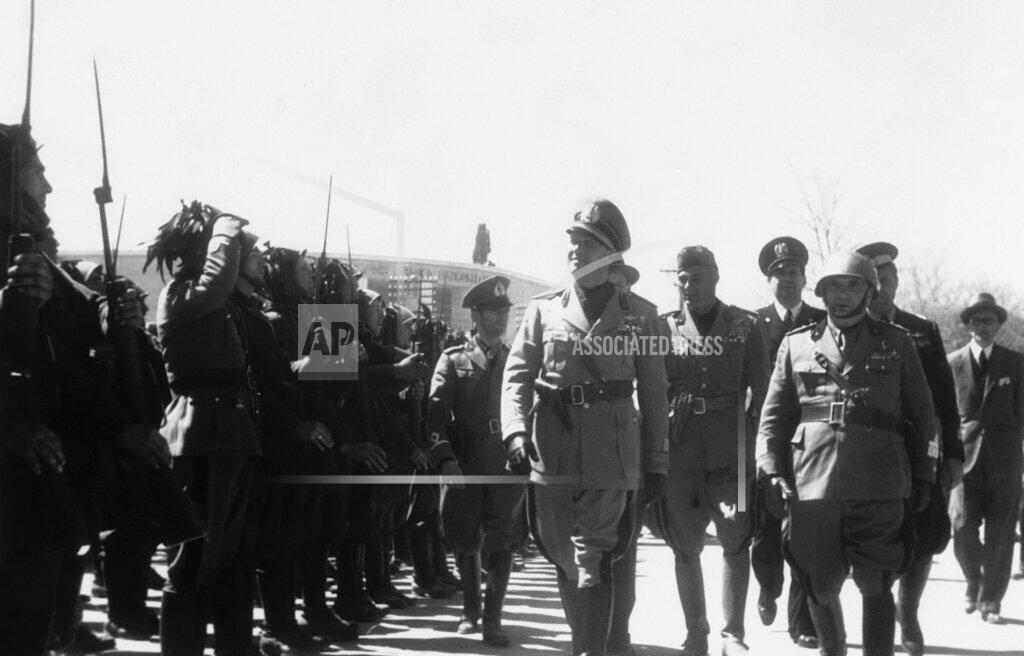
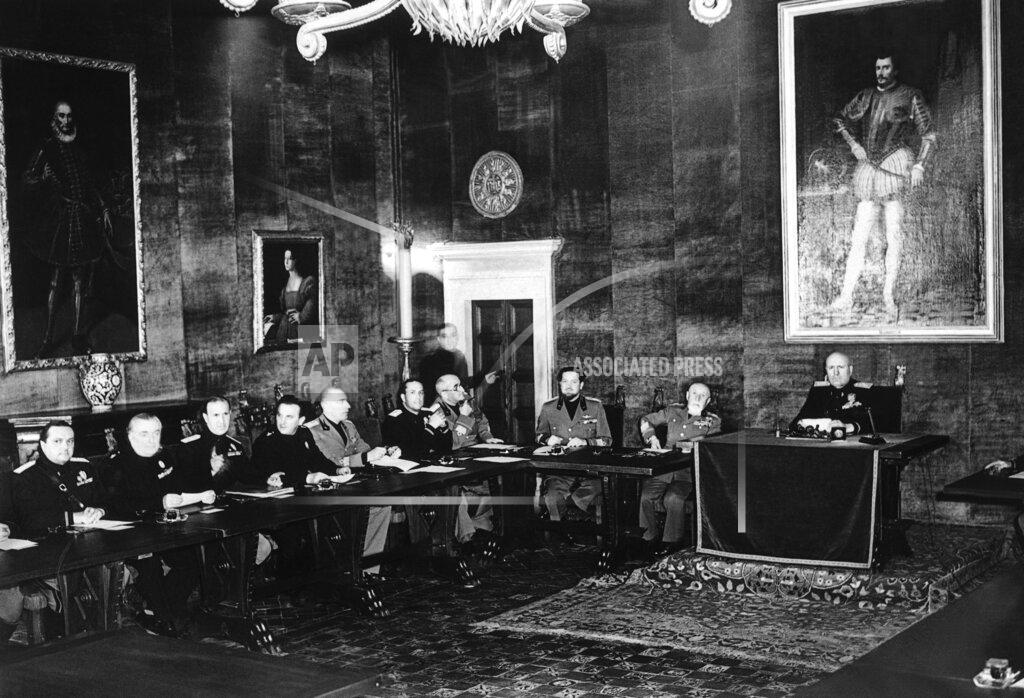
After presiding at the sitting of the Fascist Grand Council at which a resolution was voted “saluting with virile joy” the decision of the Albanian Constituent Assembly to offer the Albanian crown to King Victor Emmanuel, Premier Mussolini tonight received the plaudits of a large crowd which, obeying the orders of the Fascist authorities, gathered in the Piazza Venezia to thank him in the name of the Italian people for his successful Albanian coup. But a few minutes later the first international effects of this coup were published with the announcement that Albania had telegraphed her resignation to the League of Nations.
In response to the crowd’s cheering Signor Mussolini spoke a few words in which, despite their briefness, he succeeded in arousing all a fighting and bellicose spirit. He said that Italy would face hostile people with resolute hostility. The crowd understood this to be directed against France, for this sally was greeted with loud cries of “”To Paris!” and “Down with France.”
Signor Mussolini ended his speech by indicating that further surprises were in store, for, he said: “Tomorrow, as yesterday and always, we will go straight ahead.” The crowd received him with great, but not overwhelming, enthusiasm. Signor Mussolini’s popularity and prestige are so great he receives imposing manifestations of popular favor whenever he appears in public. Today was no exception, but certainly the crowd was neither as great nor as noisy as on many previous occasions. Perhaps this was due to the fact that meetings such as this evening’s have been sufficiently numerous to lose their novelty, but in part also to the fact that the Italians are not particularly elated over what has happened in Albania, since they have always considered the country an Italian appendage, therefore they cannot see that things are changed very materially.
Earlier Rome and Vatican City had tested their air-raid defenses
Berlin’s reaction was to accuse Britain of driving Europe into war and the democracies of seeking to entangle the smaller States. Nazi officials were surprised by the inclusion of Rumania in the guarantee and by Turkey’s. Nazi Germany answered Britain’s guarantee to Greece and Rumania tonight with assertions that British peace assurances were worthless and with charges that British policy was driving Europe into a new “people’s murder.” Official quarters said Prime Minister Neville Chamberlain in his Parliamentary declaration openly admitted he was trying to encircle Germany. They interpreted his reference to continuing negotiations with Moscow as an effort to “protect British interests with Bolshevik aid, as was done for two and one-half years at the cost of the Spanish people” — a reference to the Spanish civil war just ended.
The inclusion of Rumania in the guarantee and the mention of Turkey plainly caught Nazi officials by surprise. German relations with both countries are held to be very friendly, and Nazis said they would be compromised in the view of Germany if it were ascertained that these countries had asked for British help. As they did when the Anglo-Polish mutual assistance agreement was made, officials asked how Britain was in position to carry her frontiers to the Russian border. Official opinion was that the British fleet could give little direct aid to any countries except Greece, and that it would be impossible to land an armed force on German soil against the Reich’s well-developed coastal defense.
“No one can have faith any longer in the honesty of English peace assurances in the face of English methods of stirring up war fever in the world through unscrupulous panic-mongering,” said an official commentary. The commentary denounced “unscrupulous false alarm news of English propaganda against Germany” and added: “There is a general danger in all this — namely, the danger that all. Europe will be drawn into a new people’s murder through English policy and methods. That is the real kernel of the matter. All else is mere phraseology.”
The German cruiser Köln began training in the North Atlantic.
Rumania and Greece themselves disclaimed having invited the proffered help. But Poland welcomed the step as she reinforced her army on reports of German concentrations on her border. And Russia at last began to believe that Britain and France meant business.
Hungary gave an indication of where her sympathies lay when she explained that she had quit the League of Nations because it was a center of anti-authoritarian ideology.
Rumania charges a Hungarian menace and troops gather at the border.
The Slovak Cabinet has decided that Chancellor Adolf Hitler’s birthday, April 20, will be celebrated throughout the country. The Slovak flag must be flown from all public buildings and in the schools a two-hour recess will commemorate Herr Hitler as the protector of the Slovak State. A government delegation, including Premier Joseph Tiso, Foreign Minister Ferdinand Durcansky, War Minister Ferdinand Catlos, the leader of the Hlinka Guard and Propaganda Chief Sano Mach will go to Berlin. Property of all Hungarians in Bratislava will be registered. The party of Hungarian Unity has issued appeals to all its members living in the capital to report all real estate holdings to party headquarters. The reasons for this step have not yet been made known.
Twenty-three Jews of Hungarian nationality were expelled from Slovakia yesterday.
British military authorities at Gibraltar are taking precautionary measures of defense as a sequel to increasing troop activity in neighboring Spanish towns. Tonight a whole detachment of Royal Engineers was actively constructing a big barricade on the north front main road close to the no-man’s land separating Spain and Gibraltar.
Spanish authorities at La Linea tonight commandeered motor cars and buses. Excitement in that neighborhood was increasing. Considerable military activity was evident in the Algeçiras district, where several thousand troops have arrived since Monday. About 2,500 Galician troops, fully armed, have arrived at La Linea in the last few days and are being quartered in the bullring, schools and tents on the outskirts. Field guns, mortars, machine guns, tanks and thousands of cases of ammunition also have reached La Linea, which appears perturbed by their arrival. A food shortage continues in neighboring towns.
An estimated 100,000 French-African Muslims protest the Albanian seizure by Italy.
Washington, surveying the situation in Europe, found some increase in tension, but officials were chary of predictions.
A public rebuke to President Roosevelt for what was described as an unjustified war scare was administered on the floor of the Senate today by Senator Walter F. George of Georgia. He took his text from the remark Mr. Roosevelt made on leaving Warm Springs, Georgia, on Easter Day to the effect that “I’ll be back in the Fall if we don’t have a war.” Earlier in Mr. George’s strong speech was the climax to a day almost exclusively devoted by Congress to discussion of matters stemming from the tension in Europe. the Senate’s session Senator Bridges had introduced a resolution under the terms of which that body would “express its disapproval and forcefully condemn all inflammatory statements and press releases of the high officials of this government which have the effect of antagonizing the peoples of other nations against us, which tend to create civil unrest, which tend to have a detrimental influence on American industry, and which create war hysteria in this country.”
However, it remained for Mr. George to name names. “There is no need to gloss over the matter,” he told the Senate. “Within less than a week the President of the United States, in bidding goodbye to the people of my own State, said, ‘I will see you again Thanksgiving if we do not have war.’” Senator George said “Thanksgiving,” although dispatches from Warm Springs quoted the President as saying “the Fall.” “When that declaration is made by the President of these United State,” he continued, “it will arouse and it has aroused a genuine fear throughout this nation that somebody has afforded some encouragement to the distinguished English statesman (Lord Halifax) who today said that America, the United States, was in full sympathy with, or shared fully, the expressions that had just been made in the House of Commons by the English Premier.
Also today in Washington, the Senate also passed the bill to facilitate purchase by the Tennessee Valley Authority of properties of the Tennessee Electric Power Company and the Southern Tennessee Power Company, the Sheppard bill designed to curb pernicious political practices, the bill withdrawing the statute of limitations on offenses punishable by death and the bill increasing to $80,000,000 the annual authorization for Federal contributions to States for administration of State unemployment compensation laws, received the Connally bill imposing additional taxes on individuals and corporations during a war and adjourned at 5:26 PM until noon on Monday. A subcommittee of the Senate Appropriations Committee heard Secretary Wallace testify on problems relating to the marketing of America’s surplus farm products.
The House passed the $45,024,000 Naval Public Works Bill and the bill authorizing an appropriation of $600,000 for the continuation of the joint monopoly investigation, received a minority report of the coinage committee assailing the Administration’s monetary policies, a bill to remove the limit of $30,000,000,000 on long-term government obligations, and the Coffee Bill for an additional $50,000,000 emergency relief appropriation, and adjourned at 4:30 PM until noon on Monday.
President Roosevelt signed the bill providing for reciprocal taxation of Federal and State salaries, conferred with Governor Stark of Missouri, discussed Puerto Rican affairs with Representative Marcantonio and amendments to the Wages and Hours Law with Elmer F. Andrews, administrator.
Revision of the neutrality law to allow shipment of war materials to Great Britain and France in case of hostilities is favored by a majority of American voters, according to a survey by the American Institute of Public Opinion, of which Dr. George Gallup is director. This week the Senate Foreign Relations Committee has been taking public testimony on neutrality revision plans, one of which is the Pittman “Peace Act of 1939.” Providing for the sale of war materials to all belligerents on a cash-and-carry basis, the proposal is endorsed in principle by voters in the institute survey. The survey put this issue to the public: “Our present neutrality law prevents this country from selling war materials to any countries fighting in a declared war. Do you think the law should be changed so that we could sell war materials to England and France in case of war?”
The vote was: yes, 57 percent; no, 43 percent.
A new maneuver in the fight between Congress and the Administration over relief was revealed today when it became known that the special Senate Committee on Relief and Unemployment would meet tomorrow to report out Senator Byrnes’s bill to change the relief set-up and make the social security program the front line of defense against unemployment and want. The decision to take up the Byrnes bill with a view to putting it on a preferred status on the Senate calendar came after Senator Barkley’s statement in the Senate on Tuesday that President Roosevelt would ask Congress for $1,500,000,000 for relief for the fiscal year 1940.
The Senate movement dovetails with the plan of a House group headed by Representative Woodrum. He has pending a bill which, like that of Senator Byrnes, would make contributions to relief by States mandatory and would bring about a practical abolition of the Works Progress Administration. The Appropriations subcommittee on deficiencies, which is headed by Mr. Woodrum, is now investigating relief for facts which will bolster Mr. Woodrum’s plea for a new relief administration which would act merely as an agent of the Federal Government in allocating money to the States, to be matched in large percentage by State funds.
Renewed indication that a new set-up could be adopted came last week when the Senate, despite President Roosevelt’s plea for the full additional $150,000,000 for WPA, voted $100,000,000 in line with the action of the House, as led by Mr. Woodrum. Apparently, the economy groups of both branches felt they were in the saddle. The idea of making the social security program the front line of defense against unemployment is the main theme of Senator Byrnes’s bill. His and Mr. Woodrum’s proposals are almost identical in seeking to force the States to make a minimum contribution toward relief costs. Each proposes 25 percent, with the Federal Government making up the remainder.
Grover A. Whalen, president of the (New York) World’s Fair Corporation, announced last night that the Czecho-Slovak Pavilion in the foreign zone would be completed and opened as scheduled with the rest of the Fair on April 30, despite efforts of the German Government, just disclosed publicly, to force its abandonment. Mr. Whalen made public a letter he had received from Oldrich Vseticka, superintendent of the Czecho-Slovak Pavilion, saying he had been instructed by the Nazi Minister of Public Works in Prague, formerly the capital of Czecho-Slovakia, now in the German protectorate of Bohemia and Moravia, to close the pavilion and negotiate for its sale or rental through the German Embassy.
Mr. Whalen said the Fair officials had decided to follow the lead of the United States Government, which has refused to recognize the Nazi conquest of Czecho-Slovakia and has continued to recognize Vladimir Hurban as the Czecho-Slovak Minister in Washington. Other Fair officials said the announcement could be interpreted as notice to Chancellor Hitler and Germany, which is the only great power without an exhibit at the Fair, that they would not be recognized as having anything to do with the Czecho-Slovak exhibits. It was said the pavilion is practically complete and will have virtually all the exhibits originally planned, despite the Nazi opposition.
“Wuthering Heights,” starring Merle Oberon and Lawrence Olivier, is released. The film will win multiple Oscars, including one for Olivier and for Director William Wyler.
William Saroyan’s “My Heart’s in the Highlands” premieres in NYC.
In India, the Hindustani Lal Sena (Indian Red Army) is formed and vows to engage in armed struggle against the British.
Nine Japanese planes bomb the treaty port of Mengtsz, forty miles north of Indo-China. Japanese planes today for the first time raided a point along the French-owned Yunnan Railway between Kunming and the border of French Indo-China. They bombed Mengtsz, a small foreign “treaty port” city about) forty miles north of the French-Chinese frontier. Full details of the raid are lacking here but it is presumed that the objective was the Chinese Air Force Primary Training School at Mengtsz. A number of Americans are instructors there. Nine Japanese planes participated in the attack. Chinese fighting planes from Kunming took off to engage the invaders. Reports just released here say that Chinese planes early this week raided Pingyao near Hangchow and Japanese defense works in Shansi province, destroying fortifications in both places.
Unimpeachable foreign sources ridicule the Japanese claim of having “destroyed” the Chinese air force, particularly the claim of the destruction of forty planes at the airdrome in the Kunming raid last Saturday. Persons seeing the raid visited the field afterward and say that the only planes destroyed were decommissioned ships, either unsuitable for service or undergoing repairs including several outdated bombers. A number of smaller ships and all the other planes flew off before the attackers arrived. Loss to the field was not costly and the Chinese air force is certain that it got two Japanese bombers and possibly four. The whole China air force at present is not large, numbering probably not more than 200 fighters and bombers in active service besides trainers and auxiliary craft.
Dow Jones Industrial Average: 127.51 (+1.36).
Born:
Paul Sorvino, actor (“Goodfellas”; “Law and Order”, 1991-92; “Dick Tracy”, “That’s Life”), in Brooklyn, New York (d. 2022).
Seamus Heaney, poet and playwright (Nobel Prize in Literature, 1995), in Castledawson, County Londonderry,Northern Ireland, United Kingdom (d. 2013).
Barbara-Rose Collins, American politician (Rep-D-Michigan), in Detroit, Michigan.
Naval Construction:
The Nihon Kaigun (Imperial Japanese Navy) river gunboat HIJMS Sumida (隅田) is laid down by the Fujinagata Shipyards, Osaka, Japan.
The Kriegsmarine (German Navy) fleet tender Carl Peters is launched by A.G. Neptune, Rostock.
The Royal Navy “J”-class destroyer HMS Jackal (F 22, later G 22) is commissioned. Her first commanding officer is Commander Trevylyan Michael Napier, RN.
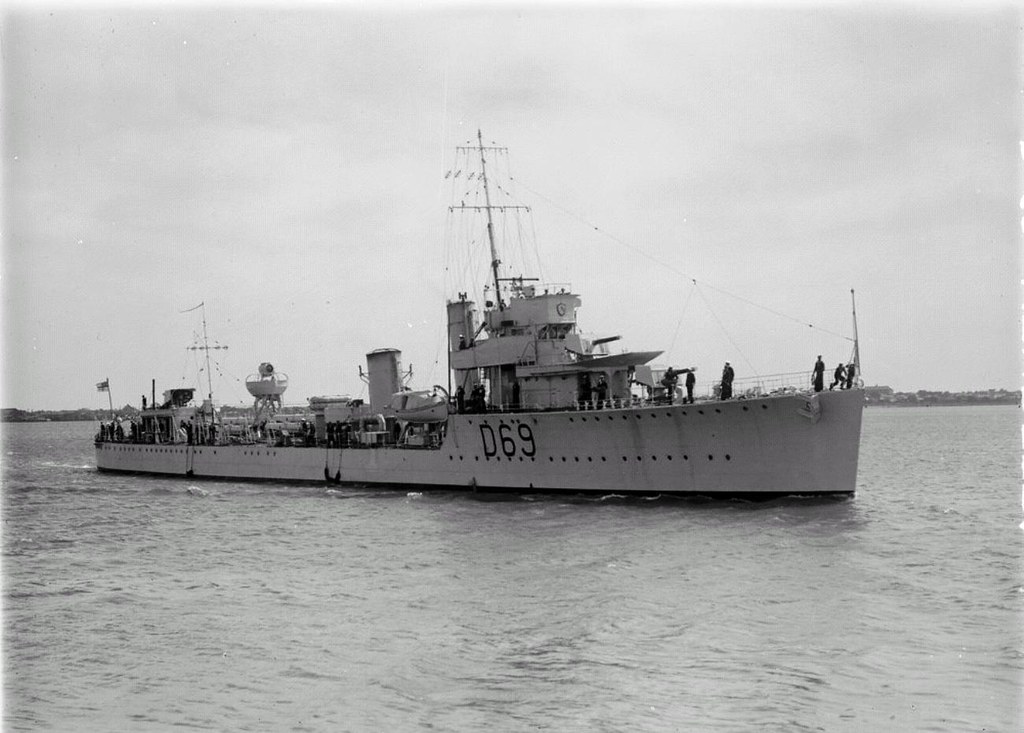
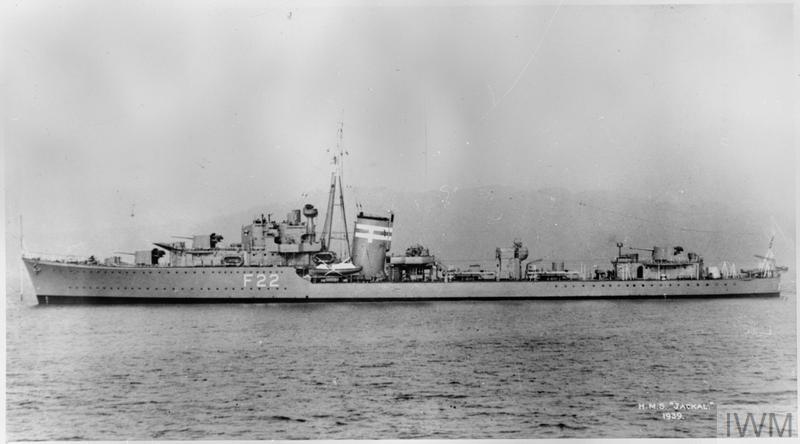
Lost 12 May 1942. HMS Jackal (Cdr. Christopher Theodore Jellicoe, DSC, RN) was bombed and heavily damaged on 11 May 1942 about 90 nautical miles north-west of Mersa Matruth, Egypt in position 32°38’N, 26°20’E in the eastern Mediterranean by German Ju88 aircraft. She was sunk the next day by HMS Jervis in position 32°33’N, 26°25’E.
Battle Honours: ATLANTIC 1939-41 – NORWAY 1940 – ENGLISH CHANNEL 1940 – CRETE 1941 – MEDITERRANEAN 1941 – LIBYA 1940-41
https://en.wikipedia.org/wiki/HMS_Jackal_(F22)#Operational_history
 History Diaries