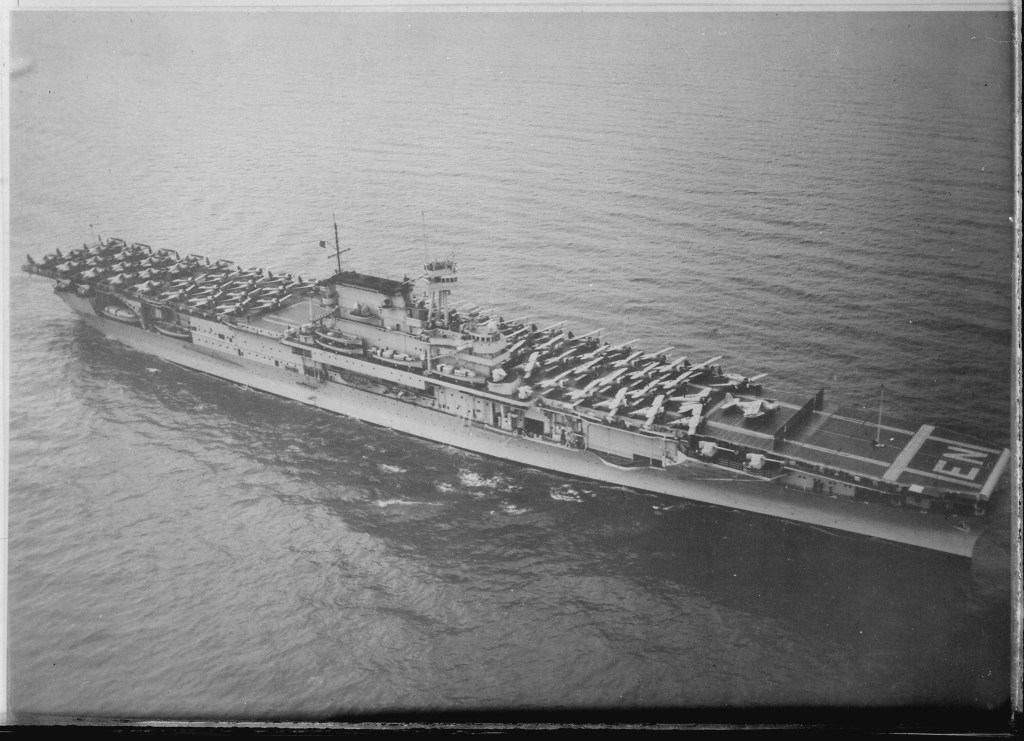
Shefqet Vërlaci, a bitter enemy of the exiled King Zog, was made the new Prime Minister of Albania. Zog had once been engaged to marry Vërlaci’s daughter but broke it off, an affront that Vërlaci had sworn to avenge. The new National Assembly voted to abrogate the constitution of 1928 and offer the Crown of Albania to Victor Emmanuel III of Italy. An Albanian constituent assembly voted in favor of a personal union with Italy and King Victor Emmanuel accepted the Albanian crown on April 16th. Albania ceased its membership in the League of Nations on April 12th due to the country’s incorporation into Italy.
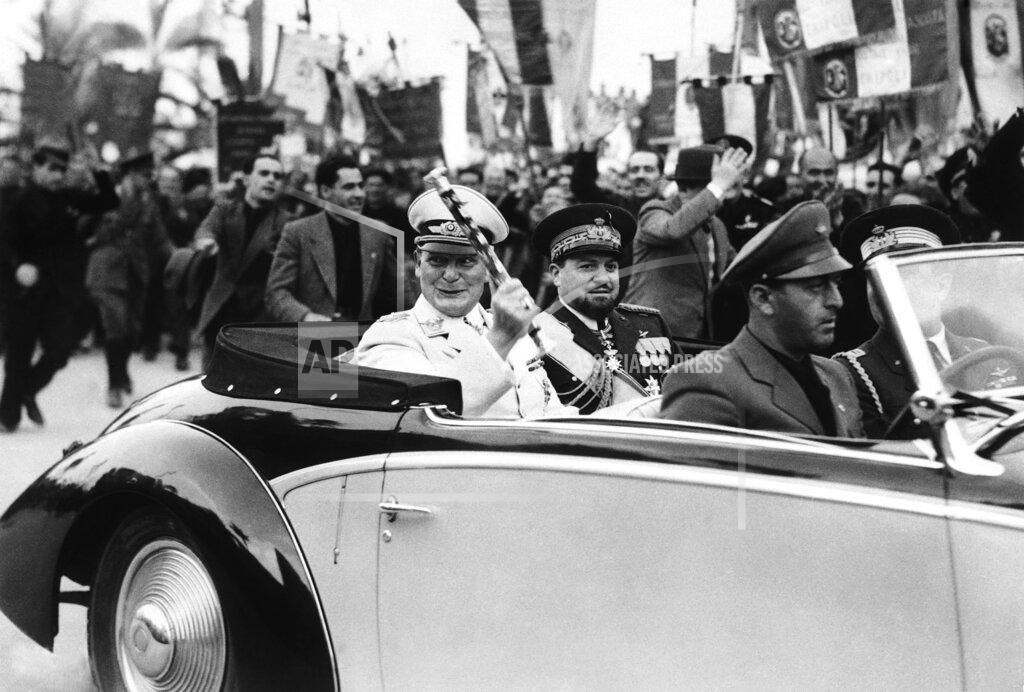
In Rome, where Premier Mussolini conferred with the commander of Italian troops in Spain on the date for their withdrawal-a point that is giving London concern — the Fascist Grand Council will meet today to accept an offer of the Albanian crown to King Victor Emmanuel. The offer was made by the Constituent Assembly in Tiranë.
Europe was comparatively hushed last night in anticipation of declarations to be made today by the leaders of the two great Western democracies. Prime Minister Chamberlain is expected to announce that Turkey is on the way into the Franco-British alliance at the same time that he proclaims Britain’s guarantee to Greece. Mr. Chamberlain is expected to announce that as a result of the Italian invasion of Albania the British Government has extended to Greece virtually the same guarantee given Poland — armed intervention against a clear threat to her independence.
It was hoped tonight that the negotiations with Turkey would have proceeded far enough by tomorrow afternoon to allow Mr. Chamberlain and Viscount Halifax, the Foreign Secretary, who will speak in the House of Lords, to announce that Turkey had agreed to give Greece a similar guarantee. Although it is by no means certain that the British will be in a position to announce final success tomorrow, the talks with Turkey have gone so favorably thus far that there is little doubt here that Turkey will be added to the barrier that Britain and France are fashioning against further aggression by Premier Benito Mussolini and Chancellor Adolf Hitler.
Simultaneously in France, where there are few signs of any war scare, Premier Daladier will declare that his country is ready to go along with Britain in guaranteeing the smaller nations against aggression
The Greek Government, however, was determined to remain neutral and placed its faith in the recent assurances from Italy. That it is the firm intention of the Greek Government to remain neutral in the event of war between European democracies and the Axis powers is a belief forced upon political observers here tonight. Britain may offer Greece military aid in the event of aggression, which seems to be taken for granted, and may even accompany such a gesture with further generosity, consisting of a loan to the tune of several million pounds, which is current rumor.
Nonetheless, Greece will not be drawn into a conflict if the government has anything to say about it, and, as it stands, the government, being a dictatorship, has something to say about it. When the Italians landed on the Albanian coast with a vast display of military might some panic spread among the Greek people. Since then, the Greek Government has issued communiqués to the effect that there need be no fears for Greece’s integrity. Greece is safe; there is no cause to worry-the government almost triumphantly announces this to be a fact. It appears now that this self-assurance and proud sense of security thus proclaimed are due to the Italian attitude rather than to the British.
Premier John Metaxas seems to be satisfied with the assurances given by Italy. A communiqué issued late last night, expressing Premier Benito Mussolini’s intention to leave Greece undisturbed, received the fullest prominence in the controlled press, and, indeed, editorial writers. were instructed to draw attention to its significance, while Britain’s support and friendly gesture went unmentioned. No comment was made upon Britain’s willingness to act as a protective power. During the day the Greek Premier telegraphed his thanks to Signor Mussolini for his reassurances.
The fact that the Italian attitude of peaceful intentions, not the British attitude, is regarded as the reason for Greece’s being at peace is enormously significant. In informed circles, in which the history of recent years lives on, the Greek position of sought-after neutrality during the World War to the detriment of the Allied cause is recalled. Considering Greece’s position as a maritime nation, neutrality is tantamount to siding against Britain in view of the fact that Greek neutrality robs Britain of necessary advantages in waging naval warfare.
Other Balkan States were not altogether calm. The Rumanian press attacked Hungary, charging she was increasing her troop concentrations at the border, and Bulgaria heard reports that Italy was considering setting up a Macedonian State that would include parts of Yugoslavia, Bulgaria and Greece.
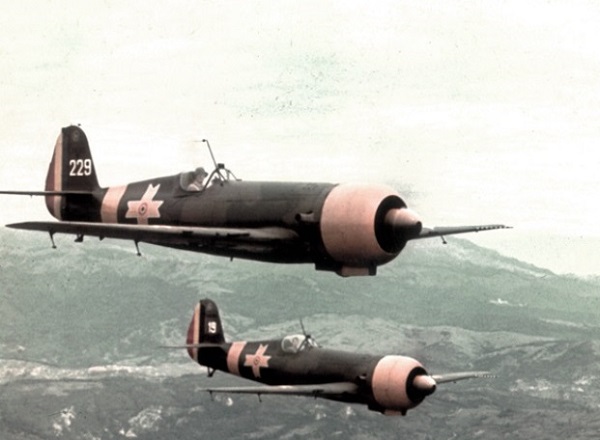
The Rumanian IAR-80 fighter makes its first flight. Work began on the IAR 80 prototype in late 1937, originally with an open cockpit and the 870 hp (650 kW) IAR K14-III C32 engine which was a licensed Gnome-Rhône 14K II Mistral Major. The prototype was completed slowly, and first took to the air this day in April 1939. Test flights of the prototype were impressive; the aircraft could reach 510 km/h (320 mph) at 4,000 m (13,000 ft), service ceiling of 11,000 m (36,000 ft) with the ability to climb to 5,000 m (16,000 ft) in 6 minutes, which was respectable at the time, though not up to the contemporary Supermarine Spitfire or Messerschmitt Bf 109 fighters. In comparison the PZL P.24E was almost 450 kg lighter, yet over 80 km/h slower with the same engine. The IAR 80 also proved to be enjoyable to fly and was maneuverable. However, over the course of the war, it became progressively outclassed.
Grigore Gafencu, Rumanian Foreign Minister, has arranged to leave Bucharest next Sunday for Berlin, where he will be the guest of Joachim von Ribbentrop, German Foreign Minister, next Tuesday and Wednesday. Afterward he will remain in the German capital for two days incognito, interviewing prominent persons, and attending the fiftieth birthday celebrations of Chancellor Adolf Hitler.
Prince Paul, Regent and uncle of King Peter, intervened today in the Serb-Croat dispute in an effort to unify Yugoslavia in the face of present grave international dangers. The Regent conferred with Dr. Ante Kosutitch, representative of the Croat leader, Dr. Vladimir Matchek, advocate of self-government for his people. Serbs seemed disposed to make concessions but questioned whether experimental changes should be made now.
Slovak Propaganda Minister Alexander Mach declared that Slovakia would pass antisemitic measures similar to Germany’s Nuremberg Laws.
Reports that Germany had made fresh demands on Poland were denied in both Berlin and Warsaw. The Germans invited the Poles to print the demands made last month to show that they were not exorbitant.
The Berlin newspaper Angriff accused President Roosevelt of being a warmonger and demanded that he answer three questions.:
“Is it true that war-mongering and war are the only means whereby you can hold your position?”
“Is it true that you see no other way of remaining in office than by stopping the mouths of your opponents, the armament industrialists, by giving them armament profits?”
“Is it true that your personal commitments and your personal circumstances and not the international situation are the reason for your infamous war agitation?”
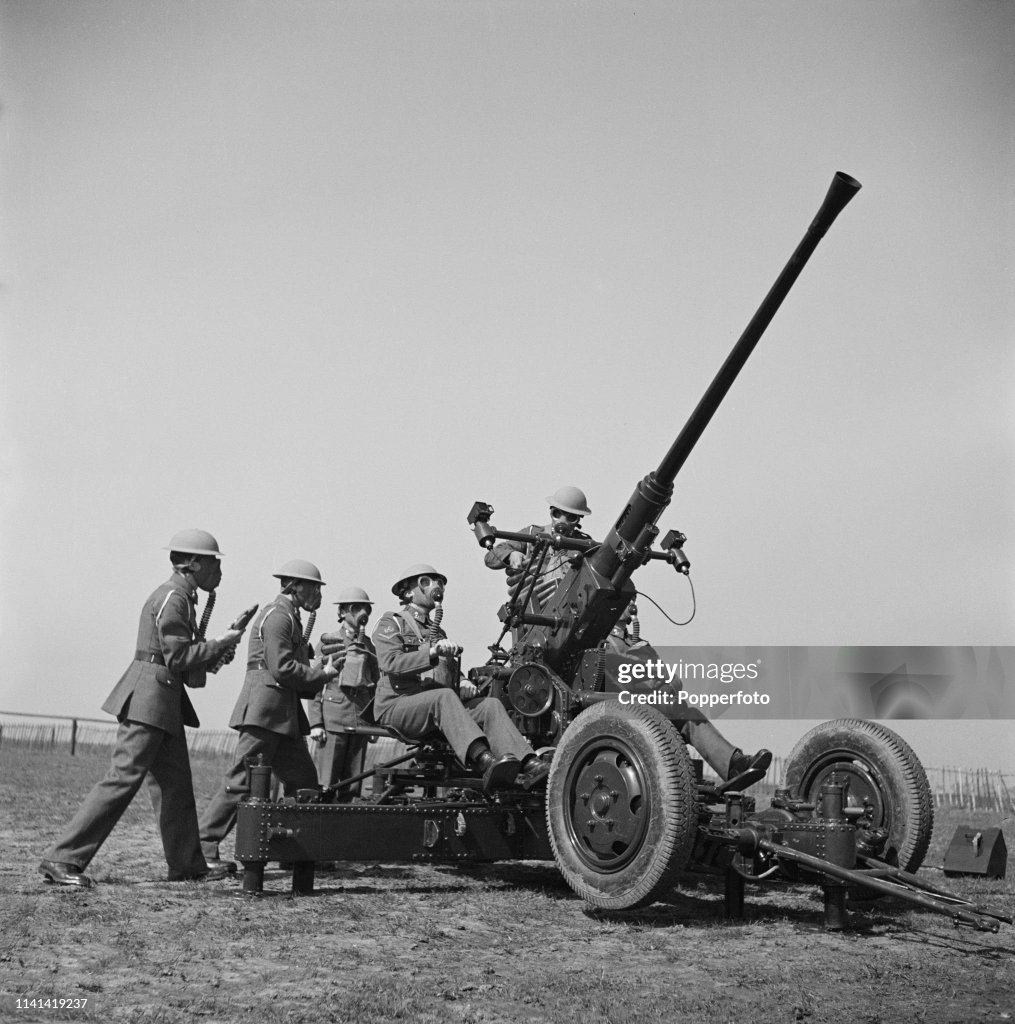
King George, Queen Elizabeth and their two daughters took part in air-raid practice today so they would know how to act if bombs start dropping in a war. The King and Queen, Princesses Margaret Rose and Elizabeth and the Duke and Duchess of Kent dashed to a bomb-proof shelter in a dungeon beneath one of Windsor Castle’s towers when the mock raid warning was sounded. The castle staff was on “wartime duty” throughout the day, with each member assigned to an emergency post. The castle’s anti-raid equipment includes a first-aid station in the servants’ quarters and a gas decontamination depot in the royal mews.
At a meeting in Cairo this evening, at which representatives of Arab countries, except Palestine, were present, British proposals to Palestine Arabs were again discussed. Every effort is being made to get the Palestine Arabs to accept them but thus far unsuccessfully. Yesterday, Dr. Chaim Weizmann, president of the Jewish Agency for Palestine, who flew here from Jerusalem for twenty-four hours, called on Aly Maher Pasha, chief of the Royal Cabinet, and Premier Mohammed Mahmoud Pasha. Dr. Weizmann proposed, in view of the critical international situation, that further discussions of the Palestine question be deferred with a temporary truce and maintenance of the status quo until world conditions were normal again.
It is expected the Egyptians will discuss Dr. Weizmann’s proposals with representatives of other Arab countries in addition to Palestine Arabs, but it is highly improbable that the suggestions will be accepted, especially by Palestine Arabs, who maintain that in view of the world situation there is the greatest likelihood that by pressing Britain now the Palestine problem will be settled in their favor since Britain cannot afford to antagonize the Arab world.
The tension abroad was reflected in New York, where underwriters decided to cease issuing quotations on cargoes bound for Germany and Italy or on ships of those countries and to advance other rates. Withdrawal of war risk insurance quotations on shipments to or from Italy or Germany and on shipments to any destination carried on Italian or German vessels and advances in war risk rates to other ports were announced last night by underwriters in New York, who expressed growing concern over the possibility of a general outbreak of war in Europe. They said that they would quote rates for Italian and German coverage only upon application, and that the rates in each instance would depend upon their judgment as to the likelihood that war might begin during the period the individual cargo is afloat.
The advances announced yesterday ranged from 100 to 200 percent from the increased levels that were established March 31, but rates to some ports were left unchanged. The underwriters said that with the tension in Europe growing daily more acute it was likely that new rates would be issued each day. Asked whether the levels announced last night would be raised or lowered today, the underwriters replied that in all probability further advances would be made but the extent of changes would depend upon the news from the capitals of Europe.
Today in Washington, President Roosevelt attended the funeral of Senator James Hamilton Lewis, conferred with Secretary Wallace on the plan to exchange surplus American commodities for strategic war materials and signed miscellaneous bills.
The Senate conducted the State funeral for Senator Lewis, which members of the House also attended.
The House passed the bill increasing the mortgage insurance authority of the Federal Housing Administration, heard a tribute to Speaker Bankhead on his sixty-fifth birthday and adjourned at 3:07 PM until noon tomorrow.
The Foreign Affairs Committee continued hearings on neutrality legislation, the Labor committee agreed to hold hearings on amendments to the National Labor Relations Act and a judiciary subcommittee heard army and navy officers endorse provisions of the Smith anti-alien and anti-sedition bill dealing with subversive propaganda among enlisted men.
The movement for repeal or modification of the U.S. Neutrality Act shows surprising strength at a House of Representatives Committee meeting. The United States has the economic power to prevent the outbreak of war anywhere in the world, Professor Charles G. Fenwick of Bryn Mawr College told the Foreign Affairs Committee today. He was testifying in favor of the Geyer resolution, a measure similar to the Thomas amendment in the Senate, which would empower the President, with the approval of Congress, to lay embargoes against aggressors and treaty-breakers while aiding the victims. Dr. Fenwick conceded that the preventive power of this country’s economic weight would have been greater if exercised a few years ago, but he contended that even at this late stage the legislative threat of its use to curb aggression would be a powerful deterrent to any nation about to embark on an imperialistic adventure.
The House committee was told by Dr. Fenwick, who is a writer and teacher of international and constitutional law, how, in 1914, he prepared a memorandum on neutrality laws for the Senate Foreign Relations Committee. He was a delegate to the Conference for the Maintenance of Peace at Buenos Aires in 1936, and to the Pan-American Conference held at Lima last December. The committee was told that any legislation enacted should be called the “Self-Defense Act,” instead of a Neutrality Act or a Peace Act, as Senator Pittman would designate his proposal. Dr. Fenwick emphasized the practical side of the emergency which confronts the world and, therefore, this country and asked the members to think in terms of what would best serve the peace and security of this country.
The campaign to clean up Kansas City broadened today with the arrest of thirteen men, seven of them in Kansas City, on charges of violating the federal narcotics laws. Among those arrested here was O. Jack Colburn, a Kansas City policeman, and several known to be minor members of the Pendergast Democratic machine. H. H. Anslinger, Federal Narcotics Commissioner, said here that the long-continued investigation which led to the arrests had shown that Kansas City was the center of narcotics distributors in the Middle West.
While agents of the Treasury Department’s Bureau of Narcotics were making the arrests a subpoena was issued as the result of investigations of other Federal agents for Edward L. Schneider, secretary-treasurer of the Ready Mixed Concrete Company, to appear before the Federal grand jury on Monday, when it is scheduled to reconvene. Thomas J. Pendergast, head of the Democratic organization, who is under indictment for violation of the income tax law for alleged concealment of receipt of payments totaling $315,000 for his part in effecting a compromise in the Missouri insurance case, is president of this company. The books of the company came into possession of the investigators last week.
Temporarily the narcotics arrests overshadowed the indictment of Pendergast in local interest. Mr. Anslinger was reluctant to give details of the investigation, but a spokesman designated by him and Federal Attorney Maurice M. Milligan said that heroin was virtually the only drug handled by the Kansas City distributors. He estimated this traffic in heroin, as at least $1,000,000 a month or $12,000,000 a year. Kansas City, he said, was the distribution point for more than half the area of the United States, handling the traffic for the Middle West, the Southwest, the Northwest and the Pacific Coast.
Wintry weather descended on the Middle West today and new low records for the date were made in several cities. Chicago’s 21 degrees was 7 degrees colder than April 12 of 1900, the previous champion. Louisville’s 27 took 5 degrees off the record for the day. Cleveland’s 21 and Detroit’s 22 equaled records. Communities in Wisconsin, Minnesota and South Dakota had temperatures down to 8. Since yesterday there has been snow in Ohio, Kansas, Nebraska, Iowa, Missouri, flurries in Chicago and Northern Illinois and in other Great Lakes States. Freezing temperatures extended as far South as the Texas Panhandle, also into Northern Oklahoma, Northern Arkansas and Northwestern Tennessee.
Leon Trotsky, exiled Communist who once headed the Red Army, and Mexico’s famous mural painter, Diego Rivera, reached a parting of the ways today. Mr. Trotsky decided to move out of Señor Rivera’s house, where the exile has lived since he came from Norway in 1937, and Señor Rivera announced his resignation from the Fourth International, which Mr. Trotsky heads. The split grew out of a letter that Señor Rivera wrote to a French poet, André Breton, in Paris.
Señor Rivera said that in his letter he outlined his views “on the general situation of the Leftist movement in the world, the social role of art and the position of artists in the revolutionary movement.” He also made some “personal allusions” to Mr. Trotsky, which the latter resented. Mr. Trotsky, a bitter opponent of the present Soviet regime, replied with remarks that Señor Rivera considered “derogatory and unacceptable.” The result, the mural painter declared, was a conversation in which they ended their friendship.
The Chinese military spokesman declined today to describe the Chinese attacks against Japanese positions on almost all war fronts as a general counter-offensive. “I cannot say,” he replied in response to a query, “whether a general drive is under way.” Reports from the fronts, however, indicated Chinese assaults of more than ordinary intensity at many places.
Kaifeng is the focal point of the hostilities in Eastern Honan Province. The Chinese reported continuing to besiege the former Honan capital from the south after sweeping up to the walls and entering the suburbs yesterday. A severe battle was said to be going on between the Japanese garrison and the attackers.
Chinese guerrillas were reported to be active between Kaifeng and Sinsiang. The military spokesman described these activities and the attack on Kaifeng as a minor operation designed to interfere with the construction of a new railway between the two cities. Chinese guerrillas also continued their offensive tactics in Hupeh. Province. On the Han River front, the Chinese are resisting Japanese units around Chungsiang, Kiukow and Yokiakow and northeast of these points, besieging Yingshan and a Japanese blockhouse along the Yingshan-Sinyang highway.
In Kiangsi Province the Chinese admit the abandonment of Kaoan after its recapture Saturday, saying the city had been given up for the second time in the face of an intense counter-attack by reinforced Japanese troops. The spokesman emphasized, however, that the temporary recapture of Kaoan had caused the Japanese to retain a division in the Kaoan-Fengsin-Nanchang area. which was to have been used in the push toward Changsha from Wuning. The Wuning drive was said to have been indefinitely halted. Shansi Province press reports describing the Chinese drive in the southwest corner of the province say Chinese columns are threatening Anyi and Fushun.
Japanese Army reports said 2,000 Chinese troops attacked the south gate of Kaifeng before dawn yesterday but were thrown back by Japanese soldiers after several hours of hard fighting.
In Southern Shantung Province “one of the bloodiest battles of the war” occurred last Monday, fifteen miles east of Linyi, near the Taierhchwang battlefield, according to Japanese Army statements. They said Japanese attacked 2,000 Chinese Eighth Route Army soldiers who were firmly entrenched and dislodged them after ten hours of fighting.
Japanese said the battle included an hour of exchange of hand grenade fire, thirty-four Japanese bayonet charges and thirty Chinese bayonet counter charges. The Japanese said the Chinese left 700 bodies on the field while only ten Japanese were killed. When asked how the Japanese could engage in sixty-four bayonet charges and lose only ten men, the army spokesman replied: “That’s what I’m wondering. I only know what the official dispatches say.”
Dow Jones Industrial Average: 126.15 (+2.40).
Born:
Alan Ayckbourn, playwright, in Hampstead, London, England, United Kingdom.
Glenn Bass, AFL split end and flanker (AFL Champions-Buffalo, 1964; Buffalo Bills, Houston Oilers), in Wilson, North Carolina.
Naval Construction:
The U.S. Navy Gleaves-class destroyer USS Eberle (DD-430) is laid down by the Bath Iron Works (Bath, Maine, U.S.A.).
The Kriegsmarine (German Navy) Type 35 torpedo boat T12 is launched by DeSchiMAG, Bremen (werk 939).
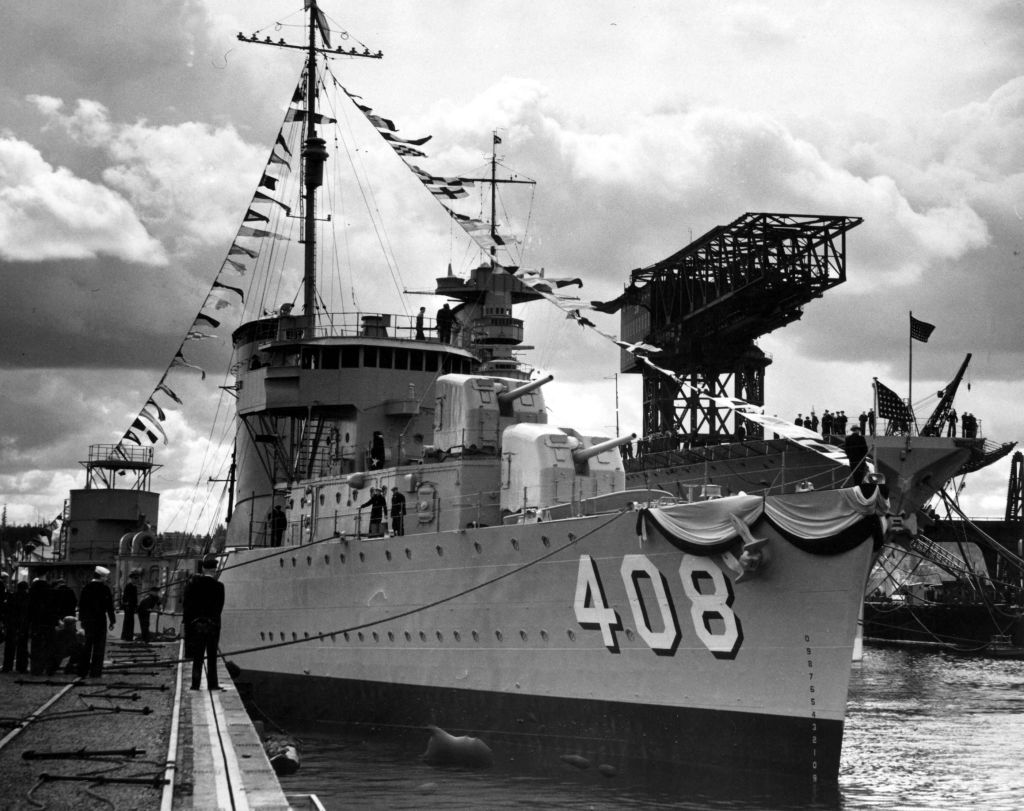
The U.S. Navy Benham-class destroyer USS Wilson (DD-408) is launched by the Puget Sound Navy Yard (Bremerton, Washington, U.S.A.).
The Armada de la República Argentina (Argentine Navy) light (training) cruiser ARA La Argentina (C-3) is commissioned.

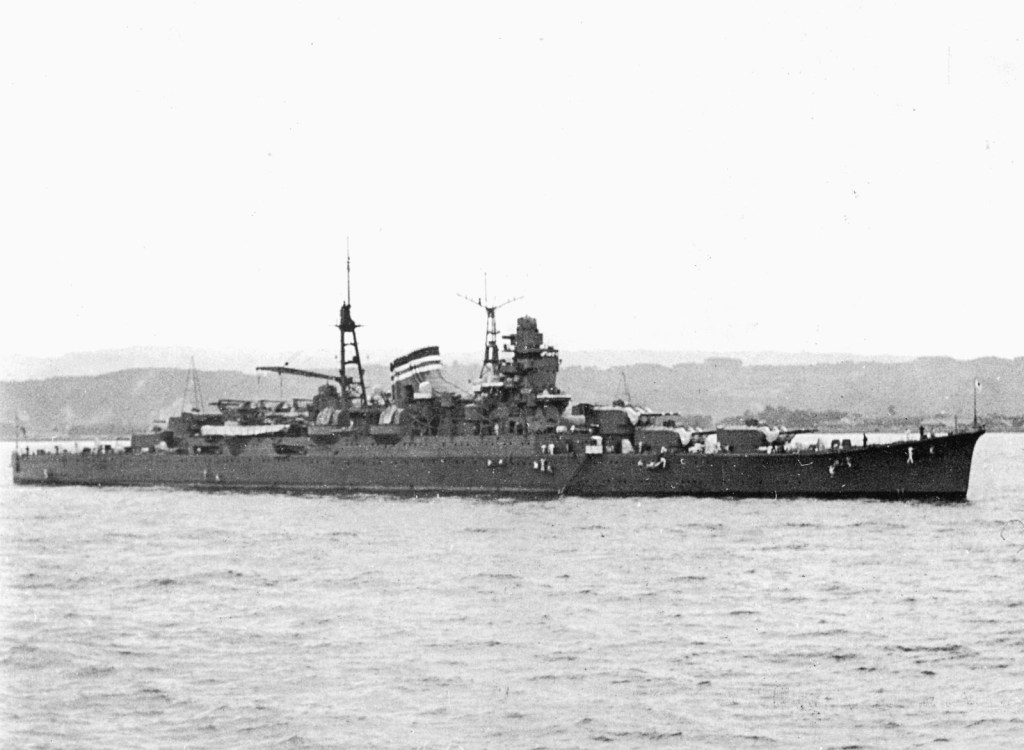
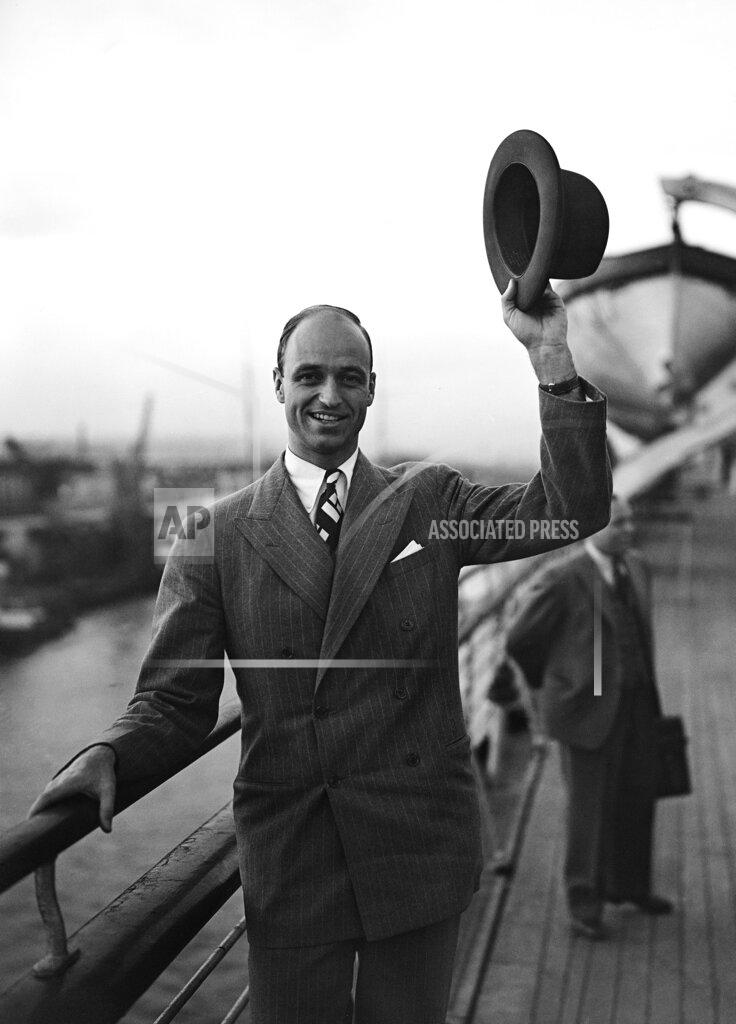
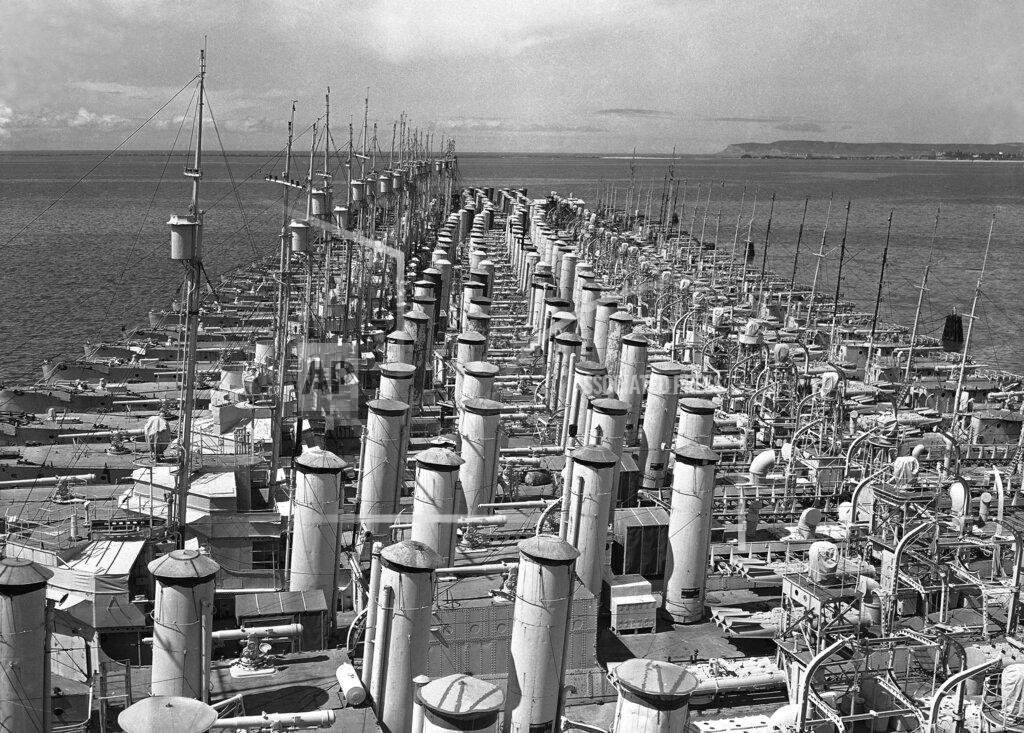
[Ed: Many of these old “Four-Pipers” will end up in British and Commonwealth service after the destroyer-for-bases deal in 1940.]
 History Diaries