On April 12, 1964, three battalions of Việt Cộng invaded Kiên Long, quickly overrunning the entire district. Upon gaining control of Kiên Long, they executed the district chief and his family. The Army of the Republic of Vietnam (ARVN), augmented by U.S. air support, responded to the invasion in force. Although the Việt Cộng were operating in the daytime, they were able to hold their own against both the ARVN and the American aircraft. After eight days of fierce combat in which heavy casualties were inflicted on both sides, the Việt Cộng abandoned the district and were able to withdraw from Kiên Long in an orderly fashion.
Both the ARVN and Việt Cộng took heavy casualties in the fight for Kiên Long. Nationwide, the ARVN took one thousand casualties (200 dead, 660 wounded, and 140 missing) from April 12 to April 20; a quarter of these were suffered at Kiên Long. Additionally, the battle held major strategic significance as it marked one of the first times that large numbers of Việt Cộng operated simultaneously and openly in broad daylight.
The hope in Saigon was that continued rapid countermeasures might make the Việt Cộng’s new aggressiveness too costly to maintain on its present scale. However, the rainy season is due to begin in about a month. It is expected seriously to impair the operations of helicopters and troop transport planes, “which permitted the quick response.
In today’s action government forces reportedly quickly recovered Kiên Long, and by late afternoon the Việt Cộng forces were reported fleeing under strafing attacks by government aircraft. Preliminary reports said that 30 Việt Cộng dead had been counted.
While the battle was raging in Chương Thiện Province, South Vietnam’s Premier, Major General Nguyễn Khánh, was saying at a news conference in Saigon that rumors of friction and impending resignations from his government were completely unfounded. With the Premier were three of five Cabinet members who were reported to have been at odds with General Khánh in recent weeks.
The display of solidarity was viewed here as an indication that Premier Khánh had managed to smooth over, at least temporarily, strains that were known to have developed in his government of two months and 12 days. General Khánh seized power January 30 from Major General Dương Văn Minh, who overthrew the regime of President Ngô Đình Diệm last November.
Despite the rise in Việt Cộng military activity, Premier Khánh said today that South Vietnam did not yet need assistance from the Southeast Asia Treaty Organization. He repeated with emphasis the words “not yet.” The foreign ministers of the SEATO nations will open a three‐day meeting in Manila tomorrow. The increasingly powerful Communist insurgency in South Vietnam will be one of the major topics. At his news conference, General Khánh again rejected President de Gaulle’s proposal that Vietnam be neutralized. General Khánh asked what the French leader would have said if, in 1943, someone had suggested that France be neutralized.
Premier Khanh said he expected that two‐thirds of South Vietnam would be sufficiently secure to permit elections in four or six months. The three Việt Cộng attacks in the last week appeared to be a Communist attempt to dash this hope. Five days ago, two Việt Cộng companies smashed a government militia training school 100 yards off the main highway, 15 miles southwest of Saigon, inflicting 91 casualties and seizing 115 weapons. Three days ago, a Việt Cộng battalion staged a bold daylight ambush of a battalion of government troops on a road 50 miles southwest of Saigon.
Infiltrators have revived a long‐dormant effort to re‐establish Quảng Ngãi Province of South Vietnam as a political and military enclave of the Communists. While the large military engagements seem to be concentrated in the critical Mekong Delta 350 miles to the south, teams trained in North Vietnam are working with increasing boldness to mobilize Communist sentiment and military organization, which existed here in the early years of the Việt Minh movement. The Việt Minh, under Hồ Chí Minh, led the war that ousted the French from Indochina in 1959. Hồ Chí Minh, is said to have lived in the Quảng Ngãi village of Vĩnh Tuy for nine months in 1949 and the province was one of his main strongholds.
Through a military rule, the Ngô Đình Diệm regime brought order at least to the lowlands where the vast majority of Quảng Ngãi’s 650,000 persons live. With the collapse of the Diệm provincial administration after the coup last November, Communist agents started emerging from their mountain hideouts and can now move virtually at will across the coastal plain. In the last month, the Saigon-Huế railroad track along coast has been blown up six times in Quảng Ngãi. This week terrorists destroyed a new road bridge a couple of miles from Đức Phổ district headquarters. It had been completed by Government engineers supported by American aid only day before.
Brazil’s supreme revolutionary command indicated today that a break in diplomatic relations with Cuba was imminent. General Artur da Costa e Silva, War Minister, declared that a break with Cuba was demanded by public opinion. He expressed the conviction of the revolutionary command that the new government would “seek to carry out this aspiration of the people.” The presidents of several state legislatures, in a meeting at São Paulo, urged the new government to break relations with Cuba. The new Foreign Minister, Vasco Leitao da Cunha, had already announced: “Brazil will not permit Communism in its territory, and will not make deals with Communism in the Americas.”
Brazil’s new President, General Humberto Castelo Branco, has given assurances that the Government will be turned over to a freely elected successor on January 31, 1966. General Castelo Branco was chosen by Congress in Brasilia yesterday to finish out the term of the ousted President, João Goulart, ending in January, 1966. The revolutionary command, acting to consolidate Brazil’s new regime, announced that 122 officers, including 16 army and air force generals and five admirals, had been taken off the active duty lists. Officially they were transferred to the reserve. This is part of a housecleaning to dispose of the forces that rallied to President Goulart before his overthrow and flight to Uruguay.
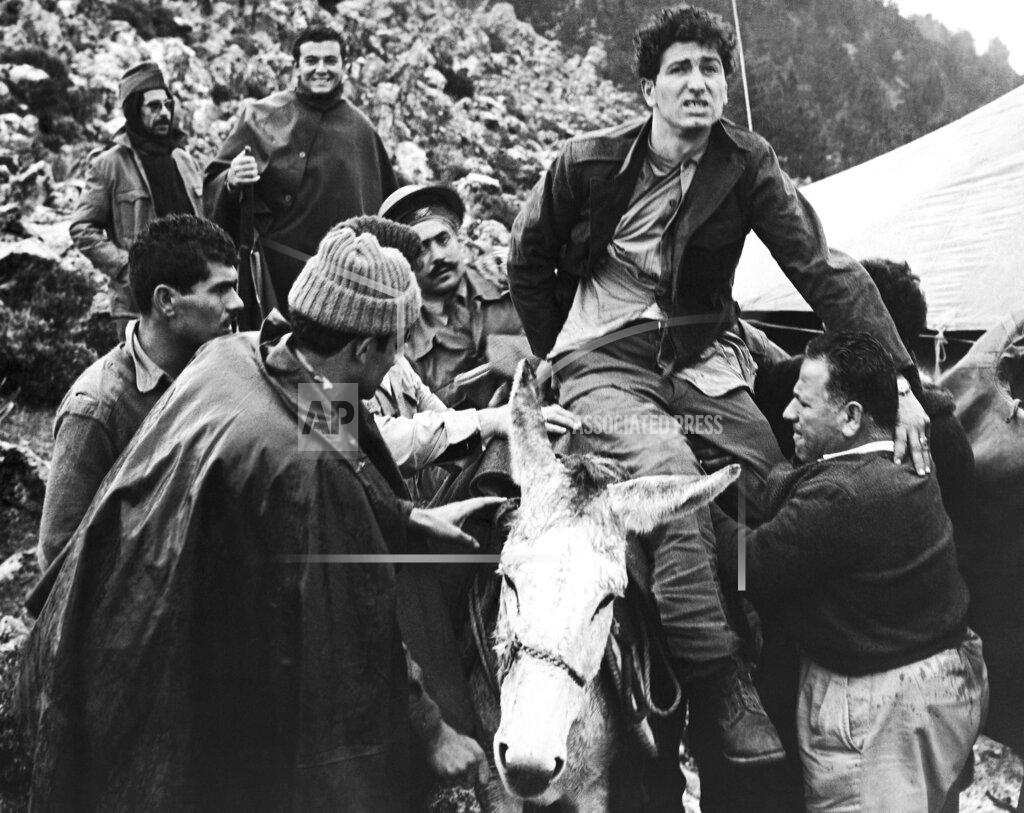
Firing between Greek and Turkish Cypriote mountain positions high above the Kyrenia Pass entered its second day today. Twenty‐five Turkish Cypriote fighters on one peak exchanged sporadic but heavy fire with advance elements of an estimated total of 500 Greek Cypriote fighters on another peak 300 yards away. The firing, which began yesterday, was resumed early today, shortly before Dr. Ralph J. Bunche, United Nations Under Secretary for Special Political Affairs, ended his three-day mission to Cyprus. Dr. Bunche termed the Cyprus conflict “an incoherent war.” The principal aim of the United Nations peace‐keeping force, he said, is to “get a full hold on the situation” and halt the fighting.
In the Kyrenia Pass area, Major Patrick Tremblay, commander of a Canadian United Nations company, said the Greek Cypriote build‐up on the mountain top was “a major concentration” for an attack on the Turkish Cypriote positions guarding the pass. The road from Nicosia, the capital, to Kyrenia, a port 12 miles to the north, runs through the pass. The Turkish Cypriotes have controlled the position since the eruption of intercommunal violence in late December over Archbishop Makarios’s proposals to amend the Cyprus Constitution. Major Tremblay described the shooting of the last two days as preliminary “harassing fire.” Though there has been considerable firing, the Greek Cypriotes have yet to advance on the Turkish Cypriote positions among the line of trees and rocky crags of the range.
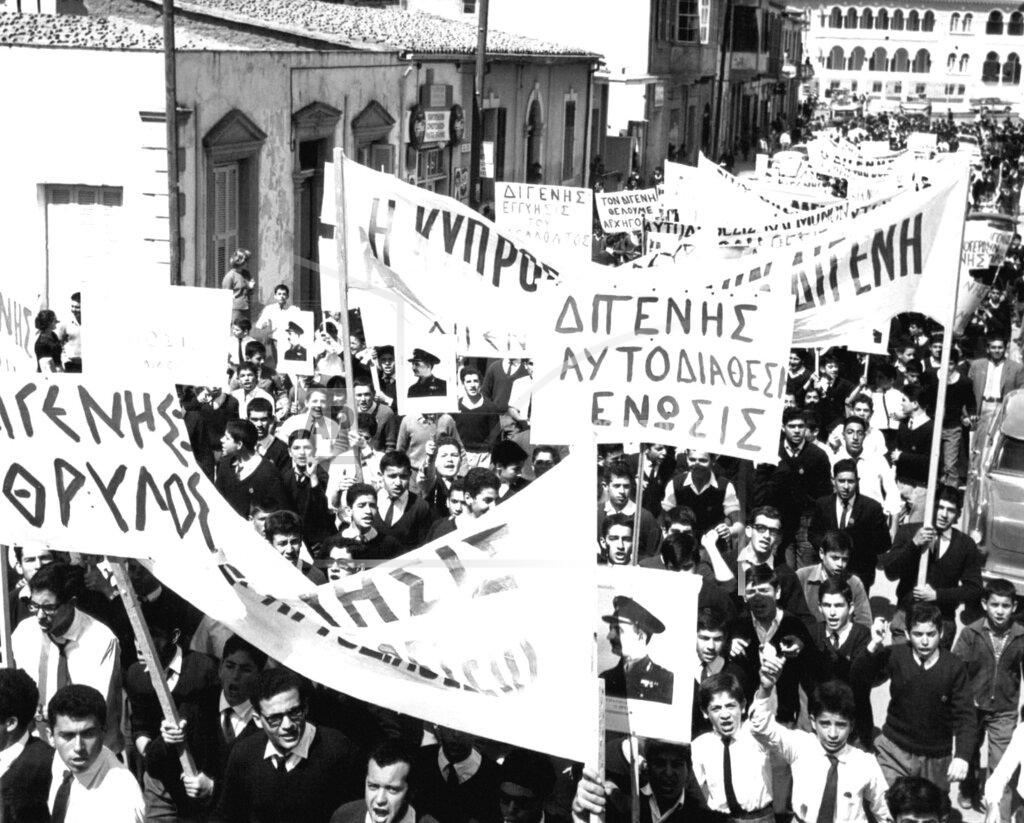
Ankara is turning on Athens and Washington a rising anger and resentment over the course of the Cyprus dispute. The feeling in Turkey is that both Greece and the United States have turned against Turkey in a matter of great importance and must now share the cost of Turkey’s loss of prestige. Any thought of dealing directly with President Makarios of Cyprus has been abandoned. Premier Ismet Inonu has been shaken by the all‐out support Athens is now giving Archbishop Makarios and its harsh tone of opposition to Turkey. Mr. Inonu feels that Athens has become increasingly hostile since the recent elections, which brought George Papandreou to power as premier. At the time the Cyprus crisis erupted with fighting between Greek and Turkish Cypriotes last December, an invasion of Cyprus by Turkish forces to defend the Turkish Cypriote minority seemed a possibility.
Now, however, with a United Nations peace‐keeping force on the island, Turks tend to agree that it is too late to invade Cyprus unless the Turkish garrison of 650 troops stationed there under a 1960 treaty is attacked. This situation has evolved at a time when the idea of self-determination for Cyprus is reported finding rising support in Western quarters. Self‐determination would raise the possibility of enosis, or union with Greece, which the Turkish Cypriote minority bitterly opposes. Turkey favors partition of the island, a solution opposed by Greece.
Soviet Premier Khrushchev pledged the Soviet Union today to a policy of strict respect for the equality of all the members, large or small, of the Communist community. He charged that the Chinese Communist leaders, by contrast, claimed a “special role” in the movement and sought to impose their will on other Communist countries and parties as Stalin had done. Mr. Khrushchev made his statement in a radio and television report to the nation. Its subject was his 10‐day visit to Hungary. He returned last night. Wearing a dark suit, white shirt and conservative tie, the Premier read his text carefully and with deliberate solemnity. His tone was moderate and free of the pyrotechnics of most of his improvised speeches.
He was seen and heard simultaneously by viewers in 16 other European countries, including all the Communist states of Eastern Europe except Rumania and Albania. There was no official explanation why Rumania, which has been playing the role of a mediator in the Moscow‐Peking conflict, did not receive the telecast. Albania is an ally of the Chinese and has suspended relations with Moscow. The fact that Mr. Khrushchev chose to make equality within the Communist bloc his principal theme was regarded as significant. The Soviet Union is making an almost desperate effort to win the support of the largest possible number of foreign Communist parties for what Mr. Khrushchev called a “resolute rebuff” to the Chinese Communists.
The military government in Burma has achieved its first major breakthrough in a campaign to quell ethnic and Communist insurrections that have troubled the country for more than 15 years. Western diplomats here report that a truce between Ne Win, head of Burma’s Revolutionary Council, and Karen rebels led by Saw Hunter Thamwe could become a pattern for ending some of the other rebellions. Although the truce agreement was arranged last month, details of the pact have reached the outside world slowly. According to reports reaching Washington, the truce has brought fighting in the Karen state to a virtual halt for the first time in more than 15 years. The Karens are estimated to total about 10 percent of the national population of more than 21 million.
Belgian doctors, on strike since April 1, were returning to hospital posts by the hundreds tonight in response to a mobilization order issued by the government. More than 1,000 doctors donned military uniforms in response to Premier Theo Lefevre’s move at dawn today to get the bulk of Belgium’s 10,000 doctors back on the job. The doctors in uniform were among 3,600 who are army reservists. The reservists must answer the draft or face harsh penalties. Also covered in the government order are 3,000 non-reservists assigned to public or private hospitals. The order to them was based on a 1948 law that lists medical care as a vital service subject to Government control during an emergency.
The civilian doctors could evade the mobilization by resigning their membership in the national medical society. However, resignation would prevent them from practicing medicine in Belgium without licenses obtainable at the discretion of the government. Should they merely ignore the summons, they would be subject to a $2,000 fine and six months in prison.
The course of the U.S. Senate civil rights debate this week waits on Everett McKinley Dirksen of Illinois, the Republican leader. Senator Dirksen has said he will disclose on Tuesday or Wednesday his considered position on Title VII of the House-passed legislation. This title would outlaw employment discrimination by unions or companies in interstate commerce. The Dirksen position could well decide the fate of Title VII. In fact, the outlook for the entire bill may be significantly affected by the maneuvering over the fair employment section.
Of all the titles in the bill, this has the most opposition in the Senate. A majority of the Senate’s 33 Republicans would just as soon see it out of the legislation entirely, and some border and Western Democrats agree. Thus the inclusion of the title as it stands could well jeopardize the possibility of obtaining the necessary two‐thirds vote to close debate on the entire bill. A leading Southern opponent, Senator John Stennis, Democrat of Mississippi, said in a radio interview today that as long as the employment title was in, “they do not have the votes to impose closure on us and pass that bill.” Mr. Stennis went on to hint that the Southerners might even oppose an amendment to delete the title on the ground that such a change would make the bill as a whole easier to pass. He said they would have to consider the proposition of voting to remove what was “really our best chance to defeat it.”
Last week Mr. Dirksen put to a Republican meeting some drastic amendments to Title VII The two most important would require the proposed new Federal commission to defer to any state fair employment agency and would make individuals rather than the commission sue over any discrimination it could not end by mediation. In the opinion of some experts, these two changes would effectively make Title VII a voluntary affair, without the force of meaningful law. Some said it would be more candid to kill the title entirely. Mr. Dirksen, after hearing protests from some liberal Republicans, said he would reconsider his amendments and propose them in new form at a party session this week.
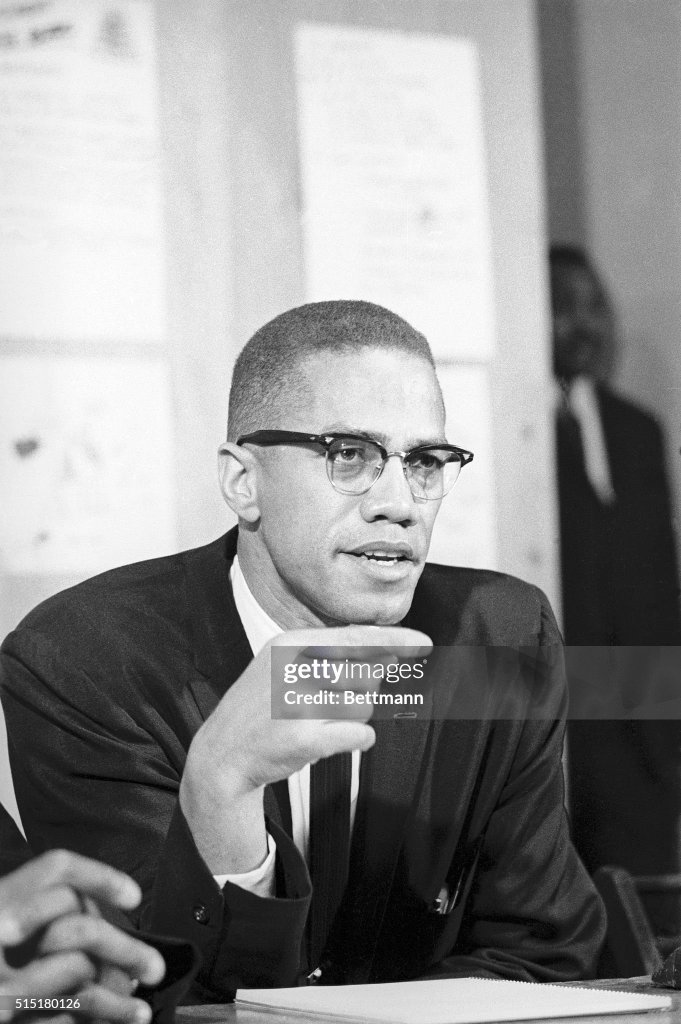
The New York State branches of the National Association for the Advancement of Colored People will stage a statewide demonstration on May 18, including picketing, boycotts and sit‐ins, to protest racial imbalances in schools. The N.A.A.C.P. said yesterday that the date for the one‐day demonstration had been selected to coincide with the 10th anniversary of the May 17, 1954, Supreme Court decision that barred school segregation. May 18 was chosen because May 17 is a Sunday and schools and most businesses will be closed. The court held that all segregation in public schools is “inherently unequal” and that all Negroes barred from attending public schools with white pupils are denied equal protection of the law, as guaranteed by the 14th Amendment.
Dr. Eugene T. Reed, N.A.A.C.P. state president, said various protest techniques would be used at the discretion of each of the 60 branches in the state. “In some cases, it may be a boycott; in others, we may picket the offices of the school board,” Dr. Reed said at a news conference following the close of a two‐day regional conference at the New Yorker Hotel.
Meanwhile a split in the ranks of the Congress of Racial Equality threatens to cause new defections of local chapters throughout the nation. Leaders of dissident CORE groups indicate they are dissatisfied with the tactics of the national office and may turn to ultra‐militant groups for support. In further reference to the N.A.A.C.P. protest, Dr. Reed said he was not prepared to say what form the demonstration would take here on May 18. He noted that the public school system had been boycotted twice by civil rights groups earlier this year.
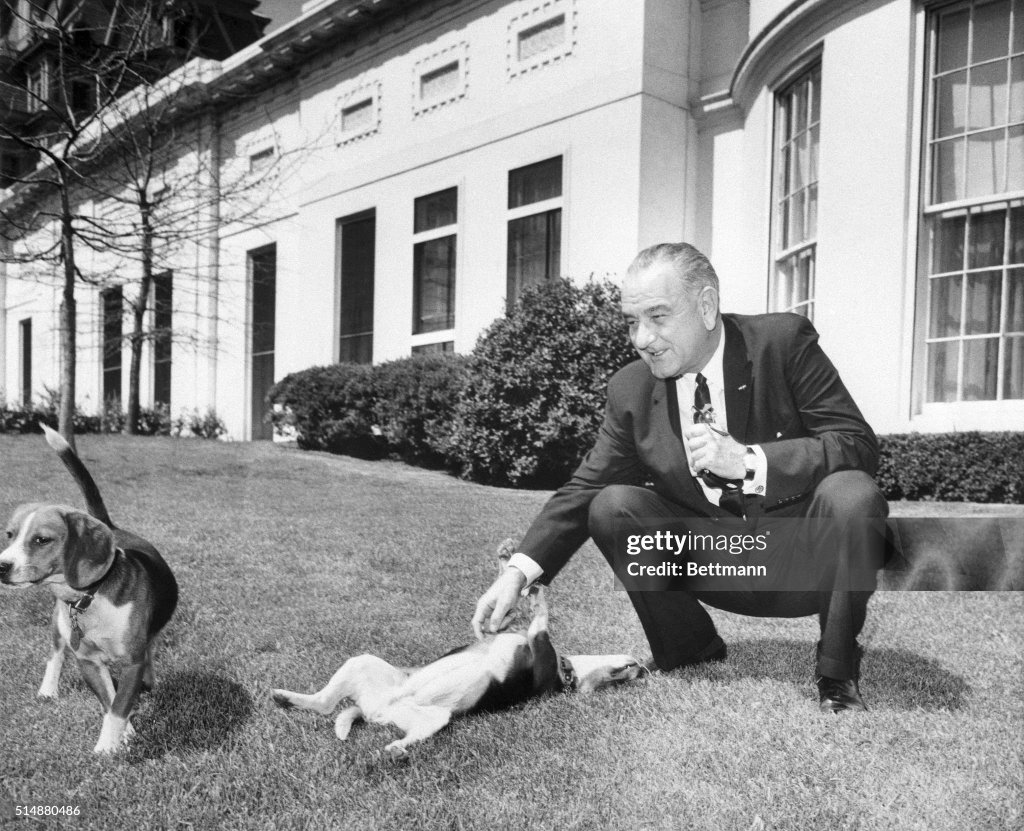
U.S. President Lyndon Johnson took advantage of the sunny weather today to stroll leisurely around the White House grounds and then thrill scores of tourists by shaking their hands. The tourists had crowded around the southeast gate on East Executive Avenue and let out a whoop when they saw the President. Mr. Johnson responded with a smile and an enthusiastic wave, then walked to the crowd and started shaking eager hands thrust between the iron bars. Yesterday the President had ordered the gates opened and had conducted a group of sightseers around the White House grounds. The gates remained closed today.
The handshaking took place shortly after the President returned from church services. He went with Mrs. Johnson, their daughter Lynda Bird, Secretary of Defense Robert S. McNamara and Mrs. McNamara to St. Mark’s Episcopal Church. After the service, the Johnsons and the McNamaras went to the parish hall for a coffee hour with members of the congregation. Earlier the police and Secret Service agents searched the basement of the church after a report that prowlers had been seen there.
A still secret paper prepared by the National Security Council early in 1950 stood at the center of the Truman‐MacArthur dispute over the conduct of the Korean war. This smoldering controversy has been revived since the death of General of the Army Douglas MacArthur and the publication of two interviews that he is said to have given in 1954. The paper, known simply as NSC‐68, prescribed a broad basic strategy for the United States in international relations, and particularly with respect to the Soviet Union. It indicated a policy of bold aggressiveness under certain circumstances, and of caution and restraint under others. NSC‐68 was formally initialed by President Truman as a basic guide to United States policy in April, approximately 60 days before the Communist North Korean Army stormed southward across the 38th parallel. The Administration’s reaction to that crisis was formed almost entirely within the context of the Security Council paper.
Its relevance to the dismissal of General MacArthur from his command and to the bitter frustration that he later expressed lay chiefly in the prohibitions that it imposed on his wish “to carry the war to the enemy.” For under the strategic concept of the National Security Council paper NSC‐68, Korea was but one among several highly flammable danger spots around the globe then threatening the non‐Communist world’s security. To President Truman and other leaders of his Administration in Washington, the fear that the Korean struggle might ignite a catastrophic third world war was equally as great as the fear that United States forces might be pushed off the Korean peninsula.
A task of major proportions confronts the defense industry in converting to production for peace, according to a group of economists who have been studying the problem for Government and business. But such conversion offers the country a “tremendous opportunity” to strengthen long-term economic growth, the investigators report. Conversion of defense industry resources to peacetime pursuits is expected to be accelerated as national security needs are fulfilled and international tensions ease. Thus, one of the investigators has emphasized the need to start discussions among Government agencies and business and labor groups to work out programs for an orderly transition.
The group of economists includes Archibald S. Alexander, who is in charge of the Arms Control and Disarmament Agency’s economic programs; Richard Nelson of the Rand Corporation, a specialist in research and development analysis, and Dr. Murray L. Weidenbaum, senior economist of the Stanford Research Institute. Their findings are set forth in a report entitled “Defense Conversion Potentials,” which has been submitted to the Defense Department by Dr. Weidenbaurn.
The economists say that the problem of conversion has been magnified by changes within the defense industry. During the mid‐fifties defense procurement shifted from such automotive and ordnance equipment as tanks, trucks and munitions, which was produced largely in the upper Midwest, to aerospace and electronic systems, on which East and West Coast companies have concentrated. Then again, in the last six years, the pattern of defense procurement changed. A rising share of prime contracts went to new research and development and production companies along the Gulf Coast instead of to the aerospace companies.
“The People,” a London tabloid newspaper, broke a story titled “The Biggest Sports Scandal of the Century”, naming three First Division players of The Football League as having been party to the fixing of soccer football matches while they had played for Sheffield Wednesday F.C. in 1962. According to the story, Peter Swan, Tony Kay and David “Bronco” Layne had bet £50 that their team would lose to Ipswich Town F.C. on December 1, 1962, and made a £100 profit when Ipswich won, 2–0. The “Sheffield Wednesday trio” would be among 10 players sentenced to prison in 1965, and would serve four months’ incarceration.
Baseball’s greatest status symbol, the practice of having the President of the United States throw out the first ball, will be on display in Washington this afternoon, weather permitting, and another season will be under way. President Johnson will be the 10th chief executive to perform this modest but captivating ceremony since 1910, when William Howard Taft began it at Griffith Stadium. This has turned the season’s first baseball game into a social occasion of considerable prestige in the nation’s capital and has prompted the American League to let the Senators open the campaign a day early to get undiluted attention.
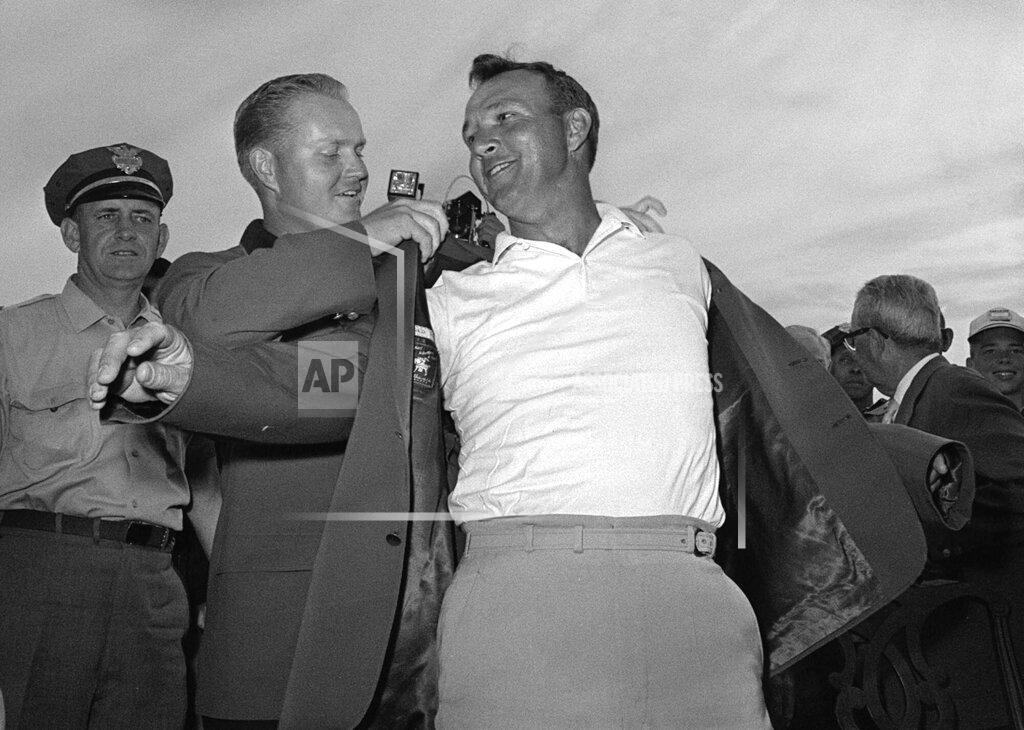
28th U.S. Masters Tournament, Augusta National GC: Arnold Palmer at 276 wins by 6 shots from Dave Marr and Jack Nicklaus to become the first 4-time winner of the Masters; his 7th and final major victory
Born:
Amy Ray, American folk-rock singer and songwriter (Indigo Girls – “Closer to Fine”), in Decatur, Georgia.
Jerry Goff, MLB catcher (Montreal Expos, Pittsburgh Pirates, Houston Astros), in San Rafael, California.
Ed Konopasek, NFL tackle (Green Bay Packers), in Gary, Indiana.
Perry Williams, NFL defensive back (New England Patriots), in Cartersville, Georgia.
Todd Black, NFL wide receiver (Chicago Bears), in Fort Dodge, Iowa.
Died:
Wallace “Bud” Werner, 28, American skier, and Barbara Henneberger, 23, West German Olympic ski racer, were both killed in an avalanche near Samedan in Switzerland, where they were part of a group of 31 skiers participating in the filming of Ski-Fascination.
Evert Willem Beth, 56, Dutch mathematician and philosopher (Significs Group).


 History Diaries