Hungary announced its withdrawal from the League of Nations. Hungary withdraws from the League of Nations, under influence of its recent alliance with Germany. On 3 May Hungary will institute severe anti-Semitic laws, similar to those in Germany.
London was less apprehensive last night after a busy diplomatic day, as a result of which Prime Minister Chamberlain is expected to widen tomorrow’s declaration on the Mediterranean to cover a determination to resist aggression anywhere in that region. Although Mr. Chamberlain had an assurance from Premier Mussolini that Italian troops would be withdrawn from Spain soon after the formal entry into Madrid, this was held not enough and Rome was pressed to make at least a partial withdrawal at once.
One fruit of the British diplomacy was reported from Athens. There it was said an agreement had been reached by which Britain would guarantee Greece’s territory and in return would get naval facilities.
A further indication of sympathy with the Anglo-French front came from Bulgaria, where the Nazi party was dissolved. Turkey, also a supporter of this front, was taking the lead in the Balkan Entente in striving for unity and did not rule out the possibility that Bulgaria might adhere to the Entente shortly.
On the other hand, Yugoslavia, caught between the two ends of the Axis, shied away from any commitments. Officially, Belgrade accepts the Italian reassurance that occupation of the neighboring State is merely a move to oust King Zog and does not change the relative position of Italy and Yugoslavia in the Adriatic. Unofficial representatives of the Yugoslav Government make no secret of their real attitude toward events involving their country more directly than any other. In the last few days, they have told the British and French Governments quite frankly that they do not intend to take any initiative whatsoever regarding Albania or toward joining the anti-aggression bloc. They have made clear that they do not want an Anglo-French guarantee.
Diplomatic circles tonight indicated Turkey had granted Rumania’s demand to open the Dardanelles, vital strait between the Aegean and Black Seas, for passage of military and other supplies to Rumania in case of war. Seara, the mouthpiece of the Rumanian Press and Propaganda Department, gave the first hint of the full import of the conversations in Ankara between the Turkish and Rumanian Foreign Ministers. It said friendship between Rumania and Turkey gave dynamic force to the Balkan Entente, which includes those two powers in addition to Greece and Yugoslavia.
France’s Mediterranean Fleet sailed from Toulon after the Cabinet had approved defense measures for the nation. Further information concerning the naval move was hidden behind strict censorship on all military and naval information.
In an atmosphere of increasing tension, but one still far short of a war panic, the French Cabinet met today for the first time since the Italian occupation of Albania. The Ministers approved the defense measures taken Sunday and, it was announced, “examined new decisions, which will be submitted to the full Council of Ministers tomorrow.” These decisions are expected to include a guarantee of protection to Greece on the same terms as the British pledge reported tonight in Athens.
For the present, France is waiting for Britain to take the initiative in any concrete counter-move to the latest aggressive action of the totalitarian governments. It held that the Near East problem which has been raised by the seizure of Albania and by what is known regarding Premier Benito Mussolini’s intentions, concerns the British far more than it concerns the French. Nevertheless, there is virtually continuous consultation between the French and British Governments. Tonight, Foreign Minister Georges Bonnet made an appointment for tomorrow morning, before the Cabinet meeting, with Sir Eric Phipps, the British Ambassador.
Just across France’s southern frontier were strong concentrations of Italian troops. Rome made no secret of this and warned that upward of 1,000,000 Italians were under arms.
The international situation brought about by Premier Benito Mussolini’s Albanian coup grew sufficiently alarming today to induce the fascist government to issue a general warning to all that Italy is militarily strong, having more than 1,000,000 men under arms and therefore is not an easy target for punitive or preventive measures. A communiqué issued tonight said: “With the recall of the entire classes of 1901 and 1912 and the presence under arms of the complete classes of 1917 and 1918 and small contingents of the classes of 1919 and with the partial recall of specialists belonging to other classes, the effectives of the army in Italy proper have reached an imposing level. Except in case of unforeseen circumstances, no further classes will be recalled.”
The communiqué, the object of which clearly is a deterrent, at the same time reveals how thorough and deep laid were the Italian plans for the Albanian move. The reactions of world public opinion were accurately foreseen and weighed and all the necessary precautions were taken to make foreign governments realize that most serious consequences would follow if indignation over the disappearance of independent Albania should be followed by actively hostile acts against Italy.
Proceeding with the consolidation of her new conquest, Italy directed an Albanian Constituent Assembly to vote today on a new regime. Autonomy with a strong tie to Italy in likely to be the country’s status
The Albanian coup, it became known, was planned as far back as last Fall.
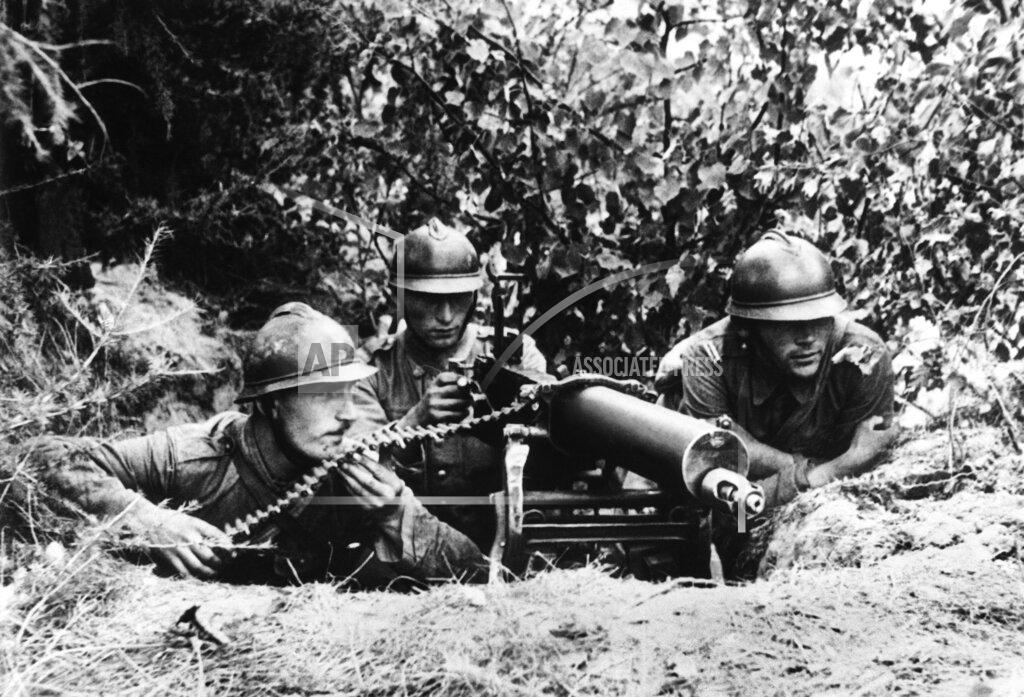
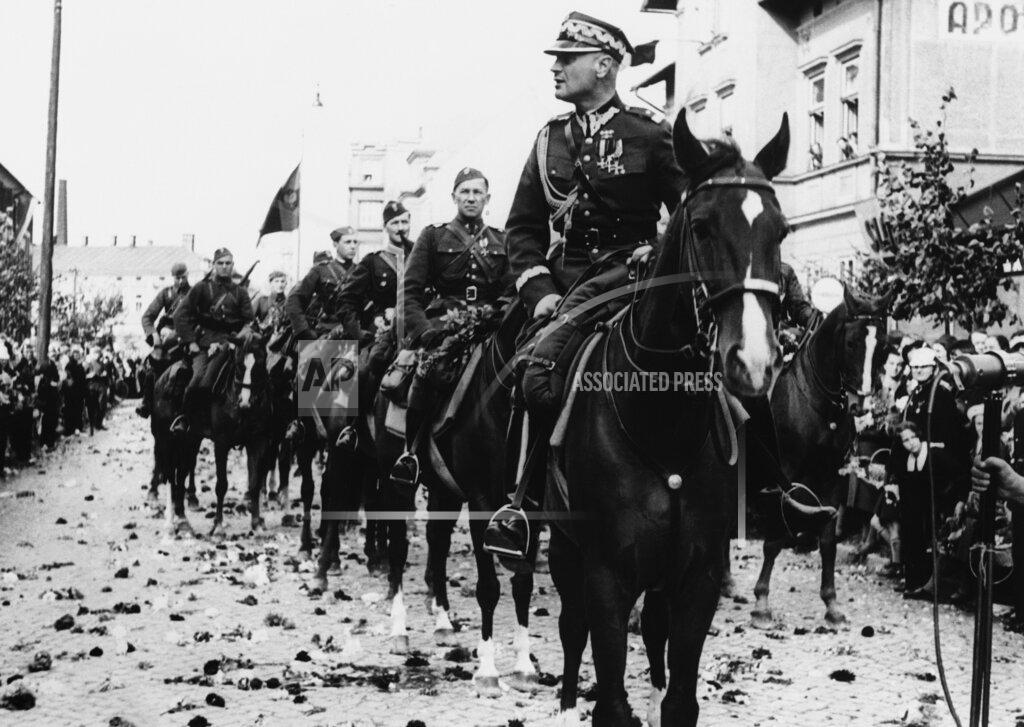
It was the other end of the Axis, however, that was causing diplomats the most concern. Poland, preparing for any German move, called up more reservists to reinforce her army, already 1,000,000 strong. Reservists usually called up for annual training in the Summer are already being instructed to report to their units for immediate service. This measure will considerably increase the numerical strength of Poland’s army, which had already been reinforced by partial mobilization a fortnight ago. The army’s present strength is estimated as nearly a million men in full war preparedness.
Although Poland is not directly involved in the Albanian crisis and would have to take a definite stand only if Great Britain or Rumania felt menaced by the seizure, the Polish public is much more disturbed than at the end of March, when the government ordered mobilization in reply to German “suggestions” about Danzig and Pomorze [the Polish Corridor].
“A general war is imminent,” says the newspaper Goniec Warszawski. “It now seems inevitable.” “Albania was the last of the European countries that could be annexed without a great military effort. The Axis powers’ voracious appetite, however, seems far from satisfied.”
Further persecution of the Polish minority is reported from German Upper Silesia. Several Polish leaders have been arrested there recently. Catholic Poles, who during Easter frequented churches giving Polish services, were photographed by Nazi Storm Troopers and prints were sent to the Gestapo for their files, it is charged. In Polish Upper Silesia many young Germans were arrested when they tried to tear down posters bearing an appeal for subscriptions to the Polish defense loan.
But Berlin, through its press, charged that the war atmosphere had its origin in London and one Nazi source said Germany’s aim now was to stave off an Anglo-French attack. Official Berlin is emerging only slowly from its Easter lull, and the Foreign Office today was silent again on the activities of Britain and France. The absence of official reaction, however, was amply offset by press comment. Britain was accused of devoting the Easter season to “disseminating unrest throughout Europe and beyond” through feverish Cabinet deliberations and military and naval preparations — primarily, it was charged, for “intimidating” smaller nations and inciting them against Germany and Italy. “Smoke and Noise in the Mediterranean” is the Angriff’s caption in referring to the units of the British fleet now assembling there as ships of pre-war vintage. The newspaper warns that “Germany will not tolerate British intervention in Italian affairs.”
Confidence in the stability and striking power of the Rome-Berlin Axis is enthusiastically reaffirmed. This is born, says the Angriff, “of our conviction of British weakness no less than from consciousness of our own superior strength.” The Italian seizure of Albania is considered closed by the German press despite what are termed British attempts to magnify it into a Mediterranean problem and exploit it as a new crisis “to harass the nerves of smaller nations.”
The game of darts was banned in Glasgow pubs for being “too dangerous”.
In Washington President Roosevelt indicated that he thought any general European war would inevitably involve the United States. President Roosevelt strongly implied at his press conference today that he believed the involvement of the United States in any general European war was inevitable and that this nation should stand shoulder to shoulder with Great Britain and France against Nazi-Fascist machinations aimed at world domination by force. The President made known his belief by expressing his approval of a newspaper editorial interpreting his use of the collective pronoun “we” in his farewell remarks at Warm Springs, Georgia, Sunday, when he promised to be back again in the Fall, “if we don’t have a war.”
The editorial, published today in The Washington Post, was termed by Mr. Roosevelt very good, very clear, and very honest. Mr. Roosevelt’s citation of the editorial took on added significance because he referred to it-by-way of replying to a press conference question as to whether he had any comment to make on the European) situation. It was after he answered with a shake of the head that he had nothing whatever to say on that subject that the editorial was mentioned. He embraced it without reservation, except to say in answer to a question that he had not inspired it.
By making the words of the editorial in effect his own, President Roosevelt told his press conference that his remarks had been addressed more to Chancellor Adolf Hitler and Premier Benito Mussolini than to his Warm Springs neighbors who had heard them at first hand. By the same token, he conceded that his implied warning of imminent war in Europe was directed “to those who would protect themselves by closing their eyes.”
A U.S. Senate coalition, which was not impressed today by another White House appeal, stood by the House and voted a relief deficiency appropriation of $100,000,000, instead of the $150,000,000 requested repeatedly by President Roosevelt. The Senate rejected by a vote of 49 to 28, an amendment by Senator Pepper to appropriate $150,000,000 for the WPA, and soon thereafter adopted the House Joint Resolution paring the fund by $50,000,000.
The vote followed six and a half hours of warm debate, at the conclusion of which Senator Barkley, the majority leader, stated with considerable emotion, in obvious reply to the White House, that he stood for the compromise on the basis of “common sense”; that he accepted his responsibility as majority leader, but did not care to or try to dictate how any member should vote. At the same time, Senator Barkley announced that the President would accept the $100,000,000 appropriation.
In addition, the hard-pressed leader who for the first time was taking a stand against the President on an important issue, said he was authorized to state that within a few days the President would transmit a message to Congress requesting an appropriation of $1,500,000,000 for the WPA for the fiscal year beginning July 1. That would be $663,000,000 less than the total now voted for this year.
“If the course I have pursued, or the vote I am going to cast, exposes me to criticism,” Senator Barkley told the Senate, “I am willing to accept it, from whatever source it comes, whether Inside the chamber or outside of it. I am not going to kid the Senate, or kid the people of the United States by holding out the hope that they can get something they cannot get.” He added that if the compromise had not been made, the Appropriations Committee might conceivably have recommended $83,000,000 instead of $100,000,000.
The White House repudiation of compromise was made in a brief letter, addressed to Senator Pepper after a telephone conversation between Mr. Roosevelt and Mr. Pepper. As far as could be ascertained the majority leader learned of the communication only when he heard it read on the floor.
Senator Robert F. Wagner of New York defended the National Labor Relations Act today in the crowded caucus room of the Senate Office Building as the Senate Committee on Labor and Education opened its hearings on amendment proposals. He insisted that the basic principles of the act were sound, that it was promoting industrial peace, and he criticized the amendments proposed by Senators Burke, Walsh, Ellender and Holman and by the American Federation of Labor.
He asserted that while the act was not perfect, changes should be made only as the need for them was clearly shown. After studying the testimony brought out at the hearings, he added, he might introduce some amendments “if the need is revealed.” The only concession he made was to endorse a change to permit employers to petition for elections when unions were competing among their employees. He pointed out that the law did not deny this privilege to employers; that its denial was based on a ruling by the National Labor Relations Board. He suggested that “under appropriate safeguards” the board might change its ruling. If it did not, he said, he favored legislation to that end.
Charging that operators in the Appalachian soft coal region have locked out 320,000 miners who have been idle since April 1, when their contract expired, John L. Lewis, president of the United Mine Workers, accused the operators yesterday of aiming to destroy the union in response to the desire of “outside interests.” He threatened to call a strike in all soft-coal mines outside the Appalachian field not yet affected by the stoppage. Mr. Lewis also issued an implied threat to tie up the anthracite coal fields if an agreement was not. signed in the soft-coal industry.
The bituminous negotiations have been in progress since March 14. Negotiations for a new anthracite agreement are scheduled to begin in this city next Tuesday. The old agreement expires April 30. A strike in soft coal mines outside the Appalachian field would involve 150,000 miners in Illinois, Indiana, Ohio, Kentucky, Colorado and other States and would bring the number of idle bituminous miners to nearly 500,000. There are 120,000 miners in the anthracite field.
A poll finds increasing support for a boycott of trade with Nazi Germany. 65% of those polled advocate such a boycott.
The Citizen Committee on Planned Parenthood urges distribution of birth control information. Abortion rings menace women, Margaret Sanger says.
The NA-40B prototype aircraft, a design which would be modified to produce the North American B-25 Mitchell medium bomber, is destroyed in a crash during testing at Wright Field, Ohio, United States. The entire crew survives the crash.
Japanese Army headquarters in Peiping reports that Chinese attempts to conduct offensives throughout Southern and Southwestern Shansi have been repulsed on all fronts. At Yungcheng, Siahsien, and Wensi, the points where the most fighting took place, the Chinese attacked with mountain artillery. heavy machine guns and trench mortars. Japanese reports declare that when the Chinese retreated, they left numerous dead, arms, ammunition and military equipment.
Apparently, the Chinese attacks are designed to open the way for flying columns to cut the Taiyuan-Puchow Railway, severing Japanese communications with garrisons stationed in Southern and Southwestern Shansi. The Japanese reports declare additional Chinese divisions have entered Shansi from the east and from Shensi. Japanese garrisons in Shansi reported 338 guerrilla attacks in March, the Chinese numbering more than 95,000 and losing more than 6,700 killed and prisoners.
The United States Embassy here protested today for the sixth time against the Japanese bombings of American mission property in recent weeks. Representations were made regarding the destruction of mission property in Yingtan in Kiangsi Province and in Hengyang in Hunan Province. The mission properties were said to have been prominently marked with flags.
The Japanese Army in Shanghai takes a very serious view of the political assassination of Dr. Shia Shih-tai today. He was a Japanese-educated physician connected with the new Japanese-sponsored city government and cooperated with the cultural branch of the Japanese Army press bureau. Although this was the first political murder inside the International Settlement since February 22, the Japanese Army contends the Municipal Council police are not effectively suppressing terrorism and anti-Japanism which they charge is directed and financed by the Chinese Government at Chungking.
Dow Jones Industrial Average: 123.75 (-0.28).
Born:
Louise Lasser, American actress (“Mary Hartman, Mary Hartman”), in New York, New York.
Houston Antwine, AFL and NFL defensive tackle, defensive end, and guard (AFL All-Star, 1963-1968; Boston-New England Patriots, Philadelphia Eagles), in Louise, Mississippi (d. 2011).
Whitey Martin, NBA shooting guard (New York Knicks), in Hamburg, New York.
Died:
S.S. Van Dine [pseudonym for William Huntingdon Wright], 50, American critic and detective writer (“Philo Vance”).
Naval Construction:
The Nihon Kaigun (Imperial Japanese Navy) Kagerō-class destroyer HIJMS Urakaze (浦風, “Wind on the Sea”) is laid down by the Fujinagata Shipyards, Osaka, Japan.
The U.S. Navy Sargo-class submarine USS Seadragon (SS-194) is launched by the Electric Boat Co. (Groton, Connecticut, U.S.A.).
The U.S. Coast Guard Arundel-class light icebreaking tug USCGC Raritan (WYT-93; later WYTM-93) is commissioned.



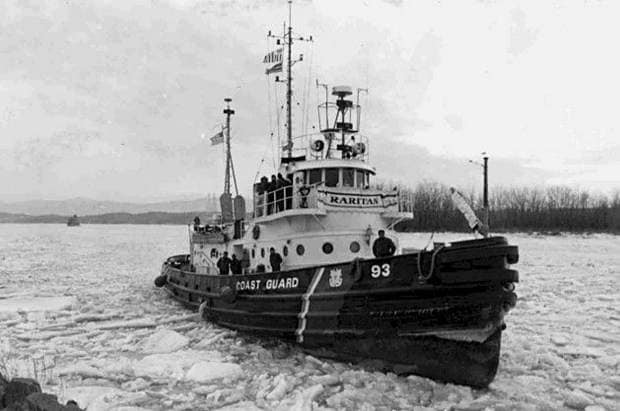
After commissioning, she was assigned harbor duties at Boston, Massachusetts. Germany invaded Denmark on 9 April 1940 and then laid claim to Denmark’s crown colony, Greenland. The U.S. State Department immediately began negotiations with Henrik Kauffmann, the Danish government-in-exile representative in Washington, D.C. and Eske Brun, the Governor of Greenland to preserve Greenland’s sovereignty. An agreement was reached on 3 May where Greenland requested U.S. protection. Because of the Coast Guard’s experience with the International Ice Patrol and because it operated the only ships that were equipped to handle ice conditions in Greenland waters, the State Department requested Coast Guard assistance in enforcing claims of sovereignty and to prevent Germany from taking control of the cryolite mines at Ivittuut (vital for the production of aluminum) and establishing weather stations on the Eastern coastline. In August, Raritan along with the cutters Duane, Modoc, and Northland joined Ice Patrol cutters Comanche and Campbell as the first cutters assigned to the Greenland Patrol.
Raritan was transferred to U.S. Navy control on 1 November 1941 by Executive Order 8929 which transferred the entire Coast Guard from the United States Department of the Treasury to the United States Navy. Raritan continued to be homeported at Boston under U.S. Navy control but was manned by Coast Guard personnel.
After the Coast Guard was returned to the Treasury Department on 1 January 1946 in accordance with Executive Order 9666, Raritan continued to operate in Boston Harbor. She was subsequently transferred to Portsmouth, Virginia. and in 1962 she was assigned to the Great Lakes and her home port was Grand Haven, Michigan.
Raritan was decommissioned from Coast Guard service on 14 May 1988.
 History Diaries