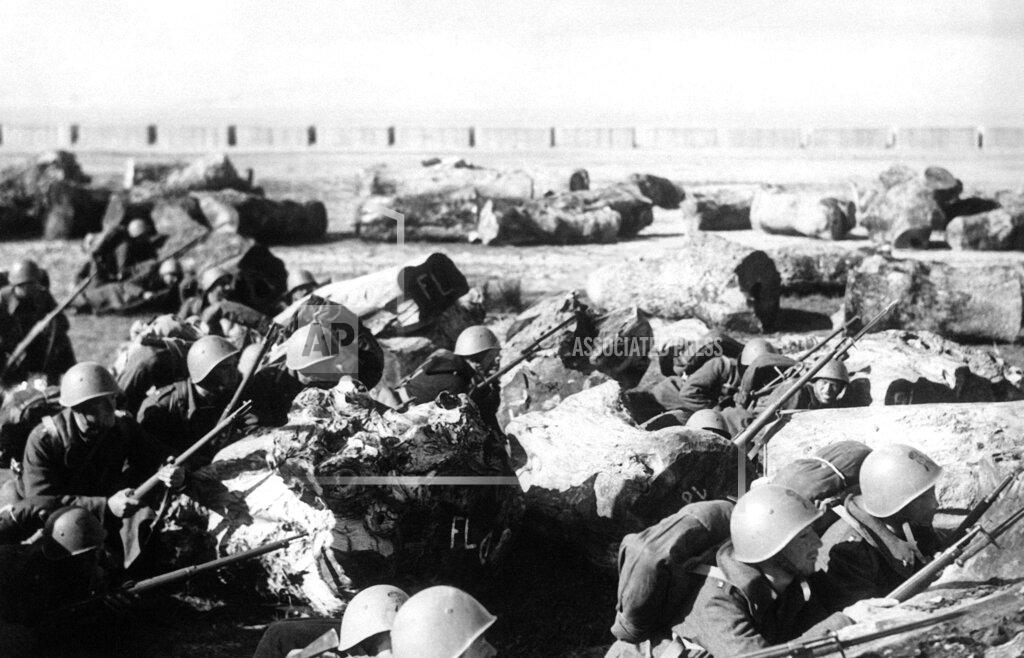
Amid rumors that Italy intends to take over the island of Corfu, Britain warns Italy to stop aggression. The British Cabinet decided today that any aggression upon Greece, Turkey or other countries in the Eastern Mediterranean would be regarded by Britain as an “unfriendly act.” A solemn declaration to this effect will be made by Prime Minister Neville Chamberlain at a special one-day session of Parliament that has been summoned for Thursday. The exact form of the statement will depend partly upon. diplomatic interchanges with the Balkan nations in the next few days, but the Cabinet subcommittee on foreign affairs began working it out tonight, and the Cabinet as a whole will have a final opportunity to approve it Thursday morning.
While the Ministers were meeting today in the first Easter Monday session of the Cabinet since the World War, British warships were steaming off to undisclosed destinations in the Mediterranean ready for any emergency. The 30,000-ton battleship HMS Warspite, flying the flag of Admiral Sir Dudley Pound, Commander in Chief of the Mediterranean Fleet, was at sea after having quickly left San Remo on the Italian Riviera, where she had been paying a courtesy call. The battleship Barham, flagship of Vice Admiral Geoffrey Layton, left Naples, Italy, with a flotilla of destroyers on secret orders.
As war worries mount, British defenses on Malta are reinforced, with British dependents evacuated and gas masks distributed to civilian residents.
Britain’s Mediterranean activity was an offset to war preparations by Italy, which had reinforced garrisons in Libya and the Dodecanese Islands and was estimated to have all told 950,000 men under arms at present.
Meanwhile, the conquest that had crystallized the latest crisis proceeded apace. More Italian troops poured into Albania by air, and the populace was warned not to oppose Italy on pain of imposition of martial law. The Italian army completed the occupation of Albania.
Fascism’s chief press spokesman, Virginio Gayda, replied to press criticism in this country by telling Americans in effect to mind their own business.
Italian troops, at present in active service both at home and In Ethiopia, Libya, the Dodecanese Islands and Albania number about 950,000 exclusive of the Fascist militia, which can be mobilized in twenty-four hours, according to official figures and information published in the press.
In Albania, according to dispatches from Tiranë, there are about 40,000 troops comprising four regiments of Bersaglieri, one infantry division, one Grenadier regiment, two Blackshirt battalions, one infantry regiment, two battalions of armored cars and some units of artillery and supply services. In Ethiopia there are 60,000 troops forming the national standing army in addition to between 60,000 and 80,000 militarized workers who can be counted on to form a fully trained and equipped army in case of an emergency.
In Libya there are, according to press statements, about 90,000 troops, composing three divisions. On the Dodecanese Islands, there are officially about 13,000 men composing one infantry division whose formation was announced last March and perhaps 2,000 special carabineers. In a dispatch from Athens, however, the Associated Press reported that there were 45,000 Italian troops on the island of Rhodes alone.
The French, in any case, were taking military measures, details of which will come before the Cabinet today.
In Greece, alarmed at Italian troops in Albania along its border, Premier Metaxas announces that his nation is prepared to repel any Italian aggression. The Greek people were anxious despite an assurance from Rome and a promise by their Premier that their independence would be preserved.
The Balkan Entente was depicted as solid in reports from Bucharest that said Greece, Turkey and Yugoslavia had promised to guarantee Rumania’s integrity. Nevertheless, Rumania was still apprehensive over Germany’s intentions. Should the situation so require, the first article of the Balkan Entente pact would forthwith be put into application, it was revealed here today. This article reads: “Greece, Rumania, Turkey and Yugoslavia mutually guarantee the security of all their Balkan frontiers.” This seems to be the outcome of the visit to Angora, Turkey, of Foreign Minister Grigore Gafencu of Rumania, and in the present circumstances it assumes capital importance. Moreover, it is assured here that all four members of the Balkan Entente are ready to fulfill their obligations. Nevertheless, Bucharest does not regard the situation as alarming at the moment, although it is viewed as calling for constant vigilance.
The Rumanian-Hungarian question is now relegated to second place. The partial Rumanian mobilization provoked by Hungary’s entry into Carpatho-Ukraine is not being canceled; the reservists are being maintained under the colors provisionally. All other precautionary measures are also being continued. King Carol and Crown Prince Michael, who passed Easter at Balcic Castle on the Black Sea, will return to the capital tomorrow, when the King will receive M. Gafencu’s report and give audiences to a number of Cabinet members and diplomats.
Reliable information stresses M. Gafencu’s satisfaction with the results of his Turkish visit. He hopes In consequence that it will soon be possible to open negotiations “for the settlement of important questions.” The same circles declare that Rumania’s foreign policy will continue to be based on the maintenance of her independence and territorial integrity. On the other hand, the invitation given by Foreign Minister Joachim von Ribbentrop of Germany to M. Gafencu to visit Berlin is causing some concern. It is assured that Rumania most certainly will resist any pressure by Germany, especially in view of Britain’s readiness to give economic assistance.
Dutch troops were sent to their border with Germany. The Netherlands called up border troops to bring her frontier battalions to full strength. This action was interpreted as designed to meet any possibility of German invasion.
Colijn’s Dutch government opens camp Westerbork for German Jews.
German Gestapo report published on this date noted that, between 1933 and 1939, a total of 162,734 prisoners were placed in “protective custody”, of which most of them were categorized as political prisoners.
Demonstrations by the students of Al Azhar Theological University and the Egyptian University of Secular Studies against the Italian occupation of Albania are indicative of the anti-Italian sentiment prevailing among Muslims in Cairo. King Zog was the only Muslim monarch in Europe. An important Muslim ecclesiastic here today remarked: “This is what the self-designated ‘Protector of Islam’ does to a Muslim King.” But while Italy is condemned for the Albanian occupation, respect and fear for Premier Benito Mussolini and the Rome-Berlin Axis appear to be increasing tremendously among all classes of Egyptians. As this increases British prestige decreases.
The Egyptians are beginning to doubt strongly that Britain is in a position to defend Egypt if the latter is attacked by the Italians. Some here are even convinced that the Valley of the Nile will become part of the new Italian Empire in the near future. These circles argue that if Britain were in a position to fight the Rome-Berlin Axis she would not have been dilly-dallying after so many aggressive acts by the totalitarian partners.
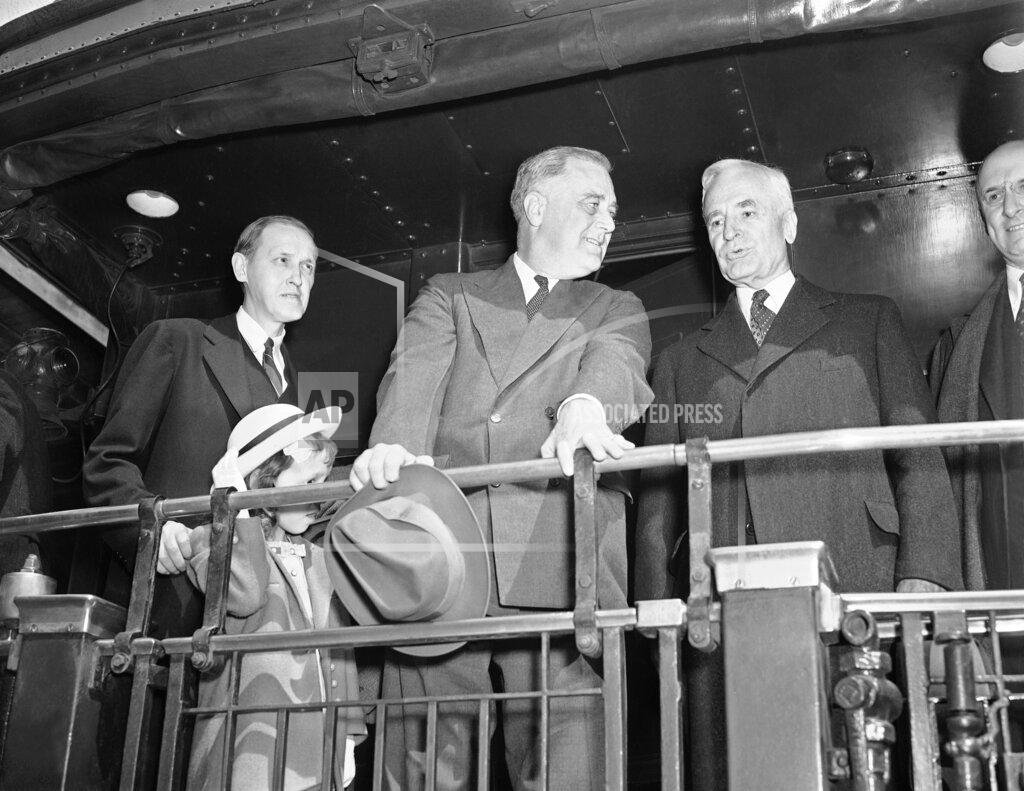
The whole European situation had Washington officials anxious, as President Roosevelt found on his return from Warm Springs. President Roosevelt returned to Washington today from a ten-day vacation at Warm Springs, Georgia, to find State Department officials admittedly anxious over the possibility of a European war not many weeks. hence. He found Congressional leaders talking openly of plans for adjournment of the session about the second week of June. Even before leaving his private car at the Union Station to motor to the White House the President conferred briefly with Secretary of State Cordell Hull on the latest reports from the European front and the possibility of a general armed conflict which led the President to tell his Warm Springs neighbors that he would “be back in the Fall, if we don’t have a war.”
That Mr. Roosevelt was far from being facetious when he thus notified the nation from the rear platform of his private car of his concern over the imminence of war was borne out in State Department circles. There the highly pessimistic reports the President has been getting from American observers in Europe are a matter of common knowledge. At his press conference not long after his meeting with the President on his special train, Secretary Hull said he had only brought the Chief Executive “up to date” on the situation and had nothing to add to his recent condemnation of the “forcible and violent” occupation of Albania by Italy.
Secretary Hull said that President Roosevelt’s remarks at Warm Springs that the United States might be forced eventually, as a result of German and Italian policies, to abandon foreign trade or reduce. American living and working conditions or to subsidize exports, was not intended to minimize the value or importance of the Administration’s trade-agreement program, which will continue to be pressed with vigor. The Secretary endorsed President Roosevelt’s belief that the policies of the totalitarian countries were endangering world trade. Mr. Hull said that the danger of war in Europe had unsettled business conditions and that the flight of capital from Europe had had an adverse effect upon the prices and value of commodities bought and sold on world markets.
President Roosevelt appeared to be in excellent spirits as he left his special train for the White House, and responded readily to the cheers which greeted him at the railroad station, where a larger crowd than usual was on hand to witness his homecoming. Secretaries Hull and Morgenthau met him at the train.
A resolution authorizing the President to impose embargoes and perhaps take other retaliatory action against Japan may soon be introduced in Congress by Senator Pittman, chairman of the Foreign Relations Committee, or another Administration spokesman, according to plans discussed today. The step, if taken, would be part of the campaign to achieve substantial revision of the Neutrality Act and would be intended to answer those critics of the proposed Pittman “Peace Act of 1939” who feel that its operation would be to the benefit of Japan and to the detriment of China.
Mr. Pittman himself was noncommittal about the introduction of a legislative proposal, but said that he had always thought a general law, such as the present Neutrality Act or any of the proposals to modify it, should be kept in the realms. of generality, and that any specific situation should be met by a specific law. He feels that the United States would be amply justified in taking retaliatory measures against Japan for what he considers to be that country’s violation of the Open Door section of the Nine-Power treaty.
Another contemplated step in the move for revision of the Neutrality Act is the introduction of a resolution continuing for another year the “cash-and-carry” section of the existing law, which will expire by limitation on May 1. Congress is not expected to complete legislative action on any sort of revision of Neutrality Act by May 1, and some Administration strategists believe it would be better to forestall a possible rush as the deadline nears, by a simple extension of the present law.
However, there are some friends of revision who fear that the lifting of the deadline might tend to deaden Congressional interest to a point where no action would be possible at this session of Congress. Public opinion, as reflected in letters to members of Congress, seems to be mounting to an extent which will force some kind of action before long, in the opinion of those who want to extend the law as a means of permitting longer debate in committee and on the floor.
A direct offer to exchange 2,000,000 or more bales of surplus cotton and up to 100,000,000 bushels of carry-over wheat for large supplies of rubber and tin is to be made soon by the government of the United States to England, The Netherlands, Belgium and perhaps other countries. This was disclosed today by Senator Byrnes of South Carolina, and largely confirmed by Secretary Hull, following a series of conferences between the Senator and State and Agriculture Department officials extending over several weeks. The plan is in line with two programs of the Administration and Congress: first, to move the burdensome surpluses of farm products now stored in the United States, and, second, to gather within these shores an ample quantity of “strategic materials,” not adequately furnished by American production, against the growing possibility of a major war.
The Senate agreement made Saturday to vote today on an additional appropriation for the WPA was upset by the death of Senator Lewis and action was postponed. Under the agreement the Senate was to have met at noon, debated until 2:30 and then decided whether to accept the $100,000,000 fund passed by the House, or vote the $150,000,000 asked in a bill by Senator Pepper in an effort to give President Roosevelt the total of $875,000,000 in deficiency WPA appropriations he has thrice requested of Congress. The agreement, because of the delay, lapsed, and Senator Barkley declined to predict whether he would seek a similar agreement when the Senate met tomorrow. The general attitude of the leaders of the contending factions indicated, however, that there was little inclination to string the fight out.
President Roosevelt will withdraw the nomination of Thomas R. Amlie, former member of Congress from Wisconsin, to be a member of the Interstate Commerce Commission. This action follows the receipt of a letter from Mr. Amlie suggesting that his name be withdrawn. It was indicated at the White House that the President would notify the Senate of his decision tomorrow and withdraw the nomination. There was no intimation as to whom the President might name in Mr. Amlie’s stead, but some Senators said they believed “a man from the ranks of labor, having the approval of the railroad brotherhoods” would get the appointment.
The nomination of Mr. Amlie had hardly been read in the Senate before a chorus of opposition went up that resulted in an effort to prevent his confirmation. Senator La Follette of Wisconsin made no attempt to spike approval of the former left-wing Representative, although he had not been consulted in advance of his selection. Labeled a Communist because of his past associations with anti-capitalist movements, Mr. Amlie denied that he was; but he made an unfavorable impression upon some members of the Interstate Commerce Committee which heard him testify on his appointment. However, Chairman Wheeler was supporting the nominee and appointed a subcommittee to consider his qualifications. The nomination got no further than the subcommittee.
Gangster John Torrio pleaded guilty yesterday to the Federal charge that he had defrauded the government of $86,000 by income tax evasions and in doing so virtually ceded to the United States the $100,000 cash he had posted as bail. Two co-defendants, William Slockbower, a brother-in-law, and James LaPenna, an associate of his bootlegging days, likewise entered guilty pleas and Federal Judge John W. Clancy granted to John D’Agostino and Louis LaCava, the remaining two defendants, a mistrial.
Juan T. Trippe, president of the Pan American Airways system, told the Civil Aeronautic Authority today his organization was prepared to go ahead with transatlantic air service at once. His statement was made while testifying at a consolidated hearing on Pan American’s application for a certificate of public convenience and necessity for the transatlantic service; its application for adjudication of rates for carrying mail on the European service, and its application for adjudication of rates for carrying mail on its present service from the United States to Bermuda.
The public hearings of the Senate Committee on Education and Labor on proposals to amend the National Labor Relations Act, which open tomorrow, will bring a major engagement between the American Federation of Labor and the Congress of Industrial Organizations in their three years of conflict. Confident that the CIO shows “signs of weakening,” the AFL leaders are trying hard to press the industrial union group on every possible front. The AFL is intensifying its efforts to undermine the two strongest organizations affiliated with the CIO, the United Mine Workers of America and the Amalgamated Clothing Workers of America.
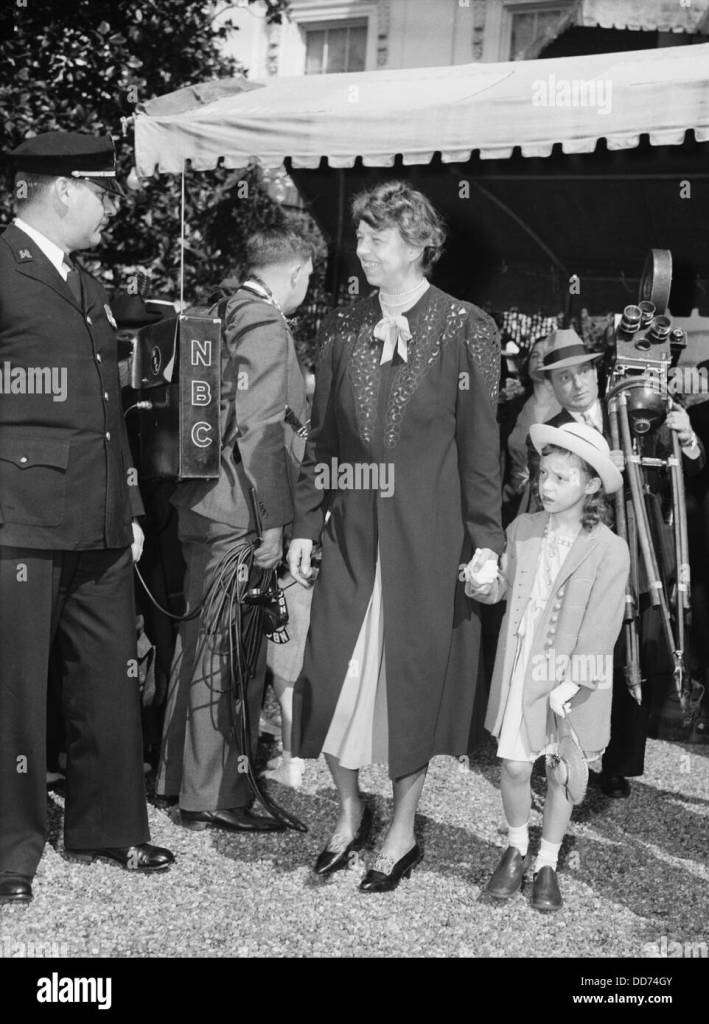
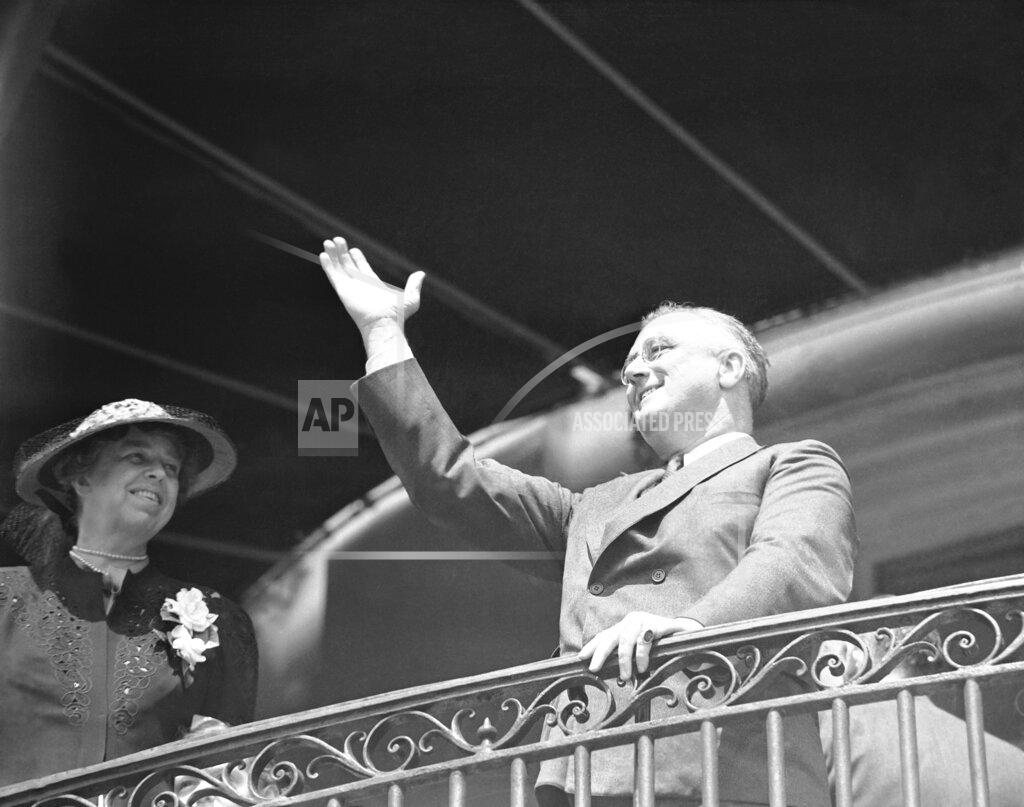
President and Mrs. Roosevelt stood on the south portico of the White House today and greeted several thousand cheering children holding their annual Easter egg rolling festival on the broad lawn behind the mansion.
Sensational revelations of a Nazi spy organization stretching into the furthermost regions of Argentina are expected to result from the investigation of the activities of German agents now being conducted by the government. The investigation so far indicates that every member of the Nazi organization in Argentina is a potential spy, ready at all times to carry out orders from headquarters in Buenos Aires. It also indicates that the Buenos Aires chief receives orders directly from Berlin. The investigation began ten days ago as a result of publication of a photograph of a document purporting to be a report to Munich by Nazi leaders in Buenos Aires on annexation of Patagonia as though that was an accepted point on the Nazi program. The investigation was originally limited to an effort to determine whether this document was genuine.
Japanese reports of the great extent of recent guerrilla engagements, in which victory is always reported, but in which major activity in four provinces is commented upon, tend to confirm the statement from Chungking that one-third of General Chiang Kai-shek’s fighting forces have penetrated behind the Japanese lines. Guerrilla fighting in North China is so extensive that Spring planting has been abandoned and commerce and the carriage of freight are at a standstill.
The heavy damage caused at Kunming by a Japanese air attack there on Saturday is now revealed here. At the airdrome the workshops, hangar, buildings and aviation training school are said to have been damaged and a number of planes destroyed. A tri-motored Junkers passenger plane on the field is reported to have been damaged. Kunming is the main southwestern Chinese air base.
British authorities dispatched the destroyer HMS Thracian today to Swatow to seek the release of the Sagres, a vessel seized by the Japanese while she was flying the British flag. The Japanese took the Sagres near the port of Swatow, which is approximately 200 miles northeast of Hong Kong. British officials meanwhile were trying to determine the actual present nationality of the vessel. When stopped, the Sagres was operating on the schedule of the British Douglas Company but her ownership was involved by previous Japanese, Portuguese and Chinese registries. Lloyd’s register lists the Sagros as a vessel of 2,333 tons, owned by the Kin Hong Steamship Company, Ltd., and registered at Hong Kong.
Japanese dislike of proposals to alter the United States Neutrality Act finds expression tonight in an unbridled though belated press attack on former Secretary of State Henry L. Stimson. It appears in a leading editorial in The Japan Times, Japanese-owned newspaper published in English for foreign residents here. Few Japanese will see the article as it is intended chiefly to reach Americans. When he was Secretary of State, says the article, Mr. Stimson proved one of the most dangerous Foreign Secretaries the United States had ever had. “But for his disastrous interference at the time of the Manchurian incident,” the paper states, “it is possible that relations between Japan and China would have been today entirely different from what they are.” Despite Mr. Stimson’s efforts, it goes on, Japan carried out her Manchurian policy to the last detail.
The crux of the complaint against him is his proposals to amend the Neutrality Act, which in its present state, The Japan Times finds, is almost truly neutral. “Cash and carry” provisions, according to the editorial, are not really impartial, but they are “at least neutral between Great Britain and Japan.” This is what Mr. Stimson cannot tolerate, according to the editorial, because “he dislikes Japan and is indignant that Japan is really as well placed as Britain in dealing with America.” The Japan Times is shocked at the suggestion that the President have the power to designate aggressor nations, aggression being in its opinion “largely a matter of circumstances.”
Dow Jones Industrial Average: 124.03 (+2.59).
Born:
Alan Rothenberg, American lawyer and sports executive, in Detroit, Michigan.
Daniel Oliver, American CEO (Federal Trade Commission), in New York, New York.
Penny Vincenzi [Hannaford], British novelist (“An Absolute Scandal”, “Spoils of Time” trilogy), in Bournemouth, England, United Kingdom (d. 2018).
Claudio Magris, scholar, translator and writer, in Trieste, Italy.
Died:
Peter Patton, 63, English ice hockey player and administrator.
Naval Construction:
The Nihon Kaigun (Imperial Japanese Navy) Type A1 submarine I-11 is laid down by Kawasaki, Kobe, Japan.
The Koninklijke Marine (Royal Netherlands Navy) O 21-class submarine HrMs (HNMS) O 25 is laid down by Wilton-Feijenoord (Schiedam, Holland). She will be captured during the German invasion of 1940 and serve in the Kriegsmarine as U-D3.



 History Diaries