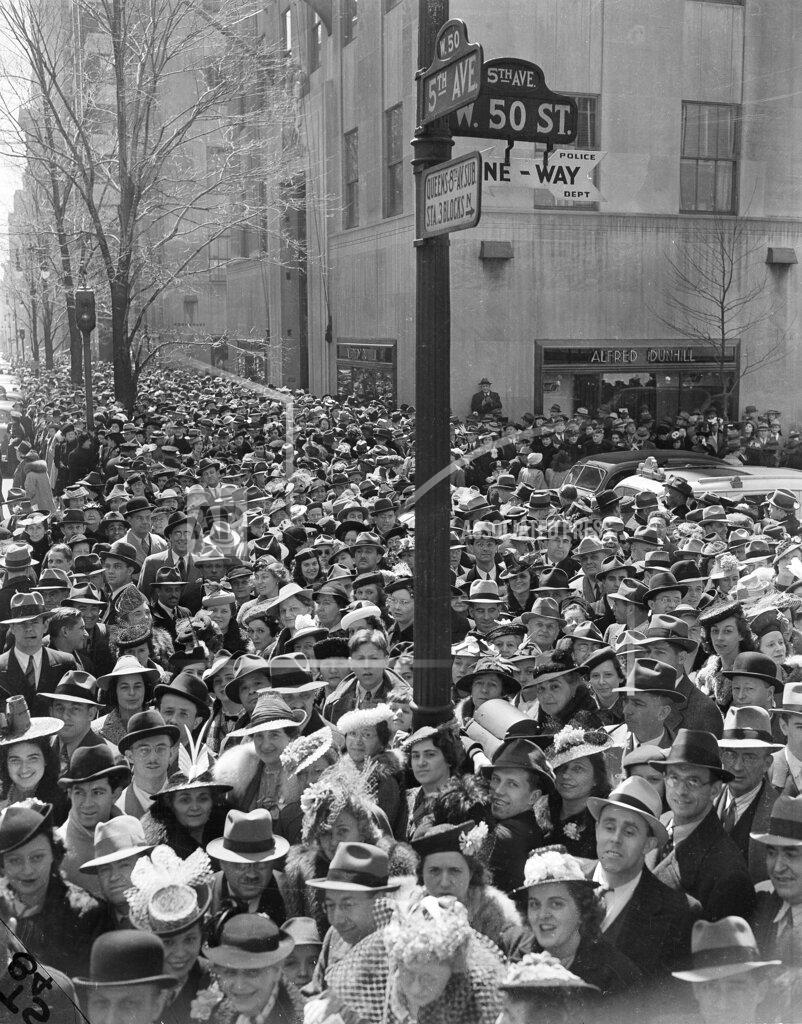
Easter Sunday.
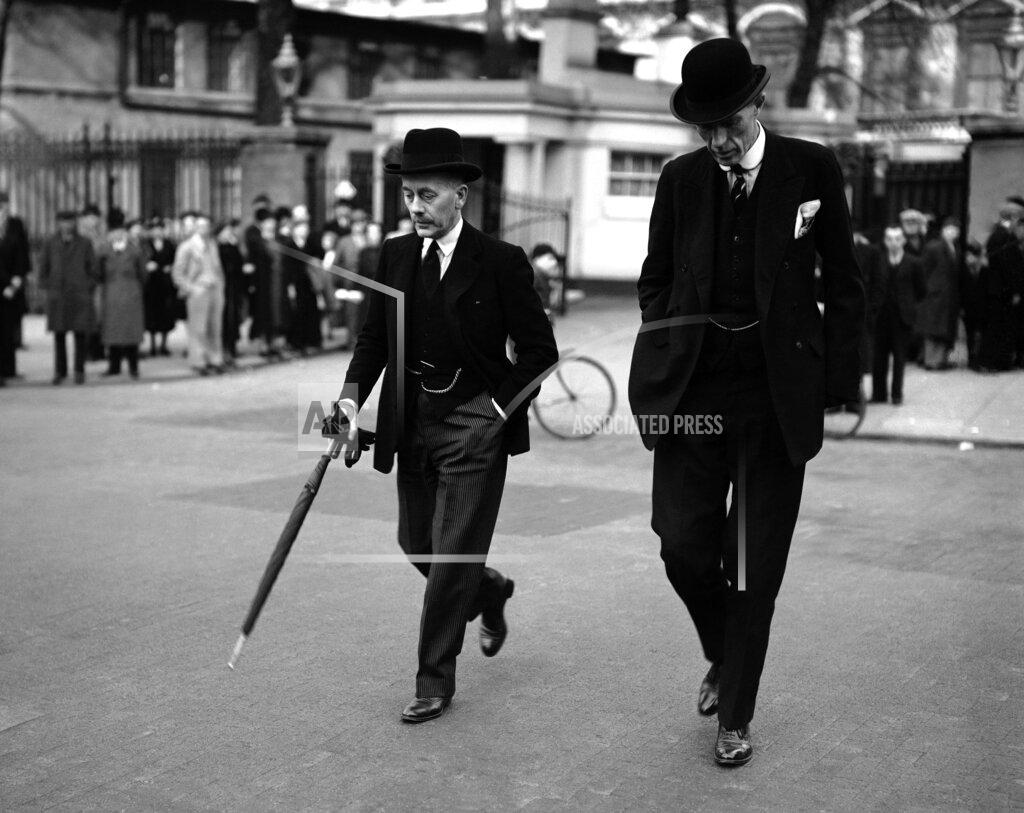
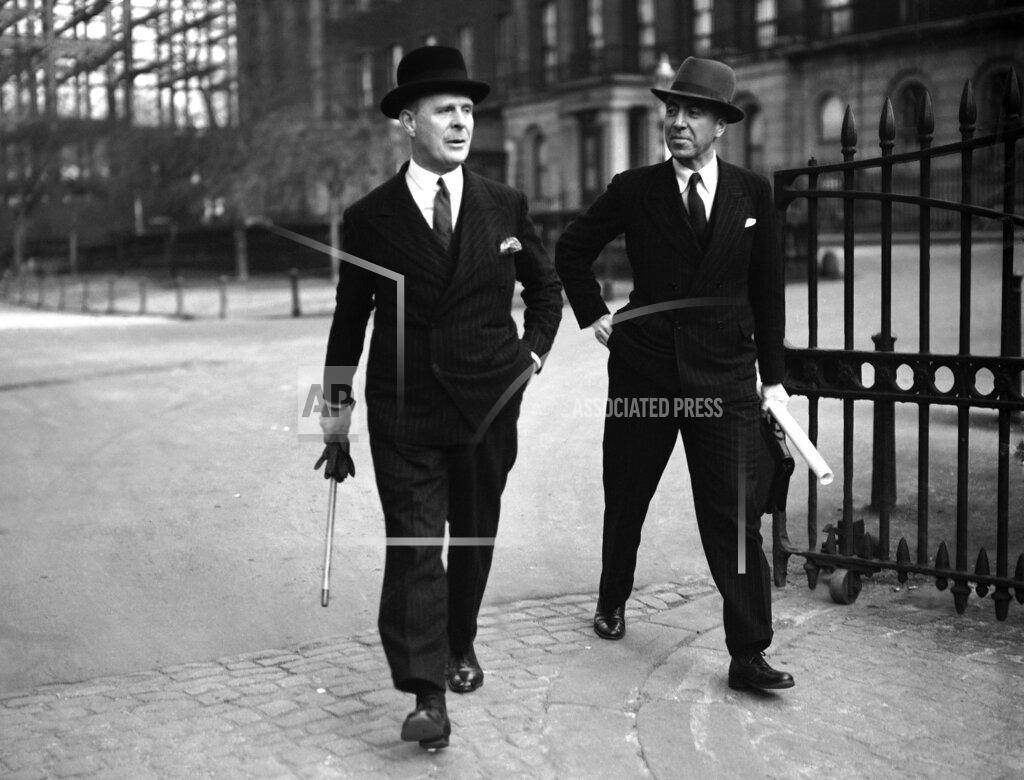
The British Cabinet will meet in an emergency session tomorrow morning to consider the consequences of the Italian invasion of Albania. The meeting had been expected this morning, but the day was devoted Instead to gathering information and preparing the ground. The Italian Government has been informed how gravely Britain would regard any advance beyond the Albanian frontiers. Rumors of an imminent Italian occupation of Corfu were in the air this morning, when Viscount Halifax, the Foreign Secretary, summoned Guido Crolla, the Italian chargé d’affaires, to the Foreign Office for the first of three visits during the day.
In advance of tomorrow’s Cabinet meeting Lord Halifax could not warn Italy positively that any threat to Greece would be regarded as an act of war against Britain. But, according to an authoritative account, Lord Halifax left his visitor in no doubt as to the seriousness with which the British Government viewed the invasion of Albania and as to the strength of the feeling that has been aroused in this country. The discussions went far beyond Albania. It was declared afterward that “any and every kind of rumor” had been covered in the conversations, including, presumably, the stories of the threat to Corfu.
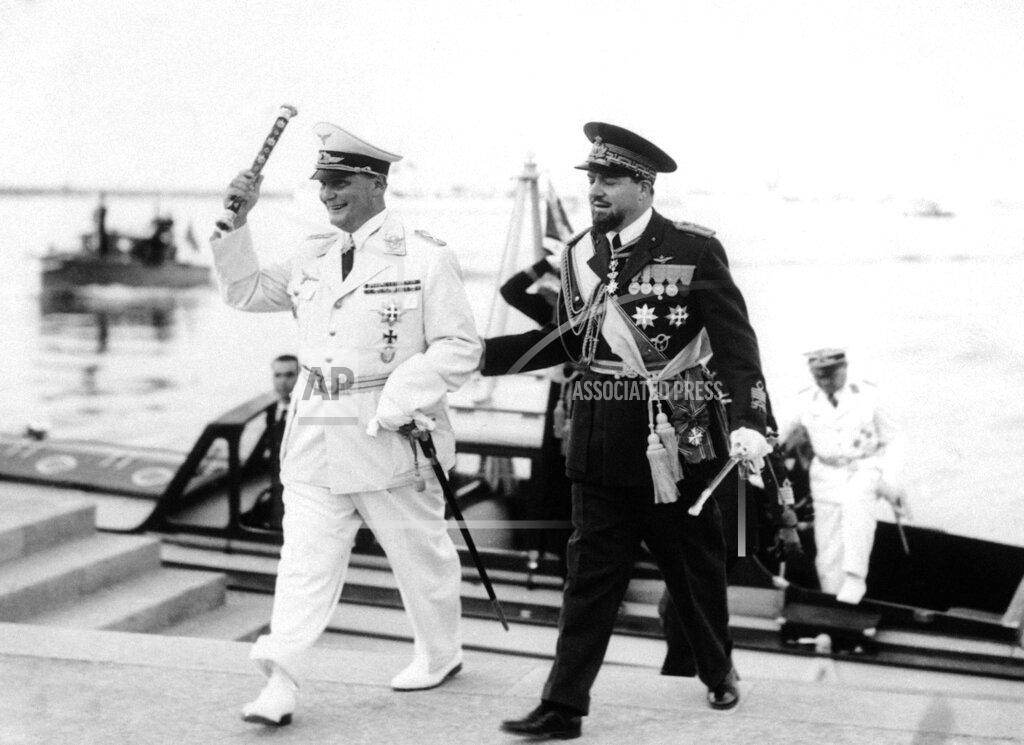
British warships on the French Riviera were hastily preparing to depart, according to reports reaching Paris today. The British battleship Malaya, which has been lying for some time in the harbor at Mentone, France, received sudden orders this evening to weigh anchor but at 11 o’clock was unable to do so because many of her crew had not been reached. A portion of the ship’s complement had gone on shore leave this evening.
Two British warships, the battleship HMS Warspite and the escort vessel HMS Aberdeen, left San Remo, Italy today. They had been in San Remo for several days. The two British warships were understood today to have left San Remo, Italy, in order to avoid any “embarrassment” that might be caused by their presence in an Italian port. An Admiralty spokesman declined to disclose their destination.
Paris reported the British and French were agreed that any extension of the Italian movement must be prevented, and military conferences resulted in a French decision to take preparedness measures in the Mediterranean area.
All Albania was firmly in Italian hands, Rome asserted, and Foreign Minister Ciano returned from Tiranë (Tirana) in time to get representations from the British Ambassador. All Albania, it is understood, is firmly in Italian hands this evening. All the inhabited centers of any importance have been reached and garrisoned. It is possible that some of the less accessible parts of the country still resound to rifle fire from the few remaining supporters of King Zog and his regime, but such “acts of brigandage” — as they are called officially — though likely to continue for some considerable time, do not alter the fact that the Italians are in every sense of the word complete masters of Albania.
Foreign Minister Galeazzo Ciano, after a busy day in Tiranë yesterday as the visible representative of the Fascist regime, returned to Rome this morning in time to receive the Earl of Perth, the British Ambassador, who left a request for information that was so urgent that the Earl had been obliged to leave his Easter luncheon in order to deliver it. Apparently, the British Government was asking for enlightenment on Italian intentions in Albania and how they could be reconciled with the terms of the 1938 Anglo-Italian Easter agreement providing for the maintenance of the status quo in the Mediterranean Basin. It is understood that Count Ciano repeated his assurances that Italy would respect Albanian sovereignty and integrity and promised a more detailed reply at an early date. The meeting lasted only a few minutes.
The occupation of Albania was completed in a very short time by means of fast, motorized columns which, radiating from the four points at which Italians landed Friday, have overrun the whole country. They made good time along the main highways, which are few, but proceeded with difficulty along secondary roads, often not much more than mule tracks. They encountered no resistance. Air force activity was intense throughout the day. Each column of troops was constantly preceded by large forces of scouting planes, which looked out for any possible danger ahead and were ready to intervene in case serious resistance was encountered. In actual fact, they had no work of this sort to perform, since manifestations of dissent were limited to an occasional barking rifle. The air force flew over the furthermost corners of Albania and reported no activity anywhere that would indicate that resistance was being prepared.
An observer at Shkodër (Scutari), in Northern Albania, reported things were normal there.
Although the Turkish and Rumanian Foreign Ministers ended their talks by reaffirming the policies of the Balkan Entente, it was obvious that the entente’s members looked to the democracies, particularly Britain, to take the initiative. Grigore Gafencu and Shukru Saracoglu, Foreign Ministers, respectively, of Rumania and Turkey, concluded their conversations here tonight. The communiqué says that they examined in the light of recent events their common interests within the framework of the Balkan pact and agreed that the pacific and firm policy of the Balkan Entente has for its purpose the security and independence of the friendly and allied peoples concerned and the consolidation of the ties uniting them in the spirit of the Salonika pact. Finally, it adds, this policy must be maintained with resolution.
Apparently, the main purpose of M. Gafencu’s visit was to ascertain, before going to Berlin, Paris and London, the views of Turkey not only as a fellow-member of the Balkan pact but as the keeper of the Straits. Turkey’s rights and duties in the Straits are defined in the Montreux convention, which gives her a wide range of action in the event of war or the threat of war. There is no doubt that Turkey is determined to fulfill her functions under the Montreux convention to the best of her ability. She also intends to carry out her undertakings under the Balkan pact. And when George Kiosseivanoff, the Bulgarian Premier, visited Angora recently this was made clear to him.
No attempt is made to conceal the gravity of the consequences of the Italian occupation of Albania and it is realized that it may be used to influence the Balkan States in case of war to disrupt Balkan communications. Nevertheless, it is still felt that the initiative to prevent war or save the smaller countries must lie with the great democracies, particularly with Britain with whom Turkey, at heart, is in sympathy.
Turkey, however, has no personal quarrel with Germany and Italy. Germany, in fact, since the absorption of Czecho-Slovakia, provides a market for at least three-fifths of Turkey’s total products and that Turkey wishes to continue on good terms is indicated by the Turkish Government’s decision to send a delegation, headed by the deputy chief of staff, to attend Chancellor Hitler’s fiftieth birthday celebrations. The general conclusion is that with sympathies in one direction and material interests in the other, Turkey must wait and see.
It is believed in Bucharest that the Rome-Berlin axis will turn its attention from the North to the South and that Italy’s armed action in Albania is only the beginning of the penetration that is developing rapidly in this section of Europe. The invitation by Joachim von Ribbentrop, German Foreign Minister, to Rumanian Foreign Minister Grigore Gafencu to visit Berlin this month is believed to be the first step.
The second step is a rumored German ultimatum to Bulgaria to accept the proposals made by the German Economics Minister, Walther Funk, last August. The third step may be a German ultimatum to Yugoslavia to change her foreign policy. Under these circumstances, it is not to be wondered that the Balkans, which have striven for twenty years to pacify the region under the slogan “The Balkans for the Balkans” should be extremely uneasy. These efforts led to the conclusion of the Balkan Entente of 1934. Bulgaria did not adhere to the entente, but by the Salonika agreement she undertook not to attack any Balkan countries.
The Balkans are now frightened by the axis’s action. Yugoslavia seems to be in the worst position of all; not only is she geographically between Germany and Italy but her access to the Mediterranean now depends on Italy’s goodwill.
Russia, too, was unwilling to do anything to check the Italians unless they should menace Turkey.
From the Vatican came an appeal for peace by Pope Pius XII, who was critical of treaty violations but at the same time said there should be a just distribution of the world’s bounties.
Madrid’s peace parade, when much of Generalissimo Francisco Franco’s military strength, including representative units of Italian troops and German fliers and technicians, will march into the capital, probably will not be held before next Saturday at the earliest. All Italians and Germans in the Nationalist forces are expected to be withdrawn from Spain by May 15. Freeman Matthews, who will act as provisional United States chargé d’affaires until an Ambassador to Spain is named, is expected to arrive at Burgos early this week.
U.S. President Roosevelt evinced his concern over the European situation when, in bidding farewell to Warm Springs, he said: “I’ll be back in the Fall if we don’t have a war.” With these words spoken in farewell to several hundred persons surrounding the rear platform of his private car at Warm Springs station this afternoon, President Roosevelt notified the nation of his concern over the possibility of a European conflict and its far-reaching implications to Americans in all walks of life.
The crowd waited motionless and speechless for some elaboration of what was in the President’s mind, but he uttered no other word. Still smiling as he had been when he faced the crowd to speak, as he always does on leaving his “other home,” he turned and entered his car on the arm of Brigadier General Edwin M. Watson, his military aide and White House secretary. Newspaper correspondents were left with the others who heard him to draw their own conclusions concerning the significance of the remark. Whether by “we” the President meant the United States) might soon have to witness another armed conflict in Europe and somehow remain aloof from it or that this nation might be forced, however unwillingly, to participate remained surmise.
However, well-informed sources close to the President revealed it to be the collective judgment of ranking American observers in Europe, as told by transatlantic telephone, that war on the Continent would come sooner rather than later. These observers were reported to have told the President that the probability of war in a few weeks was very strong
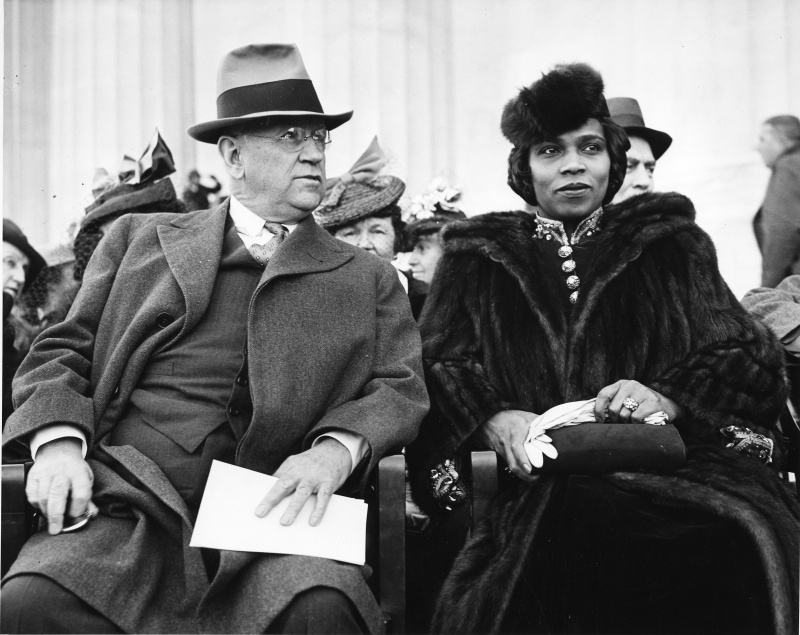
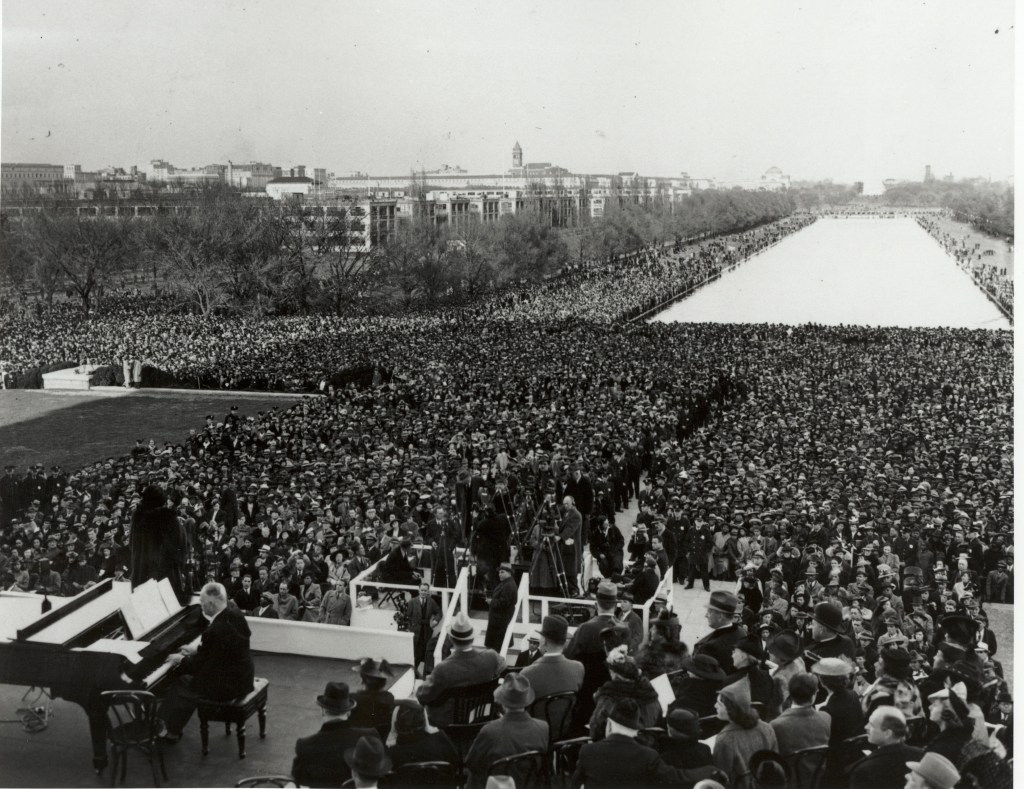
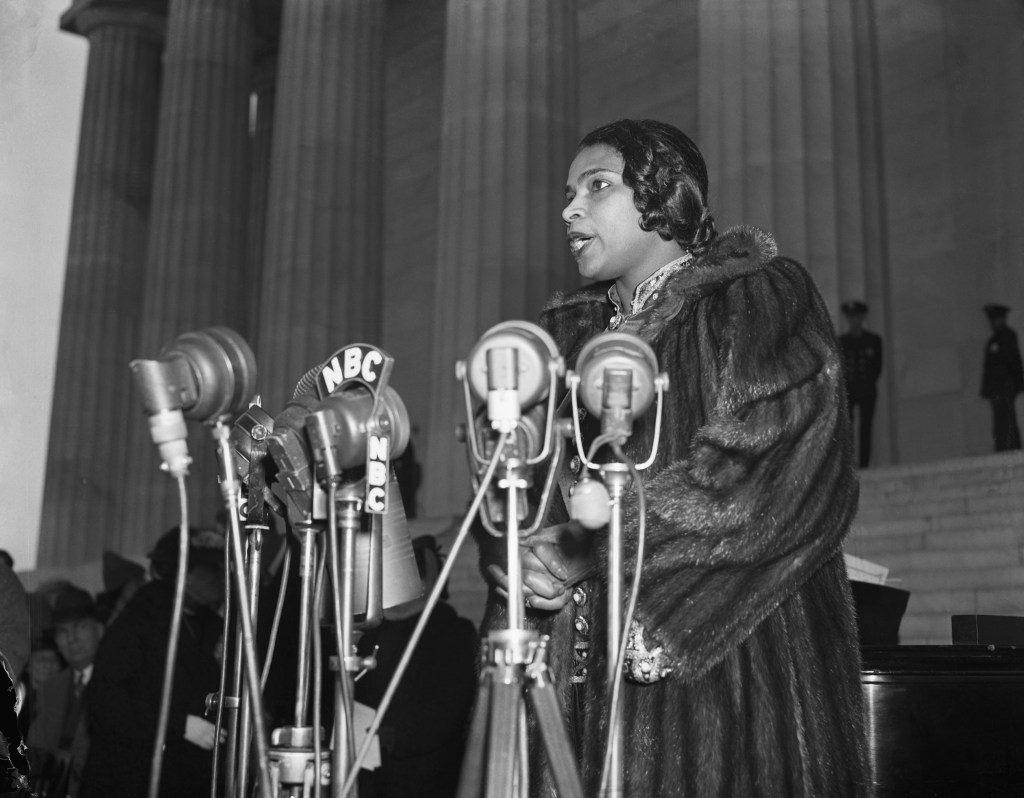
On Easter Sunday Marion Anderson, at the invitation of Secretary of the Interior Harold L. Ickes, sang a triumphant outdoor concert at the Lincoln Memorial before a crowd of 75,000 and a radio audience of millions. Anderson stood on the steps of the Lincoln Memorial in Washington DC and sang “My Country, ‘Tis of Thee”. A crowd of 75,000 listened to her on the Mall, and millions more tuned in on the radio. She sang where she did because she had been refused the use of Constitution Hall by its owners. Marian was black, and the owners had a white-artists-only clause. In early 1939, the Daughters of the American Revolution denied the internationally famed Black contralto the opportunity to sing at Constitution Hall in Washington, D.C., because of her race. First Lady Eleanor Roosevelt was so dismayed by the injustice that she resigned her own D.A.R. membership in protest.
The air was cold on April 9, 1939 — no favor to an opera singer. Anderson was also intimidated by the prospect of singing before the largest crowd she had ever faced. But, considering all she had overcome, these were small obstacles. She strode to the microphone and, with all her dignity and mastery, began her first song: “My Country ‘Tis of Thee.”
In many ways, Anderson was an unlikely hero. Off the stage, she was quiet and reserved. When asked to comment on the Daughters of the American Revolution and their refusal to let her perform, she characteristically demurred — preferring to let her performance speak for itself.
Listening on the radio that day was a 10-year-old African-American boy, moved as the whole audience of millions was, who never forgot the crystalline symbolism of that moment, in that place. A call for liberty in the very heart of a nation dedicated to that virtue, which still struggled to extend it to some. And 24 years later, he would have his own moment in that same spot.
His name was Martin Luther King, Jr.
In 1943, four years after they had refused her, the DAR invited Marian to sing at Constitution Hall in front of an integrated audience.
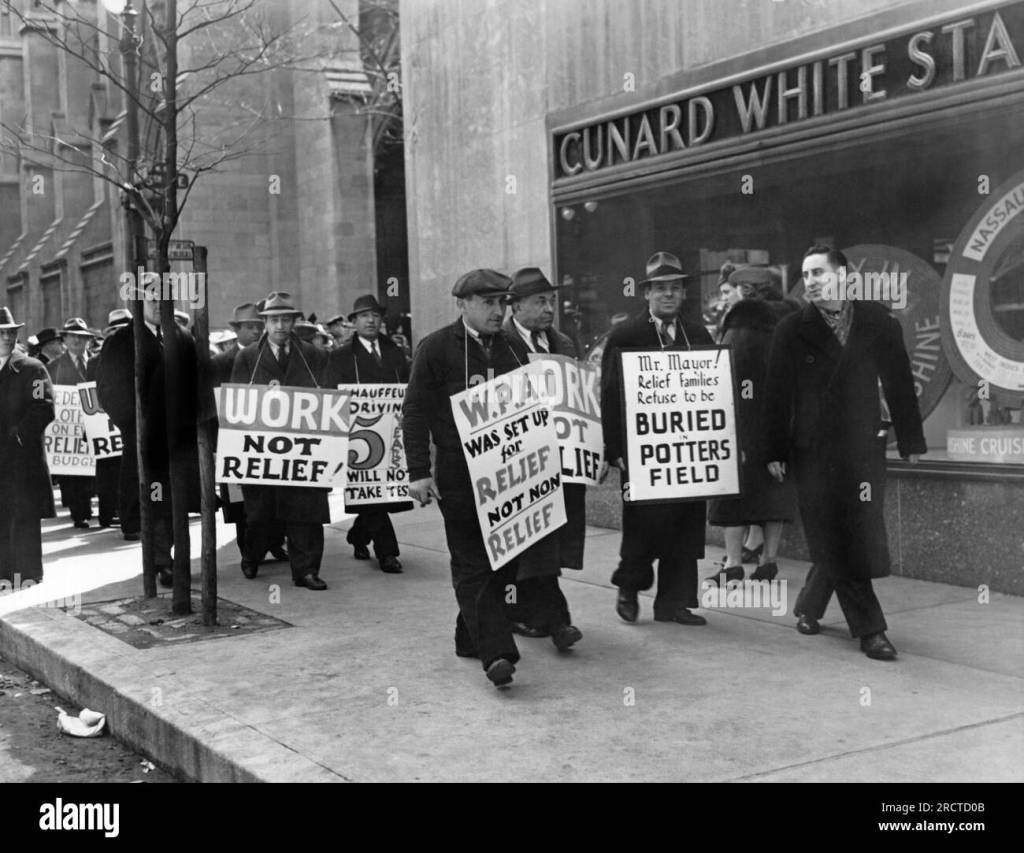
The question of relief appropriations for the 1938-39 fiscal year will be settled by Congress this week. The problem of large subsidies for agricultural products, moving up as the current major issue before the national legislators, threatens to wipe out the economies achieved in relief expenditures. The Senate will vote at 2:30 PM tomorrow on an amendment to the Deficiency Relief Bill to increase it to $150,000,000. It is expected that the amendment will be defeated and that the bill as passed by the House with an appropriation of $100,000,000 will be quickly approved by the Senate.
Completion of Congressional action on deficiency relief appropriations will fix the country’s bill for relief during the 1938-39 fiscal year at $2,350,000,000. That total will represent a reduction of $125,000,000 in the amount which President Roosevelt has insisted from the beginning was necessary adequately to care for the activities of the work-relief program during the current fiscal year.
Mr. Roosevelt originally asked for $1,500,000,000 to cover relief expenses for the first seven months of the fiscal year. Congress cut this to $1,425,000,000 in passing the first 1939 Relief Bill. In January, when this present session convened, the President asked Congress for an additional $875,000,000 to carry the Works Progress Administration to the end of the fiscal year. An effective economy bloc in both houses trimmed this to $725,000,000 over outspoken White House protests. The President almost immediately demanded that the $150,000,000 which Congress cut from his request be restored.
Business, big and little, was invited today by the Temporary National Economic Committee to use its facilities as a “forum” in which to present publicly “views and facts with respect to the economic problems” of the nation. While the committee has made it clear from the beginning of its public hearings in December that business would have its “day in court,” the fact that the committee has this early in its hearings determined to present the views of business, even before the full presentation of departmental data in preparation since last Summer, is regarded as significant.
Senator O’Mahoney, committee chairman, said the oil industry had been selected as the first to present its case, the presentation to start about June 1. Criticism of government policies, if backed by facts, would be welcomed, he stated. “The committee has authorized me to announce,” said Senator O’Mahoney, “a new phase of its studies particularly designed to afford business and industry an opportunity, in cooperation with the committee, to present its own story of the nation’s economic problems.”
Chairman O’Mahoney has taken the position throughout the hearings thus far conducted that one of the essentials of recovery was the provision of a “forum” at which business leaders could sit with administration officials and give their views of why the national economy had registered no sustained upward movement since the pit of the depression. While spurning the word “appeasement,” like other federal legislators and administrative officials who desire that the people who run the nation’s business may freely present their diagnosis of economic ills, Chairman O’Mahoney is generally regarded at the Capitol as having succeeded in his purpose of keeping the “monopoly” investigation clear of “witch-hunting,” and “name-calling” which sometimes accompany federal inquiries.
Senator J. Hamilton Lewis of Illinois, Democratic whip in the Senate, died at 8:25 tonight. He had a heart attack this afternoon and was rushed to the Garfield Hospital at 3:30 by Mrs. Lewis, who was with him when he died. Senator Lewis was 72 years old. Although he had been in ill health for several years, he had been carrying on his Senatorial duties actively.
In New Orleans, Cy Blanton of the Pirates pitches a Grapefruit League no-hitter against the Indians. The Neyer/James Guide to Pitchers will note that Blanton ruined his arm pitching a no-hitter early in spring training, 1938 (sic). Blanton will pitch just 42 innings this year. He will die in 1945 of a liver ailment at the age of 36.
Jubilant Chinese, shooting off firecrackers and waving flags, greeted Chinese troops who re-entered Kaoan yesterday, according to press dispatches from Kiangsi today. The recapture of Kaoan,, an important city on the Changsha highway forty miles west of Nanchang, was confirmed today in an announcement by the Military Affairs Commission. The commission’s statement also said Chinese troops had pushed on and retaken Tacheng, fifteen miles northwest of Kaoan, and Siangtang, the railway junction southeast of Nanchang. Press reports, however, merely say the Chinese are besieging the Japanese garrison at these two points.
Kaoan was occupied by the Japanese shortly after the capture of Nanchang two weeks ago. The Chinese reoccupation was said to have been accomplished in an attack by three columns, two of which swept around to the north of the city and the other struck in a direct assault. A Japanese force of 600 was declared to have been almost completely annihilated as the Chinese drove into Kaoan.
The counter-attacking Chinese in the Yochow sector, southwest of Hankow in Hunan Province, reported another victory, the reoccupation of Chungshan Island in Tungting Lake, ten miles west of Yochow.
Other successes were reported in Southwestern Shansi Province where the Japanese were said to have abandoned their fifth attempt to drive the Chinese from the Chungtiao Mountains and to have retreated to bases along the Tatung-Puchow Railway.
Kingwa in Chekiang Province and Yushan in Kiangsi suffered heavily in Japanese airplane bombings yesterday. Kingwa was visited twice. Two hundred and fifty persons were killed or injured. A large section of the city was demolished and large fires were started. More than 100 casualties were reported at Yushan, where 300 buildings were wrecked.
The Chinese reported that two Japanese bombers had been shot down by Chinese pursuit planes yesterday at Kunming, the capital of Yunnan Province. The Kunming air raid alarm was sounded again today but bad weather forced the raiders to turn back.
The Japanese, meanwhile, reported they dealt the rejuvenated Chinese air force a severe setback yesterday with the destruction of forty-one planes in a surprise raid on Kunming, in Yunnan Province. A naval communiqué said the attackers destroyed thirty-five of 100 Chinese planes caught unawares on the landing field and that six were shot down in ensuing fights. All the Japanese raiders were said to have returned safely to their bases. On the Central China front the Japanese announced Chinese land troops had been repulsed with heavy losses in a counter attack designed to regain Wuning, Siao River port in Kiangsi Province.
Born:
Michael Learned, American actress (Olivia-“The Waltons”, “Nurse”), in Washington, District of Columbia.
Gordie Smith, NFL tight end (Minnesota Vikings), in Douglas, Arizona.
Died:
J. Hamilton Lewis, 72, American politician, Senator-D-Illinois, Democratic majority whip (1913-1919, 1931-1939), of a heart attack.
Lincoln Memorial Concert, 9 April 1939 / Handel, “The Messiah,” recorded 1941
 History Diaries